
Most merchants operating in the EU market and ordinary consumers who frequently purchase electronic and digital products have likely come across information about the “EU new battery regulation”: some say it took effect in 2023, some say EPR will be implemented in 2025, there are also contents such as removable batteries for some products and battery passports in 2027, recycled material disclosure after 2028, and minimum recycled content after 2031. The timeline nodes are scattered, and rules apply to different entities differently, making it easy to get confused.
When judging the implementation time, first grasp three main threads: the overall timeline rhythm of the regulation, differences in requirements for different battery categories, and the identity of enterprises in the transaction chain. The following text starts with basic concepts, and gradually breaks down timeline rules, category-corresponding requirements, identity-specific priorities, and common misconceptions, to help you quickly locate compliance nodes related to yourself.
Entry-Level Basics: Prerequisites for Understanding Timeline Nodes
This is a new regulation formulated by the EU for the entire life cycle of batteries, covering the whole chain of raw material extraction, production, use, and recycling. It replaces the old battery directive that has been in use for more than a decade, with stricter requirements and a wider scope of application. Its official name is Regulation (EU) 2023/1542 on Batteries and Waste Batteries. Ordinary users do not need to memorize the number specifically, but only need to know that it is the core new regulation in the EU battery sector.
The first step to understanding timeline nodes is to distinguish three completely different core time concepts to avoid cognitive confusion:
• Entry into force: The regulation officially becomes law at the EU level, and all transition periods are calculated from this date, but not all requirements need to be implemented on that day.
• Application: The general framework provisions of the regulation begin to be binding, which is equivalent to the official start of the compliance cycle. However, different specific requirements are implemented in batches, and not all rules are enforced on the same day.
• Mandatory deadline: The final date by which a specific requirement must be met; failure to meet it after the deadline constitutes a violation.
For example: the entry into force of the regulation in 2023 is equivalent to “finalizing the regulatory framework”, the general application in 2024 is equivalent to “starting the compliance cycle”, and the various nodes from 2025 to 2036 are the “final deadlines” for different compliance requirements.
Scope of Application and Responsible Entities
The regulation covers five core battery categories: portable batteries, batteries for light means of transport (LMT), starting, lighting and ignition (SLI) batteries for vehicles, industrial batteries (including stationary energy storage), and electric vehicle (EV) traction batteries. Exceptions include: batteries for military, national security, and aerospace use, which are not subject to most regulatory requirements; batteries for medical devices are only exempt from some specific requirements, not all liabilities.
If you only sell finished products containing batteries (such as mobile phones, electric vehicles, small household appliances), you usually do not need to bear all the obligations of battery manufacturers, but you still need to verify the compliance of the contained batteries and retain the supplier’s compliance certification documents. If you are also an importer, own-brand seller, distance seller, or are recognized as a producer under the EPR scheme of the target member state, you also need to bear corresponding responsibilities for registration, document verification, making available on the market, or recycling.
Responsible entities cover all roles in the industrial chain, including manufacturers, importers, e-commerce sellers, distributors, and recyclers. Ordinary consumers need to cooperate with basic requirements such as waste battery recycling.
Consequences of Non-Compliance
Failure to meet the requirements on time will have three types of actual impacts: the core measure is that relevant batteries or battery-containing products cannot be imported or sold in the 27 EU member states, and goods may be detained by customs; specific penalty measures (such as fines, recalls, removal from shelves) are formulated by each member state on its own, and the amounts and details need to be checked against the local laws of the target country; there may also be collateral impacts such as removal from e-commerce platforms and damage to brand reputation.
Unified Judgment Rules
The judgment of all timeline nodes follows a unified core rule: most product access requirements are based on the time when the battery or battery-containing product is placed on the EU market / made available on the market. Among them, “placing on the market” usually refers to the first supply of a product on the EU market; “making available on the market” includes subsequent supply acts such as distribution, resale, or platform sales. The first placing on the market is usually the key starting point for compliance judgment. Subsequent links such as distribution and platform sales need to be combined with their own business scenarios to determine whether they fall within the scope of application of “making available on the market”. The production date can only be used as auxiliary information and cannot alone determine whether the old or new regulations apply.
In practice, customs clearance release, product listing, first shipment, etc. can be used as auxiliary evidence for judgment, but none of them are the sole criterion. The core is to see whether the product has entered the EU circulation and sales link.
Take a common example: a mobile phone produced in 2026 that first enters the EU market for sale in March 2027 must comply with the removable requirement that takes effect in 2027; but if the mobile phone has been placed on the EU market before February 2027, it can be sold normally even if it has a non-removable design.
All timeline nodes in the following text are judged according to this unified rule, and will not be repeatedly explained.
Overall Timeline: Overview of Phased Compliance Rhythm
Before looking at the specific timelines, first clarify three types of timeline nodes with different natures to avoid misinterpretation:
• Confirmed nodes: The current text of the regulation has clarified a fixed date with no additional conditions from delegated acts, and preparations can be made according to this date. Unless the EU officially revises the regulation later, it will generally not be automatically postponed due to the release of supporting detailed rules.
• Conditional nodes: The implementation time follows the rule of “the fixed date or several months after the entry into force of the delegated act, whichever is later”. It will not be earlier than the earliest date set by the regulation, but may be delayed due to the release time of the delegated act.
• Nodes to be confirmed: The specific time or requirements have not been fully determined, and subsequent official updates from the EU are required.
2023-2024: Framework Implementation, First Batch of Basic Obligations Enter into Force
All nodes in this stage are confirmed nodes, focusing on framework-based basic requirements:
• August 17, 2023 [Confirmed]: The regulation officially enters into force, and all transition periods are calculated from this date.
• End of 2023 [Confirmed]: The collection rate target for portable waste batteries is 45%, which will be gradually increased to 63% by the end of 2027 and 73% by the end of 2030. This target is a collection requirement at the level of member states and recycling systems, and is not a product-side access obligation.
• February 18, 2024 [Confirmed]: The general application date of the regulation, when framework provisions officially take effect. Two core requirements are implemented simultaneously: first, the restriction of hazardous substances is officially enforced, and the content of mercury, cadmium, and lead in batteries must not exceed the specified limits; second, non-EU battery manufacturers must appoint an EU authorized representative to undertake part of the compliance obligations under written authorization, but the main compliance responsibility cannot be transferred by appointing an authorized representative.
• August 18, 2024 [Confirmed]: The compliance obligations of most economic operators officially enter into force, including the implementation of the CE compliance framework and conformity assessment requirements. Technical documentation and declarations of conformity (DoC, official documents proving that products meet requirements) will be gradually covered according to different battery categories.
2025-2026: Phased Implementation of Information Disclosure and Supply Chain Requirements
Substantive compliance requirements begin to appear at this stage, some of which are conditional nodes:
• February 18, 2025 [Conditional]: Electric vehicle traction batteries are required to submit a carbon footprint declaration (i.e., accounting for the full-chain carbon emissions from raw material extraction to battery production completion). The implementation time is determined according to the rule of “February 18, 2025 or 18 months after the entry into force of the delegated act, whichever is later”. The accounting method, format, and verification requirements of the declaration still need to be subject to the corresponding delegated acts and implementation rules, and cannot be prepared solely based on the date.
• August 18, 2025 [Confirmed]: Two important obligations are uniformly applicable:
The first is Extended Producer Responsibility (EPR), that is, entities bearing producer responsibility are responsible for the costs and process implementation of waste battery recycling. The “producer” here does not only refer to manufacturing factories; under the EPR schemes of member states, it may cover EU manufacturers, importers, own-brand sellers, or distance sellers targeting EU consumers; the specific registered entities and requirements for docking with recycling organizations shall be confirmed according to the local rules of the target member state.
The second is the supply chain due diligence obligation, which targets relevant enterprises placing products on the EU market. The scope of application is subject to the turnover threshold set by the regulation, and whether it applies needs to be confirmed in combination with the enterprise scale and subsequent supporting rules; the content of the obligation is to investigate human rights and environmental risks in the source of battery raw materials.
• February 18, 2026 [Conditional]: Industrial batteries and stationary energy storage batteries with a capacity ≥ 2kWh are required to submit a carbon footprint declaration. The rules are consistent with those for electric vehicle traction batteries, taking the later of the fixed date and 18 months after the entry into force of the delegated act; requirements such as accounting methods and formats are also subject to the delegated act.
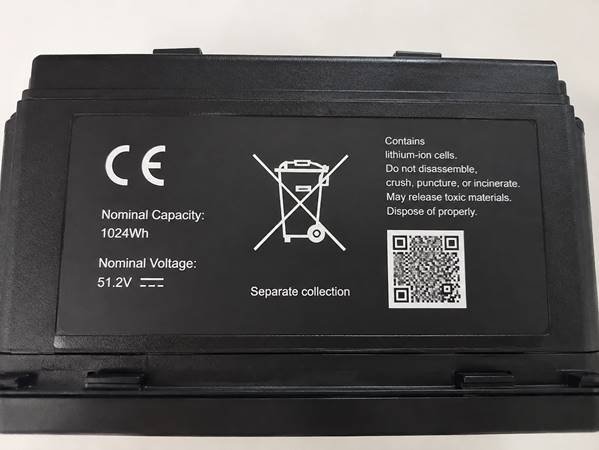
• August 18, 2026 [Confirmed]: The obligations of basic information labels and general markings are fully effective, such as capacity, separate collection markings, and relevant hazardous substance prompts; specific fields, presentation methods, and applicable categories shall be confirmed according to the annexes of the regulation and subsequent detailed rules.
• Carbon footprint declaration for light means of transport (LMT) batteries [Conditional]: In principle, no earlier than August 18, 2028, and the specific time shall be subject to the provisions of the delegated act.
• Carbon footprint labels, battery performance and durability requirements [To be confirmed]: To be issued by subsequent delegated acts. Before the release of the detailed rules, it is not advisable to finalize labels, declaration templates, or final test plans, but enterprises can first establish supplier data collection, BOM material traceability, carbon data ledgers, and performance test plans, and continue to pay attention to the progress of delegated acts.
2027: Concentrated Implementation of Core Mandatory Requirements
2027 is the year with the most concentrated core mandatory requirements in the regulation, and all nodes are confirmed nodes:
• February 18, 2027 [Confirmed]: Two key mandatory requirements officially enter into force:
The first is the removable requirement: portable batteries must support replacement by end users themselves, and light means of transport batteries must be removable and replaceable by independent professionals. Exceptions include: equipment with high waterproof safety ratings, medical devices, equipment that needs to ensure data continuity, etc., which can be exempted from this requirement.
The second is the battery passport: that is, the electronic ID card of the battery, which allows querying the full life cycle information of the battery by scanning the code. The scope of application covers electric vehicle traction batteries, industrial/energy storage batteries ≥ 2kWh, and light means of transport batteries. It should be noted that the battery passport is not an ordinary QR code label, but a set of electronic identity systems connected to the EU unified database. The QR code is only the access entry, and involves complex requirements such as data docking and real-time updates behind it, which is essentially different from the general label obligation that takes effect in 2026.
• End of 2027 [Confirmed]: The first batch of recycling and collection rate targets expire: the collection rate of portable batteries reaches 63%, the recovery rate of lithium reaches 50%, and the recovery rates of cobalt, copper, lead, and nickel reach 90%.

2028-2036: Gradual Tightening of Recycling and Recycled Material Requirements
This stage consists of long-term goals, mainly targeting recycling and recycled materials, reserving sufficient preparation time for enterprises, and most are confirmed nodes:
• End of 2028 [Confirmed]: The collection rate of light means of transport waste batteries reaches 51%.
• August 18, 2028 [Confirmed]: The obligation to disclose the proportion of recycled materials enters into force. Electric vehicle traction batteries, industrial/energy storage batteries ≥ 2kWh, and automotive SLI batteries need to disclose the proportion of recycled materials used in batteries in technical documents. This requirement is only an information disclosure obligation, that is, data is publicized according to actual usage, with no minimum proportion requirement; the mandatory minimum recycled content requirements for the same type of batteries will be implemented in two phases in 2031 and 2036 respectively.
• End of 2030 [Confirmed]: The collection rate of portable batteries is increased to 73%.
• End of 2031 [Confirmed]: Recycling efficiency targets are further improved: the collection rate of light means of transport waste batteries reaches 61%, the lithium recovery rate is increased to 80%, and the recovery rates of cobalt, copper, lead, and nickel are increased to 95%.
• August 18, 2031 [Confirmed]: The first phase of minimum recycled content requirements enters into force, applicable to electric vehicle traction batteries, industrial/energy storage batteries ≥ 2kWh, and automotive SLI batteries. The specific requirements are: cobalt ≥ 16%, lithium ≥ 6%, nickel ≥ 6%, lead ≥ 85%.
• August 18, 2036 [Confirmed]: The second phase of minimum recycled content requirements enters into force, with the proportion further increased: cobalt ≥ 26%, lithium ≥ 12%, nickel ≥ 15%, and lead remains ≥ 85%.
In addition, there are some rolling-updated nodes to be confirmed, including carbon footprint limits, performance indicators such as cycle life, detailed rules on recycling efficiency of sub-categories, specific data format requirements for battery passports, detailed rules on the removability of light means of transport batteries, etc. The specific time shall be subject to subsequent EU delegated acts.
Quick Query of Exclusive Timeline Nodes by Battery Category
If you only need to locate the requirements for your corresponding batteries, you can first quickly determine the category through the following classification, and then search accordingly:
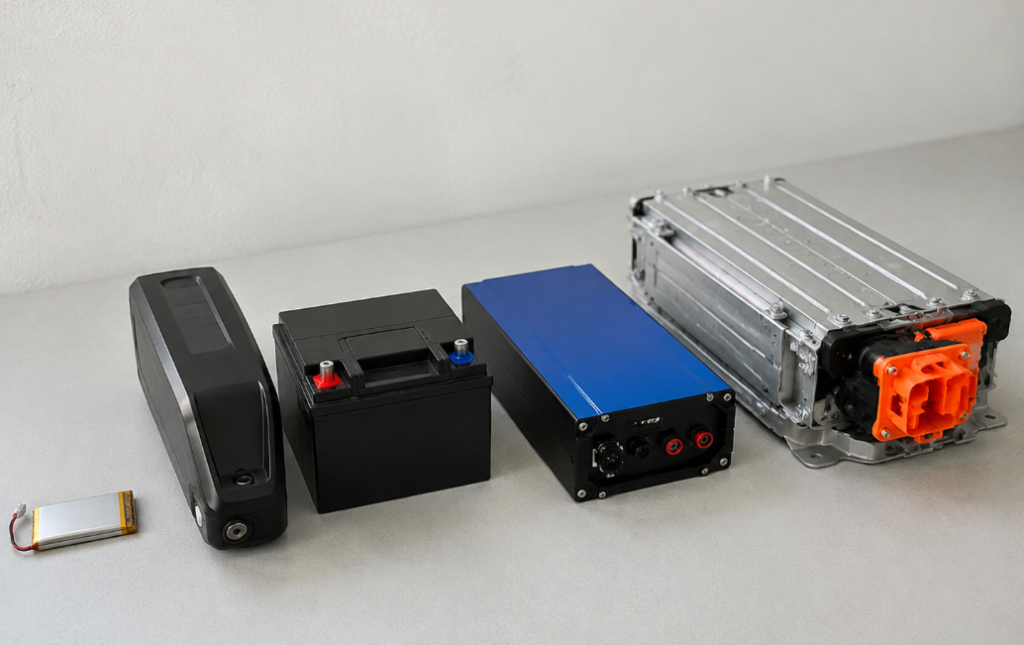
• Portable batteries: Small-sized, portable batteries for consumer electronics/small household appliances, such as batteries for mobile phones, power banks, laptops, and Bluetooth headsets.
• Light means of transport (LMT) batteries: Batteries that power light electric vehicles, such as batteries for electric bicycles, electric scooters, and balance bikes.
• Automotive starting, lighting and ignition (SLI) batteries: Small-capacity batteries used for vehicle starting, lighting, and ignition, that is, ignition batteries for fuel vehicles and hybrid vehicles, not electric vehicle traction batteries.
• Industrial batteries: Batteries for industrial scenarios or energy storage, classified by 2kWh capacity and whether they are rechargeable; stationary energy storage batteries are a sub-category of industrial batteries, and are implemented according to the rules for rechargeable industrial batteries of corresponding capacity. Among them, non-rechargeable industrial batteries only need to comply with hazardous substance restrictions and recycling obligations.
• Electric vehicle (EV) traction batteries: The core power batteries of electric vehicles, including traction batteries for pure electric and plug-in hybrid models.
If you are unable to determine the battery classification, it is recommended to check the EU official battery classification guide or consult a professional compliance agency to avoid missing compliance requirements due to self-judgment errors.
The following is a summary of the core timeline requirements for each category, which can be directly searched according to your own category:
Portable Batteries (Most Commonly Used in 3C Digital Products/Small Household Appliances)
• General basic requirements: Hazardous substance restrictions enter into force on February 18, 2024; CE/conformity assessment/technical documentation shall be implemented from August 18, 2024; labeling and marking shall be implemented from August 18, 2026
• EPR obligations: Applicable from August 18, 2025, local registration in member states shall follow the rules of the target country
• Removable requirement: From February 18, 2027, it must support replacement by end users themselves (exceptions apply to scenarios such as waterproof safety, medical devices, and data continuity)
• Battery passport: No mandatory requirement
• Carbon footprint declaration: No mandatory requirement
• Recycled material requirements: No mandatory minimum proportion requirement, only need to comply with general recycling rules
• Recycling and collection targets: Collection rate 45% by end of 2023, 63% by end of 2027, 73% by end of 2030; lithium recovery rate 50% by end of 2027, 80% by end of 2031
Light Means of Transport (LMT) Batteries
• General basic requirements: Hazardous substance restrictions enter into force on February 18, 2024; CE/conformity assessment/technical documentation shall be implemented from August 18, 2024; labeling and marking shall be implemented from August 18, 2026
• EPR obligations: Applicable from August 18, 2025
• Removable requirement: From February 18, 2027, it must support removal and replacement by independent professionals
• Battery passport: Mandatory from February 18, 2027
• Carbon footprint declaration: [Conditional] In principle, no earlier than August 18, 2028, and the specific time shall be subject to the provisions of the delegated act
• Recycled material requirements: No mandatory minimum proportion requirement, only need to comply with general recycling rules
• Recycling and collection targets: Waste battery collection rate 51% by end of 2028, 61% by end of 2031
Automotive Starting, Lighting and Ignition (SLI) Batteries
• General basic requirements: Hazardous substance restrictions enter into force on February 18, 2024; CE/conformity assessment/technical documentation shall be implemented from August 18, 2024; labeling and marking shall be implemented from August 18, 2026
• EPR obligations: Must comply with relevant requirements on recycling and collection of member states
• Removable requirement: No mandatory requirement
• Battery passport: No mandatory requirement
• Carbon footprint declaration: No mandatory requirement
• Recycled material requirements: From August 18, 2028, the proportion of recycled materials must be disclosed; from August 18, 2031, the minimum recycled content of lead shall be ≥ 85%; from August 18, 2036, lead shall remain ≥ 85%, and the recycled proportion requirements for other metals are mainly for applicable battery categories containing cobalt, lithium, and nickel, and the specifics shall be subject to the scope of application of the regulation and technical document requirements
• Recycling and collection targets: Must comply with the requirements of the member state’s recycling system, and the recovery rate targets for cobalt/copper/lead/nickel shall be implemented according to back-end recycling rules
Rechargeable Industrial Batteries (Capacity < 2kWh)
• General basic requirements: Hazardous substance restrictions enter into force on February 18, 2024; CE/conformity assessment/technical documentation shall be implemented from August 18, 2024; labeling and marking shall be implemented from August 18, 2026
• EPR obligations: Must comply with relevant recycling requirements of member states
• Removable requirement: No mandatory requirement
• Battery passport: No mandatory requirement
• Carbon footprint declaration: No mandatory requirement
• Recycled material requirements: No mandatory requirement
• Recycling and collection targets: Must comply with general recycling obligations, and be implemented according to the recovery rate targets of the corresponding category
Rechargeable Industrial Batteries (Capacity ≥ 2kWh, Including Stationary Energy Storage)
• General basic requirements: Hazardous substance restrictions enter into force on February 18, 2024; CE/conformity assessment/technical documentation shall be implemented from August 18, 2024; labeling and marking shall be implemented from August 18, 2026
• EPR obligations: Must comply with relevant recycling requirements of member states
• Removable requirement: No mandatory requirement
• Battery passport: Mandatory from February 18, 2027
• Supply chain due diligence: Applicable from August 18, 2025. Whether it is triggered needs to be judged in combination with the enterprise’s turnover threshold, the situation of placing on the EU market, and subsequent supporting rules
• Carbon footprint declaration: [Conditional] February 18, 2026 or 18 months after the entry into force of the delegated act, whichever is later
• Recycled material requirements: From August 18, 2028, the proportion of recycled materials must be disclosed; the minimum recycled proportion requirements shall be met in phases in 2031 and 2036
• Recycling and collection targets: Must comply with general recycling obligations, and the recovery rate targets for cobalt/copper/lead/nickel and lithium shall be implemented according to the unified requirements of the regulation
Non-Rechargeable Industrial Batteries
• General basic requirements: Only hazardous substance restrictions enter into force on February 18, 2024
• EPR obligations: Must comply with relevant recycling requirements of member states
• Removable requirement: No mandatory requirement
• Battery passport: No mandatory requirement
• Carbon footprint declaration: No mandatory requirement
• Recycled material requirements: No mandatory requirement
• Recycling and collection targets: Must comply with recycling obligations
Electric Vehicle (EV) Traction Batteries
• General basic requirements: Hazardous substance restrictions enter into force on February 18, 2024; CE/conformity assessment/technical documentation shall be implemented from August 18, 2024; labeling and marking shall be implemented from August 18, 2026
• EPR obligations: Must comply with relevant requirements on recycling and collection of member states
• Removable requirement: No mandatory requirement
• Battery passport: Mandatory from February 18, 2027
• Supply chain due diligence: Applicable from August 18, 2025. Whether it is triggered needs to be judged in combination with the enterprise’s turnover threshold, the situation of placing on the EU market, and subsequent supporting rules
• Carbon footprint declaration: [Conditional] February 18, 2025 or 18 months after the entry into force of the delegated act, whichever is later. Requirements such as accounting methods and formats shall be subject to the delegated act
• Recycled material requirements: From August 18, 2028, the proportion of recycled materials must be disclosed; from August 18, 2031, meet the first phase of minimum recycled content requirements (cobalt ≥ 16%, lithium ≥ 6%, nickel ≥ 6%, lead ≥ 85%); from August 18, 2036, meet the second phase of minimum recycled content requirements (cobalt ≥ 26%, lithium ≥ 12%, nickel ≥ 15%, lead remains ≥ 85%)
• Recycling and collection targets: Must comply with general recycling obligations, and the recovery rate targets for cobalt/copper/lead/nickel and lithium shall be implemented according to the unified requirements of the regulation
Note: All nodes marked “Conditional” are implemented according to the rule of “the fixed date or the corresponding duration after the entry into force of the delegated act, whichever is later”; the specific registration requirements of EPR and the docking rules of the recycling system need to be checked against the local regulations of the target member state.
Locate Key Focus Nodes by Responsible Identity
In addition to battery categories, the focus of different roles in the industrial chain varies greatly. There is no need to memorize all nodes, just search according to your own identity. All identities must follow the aforementioned unified judgment rule of “based on the time of placing on the EU market / making available on the market”.
Manufacturers (Including Non-EU Manufacturers)
Focus on the deadlines for design-related requirements, such as removable requirements and battery structure adjustments. Such requirements require modifying molds, adjusting production lines, and completing tests, which have a long cycle and need to be planned in advance to avoid starting adjustments only when the deadline is approaching. Non-EU manufacturers must appoint an EU authorized representative, but the main compliance responsibility cannot be transferred by appointing an authorized representative.
Importers
In daily practice, the customs clearance release time can be used as a reference, but the final judgment shall be subject to the unified rules. Focus on whether the compliance documents before the customs clearance node are complete to avoid goods being detained by customs.
Attention should be paid to EPR responsibilities: importers are not equivalent to statutory producers, but the EPR schemes of some member states regard importers as producers. It is necessary to check the local rules of the target country to avoid missing registration.
Special attention should be paid to the rules for old inventory: only goods that have been placed on the EU market before February 18, 2024 can be implemented according to the rules of the old battery directive; only customs clearance records or warehousing records are usually not sufficient to prove that the goods have been placed on the market under the old rules. Whether it has been placed on the market needs to be comprehensively judged based on evidence such as the first supply to EU customers, sales contracts, invoices, inventory circulation, and the availability of goods for sale.
Distributors/E-commerce Platform Sellers
In daily practice, the time when products are listed for sale can be used as a reference, but the final judgment shall be subject to the unified rules for placing on the market. Focus on the implementation time of EPR registration and labeling requirements, which are directly related to the sales link.
Platform operators usually require sellers to submit qualification materials such as EPR registration numbers, compliance declarations, and product labels; when materials are missing, the platform can directly take measures such as restricting listing or removing from shelves without waiting for penalties from regulatory authorities.
It should be noted that if you sell batteries under your own brand, you will be regarded as a producer and need to bear all compliance obligations corresponding to producers.
Recycling/Reuse Enterprises
The start time of obligations for such entities is generally later than that of front-end sales obligations. They only need to focus on the timeline nodes related to collection rate, recovery rate, and recycled materials, and do not need to pay too much attention to requirements such as front-end design and carbon footprint. At the same time, they need to cooperate with the upgrading requirements of local recycling systems in member states, and the progress of recycling systems varies from country to country.
Ordinary Consumers
There is no need to memorize enterprise-side compliance timelines, just use the personal “product purchase time” as a simple basis for judgment. The most practical tip is: for ordinary portable electronic devices (such as mobile phones, small digital products) purchased in the EU market after February 18, 2027, the batteries usually support replacement by end users themselves, but this cannot be determined solely by the purchase date. You should still check the product instructions and confirm whether they fall under statutory exemption scenarios (such as high waterproof rating devices, medical devices, etc.). When purchasing, you only need to check whether the product markings are complete, and do not need to pay attention to enterprise-side compliance details.
Avoiding Common Timeline Misconceptions
Due to the large number of timeline nodes and detailed rules, cognitive deviations are prone to occur. The following are the 8 most common misconceptions:
Misconception 1: The entry into force of the regulation in 2023 = all requirements are implemented immediately
This is the most common cognitive deviation, which confuses the concepts of “entry into force” and “application”. Entry into force only finalizes the regulatory framework and starts the calculation of the transition period. Most specific requirements have a transition period ranging from 1 year to several years, and the first batch of general requirements will not enter the application period until February 18, 2024. It can be checked against the three core time concepts in the entry-level chapter.
Misconception 2: The compliance timelines for all batteries are exactly the same
The regulation spans from 2023 to 2036, and the implementation times of requirements for different categories, different capacities, and different types of obligations vary greatly. For example, portable batteries do not need to be equipped with a battery passport, while electric vehicle traction batteries have the most comprehensive compliance requirements. It is recommended to first confirm your own battery category and capacity, and then search for the corresponding exclusive nodes.
Misconception 3: The EU has a unified timeline, and the 27 member states have exactly the same implementation time
The EU sets a framework-based unified timeline, but implementation requirements such as EPR registration and recycling processes are formulated by each member state on its own with transposition rules, and there is no unified fixed time difference. Whose country’s market you operate in, you need to check the local rules of that country.
Misconception 4: Judge whether requirements are met based on production time
The core judgment standard of the regulation is “the time of first placing on the EU market”, which is not directly related to the production time. The production date can only be used as auxiliary information and cannot be used as the sole basis for compliance judgment. The specific logic can refer to the unified judgment rules in the entry-level chapter.
Misconception 5: Enterprises in non-EU regions do not need to comply with the new regulation
As long as batteries are sold in the EU market, non-EU manufacturers must appoint an EU authorized representative and bear the same main compliance responsibilities as EU local manufacturers. No matter where the enterprise is registered, as long as it conducts business in the EU market, it must meet the regulatory requirements.
Misconception 6: The timelines for all requirements are fixed
Among the currently announced nodes, detailed rules such as carbon footprint limits, performance and durability, and LMT battery carbon footprint will be issued by subsequent delegated acts. Some are conditional nodes, and the time may be delayed but will not be earlier than the statutory earliest date. It is recommended to follow up on official updates every six months, and pay attention to distinguishing the three types of nodes: confirmed, conditional, and to be confirmed.
Misconception 7: A battery passport is an ordinary QR code label
A battery passport is a full-life-cycle electronic identity system connected to the EU unified database. The QR code is only the access entry, and the requirements for data docking and updating are much higher than ordinary labels. It is essentially different from the general label obligation that takes effect in 2026, and the two cannot be confused.
Misconception 8: Recycled material disclosure = mandatory compliance with minimum recycled content
The recycled material proportion requirement that takes effect in 2028 is only a disclosure obligation, that is, data is publicized according to actual usage, with no minimum proportion requirement. The mandatory minimum recycled content requirement will be implemented in two phases starting from 2031, and the two are compliance requirements at different stages.
Practical Methods for Following Up on Timeline Nodes
After mastering the rules, you can steadily follow up on the compliance rhythm through the following four steps:
Step 1: Confirm your identity and battery category
First use the aforementioned 1-minute classification method to determine the battery category. If you are unsure, you can consult a professional compliance agency. Then clarify your responsible identity, correspond to the unified judgment rules, and filter out the nodes related to yourself, without memorizing all the content.
Step 2: Calculate the preparation cycle backward from the deadline
The preparation cycles for different types of requirements vary greatly. It is recommended to reserve time according to the following standards:
• Design-related requirements (such as removability, battery structure adjustment): require modifying molds, adjusting production lines, and completing tests. It is recommended to start preparations 1-2 years in advance.
• Certification and document-related requirements (such as carbon footprint declaration, CE certification, technical documentation): usually reserve at least 3-6 months; if it involves supply chain carbon data collection, third-party verification, or multi-category certification, it should be further advanced.
• Registration-related requirements (such as EPR registration, EU authorized representative docking): usually reserve at least 2-3 months; if it involves multi-member state EPR registration or special industry qualifications, the preparation time needs to be appropriately extended.
Step 3: Obtain the latest information through reliable channels
The most authoritative official channels include: the battery section of the European Commission’s Directorate-General for Environment (DG ENV), the Official Journal of the European Union, and the EUR-Lex regulation database. All updates will be released on the above platforms as soon as possible. Chinese interpretations from professional compliance agencies or testing and certification institutions that track EU regulations for a long time can be used as auxiliary references, but the final decision shall be based on the official information released by the EU. It is recommended to follow up once every six months, focusing on the release progress of delegated acts.
Step 4: Anticipate common compliance risks in advance
Four types of time-related compliance risks need to be focused on preventing: First, overstocking before the deadline, resulting in goods being unable to enter the EU for sale after the new requirements take effect, causing inventory backlog; second, the implementation time of EPR in some member states is earlier than the EU unified time, resulting in fines due to failure to register in time; third, confusing production time with placing on the market time, leading to compliance misjudgment and goods being detained; fourth, mistakenly assuming that conditional nodes will definitely be delayed, and if the delegated act is released earlier, there will be insufficient preparation when implemented according to the fixed date.
After reading this article, you can quickly judge the 5 core matters related to yourself: you can distinguish the three core time concepts of entry into force, application, and mandatory deadline, and not be misled by vague propaganda such as “regulation entry into force”; you can quickly correspond to your own battery category (including energy storage/rechargeable attribution rules) and responsible identity, and find the corresponding core implementation timeline nodes; you can distinguish the three types of timeline nodes: confirmed/conditional/to be confirmed, and avoid common time cognitive misconceptions; you can plan the compliance preparation cycle by the backward calculation method, and reasonably arrange the start time of design, certification, and registration matters; you can follow up on the latest time adjustments through official authoritative channels, and respond in a timely manner to changes in pending detailed rules.