
Anyone doing business in electrical products for the Japanese market, whether factories, traders, or cross-border e-commerce sellers, will almost always encounter PSE-related questions: Does my product need certification? What is the difference between the diamond and circular marks? What are the consequences of not having it? Many people who come into contact with it for the first time easily mistake it for an ordinary quality rating, or cannot figure out its scope of application, ending up either wasting money for nothing, or having goods detained and products removed from shelves. This article compiles the most commonly asked PSE questions, from basic understanding to practical pit avoidance, to help you build a clear compliance judgment framework.
1. Basic Understanding of PSE: The Most Common Introductory Questions
Many people think PSE is Japan’s “quality product medal”, but it is not — it is essentially a statutory minimum safety access permit set by Japan for electrical products. Only products that pass the safety threshold can be sold in the Japanese market; it is not about evaluating quality, but about ensuring basic safety. Its legal basis is Japan’s (commonly known as the DENAN Law), and it is regulated by Japan’s Ministry of Economy, Trade and Industry (METI). Its core function is to prevent electrical safety risks such as electric shock, overheating, and fire.
As long as you are involved in “selling electrical products to Japan”, you need to understand some PSE rules: the most directly involved are export factories, traders, and cross-border e-commerce sellers; even service providers that offer operation services for the Japanese market, overseas warehouses, and logistics services need to know the basic requirements, otherwise they will be implicated if they help customers ship non-compliant goods. Even ordinary consumers can judge the basic safety compliance of electrical products purchased in the Japanese market through the PSE mark. Special attention should be paid here: the legally primary responsible party is not the overseas factory, but the importer within Japan or the Japanese domestic manufacturer — in short, whoever brings the product into the Japanese market for sale bears the main legal responsibility.
If it is formal commercial sales (whether offline wholesale, platform store opening, or overseas warehouse delivery), the consequences of not having PSE are very direct: customs may detain the goods, e-commerce platforms will forcibly remove products from shelves, and in serious cases, fines will be imposed, and even a full product recall will be required. In the event of a safety accident, the importer or sales entity shall not only bear legal responsibility, but also compensate users for losses.
People who are new to PSE are most likely to fall into two cognitive pitfalls: the first is thinking that “having PSE means it is a good product” — in fact, it is only the statutory minimum safety access requirement, just like the passing line for a driving test; passing the line means you can legally drive on the road, but it does not mean you have good driving skills. The second is thinking that “all electrical products need PSE” — in fact, Japan has a clear control list, and only civilian and consumer electrical products on the list are required; most purely industrial and medical-specific electrical equipment are not within the scope.
2. Scope of Application Judgment: Does My Product Need PSE?
To judge whether a product needs PSE, you don’t have to memorize the list by rote, just follow 3 steps: the first step is to check whether the product is driven or controlled by electricity; purely mechanical products (such as manual screwdrivers, ordinary plastic storage boxes) are directly excluded. The second step is to check whether it is sold to ordinary consumers and used in civilian scenarios; if it is special equipment only for factories, hospitals, and communication equipment rooms, it is basically not required. The third step is to check METI’s latest control list to confirm whether the product is on it.
The most common control categories that people come into contact with daily can be simply divided into two categories according to risk level:
| Risk Level | Corresponding Certification Type | Common Product Examples |
| High risk | Diamond PSE | Mobile phone chargers, power strips, high-voltage power cords, electric water heaters |
| Low risk | Circular PSE | Power banks, LED desk lamps, small USB fans, ordinary small home appliances |
Note: The above table is only a reference for examples of common consumer electrical products. The final classification shall be subject to the specific product names, rated voltage/power, product structure, purpose, and sales form in METI’s current . For example, the commonly referred to “mobile phone charger” needs to be judged corresponding to specific product names and parameters such as “AC adapter/switching power supply device” in the list; “ordinary small home appliances” need to be checked one by one according to the function and rated value of each product, and cannot be directly judged as diamond or circular PSE by the category name.
Of course, there are many situations where PSE is clearly not required: for example, purely mechanical products with no electrical functions at all; special electrical equipment or components only used for industrial production, medical treatment, and communication equipment rooms; as well as small power sources such as disposable dry batteries and button batteries. In addition, if it is a small amount brought into the country for personal use, direct mail, or individual scattered resale of second-hand products, it is not within the scope of commercial control and does not require PSE.
The above personal-related exemption scenarios are all limited to non-commercial purposes: personal carry-on entry or direct mail is only for a small amount of personal use, and shall not be used for commercial resale; personal second-hand transfer is only for occasional, scattered private idle transactions. If you continue to sell through e-commerce platforms, sell second-hand electrical appliances in batches by operators, or import for the purpose of sales, you still need to fulfill PSE compliance obligations according to commercial sales scenarios.
When encountering ambiguous products, you can grasp several core points for judgment: first, look at whether it is a complete machine or a component — if the component is sold separately to consumers, it needs to be judged separately whether it needs certification; if it is a supporting component sold together with the complete machine, it follows the certification of the complete machine. Second, look at whether it is a civilian or industrial general-purpose model — even if the product is labeled “industrial grade”, as long as it is also sold to ordinary consumers, it must follow civilian requirements. For products with batteries, it depends on whether the battery is built into the complete machine and sold together, or sold separately; separately sold batteries need to be judged separately.
The most accurate basis for judgment is the latest control list on the METI official website. Note that the list is updated from time to time, so do not rely on expired catalogs or old comparison tables compiled by third parties. The final decision shall be based on the latest list and regulatory interpretations currently publicly available by METI, and old materials can only be used for preliminary screening. If the classification is wrong, you may either miss the certification and result in goods being detained and products removed from shelves, or do unnecessary certification and waste money for nothing; there are also cases where the mark is pasted incorrectly — obviously a high-risk diamond category but pasted with a circular mark, which will also be punished.
3. Diamond vs Circular PSE: What Are the Differences Between the Two Types of Certification?
Many people think that diamond PSE is “higher grade” than circular PSE, but it is not — both are statutory compliance certifications, but they correspond to products of different risk levels, and there is no distinction between high and low. Diamond PSE covers “specified electrical appliances and materials”, that is, products with relatively high risks; circular PSE covers “non-specified electrical appliances and materials”, with relatively lower risks.
The core requirements of the two are quite different, you can quickly understand them by comparing the following table:
| Comparison Item | Diamond PSE (Specified Electrical Appliances and Materials) | Circular PSE (Non-Specified Electrical Appliances and Materials) |
| Testing and Certification Issuance | Must be carried out by a METI-approved third-party institution for conformity assessment and certification issuance | After completing compliance testing in accordance with the applicable technical standards of DENAN, the Japanese domestic entity that has completed METI business notification shall keep the full set of compliance documents and bear responsibility, no need to apply for approval from METI for individual products |
| Factory-Related Requirements | Some categories may involve factory quality system inspection or subsequent supervision, specific requirements depend on product category and certification institution rules | No mandatory third-party factory inspection requirement |
| Responsibility Endorsement | Endorsed by a third-party certification institution | The manufacturer/importer (notifying business operator) bears responsibility on its own |
Both marks have the three letters “PSE”, the difference lies in the outer frame and additional information: the outer frame of the diamond one is a diamond, and the code of the certification institution must also be added; the outer frame of the circular one is a circle, and the identification of the declarant is added.
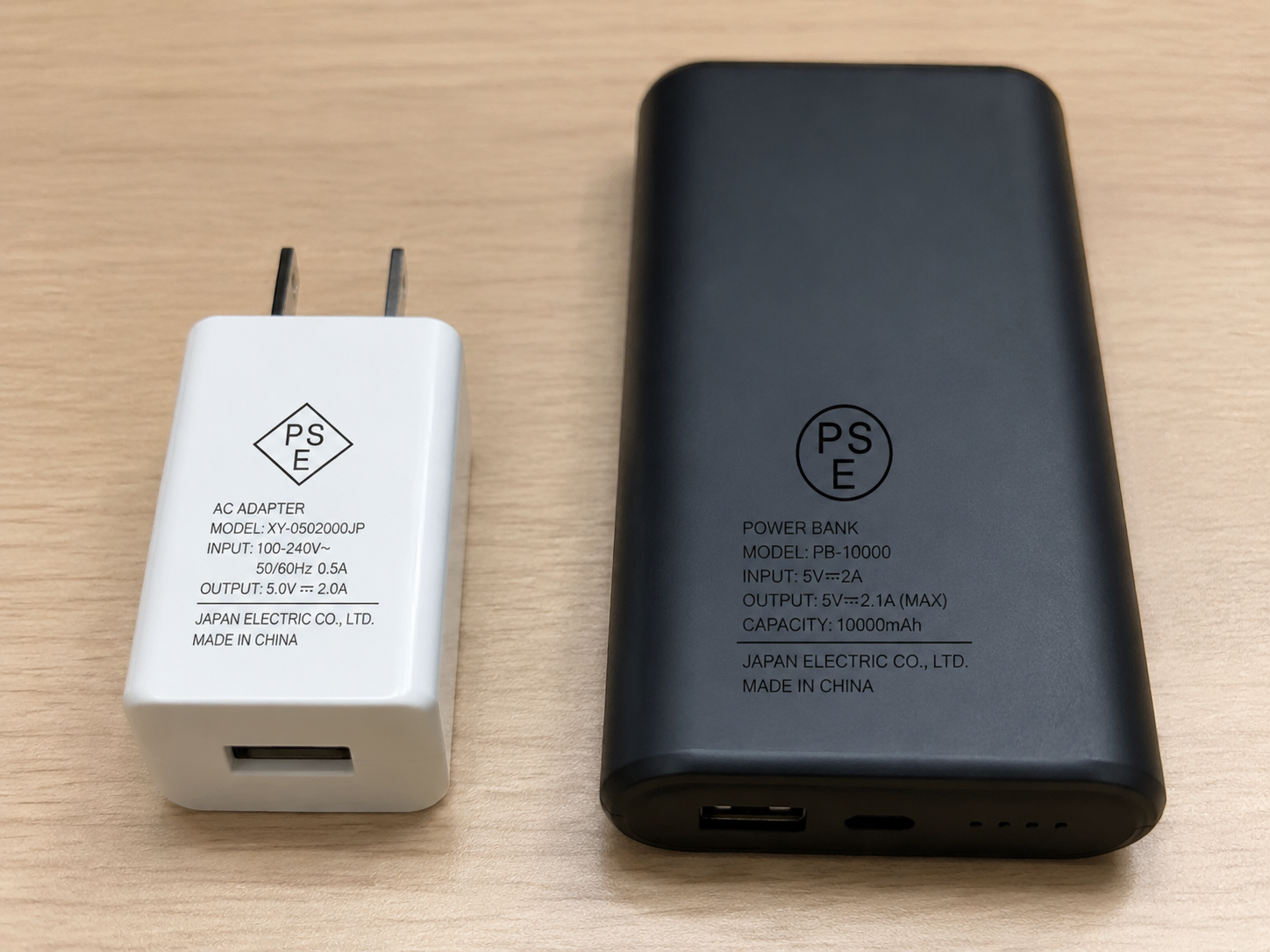
Don’t think that the classification of products is final. In the following situations, the classification may change: the first is that the product parameters are changed, such as increased power, increased voltage, structural adjustment, leading to an increase in risk level, which may change from circular to diamond; the second is that the sales form changes, components originally sold together with the complete machine are now sold separately, so the classification needs to be judged separately; the third is that regulations are updated, METI adjusts the control list and changes a certain category of products from non-specified to specified; the fourth is that core components are replaced, such as replacing key safety components like power modules and batteries, which may change the risk level and require re-evaluation of classification.
Regarding circular PSE, the biggest misunderstanding is that “no certification is required”, and some people even think that you can just paste a circular mark casually — this is completely wrong. Although non-specified electrical appliances and materials corresponding to circular PSE do not need to apply for approval from METI for each product, there are still clear compliance requirements: first, the Japanese domestic entity that bears responsibility must first complete the Electrical Appliance and Material Business Notification with METI (that is, the filing of the entity operating electrical appliances and materials, such entities are also called “notifying business operators”); second, the product must complete compliance testing in accordance with the applicable technical standards of DENAN, and retain complete test reports and conformity documents; finally, the circular PSE mark must be correctly affixed in accordance with regulations. Unauthorized marking, listing without completing testing or without a compliant entity to bear responsibility are violations. Moreover, circular PSE also has market spot checks, and unqualified ones will also be directly removed from shelves and punished, it is not unregulated.
4. Application Practice: How to Apply for PSE? How Much Does It Cost and How Long Does It Take?
Before starting the application, confirm 4 things first, otherwise getting stuck halfway will waste more time: first, figure out whether the product is a diamond or circular PSE category, the processes and requirements are very different; second, overseas sellers must first determine the compliance responsible entity within Japan — that is, an importer or compliance agent that has completed METI Electrical Appliance and Material Business Notification (i.e., notifying business operator), because compliance obligations under the DENAN regulations must be borne by a Japanese domestic entity; third, the product’s model, parameters, and structure must be completely finalized, if you change the design halfway through the application, the previous testing may be wasted; fourth, the product’s rated parameters must be compatible with Japan’s electricity environment — Japan’s household voltage is generally 100V, and the frequency varies by region, 50Hz in the east and 60Hz in the west, the product must be compatible.
The materials required for the application are not too complicated. The basic ones include product manuals, circuit schematics, bill of materials (BOM), nameplate drafts, and 2 to 5 samples need to be prepared. The samples must be exactly the same as the final mass-produced version, and cannot be specially made “test-only versions”. If it is diamond PSE, additional materials related to the factory quality system need to be prepared.
The processes of the two types of certification are different:
Circular PSE is relatively simple. First, confirm that the responsible entity within Japan has completed METI’s Electrical Appliance and Material Business Notification (i.e., has the qualification of a compliant entity); after the product is finalized, send samples for testing according to applicable technical standards, and after obtaining a qualified report, the responsible entity shall keep the full set of compliance documents, and then affix the circular PSE mark in accordance with regulations before it can be launched. Circular PSE does not require submitting a separate application to METI for individual product models or waiting for approval, it belongs to self-declaration compliance, and the responsibility is borne by the Japanese entity that has completed business notification.
Diamond PSE is more complicated. After the product is finalized, it needs to be sent to a METI-approved third-party institution for type test (that is, full safety testing of samples according to standards), and some categories may involve factory quality system inspection (depending on product category); after obtaining the third-party certification certificate, the Japanese notifying business operator shall perform the type notification obligation for the product to METI, and after completion, it can be marked and launched in accordance with regulations.
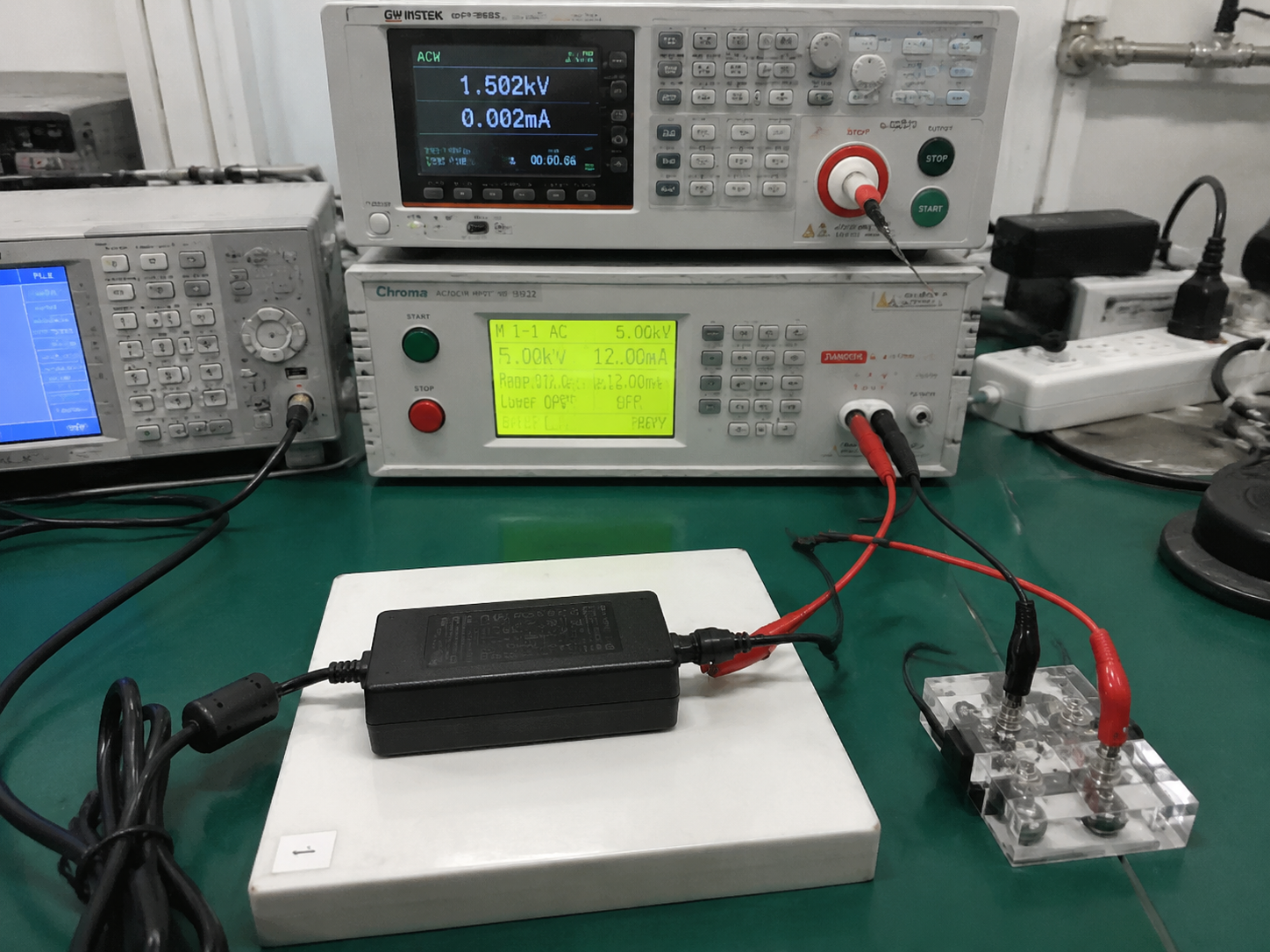
In terms of cycle, if the materials are complete and the samples pass the test at one time, circular PSE can generally be completed in 2 to 4 weeks; diamond PSE usually takes 4 to 8 weeks because it requires a METI-approved institution to complete conformity assessment and some categories may involve factory inspection. If the samples are unqualified and need rectification, materials are missing, or multiple series of models are applied for at one time, the cycle will be lengthened.
There is no official unified price for fees, and there are quite a lot of differences between different institutions and different products. Generally speaking, the fee consists of testing fee and declaration fee, and diamond PSE also adds a certificate fee. Circular PSE costs about several thousand to more than 10,000 RMB, depending on product complexity; diamond PSE is more expensive, ranging from 10,000 to tens of thousands of RMB, the higher the risk of the product, the more expensive it is.
Can overseas manufacturers get certificates? Yes, overseas factories can be the certificate holders of diamond PSE, but the compliance entity obligations under the DENAN regulations (including the business notification and document retention responsibility for circular PSE, and the product type notification obligation for diamond PSE) must be fulfilled by the Japanese domestic importer or compliance agent (notifying business operator). Overseas sellers generally have two options: either cooperate with a Japanese importer, who is responsible for compliance matters; or entrust a specialized compliance agency to handle it.
5. Marking and Documents: Is It Done After Getting PSE? What Other Compliance Requirements Are There?
Many people just paste a mark casually after getting the certificate, and finally stumble on the marking. There are clear rules for the labeling of PSE marks: it is preferred to be pasted on the product body; if the product is too small (such as a mini USB fan), it can be pasted on the smallest package or the manual. The mark must be clear and durable, should remain not easy to fall off or wear out during normal use and circulation of the product, and the size must also meet the official minimum ratio, and cannot be stretched or flattened at will.
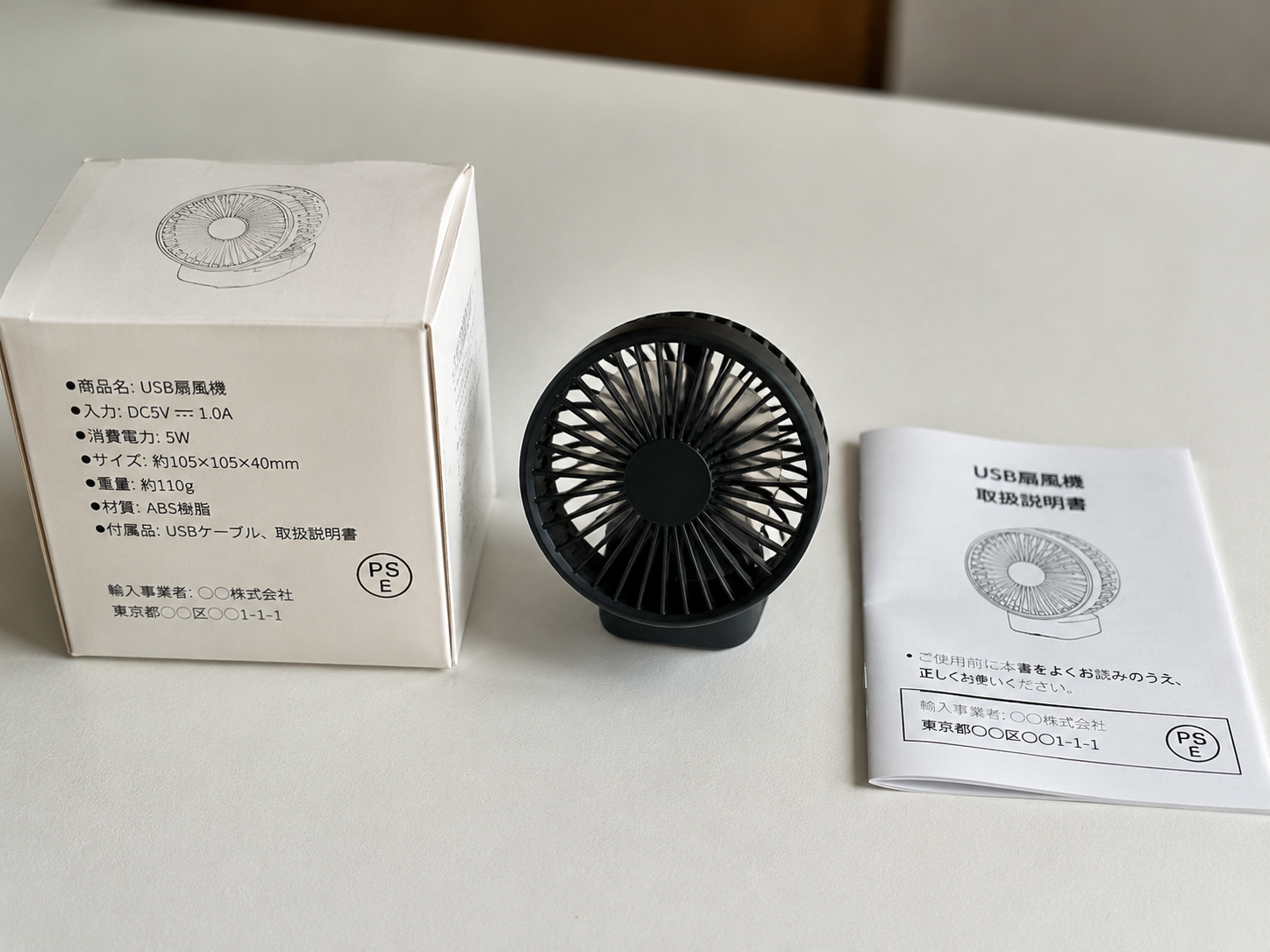
The information on the mark cannot be missing either: whether it is diamond or circular, it must include the PSE mark of the corresponding shape, rated parameters such as rated voltage/power, and the name or identification information of the notifying business operator required by regulations. Product parameters such as rated voltage and rated power must be completely consistent with the actual product; the responsible entity identification must meet the labeling requirements of Japanese regulations for notifying business operators. If the brand owner, overseas manufacturer, and Japanese importer are different entities, it is not allowed to only label the brand name or overseas manufacturer name to replace the legal responsible entity information. It is recommended that the certification institution or Japanese compliance agent confirm the compliance of the nameplate draft in advance. Diamond PSE also needs to be additionally labeled with the code of the certification institution, otherwise it is non-compliant.
The most common marking errors are the following: first, the shape is wrong, high-risk diamond categories are pasted with circular marks, or vice versa; second, information is missing, rated parameters, responsible entity information required by regulations are not labeled, or diamond PSE does not have the certification institution code; third, the format is wrong, the mark ratio is randomly changed, the size is too small, the printing is blurry; fourth, the pasting is not firm, using stickers that tear off easily, which disappear after a short time, which is also considered a violation.
Don’t think that everything is fine after the product is sold. Japanese regulatory authorities will conduct market spot checks, so compliance documents must be kept properly. The documents that need to be retained include: product classification judgment basis, test reports, certificates (if it is diamond), and conformity declarations. The document retention period shall be confirmed in accordance with the , applicable product categories, and the legal obligations of Japanese notifying business operators. Specifically, you can follow the retention requirements given by the certification institution or Japanese compliance agent, and you shall not shorten the storage period without authorization. The retained documents should at least be able to fully prove the product classification basis, test results, compliance confirmation process, marking draft, and mass production consistency requirements.
There are also many common errors in documents: for example, the model, rated value, and factory information on the documents do not match the actually sold products; the samples used for testing are old versions, and the design is changed during mass production; also, the document language does not meet the requirements: notification materials for Japanese regulatory authorities, product labels for consumers, and Japanese instructions, etc., must meet the language requirements of Japanese regulations; test reports and technical materials can be provided in English or Japanese according to the requirements of the certification institution; pure Chinese materials usually need to be supplemented with qualified translation versions, otherwise they cannot be used as compliance certificates.
6. Special Scenario Judgment: How to Judge Compliance in Ambiguous Situations?
Some special categories are easy to confuse, let’s talk about them separately: products with wireless functions, such as Bluetooth speakers, as long as the electrical part is on the control list, PSE is required. TELEC (Japan’s wireless certification) cannot replace PSE, the two regulate different fields. The judgment of battery products needs to be combined with form and purpose: batteries built into the complete machine and sold with the complete machine are covered by the PSE certification of the complete machine, no need to apply separately; power banks and lithium-ion batteries that meet the applicable conditions of DENAN are usually controlled as circular PSE; whether separately sold lithium batteries need certification needs to be comprehensively judged based on conditions such as battery type, purpose, capacity, structure, and whether they are sold separately as consumer products, it cannot be generalized. For industrial products, only components that are completely factory-specific do not need it; if it is a general-purpose model that can be used for both civilian and industrial purposes, as long as it is sold to ordinary consumers, it must be PSE certified according to civilian requirements.
Cross-border e-commerce sellers should pay special attention: if the product is a civilian electrical product within the DENAN control list, and is shipped in batches from overseas warehouses, or sold commercially on mainstream platforms such as Amazon Japan and Rakuten, PSE compliance must be completed as required. Now mainstream platforms all require uploading PSE certificates to list products. If it is personal direct mail, the quantity is within the reasonable range for personal use and only for personal use, it does not belong to the category of commercial sales and does not require PSE; but if the quantity of direct mail obviously exceeds the reasonable range for personal use, or is imported for the purpose of resale for profit, it still needs to bear PSE compliance responsibility according to commercial sales requirements. Also, if the seller assumes the role of importer (for example, using their own Japanese tax number for customs clearance), then they have to bear all compliance responsibilities, don’t think that passing the platform review means everything is fine.
Do you need to re-apply for certification if the product is modified? It depends on what is changed: the premise that the original certification can be used is that, except for adjustments to appearance, packaging, and color, the product’s model coverage range, nameplate rated value, key safety materials, core electrical components, circuit structure, production factory, and applicable safety standards have not changed, and do not affect the coverage range of the original certification. But if the core electrical components are replaced, the rated power or voltage is adjusted, or the circuit structure is changed, you need to re-apply for certification. If you are not sure, you can find the original certification institution to do a difference test judgment, no need to test all, which can save some money.
Those who sell sets or sell components separately should also pay attention: if it is sold as a complete set, you can apply for PSE as a complete machine, but the key components inside must have compliance certificates. If you disassemble the components in the set and sell them separately, each component needs to be judged separately whether it needs PSE. Packaging and sales methods will affect compliance responsibilities, it is best to confirm clearly before listing.
Many sellers will ask: can multiple importers share one certificate for products from the same factory? Yes, but the premise is that the certificate holder is the manufacturer, and the product model and production factory are exactly the same. However, each importer must make a separate compliance declaration to METI, and cannot use it directly. As for the validity period, diamond PSE is generally 3 to 7 years, varying by product and institution, and needs to be renewed when it expires. Circular PSE has no fixed validity period, but if the relevant standards are updated, the product needs to be re-evaluated for compliance. In addition, if the product design is changed or the factory is relocated, the original certification may also become invalid, and it needs to be reconfirmed.
7. Common Misconceptions and Pit Avoidance: What Cognitive Errors Will Lead to Pitfalls?
In the process of doing PSE, there are several common cognitive misconceptions that are particularly easy to lead to pitfalls. Here they are compiled into a comparison table for everyone to quickly check:
| Common Misconception | Correct Explanation | Check Points |
| Having a PSE certificate means it must be compliant | Compliance is a full-process requirement, not just having a certificate is enough | Three conditions must be met at the same time: the certificate is within the validity period, the marking meets the requirements, and the actually sold model/parameters are consistent with the certificate |
| PSE certification is valid for life | The validity of certification will change with product, standard, and production conditions | Diamond PSE has a clear validity period, which needs to be renewed when expired; circular PSE has no fixed period, but standard updates, product modifications, and factory changes may cause the original certification to become invalid |
| CE/UL/CCC certification can be directly converted to PSE | There are differences in national safety standards, which cannot be directly converted | Those holding valid CB reports can apply to reduce some repeated test items to save time and cost, but cannot directly exchange for PSE certification |
| Having a PSE mark means it must be truly compliant | There are forged marks and false declarations on the market | The authenticity of diamond PSE certification can be checked through the METI official website; for circular PSE, the authenticity of test reports and notifying entities needs to be verified |
| Small and low-priced products do not need PSE | The control scope only depends on category and purpose, and has nothing to do with volume and price | Even a USB small light that costs a few yuan, as long as it is a civilian consumer product within the DENAN control list, needs to complete PSE compliance |
| After the sample passes the test, mass production must be compliant | Changes in the mass production link may affect safety performance | It must be ensured that the mass-produced product is completely consistent with the test sample in terms of electrical structure, core components, and rated parameters; replacement of key components requires re-evaluation of compliance |
You should also pay attention to avoiding pitfalls when choosing a certification institution: for diamond PSE, you must choose a METI-approved third-party conformity inspection institution, which can be checked for qualifications on the METI official website. Don’t look for those unqualified small institutions, the certificate you get in the end will be useless. Don’t believe in publicity such as “get the certificate in a few days”, “no testing required”, “guaranteed pass”. Formal certification requires following the process and doing testing, and those that do not meet the requirements will definitely not pass. Those who say such things are basically scammers. Even for circular PSE, although it is a self-declaration, it is recommended to find a regular laboratory with corresponding product testing capabilities. Don’t just find a place to issue a fake report, the consequences will be more serious if found out.
If you are really spot-checked and found non-compliant, don’t panic, follow these steps: first, immediately stop sales, remove relevant products from shelves, and suspend the shipment of the same batch to avoid more problems; then rectify the unqualified parts, for example, if the marking is wrong, change the marking, if there is a structural problem, optimize the structure, if documents are missing, supplement the documents; after the rectification is completed, re-test or audit, and after passing, submit the rectification materials and apply for resumption of sales.
8. Quick Judgment Summary
Finally, let’s summarize the core judgment methods and red lines for everyone to quickly compare:
To judge whether a product needs PSE, remember 3 steps: first, check whether it is an electrical civilian/consumer product, second, check whether it is on METI’s latest control list, third, distinguish whether it is a specified (diamond) or non-specified (circular) category.
To judge whether a PSE mark is compliant, only 2 steps: first, check whether the shape of the mark matches the risk category of the product, second, check the information on the mark, whether the rated parameters, responsible entity information, and the institution code for diamond marks are all complete.
There are also 3 red lines that must never be touched: first, you cannot privately print or fraudulently use PSE marks; second, you cannot use certifications from other regions to directly replace PSE; third, you cannot just get the certificate and ignore the rest, marking, model matching, and document retention are all indispensable.
Mastering these basic judgment logics, you can initially complete the PSE compliance scope screening of products, identify common marking problems, understand the core nodes and cost range of application, and provide a clear reference direction for subsequent compliance operations. For specific product classification judgment, certification details or regulatory updates, it is recommended to refer to METI official announcements or formal opinions of professional compliance institutions.