
Many sellers who are new to the Japanese market often equate PSE technical documents with test reports, thinking that obtaining a test report and affixing a label is all that is needed, only to discover insufficient materials when facing customs detention or random inspections requiring the presentation of a full set of files. PSE technical documents are the core support for Japanese electrical safety compliance, far more than a single report.
First, Understand: What Exactly Are PSE Technical Documents?
Not a Single Report, but a “Safety Compliance File Folder” for Products
PSE technical documents are the full set of product safety compliance files required by Japan’s , not a single separate report or form. Their core function is to prove that the electrical products you sell in Japan truly meet PSE safety requirements, and are not put on the market with arbitrary labeling.
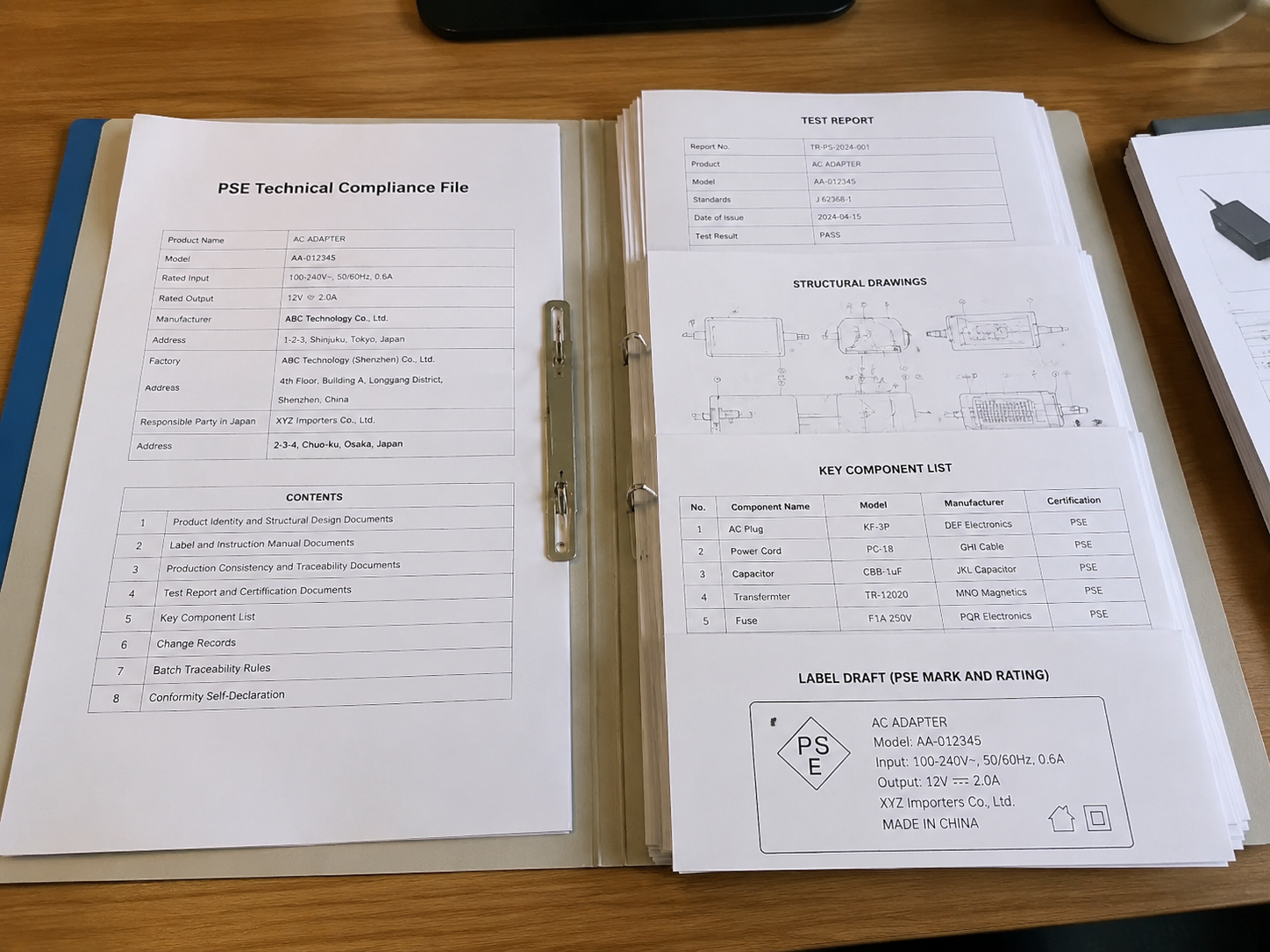
Unlike the common misconception that “you only need to submit them once when applying”, this set of documents is permanent evidence of compliance — Japan’s Ministry of Economy, Trade and Industry (METI) and its related regulatory channels may require presentation in accordance with the law. The specific inspection subjects and procedures are subject to official Japanese requirements. Failure to produce the documents or non-conforming content may constitute a compliance issue.
Don’t Confuse Them: Differences from Several Common Concepts
Many people easily mix up technical documents with test reports, certification certificates, and PSE marks, but their functions are completely different:
• Relationship with test reports: A test report is a core component of technical documents, while technical documents are a full set of files covering all dimensions of product design, production, components, and labeling; a test report alone cannot constitute a complete compliance basis, and will be judged as missing materials during random inspections.
• Relationship with PSE certification certificates: Diamond PSE usually requires a Conformity Assessment Body (CAB) accredited by the Japanese government to complete product conformity assessment and issue corresponding conformity certificates or certification documents. Such certification documents are used to confirm that specific model products have been assessed in accordance with Japan’s corresponding safety standards, while technical documents are the core basis for supporting full-cycle continuous compliance of product models, structures, components, labels, production consistency, etc. The certificate itself cannot replace complete technical documents. If technical documents are missing or non-compliant, the validity of the corresponding conformity certificate may be affected, and may even trigger regulatory corrections, suspension of use and other measures.
• Relationship with PSE marks: The PSE mark is an external compliance label affixed to the product, and technical documents are internally retained compliance evidence; neither is dispensable. The PSE mark must be supported by complete technical documents and compliance procedures, otherwise it may constitute improper labeling or sales compliance issues.
Who Is Responsible: Division of Responsibilities That Overseas Sellers Must Know
Because Japan’s governs market entities within Japan, there is a clear legal boundary for the division of responsibilities:
• Importers within Japan or market entities that have completed compliance declarations (notification business operators) are the first responsible parties, bearing all legal responsibilities for the custody, presentation, and compliance of technical documents. If you are an overseas seller without a business entity within Japan, you need to implement the responsible entity within Japan through cooperation methods that meet legal requirements; if you use an authorized representative, you need to confirm whether they have legal and commercial arrangements to undertake notification declaration, document custody, and regulatory communication responsibilities, which cannot simply replace the statutory responsibilities of importers.
• Overseas manufacturers or suppliers need to cooperate in providing core product information, and usually do not directly bear the obligation of document custody under Japanese law, but may bear corresponding commercial recovery, supply responsibilities or cooperation in investigation obligations due to contractual agreements, provision of false information, involvement in quality accidents or regulatory investigation needs.
• Brand owners should remember to clearly specify the delivery requirements and compliance responsibilities of technical documents when signing contracts with suppliers, to avoid being unable to obtain materials later and causing unnecessary compliance risks to Japanese partners.
4 Most Common Beginner Pitfalls
People who are new to PSE almost always make these cognitive mistakes. Avoiding them in advance can save a lot of trouble:
1. Wrong: Only diamond PSE requires preparation of technical documents. Even for circular PSE (self-declaration category), a full set of technical documents must be retained for inspection, except that they do not need to be submitted to a third party for review. Failure to produce them during random inspections is also non-compliant.
2. Wrong: Having a test report equals having compliant technical documents. A test report is only part of it. Missing materials such as structural drawings, label instructions, and consistency certificates do not count as complete compliance documents.
3. Wrong: After affixing the PSE mark, you don’t need to worry about the documents. Labeling cannot replace document retention, and a complete chain of compliance evidence must still be presented during random inspections.
4. Wrong: Overseas reports such as CE/UL/3C can be used as PSE documents after translation. There are differences between Japanese electrical safety standards and those of other countries/regions. Overseas reports cannot be directly used as the basis for PSE compliance (see the section on document validity determination later for specific rules).
Step 1: Classify Your Product First
After understanding the basic concepts, don’t rush to find materials to put together documents. PSE technical document requirements are tied to product classification — products with different risk levels have very different requirements. If you get the classification wrong, you will either waste money on redundant materials or miss key documents and be non-compliant.
First Judge: Is Your Product Within the Scope of PSE Jurisdiction?
PSE targets electrical appliances defined by Japan’s . Not all electrified products need to meet PSE requirements. The core judgment must meet two basic conditions: first, the product is an electrical device that operates with electricity, and second, the product is included in the “Electrical Appliance and Material Cabinet Order List” issued by METI.
In actual verification, it is necessary to make a comprehensive judgment based on multiple dimensions in the list, such as product name, specifications, power supply method, accompanying power supply/charger, battery type, etc.
Special attention should be paid to boundary categories such as battery-powered devices, USB-powered devices, adapters, and power banks. Conclusions cannot be drawn solely based on voltage or power supply method, and each list item must be checked one by one.
Common situations that may not be within the scope of jurisdiction include: some small devices with extremely low voltage/extremely low power (such as some decorative pendants powered by button batteries, subject to the list), pure mechanical products (such as manual screwdrivers), products that have been included in the jurisdiction of other special regulations (such as medical devices, which are usually also subject to regulations related to pharmaceuticals and medical devices, and whether they also involve PSE needs to be judged item by item based on the product itself, accompanying power adapters, chargers, battery packs, and the METI list).
If you are unsure, the safest way is to directly check METI’s official list, or find a professional institution familiar with Japanese regulations to make a pre-judgment, do not guess based on experience.
Core Classification: Diamond PSE vs Circular PSE
All products within the scope of PSE jurisdiction are divided into two categories, and the corresponding technical document requirements are completely different. A table can be used for quick comparison:
| Category | Official Name | Risk Level | Certification Method | Strictness of Document Requirements | Common Product Examples |
| Diamond PSE | Specified Electrical Appliances and Materials | Higher risk | Must be reviewed and certified by a CAB (Conformity Assessment Body) authorized by the Japanese government | Strict, all core documents must be reviewed by a third party | Some high-risk power connection components, specific electric heating/electric complete machine products, etc. (subject to METI’s official list) |
| Circular PSE | Non-specified Electrical Appliances and Materials | Lower risk | Enterprises self-declare compliance, no third-party review required | Relatively lenient, enterprises retain them for inspection on their own | Some complete machines or components included in the non-specified electrical appliances and materials list (subject to METI’s official list) |
A special reminder here: the above examples are only for quickly understanding the classification logic. The final classification must be subject to METI’s official list, and cannot be judged solely by “plug-in or battery-powered” or “power level” — for example, some battery-powered products may also fall into the category of specified electrical appliances and materials due to battery type, capacity or supporting power supply.
In addition, the focus of documents for different categories is also different: if it is a component product (such as plugs, wires, capacitors), the focus of the documents is on the safety certification of materials and structures; if it is a complete machine product, the focus is on the complete machine test report plus the compliance certification of key components.
Semi-proficient Reminder: Classification Is Not Static
Many people think that once the classification is determined, it will never change, but that is not the case. When these three situations occur, you need to recheck the PSE classification of the product, and the corresponding document requirements must also be adjusted accordingly:
1. Changes in the product’s structure or core components lead to an increase or decrease in the safety risk level;
2. When the product’s use, sales form, rated parameters or applicable standards change, you should recheck whether it still falls within the original PSE product name and classification;
3. The Japanese government updates the list of specified electrical appliances and materials, adding or removing a certain type of product from the list.
PSE Technical Document Required Checklist
After determining the product classification, you can prepare the documents accordingly. We will first talk about the general documents that all PSE products must have, and then talk about the additional requirements for different classifications.
Three Types of General Documents Required for All PSE Products
Whether it is diamond or circular PSE, these three types of documents are mandatory, and missing any one is not complete:
1. Product Identity and Structural Design Documents
This part is the “basic information page” of the file, used to prove the identity and basic structure of the product, including:
• Product identity information: product name, model, electrical parameters (rated voltage, power, current, etc.), version number; if it is a series of models, the corresponding relationship between each model must also be clearly stated;
• Responsible party information: names and addresses of manufacturers, importers, brand owners, and production factories;
• Structural design materials: appearance drawings, structural drawings, exploded views, circuit diagrams, location descriptions of key safety components. There is no need to pile up complex formulas, but the drawings and descriptions must be sufficient to identify key safety structures, key component positions, insulation/grounding/fire protection/temperature rise related designs, and can be checked consistently with test samples and mass-produced products;
• Key component list: list the models and suppliers of all safety-related components (such as power cords, plugs, capacitors, transformers, heating wires, etc.);
• Safety design description: explain the product’s electric shock prevention, fire prevention, and overheating prevention design logic in plain language, such as “the shell is made of V0-grade flame-retardant material to prevent the spread of internal fire”, no need to pile up professional formulas.
2. Label and Instruction Manual Documents
This part is the content directly facing consumers, and is also the focus of regulatory random inspections. The nameplates, PSE marks, safety warnings and instruction manuals for Japanese users should be in Japanese. Specifically include:
• Nameplate/PSE mark draft: it must have mandatory content such as rated parameters, PSE mark, and the name of the responsible party within Japan, and the style and position must meet the requirements;
• Japanese instruction manual: the content includes correct usage methods, prohibited items, maintenance tips, and cannot only be in Chinese or English;
• Safety warning language: prompts for product misuse risks, such as “Do not immerse in water”, “Do not allow children to use alone”, etc., should be eye-catching and easy to understand.
3. Production Consistency and Traceability Documents
This part is used to prove that “the products you sell in batches are the same as the samples tested, and the cause can be found if there is a problem”, including:
• Mass production and sample submission consistency statement: a written commitment that the mass-produced products are completely consistent with the test samples in structure, components, and materials;
• Change records: if there are changes in the product’s design, materials, or suppliers, record the time, content, reason for the change, and whether compliance has been re-evaluated;
• Batch traceability rules: clearly define how to trace the corresponding component suppliers and production records from the product batch number, to ensure that the cause can be quickly located when a problem occurs.
Additional Document Requirements for Different Classifications
In addition to the above general documents, diamond and circular PSE also have their own additional requirements, organized into a table for easy comparison:
| Product Category | Additional Required Documents | Core Requirements |
| Diamond PSE | 1. Type test report/conformity certificate issued by a Japanese CAB<br>2. Valid PSE certification certificates for key safety components | Must be issued by a CAB accredited by the Japanese government, the test is based on Japan’s current safety standards, and the PSE certificates of key components must be within the validity period and match the models |
| Circular PSE | 1. Safety test records supported by actual data (either enterprise self-test or entrusted third-party test is acceptable)<br>2. Conformity certificates for key safety components (no mandatory PSE certification required, but there must be a safety basis)<br>3. Conformity self-declaration signed by the enterprise | No need to submit to a third party for review, but must be retained for inspection, cannot only have a vague “meets requirements” statement, must have specific test data |
Semi-proficient: How to Judge Whether a Document Is Valid
It’s not just about finding a random report and putting it in. Valid documents must meet corresponding conditions. The core rules can be summarized into three points:
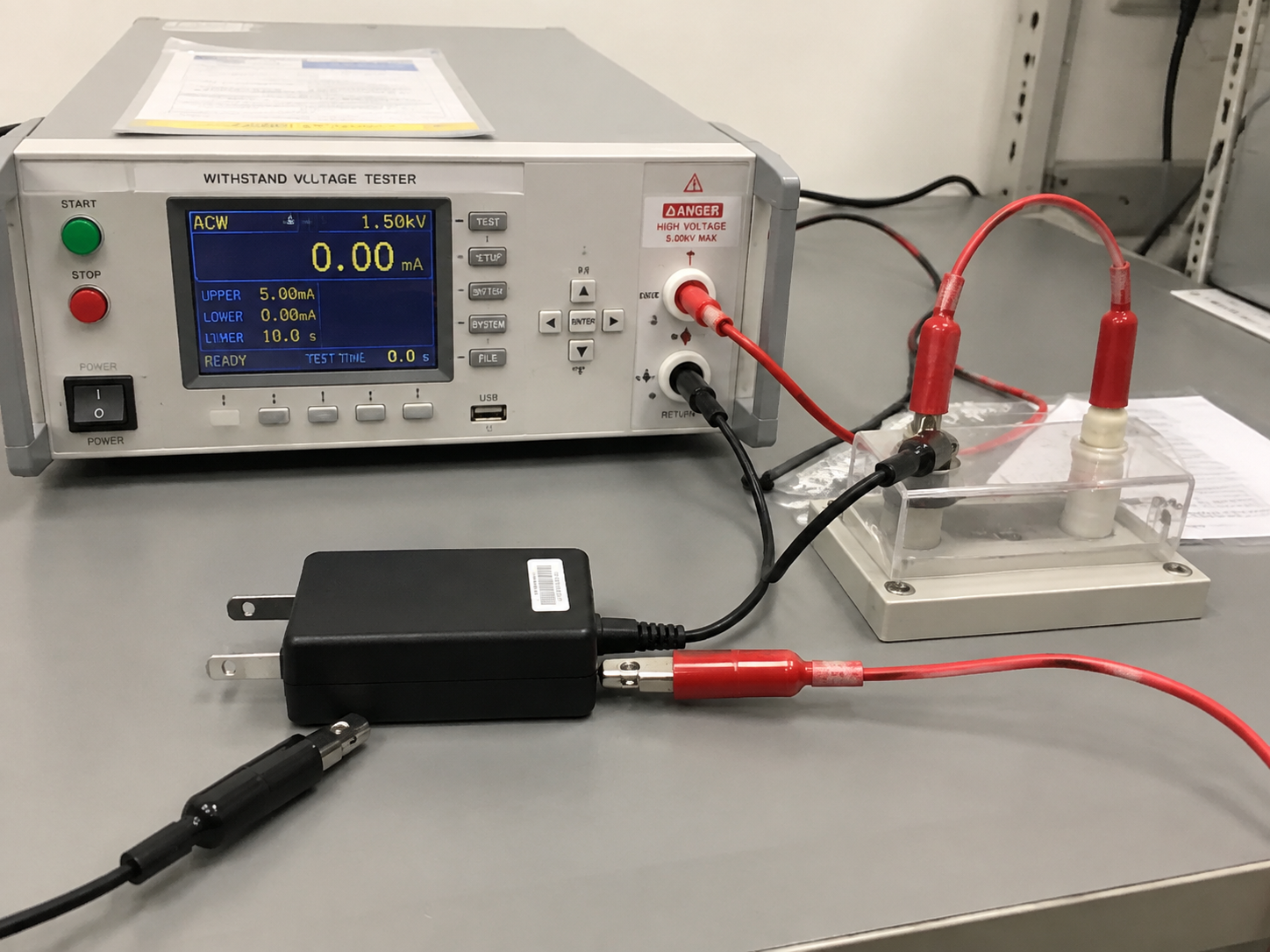
• Boundaries of overseas test reports: Overseas test reports such as CE/UL/3C can only be used as internal reference for enterprises, and cannot directly replace PSE compliance documents, which are not recognized by the Japanese government;
• Prerequisites for valid test reports: the test samples are consistent with mass-produced products, the test is based on Japan’s current safety standards, and the model on the report corresponds to the actually sold model;
• Prerequisites for valid key component certificates: the component model is consistent with the one listed in your list, the certificate is within the validity period, the certificate covers the corresponding safety requirements, and certificates of other models cannot be used as a substitute.
General Compliance Rules for Technical Documents
It’s not enough to have all the documents collected. Japanese regulators also have clear requirements for the format, storage, and management of technical documents. Many people stumble on these details — the content is complete, but it does not meet the management requirements, and is still judged as non-compliant.
Language and Format Requirements
• Language requirements: For regulatory verification, Japanese materials are the officially accepted form, which is the safest. If overseas enterprises use English technical materials, they should at least prepare Japanese translations or Japanese explanations of key content. The key content to be covered includes: test report conclusions, model correspondence, responsible party information, conformity declarations, consumer-facing label instructions, and safety warning language.
• Carrier requirements: Paper or electronic files are acceptable. Electronic files must be able to be printed at any time and retrieved quickly, and cannot only be stored on private devices or in formats that cannot be opened normally;
• Naming requirements: File names must be clear and searchable, such as “XX Model – Circuit Diagram – V1.0”, to avoid using vague names that prevent quick retrieval during random inspections.
Retention Period and Storage Requirements
• Retention period: The common requirement is to keep for at least 3 years after the product stops being sold in Japan. Some high-risk categories or regulatory and contractual requirements are longer, subject to the regulations of the corresponding category and the requirements of the competent authority;
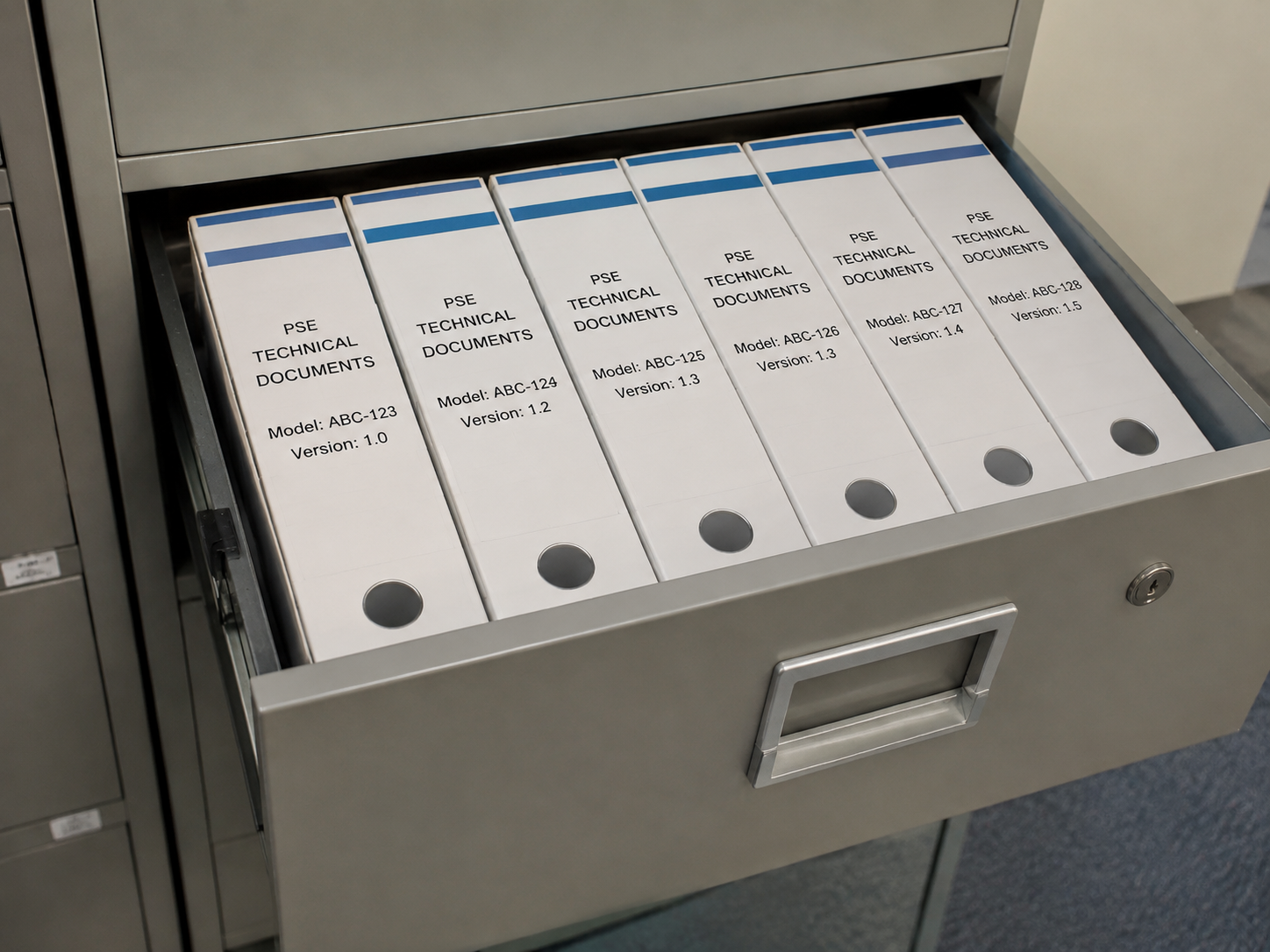
• Storage requirements: The documents must be quickly retrievable by the responsible entity within Japan. In practice, it is usually recommended that they can be provided to the regulatory department within 24 hours, and the specific time limit is subject to official requirements. This is a pitfall that many overseas sellers easily fall into: all documents are stored in the domestic company, and during random inspections, they have to go through approval, find translators, and transfer files, which cannot be provided in time, and are directly judged as non-compliant. Therefore, it is generally recommended to hand over the full set of documents to the Japanese importer or responsible entity for custody.
Version and Change Management
• All documents must have a unique number, version number, and revision record. For example, V1.0 is the initial version, and V1.1 has modified the circuit diagram. The content, time, and modifier of the modification must be clearly stated to avoid mixing old and new versions;
• As long as there are changes in the product’s design, key components, labels, or supply chain, compliance must be re-evaluated. If safety is affected, the corresponding technical documents must be updated;
• Old versions of documents must be kept well, and cannot be directly overwritten or deleted, because they need to correspond to different batches of products — for example, the batches sold last year used the old design, so there must be corresponding old version documents, otherwise it cannot be explained clearly.
Semi-proficient: Can Multiple Models in a Series Share One Set of Documents?
Many sellers have multiple models of the same series and want to share one set of technical documents to save costs. This is possible, but must meet several conditions:
• Prerequisite for sharing: The core structure, safety components, and electrical parameters of the product are completely the same, only the appearance, color, and packaging are different. For example, the same power bank has three colors: black, white, and red, with the same capacity and internal structure, so it can be shared;
• Materials to be supplemented: a series model difference description, which clearly lists the differences between each model and which parts are shared, to clarify the sharing boundary;
• Situations where sharing is not allowed: If the product’s rated voltage, power, internal structure, or safety components are different, separate documents must be prepared. For example, for hair dryers of the same series, one is 1000W and the other is 2000W, with different internal heating wires and motors, so they cannot share one set of documents.
Practical Guide: Preparation and Self-inspection from 0 to 1
After talking about all the requirements, let’s talk about how to prepare technical documents from 0 to 1 in actual operation, and how to quickly self-inspect whether your documents are basically compliant.
Four-step Sequence for Preparing Technical Documents
Don’t look for materials here and there. Follow this order for the highest efficiency and it’s not easy to miss:
1. Step 1: Confirm product classification. First, figure out whether your product is within the scope of PSE jurisdiction, whether it is diamond or circular. This is the premise of all work — if the classification is wrong, all subsequent materials are useless.
2. Step 2: Organize the product master file. First organize the general basic documents, including product identity information, structural drawings, key component lists, label instructions, etc., which is equivalent to building the framework of the file folder first.
3. Step 3: Supplement compliance certificates. According to the product classification, prepare the corresponding additional documents: for diamond PSE, in addition to connecting with a CAB accredited by the Japanese government to obtain the type test report/conformity certificate, you also need to confirm the applicability of standards, compliance certificates of key components, production consistency materials, and relevant requirements for subsequent certificate maintenance and changes; for circular PSE, you need to complete safety tests, prepare component conformity certificates and self-declarations.
4. Step 4: Establish version management. Number all documents, set versions, make a revision record template, and clarify under what circumstances documents need to be updated, to avoid forgetting to update documents after modifying the product in the future.
Three-step Quick Self-inspection Method: Judge Whether It Is Basically Compliant
If you don’t want to find a professional institution for review, you can also use these three steps to quickly check by yourself, covering 80% of common problems:
1. Step 1: Check whether 3 things are closed-loop. That is, whether the product identity is clear (model, parameters, responsible party are all clear), whether the safety basis is complete (there are test reports and design descriptions), and whether the label instructions are consistent (the parameters on the nameplate are the same as those in the document, and the instruction manual corresponds to the product).
2. Step 2: Check 4 consistencies. This is the focus of regulatory random inspections, and must be checked clearly: the drawings are consistent with the physical object, the components are consistent with the list, the test samples are consistent with mass production, and the models on all documents are consistent. As long as one is inconsistent, it is easy to have problems.
3. Step 3: Simulate 4 regulatory questions. You can pretend to be a Japanese regulator and ask four questions against the documents: What is this product? Why is it considered to meet safety requirements? Under what circumstances will this compliance conclusion change? How to trace the cause if there is a problem? If you can answer these four questions clearly against the documents, then the basic compliance is fine.
When Do You Need to Seek Assistance from a Professional Institution?
Not all situations require finding an institution. You can judge according to your own situation:
• Situations where it is recommended to find a professional institution: First time doing diamond PSE (because it must be reviewed by a CAB, the process is complex and difficult to complete independently), complex product structure (such as large electrical equipment), unsure about classification, unfamiliar with Japanese regulations and afraid of pitfalls.
• Situations where you can prepare by yourself: It has been confirmed that it belongs to the category of circular PSE, the product structure is simple (such as some low-risk USB small fans, only suitable for self-preparation when it has been confirmed that the product body, accompanying adapter/charger, and battery pack do not trigger diamond PSE or other mandatory requirements), and the basic compliance requirements have been mastered.
Common Misconceptions and Regulatory Risks
Three Most Common Document Errors
In actual random inspections, these three types of errors account for the vast majority, and must be avoided:
1. Content errors: Directly using overseas reports such as CE/UL/3C to replace PSE compliance documents (see the previous section for validity rules), only having test reports and missing other materials such as structure/labels/consistency, circular PSE only has a conformity declaration without test data support.
2. Consistency errors: Confused model naming, multiple models of the same product do not match actual sales; product revision without updating technical documents; shared documents for multiple models without clear sharing boundaries; mixed use of components from multiple suppliers is inconsistent with the list.
3. Management errors: Documents are only stored domestically and cannot be retrieved in time, key content has no Japanese explanation, version management is chaotic and old files are directly overwritten.
Core Inspection Points of Japanese Regulatory Random Inspections
When Japanese regulatory departments randomly inspect technical documents, they mainly check three aspects:
• Consistency inspection: This is the most checked, that is, to see whether the content in the document is consistent with the model, structure, and components of the actually sold product, and whether there is a mismatch between the goods and the description.
• Compliance inspection: Check whether your test reports and certification documents meet Japan’s corresponding safety standards, whether they are within the validity period and match the models.
• Completeness inspection: Check whether all required documents are available, and whether retention and storage meet the requirements.
Consequences of Non-compliant Documents
If the technical documents are non-compliant, the consequences can be minor or severe, depending on the applicable illegal clauses, product risk level, quantity involved, rectification cooperation and regulatory determination. Common disposal measures include:
• Mild to moderate: deadline for correction, customs detention of goods, suspension of sales, fines (the amount shall be judged according to applicable clauses, violation facts and regulatory determination, and serious violations may reach a relatively high amount or even the level of one million yen);
• Severe: being included in the key supervision list, mandatory product recall, prohibition of entering the Japanese market.
Final Summary
After reading this article, you should be able to clarify the core differences between PSE technical documents and test reports, certification certificates, and PSE marks, and also be able to independently judge the PSE jurisdiction attribute and classification of the product, sort out a complete document list accordingly, and check common risks through simple self-inspection. PSE technical documents are essentially a complete chain of evidence to prove product safety. As long as safety requirements are implemented from design to production, and technical documents are organized and retained in accordance with the rules, the compliance risks caused by missing documents, inconsistent models, and inability to trace during random inspections can be significantly reduced. If you encounter situations such as doubtful classification or complex diamond certification processes, you can also seek assistance from professional institutions in time.