
Most cross-border sellers or electrical appliance factories operating in the Japanese market have heard of PSE certification — many have encountered situations where goods are detained by customs or e-commerce platform listings are taken down, all due to lack of PSE compliance. Many people think PSE is “troublesome, expensive, and has confusing classifications”. In fact, as long as you sort out the logic, the process from determining whether you need to apply to finally launching compliant products is not complicated. Starting from basic definitions, this article explains in one go the pre-application preparations, full process steps, compliance judgment methods, exclusive precautions for overseas entities, timeline & fees, and key points to avoid pitfalls. Both new and experienced sellers can directly refer to it.
I. What is PSE, Who It Applies to, and Who It Does Not Apply to
1. Basic Definition and Core Role
You can think of PSE as a “safety entry ticket” set by Japan for civilian electrical products — without a required compliance certificate, you cannot legally sell the corresponding electrical products in Japan. Its legal basis is Japan’s (abbreviated as DENAN Law), and it is regulated by the Ministry of Economy, Trade and Industry (abbreviated as METI, equivalent to Japan’s competent authority in charge of industry and trade). Its core function is to prevent safety risks such as electric leakage, fire, and electric shock, and it is the bottom line of market access for civilian electrical products in Japan.
It should be specially noted that PSE is not a single “certificate”, but a set of compliance requirements divided into two categories: high-risk products follow the official certification issuance path, low-risk products can self-declare compliance, and ultimately compliance is reflected by the PSE mark on the product.
2. Common Misconceptions That Are Easy to Confuse
When many people first come into contact with PSE, they confuse it with other Japanese certifications or documents. Here we first clarify the boundaries:
• It is not radio certification (TELEC): PSE only covers electrical safety, not the compliance of wireless signals. Products with Bluetooth or Wi-Fi also need to apply for TELEC certification separately.
• It is not a quality grade certification: It only proves that the product meets the safety bottom line, does not mean better performance or longer service life, and has nothing to do with “high-quality product” selection.
• It is not a customs declaration voucher: Conventional import and export documents are still required for customs clearance. PSE is only a market access requirement, not a mandatory document for customs clearance.
• It is not an energy efficiency or food contact certification: It does not cover requirements such as energy consumption grades and material food safety, and related products need to obtain corresponding certifications separately.
3. Which Products Need to Apply, and Which Do Not
The core basis for judging whether PSE is required is the regulatory catalog officially released by METI. Commonly regulated products are plug-in, heating, and some battery-powered electrical products sold in the Japanese market and targeted at ordinary consumers. According to the level of risk, METI divides regulated products into two categories: high-risk “Specified Electrical Appliances and Materials” (Category A, corresponding to the diamond PSE mark) and low-risk “Non-specified Electrical Appliances and Materials” (Category B, corresponding to the circle PSE mark).
It should be specially emphasized here that: The final determination must be based on the entries in METI’s official catalog, and conclusions cannot be drawn solely based on voltage or product category name. For example, even for USB-powered small appliances, some belong to Category B, and some may be classified as Category A due to heating functions. Everything is subject to the catalog entries.
Common examples of products that require PSE include: mobile phone chargers, hair dryers, LED bulbs, USB small fans, power banks.
Exceptions that do not require application include: non-civilian equipment for industrial/experimental use, on-board electrical appliances exclusive to vehicles, ships and aircraft, and extremely low-voltage products (the specific threshold is subject to METI’s latest catalog, do not judge by yourself). In addition, do not only look at the whole machine; if supporting parts such as plugs and power cords are in the regulatory catalog, they also need to meet PSE requirements separately.
4. Actual Consequences of Non-compliance
Do not take chances. The implementation of PSE supervision is already very mature:
• When importing into Japan, if you encounter targeted random inspections by customs, or are required to supplement compliance certificates during subsequent platform reviews/market supervision random inspections, situations such as goods detention, delayed release, return, or inability to sell may occur — note that PSE itself is not a customs declaration voucher and cannot replace conventional import and export customs clearance documents such as invoices and packing lists.
• E-commerce platforms such as Amazon Japan and Rakuten will directly take down listings, deduct security deposits, and in serious cases, restrict store permissions.
• If non-compliance is found in METI’s market random inspections, fines will be imposed, and in serious cases, entry into the Japanese market will be prohibited.
• If a product causes an accident due to safety issues, the non-compliant responsible party needs to bear higher legal compensation risks.
II. 4 Core Confirmations Before Application (Avoid Process Rework)
Before officially starting the application, be sure to confirm the following 4 things first to avoid rework problems such as applying for the wrong type or invalidated tests.
1. Confirm Whether the Product Really Needs to Apply
The official inquiry channel is the regulatory catalog published on METI’s official website, and formal testing institutions generally also provide free verification services. The logic of preliminary exclusion is very simple: products that are non-civilian, not sold in Japan, extremely low-voltage and not in the catalog, most likely do not need to apply.
Categories that are prone to misjudgment include small home appliances with adapters, battery products, heating appliances, and lamps. If you are unsure, be sure to check the catalog or confirm with an institution, do not judge based on experience.
2. Confirm Category A (Diamond) / Category B (Circle) Classification
Classification is the core of the entire process, which directly determines the application method, cost, and timeline. The judgment logic can be followed in two steps:
Step 1: Check the METI catalog to confirm whether the product belongs to the category of “Specified Electrical Appliances and Materials”;
Step 2: If it belongs to Specified Electrical Appliances and Materials, follow the Category A (diamond PSE) path, and the certificate must be issued by a METI-registered conformity assessment body; if it belongs to Non-specified Electrical Appliances and Materials, follow the Category B (circle PSE) path, and you can self-confirm compliance.
It should be clarified here that: Voltage, power, and whether it is connected to mains power can only be used as a reference for preliminary screening, and cannot directly determine the classification of Category A/B. Here is an empirical reference for preliminary screening, which is only used to estimate the application cost and timeline in advance, and cannot be used as the final judgment basis: products connected to mains power, high-power, and frequently in contact with the human body (such as adapters, heating appliances and other common high-risk categories) are more likely to enter the verification scope of Specified Electrical Appliances and Materials; low-voltage low-power products (such as ordinary USB small fans) are usually preliminarily screened as Non-specified Electrical Appliances and Materials. The final classification must be determined based on METI catalog entries, product rated parameters, and actual structure.
There are two special rules to note: First, multi-functional or set-sold products are comprehensively judged based on the highest-risk components combined with the purpose of the whole machine. If built-in or included power adapters, charging modules, etc. belong to Specified Electrical Appliances and Materials, they may need to meet the corresponding PSE requirements respectively. Whether the whole machine is processed as Category A is still subject to catalog entries and institutional judgment; second, if the product’s power, voltage, structure are adjusted, or METI’s regulatory catalog is updated, reclassification may be triggered.
To facilitate comparison, the core differences between the two types of PSE are organized into the table below:
| Comparison Item | Category A (Diamond PSE) | Category B (Circle PSE) |
| Regulatory Scope | Specified Electrical Appliances and Materials (high risk) | Non-specified Electrical Appliances and Materials (low risk) |
| Certification Issuance Requirement | Must be issued by a METI-registered conformity assessment body | Can self-declare compliance, no official certification required |
| Marking Content | Diamond PSE mark + issuing institution code | Circle PSE mark + information of the responsible entity within Japan |
| Factory Inspection | Required (some institutions can reduce inspection workload when the ISO9001 certificate scope matches and is recognized) | Not required |
| Standard Timeline (no rectifications) | 4-12 weeks | 1-3 weeks |
| Reference Fee (ordinary small home appliances) | RMB 10,000 to tens of thousands of RMB | Several thousand to over RMB 10,000 |
3. Confirm the Responsible Entity Within Japan and Application Method
This is a mandatory requirement that overseas entities are most likely to overlook: For PSE compliance, there must be a physical responsible entity within Japan to bear safety responsibilities, and products cannot be legally launched solely in the name of overseas factories or sellers. The responsible entity must have a local registered address in Japan and a fixed contact person, who can cooperate with regulatory traceability and bear corresponding legal responsibilities.
The three common roles and their responsibility boundaries are clear:
• Importer/seller within Japan: As the legally responsible entity, responsible for reporting to METI, liaising with regulatory authorities, responding to market random inspections, retaining the full set of compliance documents, and bearing the final safety responsibility.
• Compliance third-party agent: Officially authorized by the legally responsible entity within Japan, can perform specific affairs such as reporting, regulatory liaison, and document management on their behalf.
• Overseas factory/seller: Responsible for providing true and complete product technical documents, and ensuring that mass-produced products are consistent with certified samples.
There are two main application methods, which can be selected according to your own Japanese market layout:
• Own responsible party (self-applied): Use a Japanese company controlled by yourself or a long-term cooperative compliance responsible entity. The compliance documents belong to your own side, and you do not need to re-apply if you change partners. It is suitable for sellers with long-term multi-channel layout in the Japanese market.
• Borrowing customer’s importer qualification (agent application): Use the Japanese customer’s importer qualification as the responsible entity for application. The compliance documents belong to the customer and will become invalid if you change partners. It is suitable for situations where there is only a single major customer and short-term sales.
4. Confirm the Final Mass Production Version of the Product
Be sure to wait until the final launched model, parameters, and structure are completely determined before starting the certification process.
Differences that can be applied for together: Only differences in color, appearance decoration, packaging combination that do not affect safety performance, such as black and white versions of the same fan, can be applied for together as a series without separate testing.
Differences that must be applied for separately: Changes in core components, circuits, power, functions, such as changing a 5W fan to 10W, require re-testing.
If you modify the model midway, it is very likely that the previous tests will be invalidated and the entire process will be reworked, so be sure to finalize the product in the early stage.
III. Full PSE Application Process (Clearly Disassembled by Category A/B)
The application logic of the two types of PSE has commonalities: both first complete classification and prerequisite confirmation, prepare technical documents and mass production samples, pass Japanese safety standard tests, correctly affix marks, and retain the full set of documents for inspection. Below we disassemble the practical steps of the two categories respectively.
1. Practical Process for Category B (Circle PSE)
The process for Category B is relatively simple, with the core being “self-responsibility and evidence retention”:
Step 1: Prepare the full set of technical documents and final mass production samples.
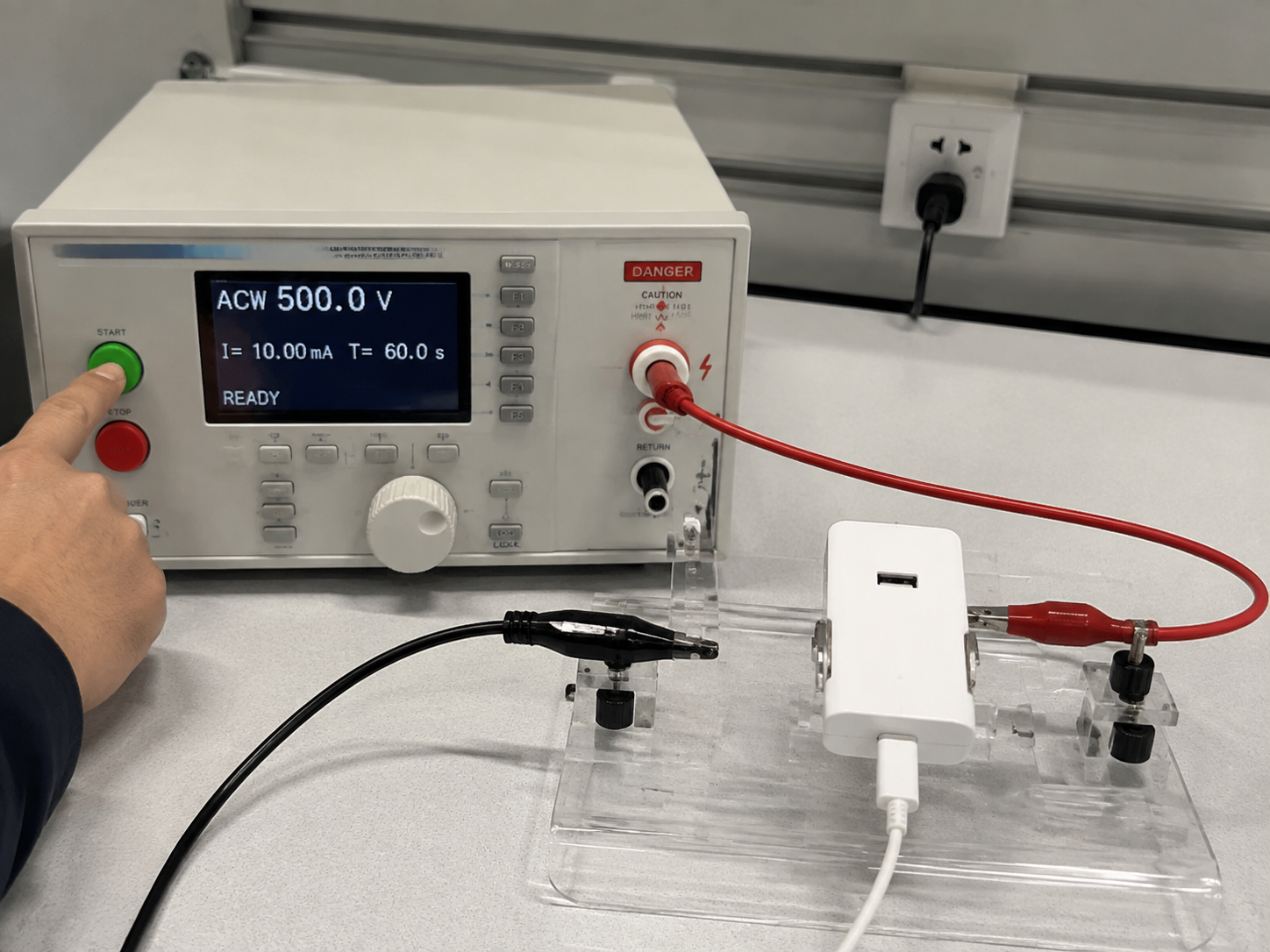
Step 2: Complete the test in accordance with Japanese safety standards — although regulations allow enterprises to self-test, most overseas sellers do not have professional testing capabilities. It is generally recommended to entrust a third-party laboratory with corresponding qualifications for testing. Be sure to retain complete and traceable test records, not just a single report.
Step 3: Issue a self-declaration of conformity, and organize the full set of technical documents for archiving.
Step 4: Affix the circle PSE mark and the identification information of the responsible entity within Japan on a prominent position of the product body.
Step 5: Launch and sell normally, and retain the full set of documents for regulatory random inspections.
2. Practical Process for Category A (Diamond PSE)
Since Category A are high-risk products, supervision is stricter, and certification must be issued by an officially recognized institution:
Step 1: Select a METI-registered conformity assessment body — this is a mandatory requirement. Reports issued by random laboratories are invalid, so be sure to verify the institution’s qualifications first.
Step 2: Prepare the full set of technical documents and final mass production samples.
Step 3: Send the samples to the institution to complete the test in accordance with Japanese safety standards.
Step 4: Accept factory quality consistency inspection, the core of which is to verify whether the factory has the ability to stably mass-produce products that meet the standards; some METI-registered institutions can appropriately reduce the inspection workload on the premise that the ISO9001 certificate covers the corresponding product scope and is recognized by the institution, but core consistency verification still needs to be completed.
Step 5: The institution reviews all documents and test results.
Step 6: After passing the review, the institution issues a conformity certificate, and the responsible entity within Japan completes the reporting to METI.
Step 7: Affix the diamond PSE mark and the code of the issuing institution on a prominent position of the product body, after which the product can be launched for sale.
3. Core Checkpoints for Each Step (Avoid Getting Stuck)
Whether it is Category A or B, you can compare these checkpoints at each step to avoid getting stuck due to small problems:
• Document check: The model, rated parameters, and entity information in all documents must be completely consistent. There should be no situation where 10W is written here and 15W is written there.
• Sample check: Must be the final mass production version, cannot be engineering prototypes or specially processed “perfect samples”, and must be completely consistent with the bulk goods.
• Institution check: For Category A, you must select a METI-registered conformity assessment body; for Category B, priority is given to third parties with Japanese safety standard testing qualifications.
• Marking check: The mark type (diamond/circle), position, and content must meet the requirements, and cannot be affixed incorrectly.
IV. Compliance Judgment Methods for Key Links (Semi-proficient: Avoid Rework and Risks)
This part is to help everyone go from “knowing the process” to “being able to judge compliance”, so as to avoid pitfalls or useless work.
1. Compliance Checklist for Document Preparation
Preparing all documents at once can save a lot of time for back-and-forth communication. The documents to be prepared are divided into four categories:
• Enterprise entity type: Business license, qualification information of the responsible entity within Japan.
• Product technology type: Circuit diagram, product specification sheet, list of key components, description of multi-model differences (if there are series models).
• Marking instruction type: Japanese nameplate draft, Japanese safety instruction manual.
• Sample type: Final mass production samples, usually 2-5 units, the specific quantity depends on the test items.
The most common reasons for rejection are: inconsistent parameters before and after, missing documents, nameplates or manuals that do not meet Japanese specifications (for example, machine translation leads to incorrect safety warning expressions), so be sure to perform a consistency check before submission.
2. Compliance Judgment Method for Testing Links
You don’t need to memorize complex Japanese standard numbers. The core test items are actually four types of safety verification: insulation withstand voltage (whether there will be electric leakage), temperature rise and heating (whether it will catch fire), leakage current (whether it will shock people), mechanical strength (whether there will be safety hazards after falling or collision).
The judgment criteria for laboratory selection are very clear: for Category A, you must select a METI-registered conformity assessment body; for Category B, priority is given to institutions with Japanese safety standard testing qualifications.
To judge whether a report is valid, look at two points: first, the covered models and scope of application are completely consistent with the products you actually sell; second, the test records are traceable, not a random paper certificate.
It is also easy to judge whether re-testing is required after rectification: if only the appearance, packaging, or supplementary documents are changed, no re-testing is required; if the circuit or core safety components are changed, re-testing is mandatory.
3. Compliance Judgment Standards for Marking and Retained Documents
Marking is the first thing regulators look at during random inspections. The general requirement is: it must be affixed to a prominent position on the product body, not only on the outer packaging, and must be clear and not easy to fall off.
• Category A marking: Diamond PSE mark + issuing institution code.
• Category B marking: Circle PSE mark + identification information of the responsible entity within Japan.
The requirements for retained documents are also very clear. All documents must be kept for at least 3 years after the product is discontinued, in preparation for regulatory random inspections:
• Documents to be retained for Category A: Conformity certificate, test report, technical documents, METI reporting record.
• Documents to be retained for Category B: Self-declaration of conformity, test records, technical documents.
In addition, the instruction manual must include Japanese, with clear safety warnings, rated parameters, and usage restrictions. Do not use machine translation directly, as it is prone to expression errors leading to non-compliance. Common marking errors include: mixing diamond and circle marks, mark size being too small, no Japanese nameplate, translation errors.
V. Exclusive Rules for Overseas Entity Applications
For overseas sellers and factories, there are several exclusive precautions for applying for PSE. Figuring them out in advance can save a lot of detours.
1. Selection of the Responsible Entity Within Japan
For overseas entities that do not have local Japanese partners, they can choose the domestic responsible entity service provided by compliant third-party institutions. When selecting, it is necessary to focus on confirming whether the service includes the four core responsibilities of METI reporting, regulatory liaison, random inspection response, and document retention, to ensure that regulatory requirements can be implemented. Special attention should be paid: launching products solely using the name of an overseas factory or seller as the domestic responsible entity is clearly illegal, and a Japanese domestic entity must bear the legal safety responsibility.
2. Review Requirements of Cross-border E-commerce Platforms
If you operate on cross-border e-commerce platforms such as Amazon Japan and Rakuten, the platform will first conduct a round of PSE compliance review. The documents to be submitted generally include: PSE compliance documents (certificate/report + conformity declaration), information of the responsible entity within Japan, and photos of the product nameplate.
Common reasons for rejection include: the report does not have valid qualifications, no information of the domestic responsible entity, and the marking does not meet the requirements. If you want to pass the review at one time, it is best to select a testing institution recognized by the platform in advance and prepare all required documents at once.
A special reminder here: Passing the platform review does not mean fully meeting regulatory requirements. The platform only conducts preliminary verification, and ultimately you still need to meet METI’s regulatory provisions. Don’t think that everything is fine once you pass the platform review.
3. Practical Precautions for Overseas Applications
• Document language: Documents submitted to the institution for review can be in English or Japanese, but the nameplates and manuals for launch must be in Japanese.
• Sample logistics: The packaging should be well protected to ensure the samples arrive intact. Confirm the laboratory’s address and customs clearance requirements in advance to avoid samples being detained or damaged.
• Fee settlement: Confirm the payment method, currency, and exchange rate in advance to avoid additional handling fees or exchange rate losses.
• Communication: Prioritize institutions with Chinese or English support to reduce communication errors and avoid rework caused by misunderstanding requirements.
VI. Timeline, Cost, and Validity Period of Compliance Documents
These are the three issues that everyone is most concerned about. All values are references for conventional situations, and the specifics will vary depending on product complexity and institution scheduling.
1. Common Scope and Influencing Factors of Application Timeline
Standard timeline (when documents and samples are complete and no rectifications are needed): Category B 1-3 weeks, Category A (without factory inspection) 4-8 weeks, Category A (with factory inspection) 6-12 weeks.
Common reasons for extended timeline include: test requiring rectification, incomplete documents, complex product structure, tight institution scheduling.
If you are in a hurry, some institutions can provide commercial expedited services, usually with an additional service fee of about 30%-50%, and the timeline may be shortened to about half of the standard; the specific extent depends on institution scheduling, sample status, test items, and whether rectification is required. It is not an official unified standard, and if the product has core safety issues, the expedited service cannot shorten the rectification time.
Also note: the review time of e-commerce platforms needs to be reserved separately, which is not included in the laboratory’s testing timeline. Do not wait until the launch time to start the application.
2. Composition of Application Cost and Optimization Methods
PSE does not have an official unified price. The cost mainly consists of four parts: testing fee (the highest proportion) + Category A conformity certificate/factory inspection fee + service fee of the responsible entity within Japan + agency fee (if you find an intermediary).
Reference price for ordinary small home appliances: Category B several thousand to over RMB 10,000, Category A RMB 10,000 to tens of thousands of RMB. For complex products or multiple models, the fee will increase according to the actual situation.
Here are three practical cost optimization methods:
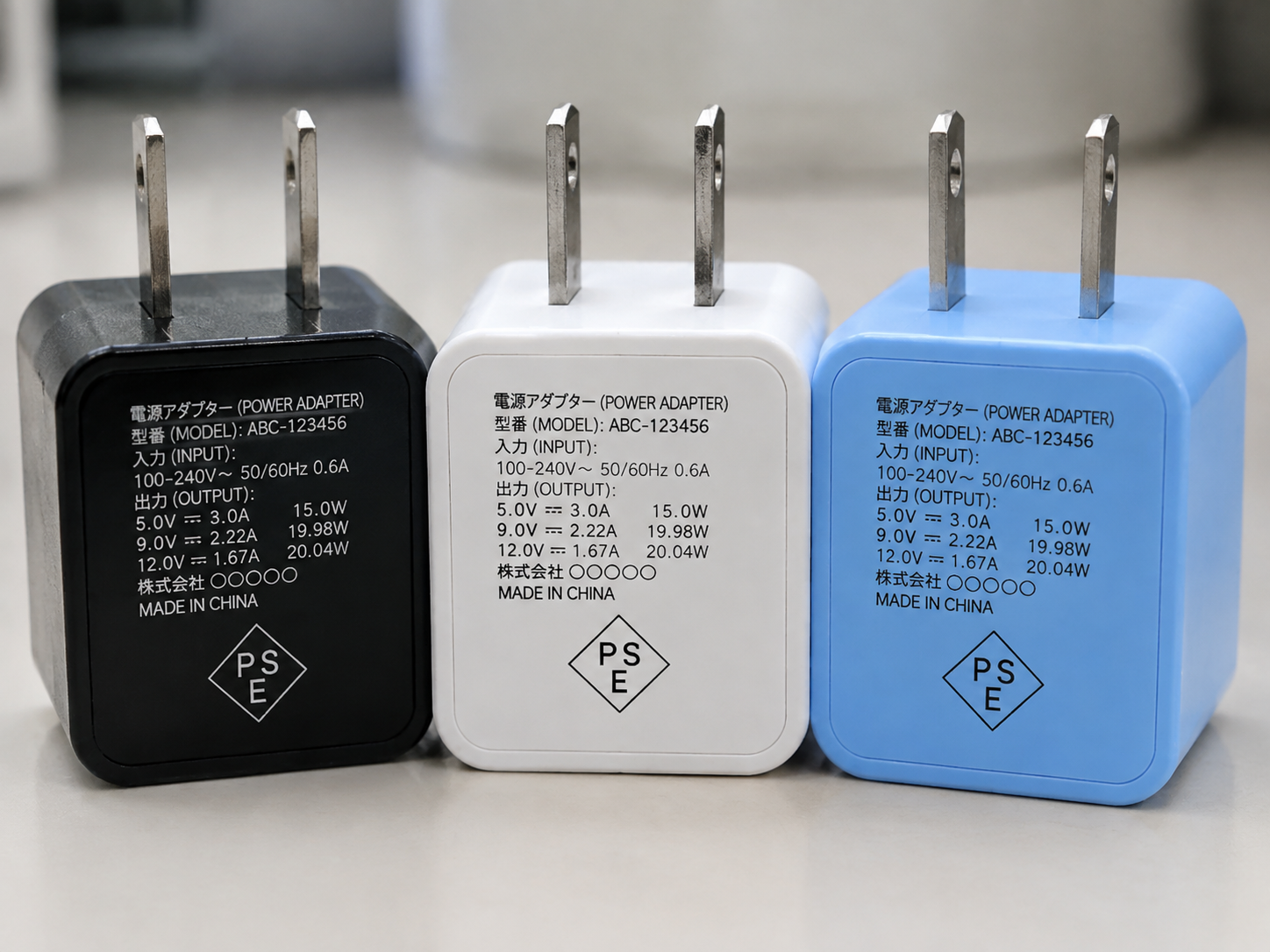
First, multi-model products with the same structure and principle can be applied for as a series to reduce repeated testing. For example, three chargers of different colors in the same series are much cheaper to apply for together than separately.
Second, select models that already have Japanese compliance certification for key components. For example, select PSE-compliant models for plugs and power cords, which may reduce supplementary testing or repeated rectification of key parts. However, it is still necessary to confirm the models, specifications, standard versions covered by the key component certificates and the scope of application of the whole machine, which is ultimately subject to laboratory evaluation. This can save part of the additional testing expenses.
Third, self-check the product’s safety issues in advance, such as whether there are exposed wires or structures that are prone to overheating, to avoid additional expenses caused by rectification; in addition, try to directly find a qualified testing institution to avoid subcontracting and price increases by middlemen.
3. Validity Period and Invalidation Conditions of Compliance Documents
Many people think that PSE documents are valid for life, but they are not:
• Category A conformity certificate: The validity period is subject to the time stated on the certificate, and the validity period varies for different product categories.
• Category B self-declaration and test report: There is no mandatory unified validity period, but they need to continuously meet the latest regulatory requirements.
Situations that trigger document invalidation include: replacement of core safety components, circuit changes, function additions, changes in rated parameters, and updates of Japanese safety standards. If it is a standard update, METI will release the latest standard and transition period requirements, and enterprises need to complete supplementary testing or document updates within the transition period, otherwise the documents will become invalid. This is also the most common misconception: many people ignore it after applying once, and only find that the documents have expired when they are found non-compliant in random inspections after the standard is updated.
VII. Common Pitfall Avoidance and Post-certification Compliance Maintenance
1. Common Pitfalls Before Application and Identification Methods
• Low-price trap with later price increases: Some institutions quote very low prices at first, and then charge rectification fees, document fees, and expedited fees after signing the contract. Be sure to confirm all fee items before signing the contract, and make it clear that there are no hidden charges.
• Reports from unqualified institutions are invalid: For Category A, be sure to check the institution’s registration qualifications on METI’s official website. For Category B, also check the laboratory’s corresponding standard qualifications. Otherwise, the report you paid for is useless at all.
• Wrong classification and wrong application type: For example, if a product is originally Category A but the institution processes it as Category B, it will ultimately fail both platform review and regulatory random inspections. If you are unsure, you can compare the judgments of 2-3 formal institutions, or check the METI catalog yourself.
2. Common Pitfalls During Application and Avoidance Methods
• Inconsistency between submitted samples and bulk goods: Some sellers specially make “perfect samples” to pass the test, but cut corners on bulk goods. Once found in market random inspections, the punishment will be more severe. Mass production samples must be submitted, and the production standards of bulk goods must be updated simultaneously after rectification.
• Confusing PSE with other certifications: Certifications such as TELEC, energy efficiency, and food contact have different regulatory scopes and cannot replace PSE; also do not equate METI reporting with PSE certification. Reporting is only a link in the Category A process, not an independent certification.
3. Post-certification Compliance Maintenance and Change Judgment Rules
Obtaining compliance documents is not a once-and-for-all matter. You also need to do a good job of daily maintenance:
First is the mass production consistency requirement: Mass-produced products must be completely consistent with the certified samples, and key safety components cannot be replaced at will. For example, if you originally used Brand A power cords, you cannot casually replace them with Brand B.
Second is the re-test judgment after changes:
• Situations requiring re-testing/document update: Replacement of core safety components, circuit adjustment, change of function or rated parameters, update of safety standards.
• Situations not requiring re-testing: Appearance color change, packaging adjustment, non-safety-related component changes, such as changing the glossy shell of a fan to a matte one, which does not affect safety, do not require re-testing.
You can usually pay more attention to METI’s official notices. If there is a standard update, you must complete the compliance update within the transition period. The full set of compliance documents must be retained as required, and do not lose them casually.
Summary: 3 Types of Quick Judgments You Can Make After Reading
Overall, although PSE certification is a mandatory access requirement for the Japanese market, as long as you make good judgments in advance and follow the correct process, it will not become an obstacle to entering the Japanese market. You can remember the three core quick judgment methods, and go through them yourself when encountering related problems:
First, quickly judge whether to apply and which type to apply for: First confirm whether the product is a civilian electrical product for Japanese consumers. If yes, check it against METI’s official catalog, and judge Category A or B according to the catalog entries. Do not guess based on experience.
Second, quickly judge whether the application prerequisites are in place: As long as the responsible entity within Japan has been determined, the final mass production version of the product has been locked, and the basic technical documents can be prepared, the process can be started to avoid midway rework.
Third, quickly judge whether it is compliant: Check whether the compliance documents have corresponding qualifications, whether the covered models are the actually sold models, whether the marking type and position on the product are correct, and whether the full set of documents is retained as required for at least 3 years after discontinuation.
Sellers entering the Japanese market for the first time should first complete catalog verification, responsible entity confirmation, and document consistency self-check before starting the testing or platform submission process.