
If you run an e-commerce or import/export business for the US market, or have purchased home appliances, power strips, or lighting fixtures in the US, you have most likely seen the small mark printed with “UL”. Some people regard it as an “entry ticket” to the US market, while others think it is just a sticker that can be pasted casually — even many merchants who have already obtained UL certification have had their goods detained or listings removed due to incorrect mark application.
The UL mark cannot be used just by printing a random pattern. There are clear rules covering authorization qualifications, mark types, and application positions. We will start with the most easily confused basic concepts, then gradually break down usage rules, pitfall avoidance methods, and self-inspection techniques. Whether you are a manufacturer, seller, purchaser, or ordinary consumer, you can understand and use this information.
First of all, UL itself is a third-party safety certification body in the United States. It is neither a government department nor a regulatory agency. The UL mark is essentially a “compliance ID card” it issues to products that have passed safety assessments, not a mandatory license issued by the US government — it is just that many US federal and local safety regulations, as well as the access rules of e-commerce platforms and offline supermarkets, generally recognize UL’s safety assessment results, which gives people the impression that “you must have UL to enter the US market”.
Many people cannot distinguish the relationship between UL test reports, UL certification, and UL marks. The three are actually completely different concepts with clear boundaries:
- UL test report: Only proves the test results of a single submitted sample, with no follow-up factory tracking inspections, and does not mean that mass-produced products meet the requirements. Obtaining a test report does not allow the use of the UL mark, nor is it equivalent to obtaining UL certification.
- UL certification: It is a complete process including product testing, factory audit, and continuous tracking inspections. Only after passing this process and obtaining valid official UL authorization can you have the premise to legally use the UL mark. The core of judging whether there is real UL certification is to check whether there is a unique File Number assigned by UL official, and whether the corresponding authorization is within the validity period.
- UL mark: It is a visual proof of UL certification authorization, not a “certificate of merit” that can be used for life after passing a test. It can only be used on the premise that the certification remains valid and the product fully meets the filing requirements.
Strictly abiding by the UL mark usage rules is not a formality: for merchants, this is a supporting access requirement for the US market, which will be inspected by customs, offline supermarkets, and e-commerce platforms, and violations may bring actual losses; for ordinary consumers and purchasers, understanding the rules can help you avoid unsafe products with fake compliance.
Here we first clarify 3 of the most common beginner misconceptions, which many people get wrong when they first come into contact with UL:
First misconception: Having a UL mark = good product quality and absolute safety. In fact, UL certification means that the product has passed the assessment according to applicable safety standards and is subject to UL’s continuous tracking inspections, which can effectively reduce safety risks such as electric leakage and fire, but it does not promise that safety accidents will never happen. UL certification does not involve the durability or performance of the product at all — for example, a hair dryer with UL Listing does not mean it has strong wind power and can be used for ten years, it only means its safety design meets the requirements of the corresponding standard.
Second misconception: With UL certification, you can paste the mark casually. In fact, certification only gives you the qualification to use the mark. There are strict rules on how to paste it, where to paste it, and which products it can be pasted on. Using it beyond the model range, pasting the wrong type, or privately modifying the mark style are all violations, and in serious cases, the certification will be revoked.
Third misconception: UL is a mandatory certification by the US government. In fact, UL is a private third-party institution, and the certification itself is not a mandatory government requirement, but is widely recognized by regulators and the market. Some product categories may have other compliance paths, and not all products must have UL certification to enter the US market.
Common UL Mark Types and Their Applicable Scopes
There is not only one type of UL mark. Different types correspond to different product attributes and usage scenarios. You must first understand the classification to avoid using the wrong one.
3 Core Common Marks (Covering 90% of Usage Scenarios)
There are three main types of UL marks that people contact most in daily life, which basically cover the vast majority of usage scenarios:
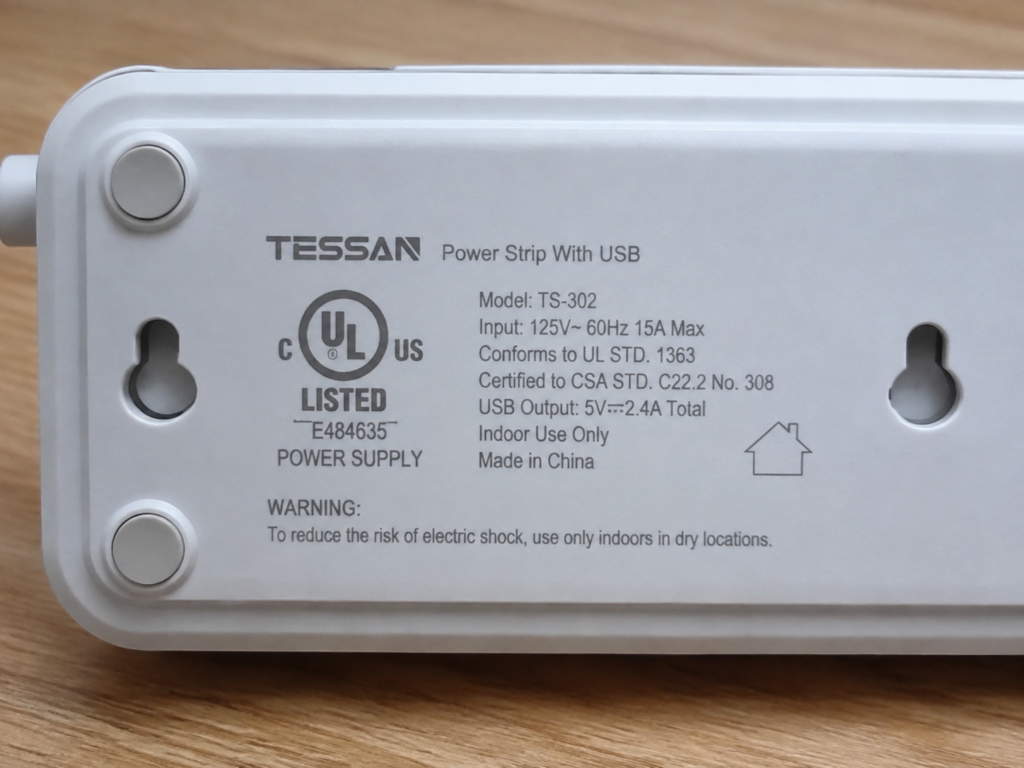
- UL Listed: Applicable to end products sold directly to ordinary consumers, such as home appliances, lighting fixtures, power cords, power strips, etc. Products that have obtained Listing certification mean that the whole product meets the corresponding safety standards and can be directly sold to end users in the market.
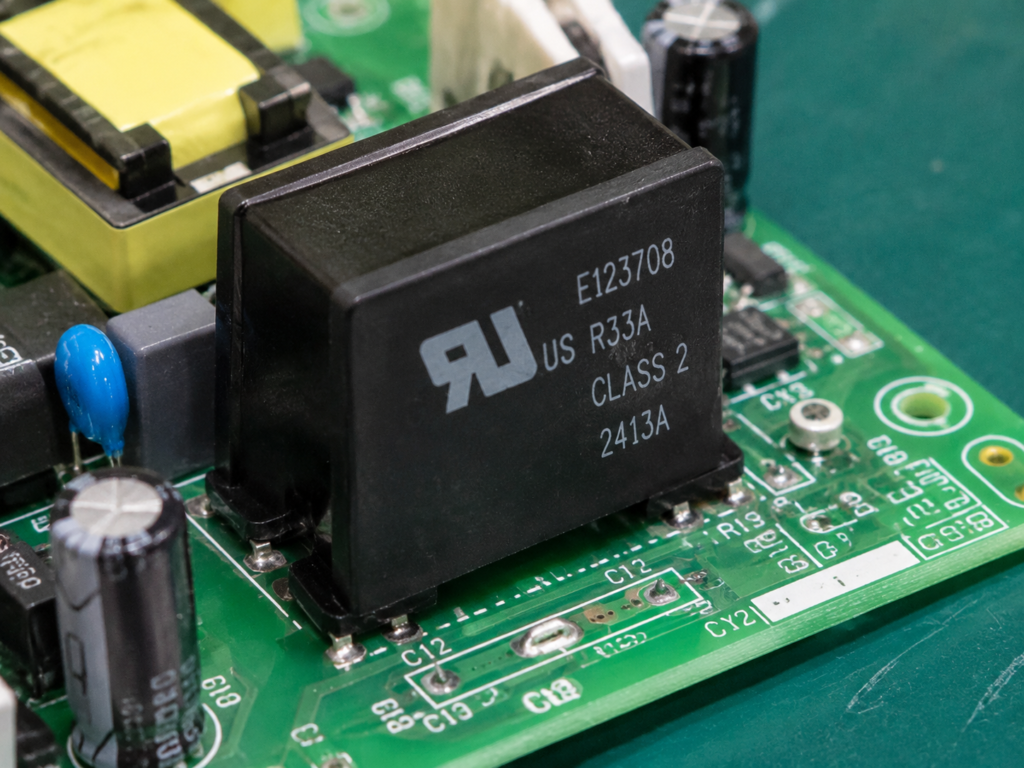
- UL Recognized: Only applicable to internal components of products, such as capacitors, power modules, PCB boards, etc. This type of mark can only be pasted on the component itself, cannot be pasted on the outer surface of the end product, and cannot be used to prove the safety compliance of the whole machine.
- UL Classified: Only proves that certain specific performances of the product meet the standards, such as fire rating, waterproof rating, explosion-proof rating, etc., and does not mean that all safety certifications have been passed. When using this type of mark, the restriction conditions and applicable scope must be clearly marked at the same time to avoid misleading consumers into thinking it is a full-item safety certification.
Easily Confused Special Marks and Regional Variants
In addition to the three core marks, there are several easily confused special marks and regional versions that require special attention:
- Performance Verification Mark (UL Verified): Only verifies whether a certain performance claim of the product is true, such as the claimed battery life, air purification filtration efficiency, battery capacity, etc. It does not fall into the category of safety certification, and must never be used as a safety compliance mark.
- Traceability QR Code Mark: Many UL marks come with an official exclusive QR code. Scanning it with a mobile phone will directly redirect to UL’s certification file page. You can quickly check the validity of the certification, covered product models, production sites and other information without manually entering the file number, which is a very convenient authenticity verification channel.
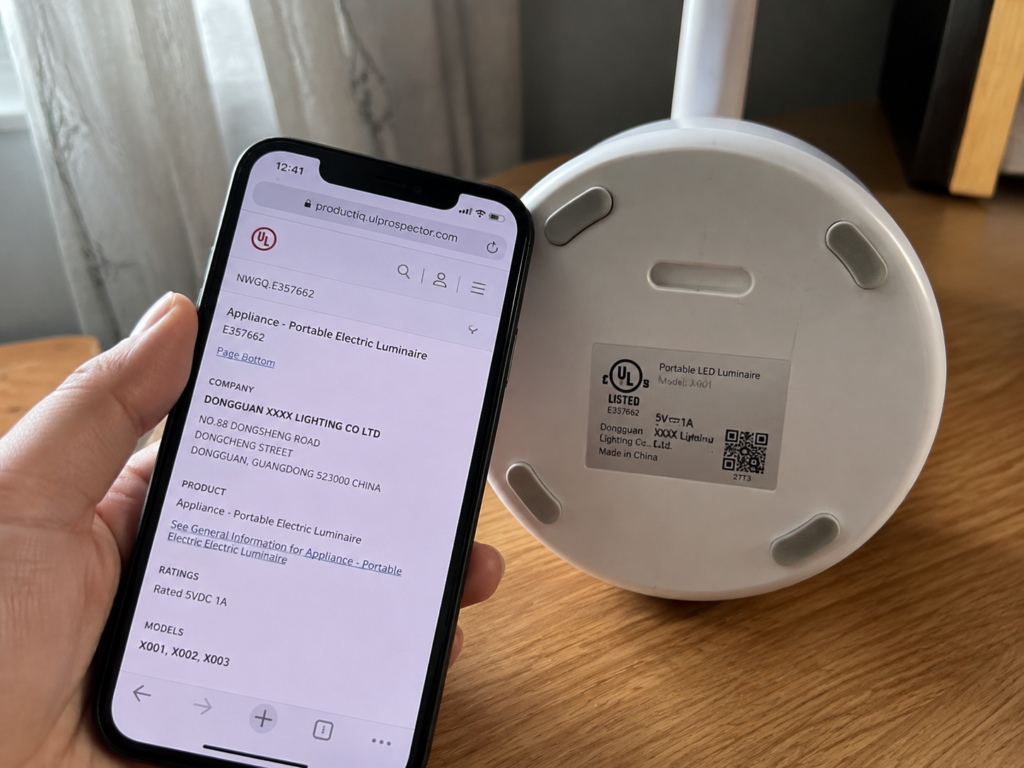
- Regional Variant Marks: For different markets in North America, UL marks have different regional versions: UL-US is only applicable to the US market, cUL is only applicable to the Canadian market, and cULus is valid for both the US and Canada. Merchants engaged in cross-border business should choose the corresponding mark version according to the target market, and cannot mix them.
10-Second Quick Method to Distinguish Mark Types
Want to quickly tell which type the UL mark in your hand belongs to? In fact, you can judge it in 10 seconds:
The first step is to look at the core keyword on the mark — whether it is Listed, Recognized, Classified or Verified. The keyword directly corresponds to the mark type, which is the most accurate basis for judgment.
The second step can be assisted by combining product attributes: end products sold to ordinary consumers correspond to Listed, internal components installed in products correspond to Recognized, and products only marked with a specific performance correspond to Classified.
The most common pitfall for beginners is using the Recognized mark for components as the Listed mark for the whole machine, so special attention should be paid to this.
4 Prerequisites for Legally Using the UL Mark
You cannot use the UL mark casually just because you have a certification certificate. You must meet the following four conditions at the same time to be considered legal:
First, you must hold valid official UL authorization. Your product must be filed in UL’s Product iQ database, have a unique file number, and the authorization must be within the validity period, not suspended or revoked. You must never print the mark first and then make up the authorization. Even if the certification is already in the application process, as long as it has not been approved, you cannot use the UL mark.
Second, the product must be completely consistent with the certification file. Everything from product model, key components, materials to the address of the production factory must fully match the filed content. If you later change the design, replace materials, or move the factory, you must first confirm with UL that the changed product is still within the scope of authorization. Otherwise, even if the product itself has no problems, pasting the mark is still a violation.
Third, you must cooperate with UL’s continuous tracking inspections. UL will conduct regular or irregular spot checks at production factories to ensure that mass-produced products are consistent with test samples. If you do not cooperate with the spot checks, the authorization will be directly suspended, and you cannot continue to use the UL mark during the suspension period.
Fourth, you must not exceed the applicable subject and scenario boundaries. The UL mark on the product body must be applied by the manufacturer or component supplier that is covered by the UL certification file and has obtained formal authorization. When importers, distributors, and e-commerce sellers display UL marks or related statements on product packaging, manuals, e-commerce detail pages, and promotional materials, they must also ensure that the corresponding products are indeed within the scope of valid authorization, and the displayed mark type and scope are completely consistent with the certification file. They must not privately re-paste or alter the mark, nor expand the scope of certification promotion.
Scenarios where the mark can be used include the product body, packaging, manuals, promotional materials, and e-commerce detail pages; if the product is not certified, the certification has expired/revoked, or it is beyond the certification scope, no entity may use the UL mark.
How to Paste It Specifically? There Are Requirements for Style, Position, and Supporting Information
After meeting the prerequisites, you must also pay attention to specific usage details. Many merchants are judged to be in violation just because they did not do well in details:
Style Requirements for the Mark Itself
You must use the original pattern provided by UL official. You cannot casually change the proportion or shape, stretch or flatten it, nor add shadows, lace, or decorative patterns. There is no mandatory requirement for color, as long as it has sufficient contrast with the background and can be clearly identified — for example, a white mark can be used on a black product, and a black mark on a white product is fine.
In addition, the UL mark cannot be merged with other marks or patterns into a new logo, nor can it be impersonated with similar-looking patterns.
Size and Durability Requirements
There is no unified number for the minimum size of the mark. The principle is that ordinary people can clearly see the “UL” characters and the keywords below (such as Listed). For details, you can refer to UL’s official guide.
The material must be durable and not easy to fall off. If the product is used in outdoor, humid, or high-temperature environments, corresponding weather-resistant materials must be used. It cannot have faded characters or peeling after two months of sun exposure. The mark must not be blocked by screws, creases, or structural parts, and there must be no blurring or broken lines.
Placement Requirements for Different Scenarios
- Product body: It should be pasted in a position that users can see without disassembly, such as the nameplate area on the bottom or back of the product. It cannot be pasted in a place that requires opening the shell to see.
- Packaging/manuals: The corresponding UL mark can be printed, but usually it should be consistent with the mark type and information on the product body nameplate; unless specifically permitted by UL’s specific mark guide or product structure conditions, it is not allowed to have the mark only on the packaging but not on the product body.
- E-commerce/promotional pages: The UL mark can be displayed, but it must never imply that UL recommends or guarantees this product — UL only conducts certification and does not endorse any product for sales.
Supporting Information That Must Be Marked Simultaneously
Just pasting a mark is not enough; there must be corresponding supporting information: first is the product model, which must be consistent with the model in the certification file; as for the UL file number, the marking requirements for different mark types are different, and it does not have to be directly printed on the front of the mark. It can be cross-checked through the product nameplate, packaging, or instruction documents. If it is a Classified mark, the restriction conditions and applicable scope must be clearly marked at the same time, such as “Only UL Classified fire rating V-0”, to avoid people thinking it is a full-item safety certification.
It is absolutely forbidden to add false and misleading content such as “UL highest level”, “UL exemption from inspection”, “UL recommended” next to the mark.
Typesetting Rules for Coexistence of Multiple Marks
The UL mark can be placed together with other certification marks such as CE, ETL, CSA, etc., but note: you cannot imply that UL is more authoritative than other certifications through typesetting (such as making the UL mark particularly large and placing it in the middle); nor can you place it too close to other marks, making it difficult for people to tell which is which. More importantly, the product models and certification scopes corresponding to all marks must be consistent, and you cannot misattribute them — for example, if model A has UL certification and model B has CE certification, you cannot put both marks on the detail page of the same product.
Practical Key Points for Different Identities: What You Should Pay Attention To
The key points to pay attention to when different people contact the UL mark are completely different. You can directly find the part that applies to you:
Finished Product Manufacturers (Production End)
You can only paste the corresponding type of UL mark on models that have been certified. You cannot paste the mark beyond the model or scope — for example, if model A has UL Listing and model B does not, you cannot paste the same mark on B.
You must keep good records of mark application for each batch of products, which is convenient for verification when UL conducts spot checks at the factory. If you want to change the style of the mark, the paste position, or add extra content next to the mark, you must first apply to UL for approval, and you cannot decide on your own.
Component Suppliers (Supply Chain End)
You can only use the UL Recognized mark, not the Listed mark — because what you produce are internal parts, not finished products sold directly to consumers.
You should proactively provide UL certification documents for components to downstream customers, which is convenient for customers to use when doing whole-machine certification. The mark must be pasted on the component itself, not only on the outer packaging. Otherwise, after the part is installed in the whole machine, there is no way to prove that it has UL Recognition.
Importers/Distributors/Cross-border Sellers (Circulation End)
You cannot privately replace or alter the UL mark on the product, nor can you sell certified and uncertified products together.
The UL mark on e-commerce detail pages and promotional materials must be completely consistent with the certification type of the actual product, and you cannot exaggerate the promotion — the most common mistake is “the product uses UL Recognized components, so it is said that the entire product has UL certification”, which is a typical misrepresentation.
Before importing or purchasing goods, you must first check whether the certification is valid in the UL Product iQ database to avoid customs detention of goods or platform removal of listings.
Ordinary Consumers/Purchasers (User End)
Don’t feel reassured just because the product has a UL mark. You can find the UL file number through the product mark, nameplate, packaging, or manual, and check the authenticity in UL’s Product iQ database. By the way, you can also verify whether the product model and production factory are consistent with the records in the database.
If what you bought is an end product, but it only has the Recognized mark on it, it is most likely a violation — because Recognized is for internal parts, and finished products cannot use this mark.
Common Violation Types and Self-inspection Methods
The 5 Most Common Violation Situations
There are many UL violation situations, and the most common ones are the following five categories:
- Unauthorized use: Pasting the mark while the certification is still in application, fraudulently using others’ UL authorization, or forging the UL mark by yourself are all the most serious violations.
- Wrong type use: Using the Recognized mark for components to replace the Listed mark for the whole machine, or using the Verified mark for performance verification as a safety certification.
- Out-of-scope use: Pasting the mark across models, pasting the mark after changing the production factory without filing, or pasting the mark beyond the certified product scope.
- Non-standard mark: The mark is deformed, blurry, out of proportion, blocked, or has false and misleading content added next to it.
- Use after expiration: Continuing to paste the mark and sell products after the certification is suspended, revoked, or expired.
Possible Consequences of Violations
The consequences of violations vary in severity, which should be determined according to UL’s certification agreement, platform rules, and local regulations. Common consequences include:
- UL level: According to the certification agreement signed by both parties, UL may issue a rectification notice, suspend or even revoke the certification, charge a penalty as agreed in the contract, and in serious cases, notify the relevant regulatory authorities.
- Market level: If you violate customs regulations, platform rules, or supermarket access requirements, situations such as US customs detention of goods, e-commerce platform removal of listings or even store closure, and product recall requests may occur.
- Legal level: If it is determined to be false advertising or label fraud, you may face legal liabilities such as consumer claims in accordance with relevant local regulations.
3-Step Quick Self-inspection of Compliance (Usable by Anyone)
Whether you are a merchant or a consumer, you can use these three steps to quickly judge whether the UL mark is compliant:
First step, check authorization validity: Find the UL file number, query it in the UL Product iQ database, and confirm that the certification is within the validity period, and the corresponding product, model, and factory are all within the scope.
Second step, check mark type: Confirm that the mark type matches the product attribute — finished products correspond to Listed, internal parts correspond to Recognized, specific performance corresponds to Classified, with no mixed use.
Third step, check the mark itself: Confirm that the style, position, and supporting information of the mark meet the requirements, and there is no exaggerated or false content.
Uncertain Gray Areas? Judge According to This Logic
In actual operation, some ambiguous situations are often encountered. You can judge according to the following logic:
- If UL Recognized components are used, can we say the product has UL certification? No. You can only truthfully say “the product uses UL Recognized components”, and cannot imply that the whole machine has UL certification.
- For uncertified products, is printing “meets UL standards” a violation? You cannot use any UL-related marks. For text statements, you must have a corresponding third-party test report, and you cannot mislead consumers into thinking that the product has obtained UL certification.
- Can customized products be pasted with the UL mark of general models? You must first confirm that the customized model is within the scope of the original certification, otherwise you cannot paste it. If you are not sure, confirm with UL.
- Can OEM factories directly use the brand’s UL mark? First, you must confirm that the OEM factory is in the production site list of the UL certification file, and second, you must have formal authorization from the brand. Only when both conditions are met can it be used, otherwise it is a violation.
How to Handle Special Situations
In daily operation, some unexpected situations are inevitable. You can’t go wrong by handling them according to the following rules:
Mark Handling When Certification Status Changes
- If the certification is suspended: Immediately stop production and mark application. Whether the already produced inventory products can continue to be sold shall be subject to UL’s written notice and the agreement in the authorization document, and cannot be decided on your own.
- If the certification is revoked: Immediately stop the use of all UL marks. The disposal of inventory products must be strictly implemented in accordance with the requirements of UL’s written notice, and you cannot continue to sell without authorization, otherwise it is a serious violation.
- If the certification is renewed: Adjust the mark according to the new certification requirements, and cannot continue to use the old version of the mark that does not meet the requirements.
Handling of Damaged/Fallen Marks
- If the mark is found to be damaged or printed incorrectly during the production process: You can replace it with a new compliant mark, as long as you keep good batch records.
- If the mark is damaged or falls off during the circulation or use process: You cannot privately re-paste it. It must be returned to the original factory, or handled after confirmation by UL.
Approval Rules for Mark Adjustment
Not all adjustments require applying to UL. There are two situations:
- Adjustments that can be made on your own: Scaling the size proportionally based on UL’s official original pattern (the aspect ratio must not be changed), and changing colors that do not affect contrast. After adjustment, it must still meet the minimum size, clarity, and contrast requirements of the corresponding mark type. If the “UL” characters or core keywords cannot be clearly identified after shrinking, it cannot be used.
- Adjustments that must apply to UL for approval: Changing the shape of the mark, changing the paste position, adding extra information next to the mark, and changing the mark material for special environments. All these must be applied to UL in advance, and you can only make changes after approval.
Final Summary: Quick Method to Judge Compliance
Remember the 16-character core mnemonic, and you can quickly judge whether the use of the UL mark is compliant: valid certification, matching type, standard style, and true information. These four sentences exactly correspond to the previous self-inspection logic:
- “Valid certification” is the foundation: first confirm that the product is within UL’s valid authorization scope, not in application, suspended, or revoked status;
- “Matching type” is the core: use Listed mark for finished products, Recognized mark for parts, Classified mark for specific performance, and no mixed use;
- “Standard style” is the detail: use the official original pattern for the mark, which is clear and durable, and the position meets the requirements;
- “True information” is the bottom line: no exaggeration, no misrepresentation, and supporting information is consistent with the certification file.
People with different identities only need to grasp their own core precautions:
- Production and supply chain end: do not paste marks beyond the scope, do not privately modify the mark, and report changes to UL first;
- Sales and circulation end: do not exaggerate promotion, do not mix mark types, and check authorization validity before purchasing goods;
- Ordinary consumers and purchasers: check the file number, look at the mark type, and don’t be fooled by fake marks.
If you encounter uncertain situations, the safest way is to first check the information in UL’s official Product iQ database. If you really can’t figure it out, directly consult UL’s official contact person. Don’t judge based on experience, to avoid unnecessary pitfalls.