
Entrepreneurs and sellers doing business in the North American market have most likely heard of UL certification: customers ask you to provide a UL certificate, Amazon requires uploading UL test reports, and offline retail stores require UL marks for entry… But when many people first encounter it, they neither understand what UL is exactly, nor know whether their product needs it, and are even more afraid of spending money on the wrong type. Today, we start from the most basic concepts, and fully explain the entire logic of UL certification from needs assessment, application preparation, processing flow to certification maintenance. After reading this, you will be able to independently handle most common problems and avoid the traps that beginners easily fall into.
First, Understand the Basics: What Exactly is UL Certification
Many people think UL is a mandatory certification issued by the U.S. government, but that is completely not the case. UL is an independent third-party safety organization with a century-long history, whose full name is Underwriters Laboratories. The UL certification it launches focuses on verifying whether products have safety risks such as electric shock, fire, and mechanical injury under normal use or even foreseeable misuse scenarios. To put it plainly, UL is a third-party endorsement that “checks safety” for consumers and regulators. It is neither a certificate issued directly by the government nor a “pass” that can be bought with money — you must pass strict tests plus subsequent production supervision to obtain certification, and it is not permanently valid.
Let’s first clarify one most commonly misunderstood point: UL is not a mandatory certification at the U.S. federal level, but it is a de facto entry threshold for the North American market. That is to say, federal law does not uniformly require all products to have UL certification, but in actual sales, many links will enforce this requirement.
UL’s Compliance Position in the U.S. Market
The parties that require you to provide UL certification are usually the following types: First, local safety regulatory personnel with jurisdiction (abbreviated as AHJ, such as fire inspectors, building acceptance inspectors). When accepting buildings and inspecting the market, they have the power to determine whether products meet safety requirements, and usually refer to safety certification marks issued by NRTL institutions such as UL as the basis for judgment. Whether a certification from a certain institution is ultimately accepted depends on the local electrical/building codes adopted, product installation scenarios, and the specific requirements of the inspectors; Second, large retailers and e-commerce platforms; Third, insurance companies. For high-risk, live, building installation or engineering products, insurance companies may require UL or other NRTL certification materials; lack of certification may affect underwriting conditions, premiums, or claim judgments, subject to the insurance company’s terms; Fourth, enterprise purchasers, especially engineering procurement, often write UL requirements into contracts.
From the official system perspective, UL belongs to the national-level third-party testing laboratory system (abbreviated as NRTL) recognized by the U.S. Occupational Safety and Health Administration (OSHA). There are currently more than 20 accredited institutions in this system. UL is the most well-known one, but not the only safety certification option — NRTL certifications issued by institutions such as ETL and CSA within their respective OSHA-recognized standard scopes also have official validity. However, whether the certification is ultimately accepted depends on local AHJ requirements, procurement contract agreements, and platform rules; due to UL’s higher market recognition, most buyers will directly request UL certification by name.
As for whether your product needs UL certification, there is no unified “mandatory” rule; it depends entirely on the product category, sales channel, installation scenario, and local specific regulations.
Three Core UL Certification Types: Applying for the Wrong One Wastes Money
When many people apply for the first time, they are confused by various UL marks. In fact, there are only three core types, with completely different applicable scenarios. Do not apply for the wrong one:
| Certification Type | Applicable Objects | Usage Scenarios | Common Products |
|---|---|---|---|
| UL Listing | Finished products/complete machines | End products sold directly to ordinary consumers, the most common type | Desk lamps, power banks, electric kettles |
| UL Recognition | Components/materials | Only supplied to finished product manufacturers for matching, not sold directly to ordinary consumers | Power adapters, fuses, flame-retardant housing plastics |
| UL Classification | Products/materials with specific performance | Only verifies one or several specific safety performances, only applicable to designated scenarios | Fire-resistant panels, specific grades of insulating materials |
In addition to the certification type, pay attention to regional marks: if you only sell to the Canadian market, choose the cUL mark (compliant with Canadian safety standards); if the target market covers both the U.S. and Canada, you can choose the cULus mark when applying — only when the project is evaluated simultaneously according to the corresponding safety standards of the U.S. and Canada, and the test report and certificate cover the requirements of both countries, can the cULus mark be used, achieving one certification covering two markets without the need to apply twice separately. If you only apply for U.S. domestic UL certification, it will not automatically cover the Canadian market, and you cannot directly use the cUL mark.
Differences from Other U.S. Compliance Requirements
Many people confuse UL with certifications such as FCC and DOE, but they cover completely different matters and cannot replace each other:
- Difference from FCC: UL only covers product safety (fire prevention, electric shock prevention, mechanical injury prevention), while FCC covers electromagnetic compatibility and wireless compliance, such as whether your product will interfere with WiFi or leak radio signals.
- Difference from DOE/CEC: UL tests safety, while DOE (U.S. Department of Energy) and CEC (California Energy Commission) test energy efficiency, that is, whether the product consumes a lot of electricity.
For example, a smart plug-in desk lamp needs to pass UL certification (to ensure no electric shock or fire), FCC certification (to ensure no interference with other home appliances), and meet DOE energy efficiency requirements. The three are completely independent requirements, and missing any one may make normal sales impossible.
Assess Before Applying: Does Your Product Really Need UL Certification?
You don’t have to jump into applying for UL right away. First assess the need from three dimensions, which can save you a lot of unnecessary money.
Assess Demand Strength by Product Risk Level
The more electrified the product and the higher the risk, the greater the probability that UL certification is required:
- High demand: Plug-in products connected to mains electricity, charging products, lighting equipment, heating equipment, and products with a built-in battery capacity ≥10Wh (for example, most ordinary power banks exceed 10Wh). Such products have higher safety risks and are usually more likely to be required by channels to provide UL certification. The 10Wh here is a high-frequency reference threshold in platform risk control and common safety standards, not a unified mandatory regulatory threshold.
- Medium demand: Low-voltage electronic devices, smart home products powered by adapters (such as smart speakers using 5V adapters, which do not directly connect to mains electricity and have relatively lower risks).
- Requires specific assessment: Purely mechanical products, passive low-risk accessories (such as non-electrified plastic storage boxes, ordinary hardware parts). Such products have very low safety risks themselves and generally do not need special UL certification, unless there are special requirements from channels or scenarios.
Risk level is only for initial screening reference. Whether UL certification is ultimately required still needs to be confirmed in combination with sales channels, installation scenarios, local AHJ requirements, and buyer contracts.
Assess Certification Pressure by Sales Channel
Different channels have very different requirements for UL:
- Large offline retailers (such as Home Depot, Lowe’s) and engineering procurement basically clearly require NRTL certification (UL is a type of NRTL). Without it, you don’t even have the qualification to enter the store.
- E-commerce platforms such as Amazon require UL certification or corresponding UL standard test reports for specified categories (such as lithium battery products, plug-in small home appliances), otherwise they will delist the listings.
- Many B2B enterprise procurements directly write UL requirements into contracts, and you cannot get orders without certification.
Assess Compliance Risk by Usage Scenario
Even for the same product, requirements vary when used in different scenarios:
- Fixed installation products (such as wall switches, recessed ceiling lights) are more likely to be subject to regulatory spot checks than portable products (such as power banks), because they involve building acceptance and AHJ will directly inspect them.
- Products used in outdoor, humid environments, or hazardous locations (such as gas stations, chemical plants) have stricter safety requirements and basically require corresponding UL certification.
- Children’s products, medical-related products, and fire safety-related products usually need to叠加 other special safety or industry regulatory requirements — for example, medical products may involve FDA and IEC 60601 systems, children’s products may involve CPSC and ASTM standards, and fire scenario products may involve NFPA standards and AHJ special acceptance — whether UL certification is required should be confirmed according to specific product attributes, applicable standards, and channel requirements.
If you are still unsure, you can make a quick judgment based on the following 5 questions. As long as 2 or more answers are “yes”, it is recommended to prepare for UL certification in advance:
- Is the product connected to mains electricity, or has a built-in battery capacity ≥10Wh?
- Does the target sales channel or buyer clearly require UL, cULus, or NRTL marks?
- Is the product used in building installation or engineering acceptance scenarios?
- Do similar competing products generally bear the UL Listing mark?
- If you are still unsure, you can find a UL-authorized institution for free pre-assessment, and get a preliminary conclusion without spending money.
5 Preparations Before Formal Application: Doing Them Right Saves Half the Time
When many people apply for UL certification, they always feel the process is slow and costly. In fact, most of the time and money are wasted on insufficient preparation. Before formally submitting the application, doing these 5 things well can save you a lot of detours.
Find the Applicable UL Standard: No Need to Memorize Standard Numbers
UL certification is tested according to corresponding product standards. Different products correspond to different standards, and even products of the same category may have different applicable standards due to different power supply methods and functions — for example, ordinary plug-in desk lamps and rechargeable desk lamps with lithium batteries have completely different applicable UL standards. If the wrong standard is selected, the test will definitely fail, which not only requires retesting but also costs more money and delays time.
You don’t have to memorize all kinds of standard numbers. The query method is very simple: either search directly in the product catalog on UL’s official website, or consult a UL-authorized laboratory or agent for free. They deal with these every day and can tell you the corresponding standard at a glance.
Prepare a Full Set of Application Materials: Don’t Wait for Supplementary Documents to Delay Progress
The materials required for UL application are not very complicated, but they should be prepared as completely as possible. Otherwise, back-and-forth supplementary documents will waste a lot of time. The materials are mainly divided into four categories:
- Basic materials: Product model and series difference description, rated parameters (such as voltage, power, battery capacity), appearance and structure photos, English user manual, nameplate draft.
- Technical materials: For electrified products, circuit schematic diagrams and a list of key components (also known as BOM, which lists all safety-related parts in the product) need to be provided.
- Component qualifications: If key safety components (such as power supplies, fuses, housing plastics) already have UL certification themselves, provide the corresponding UL file numbers, which can save the testing cost and time for these parts.
- Entity information: The names and addresses of the applicant, manufacturer, and production factory. The role relationship between the three should be clarified — for example, if you are the brand owner and the factory is the contract manufacturer, you should write it clearly, as subsequent factory inspections will be conducted at the production factory.
Choose a Reliable Application Channel: Avoid the Trap of Fake Certificates
There are two main channels for applying for UL certification, each with its own advantages and disadvantages. You can choose according to your own needs:
- Apply directly to UL official: It has the highest authority and no risk of fakes, but the cost is relatively high and the scheduling time is relatively long. It is suitable for sellers with particularly high requirements for certification authority and sufficient budget. You can directly contact the local UL branch for consultation.
- UL-authorized laboratories/agents: Lower cost, faster scheduling, and more flexible services, suitable for most ordinary sellers. But you must first verify the other party’s authorization qualification on UL’s official website to avoid unscrupulous intermediaries.
Here is a key reminder: anyone who promises “guaranteed pass”, “no testing required”, or “get certified in 3 days” is all fake. UL projects usually need to go through testing, document review, and accept initial or subsequent factory inspections according to the certification type; the initial factory inspection requirements for some component recognition projects are subject to UL project assessment, and there is no shortcut to skip core links. Buying fake certificates for petty gains will lead to greater losses if you are finally found delisted by the platform or punished by regulators.
Prepare Compliant Samples: Don’t Make “Test-Exclusive Versions”
Samples are the core of testing. Preparing the wrong samples will directly lead to test failure:
- The main test model should be the model with the highest configuration and the greatest risk. For example, for a series of desk lamps, some with USB charging and some without, choose the one with USB as the main test model. After passing, low-risk models with the same structure can be covered without separate testing.
- The number of samples is generally 2-10 units, depending on the product type and test items. For example, heating products may need more units for combustion tests.
- The most important point: samples must be completely consistent with the version you plan to mass-produce. You cannot specially replace parts or adjust structures to make so-called “exclusive test samples” just to pass the test. Subsequent factory inspections will check whether the mass-produced products are consistent with the samples. Once found inconsistent, the certification will be directly revoked.
- It is recommended to prepare 1-2 more backup samples in advance. In case the samples are damaged during the test, you don’t need to re-produce and send samples, which can save a lot of time.
Estimate Cost and Cycle in Advance, Do a Good Job in Project Planning
What most people care about most is “how much does UL certification cost and how long does it take”. In fact, there is no unified public quotation, and the difference is very large. It has to be judged from the cost composition and influencing factors:
- Cost composition: Divided into three parts. First, one-time fees, including application fee, testing fee, document review fee, and initial factory inspection fee; second, recurring fees, including annual maintenance fee, regular spot check fee, and UL label fee; third, additional fees, such as rectification and retesting fee for failed tests, change reporting fee for product revisions, and scope expansion fee.
- Reference range: The conventional processing cycle for common projects is 4-12 weeks, and projects with complex products or requiring multiple rectifications may be extended to 3-6 months; the industry experience range in RMB is from several thousand to over a hundred thousand yuan. Low-risk small components may only cost several thousand yuan, while complex large home appliances or industrial equipment may reach over a hundred thousand yuan. The actual quotation is subject to the formal plan issued by UL official or authorized institutions, and is specifically affected by factors such as applicable standards, number of samples, number of covered factories, type of label service, and number of rectifications.
In addition, UL officially does have expedited services, but they only give priority scheduling and do not skip testing and factory inspection links. The progress of all projects can be queried in real time in UL’s official system, so there is no need to urge the agent every day.
Core Application Process: 5 Steps to Get Certified
The core process of UL certification is actually very clear, with a total of 5 steps. Each step has clear checkpoints and result judgments, just follow along.
Step 1: Submit Application and Project Assessment
The operation is very simple: fill out the application form and submit the full set of prepared materials.
The checkpoint of this step is: confirm that the product is within UL’s acceptance scope, the certification type and applicable standard are consistent with your expectations, and there are no missing materials.
If the assessment passes, UL will issue an official quotation, testing plan, and project cycle. After you confirm the payment, the project will officially start; if it does not pass, you will be notified to supplement materials or adjust the applied certification type. For example, if you originally applied for Listing but actually should apply for Recognition, you will be asked to change it.
Step 2: Sample Testing (The Core Link)
Send the samples to the designated laboratory as required, and after confirming that the other party has signed for them in good condition, testing will begin.
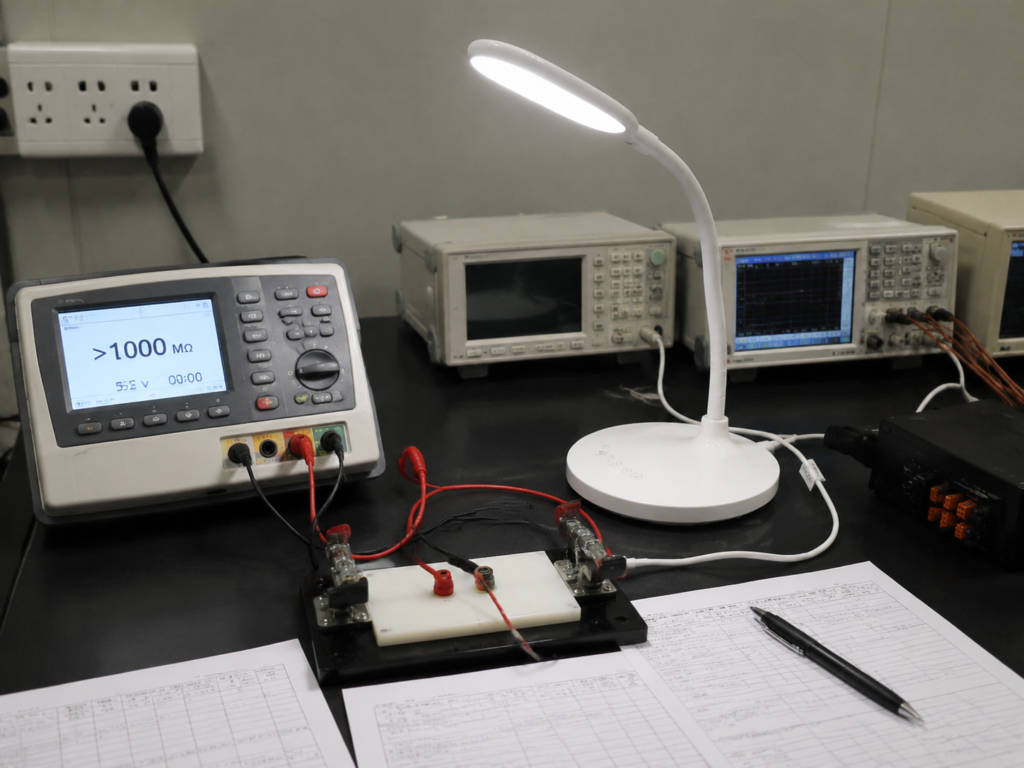
The core directions of the test are all around safety, such as electric shock prevention (whether insulation is sufficient), fire prevention (whether materials will burn and cannot be extinguished), temperature rise (whether it will be too hot during normal use), mechanical strength (whether it will break and expose live parts when dropped), abnormal operation safety (such as whether it will catch fire if the air inlet is blocked). The specific items are determined according to the corresponding product standards.
If you have questions about the project during the test, you should communicate with the engineer in time, don’t wait until the test is completed to find that the plan is wrong.
If the test passes, you will enter the next link; if it fails, the engineer will give detailed rectification suggestions. After you finish the rectification, you will re-send samples for testing. Retesting requires additional fees and will also extend the project cycle.
Step 3: Document and Label Review
Document and label review is usually carried out in parallel with the testing phase, or in the late stage of testing or after testing is completed. The specific rhythm depends on the project arrangement. The review content includes English user manuals, warning statements, nameplate parameters, wiring markings, installation instructions, etc.
The checkpoint of this step is: the parameters on the nameplate must be completely consistent with the test samples, the warning statements must cover all foreseeable risks (such as “Do not use in humid bathrooms” “Keep out of reach of children”), and the model range covered by the certification must be written clearly and accurately.
After passing the review, you will enter the factory inspection link; if you fail, you need to modify the documents and resubmit. If it is only minor text adjustments or label format modifications, it usually only affects the project progress and will not incur additional fees; but if the modification involves model range adjustment, rated parameter change, safety warning supplement, or structural description change, it may trigger supplementary review, test adjustment, or even additional charges.
Step 4: Initial Factory Inspection
It should be noted first: initial factory inspection is mandatory for UL Listing and Classification certification, and some component UL Recognition can be exempted, depending on the type you apply for.
Many people think that factory inspection is to check whether the factory is clean or large-scale, but that is completely not the case. The core of factory inspection is to confirm that your production process and quality control can ensure that the mass-produced products are consistent with the test samples, and will not be “one way for samples, another way for mass production”.
The key points of inspection are: procurement records of key components (whether they are consistent with the reported suppliers and models), incoming material inspection records, factory inspection logs, and UL mark use management (whether they are randomly affixed).
When preparing for factory inspection, you need to focus on ensuring that: the models and suppliers of key safety components are completely consistent with the reported list, incoming material inspection and factory inspection records are complete and traceable, the testing equipment used in production is within the calibration validity period, and there are clear control records for the receipt, use, and scrapping of UL marks.
If the factory inspection passes, you will enter the certification issuance link; if it fails, minor problems (such as incomplete records) only need to be rectified within the time limit and evidence submitted, while serious problems require re-scheduling on-site re-inspection, which will incur additional fees.
Step 5: Obtain Certification and UL Mark Use Authorization
After all links are passed, you will receive electronic or paper certificates, a UL file number, and detailed mark use specifications.
Don’t rush to affix the mark after getting the certificate. Be sure to check first: whether the product model, applicant and factory information, and certification type on the certificate are correct. Don’t wait until you find a mistake and have problems when using it. The authenticity of the certificate can be queried directly on UL’s official website by entering the file number or certificate number, and you can know if it is real at a glance.
After confirming that the information is correct, you can affix the corresponding UL mark on the products covered by the certification and enter the market that requires UL certification for sale.
How to Solve Common Stuck Points: What to Do If Testing/Factory Inspection Fails, or Product Is Revised
In the process of applying for UL certification, it is normal to encounter stuck points. Most problems have mature solutions.
Common Causes of Test Failure and Rectification Ideas
90% of test failures are due to these four categories: insufficient insulation distance (the distance between live parts and the housing or accessible parts is too small, which is easy to cause electric shock), excessive temperature rise (the temperature is too high during normal use, which is easy to cause fire), insufficient housing flame retardant rating (it cannot extinguish itself after burning), and unsafe abnormal operation (such as temperature runaway after fan stall).
When rectifying, follow the priority order to save time and money: first, consider replacing key components that already have UL certification, such as replacing a compliant power supply or plastic with a higher flame retardant rating. This is the fastest and does not require structural changes; second, adjust the structural spacing, such as moving the live parts a little inward to increase the insulation distance; finally, consider modifying the overall design, which is the most costly and time-consuming, and should be avoided if possible.
Also note: if it is a series of products, you should simultaneously evaluate all covered models during rectification. Don’t only modify the main test model, resulting in other models not meeting the requirements and the coverage becoming invalid. If you are afraid of failing the test, you can find a laboratory to do pre-testing before formally sending samples, which can find and modify problems in advance and greatly reduce the probability of retesting.
Common Causes of Factory Inspection Failure and Countermeasures
Most factory inspection failures are due to three reasons: key components have their suppliers or models changed privately without reporting to UL; there are no complete factory inspection records, which cannot prove that each product has undergone safety testing; the production process is different from the originally reported one, for example, one inspection process is missing.
The countermeasures are also simple: minor problems only need to be rectified within the time limit and rectification evidence submitted, no re-inspection is required; serious problems require re-scheduling on-site re-inspection and paying a re-inspection fee.
Do You Need to Re-apply for Certification for Product Revisions? Just Look at This One Criterion
If a product sells well, it is inevitable to revise and upgrade it. Many people don’t know whether they need to re-apply for UL after revision. In fact, there is only one core judgment criterion: whether the revision will affect the safety performance of the product.
If the changes only involve replacing the housing color, adjusting packaging copy, replacing non-electrical decorative parts and other changes that do not involve safety performance, no retesting is required, just report to UL for record; if the circuit, core structure, key safety materials, or rated parameters are changed (for example, changing the battery capacity from 2000mAh to 10000mAh, changing the input voltage from 120V to 240V), then supplementary testing or even a full set of retesting is required.
Never think that “it’s just a small part change” and modify it privately, continuing to use the UL mark. Once spotted in a spot check, the certification will be directly suspended or even revoked, and you may also face fines. The loss outweighs the gain.
Getting Certified Is Not the End: Do These 4 Things to Avoid Certification Invalidation
Many people think that getting a UL certificate is a once-and-for-all thing, but that’s not the case. UL certification is continuously valid on the premise that you comply with the rules, otherwise it may become invalid at any time.
Cooperate with Regular Factory Spot Checks
UL conducts 1-4 spot checks on factories every year, and the frequency is determined according to the risk level of the product — for example, plug-in heating products have high risks and may be inspected 4 times a year, while low-risk components may be inspected 1 time a year. Spot checks are unannounced and directly conducted at the factory. The content is the same as the initial factory inspection, which is to confirm that your mass-produced products always meet the requirements.
If you do not cooperate with spot checks, or the rectification is unqualified, the certification will be suspended or even revoked, and then the product can no longer bear the UL mark.
All Safety-Related Changes Must Be Reported for Record
All of the following situations must apply to UL for change reporting in advance: replacing the production factory, replacing the supplier of key safety components, increasing or decreasing the product models covered by the certification, modifying the rated parameters of the product.
The reporting process is very simple: submit a change application, and after UL assessment, they will tell you whether supplementary testing is needed. If there is no problem, the certification information can be updated. Don’t think “it’s just a small change, no need to bother”. Even if you replace a fuse of the same specification but a different brand, you must report it, otherwise it will be considered a violation if found.
UL Marks Cannot Be Misused: Clarify the Boundaries
The UL mark can only be used on products of the models, specifications, and production factories clearly stated on the certificate. You cannot randomly expand the scope — for example, if you only have UL certification for desk lamps, you cannot affix the UL mark to floor lamps. The style and position of the mark must also comply with UL specifications, and you cannot privately print anti-counterfeiting labels.
There is also a very common trap: you cannot promote UL Recognition of components as UL Listing of the complete machine. For example, if the desk lamp you sell uses a UL-recognized power supply, and you say your desk lamp is UL certified, this is a violation and will be punished. The consequences of violations vary depending on the situation: UL official may suspend or revoke the mark use authorization; e-commerce platforms and purchasers may take measures such as delisting, rejecting products, or pursuing contractual breach liability; unauthorized use of the UL trademark may also constitute trademark infringement or be handled by market regulatory authorities in accordance with regulations. Never touch this.
Do a Good Job in Daily Management of Certification Status
It is recommended to check your certification status on UL’s official website every once in a while, to avoid the certification being suspended or revoked due to missing spot checks or forgetting to report changes, which you only find out when customers or platforms check, affecting sales. All change reporting records and factory inspection rectification records should be kept properly, which can be taken out as proof in case of spot checks.
9 Most Common Traps for Beginners
Finally, we have sorted out 9 most common misunderstandings for beginners. Avoiding these can basically cover the most common judgment points when applying for UL certification for the first time.
3 Misconceptions Before Application
- Thinking UL is a U.S. federal mandatory requirement: UL is not a unified mandatory certification at the U.S. federal level. Whether it needs to be handled should be judged in combination with product category, sales channel, installation scenario, and local AHJ requirements. Confirm the clear requirements of the target channel before applying to avoid blind investment.
- Thinking that using UL components automatically gives the complete machine UL certification: Complete machine safety is a system-level assessment. Even if all components have UL Recognition, there may still be safety risks after assembly. The complete machine must apply for separate testing and assessment. Do not use component certification to replace complete machine certification.
- Applying blindly without confirming channel requirements: Different channels have different requirements for certification type (Listing/Recognition/Classification) and coverage area. For example, if the platform requires UL Listing, applying for UL Recognition will completely fail to meet the requirements. Verify the specific rules with the buyer or platform before applying.
3 Misconceptions During Application
- Thinking that passing the test will definitely get the certificate: UL certification requires multiple links such as testing, document review, and factory inspection. Failure in any link may result in failure to obtain certification. Don’t only focus on the test progress; document and factory inspection preparations should also be promoted simultaneously.
- Thinking that samples can be “specially optimized”: Samples must be completely consistent with the planned mass production version. If the mass-produced product is inconsistent with the sample, factory inspection or subsequent spot checks will trigger certification suspension/revocation. Do not make “exclusive test samples” specifically for passing the test.
- Writing series models casually with unclear difference descriptions: UL only covers series models with the same structure and risk level as the main test model. Models with excessive differences cannot be covered. When applying, clearly explain the differences between each model to avoid insufficient coverage scope.
3 Misconceptions After Getting Certified
- Thinking that one certification is permanently valid: UL certification requires cooperation with regular factory spot checks and reporting changes as required to maintain validity. Don’t ignore it after getting the certificate; pay attention to the certification status regularly.
- Thinking that the UL mark can be randomly printed on packaging and advertisements: The UL mark can only be used on products of the models, specifications, and factories stated on the certificate, and the use style and position must comply with specifications. Do not use the mark beyond the authorized scope to avoid misleading consumers.
- Thinking that small revisions do not need to be reported: As long as the change involves safety performance (even replacing a key safety component of the same specification but a different brand), you must apply to UL for assessment in advance. Do not take a fluke mentality and continue to use the mark after private revision.
After reading this article, you should already be able to independently complete these things: judge whether your product needs UL certification and which type to apply for; prepare application materials according to the process and select reliable application channels; reasonably estimate the cycle and cost range of certification; deal with common problems of failed testing and factory inspection; judge whether product revisions require re-application or reporting; correctly maintain UL certification to avoid invalidation due to violations.