
If you’ve ever bought a power strip at a U.S. supermarket, picked out a hair dryer on Amazon, or run a cross-border business serving North America, you’ve definitely seen the circled UL mark on products. Some say it’s a mandatory certificate required by the U.S. government, and products can’t be sold without it; others say it’s just a sticker you can buy with money and is useless—actually, both of these statements are only half right.
1. Core Definition and Basic Boundaries of UL Certification
To understand UL certification, you first need to know what UL is. It is not a U.S. government agency, but a third-party safety science organization with over a hundred years of history. It started in 1894 from the fire risk control business of the U.S. insurance industry—back when electrical appliances were just becoming popular and fires were frequent, insurance companies established a specialized agency to test the safety of electrical appliances in order to reduce claim risks, which was the predecessor of UL. Today, UL’s certification services are provided by UL Solutions, and its official status is a third-party safety certification body recognized by the U.S. Occupational Safety and Health Administration (OSHA, the federal department in charge of workplace safety in the U.S.), with the official name of Nationally Recognized Testing Laboratory (NRTL for short). Simply put, it is a formal institution authorized by the government and qualified to conduct safety certification. In North America, UL is one of the most recognized third-party institutions in the field of safety.
Its Essence is Third-Party Endorsement of Safety Risks
UL certification is not a production or sales license issued by the government, but a “safety qualification certificate” issued by a third party, proving that the product meets the safety standards developed by UL. Its testing scope is only related to safety: for example, whether it will leak electricity, catch fire, overheat and scald people, whether there is a risk of mechanical injury, whether the material is flame-retardant, and other safety issues under normal use or foreseeable abnormal use (such as accidental splashing of water).
As for whether the product is easy to use, durable, well-made, energy-efficient, or good-looking, UL does not care about these non-safety attributes at all. Take the most common example: a hair dryer with UL certification can only guarantee that it will not leak electricity or catch fire when you use it normally, but it does not mean that it has strong wind, dries hair quickly, or will last for three to five years without breaking.
Coverage Scope and Basic Boundaries
UL certification covers a wide range of categories. Common electronic and electrical products, home appliances, lighting, power supplies, electrical products, fire-fighting equipment, building materials, electric toys, etc., basically have corresponding UL safety standards. But not all products can be certified—if there is no corresponding UL safety standard for a certain type of product, you cannot apply for it.
Many people’s biggest misunderstanding of UL is that they think it is a mandatory certification required by the U.S. federal government. In fact, U.S. federal law has never stipulated that “all products must have UL certification before they can be sold.” In terms of nature, UL is a voluntary certification. Then why does everyone think it is mandatory? Because many channels, local regulations, and industry rules take UL (or other NRTL certifications) as access conditions, which is equivalent to “de facto mandatory”, that is, often called “quasi-mandatory”.
Here we must particularly distinguish a certification that is easy to confuse: FCC certification (certification of the U.S. Federal Communications Commission). For electronic, digital or wireless products falling under FCC jurisdiction, FCC authorization/compliance is a mandatory requirement at the federal level, which governs electromagnetic compatibility and wireless compliance. It is completely different from the safety that UL governs, and the two cannot replace each other.
2. Legal and Regulatory Position and Market Value of UL
Since it is a voluntary certification, why do almost all merchants doing business in the North American market apply for UL? This is because although it is not uniformly mandatory at the federal level, it is embedded in many key rules and is one of the most recognized options in the market among NRTL certifications.
Core Position in the U.S. Regulatory System
First, at the federal workplace level. OSHA clearly requires that electrical equipment used in the workplace must be NRTL-certified, and UL is one of the mainstream NRTLs recognized by OSHA. That is to say, if products are sold to U.S. enterprises for office or production scenarios, the other party will usually require NRTL certification, and UL is the most commonly accepted option, but not the only one.
Second, at the industry specification level. The U.S. has an industry-wide electrical installation code called the National Electrical Code (NEC for short), which extensively references the requirements for “Listed” products as the compliance basis for electrical equipment installation—simply put, switches, sockets, and lighting installed in residences and office buildings must be NRTL-listed products, otherwise they do not meet the installation specifications, and electricians usually will not rashly install them.
Third, at the local acceptance level. Building and fire inspectors (AHJ for short, official personnel with acceptance jurisdiction) in each state and city in the U.S. have the right to require installed products to have NRTL certification, otherwise they will not pass the building or fire acceptance inspection. For example, if you open a restaurant and the range hood and sockets installed do not have NRTL certification, the fire inspection may directly fail, and you cannot open for business.
Practical Effects on Different Entities
It is precisely because it is embedded in these rules that UL certification, as one of the most recognized NRTL certifications, has different practical values for different people.
For ordinary consumers, when buying high-risk products that are electrified or generate heat, the UL mark is the most intuitive safety reference, which can greatly reduce safety hazards in daily use.
For merchants and manufacturers, it is a common access condition for mainstream e-commerce platforms and offline retailers such as Amazon, Walmart, and Home Depot. It can be used as one of the evidences of enterprise compliance management and due diligence, reducing the review threshold for channel access and insurance underwriting, but it cannot exempt corresponding legal liabilities such as product defects, false labeling, and failure to perform recall obligations.
For construction and industrial scenarios, it is a common compliance option to meet local acceptance, workplace safety requirements, and obtain insurance underwriting.
Judgment Logic of “Voluntary” and “Quasi-Mandatory”
When do you need UL certification and when don’t you? The core is to distinguish between “purely voluntary” and “quasi-mandatory” scenarios, and also note that most scenarios require NRTL certification, and UL is just the most common option among them. Purely voluntary situations are very rare. Only ordinary low-risk consumer products that have no channel requirements, nor local, industry, or insurance requirements, can do without NRTL-type safety certification. In the vast majority of cases, as long as you formally sell high-risk products in the North American market, it basically falls under “quasi-mandatory”—it’s not that the law forces you to do it, but that if you don’t do it, you can’t enter channels, pass acceptance inspections, and no one dares to buy.
Here is a special reminder: you cannot simply use “sold in the U.S.” to judge whether you need UL or other NRTL certifications. You must make a comprehensive judgment based on factors such as product type, usage scenario, sales channel, and local regulations. For example, if you sell an ordinary fabric throw pillow without any electronic components and no fire protection requirements, you definitely don’t need to do it; but if you sell a throw pillow with heating function that wants to enter Amazon’s U.S. site, then it is very likely to need safety certification.
3. Common UL Certification Types and Applicable Scenarios
When many merchants promote “having UL certification”, there are actually a lot of tricks hidden—UL certification is divided into several types, and different types have completely different applicable scenarios. If you can’t tell them apart, you can easily be fooled.
Three Core Certification Types
The first type, which is also the most familiar to everyone, is UL Listing, which is certification for finished complete machines. What is a finished complete machine? It is a complete product that can be directly sold to end users and used independently right out of the box, such as mobile phone chargers, refrigerators, smoke alarms, power strips, hair dryers, etc. Listing certification is a full-item safety test. After passing, the product will be marked with “UL LISTED” and a unique UL file number. When we usually say “the product has UL certification”, most of the time we refer to Listing certification, which is also the most commonly used type for C-end retail and finished product export to North America.
The second type is called UL Recognition, which is certification for components and raw materials. These components cannot be sold separately as finished products, and must be installed inside finished products for use. For example, power cords, circuit boards, fire-resistant plastics, power modules, switches, all belong to components. The mark of Recognition certification is “UL RECOGNIZED”, also often called the RU mark. This mark is generally only shown to complete machine manufacturers and will not appear on finished product packaging for consumers—its function is to prove that this component meets safety requirements, and when complete machine manufacturers use this component, they can save a lot of trouble when doing finished product Listing certification.
The third type is called UL Classification, which is certification for specific safety risks. That is to say, it only tests one or a certain type of safety performance, not full-item safety testing. For example, the fire resistance rating of building materials, the explosion-proof rating of industrial equipment, the fire resistance time of fire doors, all fall within the scope of Classification certification. The mark of Classification certification is “UL CLASSIFIED”, which will clearly indicate what type of risk is assessed and what restrictive conditions there are, such as “only meets Class A fire protection requirements”. It is mainly used to meet the single-item safety requirements of specific industries or localities.
Regional Coverage Markings
In addition to these three core types, UL marks often have region-related annotations. For example, those marked with “cUL” indicate that the product has been certified according to Canadian safety standards and does not directly cover the applicable requirements of the U.S. market; if the U.S. scenario requires NRTL safety certification, you need to confirm that the mark or certificate includes U.S. applicable scope markings such as US, UL Listed, or cULus. Those marked with “cULus” or “UL/cUL” indicate that they meet the safety standards of both the U.S. and Canada, and can be used in the entire North American market.
You can quickly match the suitable certification type against the table below:
| UL Certification Type | Applicable Object | Typical Products | Mark Keyword | Core Applicable Scenarios |
|---|---|---|---|---|
| Listing | Finished products that can be used independently | Hair dryers, power strips, refrigerators | UL LISTED | C-end retail, finished product export to North America |
| Recognition | Internal components/raw materials of finished products | Power cords, circuit boards, switches | UL RECOGNIZED (RU mark) | Component supply, supporting finished product Listing |
| Classification | Products that only need to be evaluated for specific safety risks | Fire doors, building material fire resistance ratings | UL CLASSIFIED | Single-item safety requirements of specific industries/localities |
4. UL Mark Identification and Official Authenticity Query
After understanding the types, the next is the most practical skill: how to identify a formal UL mark and how to check its authenticity—after all, there are too many fake UL marks and misleading promotions on the market.
4 Core Characteristics of a Formal UL Mark
A formal UL mark has four core characteristics, and if one is missing, you should question it: First, it must have the circled UL registered trademark, that is, the mark with the two letters UL inside a circle; Second, it must be marked with a clear certification type, that is, LISTED, RECOGNIZED or CLASSIFIED; Third, it must have a unique UL File Number, which is the key to querying the certification; Fourth, it must be marked with the applicable region, as well as the corresponding product category or model.
Official Authenticity Query Steps
Just looking at the mark is not enough. The most reliable method is to check the authenticity in UL’s official system, which is called UL Product iQ. Enter the Product iQ query page on UL’s official website, complete registration or login as prompted, and then you can search. Basic information such as certification status, type, and coverage scope can generally be queried for free, and some detailed materials may require corresponding permissions to view. The query steps are very simple: enter the product’s UL file number, model or manufacturer name to search.
After finding the result, don’t just look at “whether there is certification”, but also check four pieces of information: whether the certification type is correct, whether the product scope matches the one you bought, whether the manufacturer is consistent, and whether the applicable region meets the requirements. Finally, be sure to confirm that the certification status is “valid”. If it shows suspended or revoked, then this mark is invalid.
Common Fake Marks and Misleading Promotions
Common fake UL marks or misleading promotions are of the following types: The first type is that the mark itself has problems, such as no file number, blurry printing, wrong certification type, or even no UL registered trademark; The second type is mismatched information, that is, the file number on the mark is real, but the corresponding product model, manufacturer, and certification type found do not match at all, for example, using the Recognition file number of a power cord to impersonate the Listing certification of a hair dryer; The third type is misleading in promotion, the most common is using component Recognition certification or Classification certification to impersonate finished product Listing certification, and some use the “yellow card” of raw materials (that is, the UL Recognition certificate for plastics and insulating materials) to claim that the entire product has UL certification, all of which are concept swapping.
Key Details That Must Be Checked During Query
Here are a few details that are easy to ignore when querying: First, be sure to check the specific product model. Different models of the same manufacturer may or may not have certification. You cannot say “this brand has UL certification, so all models have it”; Second, check the production factory. For products of the same model, if they are produced by different factories, maybe only the products of one factory are within the certification scope; Third, certifications that have been revoked or suspended cannot continue to use the UL mark. Even if they were real before, they are invalid now.
5. Effective Logic and Influencing Factors of UL Certification
Many people think that UL certification is just “sending samples for testing and getting the certificate is done”, but that’s not the case—its effectiveness is maintained through continuous supervision. Understanding its effective logic will help you understand why some certifications become invalid.
Simplified Certification Process
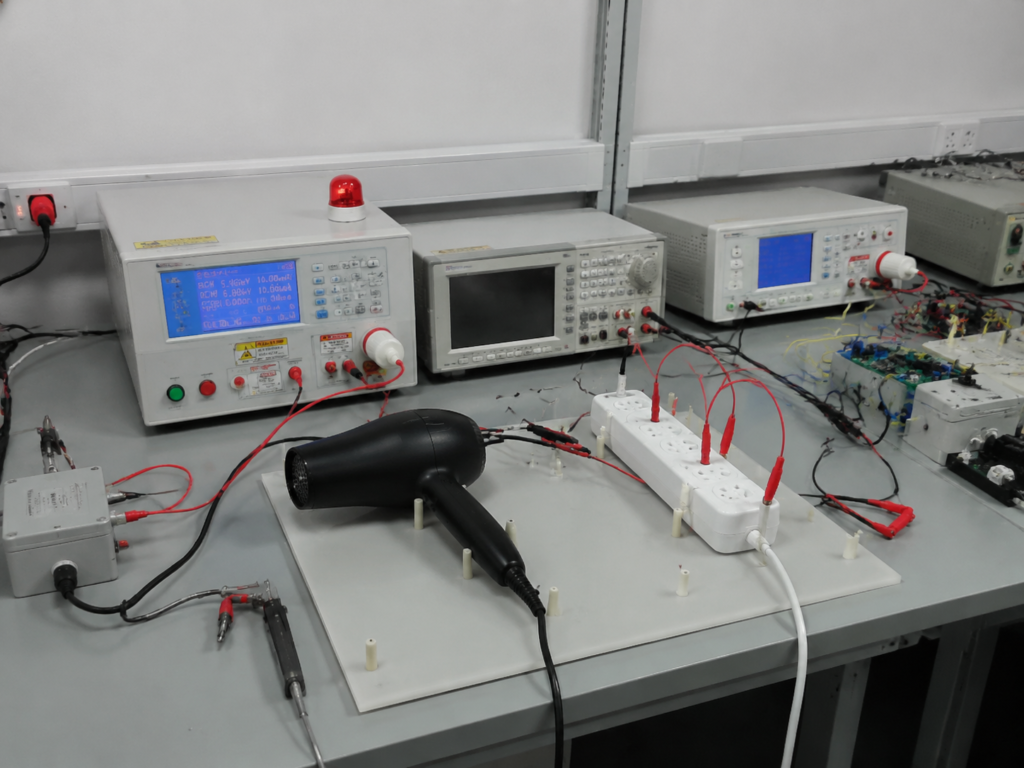
You don’t need to remember too much detail, just know the general logic: The first step is to submit an application. The manufacturer must provide UL with product information, a list of key components, and samples for testing; The second step is standard confirmation. UL will determine the corresponding safety standards according to the product type and usage scenario; The third step is safety testing, which is to test safety items such as electric shock, fire, and overheating according to the standards; The fourth step is factory audit. UL will go to the production factory to check the quality control ability to ensure that the mass-produced products are the same as the tested samples; The fifth step is certificate issuance and authorization. After both the testing and factory audit are passed, a certification certificate will be issued, authorizing the manufacturer to use the corresponding UL mark on the product.
Continuous Supervision Mechanism After Certification
Getting the certificate is not the end of the story. UL will regularly go to the factory to spot-check mass-produced products and check whether they are consistent with the originally certified samples, such as whether key components have been changed, whether the design has been modified, and whether the process has changed. If the spot check fails and rectification is not carried out as required, the certification will be suspended or even revoked. In addition, UL charges an annual tracking service fee. The fees for different products vary greatly, there is no unified standard, and the specific amount shall be subject to UL’s official evaluation.
Common Situations That Lead to Certification Invalidation
In reality, situations that lead to UL certification invalidation or violation are very common, mainly the following: First, if the product design, key materials, production process or production factory are changed without notifying UL in advance for evaluation, the changed product may no longer be within the scope of the original certification. Continuing to use the UL mark has the risk of violation, and may also be suspended or revoked in subsequent follow-up inspections; Second, the regular supervision spot check fails and rectification is not carried out as required; Third, using the UL mark beyond the scope, for example, using the component Recognition mark on finished products, or using the cUL mark only applicable to Canada on products sold in the U.S. market.
Factors Affecting Certification Cycle and Cost
Many people ask “how much does UL certification cost and how long does it take to get the certificate”. In fact, there is no universal answer, because there are too many influencing factors: First is the complexity of the product. The more complex the product and the more standards it applies to, the higher the cost and the longer the cycle; Second is whether key components have UL Recognition. If the components already have Recognition, a lot of trouble can be saved during testing, and both cost and cycle will be reduced; Third is whether there will be unqualified items in the test. If rectification is needed, it will definitely cost more money and take more time; Fourth is whether the factory’s materials are fully prepared and whether the rectification response is fast, which will also affect the overall progress. So anyone who tells you “fixed price, get the certificate in a week” is basically unreliable, and must be evaluated based on the specific product.
6. Core Differences Between UL and Other Common Compliance Certifications
People doing cross-border business often encounter various certifications, and many people confuse UL with other certifications. In fact, the things they govern and the regions they apply to are completely different.
vs. FCC Certification: Safety vs. Electromagnetic/Wireless Compliance
UL governs safety, such as whether it will leak electricity or catch fire; FCC governs electromagnetic compatibility and wireless compliance, such as whether the product will interfere with other electrical appliances and whether the wireless function meets the requirements. Electrical appliances with wireless functions usually first need to meet the relevant requirements of the FCC; if the product also has safety risks such as electrification, heat generation, charging, or channels and usage scenarios require NRTL safety certification, you also need to simultaneously apply for NRTL certifications such as UL or ETL. The two cannot replace each other at all—passing FCC only means electromagnetic compliance, not product safety, this must be clearly distinguished.
vs. ETL Certification: Both Belong to NRTL, With the Same Legal Effect
Many people don’t know that both UL and ETL are NRTLs recognized by OSHA, and within the corresponding product scope, their legal effects are exactly the same. Then why do people recognize UL more? The main difference is at the market level: UL has higher popularity, wider market acceptance, stricter audits, and correspondingly higher costs and longer cycles. How to choose? If your channel or customer explicitly specifies UL, then you do UL; if the other party only requires NRTL certification, then you can choose according to your own budget and cycle needs.
vs. CE Certification: North American Safety vs. EU Market Access
UL is the mainstream third-party safety certification in North America, which must undergo third-party testing and has continuous factory supervision; CE is the EU market access mark, and many ordinary products can be self-declared by manufacturers without testing by third-party institutions. The regions they apply to are completely different and cannot replace each other—in scenarios where NRTL or UL safety certification is required in the U.S., CE certification cannot be used as a substitute.
vs. RoHS/Energy Star: Different Evaluation Dimensions
UL governs safety, RoHS governs the restriction of hazardous substances in products, such as whether harmful substances such as lead and mercury exceed the standard; Energy Star governs energy efficiency, that is, whether it saves electricity. The same product may need to meet these requirements at the same time, but they do not represent each other—having UL certification does not mean it does not contain hazardous substances, nor does it mean it is energy-efficient, and vice versa.
7. Common Cognitive Misconceptions and Pitfall Avoidance Guide
Having said so much, in fact, most people’s misunderstandings about UL are concentrated in several common misconceptions. We will explain them all at once to help you avoid pitfalls.
Misconception 1: UL certification is a U.S. federal mandatory certification
Correction: There is no unified mandatory requirement at the U.S. federal level. UL is a voluntary certification. It only becomes “quasi-mandatory” because of channel, local, and industry requirements, and most scenarios require NRTL certification, and UL is just one of the options.
Judgment method: Comprehensively confirm based on product use, sales channel, local regulations, and insurance requirements, and cannot be generalized.
Misconception 2: Products with UL certification have better quality
Correction: This is confusing “safety” with “quality”. UL only tests safety-related items, and has nothing to do with the product’s performance, durability, or workmanship. For example, a hair dryer with UL certification only guarantees that it is not easy to leak electricity or catch fire, but does not mean it has strong wind or long service life.
Judgment method: When you see a promotion of “UL certification = excellent quality”, you can directly judge it as concept swapping.
Misconception 3: UL certification is valid for life
Correction: UL certification requires regular supervision and audit. Unreported product changes and failed spot checks may lead to certification invalidation.
Judgment method: If you want to know whether the certification is still valid, directly check the latest status in the UL Product iQ system. There is no such thing as “lifetime validity”.
Misconception 4: Components with UL certification = finished product has UL certification
Correction: This is one of the most commonly used fooling tactics by merchants. UL Recognition of components is only a supporting condition for finished product certification, which can save some certification time for the finished product, but it is by no means equal to the finished product passing UL Listing.
Judgment method: When a merchant says “has UL certification”, be sure to confirm whether it is finished product Listing certification or component Recognition certification, and it is best to ask for the file number to query and verify by yourself.
Misconception 5: UL certification is globally applicable
Correction: UL’s core recognition is in North America (the U.S. and Canada). Other countries and regions have their own safety certification requirements, such as CE in the EU, CCC in China, and SAA in Australia.
Judgment method: When exporting to different regions, you need to do the local certification, and cannot use UL as a substitute.
Misconception 6: Having a UL mark means absolute safety
Correction: UL only guarantees that the product meets safety standards under expected normal use conditions, and it does not cover the risks of improper use. For example, if you use a UL-certified power strip to power more than a dozen high-power appliances, use it under overload, or disassemble and modify it without permission, it may still be dangerous.
Judgment method: Even if the product has UL certification, it must be used according to the rated parameters, installation requirements, and operating instructions.
8. Applicable Scenarios and Basic Decision-Making Methods
Having said so much, finally, I have sorted out the decision-making methods for different scenarios for you, which you can use directly after reading.
Typical Scenarios That Usually Require UL or Other NRTL Certifications
As long as one of them is met, it is usually necessary to apply for NRTL-type safety certification. UL is one of the most commonly used options. The specific requirements shall be subject to platform rules, customer requirements, and local regulations:
First, access for high-risk electronic and electrical products on e-commerce platforms such as Amazon’s U.S. site—some categories accept other NRTL certifications, and the specific ones shall be subject to the corresponding category rules of the platform;
Second, supplier requirements of large U.S. offline retailers such as Walmart and Home Depot—these large chains usually specify a list of NRTL institutions. If UL is not specified, other recognized NRTLs can also be selected;
Third, fire-fighting and construction electrical products need to meet the local regulations and AHJ acceptance of some states and cities—usually NRTL certification is required, and UL is a commonly accepted option;
Fourth, industrial products exported to the U.S. need to meet OSHA’s workplace safety requirements—enterprise customers generally require NRTL certification, and if UL is not specified, you can choose as needed;
Fifth, some commercial lease or property insurance clauses may require the use of electrical equipment with NRTL certification, and the specific ones shall be subject to the contract or insurance clauses.
Scenarios Where UL or Other NRTL Certifications Are Not Required
The following situations can be done without: First, non-sales test samples and R&D prototypes, which are only used for testing and not sold to the public; Second, products that are not circulated in the North American market and only sold in other regions, such as only sold in Europe, then just do CE; Third, low-risk non-electrical products, such as ordinary furniture, non-electric toys, and there are no channel or regulatory requirements; Fourth, niche customized products, where the buyer clearly knows the risk of not having the corresponding safety certification and confirms in writing that they are willing to bear it.
Basic Decision-Making Methods for Different Groups of People
If you are an ordinary consumer, when buying high-power, long-term energized, heat-generating products (such as hair dryers, electric heaters, power strips, chargers), prioritize those with UL Listing marks. If you think the mark is suspicious, just go to UL Product iQ to check it. It won’t take two minutes, and safety is more guaranteed.
If you are a cross-border seller or purchaser, first confirm the list of NRTL institutions required by the platform or customer clearly. Don’t just do UL right away. If other NRTLs such as ETL can also be used, you can save a lot of costs; then ask the supplier for the certification file number, and be sure to check the model, certification type, and current status clearly, so as not to be fooled by the supplier with fake or wrong certificates.
If you are a manufacturer or brand owner, it is best to prioritize the selection of key components with UL Recognition during the product design stage, so that you can save time and cost when doing finished product NRTL certification later; also reserve certification time and rectification budget in advance, don’t wait until you are about to launch the product to remember to do certification. If the test fails, it will delay the sales cycle; in addition, if the product has changes in design, materials, process or factory, be sure to report to the issuing agency in time, don’t wait until the certification becomes invalid to regret.
Learning Summary
At this point, the core content of UL certification is finished. To sum up, after reading this content, you can at least quickly judge these 5 things:
First, you can distinguish the core definition and boundaries of UL certification—it is a third-party safety endorsement, only manages safety and not performance, and is not a mandatory certification uniformly required by the U.S. federal government. In most scenarios, it is one of the most recognized options among NRTL safety certifications;
Second, you can distinguish the applicable objects of the three types of UL certification: Listing, Recognition, and Classification, and will not be misled by promotions that “use component certification to impersonate complete machine certification”;
Third, you can identify formal UL marks, and also know how to use the UL Product iQ system to query authenticity and current certification status;
Fourth, you can combine product type, sales scenario, and sales channel to judge whether a product needs UL or other NRTL certification, and distinguish the boundary between “voluntary” and “quasi-mandatory”;
Fifth, you can distinguish the differences between UL and common certifications such as FCC, CE, and ETL, and avoid common cognitive pitfalls such as “CE replaces UL” and “UL equals good quality”.