
You may have come across terms like “EPR” or “packaging registration” in compliance notices on cross-border e-commerce platforms, or noticed that you have to pay a deposit when buying drinks and that various recycling logos are printed on packaging during trips to Europe. Behind these seemingly scattered rules lies the same core EU environmental regulation: the . Many people find it full of jargon and complex rules when they first encounter it, but as long as you sort out the logic, you can quickly understand it whether you run a cross-border business or want to learn about European environmental policies. This article will systematically sort out relevant content from basic definitions, compliance judgment logic, core rules, implementation methods to common misconceptions.
First, understand the basics: what it is and what it regulates
Plain-language definition and legal status
You can understand the EU Packaging Directive as a set of “full-lifecycle environmental rules” set by the EU for all product packaging — covering the entire chain from the production side to the waste side, including how packaging is designed, what materials are used, how it is recycled after use, and who pays for it.
Its official full name is the (PPWD for short), which belongs to the EU’s “framework directives”. Simply put, the EU sets minimum standards, and each member state must transpose these rules into its own national law for implementation. For example, Germany’s (VerpackG) and France’s AGEC packaging regulations are localized versions of this directive. Member states may enact stricter rules than the EU, but they must not fall below the EU’s baseline.
It should be particularly clarified here: it is not a single certification, nor a standard for a specific material, but a complete rule system covering design, responsibility, and recycling — this is the point that most people easily confuse when they first encounter it.
Scope of jurisdiction: what it regulates and what it does not
This set of rules has a very wide scope of jurisdiction: all commercial packaging entering the EU market is within its scope, covering all materials such as paper, plastic, glass, metal, and composite materials; there are corresponding requirements for the entire process from packaging design, production, use to waste recycling.
But it is not all-encompassing: issues such as the quality and safety performance of products inside the packaging, as well as substance migration of food packaging (i.e., whether the packaging will contaminate food), are all regulated by other specialized regulations and have nothing to do with the Packaging Directive.
Avoid 3 basic cognitive pitfalls at the beginning
People who are new to it are most likely to stumble on these three basic issues, and clarifying them first can avoid a lot of detours:
First, it is not CE certification. CE is a product safety compliance mark, which regulates the safety of the product itself; the Packaging Directive regulates the environmental recycling of packaging. The two are completely independent and cannot replace each other.
Second, it is not only EU-based enterprises that need to comply. As long as products are to be sold in the EU market, enterprises must comply with this set of rules regardless of the country where they are registered.
Third, it does not only regulate plastic packaging. Whether it is paper boxes, glass jars, metal cans, or hang tags, labels, and sealing tape on packaging, as long as they are commercial packaging, they are within the scope of jurisdiction.
Why is this set of rules needed: background and impact
Two types of core problems to be solved
The reason why the EU has formulated unified packaging rules is mainly to solve two long-standing core problems:
The first is environmental problems. According to statistics from the European Environment Agency in recent years, packaging waste accounts for about 30% of municipal solid waste in the EU, making it one of the fastest-growing waste streams. The per capita annual generation is about 180-190 kg, with data fluctuating in different years, which puts great pressure on the environment.
The second is market problems. Before the introduction of unified rules, packaging requirements varied among EU countries. Enterprises engaged in cross-border operations needed to comply with the rules of different countries one by one, resulting in high compliance costs and easy formation of trade barriers.
Two core objectives
The objectives of this set of rules are divided into two parts: environmental protection and market:
At the environmental level, the core is to reduce packaging waste at the source and improve recycling rates. The long-term goal under the EU’s circular economy policy framework is to make all packaging reusable or recyclable by 2050, serving the climate neutrality strategy; the mandatory requirements of the current PPWD are mainly phased recycling rate targets, and the subsequent PPWR will further clarify the mandatory constraints on reusable and recyclable design. Do not equate long-term policy goals with individual obligations that are currently in force.
At the market level, the goal is to unify the baseline of packaging rules across the EU, eliminate trade barriers, and reduce the compliance costs of enterprises operating across borders.
Practical impact on different groups of people
The impact of this set of rules covers different groups:
For merchants (including brand owners, importers, and e-commerce sellers), they are the main bearers of responsibility, and need to be responsible for a series of tasks such as packaging design compliance, registration and payment.
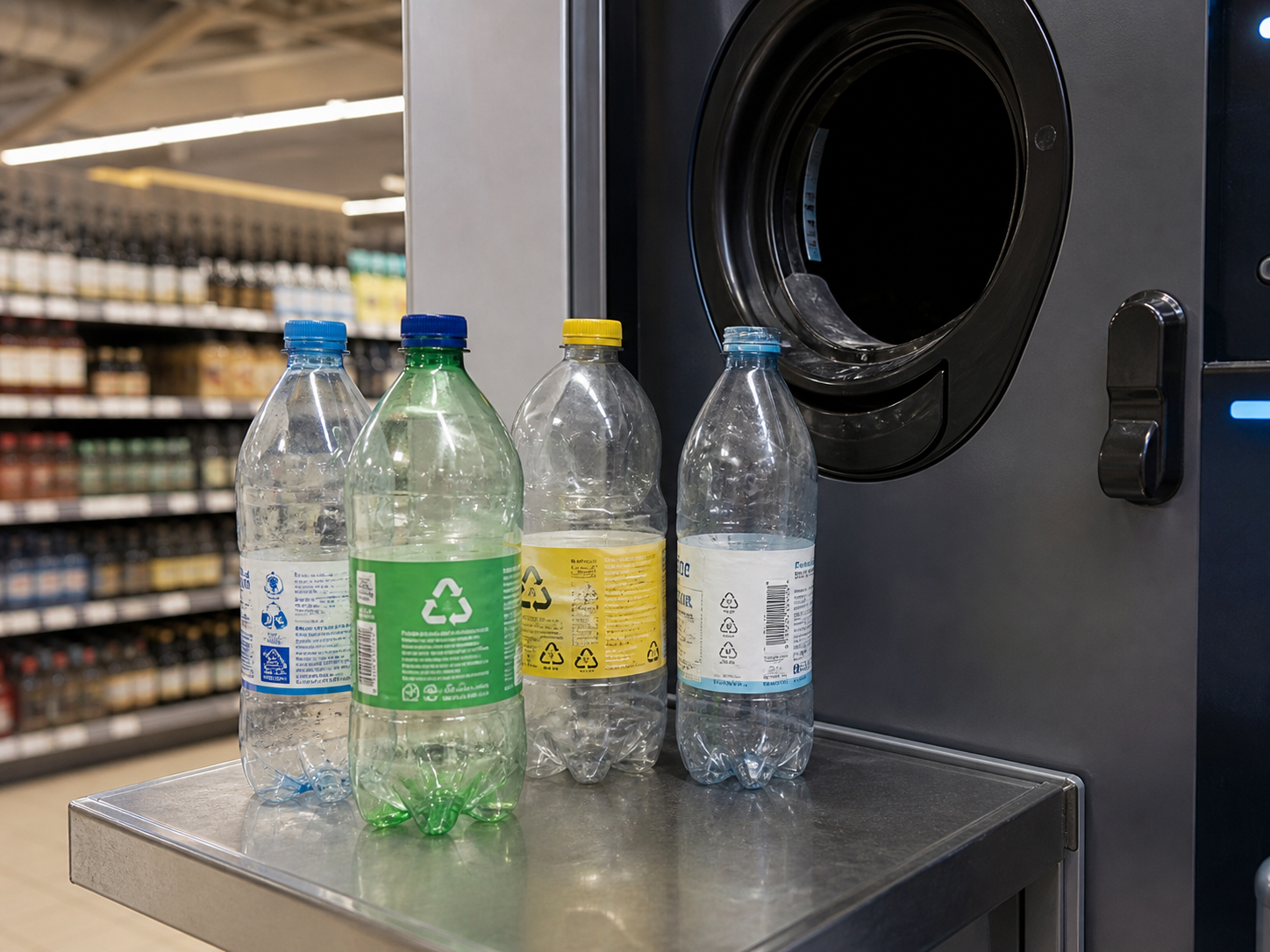
For ordinary consumers, the recycling labels and waste sorting requirements they encounter daily in Europe, as well as the beverage bottle deposit return system in some countries, are all related to this packaging regulatory system. Some beverage packaging may also be subject to special rules such as single-use plastics at the same time.
For cross-border exporters, even if the company is not located in the EU, as long as the products enter the EU market, they need to cooperate with the corresponding responsible entities to complete compliance, and cannot stay out of it.
3-step judgment: whether your business needs to comply
The question that many people care about most is: does my business need to comply with this set of rules? In fact, as long as you judge step by step according to three steps, you can get a clear conclusion.
Step 1: First determine whether your item counts as “packaging”
Not everything that holds things belongs to “packaging” in the rules; it must meet three criteria at the same time:
First, its function is to contain, protect, handle or display products;
Second, it enters the EU market together with the product;
Third, it becomes waste after use.
According to this standard, almost all commercial packaging is covered, which can be specifically divided into three categories:

• Sales packaging: the final packaging that reaches consumers, such as beverage bottles, cosmetic boxes, food packaging bags;
• Combined packaging: packaging that combines multiple products together, such as gift sets, plastic-sealed packaging of multiple products;
• Transport packaging: packaging used to protect products during transportation, such as express boxes, pallets, stretch film. Even if consumers discard it as soon as they receive it, it is still within the scope of jurisdiction.
Several boundary cases need attention: labels, sealing tape, and hang tags on packaging are all part of the packaging; but packaging for personal non-commercial shipments, such as packaging for birthday gifts sent to friends in Europe, is not within the scope of jurisdiction.
Step 2: Determine whether you are the responsible entity
Even if the packaging is within the scope of jurisdiction, not everyone has to bear responsibility. The core judgment criterion can be memorized first: the entity that first places the packaged product on the market of a certain EU member state is the responsible party.
Common responsible entities include: local EU manufacturers, importers, brand owners, cross-border e-commerce sellers, and distance sellers (such as entities that sell directly to EU consumers through independent websites).
For overseas exporters and cross-border distance sellers, special attention is needed: you cannot assume that all EPR registration processes can be completed directly as an overseas entity. Usually, you need to cooperate with importers, distributors or authorized representatives within the EU to fulfill your obligations; the specific registration path and whether a domestic responsible entity is mandatory shall be subject to the provisions of the EPR system of the country of sale. In practice, it is recommended to clarify rights and responsibilities through contracts to avoid compliance risks.
Step 3: Exclude exemptions and exceptions
Finally, it is necessary to confirm whether there are exemptions or exceptions. It is not that compliance with ordinary commercial packaging is required as long as the first two conditions are met. It should be noted that most of these exceptions mean that conventional requirements such as EPR, labeling, and reduction for ordinary commercial packaging do not apply, not that they are completely free from any environmental or waste rules:
• Military packaging: regulated by special defense-related rules, not subject to ordinary commercial packaging compliance requirements, but still must comply with waste management regulations in the corresponding field.
• Special transport packaging for dangerous goods: safety regulations for the transport of dangerous goods apply first, and they are not managed according to the environmental rules of ordinary commercial packaging, but still must comply with special requirements related to the transport and disposal of hazardous waste.
• Medical waste collection packaging: subject to special medical waste management regulations, not included in the scope of ordinary commercial packaging compliance, but must comply with medical waste collection and disposal specifications.
• Non-commercial private packaging: non-commercial packaging for personal delivery of private items does not need to be implemented in accordance with enterprise compliance requirements, and only needs to comply with ordinary domestic waste disposal rules.
• Simplification for micro and small enterprises: the EU allows member states to grant simplified policies to micro-enterprises (fewer than 10 employees and annual turnover of less than 2 million euros). Some countries also exempt enterprises with very low annual packaging usage from EPR payments, but the specific thresholds and policies need to be checked against the regulations of the country of sale, and are not uniform across the EU.
• Temporary exceptions: packaging for emergency disaster relief and public health events, as well as display packaging not for sale at exhibitions, must be officially recognized before the exception applies, and cannot be applied on one’s own; even if the exception applies, waste disposal must still comply with relevant local regulations.
All exceptions must meet the corresponding use certification or official recognition requirements, and the scope of exemption cannot be expanded on one’s own.
Core requirements: 6 rules that beginners must master
The EU Packaging Directive has a lot of content, but for beginners, mastering these 6 core rules can cover most compliance needs.
1. Source reduction: prohibition of unnecessary overpackaging
The core logic is very simple: the weight, volume, and number of layers of packaging only need to meet the minimum requirements for product protection and hygiene. You cannot deliberately use large or multi-layer packaging for promotion or to appear high-end. For example, a small lipstick wrapped in three layers of boxes with a lot of empty space inside — this kind of overpackaging for promotion purposes is prohibited.
The judgment method is also very intuitive: under the premise of the same protection effect, is there a feasible solution that is lighter, smaller, and simpler? If so, the existing packaging may not meet the requirements.
It is worth mentioning the trend of rule updates: the current PPWD only has principled requirements for overpackaging, and the new generation of PPWR will specify the void ratio requirements. The currently published agreement text clarifies that the void ratio of most packaging shall not exceed 40%. The specific scope of application, exceptions, and effective time shall be subject to the officially released provisions of the PPWR.
2. Recyclable/reusable design: reduce difficulty from the source
This requirement is to make packaging easier to recycle or reusable, reducing waste.
First, prioritize the use of single materials, and try to avoid materials that are difficult to separate such as paper-plastic composites and aluminum-plastic composites — these materials are difficult to sort during recycling, have high costs, and may even be impossible to recycle at all.
Second, reusability is encouraged. For example, deposit-based beverage bottles can be reused after being returned, cleaned and disinfected; there are also recyclable express boxes that can be used repeatedly. These forms are all encouraged.
There is a very important cognitive boundary here: “recyclable” does not only depend on the material, but also on whether the country of sale has corresponding collection, sorting, and recycling infrastructure. For example, if you use recyclable plastic film, but the country of sale does not have a plastic film recycling system, then this packaging cannot be considered “recyclable” locally, and you cannot arbitrarily label it with a recyclable logo.
3. Restriction of hazardous substances: total limit of 4 heavy metals
Heavy metals in packaging will pollute the environment, so the directive clearly stipulates the upper limit of the total content of 4 heavy metals: lead, cadmium, mercury, and hexavalent chromium. The total weight of these four heavy metals shall not exceed 100 ppm (i.e., one part per million).
This requirement covers all components of the packaging, not only the material of the packaging itself, but also the ink, coating, labels, and metal accessories on it. For example, the printing ink on paper boxes, the metal caps of plastic bottles, and the coating of hang tags must all meet the requirements.

There may be exceptions for special recycled material scenarios, but it depends on the regulations of the member states and is not universally applicable.
4. Recycling rate: mandatory targets at the EU level
The EU has set mandatory targets for the packaging recycling rate of the entire region. The current requirements are: the overall recycling rate will reach 65% by 2025 and 70% by 2030.
Taking the following common materials as examples, the material-specific targets are more specific: in 2025, the recycling rate of plastic packaging is 50%, paper and cardboard 75%, glass 70%; in 2030, plastic 55%, paper and cardboard 85%, glass 75%. Other materials such as metal, aluminum, and wood also have corresponding recycling targets, and enterprises need to make complete statistics according to the classification caliber of the country of sale when declaring.
Many people will ask: is this target set for enterprises? Actually, no. This target is to be achieved by each member state, and countries that fail to meet the target will be punished by the EU. Enterprises, through the EPR system, bear the recycling and treatment costs of their corresponding packaging, support the operation of the recycling system, and ultimately help the country achieve its goals.
5. Extended Producer Responsibility (EPR): whoever’s packaging it is pays for it
This is probably the requirement that merchants care about most, which is “EPR” that many people have heard of, with the full name of Extended Producer Responsibility. In plain language, it is whoever’s packaging it is pays for it — if you are the first to place the packaged product on the market, you have to bear the cost of recycling and disposal after the packaging is used up.
How to fulfill the obligation specifically? Most small and medium-sized enterprises will choose to join a third-party compliance organization recognized by the country of sale. This type of organization is called a Producer Responsibility Organisation (PRO for short). You only need to declare the packaging usage and material type every year, pay the fee according to the standard, and the PRO will help you with matters related to recycling and treatment, so you don’t have to build a recycling system yourself.
The cost is generally linked to the type of material used, weight, and recyclability. For example, composite materials that are difficult to recycle have higher costs, and single paper packaging has lower costs.
6. Information labeling: the role and differences of recycling logos
The core function of recycling logos on packaging is to mark materials and provide recycling guidance, helping consumers sort and dispose of them correctly.
It should be noted that at the EU level, there are only encouraging requirements for recycling labels, and there is no mandatory EU-wide unified logo. However, many member states have formulated their own mandatory labeling requirements, such as France’s Triman logo and Spain’s packaging labels. Products sold to the corresponding countries need to be labeled according to local requirements.
There is another very common misunderstanding: many people think that the “Green Dot” is a mandatory recycling logo in the EU. In fact, the Green Dot is a commercial authorization logo related to the producer responsibility system, not a unified mandatory recycling logo required by the EU; whether it needs to be used depends on the regulations of the country of sale and the requirements of the PRO system you join. You may still meet local compliance requirements without the Green Dot.
How to implement compliance: what different roles should do
Now that you know the core requirements, how to implement them specifically? Different roles and different business scales have different ways of fulfilling obligations.
3 ways to fulfill EPR obligations
Enterprises mainly have three ways to fulfill EPR obligations, which can be selected according to their own scale and needs:
The first is self-fulfillment, that is, the enterprise builds its own recycling system and is responsible for the recycling and treatment of packaging. This method is only suitable for very large enterprises, such as large supermarket chains or FMCG giants. Small and medium-sized enterprises basically do not need to consider it, as the cost is too high.
The second is entrusting a PRO to handle it on your behalf, which is the mainstream choice for small and medium-sized enterprises. A third-party PRO can assist or represent the enterprise in completing registration, declaration, payment, and docking with the recycling system. However, the authenticity of packaging usage data, the determination of the responsible entity, and the legal obligation to declare on time still need to be confirmed and filed by the enterprise itself, and responsibility cannot be completely transferred.
The third is fulfillment through importers or distributors, that is, selling goods to EU importers or distributors, who bear EPR obligations as the responsible entity. In this method, responsibilities must be clearly agreed in the contract to avoid mutual shirking after problems occur, which affects product sales.
What to do if selling to multiple EU countries
Many people think there is a EU-wide universal EPR number, but that is not the case. Since the Packaging Directive is a framework directive, the implementation rules of each member state are different, so there is no EU-wide universal EPR number. You must comply separately according to the requirements of the country you sell to.
If you sell in multiple EU countries, the correct approach is: first confirm the main countries of sale, then check the responsible entity requirements, registration processes, declaration cycles, and labeling requirements of each country one by one, and complete compliance separately. For example, if you sell to both Germany and France, you need to register for both the German Packaging Act EPR and the French AGEC packaging EPR, and also label according to the requirements of the two countries respectively.
Core obligations of different roles
Different roles bear different compliance obligations. The core obligations of the three most common roles are as follows:
• Brand/manufacturer: mainly responsible at the source. The reduction and recyclability requirements must be implemented during the design stage to ensure that packaging materials meet standards such as heavy metal restrictions.
• Importer/seller: mainly responsible for implementation, completing EPR registration in the country of sale, affixing corresponding labels as required, and declaring and paying fees on time.
• E-commerce platforms: At present, many mainstream e-commerce platforms require sellers to provide the EPR number of the corresponding country. If they cannot provide it, the platform may directly remove the products from the shelves. Cross-border e-commerce sellers must prepare in advance.
How to distinguish old and new rules: the difference between PPWD and PPWR
People who follow EU packaging compliance must have also heard the term “PPWR”, and many people are confused about its relationship with PPWD. Simply put, PPWR is a new generation of packaging rules, an upgraded and enhanced version of PPWD. The core differences between the two can be compared through the following table:
| Comparison dimension | Current rule (PPWD) | New generation rule (PPWR) |
| Legal nature | Framework directive | EU regulation |
| Application method | Transposed into national law by member states, with differences in implementation details among countries | Core rules are directly applicable across the EU, with greatly improved uniformity |
| Core requirements | Principled reduction requirements, heavy metal restrictions, basic EPR system | Clear upper limit of packaging void ratio, mandatory reuse ratio, prohibition of some single-use packaging |
| Recycling targets | Overall 65% by 2025, 70% by 2030 | Overall 70% and plastic 60% by 2030; overall 85% and plastic 75% by 2040 |
| Current status | The 2018 revised version has been fully implemented | The European Parliament and the Council reached a provisional agreement at the end of 2023. It will enter into force after formal signing and publication in the Official Journal of the EU, with core obligations applied in phases |
It is necessary to specially explain the change in legal nature: the original PPWD is a “directive”, which is equivalent to the EU providing a framework and each country implementing it on its own, so there are great differences; while PPWR is a “regulation”, whose core rules are directly applicable across the EU, and the uniformity is greatly improved compared with the old directive. But this does not mean that all implementation details are completely consistent. EPR registration processes, fee standards, law enforcement agencies, language labeling requirements, and transitional operation details still need to be checked against the specific implementation regulations of the country of sale. The specific effective time and the application nodes of each obligation shall be subject to the official statements of the Official Journal of the EU and the competent authorities of the country of sale.
Which version to follow during the transition period
Many people struggle with: which version should I follow now? Actually, it’s very simple:
• Currently ongoing business: Prioritize compliance with the current PPWD plus the packaging law of the country of sale. This is the effective rule currently being implemented, and there will be no mistakes.
• Long-term planning for the next 2-3 years: If you want to change packaging design or develop new product lines, it is recommended to adjust in advance with reference to the requirements of PPWR, such as controlling the void ratio and using single materials, so that when the new rules are fully applied, you don’t have to invest additional costs in rectification.
There is no need to worry too much about sudden changes in rules. All new obligations will have a transition period. The specific implementation time shall be subject to the schedule of provisions published in the Official Journal of the EU. Do not trust unofficial rumors.
Pitfall avoidance guide: common misconceptions and quick self-check
After talking about the core requirements and implementation methods, let’s talk about the most common pitfalls in practice and how to quickly self-check compliance.
6 common cognitive misconceptions
These are the points that are most easily mistaken in practice, and even sellers who have been doing it for a while may stumble:
1. Only EU-based enterprises need to comply: Wrong. As long as products are sold in the EU market, regardless of where the enterprise is registered, it must bear compliance responsibilities in accordance with the requirements of the country of sale. Overseas entities usually need to fulfill their obligations through domestic importers or authorized representatives (see the chapter on responsible entities for details).
2. Complying with the EU directive is enough: Wrong. The EU directive is only the minimum standard, and many member states have stricter requirements. For example, France mandates the Triman logo. It is not enough to only meet the EU minimum requirements; you must also comply with the specific regulations of the country of sale.
3. Only inner packaging needs to be managed: Wrong. Sales packaging, combined packaging, and transport packaging all fall within the scope of jurisdiction, and all must be included in the packaging usage; in practice, many sellers fail to report transport packaging such as express boxes and stretch film, which easily leads to penalties for false declarations.
4. Having a recycling logo means compliance: Wrong. The recycling logo is only information disclosure to inform consumers of the sorting method. Requirements such as EPR registration, payment, and material compliance are all indispensable. It is not that sticking a logo equals compliance.
5. Degradable/compostable packaging means compliance: Wrong. Degradable does not equal recyclable, and many countries do not have corresponding composting facilities. The use of compostable packaging may still end up being incinerated or landfilled, which does not meet the requirements. In addition, degradable packaging must also meet other requirements such as heavy metal restrictions and reduction. It is not that labeling it as degradable means everything is fine.
6. The Green Dot is a mandatory EU logo: Wrong. The Green Dot is a logo related to the commercial EPR system, not a unified mandatory requirement of the EU. The specific usage rules are subject to the regulations of the country of sale and the PRO you join (see the information labeling chapter for details).
4 compliance pitfalls that merchants are most likely to fall into
In addition to cognitive misconceptions, there are several pitfalls that are most likely to be encountered in practice, with relatively serious consequences, so you must pay attention:
• Not registering for EPR in the country of sale: This is the most common pitfall. Many sellers don’t know they need to register when they first start, resulting in goods being detained by customs, fined, or even removed from e-commerce platforms, causing great losses.
• Excessive heavy metals in packaging: If the heavy metal content is found to exceed the standard in regulatory random inspections, the products will be removed from the shelves or even prohibited from entering the country; especially parts that are easily overlooked such as printing ink and coatings must be tested in advance.
• Overpackaging: In countries with strict supervision such as France and Germany, overpackaging is easily complained about by consumers or found in regulatory random inspections, resulting in fines.
• Failure to label as required: For example, if you sell to France without the Triman logo, or the logo does not meet the requirements, you will be fined. Don’t think that labeling is a trivial matter.
3-step quick self-check of compliance
If you are unsure about your compliance status, you can use these three steps to quickly self-check:
Step 1: First confirm the country of sale, the type of packaging used, and the annual packaging usage, check the specific requirements of the corresponding country, and first clarify the applicable rules.
Step 2: Check the packaging situation: Does the material meet the requirements? Does the heavy metal content meet the standard? Is there overpackaging in the design? Are labels affixed in accordance with local requirements?
Step 3: Confirm whether you need to register for EPR; if you have already registered, check whether you have declared and paid fees on time, and whether you have missed parts that are easily overlooked such as transport packaging and combined packaging.
How to distinguish easily confused regulations
Many people confuse the Packaging Directive with several other EU regulations. The following table can help you quickly clarify the boundaries:
| Regulation name | Core scope of jurisdiction | Relationship with the EU Packaging Directive |
| Single-Use Plastics Directive (SUPD) | Specific single-use plastic products (such as straws, cutlery, cotton swabs, etc.) | The Packaging Directive regulates all packaging of all materials, while the SUPD regulates specific single-use plastic products. Some plastic packaging (such as single-use beverage bottles) is subject to both |
| Food Contact Materials Regulations | Safety of packaging in contact with food (such as migration of toxic substances) | The Packaging Directive regulates environmental recycling, while food contact regulations regulate food safety. The two cannot replace each other, and food packaging must meet both sets of requirements |
| REACH Regulation | Restrictions on the production, use, and sale of all types of chemicals | REACH has a broader scope of control, covering all chemicals; the Packaging Directive only targets specific heavy metal requirements for packaging, and packaging materials may also need to comply with other REACH provisions (such as plasticizer restrictions) |
Simply put, these regulations have different control purposes and scopes. In many cases, packaging may need to meet the requirements of several regulations at the same time. You cannot say that if you comply with one, you don’t have to worry about the other.
Summary
After sorting out the above content, you should be able to do these 6 things:
First, you can distinguish the hierarchical relationship between the EU-level Packaging Directive and the packaging laws of each member state, and will not confuse requirements at different levels;
Second, you can quickly determine whether your product packaging is within the scope of jurisdiction, whether you are the responsible entity, and whether you need to comply;
Third, you can name the 6 core requirements and know from which dimensions to check the compliance of packaging;
Fourth, you can distinguish the differences between PPWD and PPWR, know what rules to follow for current business, and how to prepare in advance for future planning;
Fifth, you can avoid common cognitive misconceptions and use the 3-step self-check method to initially judge compliance risks;
Sixth, you can distinguish the Packaging Directive from easily confused regulations such as the Single-Use Plastics Directive, Food Contact Materials Regulations, and REACH, and will not mix them up.