
Manufacturers of electronic products targeting the US market can almost never avoid FCC certification. However, many newcomers first encounter compliance issues not because the product itself is unqualified, but because they choose the wrong testing laboratory: after selecting a low-quote institution to complete testing, they only find out when submitting the certification that the laboratory does not have FCC-recognized qualifications, and the report is directly rejected. Not only can the testing investment not be recovered, but it will also delay the product launch rhythm. These problems seem hard to prevent, but in fact, most can be avoided in advance as long as you understand the qualification rules for FCC testing laboratories.
Beginner Basics: First Understand What FCC Testing Laboratory Qualification Is
Many people’s first impression of an “FCC-recognized testing laboratory” is “a laboratory run by the FCC official” or “a laboratory with a certificate issued by the FCC”, but neither is correct. You can understand it as a testing institution “recognized” by the FCC: only laboratories included in the FCC’s official accepted list can issue test reports that can be used to apply for FCC certification, and the data in the reports will be recognized by the FCC and TCB (Telecommunication Certification Body, a third-party audit institution officially authorized by the FCC, responsible for document review and certificate issuance under the Certification mode).
It is particularly important to note that not all laboratories that can perform electromagnetic compatibility and radio frequency testing have this qualification. Many laboratories can perform testing for EU CE certification and have their own national testing qualifications, but they may not be on the FCC’s accepted list, so the reports they issue naturally cannot be used for FCC certification.
Why must we pay attention to the FCC qualification of laboratories? Simply put, incorrect qualifications are likely to make the entire certification process a waste of effort, and even bring market compliance risks: for products that require Certification, if you submit an application with a report from an unqualified laboratory, the TCB usually will not accept it, which directly hinders the certification process; if products with invalid reports enter the US, customs and FCC law enforcement departments will take measures such as detaining goods and imposing fines according to the circumstances of the violation and product type; US e-commerce platforms such as Amazon will also verify the qualification of the report issuer in accordance with their own policies, and non-compliant listings may be removed.
In the entire FCC certification process, there are four core roles with a clear division of labor. If you figure out who does what, you will not be misled:
- Testing Laboratory: Only responsible for testing products in accordance with FCC rules and issuing test reports. It does not guarantee whether the certification can be obtained in the end, and has no qualification to issue FCC certification certificates.
- TCB: A third-party audit institution authorized by the FCC, responsible for reviewing application materials and issuing FCC certification certificates under the Certification mode, without having to report everything to FCC headquarters.
- FCC: Responsible for formulating rules, managing the list of recognized laboratories, and supervising the compliance of products on the market. The FCC does not provide ordinary commercial certification testing for enterprises, nor does it act as a third-party testing laboratory in regular certification applications, but it still undertakes testing functions related to supervision, technical evaluation and law enforcement.
- Applicant/Manufacturer: Is the ultimate responsible subject, fully responsible for product design, the authenticity of test samples, and the legality of submitted materials. When problems occur, the manufacturer is held accountable first.
Here we first correct three most easily misunderstood basic common senses to help you avoid cognitive deviations from the beginning:
First, the FCC does not operate commercial certification testing laboratories for enterprises. The FCC’s own laboratories only undertake testing related to supervision and law enforcement, and do not provide commercial certification testing for ordinary enterprises. The so-called “FCC-recognized qualification” is essentially acceptance qualification — that is, the FCC recognizes the test data issued by the laboratory, not awarding the laboratory an “official certification” plaque.
Second, having national testing qualifications, such as EU CE notified body qualification and China’s CNAS qualification, does not mean having FCC acceptance qualification. Certification systems in different regions are independent of each other, so do not be misled by institutions showing other qualifications.
Third, laboratories can only issue test reports and do not have the authority to directly issue FCC certification certificates. Anyone who says “our laboratory can directly issue FCC certificates” can basically be judged as unreliable.
First Determine the Premise: Different FCC Certification Modes Have Different Laboratory Qualification Requirements
After understanding the basic concepts, you may ask: Do I have to find an FCC-recognized laboratory? The answer is: not necessarily. It depends on which FCC equipment authorization mode applies to your product. For ordinary consumer electronics and industrial products, the two most mainstream ones are SDoC and Certification, which have very different requirements for laboratories.
First clarify two core concepts:
- SDoC (Supplier’s Declaration of Conformity): A low-risk authorization path, where the supplier declares on its own that the product meets the requirements of FCC rules.
- Certification: A medium-high risk authorization path, which requires submitting test reports and other materials to the TCB for review, and obtaining an FCC certification certificate after passing.
For easy comparison, you can refer to the following table (common applicable scenarios, not exhaustive):
| Authorization Mode | Common Applicable Product Types | Laboratory Qualification Requirements | Core Responsible Subject |
|---|---|---|---|
| SDoC | Unintentional radiating digital devices, such as wired keyboards, ordinary monitors, computer peripherals, etc. (specific confirmation shall be made in combination with corresponding FCC rules) | No mandatory FCC recognition requirement; enterprises can test by themselves or entrust any institution | The supplier/applicant is fully responsible for the authenticity and compliance of test data |
| Certification | Intentional radiating devices under rules such as Part 15, such as Bluetooth headsets, WiFi routers, mobile phones, etc. (specific confirmation shall be made in combination with corresponding FCC rules) | FCC 2.948 listed laboratories (i.e. accepted laboratories complying with FCC Rule 2.948) must be used for the report to be valid | The laboratory is responsible for the accuracy of test data, the TCB reviews and issues the certificate, and the applicant is responsible for the final compliance of the product |
Note: If the product does not contain any digital circuits or is not subject to FCC equipment authorization control, it may not need to be processed according to the above modes, and it is necessary to first confirm whether it falls within the FCC’s jurisdiction.
For mixed-function products, for example, products that have both a wired keyboard function and a Bluetooth connection function, you do not have to directly apply the full Certification standard according to the highest requirement. You can judge the laboratory requirements in three steps:
Step 1: First sort out all functional modules controlled by the FCC in the whole machine, such as wired digital circuits, Bluetooth transmission, WiFi modules, etc.;
Step 2: Compare with FCC rules respectively to judge the authorization mode applicable to each function, whether it is SDoC or Certification;
Step 3: For functional modules involving Certification requirements (such as Bluetooth transmission), their corresponding tests must be completed by a laboratory listed in FCC 2.948 with a matching qualification scope; for functions belonging to the SDoC category (such as wired digital circuits), they can be implemented in accordance with SDoC requirements, and there is no mandatory requirement to use an FCC-listed laboratory.
For beginner manufacturers, the core bottom line is: as long as the product contains functions that require Certification, the testing of the corresponding modules cannot use data from unqualified institutions, but it is not required that all test items select laboratories according to Certification standards.
So how to quickly judge which mode applies to your product? The core reference is the FCC rule part corresponding to the product: most products with intentional transmission functions such as Bluetooth, WiFi, and cellular networks are subject to rules such as Part 15, and usually need to go through the Certification mode; but wireless charging, some industrial, scientific and medical (ISM) equipment may be subject to other rules such as Part 18, and cannot be judged solely by “whether it emits radio frequency signals”. If you are not sure, the safest way is to check the corresponding FCC rule clauses, or directly consult the TCB. Do not judge based on experience alone to avoid subsequent rework.
There are also two easily overlooked special scenarios where many people encounter problems:
The first is the additional requirements of e-commerce platforms. Even if your product belongs to the SDoC mode, some US e-commerce platforms (such as Amazon) may also require you to provide a report issued by an FCC-recognized laboratory, otherwise they will not allow it to be listed. Therefore, manufacturers engaged in cross-border e-commerce had better confirm the platform rules in advance, and do not wait until the product is ready to find that it does not meet the requirements.
The second is the situation of the factory’s own laboratory. If it is SDoC mode, the factory can use its own testing facilities for testing, but it must meet the FCC’s capability requirements, such as regular calibration of equipment, standardized testing procedures, and ability to provide complete test records; but if it is Certification mode, even if it is the factory’s own laboratory, it must be included in the FCC’s 2.948 list, otherwise the results of its own testing will not be valid.
Core Thresholds: Qualification Requirements That FCC-Recognized Laboratories Must Meet
Since the Certification mode must use an FCC-listed laboratory, what conditions must these laboratories meet to enter the list? In fact, there are only a few core thresholds. If you understand them, you can judge whether the laboratory’s qualifications are solid enough.
The first basic premise is ISO/IEC 17025 accreditation. You can understand this as a globally通用 “laboratory capability pass certificate”, an international standard specifically used to prove that the laboratory’s management system and technical capability can stably produce reliable test data. But note that it is not enough to have a 17025 certificate. The key depends on the accreditation scope — for example, if a laboratory’s 17025 accreditation scope only covers electromagnetic compatibility testing of household appliances, not radio frequency testing, then it is not qualified to test Bluetooth headsets. In addition, 17025 accreditation is only a necessary condition for applying for FCC recognition, and cannot directly replace the FCC’s acceptance qualification. That is to say, a laboratory with 17025 may not have FCC recognition, but one without 17025 definitely cannot apply for FCC recognition.
The second requirement is that the accreditation body itself that issues the 17025 certificate to the laboratory must be within the FCC’s acceptance range. Not all 17025 certificates issued by random commercial institutions are valid. The accreditation body must first be recognized by the FCC. There are two mainstream accreditation bodies in the United States: A2LA (American Association for Laboratory Accreditation) and NVLAP (National Voluntary Laboratory Accreditation Program); overseas accreditation bodies must meet corresponding conditions at the same time, and the laboratories they accredit can apply for FCC listing.
Here we need to clarify a core conclusion first: Accreditation by members of ILAC MRA (International Laboratory Accreditation Cooperation Mutual Recognition Arrangement, that is, accreditation bodies of various countries mutually recognize accreditation results that meet the requirements) does not mean that the laboratories they accredit automatically obtain FCC acceptance qualification.
To meet the FCC’s recognition requirements, three conditions must be met at the same time: First, the accreditation body that issues the 17025 certificate is itself within the FCC’s acceptance range; second, the laboratory’s 17025 accreditation scope covers the corresponding FCC test items; third, the laboratory completes the FCC 2.948 listing application process and enters the official list.
Take China’s CNAS as an example. As an ILAC MRA member, if the laboratories it accredits want to obtain FCC 2.948 listing, they need to meet all the above conditions, and reports issued after completing the listing can be used for Certification applications. Not all accreditation results of ILAC MRA members are automatically accepted by the FCC.
The third most easily overlooked requirement is that the accreditation scope must match the testing needs of specific products. Many people think that “as long as it is an FCC-recognized laboratory, any product can be tested”, but that is not the case at all. FCC recognition qualifications are not universal for all purposes. The specific scope shall be subject to the FCC listing records and the Scope of Accreditation issued by the accreditation body. The core is to cover the FCC rule part, test methods and technical capability requirements applicable to the corresponding product. For example: a laboratory has radio frequency testing qualification for the Bluetooth 2.4G frequency band, but may not have testing qualification for 5G WiFi, nor may it be able to perform SAR (Specific Absorption Rate, simply put, testing whether the impact of radiation on the human body meets the limit) testing. If a laboratory issues a report beyond its accreditation scope, the FCC and TCB will not recognize it at all, which is equivalent to testing in vain.
The fourth is the hard requirements for personnel, equipment, sites and management systems, which are the basis for laboratories to produce reliable data:
In terms of personnel, the laboratory shall be equipped with at least one full-time technical responsible person (or authorized signing technical responsible person) matching the accreditation scope, familiar with the corresponding FCC test standards, and bear technical responsibility for the accuracy of test results and report review; all test instruments must be regularly calibrated, and test data can be traced to the International System of Units (SI), and cannot be “inaccurate instruments” that have not been calibrated; test environments such as shielded rooms and anechoic chambers must meet the interference control requirements of the corresponding FCC test standards, and no external signals shall interfere with the test results; at the same time, there must be complete management processes, such as sample management, test operation specifications, report review, deviation handling, etc., all with clear rules.
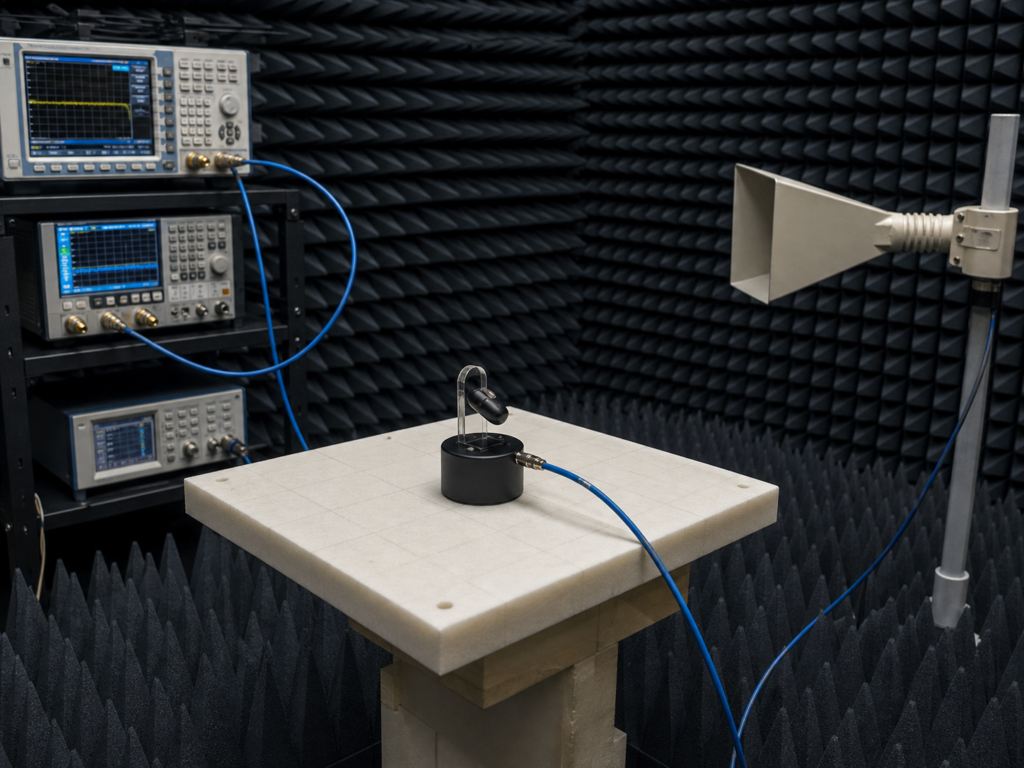
Finally, there is an easily overlooked point: qualifications need to be maintained, not once and for all. The accreditation period of laboratories is usually 2-4 years, and the specific duration varies according to the rules of the accreditation body. The validity period of the accreditation certificate and the FCC listing status are ultimately subject to the latest public records of the accreditation body and the FCC. It is necessary to focus on verifying whether the laboratory is within the valid accreditation scope during the test implementation period. If the laboratory undergoes major changes, such as changing the test address, the core technical responsible person resigning, or replacing key test equipment, it must report to the FCC or the accreditation body as required, otherwise the qualification may become invalid. If the laboratory violates the rules, such as data fraud or out-of-scope testing, the FCC will directly suspend or even revoke its qualification. In serious cases, previously issued reports may also be retroactively invalidated, affecting products that have already obtained certification.
From a practical perspective, it is recommended to choose laboratories with stable qualification status and validity period covering the entire cycle of testing and certification review to reduce the risk of qualification changes midway — this is a project optimization suggestion, not a mandatory FCC requirement.
Practical Method: How to Query and Verify the FCC Qualification of a Laboratory
After talking about so many requirements, the most practical question comes: How do I know if a laboratory really has FCC-recognized qualifications, and whether the qualifications match my product? In fact, the method is very simple. Just use the FCC’s official database to check, which is completely free and has no threshold.
The primary official FCC verification channel is the Recognized Testing Laboratory (RTL) database, also known as the 2.948 recognized laboratory database, which can be accessed through the Equipment Authorization section on the FCC official website. In addition to searching by laboratory name, country/region, accreditation body and other conditions, the database also displays information related to the laboratory’s accreditation standards and scope; if the scope information displayed in the database is incomplete, you should simultaneously check the Scope of Accreditation document issued by the corresponding accreditation body for cross-verification. When searching, you need to use the legal English name of the laboratory. Brand abbreviations, group names, and differences in Chinese-English translation may lead to search errors. Do not draw conclusions based on just one search result. If you still cannot confirm the listing status after cross-searching using the laboratory’s legal English name, test address, corresponding accreditation body and other information, it should not be used as a testing institution for Certification projects, unless written confirmation is obtained from the TCB or the corresponding accreditation body; if there are questions such as name changes or delayed database updates, you can further verify with the FCC or the corresponding accreditation body.
How to check accurately? You can check step by step according to these four steps to ensure nothing goes wrong:
Step 1: Verify the entity and test address. The legal name of the laboratory and the site where the test is actually performed must be completely consistent with the listing information in the FCC database. This step is mainly to prevent affiliation — some small laboratories do not have qualifications themselves, so they issue reports in the name of large laboratories, but the actual testing is done at their own unlisted sites. Such reports do not meet the requirements.
Step 2: Verify the accreditation scope. Do not be relieved just by seeing “has FCC qualification”. You need to specifically check whether the FCC rule part, test items, and operating frequency bands applicable to your product are all within the laboratory’s accreditation scope, which can be confirmed by comparing the Scope document issued by the accreditation body and the FCC listing information.
Step 3: Verify the qualification status. Confirm that the laboratory’s FCC listing status is currently “valid”, not suspended or revoked; the test implementation time must be within the validity period of the qualification. From the perspective of project management, a buffer margin of 1-2 months can be reserved to avoid the impact of qualification expiration during the testing process on progress.
Step 4: Verify the accreditation body. The accreditation body that issues the qualification to the laboratory must be within the FCC’s acceptance range. For example, A2LA, NVLAP, and CNAS are common compliant institutions. If it is a small institution you have never heard of, it is best to verify again.
In addition to formal qualification inquiries, you must also learn to identify common fraud and affiliation routines to avoid pitfalls:
The first is to use qualifications from other certification systems to impersonate FCC qualifications, such as using CE notified body qualifications or ISO 9001 quality management system qualifications to claim that they have FCC recognition. This is the easiest to see through. Just cross-verify through the FCC official database.
The second is affiliated qualifications, that is, the laboratory uses the qualifications of other institutions to issue reports, and does not actually have them. This can be basically avoided by checking that the laboratory name and test address on the report are completely consistent with the FCC database listing information.
The third is to exaggerate the qualification scope, such as promoting “all categories can be tested” “all FCC items can be done”. Do not trust such publicity. FCC qualifications are very subdivided, and almost no laboratory can cover all categories and test items. Be sure to verify to the specific product and test items.
There are also several special situations that require special attention during verification:
If it is a multi-location laboratory, for example, an institution has several branches or test sites, only tests completed at addresses listed in the FCC database are valid, and other branches and divisions cannot share qualifications. For example, if the headquarters is listed in Shenzhen and the Dongguan branch is not listed, then the tests done by the Dongguan branch will not be valid.
If subcontracted testing is involved, that is, the laboratory outsources part of the test items to other institutions, it is necessary to confirm that the subcontractor also has FCC recognition qualifications for the corresponding items, and the subcontracting arrangement complies with the relevant rules of the accreditation body and the FCC. It is recommended to require the laboratory to clearly disclose whether there is subcontracting, subcontracting items and subcontractor qualifications before cooperation, and the report should also clearly mark the subcontracting content to avoid affecting the validity of the report.
If it is a manufacturer’s own laboratory, it is necessary to confirm whether it is really on the FCC’s 2.948 list, otherwise it cannot be used for testing under the Certification mode. Do not mistakenly think that “the test done by your own laboratory is valid”.
Advanced Decision-Making: How to Choose a Suitable FCC Testing Laboratory
After understanding how to verify qualifications, the next step is how to choose a suitable laboratory for yourself. After all, even among FCC-listed laboratories, there are great differences in quotation, service, and speed. Choosing the right one can save a lot of cost and time.
First, according to the corresponding relationship between authorization modes and qualifications clarified above, select a laboratory with a matching qualification level. There is no need to blindly pursue higher-level qualifications to increase costs, nor can you choose institutions that do not meet the requirements to save costs: for low-risk products that only require SDoC, you can choose the testing method according to your own needs. If you need to meet the additional requirements of e-commerce platforms or improve the credibility of the report, you can also choose an FCC-recognized laboratory; for medium-high risk products that require Certification, choosing an FCC 2.948 listed laboratory is a mandatory compliance requirement. If the product belongs to special categories such as medical equipment, automotive electronics, industrial RF equipment, satellite communications, etc., it is also necessary to additionally confirm that the laboratory’s qualifications cover the corresponding FCC rule parts — the test standards for such products are different from ordinary consumer electronics, and it is not enough to have ordinary RF qualifications to undertake.
Second, match the laboratory’s capabilities according to your actual needs:
If the budget is limited and you only need to do SDoC, you can choose to test by yourself, but be sure to keep complete test records, including equipment calibration certificates, test procedures, raw data, test photos, etc. In case the FCC conducts random inspections, you can produce evidence, otherwise you will be judged as non-compliant.
If you want to obtain Certification quickly, prioritize laboratories with testing experience in the same category and fully matching qualifications. They are familiar with the corresponding standards and processes, produce high-quality reports, are less likely to be sent back for rework by the TCB, and naturally the speed is faster.
If you need to do multi-region certification at the same time, such as FCC + CE + Canada ISED/IC certification, you can prioritize laboratories with recognition qualifications in multiple regions at the same time, reduce cross-institution communication costs, and may also reuse some test data that meets the requirements, reducing comprehensive costs; but whether test data can be shared depends on regional standard differences, sample configuration, test setup and the accreditation scope of each region, and supplementary testing or separate report issuance may still be required when necessary.
In addition to these hard indicators, there are three auxiliary judgment dimensions that can help you choose a more reliable laboratory:
The first is report quality. You can ask the laboratory to send a sample test report of the same type of product first, and focus on checking the core content: including applicable FCC rule clauses, complete information of test samples, test configuration and setup description, test method basis, comparison of measurement results and limits, qualified judgment conclusion, laboratory identity information and signature seal. Raw test data, equipment calibration certificates, complete test records, etc. are quality system documents that the laboratory needs to keep. The TCB may调取 them as needed during review, and do not need to be all written into the formal report. The more standardized the report, the faster the TCB review will pass, and it is less likely to be required to supplement materials.
The second is service capability. For example, whether the efficiency of supplementary testing is high, whether technical support can answer your questions in a timely manner, whether they are familiar with FCC regulation updates — if the FCC has just changed a certain standard, and the laboratory does not know it and tests according to the old standard, it will definitely not pass in the end.
The third is risk guarantee. Before signing the contract, be sure to ask clearly: if the test fails, how to charge for supplementary testing and retesting? If the report is not recognized by the TCB due to the laboratory’s reasons (such as out-of-scope testing, wrong report), what responsibility does the laboratory bear? Is it free retesting or refund? Make these clear in advance to avoid disputes later.
There are also some boundary situations. If you don’t know how to handle them, you can follow the methods below:
If it is a product with new functions, new frequency bands, or new structures, for example, you are making a device with a newly released frequency band, and you are not sure whether the laboratory can test it, first let the laboratory do a pre-evaluation to confirm that they have the corresponding testing capability and qualification coverage, then sign the contract and pay. Do not pay and then find that they can’t test.
If the product is revised, for example, the antenna is changed, the transmission power is adjusted, the shell is changed, or the core board is changed, do not directly use the old test report. First consult the laboratory or TCB to confirm whether the old report can still be used and whether supplementary testing is needed. Otherwise, when it is found to be non-compliant, the trouble will be greater.
If you are not sure whether the laboratory’s qualifications fully match your product, you can send the detailed information of the product (such as function, frequency band, test item requirements) to the TCB or the corresponding accreditation body for verification. Do not just listen to the laboratory’s one-sided statement.
Pitfall Avoidance Guide: Common Misconceptions and Risk Investigation
Finally, we have sorted out the most common cognitive misconceptions and practical risks, covering the vast majority of qualification-related problems that beginners are prone to encounter.
First, let’s look at the five most common cognitive misconceptions, which many people who have done certification several times get wrong:
Misconception 1: FCC-recognized laboratories are all US-based. Actually, no. The FCC recognizes all qualified laboratories in the world, whether they are from China, Vietnam or Europe. As long as they are on the 2.948 list, the effect is exactly the same. Many Chinese local laboratories have better services, lower prices, and more convenient communication, so you don’t have to find a US laboratory.
Misconception 2: FCC qualification is valid for life. No. Qualifications have a fixed validity period and may be revoked due to violations. Even if it is a laboratory you have cooperated with, you need to re-check the latest status before the next cooperation.
Misconception 3: SDoC mode does not need to consider laboratory capability at all. As mentioned above, although SDoC does not mandate FCC-recognized laboratories, the manufacturer must bear full responsibility for the authenticity of the data. If the FCC conducts random inspections, it must be able to prove that the test data is true and reliable. If you choose an institution with insufficient capability to issue a report, the final compliance risk is still borne by the manufacturer.
Misconception 4: Reports issued by FCC-listed laboratories will definitely be accepted by the TCB. No. The TCB will still review — it will check whether the laboratory’s qualifications are within the scope, whether the report is complete, and whether the data is reasonable. Non-compliant reports will still be sent back, or even directly rejected.
Misconception 5: Passing the test means the FCC certification is completed. No. Testing is only the first step, especially for the Certification mode. After testing, you still need to sort out materials, submit them to the TCB for review, and only after the TCB passes the review and issues the certificate, the certification is truly completed. Don’t listen to the laboratory say “if the test passes, there is no problem”. If you can’t get the certificate in the end, it’s still trouble.
Then look at the four most common risk pitfalls in practice and the corresponding pitfall avoidance methods:
Risk 1: The laboratory’s qualification is about to expire, and the qualification has become invalid when the test is completed, resulting in the report not being recognized. Pitfall avoidance method: Before signing the contract, confirm that the validity period of the qualification covers the entire cycle of test implementation and TCB review. A buffer margin of 1-2 months can be reserved, and if necessary, it can be written into the contract or project schedule terms.
Risk 2: The laboratory conducts out-of-scope testing, and the report is rejected by the TCB, wasting time and cost. Pitfall avoidance method: Before cooperation, check the accreditation scope according to the 4-step verification method mentioned above, require the laboratory to provide FCC listing screenshots and the accreditation body’s Scope document, confirm that they are correct before cooperation.
Risk 3: The actual test address of the laboratory is inconsistent with the listed address, and the report is not accepted. Pitfall avoidance method: Before cooperation, confirm that the test address is the address listed by the FCC. If necessary, you can ask the laboratory to provide site certification or arrange an on-site visit.
Risk 4: Directly using the old report after product revision, resulting in invalid compliance. Pitfall avoidance method: As long as it is a major change involving RF circuits, antennas, power, and shells, be sure to find a laboratory or TCB to evaluate first, confirm whether supplementary testing is needed, do supplementary testing if necessary. Do not take chances.
Finally, let’s talk about the rarely applicable qualification exceptions: Only a very small number of special scenarios may not apply to the ordinary FCC laboratory qualification requirements. For example, special communication equipment procured by the US federal government or military may involve FCC jurisdiction boundaries or other federal regulatory systems, and not all government/military products are automatically exempted; custom samples for R&D, evaluation or experimentation need to meet the exemption conditions under the corresponding FCC rules (such as not sold to the public, only used in controlled scenarios, etc.), and must not enter the market circulation without authorization. Ordinary consumer and industrial products almost do not apply to these exceptions. Do not always think about relying on exceptional situations, as you will most likely encounter compliance problems.
Summary
So far, the core knowledge about FCC testing laboratory qualifications has been covered. After learning these contents, you can at least do four things well:
First, you can quickly judge the FCC authorization mode applicable to your product and the corresponding laboratory qualification requirements, and you won’t blindly look for “FCC certification laboratories” and waste money at the beginning;
Second, you can verify the authenticity and matching degree of the laboratory’s qualifications by yourself through the FCC’s official RTL (2.948) database, and you won’t be misled by fake qualifications or affiliated qualifications;
Third, you can choose a suitable testing laboratory according to your product type, budget and certification needs, neither wasting costs nor delaying time;
Fourth, you can identify common qualification fraud and pitfall scenarios, and avoid invalid certification and market compliance risks in advance.
For beginner manufacturers, the safest approach is: first confirm the authorization mode applicable to the product, then verify the laboratory’s listing status, accreditation scope and test address through the official database, and check one by one according to the rules, then you can avoid the vast majority of qualification-related problems.