
Sellers of electronic and electrical products targeting the US market, and friends who frequently purchase digital products via overseas shopping, have most likely seen words like “FCC ID” or “FCC compliance statement” on the back of products or on packaging. Many people know this is a mandatory requirement in the US, but they often have only a vague understanding of what kind of label to affix, where to affix it, and which products require it — if the label is incorrect, the light consequence is goods being detained and products being delisted, and the serious consequence is incurring high fines. In this article, we will thoroughly explain the usage rules of FCC labels, from basic judgment to pitfall avoidance and self-inspection, which you can apply directly after reading.
First, Understand: What Exactly Is an FCC Label?
You can think of the FCC label as the “electromagnetic compliance ID card” for electronic and electrical products entering the US market. It is a mandatory requirement of the Federal Communications Commission (FCC) of the United States. Its core function is to prove that the product complies with the technical rules formulated by the FCC, such as radio frequency emission and electromagnetic compatibility, and will not cause harmful interference to other electronic devices; for wireless devices used at close range such as mobile phones and wireless terminals, it will also include relevant assessment requirements such as radio frequency exposure (SAR).
At present, there are three common forms of FCC labels: FCC ID with a unique number, SDoC compliance statement text, and electronic labels in smart devices. Many beginners are prone to fall into three cognitive pitfalls when they first come into contact with this, so we will clarify them in advance here to avoid confusion later:
First, FCC label ≠ product quality qualification. It only covers the compliance dimensions related to radio frequency and electromagnetic compatibility, and does not involve other requirements such as product durability and electrical safety — the latter fall under the jurisdiction of safety certifications such as UL, and cannot be equated with a comprehensive health and safety certificate.
Second, FCC label ≠ FCC certification. Certification is a pre-process of finding an institution for review and obtaining approval in advance, while the label is the carrier for displaying the results to the public after compliance. It is just like taking a driving test is the process, and the number and photo on the driver’s license are the label.
Third, FCC ID ≠ all FCC labels. Only wireless products that follow the certification path have a unique FCC ID; products that follow the self-declaration path do not need an ID, and only need a compliance statement text.
Which Products Need to Be Labeled? Which Are Exempt?
All electronic devices with radio frequency emission or electromagnetic radiation that are sold or imported into the US market must be affixed with an FCC label as required. Common categories include mobile phones, routers, Bluetooth headsets, smart home appliances with circuit boards, computer monitors, etc.
A small number of categories can be exempted if they meet the conditions, but the scope of exemption cannot be judged subjectively by sellers. It must be comprehensively confirmed in combination with the specific rule chapters of the FCC, the attribute of the device as an intentional/unintentional radiator, operating frequency and power, actual use, and import and sales methods. Common possible exemption scenarios include: purely mechanical products (such as manual wrenches, stainless steel water cups), specific customized industrial special equipment, and equipment that meets the FCC’s extremely low power requirements and does not cause harmful interference. However, the scope of exemption is very narrow. If you are unsure, it is best to check the official FCC product classification list and do not apply exemption conditions on your own.
What Are the Consequences of Incorrect Labeling?
Don’t think that labeling is a trivial matter. The cost of non-compliance is actually not low, and the regulatory entities and penalty forms vary at different stages:
At the entry stage, US Customs will conduct inspections in accordance with compliance requirements, and may directly detain goods and prohibit entry;
In the subsequent FCC law enforcement stage, fines are usually calculated based on the nature of the illegal act, the number of involved items, the duration, and the degree of responsibility of the subject. The amount of a single item or single violation can reach thousands of dollars, and the penalty for batch violations or long-term violations will be higher;
At the sales stage, e-commerce platforms such as Amazon will directly delist products, and in serious cases, mandatory recalls will be required;
In the long run, violation records will affect the brand’s subsequent product market entry qualifications, and may also face an additional trust crisis after being complained by consumers.
Step 1: Choose the Right Label Type for Your Product
After understanding the basic concepts, the most critical first step is to choose the correct label type corresponding to the product — if the type is wrong, no matter how you affix it, it is non-compliant. The FCC label type is essentially determined by the product’s compliance path. Currently, there are two main categories. The old versions of self-verification and DoC have all been merged into SDoC, so beginners don’t have to struggle with the old names anymore.
You can think of the two paths as two different review modes:
The first is the Certification path, which is equivalent to an official unified examination — for wireless products with higher risks, you must find an FCC-recognized third-party institution for review. After passing, a unique number will be issued, which is what we often call the FCC ID.
The second is the Supplier’s Declaration of Conformity (SDoC) path, which is equivalent to an enterprise’s self-commitment — for products with lower risks that only have circuit boards but do not intentionally emit radio waves, the manufacturer can issue a compliance statement after self-testing as required, without official approval or a unified number.
For your quick distinction, here is a comparison table:
| Comparison Item | Certification Path (with FCC ID) | SDoC Self-Declaration Path |
|---|---|---|
| Review Method | Official review by a third-party institution | Self-testing and commitment by the manufacturer |
| Applicable Products | Products that intentionally emit radio waves | Products only with circuit boards and no intentional emission |
| Core Label Content | FCC ID number + compliance statement | SDoC compliance statement + US responsible party information |
| Risk Level | High | Medium to low |
Specifically for products, all products that intentionally emit radio signals, such as Bluetooth/WiFi devices, walkie-talkies, wireless remote controls, and cellular communication devices (mobile phones, tablets), must follow the certification path; ordinary wired chargers, computer monitors, wired home appliances without wireless functions, etc., can follow the SDoC path. If it is a hybrid product — such as a smart refrigerator with WiFi, a speaker with Bluetooth, which has both wireless emission and circuit electromagnetic compatibility requirements, both the FCC ID and SDoC compliance statement must be marked, and neither type of information can be missing.
If you are not sure which path your product should take, you can make a preliminary judgment in 10 seconds:
Step 1: First check if the product has the function of intentionally emitting radio waves — can it connect to Bluetooth/WiFi, can it remotely control other devices, can it insert a SIM card for communication? If there is any of these, it is most likely necessary to follow the certification path and have an FCC ID.
Step 2: If there is no intentional emission function and it is only an electronic product with a circuit board, follow the SDoC path.
If you are really unsure, do not guess on your own, and do not directly use the certification path to replace SDoC judgment — Certification and SDoC correspond to different device classifications and rule chapters, and it is not that “obtaining a more advanced certification will definitely be compliant”. It is recommended to first check the official rules of FCC equipment authorization, the KDB guidelines corresponding to the product, or find an FCC-recognized laboratory or Telecommunication Certification Body (TCB) to judge based on the actual functions of the product.
Certified Products: Correct Usage Rules for FCC ID
If your product follows the certification path, after obtaining the FCC ID, it must meet the requirements from three dimensions: format, appearance, and position, none of which can be wrong.
Format and Information Matching Rules
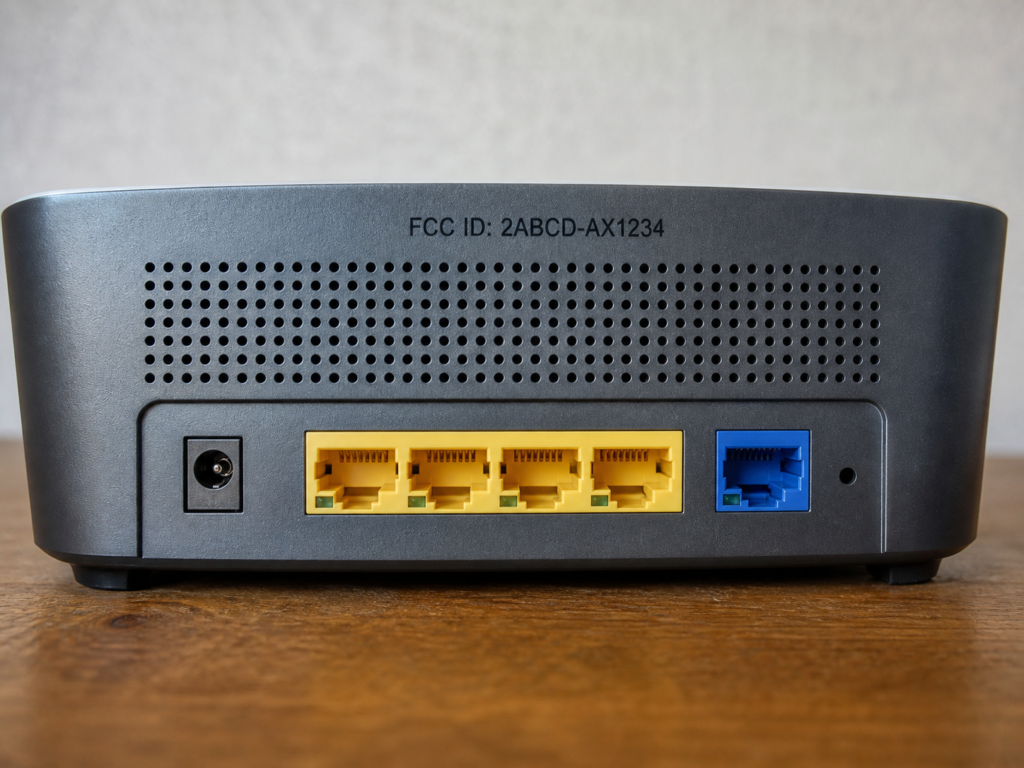
The coding rule of FCC ID is fixed: the front part is usually a 3-digit or 5-digit grantee code (also called Grantee Code, which is a unique number given by the FCC to the certification authorization holder; there is no 4-digit official grantee code), and the rear part of up to 14 digits is the product code compiled by the enterprise itself. A hyphen can be added between the two parts or not. It should be noted that the label actually affixed to the product cannot only print the number itself; it must be prefixed with “FCC ID:”, for example, “FCC ID: ABC-12345” and “FCC ID: XYZ12345” are complete and compliant marking forms.
The core requirement is authorization matching: the FCC ID corresponds to the unique authorization holder, the device model and radio frequency technical configuration listed in the authorization document. If the radio frequency core configurations (chip, antenna, module, transmission power, etc.) of multiple models in the same series are completely consistent, and all corresponding models have been listed in the authorization document, they can share the same FCC ID; if it is sold under an OEM brand, it is necessary to confirm whether the change in identification has been completed or formal permission from the authorization holder has been obtained, and the ID of the original brand cannot be directly used.
If there is a substantial change in the radio frequency part of the product — such as replacing the WiFi chip, antenna, radio frequency module, or adjusting the transmission power — you must re-apply for or confirm the validity of the ID, and cannot directly use the old ID. A mistake many sellers easily make is: products in the same series have different radio frequency configurations but share the same ID; or directly affix the ID of the old model to the new version of the product with changed radio frequency. These are all violations and will be punished if found.
Appearance and Durability Requirements
Many people think that the FCC ID has fixed size and color requirements, but in fact it does not — the size only needs to be clearly recognizable by the naked eye of a person with normal vision, and there is no mandatory regulation on color, as long as there is obvious contrast with the background, even monochrome printing is acceptable.
The only hard requirement is durability: during normal use of the product, the label must not fall off or become blurred. Processes such as laser engraving, silk screen printing, and high-temperature resistant self-adhesive are recommended. It must never be affixed to easily tearable plastic sealing films, replaceable protective films, or temporary hang tags — if the user tears off the label when unpacking, it is equivalent to not having it affixed.
Affixing Position Rules
The core principle of the affixing position is: ordinary users can easily see it without any tools.
The preferred position is a prominent place on the outside of the product body, such as the back, bottom, or fixed nameplate area, which users can see when they turn the product over.
If there is really no space, it can also be affixed in the battery compartment that can be opened without tools — for example, in the old removable battery mobile phones, you can see the label in the battery compartment when you pry open the back cover, which is allowed.
It is absolutely prohibited to: affix it on the inside that can only be seen by disassembling the shell or unscrewing screws; except for special alternative rules mentioned later such as mini products and eligible electronic labels, only printing it on the manual or outer packaging is also non-compliant.
Self-Declaration Category: SDoC Label Usage Requirements
If your product follows the SDoC self-declaration path, the requirements are different from those of certified products. It does not need an FCC ID, but there are several core requirements that must be met, otherwise it will still be considered non-compliant.
The Statement Content Cannot Be Modified Arbitrarily
The core of SDoC is the compliance statement text, which roughly means in plain language: “This device complies with the relevant FCC electromagnetic rules, does not cause harmful interference, and must accept any interference that may be received.”
It should be noted that the formal statement placed in the English user manual or accompanying compliance documents must use the standard expression specified in FCC Part 15, which contains three core meanings: first, the device does not cause harmful interference; second, the device must accept any interference received; third, including interference that may cause undesired operation (corresponding to the original regulatory text “including interference that may cause undesired operation”). You cannot take only the first two sentences and omit the rest on your own. If it is a Class A or Class B digital device, it must also match the corresponding interference warning text. Such warnings must be placed in the user manual or accompanying compliance information document, completely consistent with the actual classification of the product. In addition, the statement must never be changed into marketing language (for example, writing “This product has passed FCC official certification” is non-compliant, because SDoC is a self-declaration, not an official certification), nor can you directly copy the third-party statement of other products; it must correspond to your own product.
Don’t Mislabel Class A and Class B
Many people can’t tell the difference between Class A and Class B in SDoC, but the judgment logic is actually very simple:
Class B is for family and residential environments, with stricter electromagnetic compatibility requirements. All products designed to be sold to ordinary consumers and used in home scenarios must comply with Class B and be marked accordingly.
Class A is designed and tested according to the requirements of commercial, industrial, and office environments, with slightly looser electromagnetic compatibility requirements. If such devices are used in a residential environment, they may cause harmful interference to radio or television reception, and usually require an interference warning in the instructions.
The classification is based on the designed use and main sales target of the product. You cannot label it arbitrarily just to pass the test more easily — for example, deliberately labeling a home monitor as Class A and selling it to consumers is non-compliant.
A US Local Responsible Party Must Be Provided
This is the point that overseas sellers are most likely to miss: SDoC products must clearly mark the information of the responsible party within the US, which can be a US domestic manufacturer, importer, or other authorized responsible entity. A clear name, US local address, contact phone number, or publicly contactable internet contact information must be provided.
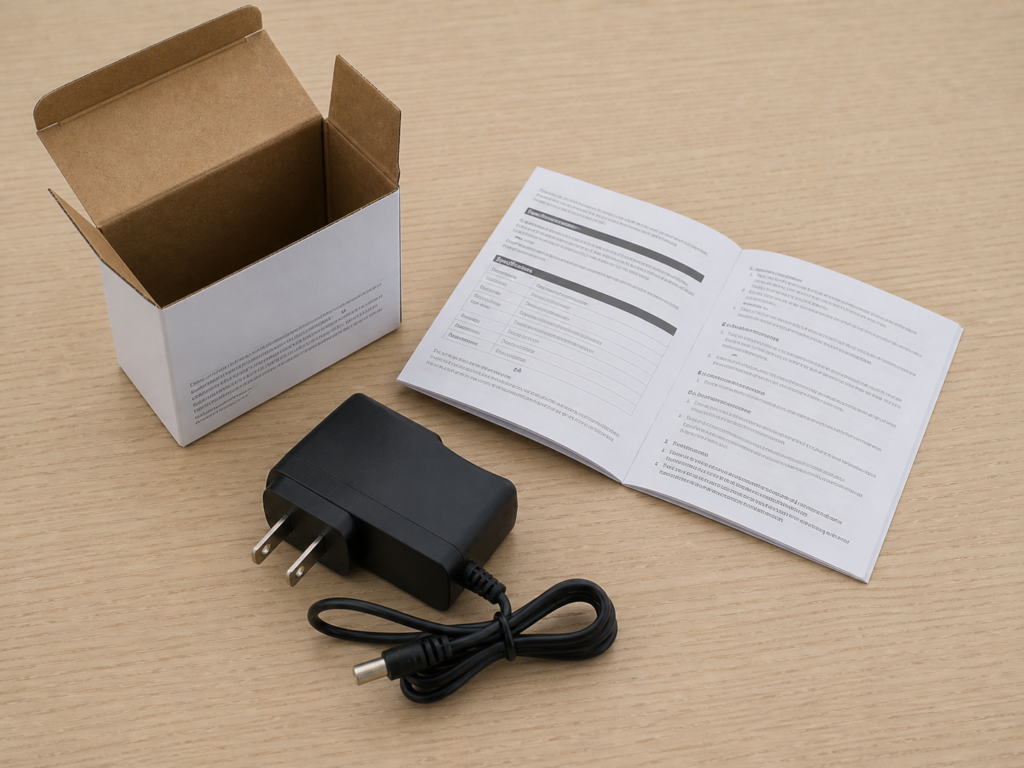
This information must be placed in a prominent position of the compliance information in the accompanying user documents, on the outer surface of the product packaging, or on the device body, to ensure that purchasers and regulators can directly obtain it. It is absolutely not allowed to only write the address of the overseas factory, let alone have no US local responsible party information at all — otherwise, US regulators cannot find the responsible person, and it will be directly deemed non-compliant.
Placement Requirements
The SDoC statement is preferably placed in a prominent position on the product body. If the product is too small and there is not enough space, it can also be placed in the accompanying user documents and on the outer surface of the packaging at the same time — note that it must be placed in both places “simultaneously”, and cannot be placed only in the manual or only on the packaging.
It is absolutely prohibited to: place it only on the e-commerce product detail page, or only in the factory’s internal test reports or non-public documents. If users and regulators cannot see it, it is equivalent to not having done it.
Three Red Lines for SDoC That Cannot Be Crossed
There are three red lines for serious violations that must never be crossed:
First, do not fabricate a non-existent FCC ID (SDoC does not need an ID; fabricating one constitutes false compliance);
Second, do not use the old version of the FCC double-F Logo to mislead users (the mandatory requirement was canceled after 2017, and there is no need to print it);
Third, do not directly use laboratory test reports as labels; they must be organized into a standardized public statement.
Label Alternative Rules for Special Scenarios
The above are all general rules for ordinary products. In actual operation, there will always be some special situations, such as the product being too small to affix a label, or using a ready-made certified module. These scenarios have special alternative rules, and you don’t have to forcefully apply the general requirements.
How to Label Mini/Ultra-Small Products
If the product itself is too small, such as the earbud body of true wireless Bluetooth headsets, small sensors, or small accessories for smart wearables, and it is impossible to affix a physical label at all, in this case, the body labeling can be exempted, but two conditions must be met at the same time:
First, print the complete label information on the minimum sales packaging;
Second, the complete label information must also be marked in the product manual.
Neither condition can be missing; only affixing on the packaging or only placing in the manual is not acceptable.
Usage Requirements for Electronic Labels
Smart devices with screens (such as mobile phones, tablets, smart watches) can use electronic labels (e-labels), that is, place the FCC ID or compliance statement in the system interface, which users can view by themselves.
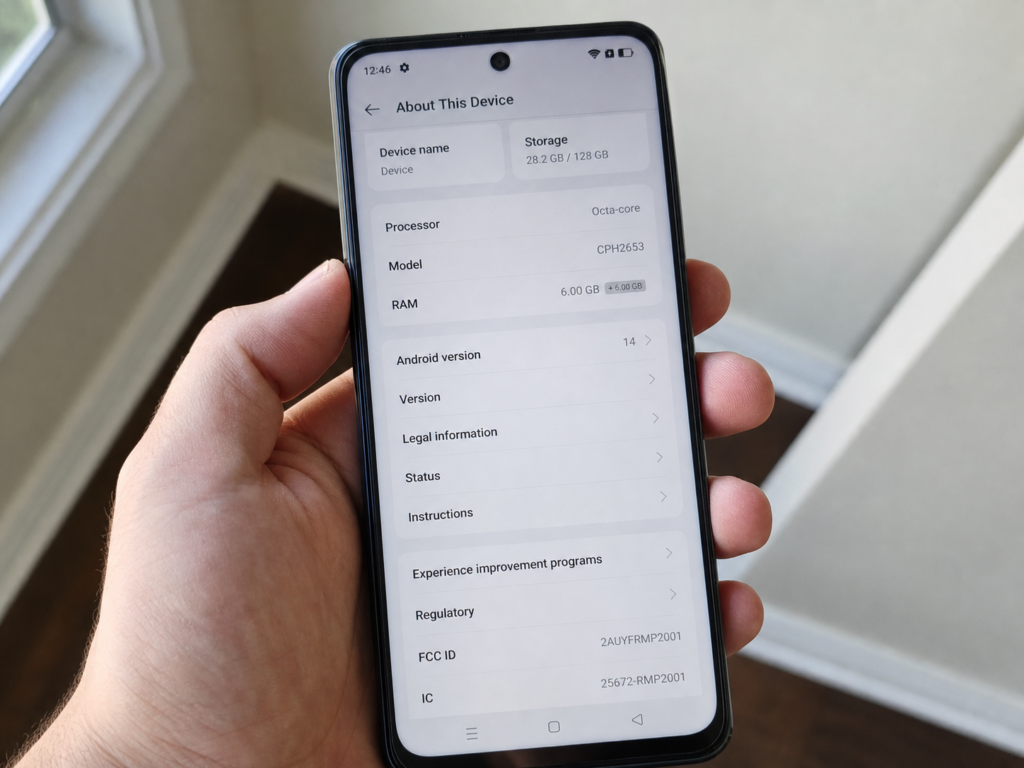
But there are two hard requirements for electronic labels: first, users can find it in 2-3 steps without paying or registering an account; for example, placing it in “Settings – About This Device” meets the requirements; second, ordinary devices without screens cannot only use electronic labels, and must have physical labels.
How to Label a Host Device with Integrated Certified Modules
If the host device uses a radio frequency module that has been FCC certified, such as a smart speaker using a ready-made WiFi module, you cannot directly default that no whole-device compliance is required. You need to judge according to the following steps:
First, confirm the certification type of the module: is it full module certification (meaning the module itself has completed all radio frequency tests and can be independently integrated into the host device for use according to authorization conditions) or limited module certification (meaning the module can only be used under specific host structure and installation conditions, and cannot be arbitrarily adapted to all products). Then carefully check the module’s grant notes (authorization remarks, which are the usage restrictions and conditions attached by the FCC when issuing the certification) and installation instructions, to confirm that the host’s antenna type, gain, transmission power, usage distance, co-located transmission (referring to whether the combined transmitted radio frequency energy still meets safety requirements when multiple wireless modules in the host work at the same time) situation, and host usage environment do not exceed the module’s authorization scope.
Only when all the above conditions are met, the host device does not need to re-apply for a whole-device FCC ID, and only needs to mark “Contains FCC ID: XXX-YYYYY” (meaning this product contains modules with the following FCC ID). But note: the non-wireless circuit part of the host itself still needs to complete SDoC or other corresponding electromagnetic compatibility assessments as required.
You must never directly use the module’s ID as the whole-device ID, nor continue to use the module certification when modifying the module’s antenna, power and other configurations.
Do Accessories Sold Separately Need to Be Labeled?
There are three situations for accessories:
If it is a wireless accessory sold separately, such as a separately sold wireless mouse or Bluetooth headset, which has an intentional emission function itself, it must apply for its own FCC ID separately and cannot use the host’s.
If it is a non-wireless accessory sold as a set, such as a phone case, stand, or ordinary data cable, which has no circuit and no emission function, it does not need to be affixed with an FCC label separately.
If it is an active accessory with a circuit, such as a separately sold wired charger, the compliance path must be judged according to the product function — if there is no wireless emission, follow SDoC; if there is, follow certification.
Pitfall Avoidance Guide: Common Misconceptions and Authenticity Verification
After finishing the rules, let’s sort out the pitfalls that people are most likely to fall into, and how to verify the authenticity of FCC labels, which can be used both for seller self-inspection and buyer purchase.
5 Common Cognitive Misconceptions
First misconception: Only with the FCC double-F Logo is it compliant. After 2017, the FCC canceled the mandatory requirement for this Logo. Whether it is compliant depends on the label content and authorization matching, and has nothing to do with whether there is a Logo.
Second misconception: If the label is affixed to the packaging, there is no need to affix it to the product body. Only mini and ultra-small products can be exempted from body labeling when they meet the conditions. All other products must have the label affixed to the body; only affixing to the packaging is non-compliant.
Third misconception: If the product has been tested, it can be affixed with an FCC ID. The FCC ID can only be printed and used after obtaining the official certification authorization from the FCC. Affixing it after passing the test but before obtaining the certificate belongs to early use, which is also non-compliant.
Fourth misconception: If a certified module is integrated, there is no need to worry about labeling and compliance. It is still necessary to check the authorization scope according to the module integration rules mentioned above, mark “Contains FCC ID”, and complete the compliance assessment of the host’s own non-wireless part at the same time, otherwise it is still non-compliant.
Fifth misconception: SDoC products can make up an FCC ID to pretend to be certified products. SDoC does not need an ID at all. Fabricating an ID is the most serious false compliance behavior among the three red lines of SDoC, and the penalty is much heavier than ordinary violations.
How to Verify the Authenticity of FCC Labels
There are two steps to judge the authenticity of the label, which is very simple to operate:
Step 1 is preliminary visual judgment: any product with intentional radio emission function must have an FCC ID, in the format of “grantee code + product code”. If a Bluetooth product does not even have an FCC ID, or the format is completely wrong, there is most likely a problem.
Step 2 is official website verification: go directly to the FCC’s official ID query system, enter the FCC ID on the product, and you can find the corresponding authorization holder, model, authorization status, and filed technical data to see if it matches the actual product.
Common abnormal situations include: no record found, authorization holder or model inconsistent with the actual product, authorization has been revoked or expired, filed device photos/technical parameters inconsistent with the actual product, or using someone else’s ID. Products with such situations cannot be sold in the US. Consumers can directly complain to the FCC, and sellers should immediately stop using them and quickly complete the compliance procedures.
It should be noted that FCC ID query can only verify the matching of official authorization records, and cannot alone prove that the current production batch, product labels, or supply chain are fully compliant. It must be comprehensively judged in combination with physical labels and product configurations.
3 Most Common Small Mistakes and Omissions in Practice
Many violations are not intentional by sellers, but just because they didn’t pay attention to details. The three most common types of mistakes and omissions include:
First, inconsistent label information across all channels (differences in content on the device body, packaging, manual, and e-commerce pages);
Second, missing US local responsible party information or only marking the overseas factory address;
Third, the label position does not meet the requirements (easy to wear, requires disassembly to view, etc.).
The specific judgment standards and rectification methods for these problems are explained in detail in the pre-market self-inspection list below, which you can directly compare and check.
Pre-Market Compliance Self-Inspection List
If you are a seller preparing to enter the US market, you can check one by one according to the following four steps before the product is launched, which can basically cover the vast majority of label compliance issues:
Step 1: First, determine the compliance path and label type accurately. First sort out all functions of the product, do not miss hidden radio frequency emissions (for example, some children’s toys have remote control, some lamps have Bluetooth networking, which are easy to be ignored), and confirm whether to follow the certification path or the SDoC path; if it is a hybrid product with both wireless functions and ordinary circuits, confirm whether both types of information need to be marked at the same time. If you are unsure, find a professional institution or check official rules to confirm, and do not judge on your own.
Step 2: Check the consistency of all label content. The FCC ID number and SDoC statement text must be completely consistent with the content on the official authorization documents and test reports, and there must be no typos or omissions; the product brand, model, hardware version, and US responsible party information must completely match the actually sold product; the Class A/B classification must correspond to the product’s designed use and sales scenario, and cannot be labeled randomly.
Step 3: Check the display position and durability of the label. For ordinary products, confirm that the label on the body is prominent, not easy to fall off, and can be seen without any tools; if it is a mini or ultra-small product, confirm that the minimum sales packaging and product manual both have complete label information, neither can be missing; if electronic labels are used, confirm that ordinary users can find the corresponding information in at most two or three steps without paying or registering an account.
Step 4: Synchronize label information across all channels. The label content on the packaging, manual, and e-commerce product detail page must be completely unified, and there must be no multiple versions of IDs or statements; the FCC ID filled in the backstage of the e-commerce platform must be completely consistent with the physical product to avoid failing the platform’s verification; all old versions of labels, packaging, and promotional materials must be cleaned up, and do not mix with new versions, which will cause information conflicts.
Final Summary
In general, the usage rules of FCC labels look detailed, but the core logic is actually very simple: first figure out which category the product belongs to, choose the correct compliance path and label type, and then place the true and accurate compliance information where users and regulators can easily see it.
After reading this article, you should be able to quickly judge whether a product needs an FCC label and which type to use, prepare the label content according to the specifications, choose the correct affixing position, verify the authenticity of the label by yourself, avoid common violation risks, and also handle problems in special scenarios such as mini products, electronic labels, and integrated modules. Combined with the pre-market self-inspection list, you can basically handle the FCC label compliance for the US market.