
Most practitioners engaged in EU wireless product-related businesses are familiar with the two directives R&TTE and RED. There are often inaccurate statements about the two in the market: some hold that RED is just a renamed version of R&TTE with no substantial differences in content; others claim that all old R&TTE certificates have become invalid and re-certification is mandatory; even more people find it difficult to determine the compliance jurisdiction of their own products. This article will systematically sort out the core differences between the two directives, provide clear explanations from basic definitions to practical judgment methods, and balance introductory understanding and practical application.
1. Preparatory Basics: Positioning and Comparison Rules
1. Quick Start: Core Conclusions and Overview of Differences
One-sentence core conclusion: RED is the current EU radio equipment access rule that replaces the radio part of R&TTE, with a more focused scope, clearer requirements, full-chain responsibility coverage, and simpler certification for low-risk equipment.
To allow readers to understand the core differences at a glance, we have compiled a general comparison table of the 6 most critical dimensions, and more detailed requirements will be expanded one by one later:
| Comparison Dimension | Old R&TTE Directive (1999/5/EC) | RED Directive (2014/53/EU) |
|---|---|---|
| Coverage Scope | Regulates both radio equipment and wired/wireless telecommunications terminal equipment, with vague category boundaries | Only regulates equipment using radio spectrum; adds pure reception and radio determination categories, removes pure wired terminals, with clear boundaries |
| Technical Requirements | Fragmented safety and health rules, vague spectrum requirements, no software-related compliance requirements | Unified health and safety radiation limits, clear requirements for efficient spectrum use, added software and firmware compliance requirements |
| Assessment Pathway | Vague classification, inconsistent implementation standards across member states, no unified rules for the application of harmonized standards | Centered on EU harmonized standards, divided into two categories: self-declaration and notified body involvement, with unified rules across the EU |
| Responsible Parties | Only clarifies manufacturer responsibilities; responsibilities of importers and distributors are vague, easily leading to buck-passing | Clear responsibilities across the entire supply chain, with explicit obligations for manufacturers, importers, and distributors respectively |
| Labeling Requirements | Some products require a radio notification mark with an exclamation mark, only manufacturer information needs to be labeled | Mandatory exclamation mark is abolished; the core conformity mark is the CE mark; operating frequency bands and maximum transmit power must be indicated; products placed on the market by importers must also be labeled with importer information |
| Transition Arrangements | No longer applies to new products placed on the EU market after June 12, 2017 | Mandatorily applies to new products placed on the market from June 12, 2017; old products legally placed on the market before that date may continue to circulate |
2. Old R&TTE: The Old Rule That Regulated Both Wireless and Wired in Early Years
The full name of R&TTE is the Radio and Telecommunications Terminal Equipment Directive, numbered 1999/5/EC. It is an old version of the market access rule issued by the EU in 1999. Its characteristic is “packaged management”: it regulates three categories of products at the same time — radio equipment, wired/wireless telecommunications terminal equipment, and associated equipment. From ordinary walkie-talkies to wired landline phones, ADSL modems, and old feature phones, all fall within its jurisdiction.
Among them, associated equipment refers to special accessories that directly serve the functions of radio equipment or telecommunications terminals (such as dedicated communication antennas), rather than general electronic accessories (such as ordinary charging cables). The core of judgment is whether it directly affects the compliance of wireless or telecommunications terminals.
This set of rules was used for more than ten years, and after the transition period ended on June 12, 2017, it no longer applies to new products placed on the EU market.
3. Current RED: The Current Rule Specifically Regulating Radio Equipment
The full name of RED is the Radio Equipment Directive, numbered 2014/53/EU. It is the current EU access rule specifically regulating radio equipment, which came into force on June 13, 2016, and is mandatorily applicable across the EU from June 12, 2017.
Its core positioning is to replace the radio-related part of R&TTE, and it only regulates “equipment using radio spectrum”. For example, common Bluetooth headsets, smart watches, WiFi desk lamps, IoT sensors, and ordinary radios all fall under the jurisdiction of RED.
4. Premise for Comparison: Unified Judgment Criteria
To avoid ambiguity, all comparisons in this article follow three unified rules:
- The comparison is of the final officially effective versions of the two directives, and does not involve drafts or revised versions;
- Only ordinary civilian and commercial radio equipment are discussed; special categories with special industry regulations such as military, aviation, maritime, and railway are not within the scope of comparison;
- The core benchmark for all time judgments is the date when the product is first placed on the EU market — that is, the date when the product first enters the EU circulation chain, not the production date, nor the shipping date.
2. Differences in Scope of Application: Which Products Fall Under RED Jurisdiction
Coverage Scope of the Old R&TTE: Packaged Management of Wireless and Wired, Vague Boundaries
The old R&TTE was a rule formulated by the EU in the early years to unify the market access of communication equipment. Its characteristic is “packaged management”, covering a total of three categories of products:
The first category is radio equipment, that is, equipment that works by transmitting/receiving radio waves, such as walkie-talkies and old feature phones;
The second category is telecommunications terminal equipment, whether wired or wireless, as long as it is connected to the public telecommunications network (that is, public communication networks such as telephone networks and broadband networks operated by operators), such as wired landline phones at home, ADSL modems, and wired fax machines;
The third category is associated equipment, that is, special accessories used in conjunction with the above equipment.
Problems with this packaged management model gradually emerged after long-term use: the technical requirements for wired and wireless are very different, and mixed management leads to very vague category boundaries, and many enterprises often cannot figure out whether their products need to be compliant according to R&TTE.
Scope Reduced by RED: Pure Wired Telecommunications Terminals Are Completely Removed
The core positioning of RED is to specifically regulate radio equipment, so the first step is to remove pure wired telecommunications terminals that have nothing to do with radio from the scope of jurisdiction.
What is a pure wired telecommunications terminal? Simply put, it is equipment that neither transmits nor receives radio waves and only accesses the public telecommunications network through wired lines, such as traditional wired landline phones, wired fax machines, and early ADSL wired modems. These are no longer within the jurisdiction of RED.
Of course, this does not mean that these products do not need to comply with EU regulations. They usually fall under the jurisdiction of other general regulations such as Electromagnetic Compatibility (EMC, the general rule that equipment must not emit excessive electromagnetic interference and can withstand normal interference) and Low Voltage (LVD, the general rule related to electrical safety). The specific judgment should be based on the product’s structure and power supply method, but they no longer need to follow the procedures for radio equipment.
Scope Expanded by RED: Pure Reception and Radio Determination Equipment Are Officially Included
While removing pure wired products, RED also officially includes two categories of radio-related equipment that had vague boundaries during the R&TTE period, and its coverage definition is also very clear: all equipment that intentionally transmits and/or receives radio waves for radio communication and/or radio determination falls under the jurisdiction of RED.
The first newly added category is pure reception equipment. Many people think that only equipment that transmits signals needs to be subject to wireless compliance, but that is not the case — for example, ordinary FM radios and television broadcast receivers do not transmit radio waves themselves, but they intentionally receive radio broadcast signals. Such equipment had vague boundaries during the old R&TTE period, with different requirements in different member states. Now RED clearly includes them in the scope of jurisdiction.
The second newly added category is radio determination equipment. For example, radar, radio rangefinders, radio positioning equipment, etc., which rely on transmitting and receiving radio waves to complete the measurement of distance and position, that is, equipment that “uses radio to measure things”, are now clearly under the jurisdiction of RED.
Here, special attention should be paid to a point that is easy to confuse: not all equipment with “measurement” functions belong to RED. For example, infrared thermometers and sound level meters use infrared rays and sound waves respectively, not radio spectrum, so they do not fall within the jurisdiction of RED. The core of judgment is: whether radio waves are used to complete the determination function.
Special Categories Exempted by Both Directives
Whether it is the old R&TTE or the current RED, there are some special categories that are exempted and do not need to be compliant according to these two directives, mainly three categories:
The first category is special equipment related to military, national defense, and national security. Such products have special confidentiality and control rules and are not subject to ordinary civilian directives;
The second category is equipment dedicated to aviation, navigation, and railways. These industries have their own special EU industry regulations and are also not subject to the ordinary radio equipment directive;
The third category is equipment used for testing and development under controlled conditions, as well as amateur radio equipment that meets the limited conditions, which also fall within the exemption scope.
Quick Judgment Method for Product Attribution
If you are not sure whether a product falls under the jurisdiction of RED, you can quickly judge it in two steps:
The first step is to check whether the product intentionally transmits or receives radio waves — if it is a pure wired product or an ordinary measurement device that does not use radio waves for determination, it does not belong to RED;
The second step is to check whether the product belongs to the special exempt industry categories mentioned above, such as military or aviation dedicated equipment, which may be exempt even if they have wireless functions.
Here are some common boundary examples: a smart desk lamp with WiFi belongs to RED jurisdiction because it transmits and receives WiFi radio waves; an ordinary wired mouse only transmits data via wired lines and does not belong; a pure FM radio, although it only receives and does not transmit, belongs to intentional reception of radio waves and is under RED jurisdiction; an ordinary wired speaker only connects to an audio cable and does not involve radio waves, so it does not belong.
Remember an exception here: if it is special equipment for a special industry, even if it has wireless functions, it may apply special industry regulations instead of RED. When making a judgment, you must first look at the core usage scenario and the industry the product belongs to.
3. Differences in Technical Requirements: What Compliance Conditions Must Products Meet
Technical requirements are one of the core differences between the two directives. On the basis of R&TTE, RED not only adjusts the structure of requirements but also adds many rules that fit the current development of wireless equipment, and different types of products are affected to varying degrees.
3.1 Health and Safety Requirements: From Fragmented to Unified and Quantified
During the old R&TTE period, safety and health requirements were formulated separately, the rules were relatively fragmented, there was no unified quantitative judgment standard for human electromagnetic radiation, and there were differences in the implementation scales of various member states.
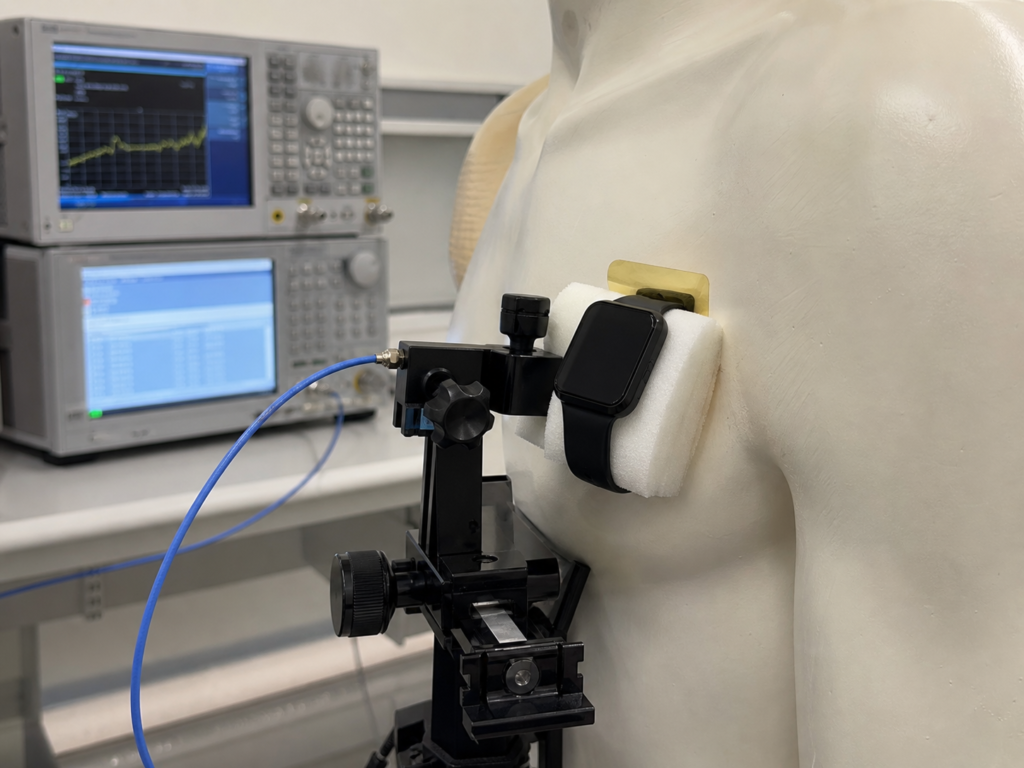
RED merges the two types of requirements into a unified basic requirement of “health and safety”, clarifying that radio equipment must meet the corresponding human electromagnetic exposure limit requirements. The electromagnetic exposure limits here do not mean that all products implement the same standard, nor do all products require special SAR (Specific Absorption Rate, the amount of electromagnetic radiation absorbed by the human body) testing. Instead, they should be judged with reference to the corresponding harmonized standards according to the product’s power, usage scenario (whether it is close to the human body), etc. In plain language, the radiation of radio waves emitted by wireless equipment to the human body must not exceed the safety threshold specified in the corresponding EU standards.
3.2 Electromagnetic Compatibility Requirements: Continued but More Unified in Implementation
Both directives require equipment to meet the basic requirements of electromagnetic compatibility: it must not generate excessive electromagnetic interference that affects the normal operation of other equipment, and it must also be able to operate stably in a normal electromagnetic environment.
The change of RED lies in that it greatly reduces the implementation differences among member states through a unified harmonized standard system: complying with the applicable harmonized standards in the RED list can usually obtain a presumption of conformity and help unify the assessment caliber across the EU; however, market supervision can still put forward requirements based on product risks, non-conformity evidence or usage restrictions, and products involving frequency band restrictions also need to check the usage conditions of member states. Overall, the core requirements for electromagnetic compatibility are continued, and the implementation caliber is more unified than during the R&TTE period.
3.3 Spectrum Use Requirements: From “No Interference” to “Efficient Use”
The old R&TTE’s requirements for spectrum only stayed at the level of “avoiding harmful interference”, the rules were relatively general, only focusing on whether the equipment would affect the normal operation of other equipment, and there was no clear constraint on the rational use of spectrum resources.
RED upgrades the spectrum requirement to “effective use of radio spectrum”, that is, not only must it not interfere with other legal equipment, but also use radio spectrum resources reasonably and efficiently, and indiscriminate occupation of frequency bands and waste of spectrum resources are prohibited. The most direct impact of this requirement is reflected in equipment with modifiable wireless parameters, such as software-defined radio (SDR), professional walkie-talkies whose frequency bands or power can be adjusted through settings, etc. If such equipment is randomly modified by users or third parties in terms of frequency band and power, it is very likely to cause out-of-range transmission and occupation of legal frequency bands. Therefore, RED requires that such equipment must have a design to prevent unauthorized modification, so as to reduce the risk of spectrum abuse from the source.
3.4 Software and Firmware Requirements: Becoming a Compliance Variable for the First Time
During the formulation period of the old R&TTE, the software functions of wireless equipment were relatively simple, so software/firmware was not included in the scope of compliance consideration, and the compliance of equipment basically only depended on hardware.
RED includes software and firmware in the scope of compliance management for the first time, but not all software changes require re-evaluation of compliance — only when the change will affect the safety, electromagnetic compatibility or spectrum compliance of the product, re-evaluation is required. For example, firmware updates that adjust the transmission frequency, power, modulation method, wireless protocol stack, and antenna matching parameters will directly affect wireless compliance, so re-verification is required; while ordinary interface UI updates, bug fixes for non-wireless functions, and function upgrades that do not involve wireless parameters will not affect RED compliance, so there is no need to go through the evaluation process again. Manufacturers need to clearly state which combinations of software versions and hardware configurations meet RED requirements, to ensure that mass production and subsequent updates are within the compliance scope.
3.5 Additional Requirements: Only Applicable to Specific Products in Accordance with Authorizing Regulations
There is also a special type of additional requirement in RED, from Article 3(3) of the directive. Such requirements do not need to be met by all wireless equipment, but are gradually implemented by the EU through special authorizing regulations according to product categories and regulatory needs. The applicability and effective time of different products vary.
Typical scenarios that have been gradually promoted at present include: network security and personal information protection requirements for some networked wireless equipment, special safety requirements for child care wireless equipment, emergency service and accessibility requirements for wearable payment wireless equipment, etc. Whether it is specifically applicable needs to be confirmed in combination with the product category and the effectiveness of the corresponding EU authorizing regulations, and cannot be generalized.
3.6 Impact Differences for Different Products
Changes in technical requirements have very different impacts on different types of products, which can be roughly judged according to product characteristics:
The first category is low-power small equipment, such as Bluetooth mice, low-power wireless sensors, ordinary Bluetooth headsets, etc.; although headsets are close to the human body, they usually have low power and mature applicable standards. The requirements during the R&TTE period have covered most of the content, and the changes of RED have minimal impact on them, basically incurring no additional compliance costs.
The second category is high-power equipment or equipment that is close to the human body when in use, such as high-power wireless routers, smart watches worn close to the body, and professional walkie-talkies. Such products need to meet clear human electromagnetic radiation limit requirements, which may require supplementary corresponding tests, and compliance costs will increase to a certain extent.
The third category is equipment with customizable wireless parameters, such as software-defined radios and professional communication equipment with adjustable frequency band power. Such products not only need to meet the requirements of efficient spectrum use, but also need to add designs to prevent unauthorized modification. The changes in compliance requirements are the most obvious, and the cost increase is also the largest.
The overall rule is: the higher the equipment power, the closer it is to the human body when in use, and the stronger the modifiability of wireless parameters, the greater the impact of changes in RED technical requirements.
4. Differences in Conformity Assessment Pathways: How to Prove Product Compliance
The so-called conformity assessment is “how to prove that your product meets the requirements of the directive”. In this part, the rules of RED are much clearer and more flexible than those of the old R&TTE.
Assessment of the Old R&TTE: Inconsistent Standards and Vague Procedures
The assessment classification of the old R&TTE was very vague, and the implementation standards of various member states were also different. Some categories required the intervention of third-party testing and certification bodies authorized by the EU (also called notified bodies), but there was no unified rule for the application of harmonized standards. Enterprises often did not know what to follow when doing compliance.
Core of RED Assessment: Harmonized Standards
The entire assessment system of RED revolves around “harmonized standards”. The so-called harmonized standards, to put it bluntly, are the “standard compliance answers” officially announced by the EU — as long as your product fully complies with the corresponding harmonized standards, it is deemed to meet the requirements of RED.
Two key points should be noted here:
- The validity of harmonized standards should be checked against the latest RED list in the Official Journal of the European Union. Standards used during the old R&TTE period may not still be in the RED list;
- For a standard with the same number, the effective version in the RED list shall prevail, and old versions are not valid.
Two Types of Assessment Pathways for RED
RED divides the assessment pathways into two categories, and enterprises can choose according to the product situation:
The first category is internal production control (self-declaration): the applicable condition is that the product fully applies the effective harmonized standards in the RED list and does not trigger the situation requiring notified body intervention — the manufacturer conducts testing, organizes technical documents, and signs the EU Declaration of Conformity (to put it bluntly, it is a compliance commitment letter issued by the manufacturer itself, which takes full responsibility for the product’s compliance) by itself, then the CE mark can be affixed, and there is no mandatory need to find a third-party body.
The second category is notified body intervention: there are two main types of triggering conditions — first, the product does not fully cover the effective harmonized standards of RED, or does not fully adopt harmonized standards; second, the product requires notified body participation due to risk, category or regulatory requirements (such as specific categories listed in Annex III of RED). If any of the conditions are met, the assessment procedure with notified body participation shall be selected in accordance with RED regulations. The specific confirmation shall be combined with product parameters, uses and applicable standards. For example, some high-power radio stations and wireless equipment for medical scenarios may require notified body intervention.
Quick Method for Judging Assessment Pathways
If you are not sure which path the product should take, you can judge it in two steps:
Step 1: First check whether the product triggers the specific requirements for notified body intervention;
Step 2: Then check whether there are effective harmonized standards covering all functions of the product.
Products such as ordinary Bluetooth/WiFi consumer electronics and low-power wireless toys mostly have corresponding harmonized standards and do not require notified body intervention, so they can basically follow the self-declaration pathway. Here is a common pitfall to clarify: many people think that all RED certifications cost a lot of money to find a third party, but in fact, eligible enterprises can complete it independently without wasting money.
The overall rule is: the higher the product risk and the less complete the standard coverage, the stricter the requirements for third-party bodies.
5. Differences in Supply Chain Responsibilities: Who Is Responsible for Compliance
One of the obvious shortcomings of the old R&TTE is the vague definition of responsible parties, which easily leads to buck-passing between upstream and downstream when compliance problems occur. RED clarifies the responsibility division of the entire supply chain, with clear provisions for the obligations of each link.
Responsibility Loophole of the Old R&TTE: Only Manufacturers Are Responsible
The old R&TTE only clarified the responsibilities of manufacturers, and the responsibilities of importers and distributors were very vague. Once a product had compliance problems, it often happened that the manufacturer pushed the responsibility to the importer and the importer pushed it to the distributor, and it was difficult for regulators to hold anyone accountable.
Full-Chain Responsibilities of RED: Each Link Has Obligations
RED clearly states the responsibilities of each role in the supply chain:
- Manufacturer: Responsible for completing compliance assessment, preparing technical documents, signing the Declaration of Conformity, and ensuring that mass-produced products meet the requirements;
- Importer: Shall confirm that the manufacturer has completed the compliance procedure. If the product is placed on the EU market by the importer, the importer’s information shall be marked as required, and non-compliant products shall not be imported into the EU;
- Distributor: Shall check whether the CE mark, instructions, etc. meet the requirements before sales, and immediately stop selling if non-compliance is found;
- Authorized Representative: May be entrusted by the manufacturer to handle some compliance affairs, but cannot replace the manufacturer to bear the responsibility for the product itself.
Three Most Common Responsibility Misconceptions
Many people have deviations in their understanding of responsibilities. Here are three high-frequency misconceptions clarified:
- “Getting a test report equals compliance”: No, in addition to the test report, a complete set of technical documents and a Declaration of Conformity are required to be fully compliant;
- “It’s fine if the upstream says it’s compliant”: No, importers and distributors also have to bear the responsibility of inspection, and they will be fined if problems arise;
- “Cross-border platform sales do not count as placing on the market”: No, cross-border e-commerce sales are usually recognized as placing on the EU market and must meet RED requirements.
Especially in scenarios such as cross-border e-commerce, OEM, and import sales, importers and distributors have higher responsibility risks, so they must clarify rights and responsibilities in advance.
6. Differences in Labeling, Documentation and Traceability Requirements: What to Affix and What Materials to Keep
There are also many differences between the two directives in terms of what marks to affix on products, what documents to prepare, and how long to keep them.
CE Mark and Special Marks: Exclamation Mark Abolished, Core Mark Unified as CE
During the old R&TTE period, in addition to the CE mark, some products also needed to be affixed with a radio notification mark with an exclamation mark, and the requirements for whether and how to affix it varied among member states, which was very chaotic.
RED abolishes the mandatory exclamation mark notification mark for some products under R&TTE, and the core conformity mark is unified as the CE mark; but this does not mean that only affixing the CE is enough. It is still necessary to mark the notified body number (if any), model and batch, subject information, operating frequency bands, maximum transmit power and other content in accordance with the applicable conformity assessment module, product size and accompanying document requirements. The original frequency band use restrictions are uniformly moved to the instructions for clear explanation. Among them, the operating frequency band and maximum transmit power are newly added mandatory labeling requirements of RED, which need to be reflected in the product or accompanying documents.
Subject Information: From Only Labeling Manufacturers to Adding Importers as Needed
The old R&TTE only required labeling of manufacturer information, while RED clarifies: the product must be labeled with the manufacturer’s name and contact information; if the product is produced by a non-EU manufacturer and placed on the EU market through an importer, the importer must also label its name and contact information on the product, packaging or accompanying documents. Products with missing or non-compliant information shall not be imported and placed on the market, to facilitate regulatory accountability.
Instructions: New Use Restriction Requirements
Both directives require the instructions to use the official language of the EU country where the product is sold. This is a general regulation of member states, not a core difference between the two directives.
The new requirement of RED is: the instructions must clearly state the use restrictions of the product, such as which countries or scenarios it cannot be used in.
Technical Documents: Unified Requirement of 10 Years of Retention
During the old R&TTE period, there was no unified regulation on the retention period of technical documents at the EU level, and the implementation calibers of member states were different. Enterprises needed to confirm according to the applicable member state rules at that time.
RED uniformly stipulates that technical documents shall be retained for 10 years after the last batch of products is placed on the EU market. The necessary contents include risk assessment reports, design drawings, test reports, and software change descriptions (if applicable).
4 Points Most Easily Missed by E-commerce Sellers
Practitioners engaged in cross-border e-commerce often stumble on labeling and documents. The most common omissions are the following:
- Missing information on wireless frequency bands and maximum transmit power;
- No description of use restrictions in EU countries;
- Unclear way to obtain the Declaration of Conformity;
- The CE mark displayed on the detail page is inconsistent with the actual product model.
Especially for small products and products with national use restrictions, these problems are most likely to occur when selling via e-commerce, so be sure to check in advance.
7. Transition Period and Validity Judgment of Old Documents: Can Old R&TTE Certificates Still Be Used?
This is the most frequently asked question: can the R&TTE certificate done before still be used now? The answer depends entirely on the date when the product is first placed on the market.
Core Judgment Benchmark: Date of First Placement on the Market
Again: the core of judging whether an old certificate can be used is the date when the product first enters the EU circulation chain, not the production date, nor the shipping date. If the product is only stored in an EU warehouse and has not entered the circulation chain, it is not considered to have been placed on the market.
Transition Period and Grandfather Clause: Can Old Products Continue to Be Sold
The transition period of RED is from June 13, 2016 to June 12, 2017. During this period, new products can be compliant with either R&TTE or RED.
The so-called “grandfather clause”, simply put, is “old rules for old products”: products that have been legally placed on the EU market before June 12, 2017 do not need to be re-adjusted according to RED and can continue to be sold and used.
But there is an exception: if the products were produced before June 12, 2017 but have been kept in EU warehouses without entering circulation, they do not enjoy the grandfather clause. If they are taken out for sale after June 12, 2017, they must comply with RED.
Validity Judgment of Old Certificates and Old Reports
Old R&TTE certificates or reports cannot be directly used for products newly placed on the market after June 12, 2017. But they are not completely useless: if the standard corresponding to the old test report is still in the effective harmonized standard list of RED, it can be used as a technical reference.
Whether retesting is required mainly depends on three conditions: whether the standard version is still valid, whether the product has substantial changes, and whether the report can cover all the requirements of RED. If all three conditions are met, the old test data can be used as supporting materials for RED technical documents, but it is still necessary to confirm that the product meets all the basic requirements of RED, the harmonized standard version is valid, the product configuration is consistent with that during testing, and the risk assessment covers all applicable items. Uncovered content still needs supplementary testing, and cannot be directly equated with complete RED compliance basis.
Do Refurbished or Modified Products Count as New Products
There is also a common boundary question: after old products are refurbished or modified, do they count as new products? Do they need to be redone according to RED?
The judgment standard is very simple: if it is just repackaging and affixing new labels, without changing the core functions of the product, then it is not a new product, the original date of placement on the market remains unchanged, and it can still follow the old rules; if there are substantial changes in hardware or software — such as changing the antenna, changing the power, adding core wireless functions — then it is regarded as a new product and needs to be re-evaluated for compliance according to RED.
The core judgment point is: whether the change will affect the safety, electromagnetic compatibility or spectrum compliance of the product. If yes, re-evaluation is required.
8. Clarification of Common Misconceptions and Quick Self-Check List
7 Most Common Cognitive Misconceptions
We have sorted out 7 of the most frequent cognitive misconceptions to help you avoid basic pitfalls:
- “RED is just a renamed R&TTE, the content is exactly the same”: No, there are substantial changes in the scope of application, responsibility division, and software requirements between the two, not just a simple name change;
- “All equipment with electronic functions fall within the scope of regulation”: No, only equipment that intentionally transmits or receives radio waves may fall under the jurisdiction of RED;
- “R&TTE has completely become invalid”: No, old products that have been legally placed on the EU market before June 12, 2017 can still circulate normally;
- “Only equipment that transmits radio waves needs to comply with RED”: No, pure reception and radio determination equipment are now also included in the scope of RED;
- “All requirements of RED are stricter than R&TTE”: No, the certification process for low-risk equipment is instead more lenient, and there is no mandatory need to find a third party;
- “If the wireless module has CE, the whole machine is compliant”: No, the antenna, housing, software, and installation method of the whole machine will affect compliance. Module compliance does not mean the whole machine is compliant;
- “The CE mark is an official EU certification”: No, CE is a manufacturer’s self-declaration, not a certificate issued by the EU official, and the manufacturer is fully responsible for compliance.
Quick Self-Check List for Ordinary Merchants
If you are an ordinary merchant doing business in the EU market, you can use the following list to quickly check the basic compliance status:
- □ Whether the product intentionally transmits/receives radio waves (exclude pure wired and non-radio determination measurement equipment)
- □ Whether it is planned to be first placed on the EU market after June 12, 2017
- □ Whether the Declaration of Conformity cites RED 2014/53/EU (instead of the old R&TTE 1999/5/EC)
- □ Whether the product/instructions indicate the operating frequency band and maximum transmit power
- □ Whether the responsibilities of importers/distributors have been clarified
- □ Whether the harmonized standards used are in the latest effective RED list
Practical Pitfall Avoidance Tips
There are three more pitfall avoidance tips at the practical level to help you avoid detours:
- Don’t believe the publicity of “RED guaranteed pass”, compliance depends on the actual parameters of the product, you can’t buy a certificate with money;
- Don’t equate wireless certifications from other regions (such as US FCC) directly with RED certification, the EU does not directly recognize certifications from other regions;
- When you are not sure about the product scope or compliance requirements, don’t guess blindly, it is more reliable to consult a professional institution with RED qualifications.
9. Summary: Judgment Abilities You Can Master After Learning
After reading this article, you should be able to master 6 practical judgment abilities, which are sufficient to deal with daily compliance problems:
- Able to distinguish the core positioning differences between R&TTE and RED: the old rule regulates wireless + wired telecommunications terminals, the new rule only regulates radio equipment;
- Able to quickly judge whether ordinary civilian products fall within the jurisdiction of RED;
- Able to judge the validity of old R&TTE certificates/reports according to the date when the product is first placed on the market;
- Able to judge the conformity assessment pathway of the product according to the coverage of harmonized standards;
- Able to identify common RED compliance misconceptions and avoid basic risks;
- Able to list the core compliance checkpoints in e-commerce/import scenarios.