
If you often buy EU-version electronic products, or run a cross-border business in Europe, you have definitely heard of the “EU unified USB-C charger” claim. Many people think that starting from a certain day, all electronic products sold in the EU must use a USB-C port, but that is completely not the case — this rule only applies to specific categories, takes effect at different times, and many common products do not need to comply for the time being. This article will thoroughly explain the scope of products subject to the EU Common Charger Directive, from basic introductory concepts and the official list, to advanced judgment methods and easily confused boundaries, as well as common myths and real cases. After reading it, you can judge by yourself whether any product needs to meet the requirements.
First, Understand 3 Basic Common Facts to Avoid Confusion Later
Before looking at the specific product list, first clarify a few core concepts, otherwise you will easily get more confused as you read.
What Exactly Does This Regulation Regulate?
In plain terms, this is a mandatory rule set by the EU, requiring certain designated electronic products to use USB-C as the unified interface for wired charging. Its core purpose is to reduce e-waste, so that users do not have to pile up chargers with different interfaces at home, and old chargers can still be used when replacing devices.
Its official name is the Common Charger Directive (EU 2022/2380). This article only focuses on the question of “which products need to comply”; specific technical compliance requirements, certification processes, and other such content are outside the scope of this article.
What Is the Use of Understanding the Scope of Application?
If you are an ordinary consumer, when shopping overseas or buying EU-version products, you no longer need to ask customer service “can this be used with my existing USB-C charger” — you can quickly judge by yourself.
If you are a small merchant or cross-border seller, you can confirm in advance whether the products you sell need to comply, to avoid being removed from platforms, having goods detained by customs, or even being fined for non-compliance with the rules.
3 Terms You Must Know First
These terms will be mentioned repeatedly in the following content; understanding them first will prevent you from getting stuck:
The first is portable rechargeable devices: in plain terms, these are devices that can be carried around and operate on a built-in rechargeable battery; devices using disposable dry batteries are not included. For example, Bluetooth earphones count, but a TV remote control using AAA batteries does not.
The second is placed on the EU market: this is not simply “sold in the EU”, but refers to the first time a product is made available to consumers on the EU market, regardless of whether it is sold or given away for free. In addition, for countries in the European Economic Area (EEA), judgment must be based on whether the local jurisdiction has incorporated this regulation into local rules; not all EEA countries apply it simultaneously.
The third is radio equipment: this concept is defined according to the EU Radio Equipment Directive (RED Directive), and the core is whether the device intentionally transmits or receives radio waves for functions such as communication and positioning. Bluetooth, WiFi, and cellular networks are the most common types. Whether functions such as GPS reception and wireless remote control count as radio equipment must be confirmed in combination with the product’s technical design and official definitions, and cannot be directly judged solely by the function name.
Official List of Products Subject to Requirements, Effective in Two Batches
The EU does not require all products to change their interfaces at once; instead, it rolls out the requirement in two batches, leaving manufacturers enough time to adjust. It should be noted that the categories on the list are statutory broad categories, and specific products still need to meet the technical attributes mentioned later to be fully applicable — it is not the case that any product with that name must comply.
First Batch: 12 Categories of Products Effective from December 28, 2024
The first batch covers common consumer electronics, totaling 12 categories, all falling within the scope of radio equipment listed in the regulation. The statutory categories corresponding to the official annex are as follows:
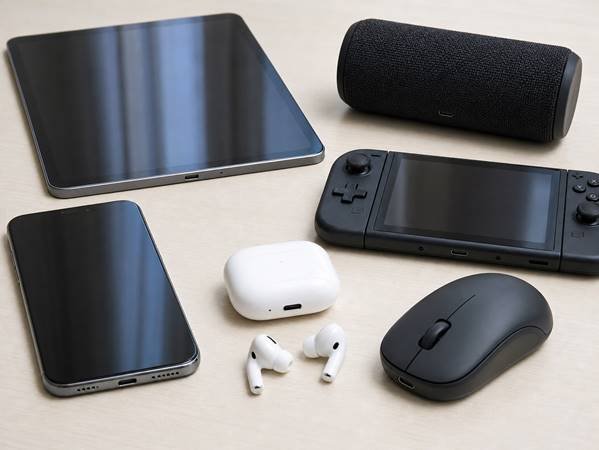
1. Mobile phones: Typical products include handheld calling devices such as smartphones and keypad feature phones that can access cellular networks; boundary note: wearable devices such as smart watches with calling functions do not fall into this category.
2. Tablets: Typical products are independent general-purpose computing devices mainly operated by touch; boundary note: wearable devices such as large-screen smart bands and smart watches do not fall into this category. Screen size is for reference only and has no legal threshold.
3. E-readers: Typical products are dedicated portable devices mainly used for reading e-books (such as the Kindle series); boundary note: general-purpose tablets with reading functions do not fall into this category.
4. Portable digital cameras: Typical products include photo/video devices that can be carried around, such as action cameras and point-and-shoot cameras; boundary note: large camera equipment fixedly installed in professional studios does not fall into this category.
5. Over-ear headphones (corresponding to official “headphones”): Typical products are wireless rechargeable over-ear headphones worn on the head, mainly used for audio playback; boundary note: head-worn devices with built-in microphones that focus on calling functions are usually classified as the next category, headsets. The specific classification shall be subject to the EU official classification.
6. Headsets (corresponding to official “headsets”): Typical products are wireless rechargeable headphones with integrated microphones and calling functions, covering various wearing forms such as over-ear with mic, in-ear with mic, and ear-hook with mic; boundary note: in-ear/ear-hook headphones only used for listening to audio without calling functions are usually classified as earbuds or over-ear headphones, and judgment must be made in combination with the product’s design positioning.
7. Earbuds (corresponding to official “earbuds”): Typical products are small wireless rechargeable headphones inserted into the ear canal or fitted to the ear opening, including true wireless earbuds and their matching charging cases (as part of the product set); boundary note: true wireless earbuds with microphones are usually still classified in this category, not as headsets. The specific classification shall be subject to statutory classification.
8. Portable rechargeable speakers: Typical products are Bluetooth speakers with wireless functions that can be carried around; boundary note: plug-in desktop speakers and wall-mounted fixed speakers do not fall into this category.
9. Wireless rechargeable keyboards: Typical products are keyboards with wireless functions and built-in rechargeable batteries; boundary note: purely wired keyboards and wireless keyboards using disposable dry batteries do not fall into this category.
10. Wireless rechargeable mice: Typical products are mice with wireless functions and built-in rechargeable batteries; boundary note: purely wired mice and wireless mice using disposable dry batteries do not fall into this category.
11. Portable navigation devices: Typical products include handheld GPS navigators, portable in-car navigators, etc.; boundary note: mobile phones and tablets with built-in navigation functions do not fall into this category.
12. Handheld game consoles: Typical products are handheld consoles with built-in screens that can be used independently without a fixed power supply or external display device (such as the Switch series); boundary note: home game consoles that need to be connected to a TV/monitor do not fall into this category.
Second Batch: Laptop Category Effective from April 28, 2026
Laptops have a longer transition period, and the rule will officially take effect on April 28, 2026. This rule applies to devices that are first placed on the EU market after that date, fall under the statutory laptop category, have radio functions, and support wired charging. It usually covers common portable laptop categories such as thin-and-light laptops, ultrabooks, and gaming laptops, but the final judgment must still be based on the product’s statutory classification and technical attributes, and cannot be determined solely by promotional labels such as “gaming laptop” or “thin-and-light laptop”.
The reason for the longer transition period is that the charging power of laptops varies widely, from tens of watts for thin-and-light laptops to hundreds of watts for gaming laptops, so manufacturers have a longer cycle to adjust product designs and unify power specifications.
Special Note: Chargers Are Not Within the Scope of “Applicable Products” of This Directive
Many people include chargers as applicable products. Here, we clearly delineate three different levels of rules:
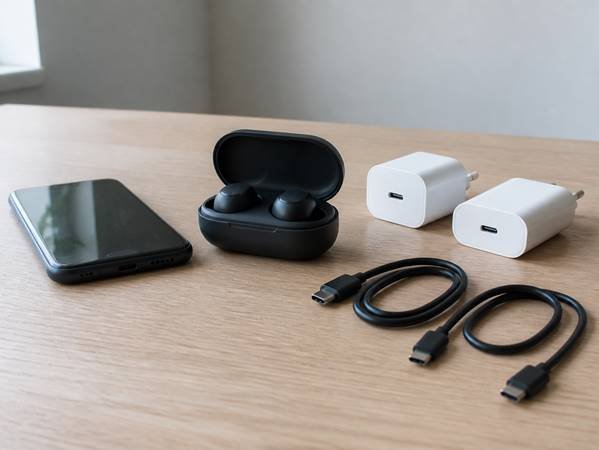
First, the “applicable products” discussed in this article refer to the electronic devices themselves that need a unified USB-C charging interface. Chargers are supporting accessories and are not within the scope of product applicability judgment of this directive.
Second, the supporting requirement of the directive for listed devices is: it is necessary to clearly show consumers whether a charger is included through statutory channels such as product packaging and official instructions, and consumers can choose to buy a version of the device without a charger. The specific labeling form shall be subject to EU implementation rules, not solely based on the sales page.
Third, separately sold USB-C power adapters may be subject to other EU regulations such as ecodesign and safety specifications, and the rules of this directive cannot be directly used to judge all their compliance requirements.
Advanced Judgment: 4 Steps to Confirm Whether Any Product Is Applicable
If you encounter an unfamiliar product not mentioned in the list, or are not sure whether a product counts, you can judge by yourself using these 4 steps. Follow them in order; if the previous step is not met, the product is directly excluded, and you do not need to proceed further.
Step 1: First Check the Time and Placement Scenario (Prerequisite)
This step is the major prerequisite, and the core judgment criterion is: whether the product is first legally placed on the EU market after the effective date of the corresponding category. The judgment results vary for different situations:
• Specific products that have been legally first placed on the EU market before the effective date (including unsold new stock and legally circulating second-hand products) usually do not trigger the new interface requirements of this directive due to subsequent continued sales or circulation, but they still need to meet the requirements of other EU regulations applicable at the time of their first placement; they cannot be automatically exempted across the board.
• If an old model of product is first introduced and placed on the EU market after the effective date (for example, an old model of a brand’s mobile phone that was never sold in the EU before and is first listed after the effective date), it still needs to comply.
• For importers who first introduce products from outside the EU and place them on the market, the time of first placement shall prevail, and products cannot be exempted solely because they are old models.
• Products brought into the EU for personal use and non-commercial purposes (such as mobile phones carried while traveling, and personal items purchased overseas) do not fall into the category of “placed on the market” and do not need to comply.
The most common pitfall here: the judgment criterion is the time of “first placement on the EU market”, not the production date, nor the individual consumer’s purchase time.
Step 2: Check the Officially Listed Category List (Core Basis)
If the time and scenario meet the requirements, next compare with the two batches of officially listed product lists above. Only categories in the list need to be further verified.
Products not in the list do not need to meet the USB-C unified interface requirements stipulated in this directive, but they may still be subject to other EU rules such as the RED Directive, battery regulations, ecodesign regulations, and product safety regulations, which is not equivalent to being completely free of EU compliance requirements.
The European Commission will regularly review the scope of application according to the evaluation mechanism stipulated in the regulation, and may add new categories through amendments in the future; specific judgments shall be based on the currently effective regulatory text and official public guidance of the EU.
Step 3: Verify 3 Core Attributes (All Are Indispensable)
Note: These three attributes are technical conditions for verifying whether products already on the official list are actually applicable, not a general judgment formula for all consumer electronics — even if products not on the list meet all three, they are temporarily not subject to the USB-C requirements of this directive.
Usually, all three conditions must be met simultaneously:
First, it must be radio equipment, that is, equipment that meets the definition of the EU RED Directive and intentionally transmits or receives radio waves for functions such as communication and positioning. Bluetooth, WiFi, and cellular networks are the most common typical types; whether functions such as GPS reception and wireless remote control constitute radio equipment must be confirmed in combination with the product’s technical design, operating frequency, and official definitions, and cannot be directly judged solely by the function name.
Second, it must support wired charging. If a device can only be charged wirelessly and has no wired charging interface at all, it is temporarily not mandatorily applicable.
Third, it must be a portable rechargeable device, that is, a device that can be carried around and has a built-in rechargeable battery (disposable dry batteries do not count). “Whether it is portable” is usually judged by the product’s design purpose and conventional usage. Fixedly installed devices generally do not fall into the portable category, but boundary products such as portable in-car navigators and detachable devices need to be confirmed in combination with specific design and official classification.
Take a simple example: a wireless rechargeable mouse is on the listed list and meets all three attributes, so it falls within the scope of application; but a wireless mouse using disposable dry batteries, although its category is on the list, does not meet the attribute of “built-in rechargeable battery”, so this rule does not apply to it.
Step 4: Check Official Classification for Cross-Category Products (Final Basis)
If you encounter cross-category products with ambiguous forms, such as 2-in-1 devices that can be used as both tablets and laptops, or smart speakers with screens, you cannot judge by yourself solely based on appearance or promotional names. You must comprehensively confirm them in combination with the product’s main design purpose, technical documents, manuals, EU official product classification, and public explanations.
If you are really unsure, you can check the public guidance of EU market regulatory authorities, and do not guess on your own.
These Products Clearly Do Not Need to Comply
Except for the eligible products mentioned above, all other products do not need to comply with the USB-C unified interface requirements of this directive, and can be roughly divided into three categories:
Category 1: Products That Do Not Meet Core Attributes (Directly Excluded)
These products do not even meet the basic technical attributes, so they can be directly ruled out:
• Non-portable: fixedly installed/non-portable designed devices such as desktop computer hosts, wall-mounted speakers, and home game consoles; servers, fixed professional studio equipment, etc. are usually also not applicable because they do not meet the portable requirement or are not on the listed list, but “professional use” cannot be used as the sole basis for exclusion; categories and attributes still need to be verified.
• Do not support wired charging / have no charging function: devices that only support wireless charging and have no wired charging interface at all; wireless mice, remote controls, etc. that use disposable dry batteries.
• Non-radio equipment: purely wired keyboards/mice, electric toys without any wireless transceiving functions, etc. — note that “not connected to the internet” does not mean it is not radio equipment; toys with wireless remote control functions may be radio equipment, which requires specific judgment.
Category 2: Special Categories That Meet Core Attributes But Are Statutorily Excluded
Even if these products meet all the above attributes, they are not subject to this directive due to statutory exclusion clauses:
• Implantable medical devices (such as pacemakers).
• Equipment specifically used in military, national security, aviation, or aerospace fields is only exempt from this rule if it falls under the statutory exclusion clauses clearly stipulated in the EU RED Directive or this directive. Ordinary industrial equipment, professional consumer-grade cameras, and civil aviation-related electronic equipment cannot be automatically excluded solely by the labels of “professional” or “non-consumer”; statutory categories, technical attributes, and applicable regulatory clauses still need to be verified.
• Light mobility vehicles such as electric bicycles and electric scooters do not fall into the common charger product categories listed in this directive; whether they need to comply with other EU product safety, radio, battery, or ecodesign rules shall be judged separately according to corresponding regulations, and there is no mandatory unified charging interface requirement.
Category 3: Common Consumer Electronics Not Yet Included in the Listed List
Many of these products meet the core attributes, but they have not yet been included in the current mandatory scope. According to the currently effective rules, they are temporarily not subject to the USB-C unified interface requirements of this directive (this does not mean that no other EU compliance is required):
• Wearables: smart watches, fitness bands, smart rings, VR/AR headsets
• Personal care: portable personal care electronics such as electric toothbrushes, shavers, and beauty devices
• Others: power banks, portable power tools, consumer-grade drones, electronic toys, non-implantable portable medical devices
The European Commission will regularly review the scope of application according to the evaluation mechanism stipulated in the regulation, and may add new categories in the future. The specific provisions shall be subject to the officially effective rules at that time.
Quick Reference for Boundaries of Easily Confused Products
Many products look similar, but their categories are completely different, and whether they need to comply with the rules is also different. Below are the 6 most easily confused groups of products, for your quick reference:
| Easily Confused Category Combinations | Core of Judgment | Applicable Rule Description |
| Tablet vs Large-screen Smart Watch/Band | Based on the product’s statutory classification and main design purpose, judge whether it is an independent general-purpose computing device; screen size is only for auxiliary reference and is not a legal threshold | Tablets are a listed category effective December 28, 2024; large-screen smart wearables are not yet included |
| Portable Bluetooth Speaker vs Desktop/Fixed Speaker | Whether it is of portable design, has a built-in rechargeable battery, can be used independently without a fixed power supply, and has wireless functions | Portable Bluetooth speakers are a listed category effective December 28, 2024; plug-in desktop/wall-mounted speakers are not applicable |
| Handheld Game Console vs Home Game Console | Whether it has a built-in screen and can be used independently without external display devices (TV/monitor) and fixed power supply | Handheld game consoles are a listed category effective December 28, 2024; home consoles such as PS5 and Xbox are not applicable |
| Wireless Rechargeable Keyboard/Mouse vs Ordinary Keyboard/Mouse | Whether it meets three conditions simultaneously: has wireless functions, built-in rechargeable battery, and supports wired charging | Keyboards and mice that meet all three conditions are a listed category effective December 28, 2024; purely wired models and wireless models using dry batteries are not applicable |
| Mobile Phone Charger vs Other Power Adapters | Chargers are accessories and are not the subject of applicable device judgment under this directive; whether a charger is included with the device belongs to separate labeling rules | Chargers themselves do not need to comply with the USB-C interface requirements of this directive; separately sold chargers are subject to other EU regulations |
| 2-in-1 Tablet/Laptop Device | Comprehensively judged based on main design purpose, technical documents, manuals, EU official product classification, and public explanations; cannot be determined solely by appearance or promotional name | Those classified as tablets are subject to the December 28, 2024 rule; those classified as laptops are subject to the April 28, 2026 rule |
Judgment Examples for 8 Common Products
Just talking about the method may still be a bit abstract. Let’s use the 4-step method above to see whether the 8 most commonly asked products count:
1. EU-version New iPhone
Conclusion: It falls within the scope of application. Devices first placed on the EU market after December 28, 2024 must have a USB-C wired charging interface that complies with the rules.
Reason: It is in the listed mobile phone category, has wireless functions such as cellular, WiFi, and Bluetooth (belongs to radio equipment), supports wired charging, and is a portable rechargeable device — all conditions are met.
Supplement: This requirement only applies to the charging interface of the device itself, and does not mean that a USB-C charger must be included with the device. Whether a charger is included falls within the scope of separate labeling and sales rules.
2. True Wireless Bluetooth Earbuds (Including Charging Case)
Conclusion: They usually fall within the scope of application. Products first placed on the EU market after December 28, 2024 must have a USB-C wired charging interface that complies with the rules.
Reason: First, true wireless earbuds belong to the listed earbuds category; second, the product set of earbuds + charging case usually has Bluetooth wireless function (belongs to radio equipment), a built-in rechargeable battery, and supports wired charging, meeting all core attributes.
Supplement: If the charging case of a certain model of true wireless earbuds only supports wireless charging and has no wired charging interface at all, further judgment is required in combination with the product’s statutory classification and technical materials, and the conclusion of “must be equipped with USB-C” cannot be directly applied.
3. Wireless Mouse Using Dry Batteries
Conclusion: It does not fall within the scope of application.
Reason: Although the mouse is in the listed category list, the product uses disposable dry batteries and does not meet the core attribute requirement of “built-in rechargeable battery”.
4. Smart Watch
Conclusion: It is temporarily not within the scope of application (according to currently effective rules).
Reason: Although it meets the core attributes of radio equipment, wired charging support, and portable rechargeable, it is not on the officially listed category list.
5. Portable Gaming Laptop
Conclusion: It falls within the scope of application. Devices first placed on the EU market after April 28, 2026 must have a USB-C wired charging interface that complies with the rules.
Reason: It belongs to the listed laptop category, and usually meets the core attributes of radio equipment, wired charging support, and portable rechargeable. The specific situation shall be subject to the product’s statutory classification and technical parameters.
6. Switch-style Handheld Game Consoles
Conclusion: They fall within the scope of application. Devices first placed on the EU market after December 28, 2024 must have a USB-C wired charging interface that complies with the rules.
Reason: They are in the listed handheld game console category, have built-in screens, can be used independently without a TV and fixed power supply, have wireless functions such as WiFi and Bluetooth (belong to radio equipment), support wired charging, and are portable rechargeable devices — all conditions are met.
7. Portable Power Bank
Conclusion: It is temporarily not within the scope of application (according to currently effective rules).
Reason: First, it is not on the officially listed category list, which is the direct reason for its current inapplicability; second, ordinary power banks usually do not have wireless transceiving functions such as Bluetooth and WiFi, and do not belong to radio equipment — neither condition is met.
8. Consumer-Grade Aerial Drone
Conclusion: It is temporarily not within the scope of application (according to currently effective rules).
Reason: Although it has radio functions such as wireless remote control and image transmission, also has a built-in rechargeable battery, supports wired charging, and is a portable device, it is not on the officially listed category list, so it is currently temporarily not subject to the USB-C unified interface requirements of this directive.
Common Pitfall Avoidance Tips for Judgment
There are many wrong statements about the scope of application. These 5 are the most common, and you must avoid them:
1. Myth: All electronic products sold in the EU need to switch to USB-C
Correct answer: It only covers officially listed products that meet the attributes of radio equipment + wired charging support + portable rechargeable. The scope is very limited. Even if products not on the listed list can be charged, they do not need to switch for the time being.
2. Myth: Products with a USB-C port fall within the scope of application
Correct answer: The scope of application depends on “whether it is on the listed list + whether it meets the core attributes”, and has nothing to do with whether the product currently has a USB-C port. For example, even if a smart watch already uses a USB-C port, it does not fall within the scope of application of this directive.
3. Myth: Old products still being sold after the effective date must meet the requirements
Correct answer: The judgment criterion is the time of “first placement on the EU market”, not the current sales time. New stock and second-hand products that were legally first placed before the effective date can usually continue to be sold, but they still need to meet the requirements of other applicable regulations; however, old models that are first placed on the EU market after the effective date still need to comply.
4. Myth: Devices that only support wireless charging are completely unregulated
Correct answer: If a device belongs to a listed category and also supports wired charging, its wired charging interface still needs to meet USB-C requirements. The core of the current directive is to mandate unified wired USB-C; unified wireless charging is a future direction, and there is currently no fixed mandatory effective date. Do not easily believe time points spread online.
5. Myth: Products sold by small brands/private channels do not need to comply
Correct answer: As long as they are brand-new listed products commercially first placed on the EU market, regardless of brand size, whether sold or given away for free, whether on e-commerce platforms or offline merchants, they all need to comply with the rules. However, products brought in for personal use and non-commercial purposes do not fall into the category of “placed on the market” and do not need to comply. Violations may trigger market supervision, import control, or platform compliance measures, and the specific consequences depend on the facts of the violation and the decision of the law enforcement authority.
Summary
The scope of application of the EU Common Charger Directive seems complicated, but its core logic is actually very clear. After reading this article, you can now do 3 things independently:
First, you can accurately name 3 categories of common consumer electronics that must comply (such as mobile phones, tablets, true wireless earbuds) and 3 categories that are temporarily not applicable (such as smart watches, power banks, electric toothbrushes);
Second, you can use the 4-step judgment method of “check time and scenario → check listed list → verify core attributes → check official classification” to quickly confirm whether any product is within the scope of application of the directive;
Third, you can avoid 5 common scope myths and will not be misled by wrong information online.
When encountering uncertain cross-category products, the safest way is to check the public guidance of EU market regulatory authorities. After all, rules may be updated with evaluations, and the latest official information shall prevail.