
When it comes to EU market access for wireless products, you must have heard of RED RF testing: some say it is a hard threshold for affixing the CE mark, some say low-power devices do not need testing, and others use US FCC reports to make do. Which products need it, what is tested, and how to judge if a report is reliable? This article starts from the most basic boundaries, covers how to verify reports by yourself and avoid pitfalls throughout the process, and can be used for basic judgment and initial report screening.
Entry-level Understanding: Boundaries and Role of RED RF Testing
Plain-language Definition and Core Positioning
Let’s first clarify the most basic concept: RF testing is essentially a “signal traffic rule” test set by the EU for wireless devices — just like cars on the road must stay in their own lanes, must not speed, and must not drive recklessly to affect others, the signals of wireless devices must also be within the specified frequency band range, must not exceed power limits, and must not leak signals randomly to interfere with other devices.
Its official status is a mandatory compliance test under the EU Radio Equipment Directive (RED, Directive No. 2014/53/EU). Its core control is whether the signal transmission and reception behavior of wireless devices complies with EU spectrum rules. It is not a functional performance test for things like how fast WiFi is or how far Bluetooth can connect, but a compliance test of “whether there is a cross-boundary violation”. It is also necessary evidence for products to enter the EU market and affix the CE mark.
Core Differences from Safety and EMC Testing
Many people confuse RF testing with safety and EMC testing. All three are common requirements for CE access, but they govern completely different matters and cannot replace each other. Take a power bank with Bluetooth as an example:
- Safety testing governs personal safety: for example, whether there is a risk of electric leakage, fire during charging, or scalding due to overheating. Its core is “not harming people”;
- EMC (Electromagnetic Compatibility) governs the electromagnetic immunity and interference of the whole device: for example, whether it will interfere with the home TV when the charging cable is plugged in, or whether it will crash when there is static electricity nearby. Its scope covers all electromagnetic-related interactions, and its core is “the whole device does not interfere with each other”;
- RF testing is a unique requirement of the RED Directive, which specifically governs the spectrum compliance of wireless signals themselves: for example, whether Bluetooth signals occupy the wrong channel or exceed power limits. Its core is “wireless signals follow the rules”.
The vast majority of products with wireless functions require all three types of testing to be carried out at the same time; missing any one does not count as complete compliance.
Product Scope and 1-Minute Judgment Method
To judge whether your product needs RED RF testing, you actually don’t need to check thick regulations, just remember one core criterion: whether the device intentionally transmits or receives radio waves. Here, “intentionally” means that wireless transceiving functions are specially designed, such as Bluetooth, WiFi, 4G, NFC, GPS, and wireless remote control, all count; while accidental electromagnetic leakage from the device (such as spurious emissions from a computer motherboard) does not count, that is under the control of EMC.
Typical covered categories include Bluetooth headsets, routers, smart watches, 4G surveillance cameras, drone remote controls, wireless sensors, etc. Special attention should be paid to categories that are easily missed in judgment: low-power Bluetooth anti-loss devices, home appliances/toys with wireless functions, and pure receiving devices (such as GPS receivers and pure FM radios) are all within the scope of control.
There are four categories of explicitly excluded products: military/aerospace devices, pure wired devices, devices homemade by amateur radio enthusiasts, and categories legally exempted by the EU (exemption rules will be explained in detail later).
4 Most Common Misconceptions for Beginners
Many people’s cognitive biases about RED RF testing come from these four common misconceptions, let’s clarify them all at once:
- Only high-power devices need testing: Wrong. Even low-power Bluetooth and NFC with only a few milliwatts are within the scope of control as long as they are devices that intentionally transmit radio waves, and there is no direct relationship with power level.
- Certifications from other regions such as FCC/SRRC can be substituted: Wrong. Frequency band division, power limits, and test standards vary across countries and regions. For example, 5GHz WiFi may have additional conditions such as indoor use, DFS radar avoidance, and TPC power control in different EU sub-bands. US FCC reports cannot directly prove that these EU-specific requirements are met, so they are not universally applicable.
- Having a CE mark equals passing RED RF testing: Wrong. CE is the general mark of EU compliance, corresponding to dozens of different directives. For example, a power bank with Bluetooth may only have passed the CE of the safety directive, but without RED RF assessment, it is still non-compliant.
- Pure receiving devices do not need testing: Wrong. The requirements for reception performance compliance are divided into two scenarios: for two-way communication devices such as Bluetooth and WiFi, poor reception sensitivity will cause the transmitter to retransmit frequently, occupying additional spectrum resources; for one-way receiving/broadcasting devices such as GPS receivers and pure FM radios, although they will not trigger retransmission by the remote transmitter, insufficient receiver sensitivity, selectivity, and anti-blocking capability will reduce the effective utilization efficiency of spectrum resources, and do not meet the mandatory requirements of the corresponding harmonized standards for receiver performance, so compliance testing is also required.
Basic Positioning of Relevant Responsible Entities
RED compliance is not only the responsibility of manufacturers; the responsibility boundaries of different roles are very clear:
- Manufacturers are the first responsible parties: responsible for product design compliance, arranging testing, preserving technical documentation, issuing the Declaration of Conformity (DoC), and affixing the CE mark;
- Importers must conduct verification: confirm that the product has the CE mark, a DoC, and complete manufacturer information, and ensure that technical documentation can be provided to regulatory authorities at any time;
- Distributors must conduct basic verification: confirm that product labels and instructions meet requirements, and do not sell obviously non-compliant products.
It should be noted that most RED devices follow the self-declaration path and do not need to find an official body to “issue a certificate”, but if the product does not have a corresponding harmonized standard or belongs to a high-risk category, an EU-authorized Notified Body (NB) is required to intervene in the assessment.
Core Test Items: 4 Types of Mandatory Requirements and Plain-language Interpretation
After figuring out whether it is needed, let’s look at what RF testing actually measures. The core is 4 types of requirements, not all devices need to be tested for all of them; they will be combined according to whether the product is transmit-only, receive-only, or transceiver-integrated.
Transmit Signal Compliance (Mandatory for All Active Transmitting Devices)
As long as the device actively sends wireless signals (such as Bluetooth headsets, remote controls), this category is mandatory. The core is to see “whether the transmitted signals follow the rules”:
- Transmit power: What is measured is not the output power at the chip end, but the total power actually radiated into the air after adding the antenna, the professional term is Equivalent Isotropically Radiated Power (EIRP). Just like the volume of speech, the actual sound transmitted after adding a speaker is the real volume. The limits vary for different frequency bands and different types of devices. In scenarios of some 2.4GHz broadband data transmission devices (such as conventional Bluetooth and WiFi), the common limit can be on the order of 20 dBm (100 mW) EIRP, but the final shall be subject to the applicable harmonized standards, device category, operating mode, and the valid version of the OJ.
- Frequency stability: Tests whether the center frequency of the signal will “drift off”. Temperature changes, low battery voltage, and component aging may all cause frequency drift. Once it drifts outside the allowable range, it will interfere with the normal communication of other channels, which is a violation.
- Occupied bandwidth: Tests the actual spectrum width occupied by the signal. Exceeding the range allowed by the standard will crowd out the signal resources of adjacent channels, so it must be controlled within the limit.
- Out-of-band/spurious emissions: Tests the “excess signals” leaked outside the operating frequency band. For example, Bluetooth operates at 2.4G but leaks 5G harmonic signals. This is the main source of interference from wireless devices to other devices, and it is also one of the items most likely to exceed the limit.
- Transmit timing/duty cycle: Tests the transmission rhythm of the signal. For example, a low-power device is only allowed to transmit a 10-millisecond signal within 1 second. If it actually transmits 100 milliseconds, even if the peak power meets the standard, the average power will exceed the limit, which is also non-compliant.
Reception Performance Compliance (Mandatory for All Devices with Reception Function)
Many people think that RF testing only tests transmission, but in fact, all devices with reception functions (such as GPS receivers, Bluetooth headsets) need to be tested for reception performance — but the reception test here is completely different from EMC immunity testing: EMC tests whether the device will be damaged by power line interference or electrostatic discharge, while RF reception testing tests whether the device can still receive signals normally when there is wireless interference in the same or adjacent frequency bands in the air.
- Reception sensitivity: Tests the weakest signal strength that the device can normally receive, just like the hearing of the ear; the smaller the sound that can be heard clearly, the higher the sensitivity. The logic of this requirement varies by device type: for two-way communication devices such as Bluetooth and WiFi, poor sensitivity will cause the transmitter to retransmit frequently, wasting spectrum resources; for one-way receiving devices such as GPS and FM, insufficient sensitivity will directly affect the normal operation of the device, and does not meet the requirements of spectrum efficient utilization rules, so there are mandatory standards for both.
- Adjacent channel selectivity/anti-blocking: Tests whether the device will be so disturbed by strong signals in adjacent channels that it cannot receive signals from its own channel, just like whether you can still hear the person opposite clearly when someone is shouting loudly next to you.
The specific test items will be adjusted according to the wireless system and corresponding standards; not all devices use the same set of test items.
Spectrum Use Rule Compliance (Mandatory for All Wireless Devices)
This category is a “rule-level” requirement that both transmitting and receiving devices must comply with. The core is to confirm that your way of using the spectrum complies with EU rules:
- Frequency band legality: First, confirm that the device uses frequency bands opened by the EU for civilian use. For example, do not directly copy the common 902–928MHz frequency band configuration in the US; EU Sub-GHz frequency bands need to be checked item by item according to specific frequency band segments such as 863–870MHz, 870–876MHz, 915–921MHz, application types, and national implementation conditions. Common configurations from non-EU regions cannot be directly applied, otherwise they may be non-compliant.
- Channel management function: Shared frequency bands can be used by all devices, so public rules must be followed. For example, some channels in the 5GHz band are dedicated to radar, and wireless devices must automatically avoid them when detecting radar signals. This function is called DFS (Dynamic Frequency Selection); another example is that in some Sub-1GHz frequency bands, you must first listen to see if anyone is using it before sending a signal, and you can only send when it is idle, which is called LBT (Listen Before Talk); there is also adaptive power control, which can automatically adjust the transmit power according to the distance, without always turning it to the maximum. These functions are not optional, they are mandatory requirements for the corresponding frequency bands.
- Antenna compliance: If the device’s antenna is replaceable (such as the external antenna of a router), the gain and type of replaceable antennas must be limited to prevent users from replacing high-gain antennas on their own, which would cause the actual radiated power to exceed the limit. Testing will also cover scenarios with replaceable antennas.
Supplementary Category: RF Exposure (EMF) Testing (Required for Devices Used Close to the Human Body)
EMF assessment evaluates the level of RF energy absorbed or irradiated by the human body when the device is working. It is part of the RED health and safety requirements, not a spectrum occupancy test. The core evaluation indicator is called SAR (Specific Absorption Rate), or power density, which must meet the limits specified by the EU. Common applicable products include products used close to the head or body such as mobile phones, Bluetooth headsets, smart watches, and body-worn locators; devices fixedly installed far from the human body can usually be evaluated for whether SAR or power density testing is required based on power and distance.
It should be noted that ordinary RF test packages do not necessarily include this item. Home routers usually do not undergo SAR testing for close human body use, but they still need to complete EMF assessment according to installation distance, output power, and applicable standards, and conduct power density or related measurements when necessary; wireless devices used close to the human body such as wearable and handheld devices need to be evaluated for additional SAR testing according to actual usage scenarios.
Simplification Rules for Test Items of Different Products
You don’t have to memorize the above categories by rote; you can directly correspond according to your product type:
| Product Type | Mandatory Core Items | Supplementary Test Items |
|---|---|---|
| Transmit-only (e.g. ordinary remote control) | Transmission compliance + spectrum use rule compliance | None (unless used close to the human body) |
| Receive-only (e.g. pure GPS receiver) | Reception compliance + spectrum use rule compliance | None (unless used close to the human body) |
| Transceiver-integrated (e.g. Bluetooth headsets, routers) | Full testing of transmission + reception + spectrum use rules | Additional RF exposure testing if used close to the human body |
| Multiple wireless modules (e.g. WiFi + Bluetooth + 4G tablet) | Separate testing of each module + multi-module coexistence testing | Additional RF exposure testing if used close to the human body |
The coexistence test of multi-module devices is easily overlooked: each module is qualified when tested separately, but when installed together and working at the same time, they may interfere with each other, causing the spurious emissions of a certain module to exceed the limit or the reception sensitivity to decrease. Therefore, module certification results cannot directly replace the whole device compliance assessment. Whether some tests can be waived shall be uniformly checked according to the antenna, power supply, installation, and firmware/country code conditions in the “Scenarios Where Testing Can Be Simplified” section later.
Prerequisites for Result Validity: 4 Necessary Conditions for Reliable Testing
Many people think everything is fine when they get the report, but in fact, not all test reports can be used for compliance. For the results to be valid, four prerequisites must be met; missing any one may result in the report being judged invalid by EU regulators.
Samples Must Be the Final Mass Production Version
The test samples must be the final mass production version, not engineering prototypes. The reason is simple: the hardware and software of engineering prototypes have not been finalized, and the test results cannot represent the products sold in mass production.
When checking, pay attention to three points: model, hardware/firmware version, and country code/region lock, which must be completely consistent with the version you actually sell. The most common pitfall is that factories use debug version firmware with locked maximum power for testing, while the mass production version has higher power, so such a report is completely useless.
Must Cover the “Worst Working Condition”
The regulation requires “qualification under all possible extreme conditions”. As long as one extreme condition is unqualified, the entire product is non-compliant. Testing only daily conditions at normal temperature and medium power is invalid.
What are the “worst working conditions”? They are divided into two categories:
- Extreme configurations: highest power level, widest channel, maximum duty cycle, all RF modules working simultaneously, highest and lowest end channels;
- Environmental boundaries: nominal maximum/minimum operating temperature, maximum/minimum supply voltage (including low battery state).
For beginners, you can remember one sentence: testing should test the “state most likely to exceed the limit”, not the state used most often. For example, a Bluetooth sensor has a qualified frequency at normal temperature, but its frequency drift exceeds the limit at 0°C low temperature, then this product is non-compliant.
Test Environment and Methods Meet Requirements
The RF test environment has a great impact on the results and must comply with specifications. There are two common test methods:
- Radiated testing: Place the whole device in an anechoic chamber covered with absorbing materials to measure the actual signal radiated into the air. It is suitable for products with antennas integrated inside the device, such as Bluetooth headsets;
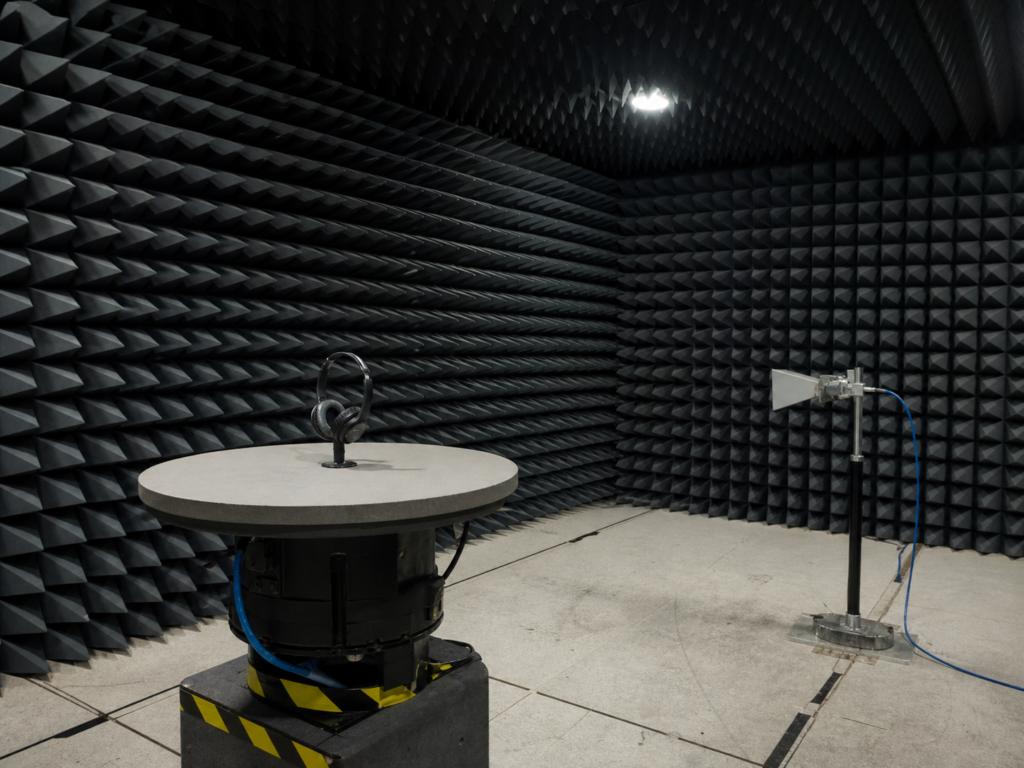
- Conducted testing: Use an RF cable to directly connect to the device’s antenna port for testing. It is suitable for products with detachable antennas, such as industrial routers.
Formal test sites must be calibrated regularly, and background noise must not affect test results. For beginners to judge whether a report is reliable, you can look at two things: whether the laboratory has ISO 17025 RF testing qualification, and whether the site calibration certificate is attached to the end of the report. Common sources of error include external mobile phone signal interference, uncalibrated test cable loss, and incorrect antenna placement, all of which will lead to inaccurate results.
Test Standard Version is Within Validity Period
If an enterprise adopts harmonized standards to obtain the effect of presumed compliance with RED, it shall use the version that is listed in the OJ and still valid when the product is placed on the EU market. After the old version is withdrawn, old reports usually cannot be used alone as sufficient evidence for newly placed products, and need to be evaluated or supplemented according to the differences of the new version.
When checking, just make sure that the standard number + version number on the report is consistent with the list of valid standards published in the OJ when the product is placed on the market. You don’t need to memorize the version number deliberately, because standards are updated regularly, but you must confirm that the laboratory uses the current valid version, not outdated old standards.
Test Standard Selection: 3-Step Judgment Method Without Memorizing Numbers
Many people get a headache when they see standard numbers starting with ETSI EN. In fact, there is no need to memorize them by rote. You can select the correct category by following a three-step logic, and the laboratory will help you match the specific numbers.
The Role of Harmonized Standards
First, understand what harmonized standards are: they are the RED corresponding test standards officially “stamped and approved” by the EU. If you test according to this standard, the EU will directly presume that your product meets the RED requirements, and no additional evidence is needed.
Harmonized standards are not mandatory, but if you don’t use them, you have to find a lot of evidence yourself to prove that the product meets the basic requirements of RED, which is more costly and has a more troublesome process. It should be noted that only the current version of harmonized standards included in the OJ has the effect of “presumed compliance”; old versions or those not included do not count.
3-Step Entry-level Logic for Selecting Standards
You don’t need to memorize numbers; follow these three steps to screen, and you will basically not go wrong:
- Look at the wireless system: WiFi/Bluetooth belong to the short-range broadband category, 4G/5G belong to the cellular category, and low-power IoT belongs to the short-range low-speed category. First, classify the major categories correctly;
- Look at the operating frequency band: 2.4GHz, 5GHz, Sub-1GHz (below 1GHz), etc. The limits and requirements of different frequency bands are different, corresponding to different standards;
- Look at the device type: Consumer-grade, industrial-grade, and automotive-grade have different usage scenarios and different requirements, so they must correspond to the correct device category.
Standard Categories Corresponding to Common Wireless Technologies (For Reference Only, No Need to Memorize Numbers)
Here is a reference for you, no need to memorize, just know the general corresponding category:
- 2.4GHz WiFi, Bluetooth, Zigbee: correspond to ETSI EN 300 328 series standards;
- 5GHz WiFi (wireless local area network, note that it is not 5G for cellular communication): corresponds to ETSI EN 301 893 series standards;
- Sub-1GHz low-power IoT (such as LoRa, wireless sensors): correspond to ETSI EN 300 220 series standards;
- 4G/5G cellular terminals: correspond to ETSI EN 301 908 series standards.
As before, the specific version number must be subject to the latest announcement of the OJ, and outdated old versions cannot be used.
Handling Methods When There Are No Harmonized Standards
If it is a relatively rare new type of wireless device, there may be no corresponding harmonized standard for the time being. At this time, you cannot just find a standard to test by yourself. You must conduct compliance assessment according to the basic requirements of RED, or contact an EU-authorized Notified Body (NB) to participate, otherwise EU regulators will not recognize it.
Report Verification Method: 4 Steps to Quickly Identify Authenticity and Applicability
After getting the test report, you don’t need to flip through dozens of pages of test data. Follow these four steps to quickly judge whether the report is real and whether it can be used for your product.
Step 1: Check the Qualification of the Issuing Body
First, look at the qualification and role of the issuing body. Different compliance paths have different requirements: for the conventional self-declaration path using harmonized standards, the test report can be issued by a laboratory with corresponding ISO/IEC 17025 RF testing capability, and the manufacturer can organize technical documentation and issue the Declaration of Conformity (DoC) based on it; if the product does not have a corresponding harmonized standard, does not fully adopt harmonized standards, or regulations clearly require the participation of a notified body, then a conformity assessment document/certificate issued by an EU-authorized Notified Body (NB) is required.
Here, a common pitfall should be avoided: national laboratory accreditation qualifications such as A2LA and CNAS can prove the testing capability of the laboratory, but cannot replace the statutory assessment status of the NB. In scenarios where NB intervention is required, ordinary laboratory reports alone do not have compliance effect. Simply put, the NB status solves the problem of statutory conformity assessment path, and ISO 17025 laboratories solve the problem of testing capability. The two are qualifications of different dimensions and cannot replace each other.
Step 2: Look at the Overall Conclusion and Coverage Scope
First look at the overall conclusion of the report: it must be all items qualified. You cannot use only a few qualified items as compliance evidence.
Then look at the coverage scope: it must include all wireless functions, all operating frequency bands, and all antenna configurations of the product. For example, if your product has WiFi + Bluetooth, but the report only tests WiFi; or if 5GHz WiFi only tests the low frequency band and not the high frequency band, these are all incomplete coverage and cannot be used.
A common trap is to use a single-module report to impersonate a whole-device report, or a single-band report to impersonate a full-band report. Be sure to carefully check the coverage scope.
Step 3: Verify 3 Core Matching Items
Compare the report with the product you actually sell. Three core pieces of information must be completely matched:
- Product information matching: Model, hardware version, firmware version, country code/region lock must be completely consistent with the sold version. For example, if you sell the EU region-locked version, but the report tests the global version, it cannot be used;
- Test parameter matching: The tested frequency band, maximum transmit power, and antenna type/gain must be consistent with the product’s nominal values. For example, if the product’s nominal antenna gain is 2dBi, but the report uses a 5dBi antenna, the result is invalid;
- Result logic matching: The qualification direction of different test items is different. You can quickly check against the Limit and Measured value in the report: for items such as transmit power and spurious emissions, the test is qualified only if “measured value ≤ limit”; for items such as reception sensitivity, the test is qualified only if “measured value is not worse than the limit” — for example, if the limit is -80dBm, a measured value of -90dBm is better, and a measured value of -70dBm is unqualified, because the sensitivity is too poor.
Step 4: Confirm Applicable Boundaries and Validity Period
Finally, look at the applicable scope and validity period of the report:
- General rule: RED RF test reports are valid across the entire EU, no need to do them separately for each country; for a few devices with special frequency bands, individual countries may have additional registration requirements, but most consumer-grade products do not need them;
- Validity period: As long as the test standard is not updated and the product is not modified (no changes to hardware, firmware, antenna), the report is valid for a long time, not expired after one year;
- Change rule: If the product’s hardware, software, or antenna is changed, the original report may become invalid, and compliance needs to be re-evaluated; if the standard is updated, it also depends on whether the updated content affects the product, and supplementary testing of corresponding items shall be carried out if necessary.
Test Focus of Typical Categories: Quick Comparison by Product
Different types of products have different test focuses and areas prone to problems. You can directly correspond to your own category to check.
WiFi/Bluetooth Consumer Electronics (Most Common)
Such as Bluetooth headsets, routers, Bluetooth speakers, and smart sockets, which are the most common categories. The core test points are transmit power, spurious emissions, and occupied bandwidth. These three items are the most likely to exceed the limit.
Special requirements: For 5GHz WiFi, it is necessary to judge whether requirements such as DFS (Dynamic Frequency Selection, radar avoidance), TPC/adaptive power control, and indoor use restrictions apply according to the actually used sub-bands and device categories; when using frequency bands shared with radar, DFS is usually a key test item.
Coexistence requirements: Devices with both WiFi and Bluetooth must test the mutual interference when the two modules work at the same time, to avoid excessive spurious emissions or decreased sensitivity.
Prone to problems scenarios: when the highest power level is turned on and multiple modules work at the same time.
Low-Power IoT Devices (Sensors, Remote Controls)
Such as wireless temperature and humidity sensors, access control remote controls, and smart door locks. These devices generally have very low power, but that does not mean they are easy to pass. The core test points are frequency stability, duty cycle, and spurious emissions.
Prone to problems scenarios: under low voltage (battery is almost dead) and high/low temperature environments, if low-cost crystal oscillators are used and temperature compensation circuits are lacking, frequency drift is more likely to occur.
Common misconception: Do not relax requirements just because the power is low. If the device uses a low-cost crystal oscillator, simplified temperature compensation design, or works in a low voltage state, frequency offset, excessive duty cycle, and spurious emissions under high/low temperature/low power scenarios are the main non-conformity risks.
Cellular Communication Terminals (4G/5G Mobile Phones, Surveillance Cameras)
Such as 4G surveillance cameras, portable WiFi, and mobile phones. These devices have many frequency bands and high test complexity. The core test points are multi-band power control, spurious emissions, and reception performance.
Special requirements: All authorized cellular frequency bands in the EU must be covered, not only the frequency bands of the home country.
Influencing factors: body posture and antenna position have a great impact on the results. Different holding and wearing states will be simulated during testing.
Common pitfall: Global version devices have frequency bands or power configurations enabled that are not allowed in the EU, resulting in non-compliance.
Multi-Wireless Module Whole Devices (Smart Watches, Tablets, Drones)
Such as smart watches with WiFi, Bluetooth, and 4G at the same time, or drones with GPS, remote control, and image transmission. The core test points are the individual compliance of each module, plus the coexistence compliance when multiple modules work at the same time.
Common pitfall: Each module is qualified individually, but mutual interference after integration is likely to cause exceeding the limit. Module certification reports cannot directly replace whole-device testing. For simplification conditions, uniformly refer to the module reuse rules above.
NFC/UWB Short-Range Devices
Such as NFC access cards/bands, UWB positioning tags, UWB digital keys, etc. The core test points are operating frequency band, field strength, occupied bandwidth, and spurious control.
Easily misunderstood point: Many people think that short distance and low power mean no risk. In fact, excessive NFC field strength will interfere with other NFC devices, and UWB has a wide spectrum, so poor control will interfere with normal communication in multiple frequency bands.
Special requirements: UWB devices should focus on transmit spectrum shape and frequency band limits. The EU has strict regulations on the available frequency bands for UWB, and cross-boundary is not allowed.
If wireless charging products are equipped with wireless communication or radio determination functions, the applicability of RED needs to be judged separately; ordinary power transmission functions mainly involve EMF, EMC, or safety requirements, and do not belong to the typical control scope of RED RF testing.
High-Frequency Pitfall Avoidance: Simplification/Exemption Rules and Full-Process Pitfalls
Finally, we have sorted out the high-frequency pitfalls in the whole process from design to launch, as well as the simplification and exemption rules that everyone is most concerned about, to help you avoid detours.
Scenarios Where Testing Can Be Simplified
Not all products need to undergo a full set of testing; simplification is possible if the prerequisites are met: using a standard wireless module that has obtained RED certification, and the use conditions of the whole device are completely consistent with the limited conditions during module certification. Specifically, three core items can be checked:
- Antenna gain and type are consistent with the limited scope of module certification;
- Power supply method, voltage range, and installation position are consistent with module certification conditions;
- Firmware configuration, country code/region lock, and RF parameters are consistent with the settings during module certification.
In this case, the whole device can be exempted from some RF transmission tests, and only the parts that are different from the module certification need to be evaluated. The judgment method is very simple: ask the module supplier for the RED certification report of the module, check the above use conditions, and if they are completely matched, you can apply to the laboratory for simplified testing.
Two Core Scenarios of Exemption and Simplification
The compliance requirements of the two types of scenarios are completely different, so they must be clearly distinguished:
[Full Exemption: Categories Not Applicable to the RED Directive]
These devices belong to the category explicitly excluded by the RED Directive, and do not need RED RF testing at all, including: military/aerospace devices, pure wired devices, devices homemade by amateur radio enthusiasts, and other categories explicitly excluded by EU law.
[Partial Simplification: Limited Exemption for Low-Power/Low-Duty-Cycle Devices]
Some frequency bands have test simplification/partial exemption conditions for low power, low duty cycle, or specific applications, but there is no universally applicable “full exemption for low power” rule. Whether the simplification conditions are met must be checked against the harmonized standards included in the OJ, EU spectrum decisions, or the specific requirements of the target member state, and complete judgment basis must be kept in the technical documentation.
It should be specially noted that even if some test items can be simplified according to the rules, it does not mean that all RED compliance obligations are exempted — legal responsibilities such as frequency band legality, spurious emission control, technical documentation preparation, Declaration of Conformity (DoC) issuance, and CE mark affixing still need to be fulfilled.
Any exemption or simplification must have corresponding official basis and supporting materials, and cannot be claimed by oneself. Otherwise, if it is spot-checked by EU market supervision, it will be directly judged as non-compliant.
High-Frequency Pitfalls in the Design Stage
- Pitfall 1: Selecting frequency bands that do not comply with EU spectrum rules. This risk has been explained in detail in the “Frequency Band Legality” section above. Before design freeze, the laboratory should be asked to check available frequency bands, duty cycle, and additional requirements such as LBT according to the target sales country, to avoid directly applying common configurations from non-EU regions and burying non-compliance hidden dangers from the source.
- Pitfall 2: Privately increasing the transmit power to enhance the signal. Many factories adjust the RF power higher than the standard in order to make the product’s connection distance longer, resulting in direct exceeding of the limit during testing.
- Pitfall avoidance method: Prioritize the use of standard wireless modules that have obtained RED certification. Generally, the parameters have been adjusted. As long as the design follows the module’s usage specifications, a lot of trouble can be saved.
High-Frequency Pitfalls in the Test Execution Stage
- Pitfall 1: Only test daily conditions at normal temperature and medium power, not extreme conditions such as high/low temperature and maximum power, resulting in invalid reports.
- Pitfall 2: Only test a single sample, without verifying batch consistency. If mass-produced products are different from the test samples due to component differences, you will still be fined if spot-checked.
- Pitfall 3: Wrong test mode selection. For example, testing in daily connection mode, while the regulation requires the worst continuous transmission mode, the measured power is lower than the actual worst case, which is equivalent to testing in vain.
High-Frequency Pitfalls in the Post-Launch Stage
- Pitfall 1: After changing hardware, software, or antenna, no re-assessment of RF compliance is conducted. For example, if you change the antenna supplier or upgrade the firmware to adjust RF parameters, the original report will become invalid, and it will still be counted as non-compliant.
- Pitfall 2: Only affix the CE mark, without preserving test reports and technical documentation. During EU market supervision spot checks, it is generally required to provide complete technical documentation within 10 days. If you cannot provide it, the product will be directly removed from the shelf and fined.
The Most Easily Misjudged “Exemption” Situations
Finally, let’s talk about the three most common exemption misconceptions that many people have fallen for:
- Toys with wireless functions can be exempted: Wrong. The Bluetooth and wireless remote control functions in toys still need to meet RED requirements, and there is no exemption.
- Low power means certain exemption: Wrong. It must correspond to the official exemption threshold of the specific frequency band, and cannot be judged by oneself.
- If the module has certification, the whole device does not need testing: Wrong. Testing can be simplified only when the use conditions of the whole device are completely matched with the module certification; otherwise, re-evaluation is required. For specific rules, see the “Scenarios Where Testing Can Be Simplified” section above.
Learning Summary: 3 Things You Can Now Do Independently
Readers can use this to complete basic judgment of RED RF testing and initial report screening. For complex products, confirmation should still be made in combination with applicable harmonized standards, laboratory opinions, and necessary notified body assessments. To sum up, there are three things:
First, Quick judgment: You can determine in 1 minute whether the target product needs RED RF testing and which test category it belongs to — just check whether it intentionally transmits and receives radio waves, then exclude exempt categories, and you will know what to test according to the product type.
Second, Report verification: You can understand the core information of RF test reports, distinguish invalid reports, and judge whether they are applicable to your product — just follow the four steps of checking qualification, looking at conclusions, verifying matching, and confirming validity period.
Third, Risk avoidance: You can avoid high-frequency compliance pitfalls in the whole process of design, testing, and launch, such as not randomly selecting frequency bands, not only testing daily conditions, and re-evaluating when modifying products, which greatly reduces the access risk to the EU market.
The core logic of RED RF testing is to control wireless signals to work within legal spectrum boundaries, ensuring that various wireless devices do not interfere with each other. The earlier you lock in the frequency band, power, antenna, and applicable standard version in the design stage, the lower the risk of subsequent supplementary testing and rectification.