
If you have seen recycling machines that give change for plastic bottles at European supermarkets, or have been asked by platforms to upload an EPR registration number when doing cross-border e-commerce in the EU, you have most likely come across EPR-related rules. However, note that the Deposit Return Scheme (DRS for short) for plastic bottles is a separate system that runs parallel to EPR, and is not equivalent to EPR. For common services such as door-to-door recycling of old home appliances and waste battery recycling boxes in convenience stores, the cost bearing and service forms also vary depending on the specific systems of member states, and EPR is one of the important supporting mechanisms among them. Many people who hear about EPR for the first time think it is a corporate environmental publicity gimmick, or something only large companies need to worry about — in fact, it is a mandatory rule with clear legal constraints that has been implemented in the EU for many years, and everything from a small express delivery box to a large refrigerator may be related to it.
1. First, understand the core: What exactly is EPR
To put it in plain terms: Whoever places a product on the EU market must bear the full-chain environmental responsibility for the recycling and treatment of that product after it is scrapped. Its official name is Extended Producer Responsibility (EPR for short). In essence, it is not a voluntary public welfare activity for enterprises, but a mandatory legal obligation required by the EU, which eligible entities must comply with.
Where exactly does the “extension” reach
Traditional corporate responsibility only covers quality and safety during the production and sales stages — once the product is sold and consumers have no problems using it, the enterprise’s responsibility ends. But EPR “extends” the responsibility backward to after the product is used up and scrapped: including recycling, sorting, reuse of recyclables, and harmless treatment of hazardous waste. The cost and management responsibility of the entire end-of-life chain must be borne by the entity that places the product on the market.
Of course, this responsibility is not unlimited: it only covers product categories clearly listed in regulations, and only applies to the EU member state where you actually sell the products; it does not require enterprises to be responsible for similar products worldwide.
The underlying logic behind it
The core logic of the EU’s promotion of EPR is actually very simple: “polluter pays”.
In the past, waste treatment was entirely paid for by the government with taxpayers’ money. Enterprises made profits after selling products, but the cost of waste disposal was passed on to all the people, which was neither fair nor efficient. EPR transfers this cost from taxpayers back to the enterprises that sell products, making recycling costs part of the product cost — which is called “cost internalization” in professional terms. As a result, in order to reduce recycling costs, enterprises will be more motivated to design products that are easier to recycle, use more environmentally friendly materials, and reduce waste generation from the source, instead of just shouting environmental slogans.
EPR scenarios around you
EPR is not an abstract regulation floating in the air; it is hidden in many daily details, but most of the time you don’t realize it:
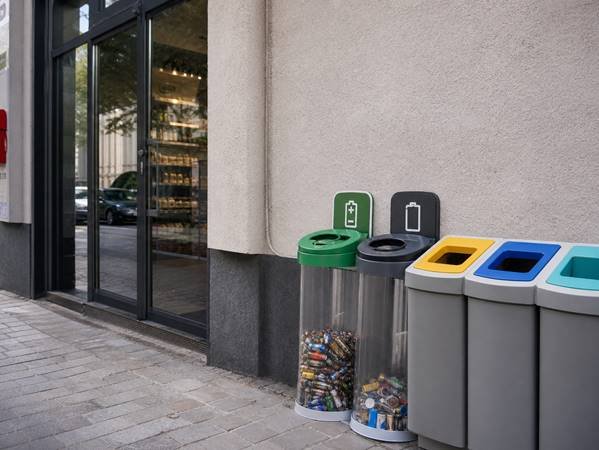
• Consumer side: The old home appliance recycling, waste battery recycling, and packaging waste recycling systems in most EU countries are supported by EPR rules. Producers bear recycling costs through payment, but whether specific services are free and the operation mode of facilities are determined by local rules.
• Merchant side: E-commerce platforms requiring the upload of EPR-related qualifications, printing recycling marks on product packaging, and declaring and paying recycling treatment fees on a periodic basis are all common compliance requirements of EPR.
Don’t confuse it with these concepts
Many people confuse EPR with other environmental and compliance concepts, but the core differences are actually very clear:
| Easily confused concept | Core difference from EPR |
| CSR / corporate environmental publicity | EPR is a mandatory legal obligation with rigid requirements for registration, declaration, and payment. It is not a voluntary public welfare activity that enterprises can choose independently |
| CE certification | CE is a compliance mark applicable to specific products covered by EU harmonized regulations. It is usually completed by the manufacturer through self-conformity assessment and affixed. Its core focus is product safety and market access; EPR focuses on environmental responsibility after products are discarded. The scope of application of the two may overlap, they run in parallel without conflict, and both must be complied with |
| Carbon footprint / carbon neutrality | Carbon footprint is the calculation of carbon emissions throughout the product life cycle, which is essentially “quantifying emissions”; EPR is the practical implementation of waste recycling and treatment responsibility, focusing on the end-of-life stage. The two focus on different dimensions and cannot replace each other |
| Waste tax | Waste tax is a general waste treatment fee levied by the government on residents or enterprises, with a wide range of uses; EPR is a special recycling treatment fee borne by producers, which is earmarked for the operation of the recycling system for corresponding categories |
2. Why does the EU promote EPR: Background and legal positioning
Core reasons for its introduction
The emergence of EPR is essentially to solve the pain points of the traditional waste treatment model: in the past, waste treatment in EU countries was mostly paid for by public finance. On the one hand, financial pressure is increasing; on the other hand, many recyclable resources are directly landfilled or incinerated, which is both wasteful and polluting to the environment.
At a broader strategic level, EPR is one of the core policy tools for the EU to promote the transition to a circular economy and improve resource utilization efficiency, and it also serves long-term carbon reduction goals — requiring enterprises to be environmentally friendly through administrative orders is often inefficient, while binding costs to enterprise interests through EPR can force the entire industrial chain to shift to a circular model from the source.
Practical value for all parties
The reason why this set of rules has been implemented for decades is that it is not a one-sided requirement, but benefits multiple parties:
• For the general public: Recycling channels for special waste are more complete, and environmental pollution is less; within the conventional recycling channels covered by the local EPR or recycling system, consumers usually do not directly pay special treatment fees, which have been shared through the producer payment mechanism. Specific rules for collection, door-to-door service, deposits, or additional service fees are implemented in accordance with local requirements of member states.
• For the industry: It forces enterprises to upgrade their environmental protection design, and at the same time drives the development of a number of new industries such as recycling, sorting, and recycled materials.
• For regulatory authorities: It clarifies the boundary of “whoever places the product is responsible”, so they no longer have to bear the full cost of all waste treatment, and public management costs are greatly reduced.
Legal framework: Not a single EU-wide unified regulation
Many people think EPR is a unified set of EU regulations, but it is not. EPR is not a single EU law, but a responsibility system jointly formed by a framework built by a series of EU directives and regulations, which are then transposed into local implementation laws by each member state. The EU level mainly sets core principles and minimum requirements, and each member state can refine the implementation rules according to local conditions. Therefore, there is no unified EPR certificate covering all EU countries and all categories, and you need to check separately by sales country and category when making judgments later.
At present, there are three core areas where the EU has issued a unified directive framework and requires all member states to generally establish an EPR system: packaging, waste electrical and electronic equipment (WEEE for short, i.e., recycling of old home appliances and electronic products), and batteries and accumulators. In addition, categories such as furniture, textiles, single-use plastic cutlery, and tires are included in the EPR scope by some member states according to local conditions, and there is no EU-wide unified expansion list.
Its mandatory nature is very clear: in principle, as long as a product falls within the EPR coverage of the target country and is placed on the local market, the corresponding obligations must be fulfilled; whether there are de minimis exemptions, simplified declarations, or special exclusions shall be confirmed in accordance with the rules of the target country and the corresponding category.
3. Who is responsible? Which products are regulated? Beginner’s self-check guide
The question that most people care about when they first come into contact with EPR is: Do I need to comply? Does my product count? You can directly check against this section.
Common covered categories
First, check if your product is within the coverage:
• Core categories that are generally mandatory across the EU: Packaging, electrical and electronic equipment (WEEE), and batteries and accumulators. These three categories have a unified EU directive framework, and all member states have established corresponding EPR systems. They are also the most frequently triggered categories.
• Extended categories already implemented in some member states: For example, textiles, furniture, and single-use plastic cutlery in France, tires in Germany, etc. The extended categories vary from country to country.
• Generally exempt categories: Military equipment, some professional medical equipment, etc. are generally not within the scope, but the specific exemption rules shall still be subject to the official regulations of the target country.
A special reminder here: there is no complete EU-wide unified EPR category list. You must check the official rules of the country where you actually sell, and you cannot take it for granted to apply the experience of other countries.
The most easily triggered: Packaging EPR
Many people think that if their products are not in a special catalog, they don’t need to worry about EPR, but that’s not the case — packaging EPR is the category with the widest coverage and the easiest to trigger. The inner and outer packaging and transport filling materials of almost all goods may be included, even if the product itself does not belong to any special EPR category.
There are many parts that sellers easily miss: outer boxes for express delivery, foam or bubble wrap for cushioning, packaging of free gifts, and even the plastic seal outside the manual may all be counted within the scope of packaging. However, note that the specific definition, composition scope, and accounting caliber of packaging are all subject to the rules of the target country, and cannot be directly excluded or included solely based on the name of the item. Its billing logic is also unrelated to the product itself: fees are usually calculated based on factors such as material, weight, and quantity in combination with the declaration cycle. Some countries also add an eco-modulation coefficient, which has no direct relationship with the value or technical content of the product.
One product may trigger multiple types of obligations
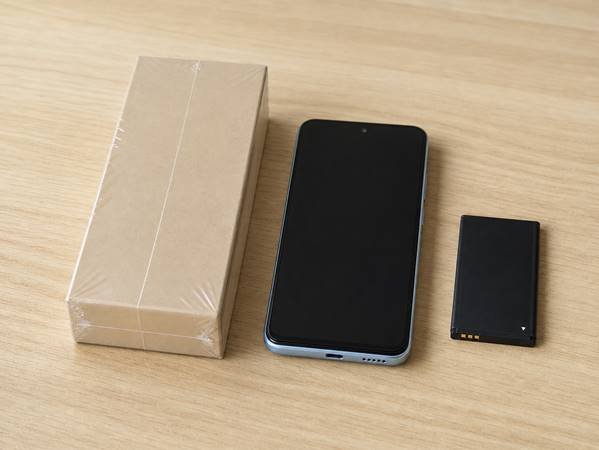
Don’t think that one product only corresponds to one type of EPR; in many cases, they are superimposed. For example, a smartphone with a battery first has packaging (paper box, plastic seal), second, it is an electronic product that falls within the scope of WEEE, and third, its built-in battery falls under battery EPR — so it is necessary to fulfill three types of EPR obligations at the same time, with separate registration, separate declaration, and separate payment, which cannot replace each other.
Who is the responsible entity: Core judgment logic
The definition of the responsible entity for EPR is clarified by each member state according to category and sales channel. Common identities include manufacturers, brand owners, importers, distance sellers, and some distributors. For beginners, you can first use “whoever first places the product on the market of the target member state for commercial purposes is most likely the legal responsible entity” as a preliminary screening standard, but the final confirmation still needs to be based on the rules of the target country and the corresponding category. Common responsible parties include: producers and brand owners within the EU, importers outside the EU, and cross-border distance sellers (for example, if you send small parcels from China directly to German consumers, you are most likely the entity that first places the product on the market).
Non-EU enterprises can usually designate a local EU authorized representative or compliance service provider to handle relevant procedures, but two layers of responsibility boundaries need to be noted: first, entrusting an agent will not automatically exempt the product placing party from its core legal obligations, and the enterprise still needs to verify the authenticity of compliance; second, for some categories in some member states, authorized representatives are required to bear specific obligations such as registration, declaration, and external liaison with regulators in accordance with the law. The specific scope of responsibility shall be subject to the regulations of the target country, authorization documents, and the contract between the two parties.
Don’t get the responsibility boundaries of these identities wrong
Many people make mistakes in identity judgment, so these common boundaries need to be clarified:
• Original Equipment Manufacturer (OEM): Entities that only undertake contract manufacturing and are not responsible for placing products on the market in their own name usually do not bear EPR obligations in the sales country; but if the OEM also sells goods under its own brand, or acts as an importer to place products on the EU market, it may have to bear EPR responsibility.
• Overseas warehouse / logistics provider: Entities that only provide warehousing and transportation services usually do not become EPR responsible entities alone; but if the logistics provider also participates in the import or sales of products, it shall be judged whether it needs to bear responsibility according to local rules.
• E-commerce platform: Some platforms will verify sellers’ EPR qualifications, and even withhold recycling fees for some categories, but this will not automatically exempt sellers from their legal responsibilities; the scope of platform obligations varies by country and category, and sellers still need to confirm on their own whether requirements such as registration, declaration, and labeling have been implemented.
• Supplier has an EPR number: The EPR qualification of an upstream supplier only covers its own placing behavior. If a downstream seller re-places the product on the local market in its own name, it usually cannot directly use the supplier’s EPR qualification. The specific situation depends on the transaction model and local rules.
• Ordinary consumers: Only need to cooperate with waste sorting and recycling, and do not bear the legal obligations of EPR registration and payment.
4. How EPR operates: Compliance process and participants
EPR is not just about paying a sum of money and being done. It has a complete operating system. First, clarify the division of labor of each role, then look at the compliance steps.
Division of labor of core participants
The entire EPR system mainly has four types of roles, each with its own responsibilities:
• Responsible entity (seller/producer): That is you. You need to complete compliance registration, declaration, payment, affix recycling marks, keep all vouchers, and cooperate with regulatory and platform inspections.
• Producer Responsibility Organization (PRO for short): A collective recycling service institution or compliance scheme recognized, authorized, or included in the compliance system by the law of the target country. It is mainly responsible for integrating enterprise needs, connecting with recycling and treatment resources, and coordinating regulatory affairs. Entrusted by enterprises, it coordinates recycling-related affairs and shares recycling costs, and does not necessarily complete all collection and treatment work itself.
Note: Some countries and categories allow eligible enterprises to choose individual compliance schemes, and not all regions mandate handling through PROs.
• Recycling and treatment institutions: Entities that actually implement recycling and treatment, such as community recycling bin operators and old home appliance treatment plants. They are responsible for collecting waste products, sorting them, turning recyclable ones into raw materials, and conducting harmless treatment for non-recyclable ones.
• Regulatory authorities: The environmental protection or market supervision authorities of each country, responsible for formulating local rules, checking compliance, and punishing violations.
6 basic steps for compliance
For sellers, the basic process of EPR compliance can be divided into 6 steps. Follow them in order and you won’t get confused:
1. Confirm basic information: Clarify the target sales country, the EPR category to which the product (including packaging, accessories, free gifts) belongs, and whether you meet the judgment criteria for the responsible entity.
2. Complete compliance registration: In accordance with the requirements of the corresponding category in the target country, complete procedures such as registration with the competent authority, joining an officially recognized compliance system (such as a PRO), and designating a local authorized representative, to obtain the corresponding compliance certificate or registration number.
3. Regular declaration: Declare data such as the quantity, weight, and material of products placed on the local market at the specified cycle (quarterly, semi-annual, or annual, varying by country and category).
4. Pay fees: Pay the corresponding special recycling and treatment fee based on the declaration results.
5. Implement labeling and information disclosure: Affix recycling marks on products or packaging as required by local regulations, and provide consumers with relevant information such as product recycling methods.
6. Keep vouchers: Properly keep documents such as registration certificates, declaration records, payment vouchers, and compliance service contracts for regulatory or platform inspections.
How fees are calculated: Core influencing factors
Many people care about how much EPR costs. In fact, there is no unified EU-wide price, and it is mainly affected by three factors:
• Product attributes: The higher the hazard level of the category and the more difficult the material is to recycle, the higher the unit cost. For example, the unit cost of mercury-containing batteries is much higher than that of paper packaging, and the cost of mixed plastics is also higher than that of single paper.
• Placement scale: The total cost is generally proportional to the quantity and weight of the products you place. The larger the placement volume, the higher the total cost.
• Country differences: The operating costs of recycling systems vary from country to country, and so do the charging standards. For example, the unit price of packaging EPR in Germany and Spain is different.
Some countries add an eco-modulation coefficient to their rates. Products that meet the design requirements of easy recycling and low pollution may be subject to lower rates. The specific rates shall be subject to the official rate schedule of the target country or the compliance system. If you want to check the specific cost, you must consult the official agency of the target country or a formal PRO, and do not believe in the so-called “unified EU-wide price”.
5. Implementation differences among countries: Core principles to avoid pitfalls
One of the most common pitfalls when doing business in the EU market is thinking that there is a “EU-wide universal EPR number” — you must dispel this idea first.
Core principle: There is no universal EPR number
The EPR registration systems and compliance requirements of EU countries are independent of each other. When selling to a member state, you need to complete compliance for the corresponding category in accordance with that country’s rules. A registration number from one country cannot be directly used in another country. Differences among countries are reflected in all aspects: different covered categories, different charging standards, different registration processes, different declaration cycles, and different requirements for recycling marks.
Some compliance service providers can provide multi-country agency services to help you handle procedures in several countries at once, but the compliance certificates you finally get are still separate for each country and can only be used in the corresponding country.
Implementation characteristics of several typical countries
To give you a more intuitive understanding, here are examples of countries that Chinese sellers often come into contact with:
• Germany: It is a country in the EU with early EPR implementation and relatively mature rules. Take packaging as an example: producers not only need to complete registration on the official LUCID platform, but also need to join an officially recognized recycling system (PRO) and declare packaging placement data as required. All three are indispensable; categories such as WEEE and batteries are managed by corresponding specialized agencies, with clear and strict law enforcement requirements.
• France: France has a relatively rich range of extended EPR categories. In addition to the three core categories of packaging, WEEE, and batteries, it has also implemented multiple EPR systems for textiles, furniture, single-use plastics, etc. France requires products in applicable categories to be affixed with the Triman sorting prompt mark and be accompanied by corresponding recycling information. The specific scope of application and display requirements need to be checked by category.
• Southern European countries such as Spain and Italy: Packaging EPR in these countries is usually the first compliance requirement that sellers come into contact with. The registration process and charging standards are different from those in Germany and France, and the specific rules shall be subject to the latest requirements issued by local authorities.
Judgment logic brought about by differences
Precisely because the rules vary from country to country, the same product may trigger different EPR categories, require different fees, and have different handling processes in different countries. Never directly apply the experience of doing EPR in one country to another, and don’t think “I have an EU EPR number so I can sell across the EU” — you must check the rules country by country.
6. Common misconceptions and consequences of violations: Don’t step into these pitfalls
Many people have deviations in their understanding of EPR. At best, they spend more money; at worst, they violate regulations and are fined. These high-frequency misconceptions must be avoided.
The 5 most common cognitive misconceptions
1. Misconception 1: EPR is just about buying a certificate
Wrong. EPR compliance is not completed just by getting a registration number. You also need to declare placement data periodically and cooperate with the operation of the recycling system. Concealing, underreporting, or failing to declare are all violations. Registration is only the first step of compliance.
2. Misconception 2: Only large local EU merchants need to comply
Wrong. EPR obligations are not automatically exempted due to small enterprise size or overseas registration. As long as they meet the judgment criteria for the responsible entity in the target country, both large and small merchants, and entities inside or outside the EU, must bear corresponding responsibilities.
3. Misconception 3: No need to register if sales volume is small
Wrong. Low sales volume does not equal automatic exemption. Most EPR categories in the vast majority of EU countries have no sales volume threshold. However, a very small number of countries or categories may have de minimis exemption or simplified declaration rules. The specific requirements must be queried separately for the corresponding category in the target country, and cannot be taken for granted.
4. Misconception 4: No need to worry if the platform withholds and pays on behalf
Wrong. Some platforms may withhold recycling fees for some categories, or bear part of the verification obligations, but this does not mean that sellers no longer need to be responsible; whether core obligations such as registration, declaration, and labeling have been implemented still needs to be confirmed by the seller themselves, and cannot rely solely on the platform.
5. Misconception 5: No packaging means no EPR
Wrong. Packaging is only the most common EPR category. If the product belongs to other EPR-covered categories such as electrical and electronic equipment, batteries, textiles, etc., even if there is no packaging (which almost never exists in practice), it will still trigger EPR obligations for the corresponding category.
Common consequences of violations
The mandatory nature of EPR has clear legal support, and violations may face multiple risks. The specific consequences vary by member state, category, and violation circumstances. Common ones include:
• Market access restrictions: E-commerce platforms remove products from shelves and restrict sales permissions. In some cases, goods may be detained by customs or market supervision authorities.
• Economic liability: It is necessary to pay the owed recycling fees and be subject to administrative fines of corresponding amounts. The fine standards vary by country and category, and there is no unified EU-wide upper limit.
• Long-term regulatory measures: Those with serious circumstances may be included in the key watch list of local market supervision, affecting subsequent operations in that country.
Minimum compliance checklist for beginners
If you are already doing business in the EU market, you can do a quick self-check against the following 6 items to identify obvious compliance loopholes:
• □ All EU countries where you are selling have been listed
• □ The EPR coverage of corresponding categories in each country has been checked (including packaging, accessories, free gifts)
• □ You have confirmed that you meet the EPR responsible entity judgment criteria of the target country
• □ EPR compliance registration for the corresponding country and corresponding category has been completed
• □ Declaration and payment have been made in accordance with the specified cycle
• □ Recycling marks have been affixed and recycling information has been disclosed as required
7. Advanced: How to judge, how to plan, how to avoid pitfalls
If you have already understood the basic rules, this section can help you make compliance decisions more efficiently and avoid detours.
3 steps to quickly judge whether compliance is needed
You don’t need to memorize complex rules. Just go through these three steps to make a preliminary judgment on whether you need to do EPR:
1. Step 1: Look at the market: Confirm whether the product is placed on the market of an EU member state for commercial purposes. “Placing on the market” here is a legal concept, referring to the first time a product is made available on the local market for sale or use. Online and offline, bulk cargo shipping, and small parcel direct mail may all qualify. The specific judgment needs to be combined with import arrangements, sales channels, and distance selling rules.
2. Step 2: Look at the category: Confirm whether the product (including packaging, accessories, free gifts) falls within the coverage of the corresponding EPR category in the target country. Don’t miss easily overlooked parts such as packaging and free gifts.
3. Step 3: Look at the identity: Confirm whether you meet the definition of “producer” or responsible entity for that category in the target country. You can first use “whether you are the first placing entity” for preliminary judgment, and the final decision shall be subject to local rules.
Quick judgment of several typical scenarios
It’s more intuitive to match the scenarios:
• Cross-border sales of ordinary daily necessities with packaging (such as paper notebooks, plastic water cups): If the target country does not include the product in other EPR categories (such as textiles, furniture, etc.), it usually only triggers packaging EPR obligations; if the product itself belongs to other covered categories, it is necessary to fulfill superimposed obligations.
• Import of electronic products with batteries (such as Bluetooth headsets, electric toys): Usually triggers three types of EPR obligations at the same time: packaging, WEEE, and batteries. The specific registration and declaration methods shall be implemented in accordance with the rules of the target country.
• The same product sold to multiple EU countries: Check and register country by country in accordance with the country difference principle in Chapter 5.
• Sales on self-built independent websites: The absence of platform compliance reminders does not mean that there is no need to fulfill obligations. As long as the EPR application conditions of the target country are met, proactive compliance is required.
How to optimize compliance costs (on the premise of not touching the red line)
The cost of EPR is not fixed and can be appropriately optimized on the premise of compliance, but all optimizations must be based on the local system:
• Front-end design optimization: In countries and compliance systems that adopt eco-modulation rates, simplifying packaging, switching to easy-to-recycle single materials, and improving product disassembly may apply lower recycling rates. The specific rules need to be queried in the rate rules of the target country.
• Compliance operation optimization: Choose formal compliance service institutions or PROs to avoid repeated handling of qualifications for the same category in the same country; accurately declare placement data to avoid overpayment or fines due to underreporting.
• Red lines that must never be touched: Concealing placement volume, forging compliance qualifications, and fraudulently using others’ compliance vouchers are all serious violations, which will face high fines and market access restrictions.
Handle it yourself or find an agent? How to choose
There are two main ways to handle EPR: directly connect with official agencies or PROs by yourself, or entrust a third-party service provider to handle it on your behalf. They are suitable for different situations:
• Situations suitable for handling it yourself: Only sell to 1-2 countries, with a single category, and have a local team that understands the local language and compliance rules, such as an enterprise with a branch in Germany.
• Situations suitable for entrusting an agent: Selling to many countries, with miscellaneous categories, no local operation team, and afraid of getting the rules wrong — finding a formal agency is more worry-free and has a lower probability of errors.
A special note here: no matter which method you choose, the product placing party is responsible for the authenticity of compliance and cannot completely leave it alone. When entrusting services, the contract must clearly specify the covered countries, categories, declaration frequency, fee composition (service fee only or including recycling fee), the responsibility boundaries of both parties, and breach of contract clauses to avoid subsequent disputes.
Compliance planning logic for multi-country sales
If you operate a pan-European site, you don’t have to complete all categories in all countries at once. You can gradually advance according to priority:
• Focus on the core first: First cover the core sales countries with the highest sales volume, first handle categories that are mandatory and have mature law enforcement (such as packaging), and then slowly expand to niche countries and new categories.
• Checklist management: You can make a “sales country × product category” ledger, marking each cell clearly as compliant, pending handling, or not needed, to avoid missing any.
• Pay attention to trends: The overall coverage of EU EPR is expanding. For example, more and more countries are beginning to add rules for textiles, furniture, single-use plastics, etc. You should regularly update the policies of target countries, and don’t wait until you are fined to find out.
How to judge whether a compliance service is reliable
EPR services on the market are mixed. Here are a few simple judgment methods to avoid unreliable services:
• Check whether the compliance certificate is verifiable: Prioritize services that can provide registration numbers queryable on the official platform of the target country, or formal contracts with officially recognized PROs; if local registration information is not public, you can request official vouchers such as confirmation letters from the competent authority and declaration receipts. Do not easily choose services that cannot provide effective verification basis.
• Check whether the service content is clear and specific: Formal services will clearly state the specific countries, specific categories, declaration cycles, and service scope covered, and will not use vague expressions such as “EU-wide universal” or “all-inclusive”.
• Check whether there are complete declaration and payment vouchers: Compliance services need to provide declaration records and payment vouchers periodically, and the vouchers can correspond to the specific compliance system or competent authority.
• Check whether they can explain the recycling responsible entity: Ask clearly which officially recognized institution bears the recycling responsibility and where the fees ultimately go. If they cannot explain the whereabouts of funds and responsibilities, it is most likely a shell service that earns the price difference.
By reading this far, you will find that although the rules of EPR are fragmented, the core logic is very simple: whoever places a product on the market must pay for the environmental responsibility after the product is scrapped. It is not an abstract policy concept, but a practical rule closely related to daily consumption and cross-border operations. For beginners who have just come into contact with it, as long as you master the three-step judgment method of “look at the market, look at the category, look at the identity”, and adhere to the core principle of “check one by one by country and category, do not blindly apply general experience”, you can avoid the vast majority of cognitive traps, gradually build a clear EPR compliance framework, and cope with the vast majority of daily scenarios.