
If you follow EU consumer regulations or are engaged in cross-border e-commerce business, you have certainly seen the crossed-out trash bin logo printed on electronic products, and you know that waste electronic products in the EU must be specially recycled. These requirements all come from a set of unified EU rules specifically governing the recycling of waste electronic products, namely the WEEE Directive, whose full name is the Waste Electrical and Electronic Equipment Directive.
In some EU countries, waste small household appliances must be sent to designated recycling points, and random disposal may result in fines; cross-border e-commerce platforms may also restrict the display of relevant products if merchants have not completed WEEE registration or the products do not bear the corresponding logo. The core of these issues actually lies in the judgment of the scope of application of WEEE: do only mobile phones and computers count? Do small items with batteries need to be covered? If a product has CE certification, does that mean WEEE does not need to be considered? This article will start with the most basic introductory judgment, then move on to boundary pitfall avoidance in ambiguous scenarios, to thoroughly explain the scope of application of WEEE, which you can apply directly after reading.
Basic Foundation: First Understand WEEE and the Value of Scope Judgment
As mentioned earlier, WEEE is a special rule for the EU to uniformly manage the recycling of waste electronic products. The underlying logic of this set of rules is very simple: whoever places a product on the EU market for circulation shall bear the cost of recycling and treatment of the product after it is scrapped, and public funds shall not be used to pay for it. To put it bluntly, it is “whoever places the product is responsible for recycling”. This logic has a special term in the compliance field, called Extended Producer Responsibility (EPR).
Here, we first draw a clear boundary between WEEE and two other EU compliance requirements that are often confused: the three have different regulatory focuses and cannot replace each other. CE usually focuses on compliance requirements such as safety, health, and electromagnetic compatibility before products enter the market; RoHS restricts specific hazardous substances in electrical and electronic products; WEEE focuses on the responsibility for recycling and treatment of products after they are scrapped. Whether a specific product needs to meet CE or RoHS requirements needs to be judged in combination with the product category and corresponding regulations, and cannot be generalized. In addition, it should be noted that batteries are subject to separate EU battery regulations. If a product comes with a battery, it must not only meet the WEEE requirements for the equipment itself but also comply with the relevant provisions of the battery regulations, so do not miss this.
Some people may ask, I neither produce nor sell goods, what’s the use of understanding this? That’s not the case:
• If you are an ordinary consumer, knowing which products are within the scope of WEEE will help you understand where to send waste items for recycling, and also understand the source of the “recycling surcharge” on your consumption bills;
• If you are a cross-border seller, importer or brand owner, the scope judgment directly determines whether you need to register for WEEE, pay a recycling fund, and affix the crossed-out trash bin logo to your products.
It is specially noted here that even free gifts, promotional samples, and trial products, as long as they are placed on the EU market by merchants for commercial purposes, are within the scope of the merchant’s responsibility. Do not think that free gifts do not require compliance — even small electronic gifts included with e-commerce orders are within the scope of responsibility.
Before formally explaining the judgment method, let’s correct the three most common cognitive misconceptions:
First, it is not only mobile phones and computers that count. From electric toothbrushes and electronic scales to even umbrellas with Bluetooth and decorative clothing with LED lights, as long as they have electronic components, they are within the scope of coverage;
Second, it is not necessary for a device to be plugged in to count. Devices that use batteries, solar energy, or wireless power supply, as long as they rely on electric current or electromagnetic fields to work, are electrical and electronic equipment;
Third, having CE or RoHS certification does not mean that WEEE can be ignored. The three have different regulatory directions and cannot replace each other.
Core of Judgment: 2 Prerequisites + 1 Key Rule
To judge whether a product falls within the scope of application of WEEE, the core logic can be broken down into two prerequisites plus one key rule: if the two prerequisites are met and the product is not in a legally excluded situation, WEEE applies.
Prerequisite 1: The product is electrical and electronic equipment
The first prerequisite is that the product must be electrical and electronic equipment — to put it bluntly, it is physical hardware that cannot work normally without electric current or electromagnetic fields, abbreviated as EEE in compliance terminology.
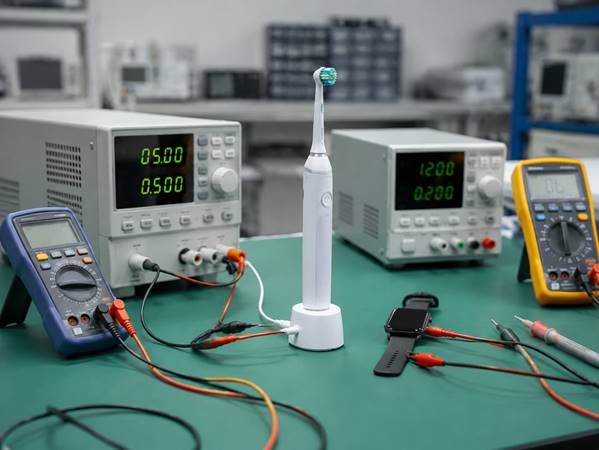
There is a very clear hard standard here: the rated voltage of the product (that is, the designed maximum normal working voltage) must meet AC ≤ 1000V and DC ≤ 1500V. Equipment exceeding this voltage range is usually not within the scope of the WEEE Directive, but may still involve other relevant requirements for industrial safety, electrical management, or waste treatment. However, the consumer electronics, small household appliances, and commercial office equipment that people come into contact with daily are basically within this voltage range, and ordinary consumers and small and medium-sized sellers rarely encounter high-voltage industrial equipment that exceeds the standard.
Another point that is easily overlooked: regardless of whether the electronic component performs the main function or is only used for auxiliary or decorative purposes, as long as there is an independently working electronic component, the product is electrical and electronic equipment. For example, sports shoes with LED lights have the main function of being worn for walking, but the LED lights are independent electronic components, so the entire pair of shoes falls into the EEE category.
Prerequisite 2: The product is “placed on the EU/European Economic Area market”
The second prerequisite is that the product enters the market circulation of the EU and the European Economic Area for commercial purposes — which is often referred to as “placing on the market” in compliance.
First, clarify the covered geographical scope: a total of 30 countries, including the 27 EU member states, plus Norway, Iceland, and Liechtenstein in the European Economic Area.
Many people think that only selling goods for a fee counts as “placing”, but that’s not the case: commercial sales, free gifts, promotional samples, and cross-border e-commerce direct mail to consumers all count as placing as long as they enter the EU market for commercial purposes. Even if goods are shipped directly from the home country to EU consumers, it counts as placing on the market, and direct mail cannot be used as an excuse to evade compliance.
The following situations do not constitute placing on the market: a small number of electronic products (such as mobile phones, cameras) carried by tourists for personal use when entering the country, or equipment temporarily transported into the EU for exhibitions and transported out after the exhibition. It should be noted that if such equipment that does not temporarily constitute placing is subsequently sold, given away, or actually scrapped within the EU, it is necessary to re-judge whether it constitutes placing and the corresponding WEEE responsibility.
Key Rule: Open scope implemented since 2018
After finishing the two prerequisites, we also need to talk about a key rule that is most easily misunderstood — this is also the core reason why many people make wrong judgments.
August 15, 2018 was an important turning point for the WEEE Directive: from this date, the scope rule changed from the old version of “only products listed in the official list need to comply with WEEE” to the completely opposite logic — as long as electrical and electronic equipment meet the above two prerequisites, they are in principle within the scope of application of WEEE, unless the law explicitly excludes them. This rule model of “what is not prohibited by law is covered” is called “open scope” in compliance.
Many people’s understanding of the scope of WEEE still stays in the old list system, thinking that only products listed in the classification table count, which is long outdated. The current rule is just the opposite: all electrical and electronic equipment that are not explicitly excluded must comply with WEEE requirements. The product classification tables that people often see are actually only used for merchants’ registration and declaration, calculation of recycling fees, and statistics of recycling data — classification does not determine whether a product must comply with WEEE, it only determines which registration group it belongs to and what standard it is charged by after application.
Classification after Application: Common WEEE Product Categories (only for registration/fee calculation)
Classification is only used for registration and fee calculation, and does not affect the judgment of whether WEEE applies. First complete the applicability judgment, then correspond to the classification.
Classification Rules and Version Differences
Classification has a clear priority logic: first, judge whether the product belongs to the three special categories of temperature exchange, screen display, and lamps and light sources. If it meets one of these categories, it is classified first, and the remaining products are then divided according to size and core function.
The EU WEEE Directive has set up a 6-category classification framework in the open scope stage to unify the recycling statistical caliber; however, the actual registration groups, fee standards, and transition progress of each member state are formulated by their own competent authorities. At present, most member states are still in the transition stage from the old 10-category to the 6-category framework. The specific classification requirements shall be subject to the current implementation caliber of the registration agency of the target country, and the registration category of the same product may vary in different countries.
Examples of Common Products in the EU 6-Category Classification Framework
| Category Name | Common Product Examples |
| Temperature exchange category | Refrigerators, freezers, air conditioners, household heat pumps, dehumidifiers, commercial display cabinets with refrigeration function |
| Screen and display category | Screens and displays with a surface area of more than 100 cm² and equipment containing such screens, such as televisions, computer monitors, usually eligible laptops, electronic advertising screens |
| Lamps and light sources category | Light sources and lighting equipment such as LED bulbs, LED light strips, fluorescent lamps, energy-saving lamps; smart lighting products need to confirm their classification according to the caliber of the target country, depending on whether they are light sources, lamps, or independent equipment with electronic control |
| Large equipment category | Washing machines, dishwashers, vending machines, large fitness equipment (any external dimension > 50 cm) |
| Small equipment category | Hair dryers, vacuum cleaners, electric toothbrushes, electronic scales, electronic door locks (all dimensions ≤ 50 cm, non-IT communication functions) |
| Small IT and communication category | Mobile phones, tablets, routers, power banks, smart watches, Bluetooth headsets (≤ 50 cm, core function is information processing/communication) |
EEE not listed in the above table still need to be judged for WEEE applicability according to the open scope rules. The table is only used for quickly corresponding to registration categories and estimating recycling fees.
Many people’s impression of WEEE products stays in common categories such as large home appliances, mobile phones and computers. In fact, many niche or unpopular products are also within the scope of application, which are particularly easy to miss:
• Wearable/accessory category: Smart bracelets, Bluetooth adapters, electronic thermometers, wireless chargers, makeup mirrors with LED lights, electric nail clippers;
• Small household category: Mini humidifiers, electric bottle openers, electronic perpetual calendars, smart sensors;
• Commercial category: Shared power bank cabinets, self-service parcel lockers, store surveillance cameras, commercial coffee machines.
Clear Exclusions: These Products/Scenarios Do Not Apply to WEEE
Exclusions are divided into three categories with different natures. Be careful not to confuse them.
Category 1: Legally completely excluded products (not subject to WEEE jurisdiction at all)
That is, products that are legally completely not subject to the WEEE Directive. Even if they are EEE and placed on the EU market, they do not need to comply with WEEE requirements:
• Special field dedicated: Military/defense electronic equipment, electronic equipment related to nuclear facilities, active medical electronics implanted in the human body (such as pacemakers), these products are governed by special rules;
• Already governed by special regulations: Electronic equipment specially designed and installed as components of vehicles, ships, aircraft, and managed under the regulatory system to which the whole machine belongs, as well as electronic components of professional industrial non-road mobile machinery, these products are managed by their respective industry regulations; it should be noted that separately sellable, general-purpose electronic accessories (such as car chargers, portable navigators) still need to be judged separately according to EEE and market placement rules, and are not automatically excluded;
• Large fixed industrial dedicated: Equipment only used for industrial production, fixed and immovable, requiring professional personnel to disassemble (such as fixed electronic control systems on factory assembly lines), these are also within the exclusion scope.
Category 2: Products that are not EEE themselves (naturally not applicable)
Products that are not electrical and electronic equipment themselves naturally do not apply to WEEE:
• Pure mechanical products: Hand tools, mechanical watches, ordinary building block toys, manual clothes racks, products that work completely without relying on electricity;
• Daily necessities without electronic functions: Ordinary glasses, paper books, plastic water cups, ordinary furniture;
• Pure digital/software products: APPs, cloud services, online courses and other products without physical hardware;
• Non-electronic consumables: Mobile phone cases, ordinary printing paper, mechanical keyboard keycaps, ordinary packaging.
Category 3: Only exempting merchants from responsibility (waste still needs to be sorted and disposed of according to WEEE)
Products in these scenarios are still within the scope of WEEE application, but because they do not involve new commercial placement, the current entity does not need to bear extended responsibilities such as producer registration and payment; when the product is scrapped, it still needs to be sorted and disposed of according to WEEE requirements, and cannot be thrown into ordinary trash cans:
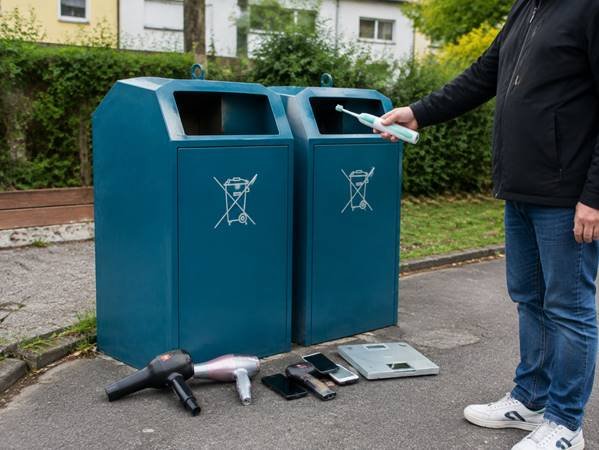
• A small number of electronic products carried by individuals for personal use when entering the country (such as tourists’ mobile phones, cameras), merchants do not need to bear responsibility, but they need to be sent to electronic recycling points when scrapped;
• Used second-hand electronic products transferred privately by individuals (such as an individual selling their own mobile phone to a neighbor), non-commercial personal transfers do not need to bear producer responsibility, but the product itself still falls within the scope of WEEE.
Ambiguous Scenario Judgment: How to Determine Uncertain Products (Semi-Proficient Level)
The above are all relatively easy to judge situations. In practice, ambiguous products are often encountered. Mastering the following judgment logic, you can judge most ambiguous scenarios by yourself.
Non-electronic main products with electronic auxiliary functions
Core of judgment: Whether there is an independently working electronic component, regardless of whether the electronic function is the main function.
For example, umbrellas with Bluetooth, sports shoes with LED lights, thermos cups with temperature display, and heating clothing. The main function of these products is not electronic, but they have independently working electronic components, so they fall within the scope of WEEE application; conversely, pure mechanical thermos cups, ordinary umbrellas, sports shoes without electronic functions, and ordinary school bags do not.
Separately sold accessories/components
Core of judgment: Whether it has its own electronic function and can be used independently when sold separately.
If it has its own electronic function and can be used independently, it may fall within the scope of WEEE, such as independent chargers, external cameras, printer cartridges with chips, battery packs with electronic identification or control functions and sold as equipment components; if it is only a dedicated non-independent part of the whole machine, cannot be used independently, or is a non-electronic consumable, it does not fall within the scope, such as the built-in cable of a specific model of mobile phone, non-independent accessories only adapted to a certain device, and non-electronic consumables.
It should be noted that ordinary single batteries and battery packs themselves are mainly governed by EU battery regulations, and compliance requirements need to be judged separately, and should not be confused with the equipment responsibility of WEEE.
Second-hand/refurbished electronic products
Core of judgment: Whether it constitutes a new “placing on the market” act.
If a cross-border merchant places second-hand or refurbished electrical and electronic equipment on the EU market for the first time, it usually needs to bear WEEE producer obligations; for refurbished products within the EU, if they are re-launched by the producer or brand owner under the name of new products, sold under a changed brand, or their functions are substantially changed after refurbishment, new producer obligations may also be triggered.
Ordinary individuals who privately transfer their own used second-hand products, or products that have previously been in compliant circulation in the EU and are only resold by individuals, usually do not need to bear producer responsibility — because when the product was first placed, the relevant producer has fulfilled legal obligations such as registration, declaration, and recycling arrangements.
Industrial/commercial electronic equipment
Core of judgment: Whether it is a large fixed dedicated equipment only used for industrial production.
If it is not a large fixed industrial dedicated equipment, even if it is used in commercial or industrial scenarios, it falls within the scope of WEEE, such as supermarket cash registers, office printers, store surveillance cameras, commercial coffee machines, warehouse barcode scanners; if it is a large dedicated equipment only used for industrial production, fixed and immovable, requiring professional disassembly, it falls within the exclusion scope, such as large fixed electronic control systems on factory assembly lines, fixed detection equipment dedicated to mines.
Set/combined products
Core of judgment: Whether each electronic component is an independently sellable EEE after disassembly.
The processing rule is: independent EEE in the set need to be classified separately, and non-electronic accessories do not need to be counted separately.
For example, the host, keyboard, and mouse in a computer set are all independently sellable EEE, and all need to be counted; the included computer bag and mouse pad are non-electronic accessories and do not need to be counted. Another example is a set of “smart watch + replacement strap + charger”, the smart watch and charger are independent EEE and need to be counted, and the ordinary silicone strap is a non-electronic accessory and does not need to be counted.
Country Differences and Verification Methods (Semi-Proficient Level)
At this point, most products can be judged by yourself, but it should be noted that WEEE is an EU framework directive, that is, the EU only sets minimum requirements and basic rules, and each member state can fine-tune the classification caliber and implementation details within the framework, so there may be certain differences between different countries.
Why there are scope differences
Because the framework directive only delimits the basic boundaries, each member state can refine or tighten the rules according to its own recycling system and industrial situation. For example, the definitions of “small household appliances”, “electronic accessories”, and “textiles with electronic functions” may differ in different countries.
Examples of common differences
• Some countries (such as Germany) explicitly include textiles with electronic functions (such as luminous T-shirts, heating scarves) in the scope of WEEE, while the rules of some countries do not have such detailed clarification;
• Some countries have different classifications for electric bicycles and household medical electronics, some are classified into the small equipment category, and some are classified into other categories;
• Some countries have stricter exemption requirements for B2B professional equipment, requiring more supporting materials to apply for exemption.
How to query the accurate requirements of the corresponding country
If you encounter uncertain situations, you can verify through three reliable channels:
First, log in to the official website of the environmental protection authority of the target country to query, such as EAR in Germany and ADEME in France. Prioritize querying official guidelines, registration agency FAQs, and written consultation channels; important compliance judgments should keep query records;
Second, consult local authorized WEEE recycling agencies, who are most familiar with the implementation details of local rules;
Third, if necessary, you can entrust local authorized recycling agencies or formal compliance service providers to issue confirmation opinions, saving the time cost of self-query.
Quick Self-Check and Learning Summary
3-Step Self-Check Method for WEEE Application Scope
When encountering uncertain products, check them one by one according to the following three steps, and you can basically draw a preliminary conclusion:
Step 1: Judge whether it is EEE: Is it physical hardware that relies on electric current or electromagnetic fields to work? Does the rated voltage meet AC ≤ 1000V and DC ≤ 1500V? It counts as long as there are independent electronic components, regardless of whether the function is main or auxiliary;
Step 2: Judge whether it is placed on the EU/European Economic Area market: Is it sold, given away, or circulated for commercial purposes? A small amount for personal use and those transported out after temporary exhibitions do not count;
Step 3: Judge whether it is a legally completely excluded situation: Is it a legally excluded product such as military/defense, implantable medical, or large fixed industrial dedicated equipment?
If the answers to the first two steps are “yes” and the answer to the third step is “no”, then the product falls within the scope of WEEE application.
Abilities You Can Master After Learning
• Beginner level: Can quickly judge whether more than 90% of daily electronic products fall within the scope of WEEE, and clarify recycling rules and basic compliance requirements;
• Advanced level: Can accurately identify the attribution of ambiguous products, such as water cups with Bluetooth, second-hand electronic products, electronic accessories, etc.;
• Pitfall avoidance level: When encountering complex or doubtful situations, know to verify through official channels to avoid compliance risks caused by cognitive deviations.