
For those doing business in the EU market, most have probably heard of the CE mark, but many people’s understanding of CE stays at the stage of “stick a label, buy a certificate and you can sell”. It is not until they suddenly receive a platform delisting notice, a customs detention letter, or even a notice from the local market supervision authority that they realize: CE is not “done once you get the certificate” — there is real enforcement verification afterwards.
The essence of why many people run into pitfalls is that they do not understand the logic of CE enforcement: it is not a “mere formality” in the certification issuance process, but a “post-market compliance verification” of products already on the market by the EU regulatory system. It checks whether the product is truly compliant, not whether there is a piece of paper. Next, we will explain the CE enforcement mechanism, penalty standards, and risk judgment clearly from basic cognition to practical pitfall avoidance. Whether you are a new small seller or a manufacturer that has been in business for some time, you can find corresponding information.
1. First, Understand the Basics: CE Enforcement Checks “Genuine Compliance”, Not “Certificates”
Many people confuse CE enforcement with CE certification, which is the most basic cognitive error. In plain terms, CE certification is the enterprise itself (or a third-party agency entrusted) proving that “my product meets EU requirements”, which is a self-certification link before going on the market; while CE enforcement is the regulatory authority verifying “whether the compliance you claim is true” after the product is launched, which is a post-market supervision link. The two are completely different things.
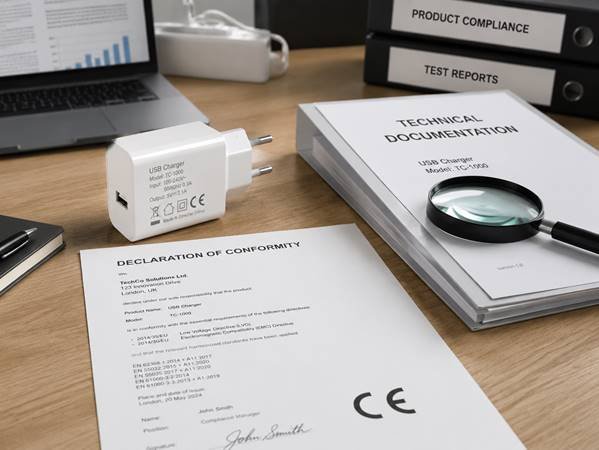
The core legal basis for CE enforcement is the EU New Legislative Framework (NLF, the top-level rule for the EU’s unified product compliance market) and the Market Surveillance Regulation 2019/1020 — this is the general framework for EU product safety enforcement, and enforcement in all member states must comply with the basic requirements of this regulation.
Which products are subject to CE enforcement?
The CE mark only applies to products covered by at least one EU harmonized legislation, and the scope of CE enforcement also strictly corresponds to such products: as long as the product is legally required to bear the CE mark and is placed on the EU market (that is, enters the EU market for sale), whether it is produced locally in the EU or imported from abroad, it is within the scope of enforcement, covering scenarios such as offline circulation, customs entry, e-commerce platform sales, and complaint and report verification.
There are also clear exceptions, which need to be judged in combination with the exclusion clauses of specific regulations: for example, military products, some customized medical devices, etc., are explicitly excluded from application in the corresponding CE regulations; while ordinary consumer products that do not need to bear the CE mark (such as ordinary paper notebooks, non-protective daily pure cotton T-shirts), although not within the scope of CE enforcement, may still be subject to other market supervision rules such as the General Product Safety Regulation (GPSR), so it cannot be simply assumed that “no CE requirement means no enforcement risk”.
Beginners can judge according to this logic: first confirm whether the product is covered by CE harmonized legislation, and then judge the enforcement type and risk level accordingly.
Why must we attach importance to CE enforcement?
Because the consequences are highly flexible: at the lightest, it is just ordering rectification and product delisting; at the heaviest, it may face high fines, EU-wide sales bans, and even criminal liability. Many new sellers are prone to three common cognitive misunderstandings: thinking that having a CE certificate means they will not be fined, thinking that small sellers with small batches will not be inspected, and thinking that sticking a CE mark counts as compliance — we will break down these misunderstandings one by one later. First, remember one core point: CE enforcement depends on the authenticity of full-chain compliance, not a single piece of paper.
2. Who Has the Right to Inspect, Who Is Responsible: Participants in CE Enforcement
Many people, when first exposed to CE enforcement, are confused about who can issue fines and who only cooperates. In fact, the entire system is divided into three layers: EU-level coordination agencies, direct enforcement departments of member states, and various collaborative participants, each with different powers and responsibilities boundaries.
EU level: only coordinate, do not directly issue fines
EU-level institutions are mainly responsible for formulating rules, coordinating and integrating, and will not directly inspect a specific product or issue fines directly. There are three that are more relevant to everyone:
• Directorate-General for Internal Market of the European Commission: responsible for formulating unified enforcement rules and coordinating cross-border violation cases;
• Rapid Alert System for Dangerous Non-Food Products (Safety Gate, long-time sellers are more familiar with its old name RAPEX): an EU-wide early warning system for dangerous non-food consumer products. Only high-risk products that meet the notification conditions will be entered. After receiving the warning, each member state will take corresponding measures according to its own rules, and not all violations will trigger EU-wide simultaneous enforcement;
• Administrative Cooperation Groups (ADCO) in various product fields: a collaboration platform for national enforcement agencies to coordinate enforcement standards for specific product categories, used to solve the connection problem of cross-border enforcement.
Member state market supervision authorities: the core entities with administrative penalty power
The ones that truly directly inspect products and make administrative penalty decisions are the competent market supervision authorities designated by each member state, and the specific division of labor depends on the product category: for example, the French Directorate-General for Competition, Consumer Affairs and Fraud Control (DGCCRF) will take the lead in market supervision in the field of consumer goods; in Germany, the federal and state competent authorities divide responsibilities according to product categories, and some technical products may also involve professional competent authorities such as the Federal Institute for Materials Research and Testing (BAM). It is not a single agency that is uniformly responsible for the punishment of all CE products.
The core responsibilities of these departments are to directly spot-check products, verify compliance documents, make penalty decisions, and supervise product recalls. Enforcement usually follows the territorial principle: the enforcement agency of the corresponding country has jurisdiction over which member state the product enters from, which member state it is sold in, and which country the violation occurs in, not directly managed by the European Commission. During the enforcement process, customs, police, and local consumer protection organizations will cooperate in the action.
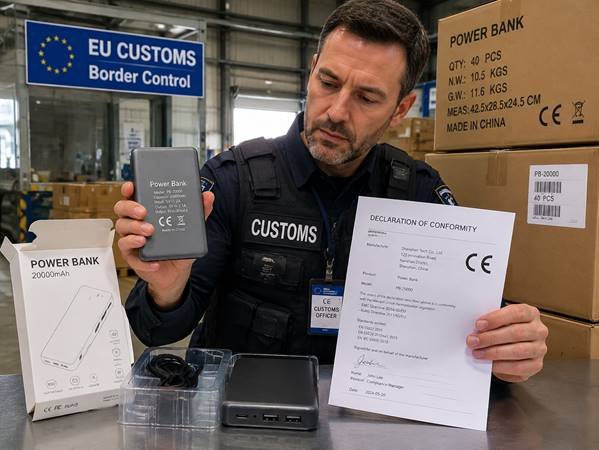
It is necessary to particularly distinguish the functions of customs: customs of EU member states are responsible for cargo release verification at the border, can take measures such as suspending release and refusing entry for suspected non-compliant goods, and synchronize relevant information to market supervision authorities, but customs do not directly make market supervision administrative penalties.
Collaborative participants: no direct penalty power, but can trigger or cooperate with enforcement
There is another category of roles that do not have direct administrative penalty power, but are closely related to the trigger and implementation of enforcement:
• Consumers, peers, industry organizations: complaints and reports are an important source of enforcement triggers. Reports with clear evidence of violations may be prioritized for verification by enforcement agencies;
• E-commerce platforms: the obligations of platforms need to be judged in combination with their business roles, the applicable EU Digital Services Act (DSA), specific product regulations, and member state implementation rules: usually they need to cooperate with regulatory authorities to delist illegal products and provide operator information, and in some scenarios need to conduct basic verification of sellers’ compliance information; if they fail to perform statutory obligations, they may face separate penalties, but the platform itself does not bear the main responsibility for product compliance.
Responsibility chain: who pays for violations?
CE compliance responsibility is across the entire chain. EU regulations collectively refer to all responsible entities related to products entering the EU market as “economic operators”. The scope and severity of responsibilities of different roles depend on their statutory obligations, actual degree of fault, and ability to control illegal acts, and are not sorted fixedly by role:
• Manufacturer: is the first responsible person for product compliance, bearing core obligations such as product design, conformity assessment, technical document preparation, signing of the Declaration of Conformity, and production consistency control. If the violation originates from the design, production or conformity assessment link, it usually bears the main responsibility;
• EU Authorized Representative (EU AR): is the compliance liaison entity designated by non-EU manufacturers within the EU. It only performs specific duties within the scope of written authorization (such as keeping documents, liaising with regulators), and does not undertake all compliance responsibilities of the manufacturer. The penalty intensity needs to be judged according to its degree of fault, and it is not necessarily the heaviest;
• Importer: the entity that introduces products into the EU market, needs to verify whether the basic compliance labels and documents of the products are complete, and shall bear corresponding joint liability if it fails to perform the verification obligation;
• Distributors (including e-commerce sellers): if they only engage in distribution activities, they need to check whether product labels and basic compliance documents are complete, and bear joint liability if they knowingly sell non-compliant products; if the seller itself is the importer or manufacturer of the product, it shall correspondingly bear higher-level responsibilities, and cannot be uniformly identified as a distributor;
• Fulfillment service providers (such as overseas warehouses): fulfillment service providers that only provide warehousing and logistics services generally do not directly bear product compliance responsibilities, and may only need to cooperate with regulators to provide information or bear assistance obligations when the responsible entity cannot be confirmed.
The most easily confused role boundaries
Many people think that “the institution that issues CE certificates is the one that enforces the law”, which is completely wrong. Here we clarify two common points of confusion:
First, Notified Body (a third-party conformity assessment body officially recognized by the EU) can only conduct compliance assessment within its qualification scope, that is, help enterprises check whether products meet the requirements. It is not a government department, has no enforcement power, and the certificate it issues does not represent government endorsement. It will still be inspected during enforcement;
Second, ordinary testing/certification institutions only issue test reports, and have even less administrative penalty power. A test report cannot replace a full set of compliance documents.
The judgment standard is very simple: only government market supervision authorities have the right to issue fines, take forced delisting or recall measures, and no other institution has this power.
3. Full Process of CE Enforcement: General Logic from Trigger to Case Closure
First of all, it should be noted that the EU does not have a unified statutory enforcement procedure, and the processes, time limits, and specific requirements of each member state may vary. The following is a sorting based on general rules, which is convenient for beginners to understand.
How is enforcement triggered?
There are five common trigger sources, and the probability and priority vary by product, channel, and region:
1. Random spot check: enforcement agencies sample according to the annual risk-oriented plan, and the probability of being selected for high-risk products is usually higher than that of low-risk products;
2. Complaints and reports: reports from consumers, peers or industry organizations with clear violation suspicions may be prioritized for verification;
3. Customs entry verification: when cross-border goods enter the EU, customs will conduct border verification of the compliance of the goods, and the probability of suspended release for high-risk categories is relatively higher;
4. Special rectification: EU-wide or member state special enforcement actions targeting specific high-risk products, such as special toy inspections before Christmas and special outdoor electrical appliance inspections in summer, will periodically increase the spot check ratio;
5. Platform big data screening: some e-commerce platforms will automatically identify products without CE marks or EU AR information through the system, may first take delisting measures, and then synchronize to the regulatory authorities. This is also one of the trigger scenarios that cross-border sellers often encounter.
What does enforcement mainly check?
Regardless of the trigger method, the core inspection contents are three categories, and the specific requirements need to be judged in combination with the applicable product regulations:
The first category is label verification: the basic requirement is that the CE mark must be visible, clear, and indelible; as for the specific size, whether it is necessary to mark the Notified Body number, manufacturer/importer/EU AR information, warning content, and manual language requirements, all need to be judged in combination with the applicable product regulations and the regulations of the selling member state, and there is no unified general standard.
The second category is document verification: the core verification is two types of documents: one is the Declaration of Conformity (DoC), which is a formal document signed by the enterprise declaring that the product complies with all applicable CE regulations; the other is technical documents, which are used to prove that the product meets safety requirements. The specific content is stipulated by applicable regulations, usually including risk assessment, design and manufacturing information, test reports, applicable standard lists, etc. The core requirement is that the document content must correspond one-to-one with the actual product model, configuration, and regulation version, and there is no unified fixed template.
The third category is physical verification: when necessary, the product will be tested to verify whether its performance meets the applicable CE requirements and whether it is consistent with the description in the technical documents, which is usually completed by a qualified third-party laboratory.
Common enforcement methods
There are three common enforcement methods: the lightest is online or offline document verification, requiring enterprises to submit electronic or paper documents within a time limit; the slightly stricter is market sampling testing, which directly draws samples from the market, warehouses or customs for testing; the strictest is on-site inspection, which directly goes to the enterprise’s warehouse, office or even production site to verify the supply chain and production records.
Risk stratification for easy understanding (not a unified EU statutory classification)
According to the verification situation, the severity of enforcement results can be roughly divided into four levels. The specific disposal measures depend on the rules of the member state and the circumstances of the individual case, and there is no absolutely unified standard:
• Compliance passed: if no violation is found after verification, the case is directly closed or the goods are released, which does not mean that they will not be spot-checked again in the future;
• Formal defects: minor problems of label and document format that do not involve safety risks, usually ordered to be corrected within a time limit. Whether to fine and the amount of fine depend on the rules of the member state, and not all formal problems can be exempted from fines;
• Document and traceability defects: there is no direct safety hazard, but there are problems such as missing technical documents, untraceable information, and inconsistency between goods and certificates. Products may be required to be delisted, seized, and imposed administrative fines;
• Substantial safety non-compliance: if the product has actual safety hazards, intentional fraud or repeated refusal to correct, measures such as forced withdrawal, recall, confiscation and destruction, and EU-wide sales ban may be taken, and those with serious circumstances may be transferred to criminal authorities for accountability.
Here we need to distinguish two easily confused concepts: “withdrawal” is to recover products that are still in the circulation channel and have not been delivered to consumers (such as inventory in warehouses and on shelves); “recall” is for products that have been sold to consumers, actively notifying the other party to return, repair or refund. The cost and impact of the latter are usually greater.
If you have objections to the enforcement result, the relief channels, time limits and procedures are all stipulated by the domestic law of the member state, which may include administrative objection, review or administrative litigation to the court, rather than uniformly appealing to the original penalty agency.
4. Types of CE Violations and Penalty Standards: What and How Much to Penalty
This is the part that everyone is most concerned about, but first of all, we must clarify a core premise: the EU does not have a unified fine amount standard. The specific form and amount of all penalties are stipulated by the member state where the violation occurs or where the product is sold through domestic law. The penalty calculation method may be a fixed upper limit, based on the number of illegal products, or based on the proportion of the enterprise’s annual turnover, etc., and there is no general “fixed price”.
Four types of violations, with increasing severity
We can divide common CE violations into four categories from low to high severity, and the corresponding disposal intensity is also completely different:
| Violation Type | Severity | Common Manifestations | Possible Disposal Measures (subject to member state rules) |
| Formal | Relatively minor | Unclear CE mark, missing label information, non-compliant manual language | Rectification within a time limit, warning, small fine (depending on country) |
| Document-related | Moderate | Missing DoC or technical documents, citing invalid regulations, documents not corresponding to product models | Delisting/seizure, administrative fine |
| Traceability-related | Moderately high | No designated EU responsible person information, untraceable product batches, false supply chain information | Seizure/delisting, fine, and market access restriction for serious cases |
| Substantial | Most serious | Products actually do not meet safety requirements, serious inconsistency between goods and certificates, design/core component changes not re-assessed | Withdrawal/recall, confiscation and destruction, high fines, EU-wide sales ban, transfer to criminal justice if involved |
Core influencing factors of penalty severity
Also for missing documents, why are the penalties very different? Usually, it is judged by comprehensively considering various factors. Which factors are included in the consideration and how much weight they have are determined by the laws of the member state and the circumstances of the individual case. Common consideration factors include:
1. Nature of violation: whether it involves risks to personal health and environmental safety. The penalty for substantial safety violations is usually much heavier than that for formal violations;
2. Subjective fault: whether there are circumstances such as intentional fraud, concealing problems, repeated violations;
3. Harmful consequences: whether it has caused personal injury, property loss or adverse social impact;
4. Business scale: in the rules of some member states, the penalty intensity will be adjusted as appropriate for small and micro enterprises, but this is not a unified mandatory requirement at the EU level;
5. Degree of cooperation: those who take the initiative to rectify, cooperate with the investigation, and take the initiative to recall to eliminate risks may be given lighter treatment within the legal scope, but the penalty is not necessarily reduced or exempted.
There is no unified standard for fine amounts, but common ranges can be referred to
Fines are one of the most common forms of administrative penalties. Since the EU does not have unified fine rules, the following are only reference ranges based on the enforcement practices of most member states, and do not constitute a legal basis. The specific amount shall be subject to the domestic law of the place where the violation occurs, product type, sales scale and individual case circumstances:
• Minor formal violations: such as unclear labels, non-compliant manual language and other non-safety issues. Fines in most member states are usually in the range of hundreds to thousands of euros. For particularly minor and first-time violations, only rectification may be ordered and fines may be exempted;
• Moderate violations: such as missing documents, general inconsistency between goods and certificates, incomplete traceability information and other violations without direct safety hazards. Fines can usually reach tens of thousands to hundreds of thousands of euros, and the specific amount fluctuates with the product risk level and the value of the involved goods;
• Serious violations: involving intentional fraud, substantial safety hazards, causing personal injury or major property loss, the maximum fine can reach the level of one million euros; some countries allow fines to be calculated as a certain proportion of the enterprise’s annual turnover, and the upper limit of fines for safety violations of high-risk consumer goods in Germany, France, etc. can even reach millions of euros.
Three main types of penalties
Penalties for CE violations are not just fines, but are mainly divided into three categories:
The most common is administrative penalties: including warnings, rectification within a time limit, restricting or prohibiting product supply, product seizure/confiscation, forced withdrawal/recall, destruction, administrative fines, etc.; the warehousing and disposal costs incurred by seizure and destruction are usually borne by the responsible enterprise.
Criminal penalties only apply to extremely serious illegal circumstances: such as intentionally forging CE marks or compliance documents, selling products known to have fatal risks resulting in casualties, large-scale fraud, etc. The specific sentencing and fines are stipulated by the criminal laws of each country, which may include imprisonment and high criminal fines.
Another category that is easily overlooked is additional commercial impact: such as e-commerce platform account bans, customs listing enterprises on high-risk lists (stricter entry verification in the future), EU-wide violation record sharing (increased probability of future spot checks), consumer civil claims, etc. These hidden costs are sometimes even higher than the fines themselves.
5. Quickly Judge Your Own Risks: Enforcement Differences in Different Scenarios
Don’t think that CE enforcement is far away from you, and don’t be overly anxious. You can initially judge the risk level from several dimensions combined with your own situation — this is only an empirical reference and cannot replace regulatory judgment.
Risk by sales channel
• Cross-border e-commerce platforms: due to the pressure of compliance verification on platforms, the trigger speed of violations is usually faster, and delisting measures may be taken first before entering the verification process, with high disposal efficiency;
• Offline physical retail: mainly random spot checks by local market supervision authorities, the process is relatively gentle, but the verification content is usually more comprehensive;
• B2B industrial procurement: the probability of daily spot checks is relatively low, but once a safety accident occurs, the accountability intensity is usually very high.
Risk by product risk level
First, it is necessary to confirm whether the product is within the scope of CE harmonized legislation. On this basis, the risk can be judged in combination with the danger degree of the product and the complexity of conformity assessment:
• Low-risk CE products: usually products with low danger degree and conformity assessment mainly based on enterprise self-declaration. The probability of spot checks for such products is relatively low, and minor violations are mostly rectified and corrected;
• Medium and high-risk CE products: such as electrical products, machinery, products for children, medical devices in contact with the human body, personal protective equipment, etc. Such products usually have a higher probability of spot checks and stricter penalty standards.
There is a simple heuristic judgment method: the closer the product is to the human body, the higher the energy involved (electricity, machinery, chemistry, etc.), the more vulnerable the user group (such as children, the elderly), the stricter the regulatory requirements usually are, and the higher the enforcement risk — but this is only an empirical judgment, and ultimately still subject to the applicable product regulations.
Enforcement differences by region
Different member states have differences in enforcement resource allocation, annual special plans, and penalty standards. Beginner readers can make preliminary judgments based on common practices:
Germany, France, and the Netherlands are generally considered member states with sufficient enforcement resources, with relatively high frequency of daily spot checks, more detailed verification of document compliance and label standardization, and stricter fine implementation, especially for high-risk categories such as electrical products, toys, personal protective equipment, and ordinary consumer goods, the cost of violations is relatively higher.
Some new Central and Eastern European member states may have relatively limited enforcement resources, and the frequency of daily random spot checks may not be the same as the above-mentioned countries, but this does not mean “lax supervision”: once there are consumer complaints, customs interception, safety accidents or EU Safety Gate notifications, verification and punishment will still be carried out strictly in accordance with the law, and violation records will be synchronized to all member states through the EU cross-border cooperation mechanism.
Overall, trying to choose a “lax” regulatory market to enter cannot fundamentally eliminate risks. As long as the product is sold within the EU, it may be inspected by the enforcement authorities of any member state.
Special rules for cross-border e-commerce scenarios
Sellers doing cross-border e-commerce need to pay attention to several special rules related to enforcement:
First, not all CE products must specifically designate an EU Authorized Representative (EU AR), but CE products subject to the Market Surveillance Regulation 2019/1020 and corresponding product regulations usually require an identifiable EU responsible entity (which may be an importer, the manufacturer’s EU Authorized Representative, a fulfillment service provider, etc., depending on the regulatory requirements); if the applicable regulations require marking the EU responsible person information but the product or sales page does not provide it, the platform can directly delist the product, and customs may also detain the goods.
Second, products that enter the EU and are stored in overseas warehouses or FBA warehouses for sale are subject to EU market supervision rules. Whether it constitutes “placing on the market” in the legal sense needs to be judged in combination with the specific transaction arrangement, but it is by no means “no need to comply if not sold”;
Third, for products mailed directly to EU consumers, customs may require compliance documents at the border. If they cannot be provided, they may be refused entry, and the relevant responsibility is ultimately borne by the seller;
Fourth, the platform will verify the seller’s compliance information according to its own rules and EU regulatory requirements. Non-compliant products may be directly delisted, and in serious cases, the account may be restricted.
6. Common Misunderstandings and Practical Pitfall Avoidance Guide
After talking about the rules, let’s break down several most common cognitive misunderstandings, and then give you several practical pitfall avoidance methods.
6 most common cognitive misunderstandings
1. Misunderstanding: Having a CE certificate means you will not be fined
Truth: A CE certificate is only a conformity assessment certificate issued by a third-party agency. During enforcement, the authenticity of the documents, the consistency between the product and the documents, and whether the regulation version, product model, and assessment scope corresponding to the certificate are still applicable will be verified — you cannot directly judge whether it is valid or invalid only by the regulation version date on the certificate, which needs to be comprehensively judged in combination with the transition period of the regulation, whether the product has changed, the assessment scope of the certificate, etc. Those with fake certificates, inconsistency between goods and certificates, or certificates exceeding the assessment scope will still be fined.
Judgment method: first confirm that the product model and configuration corresponding to the certificate are consistent with the actually sold product, then check whether the regulations cited in the certificate are currently valid and the assessment scope covers all compliance requirements of the product, and at the same time ensure that the product production process meets the consistency requirements, then the certificate has actual effect.
2. Misunderstanding: Small sellers/small batches will not be inspected
Truth: Automated screening by customs and platforms covers all sellers and orders, and will not be skipped because of small sales volume. Even small batch orders of high-risk products may be selected for verification.
Judgment method: enforcement risk mainly depends on product type, sales channel and risk level, and has no direct relationship with sales volume and enterprise scale.
3. Misunderstanding: Sticking a CE mark counts as compliance
Truth: The CE mark is a mark for enterprises to self-declare compliance, which means “the enterprise declares that the product meets all applicable CE regulatory requirements”, not that sticking the mark equals compliance. It must be supported by supporting compliance documents, and the product actually meets the requirements, to be considered truly compliant.
Judgment method: The CE mark is the “result mark” of compliance, not an “access pass”. It must be supported by a full set of technical documents, Declaration of Conformity and truly compliant products.
4. Misunderstanding: Having a test report equals full compliance
Truth: A test report is only a proof of results for specific samples and specific test items. Whether a test report is required, who issues it, and what items are tested depend on the applicable regulations and conformity assessment path. The test report cannot replace risk assessment, complete technical documents and production consistency control, and is only part of the compliance evidence.
Judgment method: The test report is one of the important evidences to prove conformity, but it is not a complete compliance package. You cannot judge that the product is fully compliant only by a test report.
5. Misunderstanding: EU fines have a unified standard
Truth: The EU does not have a unified fine amount standard. All penalties are stipulated by the domestic laws of each member state. The penalties vary greatly between different countries, different products, and different circumstances, and there is no general “fixed price”.
Judgment method: You need to query the penalty rules for the corresponding product regulations in the main selling countries, and do not trust the fixed fine amounts claimed by online or intermediaries.
6. Misunderstanding: Delisting products equals completing rectification
Truth: Delisting only stops new sales. If the already sold products have safety hazards, it is still necessary to take measures such as withdrawal, recall or notifying consumers as required, otherwise it is not considered completed rectification.
Judgment method: Rectification needs to cover the root cause of the problem — if there is a problem with the document, correct the document; if there is a problem with the product, correct the product; risk products that have flowed into the market need to take corresponding risk elimination measures, and cannot just rely on delisting.
Basic actions to reduce risks before going on the market
Most common CE enforcement risks can be avoided in advance through basic compliance work before going on the market. Doing the following 5 things well can avoid the vast majority of common problems:
1. Confirm applicable regulations: first clarify whether the product is within the scope of CE harmonized legislation, which specific regulations apply, and do not blindly affix the CE mark;
2. Complete conformity assessment: complete risk assessment and conformity assessment in accordance with the requirements of applicable regulations. For categories that require the participation of a Notified Body, choose a Notified Body that can be found in the EU official NANDO database and has corresponding qualifications, and do not buy fake certificates;
3. Prepare compliance documents: prepare the Declaration of Conformity (DoC) and technical documents in accordance with regulatory requirements, ensuring that the document content fully corresponds to the model, configuration, and components of the actual product; the retention period of documents shall be implemented in accordance with applicable regulations, and most CE harmonized regulations usually require 10 years of retention;
4. Clarify the responsible entity: if the regulations require the designation of an EU responsible person (such as EU AR, importer), it should be implemented in advance and ensure that the information on the label is accurate and traceable;
5. Standardize label information: affix the CE mark, mark necessary manufacturer/responsible person information, warning labels and manuals in corresponding languages in accordance with the requirements of applicable regulations. The information on the online sales page must be consistent with the physical product to avoid false publicity.
Response steps after receiving an enforcement notice
If you really receive an enforcement notice, don’t panic, and handle it according to the following steps:
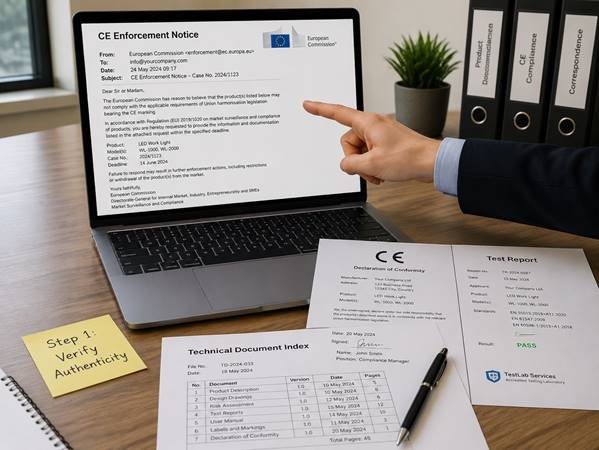
Step 1, first confirm the authenticity: there are currently many fraudulent emails impersonating EU enforcement agencies to demand fines. Be sure to verify the identity of the enforcement agency, involved products, violation basis and reply deadline through official channels, and do not click on email links or call unfamiliar numbers at will;
Step 2, immediately suspend the sales of the involved products through all channels, lock the affected models, batches, inventory and sales scope to avoid further expansion of risks;
Step 3, sort out existing compliance documents and relevant evidence, and assess the severity of the violation: whether it is a simple formal problem or a substantial problem involving product safety;
Step 4, cooperate to submit materials within the specified time limit: if it is a minor formal problem, rectify as required as soon as possible to strive for lighter treatment; if it is a serious substantial safety problem, it is recommended to seek the assistance of a professional compliance consultant or local lawyer;
Step 5, if you have objections to the penalty result, you must apply for relief in accordance with the time limit and channels stipulated by the laws of the member state, and do not delay handling. The specific relief methods may include administrative objection, review or court litigation.
3 red lines that must never be touched
Finally, we would like to remind you of three red lines that must never be touched. If you touch them, you will face EU-wide entry ban at the lightest, and bear criminal responsibility at the heaviest, with no room for luck:
First, forge CE marks, Declarations of Conformity or technical documents;
Second, knowingly placing products with serious safety hazards on the EU market;
Third, repeated violations and refusal to rectify, or intentionally concealing fraud.
Core Point Summary
Generally speaking, CE enforcement is a post-market supervision system established by the EU to ensure product safety in the unified market. The core is to verify the true compliance of products, rather than simply checking whether there is a certificate.
Core conclusions for beginners to remember
1. CE enforcement is a post-market compliance verification by market supervision authorities of EU member states, covering all products that are legally required to bear the CE mark and placed on the EU market; products that do not require the CE mark may still be subject to other product safety regulations.
2. The enforcement entities are the competent market supervision authorities of each member state. EU-level institutions are responsible for coordination, and customs, e-commerce platforms, etc. participate in coordination according to their respective responsibilities. Only market supervision authorities have the right to make administrative penalties.
3. Violation disposal ranges from rectification, delisting to fines, recalls, sales bans and even criminal liability, depending on the nature and severity of the violation.
4. The EU does not have a unified fine standard. The amount and form of penalties are determined by the laws of the member state where the violation occurs and the circumstances of the individual case.
Judgment methods for intermediate level mastery
1. Can initially judge your own enforcement risk level in combination with the applicable product regulations, risk level, sales channel and target market;
2. Can distinguish the boundaries of four types of violations: formal, document-related, traceability-related, and substantial, and know the possible disposal measures for different types of violations;
3. Clarify your own role in the economic operator responsibility chain, and know the corresponding compliance obligations and responsibility scope;
4. Master the basic response steps for receiving enforcement notices, and keep in mind the three compliance red lines that cannot be touched.
As long as compliance is truly implemented in practice, and you do not muddle through by sticking labels or buying certificates, the vast majority of CE enforcement risks can be avoided in advance.