
Friends who export charging products to Saudi Arabia have most likely heard of terms like “SABER” and “SASO certification”, but many people get confused when they first encounter them: Is SABER a certificate or an institution? Can CE or CB reports be used directly? Why are goods detained during customs clearance even when they have certificates?
Most of these confusions come from an unclear understanding of SABER’s positioning and unfamiliarity with the exclusive rules for charging products. In this article, we will start from the most basic concepts, covering the regulation judgment of charging products, application procedures, common pitfalls, and the differences from other common certifications, to explain SABER thoroughly. After reading, you will be able to go from beginner to independently judging most basic issues.
Basic Knowledge of SABER (Must-Know for Beginners)
First of all, we need to clarify a core point: SABER is not a certificate, nor is it a testing or certification issuing institution. Its essence is Saudi Arabia’s official online management platform for product compliance access, equivalent to the “online government service hall” for product compliance in Saudi Arabia.
This platform is operated by the Saudi Standards, Metrology and Quality Organization (abbreviated as SASO, the official regulatory body of Saudi Arabia) and serves as the electronic implementation entry point for Saudi Arabia’s Product Safety Program (Saleem). Simply put, SASO is the “referee” that sets rules and oversees regulation, while SABER is the “service system” used to follow procedures, store certificates, and connect with customs.
The commonly heard “SASO certification” and “SABER certification” are actually common names in the market, referring to the entire Saudi product compliance process. The officially valid compliance credentials are two types of electronic certificates: PCoC (Product Conformity Certificate) and SCoC (Shipment Conformity Certificate). The paper-based SASO CoC certificates from earlier years have long been replaced by SABER electronic certificates, and all rules are subject to the latest requirements of the SABER platform.
People who are new to this are prone to falling into three cognitive pitfalls. Let’s clarify them in advance here to avoid detours:
First, thinking SABER is a certificate. In fact, it is just an official platform for handling and managing compliance credentials, just like the government service system for applying for ID cards; the system itself is not the ID card.
Second, thinking that CE, CB, and FCC reports can be used directly. These certifications or reports can only be used as technical references and cannot replace Saudi Arabia’s compliance requirements at all. For example, Saudi Arabia’s exclusive Type G plug requirements, energy efficiency standards, and labeling rules are not covered by other certifications.
Third, thinking that only imported products need to be processed. Products produced locally in Saudi Arabia may also be subject to applicable technical regulations and product compliance requirements, but whether it is necessary to apply for a PCoC on SABER and the specific procedures should be confirmed according to product classification, applicable regulations, and the latest requirements of SASO; imported products also need to go through corresponding shipment conformity procedures in accordance with regulations.
Regulation Scope and Judgment Logic for Charging Products
After understanding what SABER is, the next most concerning question is: Do the charging products I sell need to go through the SABER process?
First, let’s list several common types of regulated charging products. As long as they fall within the scope, whether imported or locally produced and sold in Saudi Arabia, they all require compliance registration:
The first category is products with circuit power supply, such as wall chargers, power adapters, multi-port fast chargers, wireless chargers, and charging docks. These are basically within the regulation scope.
The second category is cables, including USB-A and USB-C charging cables. Whether they are active or passive, the final judgment is based on the HS code.
The third category is accessories, such as separately sold Saudi-specification conversion plugs and consumer electronics accessories with charging ports.
Of course, many products are not so easy to judge directly. You can conduct a preliminary investigation according to these four steps. Note that the final judgment is subject to the official authority:
Step 1: Confirm the HS code first. This is the core basis for judging the regulation status. Queries on the SABER platform can only be used as reference. The final verification is done by the importer, customs broker, or customs. Don’t be certain just because you looked up a code yourself.
Step 2: Check core attributes: whether the product has a power supply function, whether it is sold separately, input voltage range, power level, and plug type. All of these will affect the regulation judgment. For example, for the same USB cable, the requirements may be different for a pure data cable and one with charging function.
Step 3: Check additional attributes: whether the product has a built-in battery, whether it has wireless communication or radio frequency functions. For example, a wireless charger with Bluetooth will involve additional radio frequency regulation requirements.
Step 4: Combine technical regulations and platform registration results to confirm specific application requirements and assessment paths.
Here are some reference assessment paths for common charging products. Note that these are for reference only, and the final judgment is subject to the official authority:
Chargers, adapters, and wireless chargers with active circuits generally require sample testing plus document review. Apply for a PCoC first, then apply for an SCoC for each shipment;
Active charging cables require safety testing plus document review, and certificates are issued in accordance with corresponding regulations;
Whether a charging cable is a regulated product, which technical regulations apply, and whether sample testing is required should be confirmed item by item in combination with the Saudi Customs HS code, the actual function of the product, and SABER product classification; you cannot default to test exemption or a simplified path just based on the name “passive charging cable”;
Products with batteries or radio frequency functions need to meet special regulations, and the path must be separately verified.
There are also some boundary scenarios that many people are unsure about, such as industrial/medical-specific charging equipment, pure data USB cables, adapters built into complete machines and not sold separately, and multi-accessory sets. You cannot directly say “need to apply” or “no need to apply” for these. The principle of judgment is: product use does not automatically exclude regulation, and must be confirmed according to the HS code, corresponding regulations, and the requirements of the competent authority. You can first make a pre-query on the SABER platform, but the final result is still subject to the judgment of customs or the assessment body.
Core Dual-Certificate Rules of SABER (Applicable to Regulated Charging Products)
For regulated charging products, the core is two electronic certificates: PCoC and SCoC. Many people are confused about the difference between the two. We will explain them separately and then make a comparison at the end.
First, let’s talk about PCoC, whose full name is Product Conformity Certificate. It is equivalent to the Saudi access filing certificate for a single product. Its function is to prove that this model of product complies with Saudi technical regulations, and it is a prerequisite for applying for an SCoC — without a valid PCoC, you cannot apply for an SCoC for customs clearance.
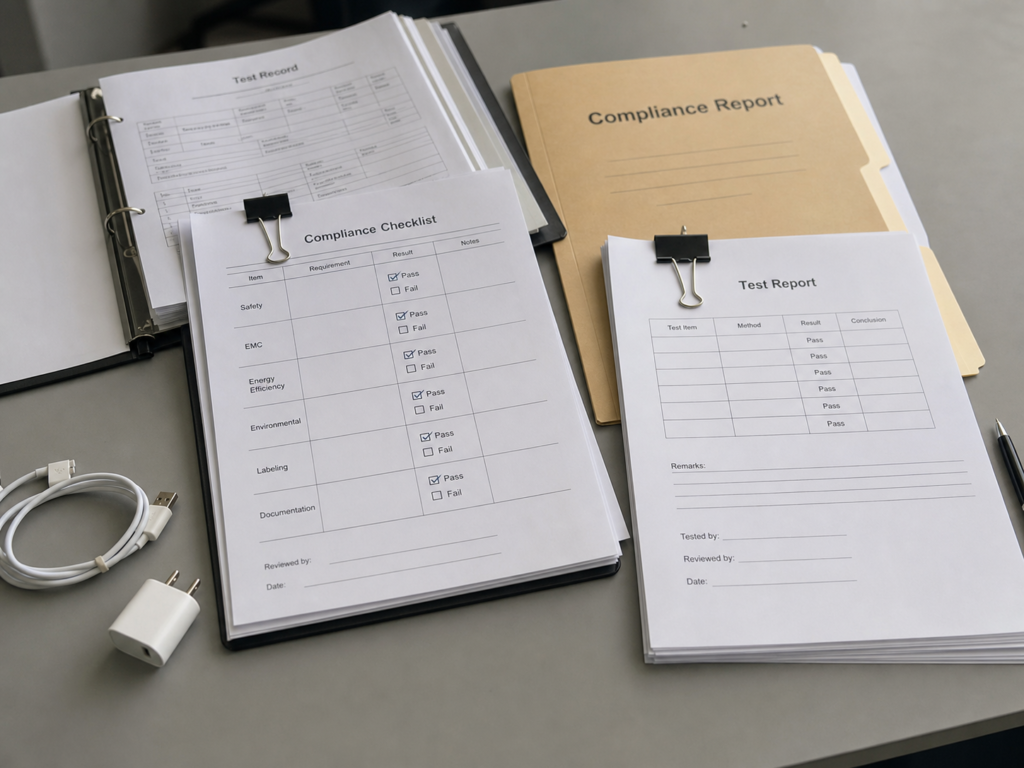
The PCoC is not issued by the SABER platform, but is reviewed and issued by a SASO-recognized assessment body, and then registered on the SABER platform. Its validity period is usually 1 year, and there may be slight differences for different product categories and issuing institutions.
The validity period and coverage scope of the PCoC are subject to the content stated on the certificate and the review conclusion made by the assessment body in accordance with applicable regulations. The same model or product series that meets the coverage conditions can be used for corresponding applications within the validity period, but when there are changes to the model, manufacturer, factory, key components, or technical parameters, you should first confirm with the assessment body whether changes, supplementary testing, or re-application are required.
For charging products, the PCoC has exclusive requirements: the input and output parameters, plug specifications, and interface types on the certificate must be completely consistent with the actual product. It is not allowed that the certificate says USB-C interface but the actual product is USB-A.
Next is the SCoC, whose full name is Shipment Conformity Certificate. This is the core credential for customs clearance of a single batch of imported goods at Saudi Customs, equivalent to the “clearance pass” for this batch of goods.
The SCoC is also reviewed by a SASO-recognized assessment body and generated through registration on the SABER platform. Its validity period is very short: it is only valid for the customs clearance of the current batch, and becomes invalid after use.
An SCoC can only be applied for by binding a valid PCoC, and the information on the certificate must completely match the shipping documents. For charging products, special attention should be paid: all product models and quantities in the batch must be within the coverage scope of the corresponding PCoC. It is not allowed that the PCoC only registers 65W chargers but the batch also contains 120W ones.
To facilitate everyone’s distinction, here is a simple comparison table:
| Comparison Item | PCoC (Product Conformity Certificate) | SCoC (Shipment Conformity Certificate) |
| Core Function | Product conformity and corresponding access credential, prerequisite for applying for SCoC | Customs clearance credential for a single batch of imported goods |
| Validity Period | Usually 1 year | Only valid for the current batch’s customs clearance |
| Coverage Scope | Subject to the model, product series, manufacturer, factory, and applicable regulation scope stated on the certificate | Models and quantities of the single batch of goods |
| Exclusive Requirements for Charging Products | Input and output parameters, plugs, and interfaces must be consistent with the actual product | Products in the batch must be within the PCoC coverage scope |
Regarding the dual certificates, there are two common misconceptions that must be avoided:
First, thinking that having a PCoC allows direct customs clearance. That’s wrong. The PCoC is only the product’s access filing. When importing regulated products, they must be paired with the SCoC of the corresponding batch to clear customs.
Second, thinking that all charging products need to apply for the dual certificates. That’s wrong. Only products that are regulated and required by regulations to go through the SABER process need them; products not within the regulation scope do not.
In addition, we would like to remind everyone that PCoC and SCoC are processed electronically in the SABER system and linked to relevant regulatory procedures, but import customs clearance still requires the submission of complete shipping and customs declaration documents in accordance with Saudi Customs requirements. You cannot complete all customs clearance procedures solely with platform certificates.
Core Compliance Requirements for Charging Products
Now that you know what certificates to apply for, the next thing to talk about is the core compliance requirements that charging products must meet. Understanding them in advance can help you avoid 80% of testing and review failure issues.
First are electrical safety requirements, which are basic mandatory items. There are three main points:
First is electric shock protection. The insulation and voltage resistance performance of the product must meet standards. Users must not be able to touch live parts during normal use. For example, the prongs of a charger and internal circuits must have sufficient insulation protection.
Second is heat resistance and fire prevention. The flame retardant and temperature resistance properties of the product’s shell and cables must meet requirements. The temperature rise during operation must not exceed the standard to avoid the risk of overheating and fire.
Third is parameter consistency. The output voltage, current, and rated power of the product must be consistent with the declarations on the nameplate and packaging. False labeling is prohibited — for example, if it is labeled as 65W fast charging but the actual measurement is only 40W, it will definitely not pass.
Next are plug and grid adaptation requirements, which is the most common pitfall for charging products:
Most of Saudi Arabia’s civilian power supply is 230V/60Hz. The product’s input voltage range must cover this requirement. Products that only support 110V are definitely not acceptable.
For fixed wall-mounted charging products, the plug must comply with Saudi Arabia’s Type G standard, which is commonly known as the British three-pin square plug. This is a mandatory requirement. For products with conversion plugs, replaceable plugs, or multi-country plugs, the judgment must be made in accordance with Saudi Arabia’s special regulations on plugs and sockets. It is not that just matching a Type G conversion head meets the requirements.
Special reminder here: If a fixed wall charger uses a European or American standard plug, it is highly likely to fail to meet the requirements and will be directly rejected.
Next are marking and labeling requirements:
The content that must be marked on the product includes brand, model, rated input and output parameters, power, place of origin, safety warnings, etc. The specific content is subject to the requirements of corresponding regulations, and no items can be missing.
Where applicable regulations require Arabic labels, manuals, or safety information, Arabic content must be provided as required; whether English or other languages are also needed, as well as the specific marked items, shall be subject to applicable technical regulations and SASO labeling requirements.
Another very important point: the core information on the product’s nameplate, packaging, manual, and certificate must be completely consistent. For example, if the product says the place of origin is China but the packaging says Vietnam, it will definitely not pass the review.
Finally, there are additional special requirements, which vary according to product type:
Active chargers or power adapters usually need to be evaluated for electrical safety and possibly applicable EMC requirements in accordance with applicable technical regulations; whether energy efficiency, plug, and other test items are applicable shall be confirmed by product classification, rated parameters, applicable regulations, and the assessment body. All items cannot be regarded as fixed mandatory test items in advance.
Products with Bluetooth, Wi-Fi, or other wireless communication/radio frequency transmission functions need to further verify Saudi communication and spectrum regulatory requirements; pure wireless charging functions shall be judged according to their electrical safety, EMC, and other applicable regulations, and cannot be classified as communication equipment just because they have wireless charging function.
Products with built-in batteries, such as power banks and charging docks with batteries, also need to additionally meet battery safety and transportation compliance requirements.
Full Application Process and Document Preparation for Charging Products
After understanding the compliance requirements, let’s talk about the specific application process, the participants in each link, and the documents that need to be prepared.
First of all, we need to figure out what roles are involved in the entire process and what each is responsible for, so as not to contact the wrong person:
The first is the Saudi local registrant/importer, which is the applicant subject for SABER. Usually, the importer or responsible entity within Saudi Arabia needs to initiate and manage the application in SABER. Overseas manufacturers or suppliers can participate in the submission of documents, samples, and technical documents in accordance with the process requirements of the importer and assessment body.
The second is a SASO-authorized assessment body, responsible for reviewing documents, confirming testing requirements, and issuing the dual certificates. Their qualifications can be queried on the official SASO website. Be sure to find one with formal authorization, otherwise the certificate issued will be invalid.
The third is a testing laboratory, responsible for testing samples and issuing reports. The laboratory must be recognized by the assessment body. Note that laboratories only have testing authority and no certification issuing authority. Don’t listen to laboratories that say they can directly issue SABER certificates.
The fourth is the manufacturer/exporter, which is ourselves, responsible for providing technical documents and test samples, and cooperating with the institution for rectification.
The fifth is the customs broker, responsible for assisting in confirming the HS code and handling specific customs clearance procedures.
Next, let’s take the most common 65W USB-C charger as an example to explain the conventional application steps:
Step 1: The Saudi importer opens a SABER account and submits basic product information such as model, parameters, and HS code on the platform.
Step 2: Select a SASO-authorized assessment body, confirm the test items that need to be done, and then send the samples to a laboratory recognized by the assessment body for testing.
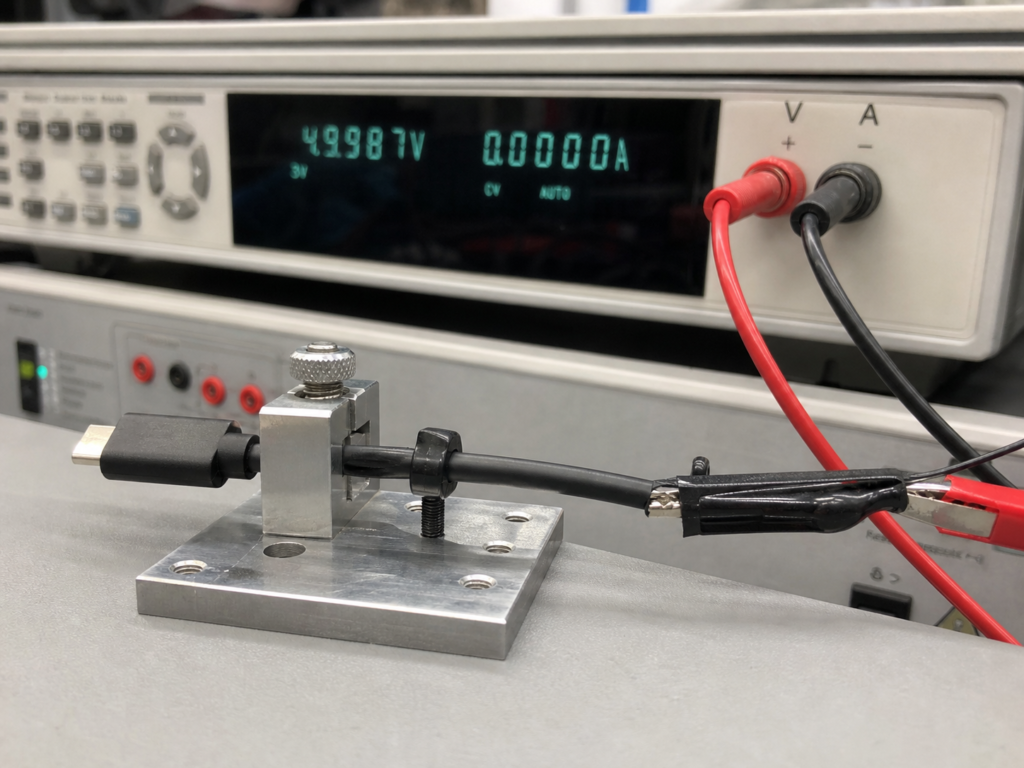
Step 3: After passing the test, submit a full set of technical documents to the assessment body. After the review is passed, the institution will generate a PCoC certificate on the SABER platform.
Step 4: Before each shipment, submit shipping documents such as commercial invoice, packing list, and bill of lading, bind the corresponding PCoC, and apply for the SCoC of the current batch.
Step 5: After the SCoC review is passed, you can use the electronic certificate to handle customs clearance.
Of course, not all products need to go through such a complete process. The specific testing or document assessment method shall be determined according to product classification, applicable regulations, HS code, and the confirmation result of the assessment body. You cannot default to test exemption or a simplified path just based on the name “passive charging cable”.
The core documents that need to be prepared for application can be divided into four categories:
The first category is technical documents, including product specifications, fast charging protocol descriptions, interface descriptions, circuit schematics, and BOM (bill of materials) (provided as needed, not required for all products).
The second category is test documents, that is, test reports on safety, EMC, energy efficiency, and plug specifications issued by recognized laboratories. Specific items are provided in accordance with applicable regulations and product assessment requirements.
The third category is marking documents, including product nameplates, packaging, and manuals, which must contain parameters, place of origin, safety prompts, and other content required by regulations.
The fourth category is shipping documents, including commercial invoices, packing lists, and bills of lading. The information in these documents must be completely consistent with that on the PCoC, otherwise it will affect the SCoC application.
Regarding the processing cycle, here is an empirical range for everyone, which is not an official commitment. The actual time will be affected by many factors:
The conventional processing time for PCoC is 2-4 weeks. If the product is relatively complex, or if the test fails and rectification is required, the time will be longer.
The processing of SCoC is relatively faster. If the documents are complete and meet the requirements, it usually takes 1-3 working days to be issued.
There are many factors affecting the cycle, such as product category, number of test items, institution scheduling, document completeness, number of rectifications, and accuracy of batch documents. Therefore, it is recommended that everyone reserve enough time in advance and don’t wait until the shipping schedule is close to apply.
Finally, let’s use the complete example of a 65W USB-C power adapter exported to Saudi Arabia to string together the entire process for everyone’s understanding:
First is pre-judgment: The applicable complete HS code shall first be confirmed by the Saudi importer, customs broker, or Saudi Customs, and then the SABER regulation status shall be queried based on this code and the actual technical attributes of the product; the example shall not use the unverified 85044099 as a definitive classification. Whether the product plug meets the requirements shall also be subject to applicable standards and the review of the assessment body.
Then is document preparation: submit product specifications, nameplate, circuit schematic, BOM list, and fast charging protocol description.
Next is the testing link: complete corresponding test or document assessment items such as safety, EMC, energy efficiency, and plug specifications according to product classification, rated parameters, applicable regulations, and requirements confirmed by the assessment body.
Then obtain the PCoC: After the assessment body passes the review of documents and test reports, it registers and generates the PCoC on the SABER platform, with a validity period of 1 year.
Then obtain the SCoC: Before the first shipment, submit the invoice, packing list, and bill of lading, bind the corresponding PCoC to apply for the SCoC.
Finally, customs clearance: After the SCoC review is passed, handle customs clearance with the electronic certificate and in conjunction with other shipping and customs declaration documents required by Saudi Customs.
Special reminder here: This process is for chargers with active circuits. Products like charging cables cannot be directly applied to this process. You must first confirm the regulation status, applicable regulations, and specific assessment requirements.
Certificate Validity Verification and Change Management (Must-Know for Intermediate Proficiency)
After getting the certificate, how do you ensure that the certificate is real and valid? Under what circumstances do you need to change the certificate? This part is advanced content, suitable for friends who need to verify certificates or do long-term compliance management.
First, when you get a SABER certificate, what information should you check?
General must-check items include: certificate number, certificate status, validity period, holder, manufacturer, product model, product description. These basic information must first match.
For charging products, there are several exclusive checkpoints: input and output power, interface type, plug specifications, and whether it covers fast charging or wireless functions. For example, if you purchase a 65W gallium nitride charger but the certificate only says 20W, that is definitely wrong.
The most important point: the information on the certificate must match the core content of the product nameplate and shipping documents, otherwise there will be problems during customs clearance.
Then how to officially verify the validity of the certificate?
The most formal channel is to query through the SABER platform. There is a public query entry, and you can also query after logging in with a SABER account. The specific functions are subject to the latest version of the platform.
During verification, focus on three points: whether the issuing institution is SASO-authorized, whether the certificate status is valid, and whether the certificate information is consistent with the actual product.
If the information cannot be found through public query, you can request official registration records from the importer or assessment body. Don’t think a PDF is real just because you got one.
Let’s talk about the rules for certificate change and invalidation.
Changes involving model, brand, manufacturer, production factory, key safety components, rated parameters, plug type, or other changes that affect compliance shall be confirmed with the assessment body and declared as required before implementation; whether general packaging or non-critical information changes require certificate update shall be judged based on the specific impact and the assessment body.
How to handle after the change? Whether supplementary testing is needed, whether the certificate needs to be updated or re-applied, shall be determined by the assessment body based on the nature of the change and corresponding regulations. Not all changes require re-application.
There are several situations where the certificate will be clearly invalid: the validity period expires without renewal, the certificate is revoked due to unqualified product spot checks, or the change exceeds the coverage scope of the original certificate. In these cases, the certificate can no longer be used.
Common Pitfalls and Pitfall Avoidance Checklist for SABER Application of Charging Products
Here we have compiled the most common pitfalls in the SABER application process for charging products and corresponding pitfall avoidance methods. These are all experiences gained from actual practice. Knowing them in advance can save a lot of money and time.
First are common pitfalls on the product side:
Pitfall 1: Fixed wall chargers use European or American standard plugs, which do not meet Type G requirements. This is the most frequent pitfall. Many sellers who are used to the European and American markets directly apply with European/American standard products and get directly rejected.
Pitfall 2: Fast charging products have false power labeling, and the output parameters are inconsistent with the declaration. It will be exposed as soon as it is tested. Not only will it fail to pass, but it may also leave a bad record.
Pitfall 3: The shell or cable of the charging cable has substandard flame retardancy, and fails the fire test. Many low-cost charging cables use non-flame-retardant materials to save costs, and it is easy to fail here.
Pitfall 4: The label lacks content required by regulations, or the Arabic version is not prepared as required. Unqualified labels directly affect the review approval.
The pitfall avoidance methods are also very simple: check the product’s structure, parameters, and markings against regulations in advance, and do pre-testing if necessary. Don’t wait until the formal test to find problems.
Next are common pitfalls in process and cost:
Pitfall 1: Choosing an assessment body without SASO authorization, or the laboratory’s report is not recognized. You spend a lot of money, but the certificate is useless, and you get stuck during customs clearance.
Pitfall 2: Mistakenly thinking that all charging cables do not need to apply or are exempt from testing. As a result, you are required to make up the certificate during customs clearance, delaying the shipping schedule and incurring additional costs.
Pitfall 3: Remembering to apply for SCoC only before shipment. As a result, due to document problems or institution scheduling, the shipping schedule is delayed, resulting in additional costs such as port detention fees and container rental.
Pitfall 4: Finding an institution with a particularly low quotation. At first they say it can be done for a few thousand yuan, but later they arbitrarily increase the price on the grounds of unqualified testing or supplementary documents. In the end, you spend more money than with a formal institution.
Pitfall avoidance methods: Confirm the product’s regulation status in advance, choose a formal authorized institution, ask clearly about the full process cost and rectification rules in advance, and it is best to write them in the contract. Don’t be penny-wise and pound-foolish.
Finally are common pitfalls in the customs clearance link:
Pitfall 1: The models and quantities on the invoice and bill of lading are inconsistent with the information on the dual certificates, resulting in customs detention of goods. Many careless sellers make this mistake, such as missing the suffix of the model, or the quantity not matching.
Pitfall 2: For sets of charger plus charging cable, the respective compliance requirements are not confirmed separately. You think the certificate for the charger is enough, but as a result, the charging cable is also within the regulation scope, and the entire batch of goods is detained if there is no certificate for it.
Pitfall avoidance methods: Check all information of documents and certificates one by one before shipment. Confirm the compliance rules for set products in advance. Don’t take it for granted that one certificate can cover all accessories.
Core Differences Between SABER and CE/FCC/CB (From the Perspective of Charging Products)
Many friends will ask: I already have CE, FCC, or CB reports, can I skip applying for SABER? Here we specifically compare these common certifications/reports from the perspective of charging products to help everyone figure out if they can be used interchangeably.
First, let’s explain the scope of the comparison: we are comparing the market access requirements for consumer-grade chargers, power adapters, and charging cables. The comparison dimensions include applicable regions, core requirements, application processes, and whether they can directly replace SABER.
To facilitate everyone’s quick viewing, here is a simplified table:
| Comparison Item | SABER (Saudi Arabia) | CE (EU) | FCC (US) | CB Test Report |
| Applicable Region | Saudi Arabia | EU and regions that recognize CE | United States | Mutual recognition of test results among IECEE member states |
| Core Focus | Safety, plug, energy efficiency, labeling, EMC, radio frequency (depending on product) | Safety, EMC, radio frequency (depending on product) | EMC, radio frequency regulation | Mutual recognition of safety and other standard tests |
| Batch Customs Clearance Requirements | SCoC required for each batch of regulated products | No batch customs clearance certificate requirement | No batch customs clearance certificate requirement | No access validity, only a test report |
| Can It Directly Replace SABER | – | No, only for technical reference | No, only for EMC/radio frequency reference | No, can reduce some repeated tests |
Specifically:
Compared with CE certification, the two have different applicable regions. SABER has exclusive plug, energy efficiency, and labeling requirements. The safety and EMC standard systems are also not completely consistent with those of the EU. Moreover, SABER must be applied for by a Saudi local registrant, and SCoC is required for each batch of regulated products. CE cannot replace SABER at all, and can only be used as a technical reference. The difference is even greater for products with wireless communication or radio frequency transmission functions.
Compared with FCC certification, SABER covers more dimensions such as safety, plug, and energy efficiency, while FCC only focuses on EMC and radio frequency regulation, and has no batch customs clearance requirements. FCC can only be used as a reference for the EMC/radio frequency part and cannot replace SABER.
Compared with CB test reports, CB is only a mutually recognized test report, not an access certificate. If the CB report meets the corresponding Saudi standards, it can reduce some repeated tests, but it still needs to supplement the tests/reviews required by Saudi exclusive requirements, and compliance can only be achieved after completing platform registration. It cannot directly replace SABER.
A brief summary is: no matter whether you have CE, FCC, or CB, none can directly replace SABER. At most, they can be used as technical references to reduce some repeated tests, and the required processes still have to be followed.
By now, you should have a comprehensive and practical understanding of the SABER platform. You will no longer regard SABER as a certificate, and you can also distinguish the relationship between SASO, SABER, PCoC, and SCoC, and will not be confused by various common names in the market. You can also follow the steps of “first verify the HS code, then check the product attributes, and finally confirm the official result” to preliminarily judge whether your charging product is regulated, and know that you cannot draw conclusions based solely on product use, and the final judgment is subject to the official authority.
For regulated charging products, you also understand the general application process and the core documents that need to be prepared, and know that the assessment paths for different products are different, so you cannot directly copy other people’s experience. You have also learned how to verify the validity of SABER certificates and know which changes need to be proactively declared to avoid certificate invalidation.
In addition, you can also identify common pitfalls on the product side, process side, and customs clearance side. Preparing in advance can avoid most problems. If your charging products are going to enter the Saudi market, it is recommended to prepare in accordance with these requirements in advance. Don’t wait until the shipment is about to be made to start the application, which will not only delay time but also easily lead to pitfalls.