
Many friends engaged in cross-border trade most easily fall into the pit of incorrect certification when selling products like chargers and charging cables to South Africa for the first time: either they think CE or FCC is enough for direct customs clearance, only to encounter problems in the local access process; or they think all products need certification, spending a lot of unnecessary money. In fact, the logic of South Africa’s electronic and electrical certification system is very clear. As long as you figure out who is in charge, which are mandatory requirements, and which are optional bonus items, you can avoid many detours.
First, Understand the Basics: Core Framework of South African Certifications
The regulation of electronic and electrical products in South Africa is not decided by a single department. Different agencies manage different matters, and certifications are divided into two categories: mandatory and voluntary. Clarifying this framework first will prevent confusion later.
Three Regulatory Bodies, Each with Its Own Responsibilities
There are three core regulatory departments related to electronic and electrical products in South Africa, with very clear division of labor:
• **NRCS (National Regulator for Compulsory Specifications)**: Equivalent to South Africa’s “market access gatekeeper”, responsible for implementing compulsory specifications and issuing LOAs. Whether a product requires an LOA depends on whether it falls within the scope of specific compulsory specifications.
• **ICASA (Independent Communications Authority of South Africa)**: Manages products with wireless and communication functions, such as chargers with Bluetooth and charging devices with WiFi, focusing mainly on radio spectrum and communication equipment access.
• **SABS (South African Bureau of Standards)**: Responsible for formulating South African national standards. The SABS certification it issues is usually a voluntary quality certification, not a mandatory legal access document for all products.
Mandatory vs Voluntary: Don’t Mix Up the Priority
Many people confuse the two types of certification when they first come into contact with them, but the difference is very straightforward:
• **Mandatory certification**: For products falling within the scope of applicable compulsory specifications or communication equipment type approval, it is a compliance requirement that should be prioritized for import, supply and sale. Lack of it may bring customs clearance, sales or law enforcement risks.
• **Voluntary certification**: It is a “bonus item”. Not having it does not necessarily mean violation of laws, but it can help improve product competitiveness and may be useful when entering large supermarkets or cooperating with major customers.
Which Charging Products Require Mandatory Certification? Which Don’t?
For common products such as chargers and charging cables, whether NRCS approval is required cannot be judged only by “whether there is a chip”, but depends on the rated parameters and purpose of the complete product, as well as whether it falls within the scope of relevant compulsory specifications.
Generally, mains-powered chargers, power adapters, as well as power strips and extension cords with mains plugs, need to be confirmed item by item whether an LOA is required according to applicable NRCS compulsory specifications.
For USB/USB-C charging cables, judgment cannot be made only based on whether they contain E-Marker, fast charging chips, or whether they are active cables. It is necessary to check the applicable scope of VC 8006, VC 8029, VC 8055, etc. item by item according to their rated voltage, whether they are flexible cords connecting equipment to low-voltage mains, and whether they are part of regulated products.
Plugs, sockets and socket converters cannot be judged only by whether they have electronic components. Purely mechanical structures are not automatically exempt; socket converters falling within the scope of VC 8008 need to obtain NRCS approval or LOA. Only mechanical accessories that do not fall within the definition and scope of this specification may not be applicable.
Whether personally carried items, samples, repair parts, exhibition or test equipment can be exempted depends on the applicable VC of the product, customs requirements, and whether ICASA regulation is involved. Do not take “1-2 units for personal use” or quantity limits without stated basis as a general rule applicable to all electronic and electrical products. For ICASA-regulated equipment used for testing, demonstration or research purposes, applications can be made according to its temporary type approval or exemption procedures.
3 Most Common Misconceptions for Beginners
These three pitfalls are most commonly encountered by novices. Avoiding them in advance can save a lot of money and time:
1. **Misconception 1: CE/FCC/CCC can be directly used in South Africa**: CE, FCC, and CCC certificates themselves cannot replace NRCS LOA or ICASA type approval. Whether existing test data such as IEC and EN can be used for South African applications also needs to be checked against applicable South African standards, national differences and technical equivalence requirements. Failure to obtain applicable local mandatory approval will bring customs clearance, sales and law enforcement risks, but it cannot be simply asserted that all goods will be detained.
2. **Misconception 2: All products require mandatory certification**: Not all products automatically need an LOA. The key is not simply whether there is a chip, but the rated parameters, purpose and specific VC scope of the product.
3. **Misconception 3: SABS mark is South African mandatory certification**: SABS is usually a voluntary quality certification and cannot replace the LOA or other legal access documents required under applicable circumstances.
The Core Mandatory Access Requirement: NRCS LOA Safety Certificate
For many charging products falling within the scope of compulsory specifications, the LOA issued by NRCS is the most core access document that must be prioritized for confirmation. We will explain it in detail separately.
What Exactly is LOA?
The full name of LOA is **Letter of Authority for Compulsory Access**, which is an important document for electronic and electrical products entering the South African market within the scope of applicable compulsory specifications.
Special attention should be paid here: LOA proves that the product meets the requirements of the applicable NRCS compulsory specifications, which may specifically involve safety, energy efficiency or other items; it does not mean how good the product’s quality, durability or charging performance is. Whether electromagnetic compatibility testing, wireless equipment type approval, etc. are also required shall be separately judged according to the product itself and ICASA technical regulations.
For applicable products, LOA is issued by NRCS, and whether it needs to be obtained shall be confirmed before import customs clearance and online and offline sales.
What Requirements Must Be Met to Apply for LOA?
To get an LOA, there are three core hurdles to pass:
The first hurdle is **test requirements**: The applicable test standards must be confirmed according to product category, applicable VC and current SANS/IEC versions. It is not allowed to uniformly designate all chargers and power adapters as SANS 62368-1. For example, some transformers, power supplies and similar products may involve standards such as SANS IEC 61558. When applying, a complete test report that meets NRCS requirements and covers South African national differences shall be submitted.
If you already have CB, IEC or EN test reports, they can be used as basic application materials, but they are not automatically recognized directly. Whether they are accepted, whether supplementary testing, equivalence statements or supplementary materials are required shall still be reviewed by NRCS according to applicable specifications.
The second hurdle is **labeling requirements**: The product body usually needs to have a clear nameplate marked with parameters such as voltage, current, brand, model, and production information, which cannot only be printed on the packaging.
The third hurdle is **adaptation requirements**: First, whether the input voltage of the product is suitable for South African mains shall be confirmed according to the rated parameters of the product; the common mains in South Africa is 220–240V/50Hz. Second, products with plugs, sockets and converters shall comply with applicable SANS 164 series and VC 8008 requirements.
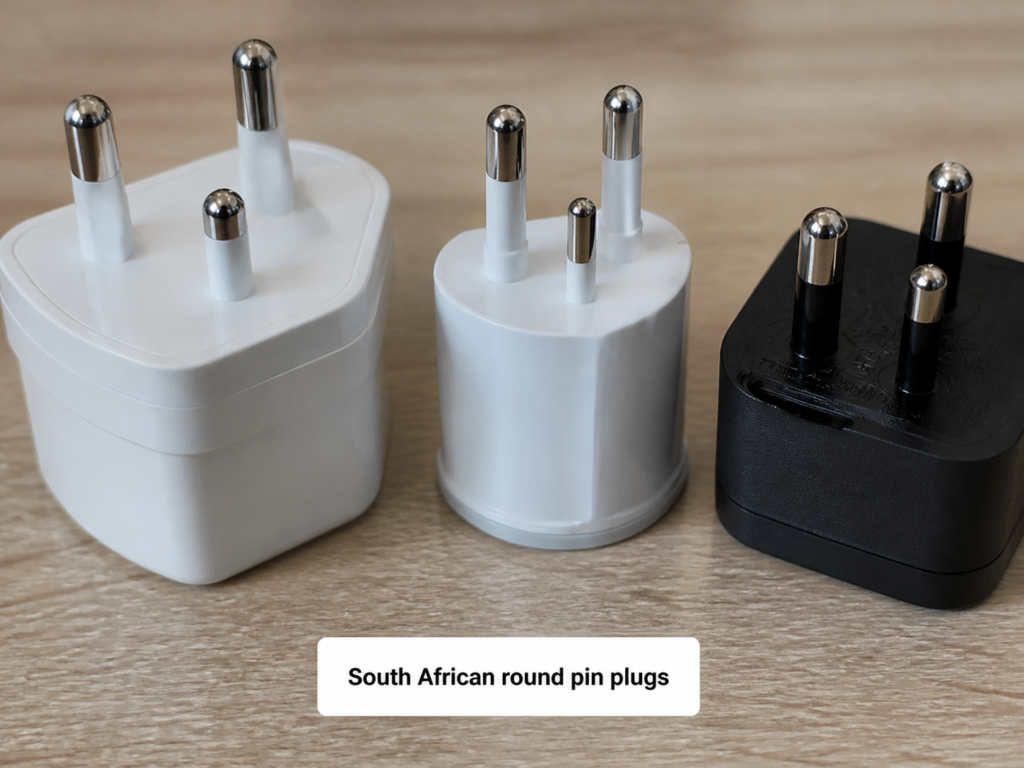
South Africa still commonly uses the traditional large round pin system, namely SANS 164-1; the more compact three-round pin system is SANS 164-2. Do not refer to SANS 164-2 as “Type N”, because Type N is usually used for another international plug classification and is not the standard name of South Africa’s SANS 164-2.
These Rules of LOA Directly Affect Your Costs
Many people do not know these rules of LOA and spend extra money for nothing:
• **Validity period**: The validity period, renewal conditions and report validity of LOA shall be subject to the applicable VC of the product and the content of the certificate. For example, VC 8029 stipulates that the validity period of the first LOA is 3 years and the renewal is 2 years; this cannot be generalized to other VCs.
• **Certificate holder requirements**: The holder can be an overseas manufacturer or a South African local company. Who actually holds the certificate shall be carefully determined in combination with import, sales arrangements and responsibility allocation.
• **Model coverage rules**: Whether models, colors or variants can be included in the same LOA must be confirmed by NRCS based on applicable VC, model identification, technical differences, test reports and production consistency data. It is not allowed to assume that one certificate can be shared just because the core circuit, power or interface looks the same.
Additional Mandatory Certifications Are Required in These Cases
In addition to NRCS LOA, there are some “triggered” requirements — they are only required when the product meets specific conditions, not for all products.
Energy Efficiency Label: Judged by the Scope of Regulated Products
South Africa’s minimum energy efficiency standards and labeling requirements shall be subject to the product scope listed in VC 9008 implemented by NRCS and its effective amendments. The current regulated scope mainly involves some household appliances and audio-visual related products, such as air conditioners, heat pumps, televisions or monitors, dishwashers, electric ovens, refrigerators and freezers, clothes dryers, washer-dryers and automatic washing machines.
For ordinary USB chargers, external power supplies and multi-port charging stations, it cannot be concluded that South African energy efficiency labels must be affixed just because the power reaches 65W. Whether energy efficiency requirements apply shall be based on whether the product falls into the product categories listed in VC 9008 or its subsequent amendments.
Energy efficiency labels and LOA are also different requirements: the former mainly focuses on energy performance, while the latter depends on the applicable NRCS compulsory specifications of the product, and they cannot replace each other.
ICASA Wireless Certification: Only Required for Products with Communication Functions
If your product has wireless and communication functions, such as a wireless charger with Bluetooth, a smart charging station with WiFi, or a charging device that can connect to an APP, you need to additionally evaluate whether ICASA wireless certification should be done, which is regulated by the Independent Communications Authority of South Africa.
There is a point that is easy to misjudge: **for products with pure Qi wireless power supply and no data or communication function, it cannot be directly determined whether ICASA is required**. It is recommended to confirm the requirements with the official or a reliable agent in advance, and do not draw conclusions on your own.
The core requirement of ICASA certification is that the radio frequency indicators of the product must comply with South African local regulations, and a type approval certificate will be issued after passing. It has several very strict rules:
• The certificate usually needs to be held by a locally registered company in South Africa, and overseas companies or individuals cannot apply directly.
• When the wireless module or antenna is changed, re-application or re-evaluation may be required.
• The existing certification of the wireless module itself may not replace the whole product certification, and whether the whole product needs type approval shall still be confirmed according to ICASA requirements.
Other Possible Requirements
South Africa does not have a set of national systems with exactly the same name and structure as EU RoHS and WEEE, but electrical and electronic equipment has been included in the and related product notices.
Manufacturers, importers, brand owners, etc. that meet the definition of “producer” shall check whether they need to register, join or establish an EPR scheme, as well as related fees and ongoing compliance obligations. Some large chain supermarkets and local major customers may also put forward additional material, environmental protection or quality requirements, which can be clarified in advance when docking.
Voluntary Certifications: SABS and Other Bonus Items
In addition to mandatory certifications, there are some voluntary certifications that, although not required, are very useful in specific scenarios.
What is SABS Certification?
SABS certification is a certification issued by the South African Bureau of Standards. It can usually be used as a quality endorsement to help enterprises explain to consumers and purchasers that products meet the requirements of corresponding standards. In addition to SABS, high-end energy efficiency certification, factory quality system certification, etc. may also fall under voluntary requirements.
When Do You Need Voluntary Certification?
Generally, voluntary certification can be considered in the following situations:
• To enter large chain supermarkets and mainstream e-commerce platforms in South Africa, the other party may additionally require SABS certification
• To improve the market competitiveness of products and widen the gap with ordinary low-cost competitors
• When docking with local major customers, there are relevant provisions in their procurement requirements
Quickly Determine What Certifications Your Product Needs
After talking so much, you may still be a bit confused. Below are two practical tools to quickly determine which certifications your product needs.
Quick Reference Table for Common Charging Product Certifications
We have sorted out the certification requirements of the most common types of charging products into a table, which you can check against:
| Product Type | Mandatory Certification Requirements | Optional/Remarks |
| Ordinary wired chargers/power adapters | Confirm whether LOA is required according to applicable NRCS compulsory specifications | SABS certification is optional; products with plugs shall comply with applicable SANS 164 series and VC 8008 requirements |
| USB/USB-C charging cables | Cannot be judged only by E-Marker, fast charging chip, or active/passive cable type; shall be confirmed based on rated voltage, whether connected to mains, whether within the scope of applicable VCs, and whether they are part of a regulated complete product | When sold together with the main product, the applicable scope of both the complete product and the cable shall be considered |
| Wireless chargers with communication functions | Confirm LOA according to applicable NRCS compulsory specifications; evaluate ICASA type approval if with wireless communication function | RF testing shall match South African local frequency bands and technical regulations |
| Plugs, sockets or socket converters | Shall check VC 8008; purely mechanical structures are not automatically exempt | If with intelligent identification circuits, other applicable specifications may also be involved |
| Multi-port fast charging stations | Confirm whether LOA is required according to product category and applicable NRCS compulsory specifications | Total power, single-port and combined output shall be consistent with product documentation and test reports |
General Four-Step Method, You Can Check by Yourself
If your product is not in the table above, you can also use these four steps to judge by yourself:
1. **Step 1: Is the product connected to South African mains, or is it part of a mains-connected product?** Yes → first check the applicable NRCS compulsory specifications; No → it does not mean that no certification is required, but some mains product specifications can usually be excluded first.
2. **Step 2: Does it have wireless or communication functions?** Yes → evaluate whether ICASA type approval is required; No → ICASA wireless equipment requirements can usually be excluded.
3. **Step 3: Does the rated voltage, purpose and structure of the product fall within the scope of specific VCs?** For example, for USB/USB-C cables, it depends on whether they are mains-connected flexible cords or part of a regulated complete product; for plugs, sockets and converters, VC 8008 shall be checked. “Whether there is a chip” cannot be used as the judgment rule for LOA.
4. **Step 4: Is it for commercial sale?** Applicable mandatory certifications shall be completed before commercial sale; whether personal carry, samples, repair parts or test equipment can be exempted shall be confirmed according to specific VC, customs and ICASA rules.
For example: you want to sell a 100W multi-port fast charger with Bluetooth control. Go through the four-step method: connected to mains → check applicable NRCS compulsory specifications and evaluate whether LOA is required; with Bluetooth → evaluate ICASA type approval; with circuit → cannot draw conclusions based on this alone, still need to check the specific VC scope; commercial sale → applicable mandatory certifications shall be completed before sale. As for the 100W power itself, it cannot automatically lead to the conclusion that South African energy efficiency labels must be affixed.
Introduction to Certification Processing: Process, Cycle and Cost
After figuring out what certification to do, you may care about how to handle it, how long it takes, and how much it costs. Here is a general introductory framework for you. You don’t need to remember too much detail, just have a clear idea when looking for an agent.
NRCS LOA Processing Steps
The basic process of handling LOA usually includes four steps:
1. First use the four-step method above to confirm whether the product is within the scope of applicable mandatory certification, so as not to work in vain.
2. Prepare test materials according to applicable VC and SANS/IEC standards. Existing CB, IEC or EN reports can be used as basic materials, but it may still be necessary to supplement South African national differences, equivalence statements or other materials.
3. Submit product materials, test reports, and holder materials to NRCS for review.
4. Obtain the LOA certificate after passing the review. NRCS may also require representative samples, supplementary materials or production consistency certificates, and whether further verification is needed shall be subject to actual requirements.
ICASA Certification Processing Steps (Only for Wireless Products)
ICASA certification is a bit more troublesome because it involves a local certificate holder:
1. First confirm whether the wireless function of the product is within the regulatory scope of ICASA. For example, pure Qi wireless charging needs to be confirmed first.
2. Complete RF, EMC and other applicable tests, and sort out wireless technical materials.
3. A locally registered company in South Africa acts as the certificate holder and submits the application to ICASA.
4. Obtain the type approval certificate after passing the review.
Cycle, Cost and Required Documents
Many people ask “how much does it cost to get a certification and how long does it take to get the certificate” as soon as they come up. In fact, there is no fixed answer to these two, which are affected by many factors:
• **Cycle reference**: It shall be viewed by regulatory agency. The NRCS public procedure states that the evaluation of LOA applications usually takes up to 120 working days; ICASA states that type approval usually takes about 30 days after all necessary documents are submitted. The actual time is still affected by the completeness of materials, product complexity, correction situation and the requirements of the competent authority.
• **Cost reference**: There is no unified standard, which mainly depends on the number of test items, the power and functional complexity of the product, whether rectification is needed, and the service fee of the local agent. Do not trust the statement of “one-price”.
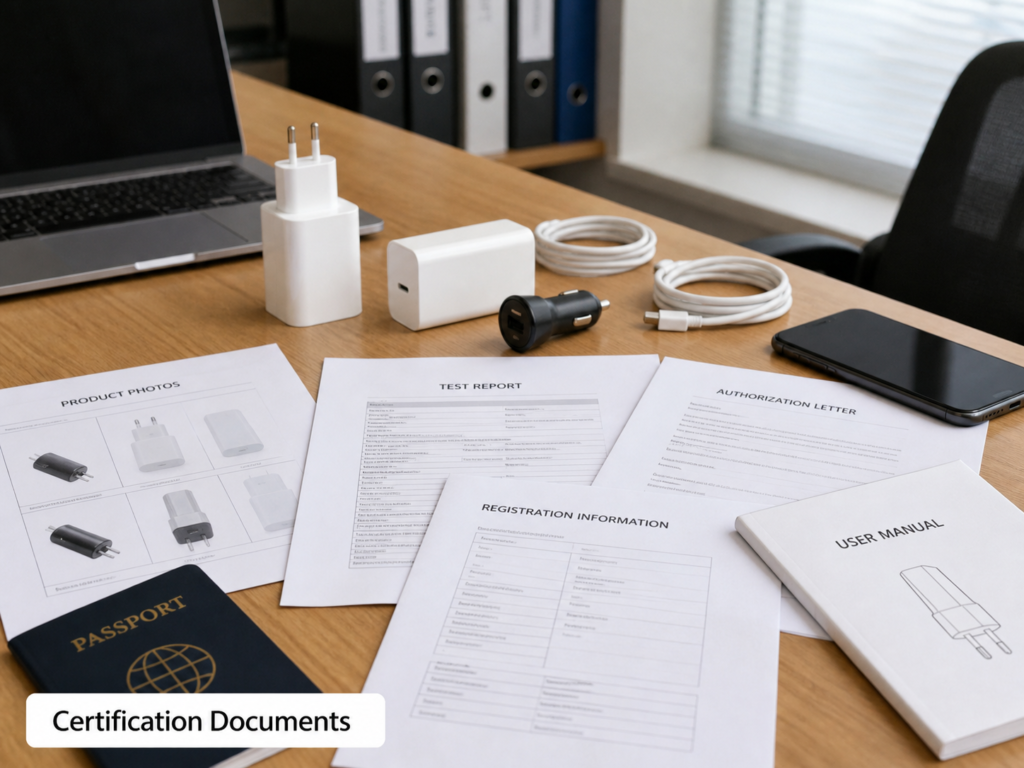
• **Required documents**: No matter which certification you apply for, you basically need these items: product identity materials (brand, model, rated parameters, nameplate, manual, appearance photos), complete test reports that meet the requirements, registration information and authorization documents of the certificate holder or importer.
Finally, a special reminder: do not trust the promise of “pay extra to pass 100% quickly”, and be sure to verify the qualification of the service provider and the official process.
Certificate Verification and Pitfall Avoidance Guide
The certification industry is quite deep, and novices are easy to fall into pitfalls. Below we will teach you how to check the authenticity of certificates and how to avoid the most common pitfalls.
How to Check if a Certificate is Real?
Whether it is a certificate you applied for yourself or given by others, you can check the authenticity through official channels:
• **NRCS LOA**: Go directly to the query system on the NRCS official website, enter the certificate number, holder name, and product model to check whether the information is consistent.
• **ICASA certificate**: Check it in the type approval database on the ICASA official website, enter relevant information to verify.
Fake certificates generally have the following typical characteristics, and you should be vigilant when encountering them:
• The corresponding record cannot be found on the official website, or the information on the certificate does not match the official website registration
• The holder, product model, brand or key parameters are inconsistent with the actual product
• The certificate number format does not comply with official rules, or cannot correspond to the applicable specification
The validity period of LOA shall be based on the applicable VC, certificate content and NRCS records. It cannot be directly judged as a fake certificate just because the certificate period exceeds 3 years.
6 Most Common Practical Pitfalls
These are the pitfalls we have seen the most people fall into. Avoiding them in advance can save a lot of trouble:
1. **Buying ready-made certificate affiliation**: Some agents say “buy a ready-made LOA to attach your brand”, which is illegal — the holder, product model, core parameters, etc. on the LOA shall correspond to the actual product. As long as they do not match the product you actually sell, it may bring customs clearance, sales and law enforcement risks. Never be greedy for cheap.
2. **Thinking low power means no LOA**: Whether an LOA is required is not simply based on the power level, nor only on whether the product has a chip, but on whether the product falls within the scope of specific NRCS compulsory specifications.
3. **Taking 65W as the threshold of energy efficiency label**: For ordinary chargers, external power supplies or multi-port charging stations, it cannot be directly concluded that South African energy efficiency labels must be done just because they reach 65W. It shall be subject to the product scope listed in VC 9008 and its amendments.
4. **Wireless products missing ICASA**: For charging products with communication functions such as Bluetooth and WiFi, if only NRCS-related approvals are obtained without completing applicable ICASA type approval, they may face sales restrictions, removal from shelves or law enforcement risks.
5. **Plug specification non-compliance**: For products with plugs, sockets or converters, compliance cannot be judged only by the appearance that looks like a South African round plug. Applicable SANS 164 series and VC 8008 requirements shall be checked.
6. **Thinking that wireless module certification means no need for whole product ICASA**: Module certification may not replace whole product certification. Even if the module has passed relevant certification, whether the whole product still needs to apply shall still be confirmed according to ICASA rules.
Differences in Requirements for Different Sales Channels
Legal access obligations are based on product scope and applicable regulations, and will not be automatically changed or exempted because the product is sold in offline physical stores, cross-border e-commerce platforms or private transactions.
E-commerce platforms may have additional document upload requirements, but whether they require uploading LOA, ICASA certificates or other materials shall be verified item by item according to the current policies of the target platform, target site and product category, and should not be generalized as a unified rule of “most platforms”.
Private small-batch transactions do not mean that compliance requirements can be ignored for a long time. As long as the product falls within the regulated scope, it shall still be handled in accordance with applicable regulations.
Final Summary
Generally speaking, the certification logic of South African electronic and electrical products is actually very clear. As long as you master several core points, you can judge the requirements by yourself and avoid most pitfalls.
First, distinguish between mandatory and voluntary: for products falling within the applicable scope, NRCS LOA is an important mandatory access document; products with communication functions also need to evaluate ICASA type approval; energy efficiency labels shall be judged according to the product scope clearly listed in VC 9008 and its amendments; SABS is usually a voluntary quality bonus item.
Second, use the four-step method to quickly judge: first check whether the product is connected to mains or is part of a mains product, then check whether it has wireless communication functions, then check the rated parameters, purpose and specific VC scope, and finally confirm whether it is for commercial sale. Especially for USB/USB-C cables, plugs and converters, conclusions cannot be drawn only based on whether there is a chip or whether it is a mechanical structure.
Finally, be sure to go through formal channels for processing. After getting the certificate, first check the authenticity in the official system. Do not be greedy for cheap to buy affiliated certificates, and do not trust the statement of “guaranteed pass and expedited”. Only by steady progress can you successfully enter the South African market.