
Many cross-border merchants entering the Great Britain (GB, including England, Wales, and Scotland) market for the first time may have encountered similar situations: when preparing to ship products, customs clearance requires filling in “UK responsible person” information, and e-commerce platform reviews also require relevant certificates. Many people instinctively assume this is a standard part of UKCA certification—actually, the commonly mentioned “UKCA UK responsible person” is a colloquial term in the cross-border circle. The UK does not have a unified mandatory “UK responsible person” system covering all UKCA products. Different products are regulated by different laws and regulations, with differences in the names of local responsible entities, triggering conditions, and statutory duties, so they cannot be generalized.
Before discussing specific requirements, let’s first clarify the core reason why the UK sets up such local responsible entities: after Brexit, the originally applicable EU Authorized Representative (EU AR) system no longer covers the UK domestic market. The UK needs to establish an independent market supervision interface to ensure that when product safety or compliance issues arise, there is a locally traceable and accountable entity, making it convenient for regulatory authorities and consumers to quickly handle compliance-related matters without having to contact overseas manufacturers across borders.
In this article, we will explain this matter thoroughly: first, we will sort out several easily confused local compliance roles, then teach you step by step how to judge whether your product needs to be configured, what requirements to meet, and how to avoid common pitfalls. Whether you are a new small seller or a merchant looking to sort out your compliance system, you can find the corresponding answers.
I. First, Clarify: What Are the Common Local Compliance Roles?
Many people tend to confuse different local compliance roles. Let’s explain the most common ones in plain language first. Note that these roles belong to different regulatory systems and cannot be used interchangeably:
• UKRP (UK Responsible Person): This is a statutory exclusive term in special regulations such as those for medical devices. Simply put, it is the mandatory local statutory responsible person that overseas manufacturers must designate when selling corresponding categories to the UK GB market. It is directly managed by the corresponding competent authority (for example, medical devices are regulated by the UK Medicines and Healthcare products Regulatory Agency, MHRA), with clear statutory duties and qualification thresholds.
• Voluntarily Entrusted Local Compliance Contact: Some UKCA product regulations do not mandate overseas manufacturers to designate a special local responsible entity. If merchants need it for platform requirements, facilitating consumer contact, etc., they can entrust a UK local entity as a compliance contact on their own, which is equivalent to an “agent” helping you handle compliance-related matters in the UK. However, this is a voluntary commercial arrangement. Not all products have corresponding statutory roles, and obligation requirements under different regulations are not unified.
• UK Importer: Refers to a UK domestic entity that first places non-UK manufactured products on the GB market under applicable product regulations (placing on the market means first making products available to the UK market in the course of commercial activities). In scenarios involving cross-border direct shipping, platform fulfillment, or multiple trading entities, the importer in the regulatory sense should be identified according to the corresponding product regulations and the actual arrangement of first placing on the market, and cannot be judged solely by the entity name on logistics customs clearance documents. The importer itself bears statutory compliance responsibilities for the import stage. If eligible, it can also serve as UKRP or a merchant’s voluntarily entrusted contact, but it is an independent trade and compliance role.
• UK Approved Body (UK Accredited Conformity Assessment Body): Many people think UKCA is a unified “certification issuance” system, but that’s not the case—for most low-risk products, the manufacturer can issue the UKCA declaration of conformity on its own. Only some high-risk products require the participation of a UK-accredited third-party body (i.e., UK Approved Body) in the assessment. Such bodies are only responsible for conformity assessment work and do not bear local compliance liaison responsibilities. Do not confuse them with Notified Bodies under the EU system.
• EU Authorized Representative (EU AR): A role specifically for compliance liaison in the EU/EEA market. It cannot be directly used as a mandatory responsible person for the UK, unless the entity to which the EU AR belongs also has a qualifying business premises in the UK, meets the qualification requirements of corresponding regulations, and has been separately authorized.
• UK Overseas Warehouse/Distributor: Only responsible for warehousing or selling goods, and will not automatically become a compliance responsible entity. Do not assume they will bear relevant responsibilities.
To facilitate quick differentiation, we have compiled a simplified comparison table:
| Role | Core Positioning | Applicable Scenarios | Is it a mandatory statutory role? |
| UKRP (UK Responsible Person) | Statutory local responsible person for special categories such as medical devices | Categories explicitly required by special regulations for the UK GB market | Yes (only for categories explicitly required by special regulations) |
| Voluntarily Entrusted Local Compliance Contact | Local compliance liaison entity voluntarily entrusted by overseas manufacturers | Scenarios where merchants voluntarily configure for business needs, with no unified statutory requirement | No (not a general statutory role, only bears responsibilities according to the agreement between the two parties) |
| UK Importer | Entity that first places non-UK manufactured products on the GB market, bearing compliance responsibilities for the import stage | Scenarios where non-UK manufactured products are first placed on the GB market | Yes (when there is an import act that meets the statutory definition, the importer shall bear corresponding responsibilities) |
| EU Authorized Representative (EU AR) | Compliance liaison for the EU market | EU/EEA market | No (not applicable to UKCA rules for the UK GB market) |
| UK Approved Body | Undertakes conformity assessment work for some high-risk products | Scenarios requiring third-party participation in UKCA assessment | No (only some products require its participation in assessment) |
II. How to Judge: Does Your Product Need a Local Responsible Entity?
To judge whether a local responsible entity needs to be configured, you cannot only look at whether there is a UKCA mark, nor can you draw a conclusion solely based on the product risk level. You need to check step by step in the following order:
Step 1: First determine the market where the product is placed—Is it Great Britain (GB, including England, Wales, Scotland) or Northern Ireland (NI)? The two apply completely different compliance systems and cannot be confused.
Step 2: Determine the specific UK regulations applicable to the product—different products are regulated by different regulations. For example, medical devices are subject to the , ordinary small household appliances are subject to the Electrical Equipment Regulations, and toys are subject to the Toys Safety Regulations. Their requirements are completely different, and shall be subject to the explicit provisions of the corresponding regulations.
Step 3: Check the local entity requirements of the regulation for overseas manufacturers—see whether it is mandatory to designate a special local responsible person (such as UKRP for medical devices), or whether the importer can bear statutory responsibilities, or there are other local entity requirements.
Step 4: Check supporting requirements such as documents, labels, and registration—if a local entity needs to be designated, further check specific requirements such as qualifications, duties, and labeling.
If you are not sure which category your product belongs to, you can go to the GOV.UK official website and search for the corresponding official guide through the keyword “placing products on the GB market” plus the product category; for medical devices, you can directly check the special guidelines issued by MHRA, which is the most authoritative information.
Reference for Common Categories in the GB Market
| Product Category | Applicable Competent Authority | Do overseas manufacturers need to mandatorily designate a local responsible entity? | Common Name of Local Entity | Does the importer have statutory compliance responsibilities? |
| Medical devices (including Class I, IIa/IIb/III, etc.) | MHRA (Medicines and Healthcare products Regulatory Agency) | Yes | UKRP (UK Responsible Person) | Yes |
| Ordinary small household appliances, household electronic and electrical products | OPSS (Office for Product Safety and Standards) | Need to check according to corresponding regulations; most categories do not currently require separate mandatory designation | No unified statutory name, compliance contact can be entrusted voluntarily | Yes |
| Toys | OPSS | Need to check according to corresponding regulations; most categories do not currently require separate mandatory designation | No unified statutory name, compliance contact can be entrusted voluntarily | Yes |
| High-risk special categories such as pressure equipment and explosives | Corresponding special competent authorities | Need to check according to corresponding special regulations | Subject to regulatory provisions | Yes |
| Non-UKCA mark categories such as cosmetics and food | Corresponding special competent authorities | Need to check according to corresponding special regulations | Subject to regulatory provisions | Yes |
Special Rules for the Northern Ireland Market
The UKCA mark system is usually not applicable to the Northern Ireland market. Currently, the region follows compliance rules aligned with the EU. Most products can use the CE mark, and some scenarios require the UKNI mark. Local responsible entity, registration, and labeling requirements must be judged separately according to the special rules of the corresponding product and the manufacturer’s location, and cannot directly apply the GB UKCA responsible person rules.
Special reminder: For medical devices sold to Northern Ireland, it is necessary to separately check MHRA registration and UKRP-related requirements, and cannot draw conclusions solely based on the CE/UKNI mark or whether there is an EU Authorized Representative.
Common Scenarios Where No Special Configuration Is Required
If the following conditions are met, there is usually no need to specially configure a mandatory local responsible entity (except for categories explicitly mandated by regulations):
1. The manufacturer itself has an actual business premises in the UK GB and can bear compliance responsibilities on its own;
2. The product is only for personal non-commercial use or sample display, and does not constitute a commercial act of “placing on the market”;
3. The regulations applicable to the product do not mandate overseas manufacturers to designate a special local responsible entity, and it has been clarified that a qualified UK importer bears all compliance responsibilities for the import stage.
Special Reminders for Cross-Border E-Commerce Scenarios
• Overseas sellers who ship directly to UK GB consumers through e-commerce platforms still need to be equipped with a local responsible entity in accordance with regulations as long as the product belongs to categories for which local responsible entities are mandated by law, and cannot claim exemption on the grounds of “cross-border direct shipping”.
• UK overseas warehouses and FBA warehousing service providers only undertake warehousing and fulfillment functions, and do not automatically become local responsible entities. Separate authorization and compliance with qualification requirements are required.
• The review requirements of e-commerce platforms are not equal to statutory compliance requirements. The specific requirements shall be subject to official UK regulations to avoid the situation of “passing platform review but being non-compliant”.
III. Qualification Requirements: What Kind of Entity Can Serve as a Local Responsible Entity?
The qualification requirements for local responsible entities vary greatly under different product regulations. The following qualification requirements, taking the UKRP for medical devices as an example, only apply to categories for which local responsible persons are explicitly mandated by regulations, and must not be directly applied to all UKCA products. For local compliance contacts voluntarily entrusted by merchants, the following criteria can be referred to for screening. The core requirement is that the entity can actually undertake compliance liaison work, and avoid service providers that only provide address anchoring services.
1. Statutory Qualification Requirements for Mandatory Categories (Taking Medical Device UKRP as an Example)
For categories explicitly required by regulations to designate a local responsible person, there are usually clear hard thresholds. Taking medical device UKRP as an example:
• Identity and Address Requirements: Must be an entity (a company or a qualified individual; individual employment requirements are subject to corresponding regulations) with a registered business location that meets regulatory requirements in the UK GB, and has the contact capability to actually perform duties; arrangements that only provide mail receiving, mail collection, or pure address anchoring services and do not actually undertake compliance duties do not meet statutory requirements. The use of Post Office (PO) boxes, virtual office addresses, or collection addresses as business addresses is prohibited.
• Duty Performance Capability Requirements: Able to understand the compliance technical documents of the corresponding products and Declaration of Conformity (DoC, a formal commitment document issued by the manufacturer to prove that the product meets the requirements of applicable regulations); capable of liaising with the corresponding competent authority (for example, medical devices liaise with MHRA); have sufficient resources to keep compliance documents and respond to regulatory inquiries within the time limit specified by regulations.

• Authorization Requirements: Must sign a formal written authorization agreement with the manufacturer, clarifying the scope of authorization and division of responsibilities. Entities without written authorization are not recognized by regulators.
• Industry Qualification Requirements: High-risk special categories usually require the responsible person to have compliance experience in the corresponding industry, and some categories also need to complete registration and filing with the competent authority.
2. Circumstances Under Which an Entity Cannot Serve
Whether it is a mandatory responsible person or a voluntarily entrusted contact, the following types of entities do not meet the requirements:
• Entities that have not signed a written authorization agreement with the manufacturer;
• Service providers that only provide address collection services and do not bear actual compliance responsibilities;
• Entities that are not capable of performing the responsibilities under corresponding product regulations.
IV. Boundary of Duties: What to Do and What Not to Do?
1. Statutory Duties of Mandatory Local Responsible Persons (Taking UKRP as an Example)
The duty requirements of different regulations are slightly different. Taking medical device UKRP as an example, the statutory duties mainly include three categories, which are also the general requirements for most mandatory categories:
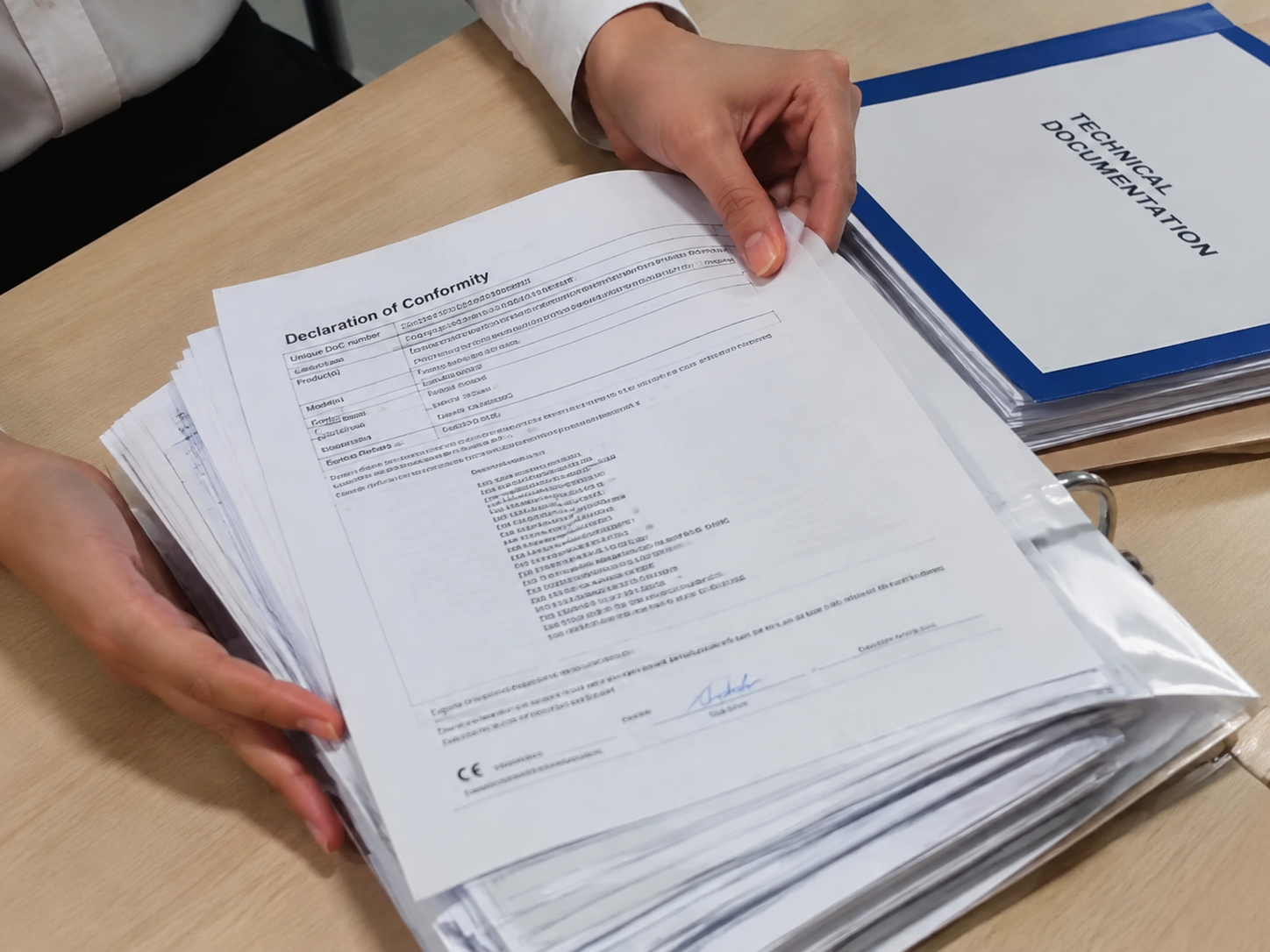
• Compliance Document Custody: Keep the technical documents and Declaration of Conformity (DoC) provided by the manufacturer. The retention period is subject to product category requirements, commonly 10 years after the last placement on the market, and the specific period is subject to corresponding regulations; when required by regulators, submit compliant documents within the specified time limit.
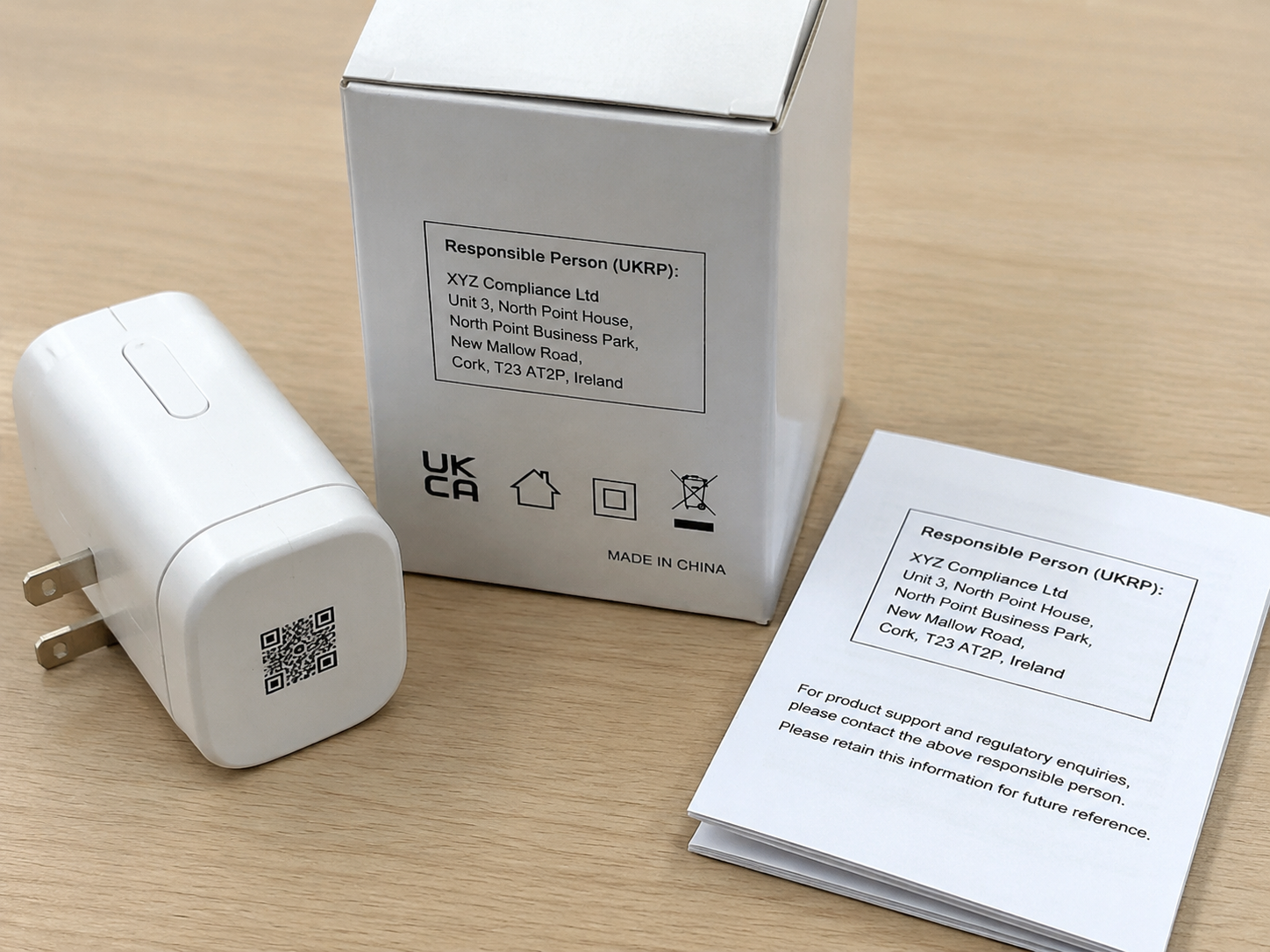
• Market Liaison and Labeling Cooperation: Ensure that the name and actual business address of the responsible person are marked on the product body, packaging, or accompanying documents in accordance with regulatory requirements; if the product is too small or has special materials that cannot be marked on the body, it can be marked on the packaging or accompanying documents in accordance with the requirements of corresponding regulations. At the same time, accept compliance consultations from consumers, distributors, and regulatory agencies, and cooperate with regulatory investigations, random inspections, etc.
• Risk Disposal Cooperation: If the product is found to have safety hazards that meet the provisions of regulations, it is necessary to notify the manufacturer and report to the regulatory authority as required, and cooperate in carrying out risk disposal work such as product recall and rectification.
2. Clear Boundary of Responsibilities
Whether it is a mandatory responsible person or a voluntarily entrusted contact, some responsibilities are not within their scope of duties:
• Do not replace the manufacturer in bearing the main compliance responsibility for product design and production: the main responsible entity for product design and production issues is still the manufacturer, and the local responsible person only bears the local liaison-related responsibilities stipulated by regulations.
• Not responsible for product conformity assessment: the local responsible person is not a UK Approved Body, nor a testing laboratory, and is not responsible for testing products or issuing conformity certificates, only undertaking liaison and document custody responsibilities.
• Internal agreements cannot override statutory responsibilities: if it is a statutory mandatory local responsible person role, even if the authorization agreement stipulates that “all documents are kept by the manufacturer itself”, this internal agreement cannot exempt the responsible person from statutory responsibilities. The responsible person can seek compensation from the manufacturer in accordance with the agreement after bearing the responsibility.
Regulatory authorities may take corresponding regulatory measures against manufacturers, importers, UKRPs, or other economic operators with responsibilities in accordance with applicable regulations. The specific responsibilities of each party shall be subject to their statutory obligations and actual illegal facts.
If it is a voluntarily designated contact, the duties are mainly agreed upon by the authorization agreement between the two parties, but must not violate the mandatory provisions of corresponding regulations.
V. Practical Guide: How to Select, Appoint, and Replace?
The following operations are only involved when the regulations applicable to your product mandate the designation of a local responsible person, or when you voluntarily entrust a contact person for business needs.
1. Comparison of Advantages and Disadvantages of Three Cooperation Modes
There are three common cooperation modes for local responsible persons/contacts, each with advantages and disadvantages. You can choose according to your business situation:
| Cooperation Mode | Cost | Professionalism | Stability | Suitable for |
| Entrust a UK importer/distributor to serve | Low (usually tied to trade cooperation, no additional fee required) | Uneven, need to verify its compliance capability in advance | Weak (compliance gaps are prone to occur when cooperation terminates) | Merchants with a fixed single UK distributor and low product risk |
| Entrust a professional third-party compliance service provider to serve | Medium (annual service fee required) | High (has a dedicated compliance team familiar with corresponding regulations) | Strong (not affected by changes in trade cooperation) | Small and medium-sized merchants selling multiple categories through multiple channels, or whose products belong to mandatory categories |
| Manufacturer sets up its own UK entity to serve | High (need to bear the operating cost of a UK company) | High (can independently control all compliance matters) | Strongest | Medium and large enterprises with large sales volume and high product risk |
2. Core Criteria for Screening Reliable Entities
No matter which mode you choose, you must verify against these criteria to avoid pitfalls:
• Have an actual business address in the UK: you can verify through public information from Companies House, don’t just listen to the verbal promises of service providers.
• Have compliance experience in the corresponding product category: for example, if you deal in medical devices, find a service provider with medical device UKRP qualification and experience, don’t find one that only handles ordinary electronics.
• Willing to sign a formal written authorization agreement: the agreement should clarify core content such as product scope, sales area, division of responsibilities, validity period, and termination conditions, and cannot be a verbal agreement.
• Able to provide clear compliance service commitments: for example, document custody plans, regulatory response timelines, problem reporting processes, etc., must have clear statements.
• Agree to disclose its name and address in accordance with regulatory requirements: the responsible person information for mandatory categories must be marked on the product or packaging as required. Those who are unwilling to disclose are definitely non-compliant.
3. Necessary Procedures for Formal Appointment
After selecting the responsible person, you need to complete these procedures for it to formally take effect:
1. Sign a written authorization agreement: clarify the authorized product scope, sales area, division of responsibilities of both parties, agreement validity period, termination conditions, confidentiality clauses, etc. The more detailed the better, to avoid subsequent disputes.
2. Hand over compliance documents: hand over documents required by applicable regulations for the responsible person to hold or access at any time. Taking medical devices as an example, usually including technical documents, Declaration of Conformity (DoC), MHRA registration materials, etc.; materials such as test reports and label drafts need to be provided according to the requirements of applicable regulations, the composition of technical documents, and the needs of label review, and are not mandatory for all categories.
3. Update product labeling: mark the name and actual business address of the responsible person on the product body, packaging, or accompanying documents in accordance with the requirements of corresponding regulations.
4. Filing for special categories: if it is a category that requires filing such as medical devices, complete the responsible person registration and filing with the corresponding competent authority (such as MHRA).
4. Key Points for Replacing the Responsible Person
If you need to replace the responsible person due to cooperation expiration, service provider change, etc., you should focus on the following points to avoid compliance risks:
• Sign a new authorization agreement in advance to ensure that the new agreement takes effect when the old agreement expires, so as to avoid a compliance gap period;
• Clarify the update time node of labels, DoC, and filing information for products first placed on the market after new production or changes, to ensure that newly placed products meet the requirements;
• Old-labeled products that have been legally placed on the GB market can continue to be sold on the premise of meeting the transition period requirements of corresponding regulations, and there is no mandatory recall for re-labeling. The specific situation is subject to the latest guidelines of the competent authority;
• If it belongs to a category that requires regulatory filing, update the responsible person’s filing information with the competent authority in a timely manner;
• Check whether corresponding special regulations require notification to the competent authority regarding the change of the responsible person, and implement it as required.
VI. Pitfall Avoidance Guide: Common Misconceptions and Violation Risks
1. Clarification of High-Frequency Cognitive Misconceptions
• Misconception: Having a UKCA mark equals having a UK responsible person
Clarification: UKCA conformity assessment and local responsible entities are two sets of independent requirements. Having a UKCA mark does not mean that a local responsible person is automatically equipped; whether it needs to be configured shall be judged according to corresponding product regulations. For most categories that do not currently require separate mandatory designation, the importer can bear compliance responsibilities, and conclusions cannot be drawn solely based on risk level. In addition, note that not all UKCA products require the participation of a UK Approved Body for assessment. Low-risk products can have their DoC issued by the manufacturer itself.
• Misconception: EU AR can directly serve as the UK responsible person concurrently
Clarification: EU AR is a compliance liaison role for the EU/EEA market, with completely different applicable markets, and cannot directly replace the mandatory local responsible person in the UK. If the entity where the EU AR is located also has a qualifying business premises in the UK and meets the qualification requirements of corresponding regulations, it can serve as the UK local responsible person at the same time, but separate authorization and qualification confirmation are required.
• Misconception: The UK responsible person must be the importer
Clarification: The importer itself has statutory compliance responsibilities for the import stage, but for categories that mandate a local responsible person, you can entrust the importer to serve concurrently, or entrust a qualified third-party service provider. It is not mandatory to choose the importer. If the regulations do not mandate it, there is no need for special designation.
• Misconception: Small sellers or those with low sales volume do not need to configure
Clarification: If the regulations applicable to the product mandate overseas manufacturers to designate a local responsible person, it is required regardless of sales volume. There is no provision in regulations that “low sales volume equals exemption”. Random inspections and consumer complaints may trigger accountability. If the regulations do not mandate it, there is no need for special configuration.
• Misconception: Northern Ireland also needs a UKCA UK responsible person
Clarification: Northern Ireland does not apply the GB UKCA system, and there is no unified requirement for a “UKCA UK responsible person”. The specific local entity requirements shall be implemented in accordance with the special regulations of the corresponding product.
2. Common Operational Violations (For Mandatory Categories)
If your product belongs to a category explicitly mandated by regulations to designate a local responsible person, these operations are prone to violations and must be avoided:
• Using PO boxes, virtual addresses, or anchored addresses that only provide mail receiving and collection services as the responsible person’s business address, which does not meet the statutory address requirements.
• The authorization agreement completely exempts the responsible person from compliance responsibilities, which is essentially “address anchoring” and is not recognized by regulators.
• Missing or incorrect marking of responsible person information on product labels, such as only marking email or phone number, without marking the actual business address as required by regulations.
• After the responsible person is changed, the compliance documents, product labeling, or regulatory filing information are not updated in a timely manner.
• Failure to keep compliance documents as required, and inability to provide them on time when regulatory inquiries are made.
3. Actual Consequences of Violations
The following consequences only apply to situations where product regulations do have statutory obligations for local responsible persons and such obligations are not fulfilled; for ordinary categories without mandatory local responsible person requirements, there is no such violation risk.
Those who fail to perform local responsible person obligations as required may be required to prove compliance during border inspections, market supervision random inspections, platform reviews, or downstream procurement reviews. Specific regulatory measures depend on the applicable product regulations and the actual judgment of the law enforcement agency. Common measures include:
• Border stage: products may be detained, required to be rectified or returned, resulting in additional freight and storage costs;
• Platform stage: e-commerce platforms may remove non-compliant products, restrict sales permissions, and ban stores in serious cases;
• Regulatory stage: facing penalties such as fines from regulatory authorities and product recalls, and being prohibited from entering the UK market in serious cases.
VII. Compliance Self-Inspection and Summary
UKCA UK Responsible Person Compliance Self-Inspection Checklist
You can quickly self-inspect against the following items to ensure compliance:
• 【Scope Judgment】It has been confirmed that the product is placed on the GB market, the manufacturer is overseas, and the corresponding product regulations have been checked, clarifying that it belongs to a category for which a local responsible entity is mandatory, or a contact person has been voluntarily configured; if only placed on the Northern Ireland market, the corresponding rules have been checked separately.
• 【Qualification Check】The responsible person/contact has an actual UK business address, has signed a written authorization agreement, has corresponding product compliance capabilities, and does not fall into the circumstances where service is prohibited.
• 【Document Check】Compliance documents such as DoC and technical documents have been handed over in accordance with regulatory requirements, and the retention period meets regulatory requirements.
• 【Labeling Check】The product/packaging/accompanying documents have been correctly marked with the responsible person’s name and physical address in accordance with regulatory requirements.
• 【Risk Check】The authorization agreement clarifies the division of responsibilities, and there is a transition response plan for the change of the responsible person; categories requiring filing have completed regulatory filing.
Summary
In general, the “UKCA UK responsible person” is not a unified statutory role. Whether to configure it and what requirements to meet depend mainly on the market where the product is placed and the specific applicable regulations, and cannot be generalized solely based on risk level or colloquial terms. After learning this article, you should be able to independently judge three things: first, whether your product needs to be equipped with a mandatory UK local responsible entity; second, whether the cooperative entity you find meets the statutory qualification requirements; third, what common compliance pitfalls to avoid in daily cooperation and product labeling. Entry-level merchants do not need to rush to find service providers. First, check the product category and applicable rules step by step, then choose the appropriate cooperation mode according to actual needs, and implement compliance requirements in advance. In this way, unnecessary losses such as customs clearance delays and platform removals can be avoided.