
For sellers of charging products expanding into the Thai market, whether through general trade or operating local stores on Shopee and Lazada, the most common pitfall is not product selection, but access compliance. After goods arrive at the port, they may be required to supplement materials due to issues with procedures, standards, or documents; or stores that have just started operating may be delisted due to lack of qualifications required by the platform, with losses often amounting to tens of thousands or even hundreds of thousands of yuan. Many people assume that CE and FCC certificates are globally valid, only to find upon arriving in Thailand that they cannot directly replace local requirements. Thailand’s electronic product access mainly involves two institutions. The rules are complex if you don’t understand them, but simple if you do: as long as you figure out what each regulates and which category your product falls into, you can avoid many detours.
Basic Access Knowledge (Must-Read for Beginners)
Why Local Access Is Mandatory
Products within the regulatory scope of NBTC or TISI usually need to obtain corresponding permits or certifications before import, customs clearance, and sale. Goods that do not meet the requirements may be refused release, required to rectify, returned, or subject to administrative penalties, depending on the product category, HS code, import license, and current regulatory requirements.
For online sales, the statement that “certification must be provided for all products” cannot be simply applied. Whether platforms such as Shopee and Lazada require submission of compliance qualifications shall be subject to the specific site, product category, and current platform policies. Even if a product is not temporarily required by the platform to submit a certificate, it does not mean that it can be exempted from import or sales requirements stipulated by Thai law. If complained by consumers or reported by competitors, the platform may also take measures such as restricting sales and deducting points according to its own rules.
It should be particularly emphasized here that CE and FCC usually cannot directly replace the local permits of Thailand’s NBTC or TISI. CB reports or certificates may be used as the basis for evaluation in some TISI standards and certification schemes, but whether they are accepted and which tests can be reduced must be confirmed according to the applicable TIS standards, product scope, and current TISI rules. Overseas materials can help laboratories understand the product situation, but they cannot be generally regarded as a “pass” for the Thai market.
Division of Labor of the Two Regulatory Authorities
Thailand’s electronic product access mainly involves two departments with different divisions of labor, but specific products still need to be judged in combination with their respective catalogs and notices.
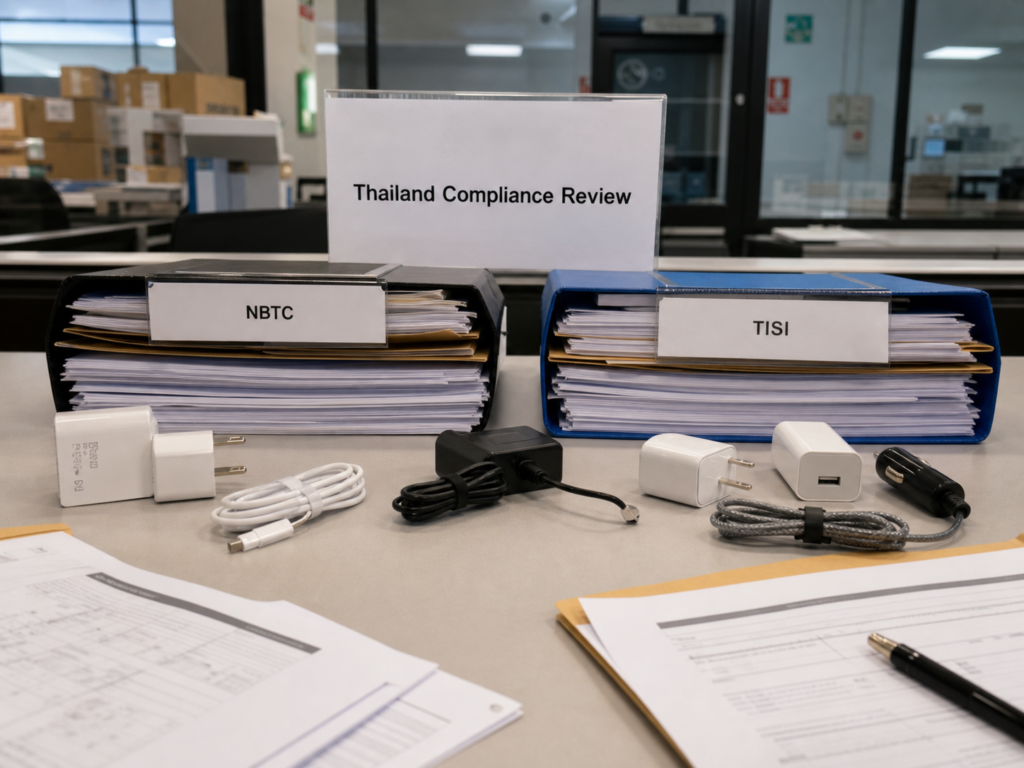
One is NBTC, the full name of which is the National Broadcasting and Telecommunications Commission of Thailand. You can simply understand it as the “wireless communication and spectrum regulatory authority”, which mainly regulates radio communication equipment, radio equipment, and some wireless power transmission equipment controlled by its notices. Devices with wireless communication functions such as Bluetooth and Wi-Fi usually need to confirm procedures according to the corresponding device category, operating frequency band, and transmission power. For wireless charging products, whether NBTC is required cannot be judged solely by “having transmission function”; it must be confirmed item by item in combination with operating frequency, power, purpose, and current NBTC notices.
The other is TISI, the Thai Industrial Standards Institute, which mainly involves product safety standards, quality standards, and license management for products subject to mandatory standards. For charging products, the focus is usually on electrical safety, such as whether the product has risks of electric shock, fire, overheating, or insulation failure, and whether plugs, sockets, and related connection methods comply with applicable standards.
The two usually cannot replace each other. If the wireless part of a product falls within the regulatory scope of NBTC, and the power supply part falls within the scope of TISI mandatory standards, corresponding procedures need to be handled separately; however, whether it constitutes “dual certification” must be confirmed according to the specific product category, parameters, and current catalog.
Common Misconceptions for Beginners
Sellers who are new to Thailand access are prone to these common pitfalls, and avoiding them in advance can save a lot of money.
The first misconception is that “all chargers need NBTC certification”. In fact, wireless communication functions such as Bluetooth and Wi-Fi usually need to be confirmed according to the corresponding NBTC device categories; whether wireless charging products are regulated by NBTC also depends on the operating frequency, transmission power, and current notices. Ordinary wired chargers and passive data cables usually do not fall within the scope of NBTC wireless devices, but the specific product situation should still be checked.
The second misconception is that “TISI is voluntary certification and does not need to be done”. TISI does have mandatory and voluntary certification or standard application scenarios, but products such as wired wall-mounted chargers and AC/DC power adapters cannot be judged whether they belong to the mandatory catalog solely by name; they must be confirmed according to product definition, rated input and output parameters, purpose, applicable TIS standards, and the latest catalog.
The third misconception is that “with overseas certification, you can directly enter Thailand”. CE and FCC usually cannot directly replace Thailand’s NBTC or TISI procedures; CB materials may be helpful in some TISI schemes, but whether they are accepted and whether tests can be reduced need to be confirmed according to specific rules.
The fourth misconception is that “if the wireless function is turned off by default, you don’t need to worry about it”. If the device hardware supports wireless communication or wireless power transmission, NBTC applicability assessment should still be carried out. Default off does not automatically equal exemption, but which procedures need to be handled ultimately depends on the device category, frequency band, power, and relevant notices.
Core Rules of NBTC Certification (Exclusive for Charging Products)
After clarifying the basic logic, let’s first talk about the NBTC certification that everyone is most likely to confuse, especially the applicable rules for charging products. You don’t need to study thick regulations; just look at these points.
Applicable Scope and Boundary Judgment
To judge whether NBTC is needed, first of all, it depends on whether the product has wireless communication or wireless power transmission functions, and whether the function falls within the scope of devices regulated by current NBTC notices.
For charging products, smart chargers and charging stations with wireless communication functions such as Bluetooth and Wi-Fi usually need to confirm NBTC procedures according to the corresponding device category, operating frequency band, and transmission power. For chargers and charging pads with wireless charging transmission function, whether they must be handled cannot be judged solely by product name; they should be evaluated item by item in combination with operating frequency, transmission power, purpose, and current NBTC rules.
Products that usually do not need to go through NBTC wireless device procedures include ordinary wired chargers, passive USB/USB-C data cables, and power adapters without wireless functions. However, “usually not required” does not mean absolute exemption for all products; it should still be checked whether the product has other wireless modules or belongs to special device categories.
Devices that only receive wireless signals usually have lower risks, but it cannot be generally concluded that no procedures are needed; it should still be checked whether they fall within the scope of NBTC regulation or licensing. For wireless charging transmission products, you can first prepare materials such as operating frequency, transmission power, coil, and usage method, and find a compliance agent or relevant laboratory for pre-assessment.
Core Compliance Requirements
NBTC’s compliance requirements mainly include three aspects: device applicability confirmation, technical testing, and labeling information, but the specific content depends on the device category.
First, the product must comply with applicable Thai radio frequency bands, transmission power, technical parameters, and other relevant requirements. Bluetooth, Wi-Fi, and wireless power transmission devices may apply different technical conditions, and the test requirements of one device cannot be applied to another device.
Second, according to the specific NBTC device category and applicable notice, the NBTC number and other required information shall be marked at the specified position. Labeling may involve products, nameplates, packaging, manuals, or approved electronic labels. It cannot be generally asserted that all products must have a unified “certification mark + certificate number” printed on the body. Before sending samples or mass production, the application agency should be asked to confirm the label format, position, and content.
Whether the manual and warning statements must be in Thai should also be confirmed according to the specific device category and relevant regulations. For products involving wireless transmission, use restrictions, or safety warnings, corresponding languages and information should be prepared according to NBTC requirements, and it cannot be assumed that providing only English or Chinese is sufficient.
Basic Certificate Rules
The validity period, renewal, and change requirements of NBTC certificates, registrations, or permits depend on the specific device category, approval type, and current NBTC regulations. They shall be subject to the period stated on the certificate and NBTC system information, and cannot be uniformly presumed as “usually 3 years”. Enterprises can set reminders based on certificate documents, but do not arrange a fixed renewal cycle without checking the specific documents.
The applicant, importer, or responsible entity shall also meet the subject qualification according to the specific NBTC procedures. Foreign manufacturers usually need to handle relevant links through qualified local Thai importers, agents, or authorized representatives, but the requirements for manufacturers, importers, distributors, legal entities, and authorized representatives may vary for different procedures. Therefore, it should not be simply stated that all certificates must be held by Thai companies, let alone interpret the agency relationship as unconditional “certificate holding through affiliation”.
If there are subsequent changes to the product, such as adjusting wireless parameters, replacing wireless modules, modifying circuits or antennas, you should confirm with the application agency before mass production or sale whether it is necessary to change the declaration, supplement tests, or re-apply. You cannot directly use old materials to cover obviously different products.
Common Precautions for Charging Products
For charging products, there are several detail pitfalls that are easy to fall into.
If the product has multiple wireless functions at the same time, such as a smart charging station with both Bluetooth and Wi-Fi, it is usually necessary to confirm the corresponding frequency bands, transmission parameters, and test ranges separately. You cannot automatically cover another function just because one module has been evaluated.
Some sellers will say: “The wireless module I use has passed NBTC, so does the whole machine not need to be tested?” Usually, this cannot be understood this way. Evaluated or certified wireless modules may help reduce some tests or material preparation, but the antenna, housing, power supply, software configuration, and installation method of the whole machine may still affect the final compliance. Whether simplification is possible must be confirmed according to specific NBTC procedures.
In terms of testing institutions, it cannot be generally said that reports from Chinese laboratories or other foreign laboratories will definitely be accepted by NBTC. Before sending samples, it should be confirmed whether the laboratory is within the scope of laboratories accepted or recognized by NBTC, and whether the report meets the standards, format, and technical requirements of the corresponding procedure. Low-power wireless products may be subject to simplified declaration or other simplified procedures, but this shall still be subject to the latest rules and specific device categories.
Core Rules of TISI Certification (Exclusive for Charging Products)
After talking about NBTC which regulates wireless devices, let’s talk about TISI which involves electrical safety and product standards, which is also a part that charging products often need to evaluate.
Two Types of Attributes: Mandatory/Voluntary
The application scenarios of TISI-related certifications and standards can be divided into two categories: mandatory and voluntary, but the final decision shall be subject to specific product standards and catalogs.
For mandatory products, as long as they are included in the current mandatory standard scope, they need to meet the corresponding license and compliance requirements before import, manufacture, or sale. Voluntary ones are usually applied for independently by enterprises, which can be used to prove that products meet a certain standard or enhance market competitiveness.
For charging products, wired wall-mounted chargers, AC/DC power adapters, etc. cannot be judged as “basically all need to be handled” or “definitely do not need to be handled” solely by product name. Whether a mandatory license is required shall be confirmed according to product definition, rated input and output parameters, purpose, applicable TIS standards, and TISI’s current mandatory standard catalog. Some power products may also be affected by other standards or import regulatory requirements.
Applicable Scope and Boundary Judgment
To judge whether mandatory TISI is needed, it mainly depends on three aspects: the definition and purpose of the product, rated input and output parameters, and whether it belongs to TISI’s current mandatory standard catalog.
Whether the product is directly connected to Thailand’s mains power can only be used as screening information and cannot replace catalog judgment. Thailand’s civil power supply is 50Hz, and the nominal voltage is usually considered according to the 230V system. Actual products should still be confirmed according to the rated input range on the nameplate and applicable TIS/IEC standards, and a single “220V” value cannot be used to replace certification judgment.
Specific to charging products, wired wall-mounted chargers and AC/DC power adapters shall be confirmed item by item according to the above conditions. USB-C cables with E-Marker chips and data cables with active electronic components also need to be evaluated in combination with product definition, purpose, and the latest mandatory catalog. Passive ordinary charging cables and accessories with only low-voltage input usually have lower risks, but they still need to be judged in combination with sales forms and applicable standards.
Core Compliance Requirements
The core requirements of TISI usually revolve around electrical safety and applicable product standards, including indicators such as electric shock protection, fire protection, high temperature resistance, and insulation performance. Specific test items will vary depending on product standards, rated parameters, and structure.
The plug, socket, or detachable power connection method of the product must meet applicable Thai standards and import and sales requirements. Whether adapters are allowed to be attached and whether adapters need to be separately compliant shall be confirmed according to the specific product, plug structure, and applicable standards. Adapters cannot be used to evade requirements that should apply to the product body, but it is also not possible to generally deem all sales methods with foreign pins and attached adapters as non-compliant without checking the standards.
Label and manual requirements also depend on specific product standards and license schemes. For mandatory products, if the TISI mark, license number, or other specified information is required, they shall be marked at the specified position according to TISI requirements; the manual shall also prepare applicable safety use information, and confirm whether a Thai version is required according to specific requirements.
Basic Certificate Rules
The validity period, renewal, supervision and inspection, and factory audit requirements of TISI licenses must be confirmed according to specific product standards, certification schemes, and the content stated on the license, and cannot be uniformly summarized as 3 years for mandatory types and 2 years for voluntary types. Enterprises shall manage the valid status based on license documents and TISI official records.
Mandatory products usually need to undergo factory audits, sample testing, and follow-up supervision according to applicable certification schemes, but the audit methods, frequency, and non-conformity handling are not exactly the same for all products, and may depend on product standards, certification channels, factory quality systems, and specific TISI requirements. Whether rectification is possible after problems occur, whether re-inspection is required, and the scope of re-inspection shall also be subject to the decision of TISI or an authorized certification body.
Common Precautions for Charging Products
When doing TISI for charging products, changes in rated power usually require re-evaluation of the certification scope, which may lead to adding models, supplementary tests, or separate applications. For example, for 20W and 65W products, whether they can be placed in the same series or the same license scope cannot be directly concluded; it must be reviewed and confirmed by TISI according to specific models, structural differences, and test coverage.
If the interface type or number of interfaces changes, a change assessment should also be submitted before mass production or sale. If only the housing color and packaging differences do not affect safety parameters and structure, they may be included in the same series, but whether the documents need to be updated shall still be confirmed by the certification body.
For OEM/ODM products with private labels, brand authorization documents and product materials are usually required, and the specific document list shall be subject to the requirements of the application agency.
Quick Judgment Method for Dual Certification Applicability (Intermediate Advanced)
Many sellers will still be confused after reading this: How do I know if my product needs NBTC, TISI, or both? You can do a preliminary screening according to the following three steps, but the final conclusion shall still be subject to the specific catalogs, notices, and written assessments of NBTC and TISI.
Step 1: Judge NBTC Requirements
First ask yourself three questions:
• First, does the product have wireless communication functions such as Bluetooth and Wi-Fi, or wireless power transmission functions?
• Second, what are the operating frequency, transmission power, and purpose of the wireless function? For wireless charging, especially, it cannot be judged that it must be handled solely because it “can transmit”.
• Third, can the wireless function be turned on through software or firmware? Default off does not mean automatic exemption, and hardware and software configurations should still be submitted for assessment.
Active transmission is the primary screening condition for judging NBTC applicability, but whether type approval, registration, declaration of conformity, or other procedures are required ultimately depends on the device category, operating frequency, power, and current NBTC notices. Receive-only devices usually have lower risks, but it should still be checked whether they fall within the scope of NBTC regulation or licensing.
Step 2: Judge Mandatory TISI Requirements
Ask another three questions:
• First, does the rated input of the product involve Thailand’s civil power supply? Thailand’s civil power supply is usually considered according to the 50Hz, 230V system, but shall be subject to the rated input range on the product nameplate and applicable standards.
• Second, does the product belong to power adapters, wired chargers, or other product categories subject to TISI standards?
• Third, do data cables and connectors have active electronic components, comply with a certain TIS standard, and are included in the latest mandatory catalog?
The conclusion is: it cannot be concluded that TISI must be handled solely because it is “connected to mains power”. Only when the product definition, parameters, purpose, and current mandatory catalog jointly indicate that it falls within the scope of mandatory standards, corresponding licenses or procedures need to be handled.
Step 3: Judge Certification Type/Exemption
According to the results of the first two steps, you can first correspond to several common scenarios:
• **Single TISI scenario**: For example, ordinary wired chargers and wall-mounted power adapters without wireless functions, provided that they do fall within the scope of TISI mandatory standards.
• **Dual certification scenario**: Smart chargers with wireless charging, Bluetooth, or Wi-Fi, and charging stations with wireless functions, only need to handle corresponding procedures separately when the wireless part falls within the NBTC regulatory scope and the power supply part falls within the TISI mandatory standard scope at the same time.
• **NBTC-only scenario**: It may occur in wireless transmission charging accessories that are purely low-voltage and not connected to mains power, but which NBTC procedures are required must be evaluated separately.
• **Exemption scenario**: Passive ordinary charging cables and pure connectors without electronic components usually have lower risks, but it is still necessary to confirm whether they are covered by a mandatory standard or other import requirements.
Special Judgment Rules for Set Products
Many charging products are sold in sets. At this time, compliance judgment should be more careful, and you cannot only look at the main product.
If it is a set of wired charger + USB cable, the charger and cable shall be evaluated according to their respective product definitions, standards, and catalogs. The charger’s certificate does not automatically cover the cable; if the cable falls within the scope of a mandatory standard, corresponding procedures need to be completed.
If it is a set of wireless charging pad + power adapter, the wireless charging pad shall be evaluated whether it falls within the NBTC regulatory scope, and the adapter shall be evaluated whether it falls within the TISI mandatory standard scope. Whether it constitutes dual certification cannot be directly presumed solely by the combination of “wireless charging pad + adapter”.
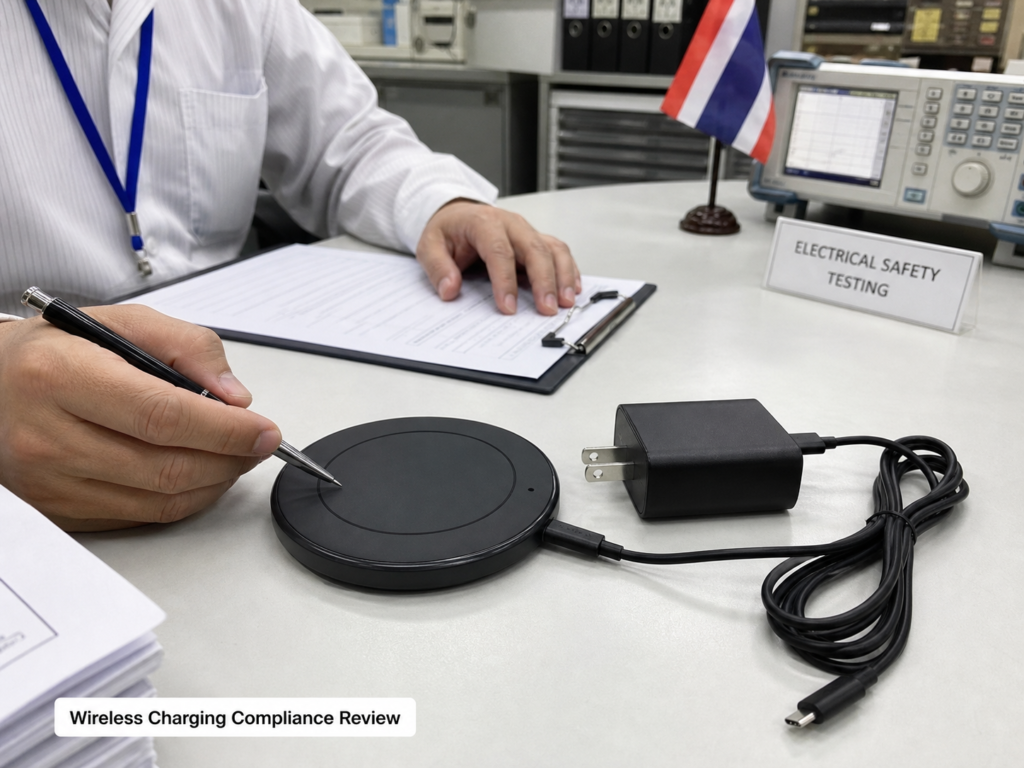
If it is a set of smart charging station + supporting cables, the charging station and cables still need to confirm applicable requirements separately. Only when the wireless function of the charging station falls within the NBTC regulatory scope and its power supply part falls within the TISI mandatory standard scope, dual procedures are required. The set sales page should also accurately display the model and compliance information of each component according to platform requirements.
Official Inquiry and Pre-Assessment Methods
If you are not sure about your own judgment, you can also check the official catalog or find an agent for pre-assessment.
NBTC-related device categories, frequency bands, type approval, and registration requirements shall be confirmed through the NBTC official website and current notices. TISI mandatory standards shall be searched through the TISI official website and standard catalog by entering product keywords and combining product definition, parameters, and purpose.
If you are still unsure, you can find a local Thai compliance agent or certification body for pre-assessment, but you should require the other party to explain the judgment basis, applicable standards, and applicant entity, and do not just accept verbal conclusions such as “definitely need to be handled” or “definitely do not need to be handled”.
Full Certification Process (Beginner-Friendly and Implementable)
After figuring out what certification to apply for, the next step is how to handle it specifically. The processes of NBTC and TISI are not exactly the same, and actual operations shall be confirmed separately according to the procedures of the corresponding institutions.
Pre-Processing Preparations
Before the official launch, doing these things well first can save a lot of time.
First is material preparation. Prepare the product specification sheet, clearly stating the rated input and output power, interfaces, wireless parameters, and usage method; at the same time, prepare applicable circuit or structural materials, samples, brand authorization letter, and other documents required by the application agency. The number of samples shall be subject to the requirements of the laboratory or certification body, and do not default to a fixed 2-3 units.
Then is subject confirmation. The qualifications of the applicant, importer, responsible entity, or authorized representative depend on the specific NBTC or TISI procedures. Foreign manufacturers usually need to handle relevant links through qualified local Thai importers, agents, or authorized representatives. It is best to confirm clearly before testing to avoid finding that the applicant entity does not meet the requirements after the test is completed.
Time planning is also very important. The certification cycle will be affected by test items, data completeness, rectification, factory audits, and the review progress of the competent authority. It is best to reserve sufficient time before listing or shipping, and do not simply calculate all products as “1-2 months in advance”.
It is also necessary to sort out models in advance, separating those that can be declared in series and those that need separate evaluation. Products with different power, interfaces, wireless functions, structures, or key components may need to add models, supplement tests, or apply separately, and you cannot consider them as belonging to the same series on your own.
If you are not sure about the product, you can also do pre-testing in advance to get a baseline and reduce the probability of failing the formal test. However, whether the pre-test report can be directly used for formal applications still needs to be confirmed with the corresponding institution.
Specific Processing Steps (Taking Dual Certification Products as an Example)
For products that may require dual procedures, the process is roughly five steps:
Step 1: First submit the materials to a laboratory, certification body, or agent for pre-assessment to confirm what categories, standards, and procedures apply to NBTC and TISI respectively, and at the same time confirm the applicant entity, test items, approximate cost, and cycle.
Step 2: According to the specific procedures of NBTC or TISI, select laboratories, certification bodies, or testing institutions within the recognized scope that they accept. NBTC and TISI shall be checked separately, and it should not be generally understood that the two use the same list of recognized laboratories. Before sending samples, confirm whether the format, standards, and technical scope of the test report can be used for the corresponding application.
Step 3: After passing the test, the qualified applicant, importer, responsible entity, or authorized representative shall submit application materials to NBTC and TISI respectively. Whether individuals or overseas companies can submit directly depends on the specific procedures and cannot be generally asserted.
Step 4: If the applicable TISI certification scheme requires a factory audit, complete the audit, sampling, and subsequent rectification according to the arrangement of TISI or the authorized certification body. The audit method and non-conformity handling shall be subject to specific requirements.
Step 5: After passing the review, obtain the corresponding documents or licenses, and mark the required information on the product, nameplate, packaging, manual, or electronic label according to specific NBTC and TISI requirements. You cannot uniformly print the so-called “mark + number” without confirming the labeling rules.
Reference for Cycle and Cost (Common Range for Charging Products)
Many sellers are most concerned about the cycle and cost, but there is no unified table for these two items applicable to all charging products. The cycle and cost must be confirmed case by case according to product category, applicable standards, test items, number of samples, factory audit, number of rectifications, applicant entity, and application channel.
The time required to handle TISI alone, NBTC alone, or advance both types of procedures at the same time may be different. The number of wireless functions, rated power, product structure, whether factory audit is required, and whether the materials are complete will affect the final progress. Any discount in the agent’s quotation is also a business arrangement and is not universally applicable.
Therefore, do not write 4-8 weeks, 3-6 weeks, 6-10 weeks, or 10%-20% discounts as general rules. A more prudent approach is to obtain a written quotation from the actual service agency, clarifying test fees, application fees, factory audit fees, rectification fees, translation fees, sample transportation fees, and possible change fees.
Handling of Common Problems
Problems are inevitable during the processing, and the handling method shall be subject to the formal opinions of the laboratory, TISI, or NBTC.
If the test fails, adjustments shall be made according to the rectification opinions given by the laboratory, and confirm whether the changes will affect the submitted models, structures, or test scope. Charging products may encounter problems such as insulation, temperature rise, and electromagnetic compatibility, but the specific rectification plan depends on the test results, and it cannot be simply considered that “rectification is not difficult”.
If non-conformities occur in the factory audit, rectification shall be carried out according to the requirements of the audit body, and confirm whether re-inspection, supplementary documents, or re-sampling are required.
If there is an error in the information on the certificate or license, you should contact the accepting agency as soon as possible to submit a correction or change application. The time for rectification and re-inspection and certificate information correction shall be subject to the acceptance and review progress of the laboratory, TISI, or NBTC, and a unified 1-2 week time limit cannot be promised.
Full-Chain Compliance Pitfall Avoidance Guide (Intermediate Advanced)
Many sellers think that getting the certificate means everything is fine, but in fact, there are pitfalls in customs clearance, sales, and supply chain links, and if you are not careful, all previous efforts will be wasted.
Common Pitfalls in Customs Clearance
Customs clearance is the first hurdle, and these pitfalls must never be fallen into.
The first is that the customs declaration model is inconsistent with the certificate or license model. Even if there is only one letter difference in the suffix, it may lead to supplementary review or delay. Therefore, when declaring customs, you must carefully check the model, brand, rated parameters, and certificate holder.
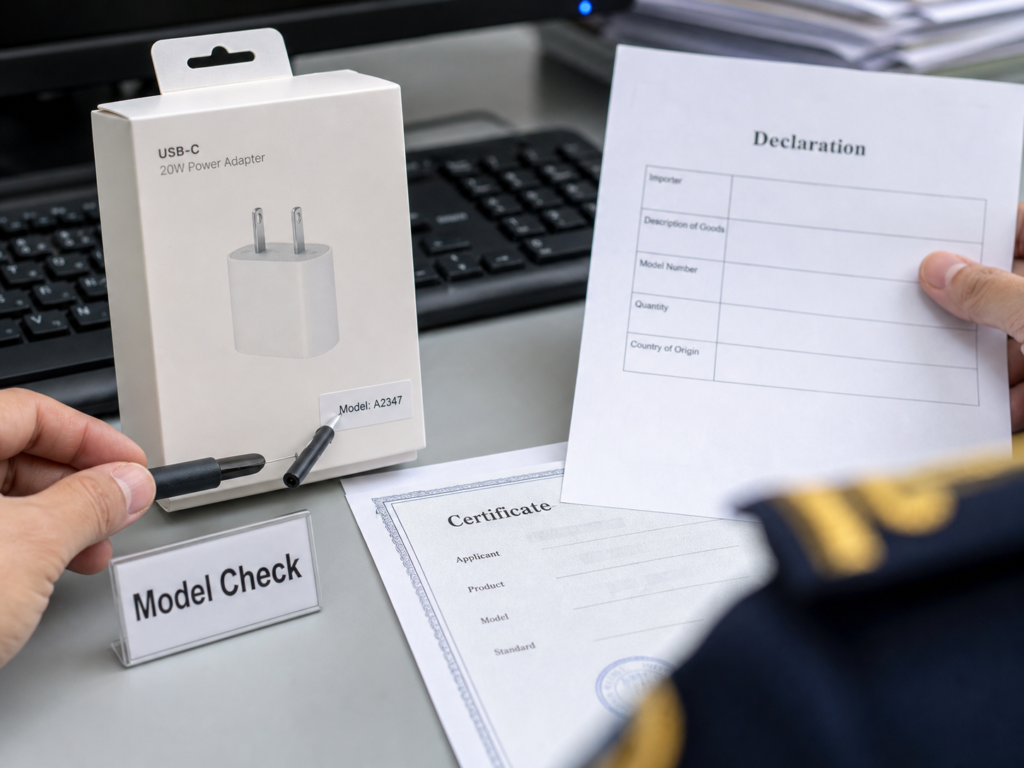
The second is that the certification or license information is not marked according to applicable requirements. Even if the documents have been obtained, if the labeling method of the product, packaging, or manual does not meet specific requirements, you may be required to rectify.
The third is using others’ certificates fraudulently. The certificate holder, brand, model, factory, and product parameters on the certificate must be consistent with the actual goods, and you cannot directly use documents from other customers of the supplier.
The fourth is incorrect HS code declaration, leading to misjudgment of access requirements. The HS code is only one piece of information for judgment and cannot replace product definition, technical parameters, and competent authority catalog judgment.
Common Pitfalls in Online Sales
For e-commerce sellers, there are also many pitfalls in the sales link.
Don’t wait for the platform to require certification before handling it temporarily. Platform review takes time. It is best to confirm the qualification requirements of specific sites and categories before listing, and reserve time for possible rectification.
Do not allow products of the same series to directly share one certificate. Changes in rated power usually require re-evaluation of the certification scope, which may require adding models, supplementary tests, or separate applications. Whether series certificates can be shared must be reviewed and confirmed by TISI according to specific circumstances.
After the certificate or license expires, it shall be handled in a timely manner according to the actual import, manufacture, sales, and inventory situation. Stopping sales does not mean that all obligations automatically disappear. It is still necessary to confirm inventory disposal, import records, supervision obligations, and license cancellation or expiration requirements.
The models and parameters on the e-commerce page must be completely consistent with the certificate or license documents. For example, the power, number of interfaces, and wireless functions advertised on the page cannot exceed the coverage of the documents. When inconsistencies in models or parameters are found, the change assessment should be completed first before updating the page or selling the product.
If it is a set product, do not only upload the certificate of the main product. Accessories should also confirm compliance certificates according to their own product categories, and which materials the platform requires to upload shall be subject to the specific site policy.
Common Pitfalls in Procurement and Supply Chain
The pitfalls in the supply chain are the most hidden, and many sellers only find out that it is the supplier’s problem after something goes wrong.
For example, the model of the test report given by the supplier is inconsistent with the model of the actual supplied goods. They use the report of model A to explain model B, and you only find out something is wrong when you go for certification or customs clearance.
Some suppliers secretly change the product, such as replacing the power chip, changing the power, or replacing the wireless module, without notifying you in advance, resulting in the original materials may no longer cover the actual product.
The most common is that the division of responsibility for certification is not clearly stated in the contract, and when problems arise, they shirk responsibility from each other, such as who pays for the certification, who is responsible for providing materials, and who bears the loss if the goods are detained at customs.
The way to avoid pitfalls is also very simple: clearly write in the procurement contract the bearing of certification costs, the obligation of advance notification for product changes, the responsibility for the authenticity of materials, the requirements for consistency between samples and mass production, and the division of responsibility for customs clearance obstruction. Writing it clearly in black and white works better than anything else.
Consequences of Violations and Common Scope
If there is a real violation, how serious the consequences are cannot be summarized by a fixed fine ratio. The punishment shall be subject to the specific illegal act, applicable law, decision of the competent authority, and facts of the case, which may include detention, return, confiscation, fine, suspension or revocation of license, etc.
Whether the product is required to be rectified, whether procedures can be made up, and whether it needs to be returned or destroyed also depends on the product category, nature of the violation, import status, and handling result of the competent authority. Do not regard “10%-30% of the goods value” as a universally applicable budget standard.
If there is a brand or qualification violation on the platform, after being discovered by consumers, competitors, or platform review, it may also be subject to restrictions on sales, point deduction, delisting, or even store closure according to platform rules.
Methods for Querying Certificate Authenticity and Validity
Whether it is a certificate you applied for yourself or a certificate given by the supplier, you should check its authenticity and applicable scope.
The specific certificate number, product model, brand, certificate holder, factory information, and valid status shall be verified through the NBTC or TISI official system, official documents, or with the competent authority. Whether it supports scanning codes, querying by model, or searching by certificate holder shall be subject to the actual functions of the current official query system, and it cannot be guaranteed that all certificates can use the same query method.
Be sure to rely on the query results and official documents from official channels, and do not credulously believe screenshots given by agents or suppliers. Even if the screenshot is real, it may have expired, or only cover a certain model or a certain brand, and cannot automatically cover the actual imported products.
Post-Certification Compliance Maintenance and Change Handling
Obtaining the certificate or license is only the first step, and subsequent maintenance is also very important, otherwise the documents may no longer cover the actual product.
Certificate Validity Period Management
First of all, manage the valid status of the certificate or license. The validity period, renewal, and supervision requirements of NBTC and TISI depend on specific procedures, product standards, certification schemes, and document content, and shall be subject to official records and certificate documents, and cannot be uniformly presumed as 3 years or 2 years.
It is recommended to regularly check the certification validity period, on-sale SKUs, actual imported models, and product change records. After stopping sales, do not simply think that “if you don’t sell, you don’t need to renew”. It is still necessary to confirm inventory disposal, import records, supervision obligations, and license cancellation or expiration requirements.
Rules for Re-Assessment of Product Changes
If the product is changed later, do you need to re-certify? A more prudent approach is to submit a change assessment first, rather than directly judging that “it must be re-handled” or “it doesn’t need to be taken care of at all”.
The following changes usually belong to situations that require key evaluation: adjusting rated power, replacing power chips or other key safety components, changing interface types or quantities, replacing wireless modules, adjusting wireless parameters, changing antennas, and replacing flame-retardant housing materials. These changes may affect safety, EMC, or wireless performance, and must be confirmed with TISI, NBTC, or relevant certification bodies before mass production or sale.
Whether re-testing, license change, supplementary technical documents, or re-certification is required shall be subject to the conclusions made by TISI, NBTC, and certification bodies based on specific standards and certification schemes. Some changes may be handled through technical documents, difference assessment, or supplementary testing.
Adjustments to housing color, modifications to packaging text, etc., if they do not affect safety parameters, structure, and wireless parameters, usually have lower risks, but change records should still be kept. When in doubt, first find an agent or certification body for evaluation, and do not sell after direct changes.
Response to Market Sampling Inspection
Random sampling inspections may also be conducted in the Thai market. Preparing in advance can reduce passive situations. Archive certificates or licenses, test reports, authorization letters, import documents, product specifications, and change records in an easily accessible place, so that they can be provided in time in case of sampling inspection.
If the sampling inspection really fails, timely suspend the sales of relevant batches, rectify according to the requirements of the competent authority or platform, and confirm whether the rectified products need re-testing or document changes. Do not continue to sell the same batch of products before the problem is resolved.
Summary and Quick Checklist
Core Takeaways of the Guide
After reading this guide, you should have figured out these things: First, you can initially judge whether your product needs to be evaluated for NBTC, TISI, or both types of procedures; second, you know that the certification cycle, cost, and materials to be prepared must be confirmed case by case according to specific products; third, you master the methods of avoiding compliance risks in customs clearance, sales, and procurement links; fourth, you know that you should verify the authenticity, applicable scope, and valid status of certificates or licenses through official channels.
Thailand Access Quick Checklist
For the convenience of everyone’s checking, a quick checklist has been sorted out. Just go through it before new products are launched or shipped:
• Confirm whether the product has Bluetooth, Wi-Fi, or wireless power transmission functions, and check its frequency band, power, and NBTC applicable scope
• Confirm the product definition, rated input and output parameters, purpose, and whether it is in the TISI mandatory standard catalog
• Do not directly presume that dual certification is required solely based on “connected to mains power” or “has wireless transmission”
• All components of set products have completed compliance evaluation separately
• Reserve sufficient certification processing time according to specific procedures
• Products, packaging, manuals, or electronic labels have been marked with required information according to applicable requirements
• The models, parameters, and brands on customs declaration and e-commerce pages are consistent with the certificate or license documents
• Qualified local Thai importers, agents, authorized representatives, or other responsible entities have been confirmed
• The valid status of documents has been verified through official channels of NBTC and TISI
Additional Tips
Finally, let’s add a few easily overlooked points: If your product has a built-in battery, such as a wireless power bank, you should separately check the applicable product safety standards, transportation documents, dangerous goods and import requirements, as well as applicable environmental protection or producer responsibility regulations. The transportation link may involve UN 38.3 test materials and carrier requirements, but whether additional TISI or other permits are required depends on the battery type, capacity, product category, and sales method.
Cross-border e-commerce sellers can also consult the platform’s exclusive compliance channel. Some platforms may have cooperative compliance agencies or additional document requirements, but platform policies cannot replace Thailand’s statutory access requirements.
In addition, Thailand’s regulations and mandatory catalogs are updated from time to time. It is recommended to re-check the latest rules, product catalogs, and application requirements of NBTC and TISI every six months or before each new product launch, and do not directly apply experience from a few years ago to current products.