
Many cross-border sellers and small importers entering the Japanese market for the first time often encounter issues such as being required to provide compliance documents when goods arrive at the port, or being found non-compliant in random inspections after products are listed. They cannot figure out what the commonly mentioned “METI notification” actually is, what its relationship is with PSE and customs declaration, and even think that buying a “number” from an agent is enough to cope with it. In fact, the commonly referred to “METI notification” is a general term in Chinese practice, corresponding to a full set of statutory obligations that operators of imported electrical products must fulfill under Japan’s , including business notification, product compliance, and labeling management. It is not a “pass” issued by the government for individual products. Starting from basic concepts, this article explains the judgment methods, preparation materials, operation procedures, and follow-up maintenance points step by step, to help you sort out the compliance logic of electrical products imported into Japan.
1. First, Understand the Core Concepts: Don’t Get Confused by Terms
People who are new to this field are easily confused by various statements. Let’s first clarify the most core concepts, so that we won’t take detours later.
First is METI, the full name of which is the Ministry of Economy, Trade and Industry of Japan. It is the core department in charge of industrial product safety and market access in Japan. The electrical product compliance requirements that ordinary importers are exposed to are basically formulated based on the implemented by it.
Second is the commonly heard “notification/filing/todoke”: these three terms are often used interchangeably in Chinese, generally referring to the entire set of import compliance procedures. But from a legal perspective, the core is Import Business Notification — that is, the statutory procedure for operators engaged in the import of electrical products in Japan to report their business scope and product categories to METI. Special attention should be paid: the notification is of a “reporting” nature, not a government safety approval for individual products, nor does it represent an official endorsement of product quality. The safety and compliance of the product itself is the responsibility that the operator must bear on its own.
Finally, the core function of this set of procedures: it is a necessary prerequisite for the legal sale of products in the Japanese market, and one of the compliance bases that customs may verify when entering the country. However, it does not mean that “you can sell freely once you get the number”, and a series of obligations such as product labeling and record keeping must be fulfilled subsequently.
Beginners are most likely to confuse several similar concepts, let’s clarify them all at once:
The first group is Business Notification (commonly referred to as METI notification) and customs declaration. These are two completely independent systems: customs declaration governs “whether goods can enter Japan”, checking tariffs and whether the goods are consistent with the declaration; while Business Notification governs “whether products can be legally sold in the Japanese market”, corresponding to product safety compliance requirements. Even if customs releases the goods, if the notification obligation is not fulfilled or the product is non-compliant, METI will still impose penalties if it is found in subsequent market random inspections.
The second group is Business Notification and PSE-related requirements. This is the most frequently asked group: Business Notification is the reporting procedure for import operators, while PSE is the labeling system for product safety compliance. Both are statutory obligations, but their natures are completely different. Specifically, Specified Electrical Products with higher risks need to undergo conformity inspection by a Japan-registered inspection body, and the product shall be marked with the diamond-shaped PSE mark; for General Electrical Products with lower risks, the operator shall complete the safety inspection by itself or entrust an institution in accordance with Japanese standards, and the product shall be marked with the circular PSE mark. Not all products require a third-party “certificate”, but both types of products must meet the corresponding safety requirements and complete the Business Notification at the same time.
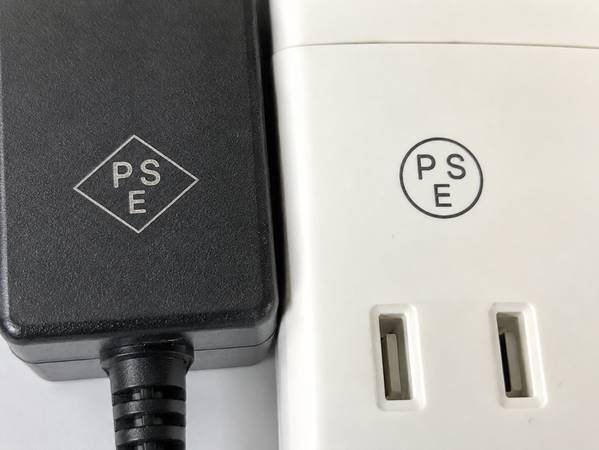
The third group is the and the . Occasionally, people mention the “Electricity Business Act”, but that regulates the business of power companies such as Tokyo Electric Power and Kansai Electric Power, and has nothing to do with ordinary importers selling chargers and small home appliances. The METI-related compliance we often refer to is all based on the , so don’t get the wrong legal basis.
If the obligation that should be fulfilled is not performed, the most common situation is that customs may detain the goods due to insufficient compliance documents, and the goods cannot enter the country normally; if the product has already entered the market and is found by METI in random inspections, it may be required to rectify, stop sales, and recall sold products. In cases of serious circumstances and refusal to rectify, it may also involve administrative penalties or even criminal liability. It should be reminded that METI’s penalties do not have a unified fixed amount, but are comprehensively determined based on the type of violation, the severity of the circumstances, the value of the goods involved, and sales volume. Don’t believe the so-called “fixed penalty of tens of thousands of yen” statements on the Internet, they have no reference value.
2. Do Your Products and Business Need to Fulfill METI-Related Obligations?
After understanding the basic concepts, the next core question is: do the products I sell and my current business model need to do this? Don’t guess. You can make a basic judgment according to the four-step logic, and then confirm with a professional for complex situations.
Step 1: Determine Whether It Falls Within the Scope of Statutory Electrical Products
Many people think that “as long as it is powered or rechargeable, compliance is required”, but in fact this judgment standard is too broad. The only basis for whether it is subject to the is the statutory electrical product catalog officially released by METI. It needs to be comprehensively judged in combination with the product’s name, use, rated voltage, input and output methods, key safety components, and sales form. Being powered, rechargeable, or having a USB port does not automatically mean it falls within the regulatory scope.
Common regulated categories (for reference only, final shall be subject to the official catalog and specific product specifications) include: power adapters, plugs and sockets, wires and cables, household circuit breakers, most mains-connected lamps, small home appliances, etc. that are directly connected to Japanese mains (100V AC). Battery products with charging functions (such as power banks, rechargeable battery packs, devices with built-in rechargeable batteries) need to be comprehensively judged in combination with input and output methods, uses, rated parameters, and whether they fall into the official catalog. It cannot be directly determined to be or not to be within the regulatory scope just because of “USB power supply” or “rechargeable”.
If you are unsure, the safest way is to check the official METI electrical product classification database, or confirm with a professional compliance person. Don’t judge by yourself. If the classification is wrong, all subsequent steps will be in vain.
Categories that are clearly not included include: products with purely mechanical structures and no electricity at all, such as non-electrical plastic shells, packaging, ordinary accessories, etc.; some other low-voltage electrical products that do not involve electrical safety risks may also not be in the statutory catalog, and the official query results shall prevail.
Step 2: Distinguish Between Specified and General Electrical Products
If it is determined to be a statutory electrical product, it is also necessary to distinguish whether it is a “Specified Electrical Product” or a “General Electrical Product” — this directly determines your compliance cost and process requirements. Simply put, the core basis for classification is the safety risk level of the product: products that are likely to cause serious accidents such as electric shock and fire are Specified Electrical Products with stricter requirements; products with relatively lower risks are General Electrical Products with relatively lenient requirements.
| Category | Risk Level | Core Compliance Requirements | Common Product Examples (for reference only, subject to official catalog) |
| Specified Electrical Products | High | Conformity inspection must be carried out by a Japan-registered inspection body, the product shall be marked with the diamond-shaped PSE mark, and the operator shall properly keep the inspection documents | Power adapters directly connected to mains, plugs and sockets, wires and cables, household circuit breakers (rated parameters and uses need to be verified) |
| General Electrical Products | Medium to low | The operator shall complete the safety inspection by itself or entrust a third party in accordance with Japanese standards, keep the inspection records, and the product shall be marked with the circular PSE mark | Some USB-powered small appliances, desktop small table lamps (rated parameters, structure and uses need to be verified) |
Special attention should be paid to boundary cases here: the classification of complete machines, accessories, modules, and sets may be completely different. Even for the same product, if the voltage is changed, the plug is replaced, the use is changed, or the key safety components are replaced, the classification may change. For example, if a power supply originally used for ordinary consumer electronics is changed to be used for medical equipment, the classification may change from general to specified, and even fall into the scope of other laws and regulations. Don’t directly apply previous experience.
Step 3: Determine Whether the Import Scenario Requires Fulfillment of Obligations
Not all imported electrical products need to fulfill the notification obligation. The core judgment standard is: whether the product enters the Japanese market for circulation and is used for sales or operational use.
The scenarios where obligations must be fulfilled are very clear: as long as the imported products are for domestic sales in Japan, including retail on cross-border e-commerce platforms such as Amazon and Rakuten, as well as OEM and ODM processing for Japanese brands and then launched in Japan, as long as they ultimately flow to Japanese consumers or for operational use, all obligations must be fulfilled.
There are three types of scenarios that do not require fulfillment: first, personal use, and the quantity is within the reasonable range recognized by customs, such as buying a charger by yourself through overseas online shopping for personal use; second, products produced locally in Japan do not need to go through import-related notification procedures; third, goods that are only transshipped through Japanese warehouses and ultimately sold to third countries, and do not enter the Japanese market for circulation.
There is another type of relatively vague scenario: samples, test products, and display products. If these products are only used for internal testing, exhibition display, and will not eventually enter the sales or distribution link (for example, shipped back or destroyed after the exhibition), whether special cases or simplified procedures can be applied needs to be confirmed with the competent authority, and exemption cannot be self-determined; but if the samples are eventually sold to customers, or given to customers for trial and then owned by customers, they essentially enter the market, and all obligations must be fulfilled. Don’t take chances.
Step 4: Confirm the Subject of Responsibility
The subject of obligation for METI-related compliance is operators engaged in the import business of electrical products in Japan, who need to have the compliance management capability for the corresponding products — for example, being able to keep technical documents, handle consumer complaints, implement recall requirements, and cooperate with inspections by regulatory authorities. Overseas sellers and factories cannot directly submit notifications to METI.
Many people ask, who exactly is the subject of responsibility? The judgment standard is very simple: whoever bears the product launch responsibility in Japan, and who is responsible for managing the product’s labeling, after-sales service, and recall, is the subject of obligation. For example, if a cross-border e-commerce finds a Japanese compliant import service provider, and the service provider assumes the responsibility of the import operator in accordance with the law, then this service provider is the subject of responsibility for the notification.
There is a common pitfall for beginners: to save money, they find individual buyers or international students in Japan to temporarily act as importers for receiving goods and declaration. This practice is extremely risky — most individuals do not have the corresponding compliance management capabilities, nor can they bear subsequent statutory responsibilities such as market random inspections and after-sales recalls. Once a problem occurs, not only may the goods be detained, but the actual seller will also be held accountable.
3. What Materials Should Be Prepared Before Notification?
After confirming that the obligation needs to be fulfilled, don’t rush to submit. First, prepare the materials in three categories according to their uses. Otherwise, it is easy to have problems due to incomplete or mismatched materials.
Category 1: Basic Information Required for Statutory Notification
This type of information is the content that needs to be filled in when submitting the Business Notification. The core is to accurately reflect the basic situation of the operator and the products to be imported:
• Basic information of the import operator: Corporate Number (unified number of Japanese corporations), registered name, registered address, and contact information of the person in charge of liaison. It should be noted here that METI will not conduct approval based on the Chinese-style “business scope of business license”, but the operator must actually engage in the relevant import business and have compliance management capabilities. Don’t find a completely unrelated company (such as a catering company) to be the nominal holder, as failure to fulfill compliance obligations later will cause bigger problems.
• Basic product information: category, name, model, rated parameters (voltage, power, frequency), manufacturer name and address, and production factory information of the electrical products to be imported.
Category 2: Product Compliance Certification Materials
This type of material is the core document proving that the product meets Japanese safety standards. It is not necessary to submit all of them to METI for approval when submitting the notification, but the operator must keep them properly, be able to provide them at any time during market random inspections, and the content must be completely consistent with the actual product.
• Specified Electrical Products: It is necessary to provide conformity inspection documents issued by Japan-registered inspection bodies (that is, the commonly mentioned diamond-shaped PSE-related reports and certificates), as well as corresponding product structure materials. Note: Not any third-party institution’s certificate can be used. It must be a document corresponding to the product model and specifications issued by a registered inspection body officially recognized by Japan.
• General Electrical Products: The operator needs to complete the inspection by itself or entrust a capable institution in accordance with the applicable Japanese safety standards, form a complete self-inspection record and keep it; if there is a test report issued by a third-party institution that meets Japanese standards, it can be used as supporting material for self-inspection, but a third-party “certificate” is not mandatory.
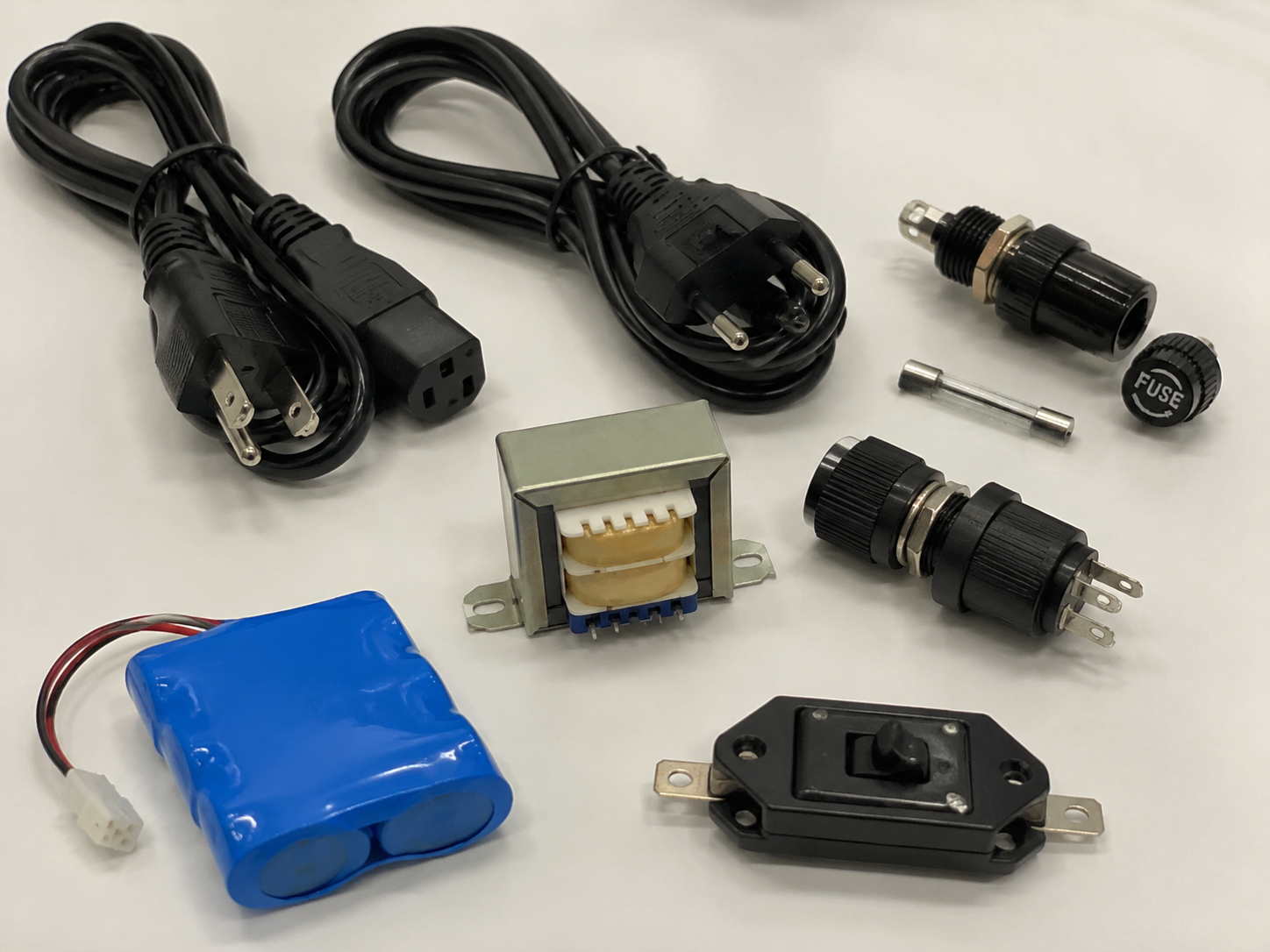
• List of key safety components: covering components directly related to electrical safety such as power cords, plugs, fuses, transformers, batteries, and circuit protection devices. The list must indicate the model, specification, and supplier of each component, which is the core basis for verifying the consistency between the product and compliance documents.
• General core requirements: The product model, rated parameters, manufacturer, production factory, and key safety components in all materials must be completely consistent with the actual product. Even if the model has a different symbol or a missing hyphen, it may be deemed non-compliant.
Category 3: Customs Clearance and Commercial Auxiliary Materials
This type of material is mainly used for the customs entry process, which is a separate system from the Business Notification and needs to be prepared separately:
• Basic import plan: conventional customs clearance materials such as import port, estimated import time, import quantity, commercial invoice, and packing list.
• Language requirements: It should be distinguished by different carriers: ① Labels on the product itself, consumer-oriented manuals, and safety warnings must be provided in Japanese as required by laws and regulations, because they are directly related to consumer use safety; ② Internal test reports and technical materials are not required to be all translated into Japanese, but if regulatory authorities require them during random inspections, accurate translated versions must be provided in a timely manner; ③ The notification application form must be filled in Japanese. If the Japanese expressions of key information (model, parameters, warnings) do not meet the specifications, it may lead to incorrect notification information, or penalties for non-compliant product labeling. It is recommended to find personnel who understand Japanese electrical compliance to check, and don’t use machine translation casually to cope.
4. Complete Operation Process from Preparation to Implementation
When all materials are prepared, you can proceed according to the process. The core of the whole process is “first confirm the classification, then submit the notification, and finally implement the compliance obligations”. Among them, classification confirmation is the most error-prone link, so special attention should be paid.
Step 1: Reconfirm the product classification and scope of obligations.
Don’t think that there is no problem just because you have made a judgment before. Before formal submission, you must check against METI’s official classification catalog to confirm two things: first, the product does fall within the scope of electrical products that require regulation; second, the product classification (specified/general) is correct, and the corresponding compliance certification materials are matching. If the classification is wrong, the subsequent notification information will be inaccurate, and the product may also be penalized for non-compliance after launch, so this step must not be skipped.
Step 2: Submit the Business Notification.
The current mainstream submission channel is the Japanese government’s e-Government system e-Gov, which is convenient for online submission and allows progress checking; you can also choose to submit written materials, but the process is relatively cumbersome, and the specific requirements shall be subject to METI’s latest official guidelines. It should be noted that the application must be logged in and filled out by the import operator (subject of notification obligation) in Japan with its own account. Products of different categories may be handled by different departments within METI, so you must select the correct category entry when filling out. All core information filled in must be consistent with the actual situation and subsequent product labeling.
Step 3: Cooperate with material supplementation (if any).
After submission, if the competent authority finds that the information is missing or has questions, it will issue a supplementation notice to the operator. There is a clear specified deadline for supplementation, and failure to submit within the time limit may result in the application being invalid, requiring a complete re-declaration process. Therefore, a dedicated person should be arranged to pay attention to system notifications and emails in a timely manner, and prepare supplementary materials as required.
From practical experience, for General Electrical Products with complete materials and no supplementation, the review cycle is about 1-2 weeks; for Specified Electrical Products or those with complex materials that require multiple supplementations, you can reserve a schedule of 3-4 weeks. The above are only reference values. The actual cycle varies with the official application volume, product category, and supplementation situation, and the specific progress shall be subject to the competent authority.
Step 4: Implement all pre-launch compliance obligations.
Completing the Business Notification does not mean that you can sell directly. You also need to implement three core things: first, the product shall be marked with the corresponding style of PSE mark (diamond/circular), the name of the import operator, rated parameters and other statutory labels as required; second, all compliance certification documents and inspection records shall be properly kept to ensure that they can be provided at any time during random inspections; third, corresponding commercial documents and compliance materials shall be provided as required by customs during customs clearance.
Here, it is necessary to clarify the “notification number” often mentioned in Chinese practice: it is generally the common name used by practitioners for the Business Notification acceptance number and management number. It is not a “certification number” issued by METI for individual products, nor is it a statutory label content that must be marked on the product nameplate. In scenarios where customs clearance, platform entry, or customers request the “notification number”, you should provide the official notification acceptance certificate issued by the authority, together with the corresponding product’s PSE compliance documents and product consistency certification materials. Providing only the number cannot be regarded as compliance.
The core standard for judging the validity of compliance has never been whether there is a separate “number”, but: whether the Business Notification for the corresponding category has been completed in accordance with the law, whether the product actually meets Japanese safety standards, whether the labeling meets statutory requirements, and whether the compliance records are complete and verifiable.
5. Completing the Notification Is Not the End, These Maintenance Tasks Must Be Done Well
Many beginners think that once the procedures are completed, it will be done once and for all. In fact, this is not the case. If the follow-up maintenance is not done well, it will still be deemed a violation.
First, clarify the rules for changes and re-evaluation.
The Business Notification itself does not have a fixed “validity period”, but according to the different content of changes, it needs to be handled according to two types of rules, and the specific procedures shall be subject to the latest requirements of the competent authority:
The first type is simple change scenarios: if only non-core information such as the contact person, registered address, and contact information of the import operator is changed, usually only a change notification or simple information update is required, and there is no need to re-prepare a full set of product test materials and compliance documents.
The second type is scenarios requiring re-evaluation: if there is a change of the import operator subject, change of manufacturer/production factory, change of product model/rated parameters/internal safety structure/use/key safety components, or update of the Japanese safety standards applicable to the product, which may lead to changes in product classification and invalidation of original compliance documents, the compliance requirements must be re-evaluated, and if necessary, the conformity inspection/self-inspection must be re-completed, and even the notification must be re-processed.
Don’t think that one notification can apply to all similar products for life. The compliance requirements for each product must be checked separately.
Second is the compliance of labels and documents after launch, which is the most likely point to be inspected in random checks.
• Labeling requirements: Specified Electrical Products shall be marked with the diamond-shaped PSE mark, and General Electrical Products shall be marked with the circular PSE mark. At the same time, statutory information such as the name and address of the import operator, and the rated parameters of the product shall also be marked. The statutory label information on the product itself, packaging, and manual must be accurate, and there must be no contradictions between carriers. For example, the model on the product cannot be different from that on the packaging.
• Manual requirements: The product’s usage methods, usage environment, prohibited scenarios, safety warnings, etc. must be marked in Japanese. The specific requirements are determined according to the product category and applicable standards. Don’t just modify a general template and use it. For example, outdoor lamps must be marked with waterproof rating and usage restrictions. If an accident occurs because it is not clearly stated, the import operator shall bear full responsibility.
• Record keeping: It is necessary to distinguish between statutory obligations and risk management suggestions: ① Statutory requirements: The statutory retention period for self-inspection records of General Electrical Products and conformity inspection documents of Specified Electrical Products is at least 3 years, calculated from the date of product import or production; ② Risk management suggestions: import records, purchase vouchers, supplier declarations, complaint handling records, recall records, etc., although not all have a statutory 3-year requirement, it is recommended to keep them for at least 3 years to facilitate response to random inspections and traceability.
Finally, the response to market random inspections.
METI regularly conducts random inspections of electrical products on the market. It may purchase samples from online platforms or inspect offline stores. After being selected, the operator will be required to provide compliance materials, and product testing will be conducted if necessary. If non-compliance is found in random inspections, possible consequences include requiring submission of rectification reports, stopping sales, recalling sold products, and administrative penalties. In cases of serious circumstances and refusal to rectify, it may involve criminal liability; specific measures are determined according to the type of violation, the severity of the circumstances, and whether they cooperate with rectification, and there is no unified fixed penalty standard.
6. High-Frequency Scenario Decision-Making and Common Risk Avoidance
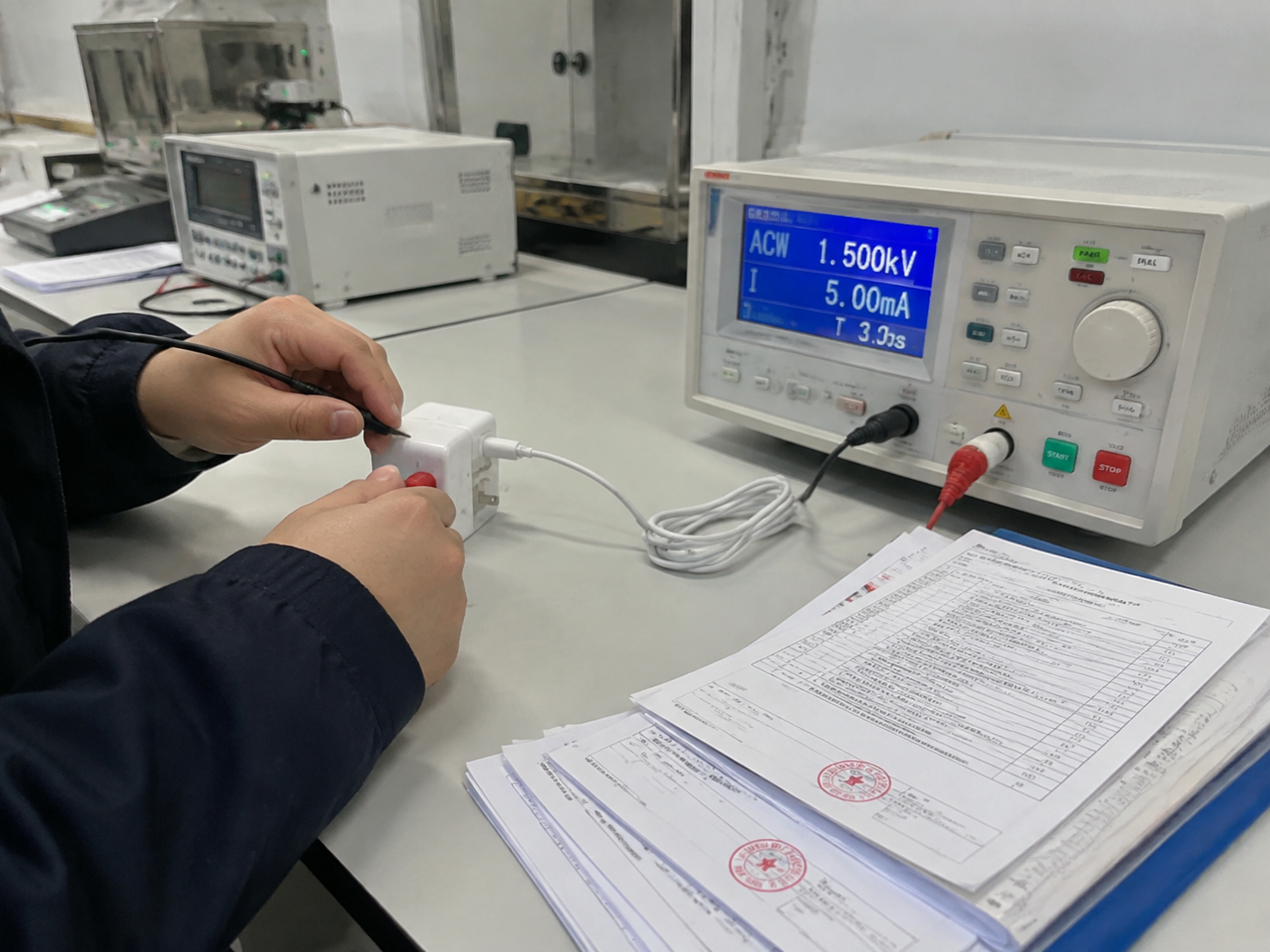
Most of the pitfalls encountered by beginners in importing Japanese electrical products are similar. We have sorted out the decision-making logic for the 4 most frequent scenarios and the avoidance methods for 4 types of common violation risks, to help you avoid most problems in advance.
Decision-Making Logic for 4 High-Frequency Scenarios
1. Can multi-model products be treated as the same series?
Don’t just look at the appearance, check item by item: whether the manufacturer, production factory, core electrical parameters, internal safety structure, and applicable standards are completely consistent. If there are only small differences in color, packaging, and non-safety functions, the same set of compliance documents may be shared, but whether they can be covered in the same notification needs to be confirmed according to the official rules of the corresponding category; if the core parameters or safety structure change, they must be evaluated separately and cannot be merged on your own.
2. The supplier says it has “PSE certification”, can it be used directly?
Don’t agree directly, first check 6 points: ① Is it issued by a Japan-registered inspection body? ② Is it a conformity inspection document for specified products or a test report for general products? ③ Are the product model and specifications on the document completely consistent with your product? ④ Are the manufacturer and production factory consistent with your product? ⑤ Is it within the validity period and meets the current Japanese standards? ⑥ Is it applicable to the Japanese market (don’t use other countries’ certifications such as 3C or CE). As long as one item does not meet the requirements, it cannot be used directly, and a new compliance assessment is required.
3. A new version of the same product is released, can the original materials be used?
No, as long as the new version has these changes: plug replacement, voltage change, use change, key safety component replacement, internal structure change, you must re-judge the product classification, re-evaluate compliance requirements, and if necessary, re-conduct inspections and update notification information. You cannot directly use the old materials, otherwise it will be non-compliant.
4. Cross-border e-commerce doing overseas direct mail, do you not need to care?
No, as long as the product is ultimately sold to Japanese consumers and enters the Japanese market for circulation, there must be an import operator in Japan to bear the notification obligation and product responsibility. You cannot think that “it is compliant if it is listed on the platform”. The platform only provides sales channels, and the ultimate compliance responsibility still lies with the operator and the seller.
Avoidance Methods for 4 Types of Common Violation Risks
| Common Risk Type | Specific Manifestation | Verification/Avoidance Method | Possible Consequences |
| False compliance documents | Using others’ PSE reports without authorization, forging conformity inspection documents, using other countries’ certifications to impersonate Japanese compliance documents | After receiving the documents, verify the authenticity with the issuing institution, check whether the model, factory, parameters are consistent with the actual product, and don’t trust unreasonably low-priced services that claim “guaranteed pass” | Products are deemed non-compliant, facing rectification, recall, and administrative penalties |
| Inconsistent information | Inconsistent models, parameters, and manufacturers on notification information, product labels, and compliance documents | Before submitting the notification and before mass production of the product, put all materials and the actual product together and check them one by one, even a difference of one letter must be corrected | Customs detention, failure in market random inspections, and being required to rectify |
| Out-of-scope application | Applying the compliance documents of Product A to Product B, applying the rules of general categories to specified categories | Conduct separate classification and compliance assessment for each product, and don’t casually apply the materials of other products | Non-compliant products and penalties |
| Label/manual errors and omissions | No PSE mark, wrong mark style, no importer information, no Japanese warnings in the manual | Before mass production of the product, have the labels and manuals checked by personnel who understand Japanese electrical compliance to ensure they meet statutory requirements | Directly deemed non-compliant during random inspections, and required to be removed from shelves for rectification |
7. Quick Self-Inspection and Capability Summary
Basic Capability Self-Inspection: Able to independently judge the regulatory scope and classification of products, identify qualified Japanese importers, verify the validity of compliance documents, and implement post-notification maintenance and response to random inspections.
METI Compliance Quick Self-Inspection Checklist (only for basic screening. Products with blurred catalog boundaries and complex structures should still be confirmed with the competent authority or professionals):
□ Have confirmed whether the product is a statutory electrical product and its specific classification (specified/general) through METI’s official catalog or professional channels
□ Have determined a qualified import operator in Japan that can bear the notification obligation and subsequent compliance responsibilities
□ Have prepared compliance certification documents for the corresponding category, and the model, parameters, and manufacturer on the documents are consistent with the actual product
□ Have sorted out a complete list of key safety components, which is consistent with the test report and mass-produced actual products
□ Have completed the import business notification for the corresponding category as required, and the filled information is accurate and correct
□ The product itself, packaging, and manual have been marked with the corresponding style of PSE mark, import operator information, and rated parameters as required
□ Have kept compliance inspection records as required by law, and prepared relevant traceability materials for responding to random inspections
□ Have confirmed that the Japanese warnings and usage instructions in the product manual meet the requirements of the corresponding category
The core logic of METI compliance for electrical products imported into Japan is “operators notify in accordance with the law, products meet safety standards, and labels and records are traceable”. If you encounter situations with blurred catalog boundaries or complex product structures, it is recommended to confirm with METI officials or professional compliance personnel, and do not judge by yourself based on experience.