
Sellers of charging products targeting the Canadian market often encounter two unavoidable compliance requirements: one is ISED, and the other is CSA/cUL safety approval. Many people get confused when they first come into contact with them: since both are Canadian certifications, if one is done, is the other unnecessary? In fact, these two systems are completely independent in terms of governing departments, regulatory objectives, and compliance methods. If you make a mistake, the lightest consequence is customs detention of goods, and the most serious is sales ban and product recall. Today, we will start from the most basic definitions, then cover quick judgment, verification methods, and pitfall avoidance skills. After reading, you can directly apply them to product selection and compliance work.
Core Positioning and Jurisdictional Boundaries
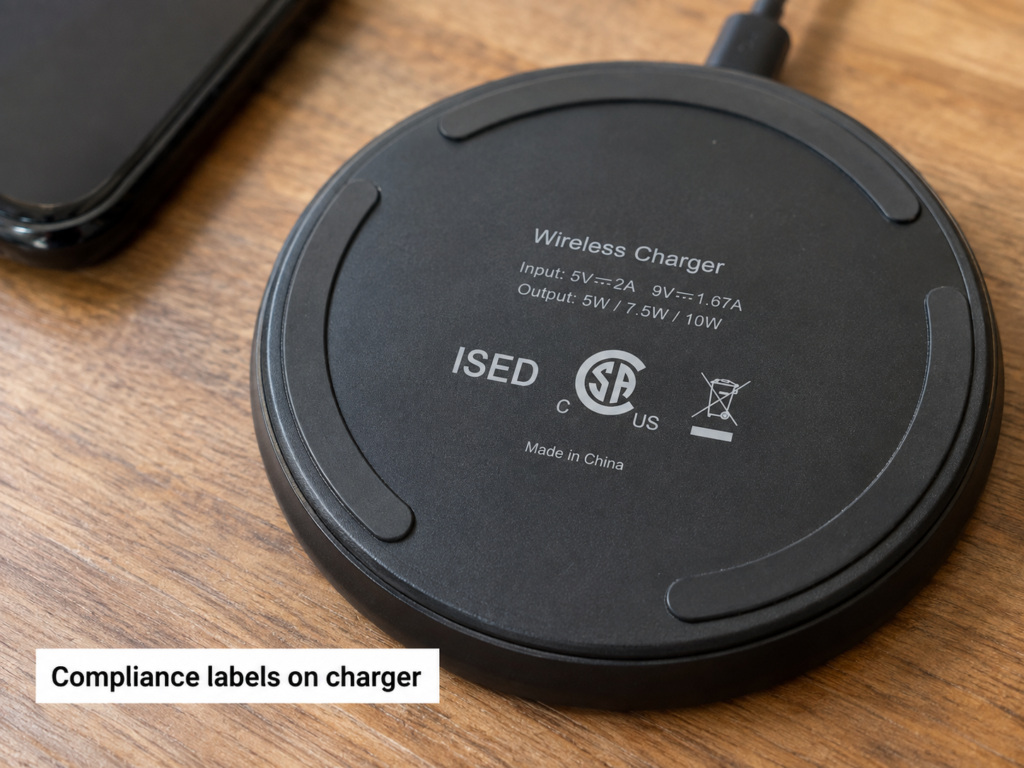
Many people cannot distinguish between these two requirements, essentially because they do not understand “what they regulate, who regulates them, and to what extent they apply”. Let’s first clarify the core differences, so the subsequent content will be easier to understand.
The full name of ISED is Innovation, Science and Economic Development Canada, which is a federal government department responsible for radio spectrum and electromagnetic compatibility issues across the country. Simply put, it prevents radio signals emitted by products such as wireless chargers and smart fast chargers from interfering with public communications, airport navigation, or electronic devices of other users. Its regulatory scope is mainly divided into two categories: one is radio transmission and wireless power transfer (such as Bluetooth, Wi-Fi, wireless charging), which applies the RSS series of standards; the other is electromagnetic disturbance (commonly known as EMC), which applies the ICES series of standards according to product categories.
Safety approvals such as CSA, cUL, and cETL regulate electrical safety, that is, to prevent safety accidents such as electric leakage, fire, and explosion of chargers. The approval and enforcement of electrical products are mainly managed by the electrical safety authorities of each province or territory (abbreviated as AHJ, the official department responsible for electrical safety supervision). CSA, UL, ETL, etc. are third-party certification bodies accredited by the Standards Council of Canada (SCC). Products should usually bear a certification or field evaluation mark recognized by the local authority of the place of sale, applicable to Canadian standards and the product category; the same Canadian certification mark is usually accepted by multiple provinces, but the recognition list, exceptions, and installation requirements of the place of sale should still be verified.
To facilitate quick comparison, we have compiled a core difference comparison table:
| Comparison Dimension | ISED Wireless/Electromagnetic Compatibility Requirements | Provincial Electrical Safety Approval (CSA/cUL/cETL, etc.) |
|---|---|---|
| Governing Body | Federal government department (ISED) | Managed by provincial/territorial authorities, which accredit corresponding third-party certification or field evaluation bodies |
| Regulatory Objective | Prevent radio interference and spectrum abuse | Prevent electrical safety accidents such as electric shock and fire |
| Trigger Logic | Depends on whether the product has wireless functions, and determines the applicable ICES standard based on the main function and sales method | Depends on whether the product is connected to mains power, has high-voltage electrical risks, and the rules of the place of sale |
| Compliance Mode | Divided into two categories: third-party certification + Supplier’s Declaration of Conformity (SDoC) | Available through accredited paths such as certification or field evaluation; there is no general self-declaration channel |
| Scope of Validity | Uniformly valid nationwide | Governed by the rules of the province or territory of sale; the same Canadian certification mark is usually accepted by multiple regions, but local recognition, exceptions, and installation requirements need to be verified |
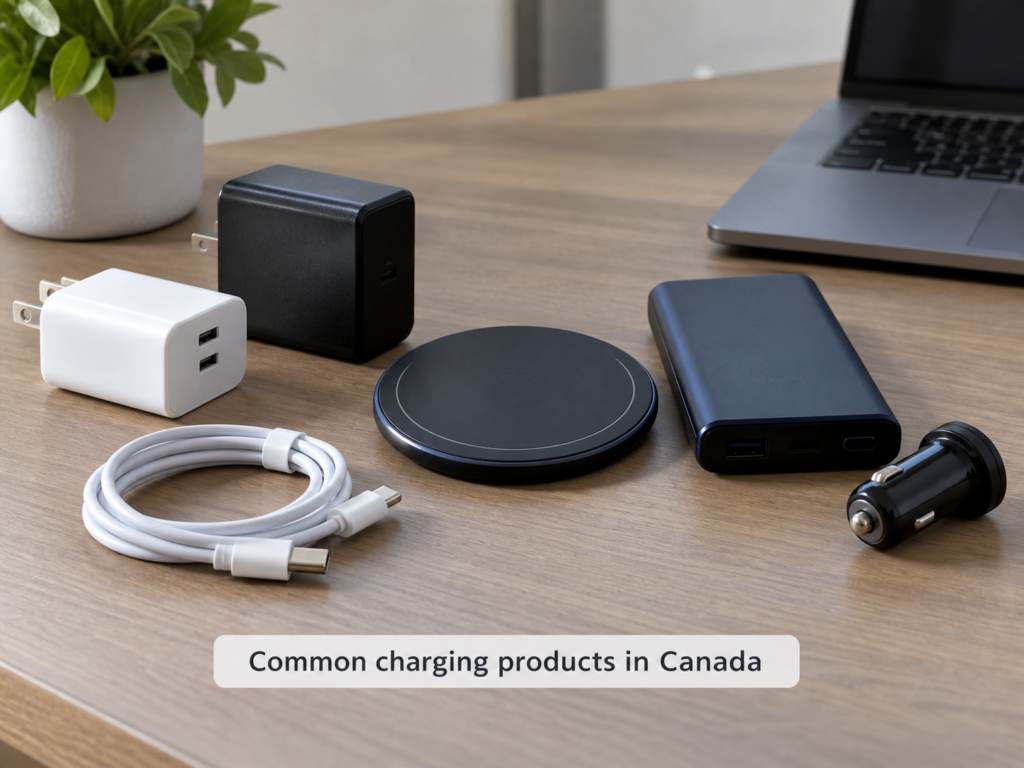
Let’s first clarify the scope of application: all requirements mentioned in this article apply to consumer-grade charging products, such as wall-mounted chargers, power adapters, wireless chargers, charging cables, power banks with charging functions, and car chargers. Industrial-grade, medical-grade products, and original factory-installed in-vehicle accessories are not within this scope; in addition, other regulations such as energy efficiency and chemical health are not covered by these two systems.
Trigger Conditions and Core Assessment Requirements
After understanding the positioning of the two systems, what everyone is most concerned about next must be: does my product need to meet this requirement? What exactly is assessed? Let’s explain them separately.
Two Types of ISED Requirements: RSS and ICES
ISED requirements are divided into two major parts, with different trigger conditions and assessment content:
The first part is the RSS series, targeting radio and wireless power transfer. As long as your product has radio transmission functions (such as Bluetooth, Wi-Fi) or wireless charging (WPT) function, this requirement is triggered. The core assessment covers three aspects: first, whether the frequency band used and transmission power comply with Canadian spectrum regulations, and unauthorized occupation of frequency bands is prohibited; second, whether the signal interference level is low enough to not affect the normal operation of other devices; third, for products used in close contact with the body, the radio frequency exposure level (that is, the impact of radio frequency energy generated by the product on the human body) must also be assessed.
Radio frequency and WPT requirements depend on the frequency, transmission characteristics, radiation limits, use distance or scenario, and radio frequency exposure conditions specified in the applicable RSS; power is only one of the potentially relevant parameters.
There are three commonly used standards: RSS-216 covers wireless power transfer (wireless charging), RSS-247 covers short-range wireless devices such as Bluetooth and Wi-Fi, and RSS-102 covers radio frequency exposure. For wireless chargers, the corresponding compliance path must be determined according to the Type 1, Type 2, and Type 3 technical conditions of RSS-216; judgment cannot be made solely based on “low risk” or “high risk”.
The second part is the ICES series, targeting electromagnetic disturbance. It cannot be directly concluded that ICES-003 must apply just because the product has digital circuits or switching power supplies; the applicable ICES standard should first be determined based on the main function and sales method of the product. Separately sold external switching power supplies or semiconductor power converters usually apply ICES-001; if sold together with ITE or digital equipment, or only for use with specific ITE or digital equipment, they can be evaluated according to the combined requirements of ICES-003. For situations such as radio, WPT, and vehicle installation, the applicable RSS, other ICES standards, or exemption conditions should also be verified respectively.
Provincial Electrical Safety Approval Requirements
The trigger logic for safety approval is very simple: as long as the product is directly connected to mains power, has high-voltage electrical risks, or is an electrical product that requires approval from the AHJ of the place of sale, it needs to be done. The core assessment items are all safety-related: for example, whether the electric shock protection is sufficient, whether the insulating layer can withstand voltage, whether the material is prone to fire, whether the operating temperature is too high, and whether there will be danger under abnormal working conditions (such as short circuit, overload).
Electrical safety assessment is determined based on applicable product standards, rated parameters, structure, insulation, materials, use environment, and abnormal working conditions; the strictness cannot be judged solely by the power level.
Canada does not lack a national-level electrical safety standard system; however, there is no single product safety standard covering all electrical products. The specific applicable Canadian product standards, certification paths, and provincial implementation or exception rules should be confirmed according to the product category and the place of sale and installation.
Compliance Modes and Labeling Requirements
Now that we know what needs to be done, the next step is how to do it and what labels to affix after completion. This is also an area where the two systems differ greatly.
Two Types of ISED Compliance Modes
ISED divides equipment into two conformity assessment categories: Category I and Category II. Which category to follow is not self-judged based on the general sense of “high risk” or “low risk”, but depends on the clear classification conditions in the applicable RSS.
The first category is Category I, which must obtain certification in accordance with RSP-100, and the corresponding certificate can be issued by ISED or an ISED-accredited certification body; after the equipment certification materials are processed, they will be included in ISED’s official REL database. REL is a public list of certified radio or broadcasting equipment in Canada.
The second category is Category II, also known as SDoC (Supplier’s Declaration of Conformity). This type of equipment usually does not need to go through the certification process; as long as the supplier completes the test according to the standards, keeps the test report and responsible party information, and declares conformity on its own, it is sufficient.
Regardless of the category, if there is a corresponding US FCC certification, some tests can be waived if conditions are met, saving time and cost.
From an industry reference perspective, Category II SDoC can usually be completed in 1-4 weeks with relatively low cost; Category I has a longer cycle and higher cost than Category II because it requires certification and data processing, which is specifically affected by product complexity, scheduling, and rectification situations.
ISED Labeling Rules
Labeling requirements vary by category:
- For Category I products, the IC number (i.e., ISED certification number) plus the hardware version number (HVIN) must be marked, which can be a permanent physical label or an electronic label (for example, can be found in the product’s settings menu). If the complete device uses a pre-certified wireless module, it is only necessary to mark “Contains IC: …” plus the module’s IC number.
- For Category II SDoC products, there is no need to mark the IC number; it is only necessary to mark the conformity information according to the corresponding standard, and the test report and SDoC declaration shall be kept by the supplier for inspection.
Compliance Mode of Provincial Electrical Safety Approval
Unlike ISED, provincial electrical safety approval does not have a general self-declaration channel. According to the rules of the place of sale, complete electrical products should bear a certification mark or field evaluation approval label recognized by the place of sale. Paths such as mass production certification, field evaluation, and subsequent supervision requirements shall be subject to the plan of the certification or evaluation body.
If there is a corresponding US UL or ETL certification, some tests can also be waived if conditions are met, but a certification or approval mark applicable to Canada must be obtained, and the US certificate cannot be used directly.
For first-time safety certification, the industry reference cycle is 6-12 weeks with relatively high cost, which also depends on product complexity and rectification situation.
Electrical Safety Labeling Rules
Products with safety certification should bear a safety certification mark or field evaluation approval label recognized by the AHJ of the place of sale and applicable to the complete end product. During verification, it should be confirmed that the mark or label is authentic, the issuing body and mark category are locally recognized, the mark is applicable to the complete end product, and the model or approval scope matches; if the mark scheme itself includes a control number, serial number or file number, query based on that.
The position, size, and alternative labeling methods of electrical safety marks or approval labels must follow the mark use authorization of the issuing body and the rules of the place of sale; without explicit permission from the body, packaging or electronic manuals cannot replace the marks or labels required on the product body.
How to Quickly Determine Which Compliance Requirements Your Product Needs?
After talking about so many rules, everyone may still feel confused. Don’t worry, we have compiled a 3-step quick judgment method and a decision matrix for common charging products, which you can check against.
3-Step Quick Judgment Method (General Logic)
- First step: Check wireless functions: Does it have radio transmission (Bluetooth/Wi-Fi) or wireless charging (WPT) function? If yes, it needs to comply with ISED RSS requirements.
- Second step: Check product category and sales method: First determine the main function and sales method of the product, then determine the applicable ICES standard; it cannot be uniformly classified as ICES-003 just because it has digital circuits or switching power supplies. Separately sold external switching power supplies or semiconductor power converters usually apply ICES-001; when sold together with ITE or digital equipment, or only for use with specific ITE or digital equipment, they can be evaluated according to the combined requirements of ICES-003.
- Third step: Check mains power connection: Is it connected to mains power, and is it a high-voltage electrical product? If yes, it is necessary to combine the AHJ rules of the place of sale to determine whether safety approval is required.
Typical Charging Product Decision Matrix
We have compiled the compliance requirements for 8 common charging products. It should be noted that the applicability of ICES cannot be judged solely by whether there are digital circuits or switching power supplies, but should be confirmed in combination with the main function of the product, sales method, and other applicable standards.
| Product Type | ISED RSS Requirements | ISED ICES (EMC) Requirements | Provincial Safety Approval Requirements | Boundary Reminder |
|---|---|---|---|---|
| Ordinary wall-mounted wired charger/power adapter | None | Separately sold external switching power supplies are usually confirmed according to ICES-001 | Usually required (connected to mains power) | Pay attention to the output power level and exception rules of the selling province |
| Wireless charging pad (transmitter) | Classified according to RSS-216; those with Bluetooth/Wi-Fi need to additionally comply with corresponding RSS requirements | Confirm applicable ICES standards according to the main function and sales method of the product | Usually required (connected to mains power) | Pay attention to WPT type, additional wireless functions, power, and rules of the selling province |
| Wireless charging receiver (receiver end) | Comply with the corresponding type of RSS-216 | Confirm applicable ICES standards according to the main function and sales method of the product | Depends on product type, matching load, and rules of the selling province | Pay attention to WPT type, matching equipment, and rules of the selling province |
| Passive USB-A/USB-C charging cable (sold separately) | None | None (passive component) | Depends on provincial rules, whether it is packaged with approved power supplies, and power level | Pay attention to whether it is sold separately, whether it has electronic components, and the compliance status of the matching power supply |
| Fast charging cable with E-Marker chip (sold separately) | None | Judged based on chip function and applicable standards | Depends on provincial rules, whether it is packaged with approved power supplies, and power level | Pay attention to chip function, whether it is sold separately, and rules of the selling province |
| Smart fast charger with Bluetooth/Wi-Fi | Determine Category I or Category II requirements according to applicable RSS | Confirm applicable ICES standards according to the main function and sales method of the product | Usually required (connected to mains power) | Pay attention to the type of wireless function, power, and rules of the selling province |
| Power bank with wireless output | Classified according to RSS-216; those with additional wireless functions need to comply with corresponding RSS requirements | Confirm applicable ICES standards according to the main function and sales method of the product | Depends on whether it has mains input and rules of the selling province | Pay attention to whether it has an AC plug, battery capacity, and rules of the selling province |
| Ordinary consumer-grade in-vehicle wireless charger | Classified according to RSS-216; those with additional wireless functions need to comply with corresponding RSS requirements | Confirm according to vehicle installation method, product function, and applicable ICES standards or exemptions | Depends on usage scenario and rules of the selling province | Pay attention to input voltage, installation method, and rules of the selling province |
A reminder here: safety approval, installation, and enforcement are managed by each province or territory, but this does not mean that after obtaining a valid Canadian certification mark, re-certification is required province by province. The same Canadian certification mark is usually accepted by multiple regions; however, it is still necessary to confirm whether the AHJ of the place of sale recognizes the body, the mark category, and the product scope, and verify local exceptions or special installation requirements.
Compliance Verification Practice: How to Check if a Certificate is Genuine?
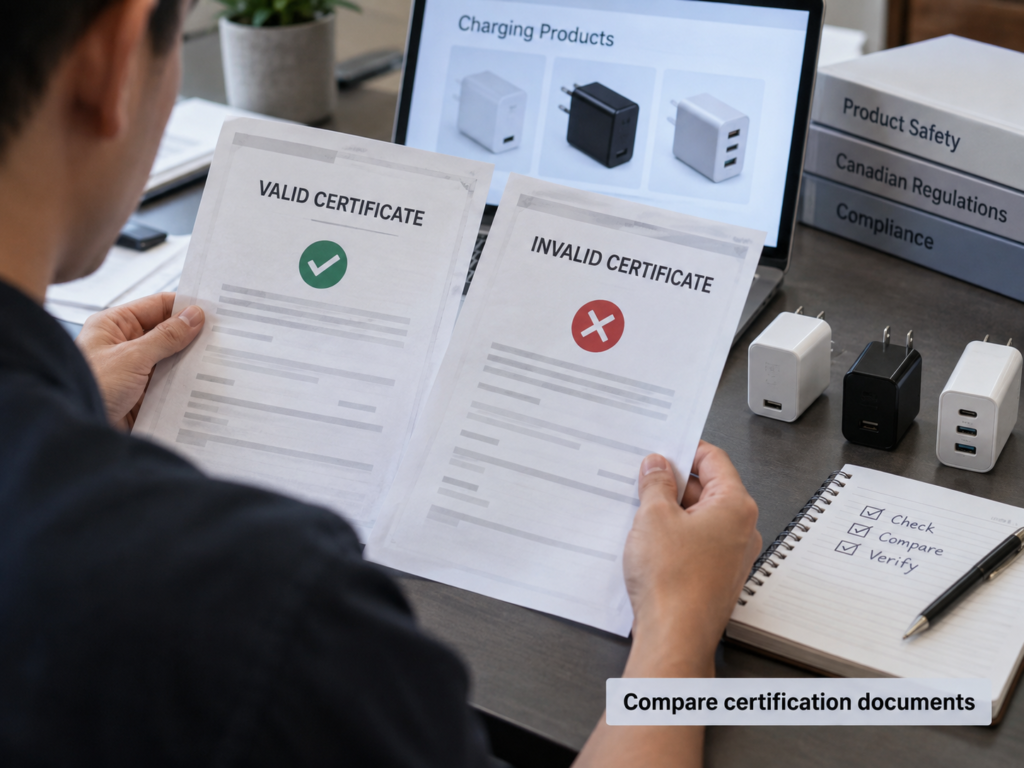
Many sellers encounter problems not because they did not do compliance, but because they got fake or mismatched certificates, which are found to be invalid when inspected. We have compiled two sets of verification steps and rules for invalidation judgment.
ISED Compliance Verification Steps
- First step: Check the physical label: Check whether the model, version, and parameters on the product itself, packaging, and manual are consistent with the product you actually sell. Don’t just trust the publicity on e-commerce pages; many merchants label randomly.
- Second step: Verify by category:
- For Category I products, find the IC number and HVIN (hardware version number) on the label, log in to ISED’s official REL database, enter the number to query, and check whether the model, photo, and parameters in the database are consistent with your product.
- For Category II SDoC products, since they are not uploaded to the official database, you should require the supplier to provide a complete test report, SDoC conformity declaration, and relevant information of the responsible party, and keep them for inspection.
Electrical Safety Approval Verification Steps
- First step: Check the physical label: Confirm that the product has an official safety certification mark or field evaluation approval label recognized by the AHJ of the place of sale and applicable to the complete end product.
- Second step: Multi-dimensional verification:
- For publicly queryable bodies such as CSA and UL, directly log in to their official certification directories, query by the control number, serial number, file number or model provided by the mark scheme, and check whether the coverage includes your product model and parameters.
- For bodies that do not offer public query, require the supplier to provide valid certificates and official authorization documents.
- Finally, be sure to confirm that this certification mark or approval label is on the AHJ recognition list of the province where you want to sell, and that the mark category is applicable to the complete end product, not a component recognition mark only for use in complete devices.
What Situations Directly Count as Invalid Verification?
- Model/version mismatch: The model and version on the compliance document are different from the product you actually sell, even if they are of the same series, it will not be accepted.
- Mark or label cannot be verified: If the mark or label is blurry, the issuing body is unknown, the mark category is not applicable to the complete end product, or its coverage cannot be confirmed, the supplier must provide model-level official certification, otherwise it is not valid.
- Lack of necessary documents: If complete test reports, certificates or declarations cannot be provided and compliance cannot be confirmed, materials must be supplemented.
List of Required Delivery Documents for Compliance
When asking suppliers for compliance documents, request them against this list to avoid missing items:
Product model/version list, BOM and key component list, circuit schematic (if required), PCB layout drawing (if required), label draft; if applicable, English and French user manuals, notices and safety warnings required by ISED; complete test reports, compliance certification documents (ISED SDoC/certification certificate, electrical safety certification certificate), change records and compliance assessment documents.
Radio equipment should meet the bilingual (English and French) manual requirements of RSS-Gen; for other products, whether bilingual manuals or specific language content are required should also be confirmed according to applicable regulations, certification standards, and local language rules of the place of sale.
Ongoing Compliance and Pitfall Avoidance Guide
Many people think that compliance is a “one-and-done” thing, and they don’t care after getting a certificate once. In fact, there are pitfalls in subsequent model changes, certificate transfer, and set sales. We have compiled the most common problems and pitfall avoidance methods.
If the product is redesigned, can the previous compliance documents still be used?
First, there is a general principle: only replacing non-technical content such as packaging that does not change any regulatory requirement information, certification marks, model or version identifiers, installation and use conditions, or safety warnings usually does not require re-testing; however, any change to labels, packaging, or manuals should first undergo a documented compliance assessment, and confirmation from the certificate holder, certification body, or responsible party under the ISED path should be obtained when necessary.
But if the core components are changed, it depends on the situation:
- ISED side: For Category I products, if the wireless module, antenna, key circuit are replaced, or the firmware update affects radio frequency performance, ISED certification needs to be resubmitted. For Category II SDoC products, if components that affect compliance are changed, re-testing is required and SDoC documents must be updated. In addition, if the standard version is updated, it is also necessary to evaluate whether re-compliance is required according to ISED’s transition requirements.
- Electrical safety side: If safety materials, key circuits, input and output parameters, or product structure are changed, they must be submitted to the original certification body for evaluation to see whether the old certificate can still be used or supplementary testing is required. In addition, there is no unified fixed validity period for safety certification; the specific ongoing validity depends on the subsequent supervision and change assessment of the certification or evaluation body, not just the number of years written on the certificate.
Three Most Frequent Pitfall Avoidance Judgments
These three are the most common pitfalls for beginners, so be sure to remember them:
- US certification cannot directly replace Canadian compliance: Many people think FCC is ISED and UL is cUL, which is wrong. There must be Canada-specific compliance marks and numbers; US FCC ID and UL marks are invalid in Canada, even if issued by the same body.
- “Meeting standards” is not equal to “formal compliance”: Don’t trust suppliers’ verbal claims that “we meet RSS-216 standards” or “meet CSA standards”; verbal statements are not proof. ISED’s SDoC must have complete test reports and declaration documents on file, and safety approval must have AHJ-recognized marks and official authorization, otherwise they are not valid.
- Don’t ignore the compliance requirements of the complete set of products: For example, if you sell a wireless charger, the matching charger has not obtained safety certification, or the high-power fast charging cable does not meet the requirements, the entire set is non-compliant; you cannot say that the wireless charger itself is compliant and everything is fine. Compliance of a single component does not equal compliance of the entire set of products; all matching key components must meet the corresponding requirements.
Judgment Logic for Several Special Situations
There are several common special situations that many people are unsure about, let’s explain them clearly together:
If a pre-certified wireless module is used, what else needs to be done for the complete device?
If the wireless module has obtained ISED certification, the testing of the wireless part can be simplified if conditions are met during the integration of the complete device. But note: the module’s certification only covers the radio frequency part and cannot replace the electrical safety compliance assessment of the complete device. Whether the complete device needs to obtain safety certification or whether exceptions apply should be determined according to the structure of the complete device, power supply method, product category, and rules of the local authority of the place of sale. In addition, if you change the antenna, housing, or installation position of the module, the original module certification may become invalid and requires re-evaluation.
What if the rules are different in each province?
Don’t take it for granted to follow the “minimum standard”; you must confirm the approval rules, exceptions, and enforcement standards of the local AHJ province by province. For example, Ontario requires all electrical equipment to obtain safety approval in principle, but it also has a list of exceptions, such as Class 2 output side equipment, portable battery equipment, etc., which may not require separate approval; for details, you need to check the local official rules.
Under what circumstances can compliance be exempted?
Radio equipment for research and development, testing, demonstration, or market evaluation purposes can be exempted from certification and labeling requirements within the scope specified in RSS-Gen. Whether personal carrying or temporary import can be exempted from specific import, use, energy efficiency, or provincial safety requirements should be confirmed according to relevant regulations and rules of the competent authorities respectively; non-sales or temporary import status cannot be regarded as automatic exemption from all compliance obligations.
What should be noted about series/family certificates?
Multiple models of the same series can share one certificate or declaration, but they must be within the scope of models and versions clearly listed on the certificate. Many suppliers will say “this is our series certificate, covering all models”, don’t believe it; be sure to check whether the specific model and version are on the list – even if the appearance is exactly the same, as long as the internal circuit, power, or wireless module is different, it may not be within the coverage.
What are the consequences of non-compliance?
If ISED requirements are violated, they will be handled in accordance with federal regulations such as the Radio Act; if electrical safety requirements are violated, they will be handled in accordance with the electrical safety or product safety regulations of the selling province. Common penalty measures include customs detention of goods, sales ban, product recall, etc. The specific severity shall be subject to the judgment of the law enforcement agency.
Summary
So far, the differences, judgment methods, verification, and pitfall avoidance of the two systems have all been explained. Finally, we have extracted three core conclusions and three actionable methods that can be directly implemented:
Core Conclusions Quick Recap
- ISED is a federal-level wireless/electromagnetic compatibility compliance requirement, and provincial safety approval is an electrical safety requirement to prevent electric shock and fire. The two are completely independent and cannot replace each other.
- Not all wireless chargers require official certification. The compliance mode must be determined according to the Type 1, Type 2, and Type 3 technical conditions of RSS-216, and cannot be simply judged as “low risk”.
- All compliance requirements must be finally determined in combination with product functions, applicable standards, and AHJ rules of the selling province or territory; there is no absolute conclusion divorced from product conditions.
Actionable Implementation Methods
- Before product selection/procurement: Use the 3-step quick judgment method + typical product decision matrix to confirm in advance which compliance items the product needs to meet, so as to avoid pitfalls later.
- After receiving samples: First check the physical label of the product, then check the official database or request supplier documents according to the corresponding verification path to confirm that the certificate is genuine and valid and the model matches.
- When the product is redesigned: The change assessment process must be followed. Whether it is ISED or safety certification, old compliance documents cannot be directly used to avoid invalidation.