
Sellers of charging products targeting the South African market often encounter questions about NRCS certification: some say all electronic products require it, some say a CB report can be used directly, and others say car chargers are completely exempt because they are low-voltage. These statements are half-true and half-false, which can easily lead new sellers to make mistakes. At best, goods are detained at customs; at worst, they face fines or even a ban on entering the South African market. In this article, we will explain the applicable products, corresponding standards, and boundary rules of South Africa’s NRCS certification from basic entry-level knowledge to practical judgment. Whether you are a new seller just entering the South African market or an operator looking to clarify compliance boundaries, you will find useful information here.
Basic Knowledge of NRCS Certification (Must-Know for Beginners)
Core Roles and Compliance Credentials
First of all, it is important to clarify that the full name of NRCS is the National Regulator for Compulsory Specifications of South Africa. It is the official regulatory body responsible for mandatory product access in South Africa. Its core work is to approve certifications and conduct market spot checks, **and it does not conduct product testing itself** — this is the first point many people get wrong.
The official compliance certificate issued by NRCS is called LOA (Letter of Authority), which only needs to be applied for products included in the compulsory specifications. Within the scope of applicable compulsory specifications, products imported, sold, or placed on the South African market usually require a valid LOA; whether customs clearance or platforms conduct inspections is subject to the actual requirements of the competent authority, customs, and platforms. Charging products usually focus on electrical safety, that is, preventing risks such as electric shock and fire, but some products may also involve other mandatory requirements such as energy efficiency.
As long as a product falls within the mandatory scope, whether it is imported into South Africa for sale, produced and sold locally in South Africa, or listed on e-commerce platforms, a valid LOA is required. Specific regulatory requirements are subject to the actual verification of customs clearance and platforms.
Logical Relationship of Relevant Documents
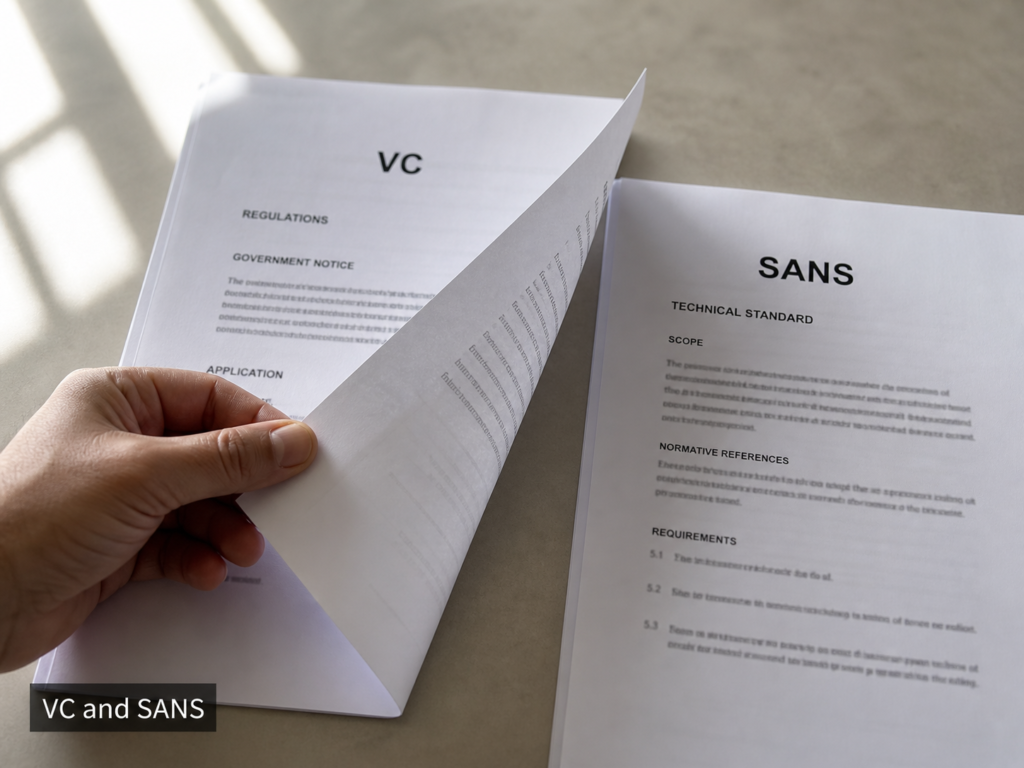
Many people are confused by abbreviations such as VC and SANS when they first come into contact with them. In fact, they form a logical chain from rules to implementation:
1. **VC (Compulsory Specification)**: It is a regulatory document officially issued by NRCS, equivalent to a “catalog of products requiring certification + basic requirements”, which clearly specifies which categories need certification and what standards they must meet.
2. **SANS (South African National Standard)**: It is the technical basis specified in the VC, equivalent to a “specific examination syllabus”. Most SANS standards are directly identical to or slightly modified from the internationally used IEC standards, so there is no need to develop a completely new set.
3. **Test Report**: It is a qualification certificate issued by a testing institution that meets NRCS requirements after testing according to SANS standards, equivalent to “your exam transcript”.
4. **LOA**: It is a certificate issued by NRCS after reviewing your test report and other materials and confirming that the product meets the requirements, equivalent to an “official access pass”.
In short: VC defines who needs to take the exam, SANS determines what to test, testing institutions issue results, and NRCS issues compliance certificates.
Boundaries of Easily Confused Institutions
In addition to NRCS, there are several institutions that are often mentioned together. Their boundaries must be clarified, otherwise it is easy to miss required certifications or spend unnecessary money:
• **SABS (South African Bureau of Standards)**: SABS is an independent statutory standards and conformity assessment body in South Africa. Laboratory reports within its corresponding accreditation scope can be used as LOA application materials if they meet NRCS requirements and are accepted by NRCS; the SABS voluntary certification mark cannot replace the LOA issued by NRCS.
• **ICASA (Independent Communications Authority of South Africa)**: It is the institution responsible for radio transmission. If your charging product has wireless communication functions such as Wi-Fi, Bluetooth, or cellular network, in addition to NRCS safety certification, it must also meet ICASA requirements; you cannot only complete NRCS certification.
• **Energy Efficiency Certification**: Some products such as external power supplies may also be subject to South African mandatory energy efficiency specifications, such as VC 9006; this is different from electrical safety requirements, but corresponding compliance documents may still need to be obtained in accordance with relevant NRCS procedures.
Clarification of High-Risk Misconceptions for Beginners
People who are new to NRCS are most likely to have three misconceptions, which are directly clarified here:
1. **”NRCS is a testing institution, just go to NRCS for testing”**: Wrong. NRCS is only responsible for approval and supervision. Testing must be done by a third-party institution that meets its requirements; it does not accept testing business itself.
2. **”Having a test report equals having NRCS certification”**: Wrong. A test report is only one of the materials for applying for an LOA. Only after obtaining the LOA issued by NRCS can you be considered truly compliant with South Africa’s mandatory access requirements.
3. **”All electronic products require NRCS certification”**: Wrong. Only products explicitly covered in the VC list require certification; products not on the list do not need it, so don’t waste money.
Six-Step Judgment Method for Mandatory Scope of Charging Products (Core Tool)
After clarifying the basic concepts, what everyone is most concerned about is definitely: does the charging product I sell need NRCS certification? Don’t guess. Follow the six steps below in order to get a relatively accurate preliminary judgment, and then confirm with the official if there is any doubt.
Six-Step Judgment Logic (Execute in Order)
These six steps have a sequential order, do not skip them:
**Step 1: Clarify the specific product category**
First, clarify the specific type of product, don’t just say “charger” or “data cable” — is it wall-plugged or in-car? Is it a power strip with USB ports or a pure adapter? Is it for mobile phones or battery packs? Requirements for different categories are completely different. The more vague the category, the easier it is to make a wrong judgment.
**Step 2: Check the power supply/circuit situation**
Check whether the product is connected to South Africa’s mains electricity (230V) and whether it has active electronic components (such as fast charging protocol chips, E-Marker chips, control circuits, etc.). This step is only for reference and not the only judgment criterion — for example, products connected to mains electricity are most likely within the scope, but low-voltage car chargers are not necessarily exempt, so you cannot draw a conclusion based solely on this step.
**Step 3: Confirm the sales/entry form**
Is the product imported in bulk for sale to South African consumers, or for personal use? Is it produced and sold locally, or a sample for temporary exhibition? Bulk sales or imports targeting consumers are conventional scenarios under mandatory control; special situations such as personal use and samples may be subject to special procedures, but they are not automatically exempt.
**Step 4: Check the corresponding VC clauses**
This is the most core step: check the VC list issued by NRCS to see if your product category is explicitly covered. The first three steps are auxiliary screening; whether certification is required ultimately depends on the explicit provisions of the VC.
**Step 5: Check special scenarios**
If your product is in non-sales scenarios such as personal use, temporary exhibition samples, or transit transshipment, there may be special exemption or import procedures, but this does not constitute automatic exemption. You must confirm with NRCS or relevant competent authorities and obtain the required approval before import, and at the same time check requirements such as quantity, purpose certificate, and import documents. It is not allowed to sell or convert to commercial use without approval.
**Step 6: Official confirmation**
If you are still unsure after completing the first five steps, for example, if the product is a relatively new category, or the description in the VC is relatively vague, do not make a decision on your own. Directly check the latest list on the NRCS official website, or find an NRCS-recognized institution for pre-assessment. The official reply shall prevail to avoid pitfalls.
Charging Products with High Probability of Being Subject to Mandatory Certification
For your quick reference, we have sorted out several types of charging products that have a high probability of falling within the mandatory scope. Note that this is only for reference, and the VC shall prevail in the end:
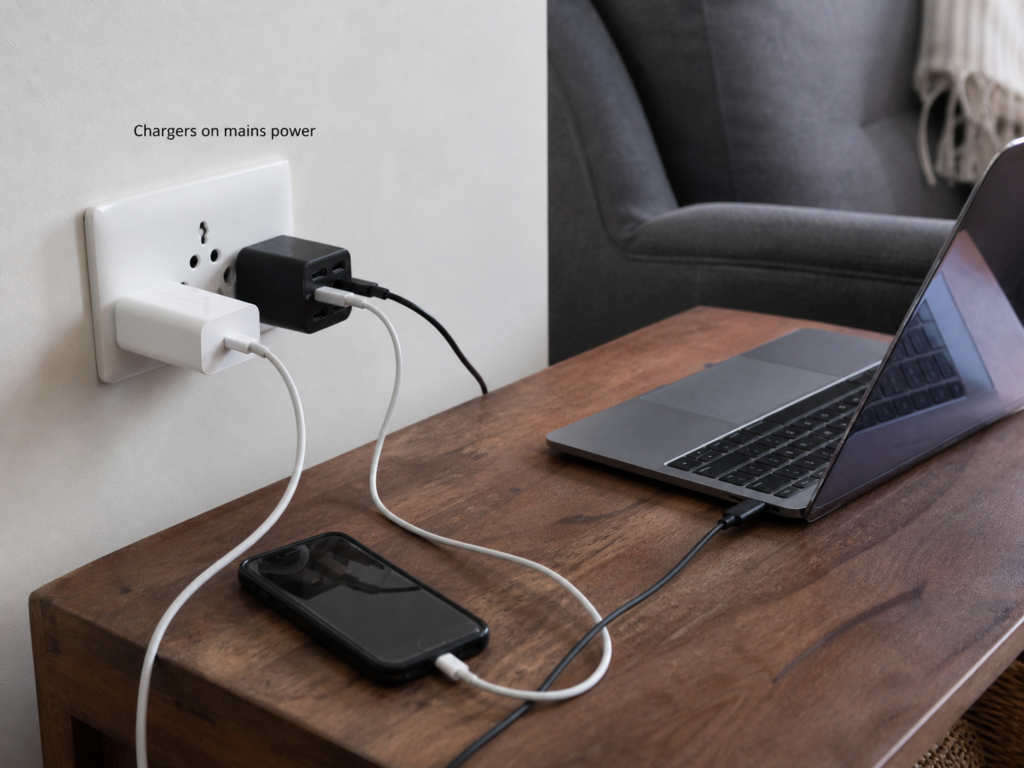
• **Chargers/power adapters connected to South African mains electricity**: Including wall-plugged, desktop, and multi-port USB models. As long as they are connected to 230V mains to power devices such as mobile phones and laptops, it is usually necessary to focus on checking the corresponding VC; if they are low-voltage input, such as only 5V input, VC requirements need to be checked separately.
• **Plug/socket assemblies with charging function**: For example, South African power strips with USB ports and travel adapters with charging function. Because they have active charging circuits, they are highly likely to require certification; if it is a purely physical conversion plug with no electronic components and only converts the shape of the pins, it needs to be checked separately.
• **Wireless charging pads/bases connected to mains electricity**: Whether they fall within the NRCS mandatory scope still needs to be checked against the specific product and VC first; if they have wireless communication functions, such as Bluetooth and Wi-Fi, ICASA requirements also need to be checked additionally.
• **Independent battery chargers**: For example, desktop chargers for lithium battery packs and electric vehicle batteries. These are specialized battery chargers, and the applicable standards are different from ordinary mobile phone chargers; if they are external power supplies supporting information equipment, other standards may apply, which need to be checked separately.
• **Charging/data cables**: Whether USB-C cables fall within the NRCS mandatory scope should be judged based on their product definition, rated input/output, whether they have power conversion or other controlled functions, and the corresponding VC clauses. It cannot be presumed that an LOA is required just because it contains an E-Marker; whether a pure cable is controlled cannot be judged solely by whether it has a chip.
• **In-car low-voltage chargers**: That is, USB chargers plugged into the 12V/24V cigarette lighter of a car. Many people think that low-voltage products do not require certification, but in fact, they are not automatically exempt, and the scope requirements of the corresponding VC still need to be checked.
Applicable Special Procedures/Non-Mandatory Scenarios
There are several types of scenarios where special procedures may apply, but note that **they are not automatic exemptions** and must meet corresponding conditions:
• **Items for non-sales purposes**: Personal use items, temporary exhibition samples, and transit transshipment goods may have special exemption or import procedures, but you must confirm with NRCS or relevant competent authorities and obtain the required approval before import, meet requirements such as purpose, quantity, and declaration. It is not allowed to sell or convert to commercial use without approval.
• **Purely passive charging/data cables**: Ordinary cables without any electronic components, only used for conducting electricity or transmitting data, such as ordinary USB-A to C cables without E-Marker. Whether they are within the mandatory scope when sold separately shall still be subject to the current VC and product definition, and cannot be deemed exempt on your own just because “there is no chip”. If they are supplied with a charger, it is also necessary to check whether they are explicitly covered by the relevant LOA.
• **Products explicitly excluded by the official**: NRCS updates the VC list and announcements, and some products may be explicitly excluded from the mandatory scope. Such cases shall be subject to the latest official announcements.
Applicable Standard System for Charging Products
After confirming that the product requires NRCS certification, the next step is to know what standards it must meet. Many people directly apply CE and CB standards, but South African standards have their own rules and cannot be applied arbitrarily.
Basic Rules for Standard Adoption
First, remember several basic principles:
First, the technical basis for mandatory certification is usually the **SANS standards explicitly specified in the VC document**, not any IEC standard you find randomly.
Second, most SANS standards are identical to or modified from international IEC standards, so if you already have an IEC or CB report, you may only need to make up for South Africa’s national difference tests, without full retesting. But the specific situation depends on the standard version, report format, and audit requirements specified in the VC.
Third, the LOA has a validity period and needs to be renewed upon expiration; if the corresponding SANS standard is updated, it shall be implemented in accordance with the announcement issued by NRCS. Whether there is a transition arrangement and how to handle it shall be subject to the official notice. Do not assume that there is a fixed transition period.
Classification of Common Applicable Standards
The commonly used SANS standards for charging products are mainly divided into three categories. We have compiled a comparison table for your quick reference. The final applicability shall be subject to the specification of the VC:
| Standard Category | Standard Number | Applicable Product Scope |
| Safety | SANS IEC 62368-1 | Applicable to products explicitly specified by VC and belonging to audio-visual, information and communication technology equipment or their related power supplies; specific external power supply and charger standards must be confirmed according to the corresponding VC, product category, and current SANS version, and cannot be classified into 62368-1 solely based on “having active components” |
| Safety | SANS 60335-2-29 | Specialized independent battery chargers; whether it is specifically applicable still needs to be confirmed in combination with product use, structure, and VC requirements |
| Plug/Connector | SANS 164 series | Products with South African plugs or sockets need to be confirmed according to the corresponding SANS 164 part; there are different systems such as Type M and Type N in the South African market, and it cannot be generally stated that there are only or mainly large three-pin cylindrical plugs |
| Interface/Performance | SANS IEC 62680 series | Reference for USB/USB-C interfaces and related technical specifications, **cannot replace safety standards or LOA** |
It is particularly reminded here that interface performance standards are only for reference. Mandatory requirements still depend on the safety and other technical standards specified by the corresponding VC. Do not think that passing USB-IF certification means you don’t need NRCS certification; the two are different compliance matters.
Usage Rules for External Reports/Certifications and LOA
Many sellers already have CB, CE, and SABS reports. Can these reports be used to apply for LOA? Let’s explain them one by one:
• **CB Report**: If the testing scope of the CB report covers your product, the issuing institution and report scope meet the requirements, and it includes or can supplement South African national difference tests, it may be submitted as LOA application material, but there is no guarantee that NRCS will directly approve it. The final result depends on the audit.
• **IEC or CB Report**: Whether it can be used for LOA application depends on the accreditation qualification and scope of the issuing institution, the standard version corresponding to the report, South African national differences, and NRCS audit requirements. Reports cannot replace LOA, but qualified IEC/CB reports may be used as application materials.
• **CE Certification/Report**: This is the EU access requirement, which is a separate system from South Africa’s NRCS and cannot replace LOA. Whether its technical data can be used as audit reference depends on the specific report content and NRCS requirements.
• **SABS Testing/Certification**: Whether the report issued by SABS can be used for LOA application depends on the laboratory’s accreditation scope, report standards, national differences, and whether NRCS accepts it. The SABS voluntary certification mark cannot replace LOA.
Regulatory Divergence for Ordinary and Wireless-Enabled Products
More and more charging products now have wireless functions. Special attention should be paid to the regulatory divergence here, and do not miss required certifications:
• **Only with wireless charging function**: Wireless power supply devices without communication functions usually do not belong to communication type approval devices because of Qi power supply itself, but it should still be confirmed whether they are applicable according to the working frequency band, device functions, and current ICASA requirements. Whether NRCS requires LOA shall be judged according to the specific product and VC scope, and cannot be concluded solely based on connection to mains electricity.
• **With wireless communication function**: For example, smart charging bases with Wi-Fi, wireless charging earphone cases with Bluetooth. As long as there is a wireless transmission function, in addition to possible NRCS product safety requirements, ICASA’s radio type approval requirements must also be checked additionally. Neither matter can be omitted.
• **Products without wireless function**: For ordinary products without wireless functions such as chargers and data cables, electromagnetic compatibility (EMC) requirements are implemented in accordance with the clauses of the corresponding VC, and are not under the unified control of ICASA, so there is no need to contact ICASA separately.
Boundary Scenarios and Product Change Judgment Rules (Intermediate Level)
The previous content is about conventional situations. In actual operation, you will encounter many boundary scenarios, such as whether free gifts require certification, and whether product changes require re-certification. These are advanced judgment rules, suitable for sellers who already have basic knowledge.
Boundary Judgment for Sales/Entry Scenarios
First is the boundary between sales and entry. It is necessary to clarify which must have LOA and which can go through special procedures:
• **Situations where LOA must be focused on checking**: Bulk import into South Africa for sale, local production and sale in South Africa, listing on local e-commerce platforms, and bulk direct mail from cross-border e-commerce to South African consumers. These are all sales behaviors targeting consumers. As long as the product falls within the scope of applicable compulsory specifications, a valid LOA should be obtained.
• **Situations where special procedures may apply**: Products brought into the country for personal use, samples for temporary exhibitions, and goods in transit transshipment may have special exemption or import procedures, but you must confirm with NRCS or relevant competent authorities and obtain the required approval before import, and they must never be used for sale or converted to commercial use.
• **Special note**: Samples and free gifts distributed to consumers cannot be deemed as not requiring compliance just because they are “free of charge”. As long as the product falls within the mandatory scope, it should be checked whether it is covered by an applicable LOA.
Judgment Rules for Supporting/Combined Sales
Many sellers sell chargers and data cables as a set, or make kits. This situation needs to be judged according to the actual composition of the product:
• **Accessories given free with the main product**: Accessories, kits, and combined products must be confirmed item by item according to their actual product composition and applicable VC. The LOA of the main product does not automatically cover another independently sold or independently controlled accessory; it can be implemented under that LOA only if the accessory, model, and sales form are clearly listed in the LOA document, and NRCS accepts the coverage method.
• **Accessories sold in separate packaging/priced separately**: For example, separately sold data cables and separately priced chargers cannot be automatically covered by the certification of the main product. If the accessory falls within the scope of compulsory specifications, the LOA requirements should be checked according to its own product category.
• **Multiple charging products sold as a set**: For example, a set includes a charger, a data cable, and a wireless charging pad. You cannot assume on your own that a unified LOA can cover them, nor can you default to only handling one of them. You should confirm the coverage method and required documents with NRCS according to the actual sales form of each product and the set.
• **Multi-functional combined products**: For example, a power strip with USB ports is both a socket and a charger, which requires checking the VC requirements and standards of all relevant categories at the same time, and cannot only comply with one of them.
Product Change and Model Family Management Rules
After the product is certified, changes are inevitable. Not all changes require retesting, but not all changes can be decided on your own:
• **Changes requiring re-evaluation/application**: If the charging power, output protocol are changed, key safety components such as transformers and capacitors are replaced, the plug type is changed, or the housing and heat dissipation structure are changed, these may affect safety performance. They should be re-evaluated, and changes should be handled or LOA re-applied according to NRCS requirements.
• **Changes requiring confirmation with NRCS**: If only the brand/trademark, applicant/importer, model identification, or manufacturer are changed, although these changes may not directly affect safety, they may still affect the LOA coverage or certificate information. You must confirm with NRCS whether change filing is required.
• **Conditions for model family merging**: Whether model families can be merged and the number of models that one LOA can cover must be confirmed according to NRCS’s current application guidelines, applicable VC, and case-by-case audit. Even if the circuit and plug are the same, if the model, brand, manufacturer, or rated parameters change, you cannot assume on your own that the LOA can be shared.
• **Changes in packaging and manuals**: Changes only involving packaging or non-safety promotional text that do not affect the product’s technical characteristics and mandatory labeling requirements usually do not require retesting, but should be confirmed and records kept in accordance with NRCS change rules. Changes involving rated parameters, warnings, labels, manufacturer, importer, or LOA information should be confirmed with NRCS first.
Common Misconceptions and Quick Judgment Tools
We have sorted out several pitfalls that people are most likely to encounter in actual operation, as well as quick judgment tools, to help you avoid detours.
Inventory of High-Risk Cognitive Misconceptions
These five misconceptions are the most likely to cause compliance risks, and must be avoided:
1. **”USB-C cables with E-Marker definitely require NRCS certification”**: Wrong. Whether certification is required should be judged in combination with product definition, rated input/output, whether there is power conversion or other controlled functions, and the coverage of the current VC. It is not that certification is required as long as there is an E-Marker.
2. **”Low-voltage input car chargers are automatically exempt”**: Wrong. Although car chargers are 12V/24V low-voltage, they are not automatically exempt, and the scope requirements of the corresponding VC still need to be checked.
3. **”CE/CB/SABS reports can directly replace LOA”**: Wrong. Reports that meet the requirements can only be used as materials for applying for LOA. Ultimately, you must obtain the LOA issued by NRCS to be considered compliant, and reports cannot directly replace it.
4. **”The original LOA becomes invalid immediately after the standard is updated”**: Wrong. The validity of the original LOA depends on the validity period of the certificate and the transition arrangement issued by NRCS. It does not become invalid immediately as soon as the standard is updated.
5. **”Free accessories do not require certification”**: Wrong. Whether accessories can be covered by the main product’s LOA depends on whether the accessory, model, and sales form are clearly listed in the LOA document, and whether NRCS accepts this coverage method. It cannot be deemed that compliance is not required just because they are free gifts.
Quick Checklist for NRCS Necessity
If you want to quickly make a preliminary judgment on whether a product requires NRCS certification, you can check the following list:
□ The specific product category has been clarified (not vague “charger” or “data cable”)
□ It has been confirmed whether the product has mains input and whether it has active electronic components
□ It has been confirmed whether the product is sold/imported in bulk for the South African market
□ It has been checked whether the corresponding VC covers this type of product
□ The declaration requirements for special scenarios have been excluded or confirmed
□ When in doubt, pre-assessment has been conducted through official or recognized institutions
Quick Standard Matching Reference
We have also compiled reference judgment methods for common charging products. As the saying goes, the VC specification shall prevail in the end, and this is only for quick reference:
| Product Type | Reference Judgment Method |
| Wall-plugged USB/USB-C consumer chargers | First confirm whether it falls under the current VC, then evaluate according to the power safety standards and plug requirements specified by the VC; SANS IEC 62368-1 cannot be directly specified solely based on the product name |
| Independent battery chargers | Check the product use, structure, and charger safety standards specified by the VC, for example, evaluate SANS 60335-2-29 when applicable |
| Separately sold USB-C fast charging cables with active components | First confirm whether it falls under the controlled product definition of the current VC; if explicitly covered by the VC, then evaluate according to the safety, interface, and other standards specified by the VC. It cannot be presumed that an LOA is required just because it contains an E-Marker |
| South African plug power strips with USB ports | According to the actual composition of the combined product, check the socket, plug, USB power supply part, and relevant VC-specified standards respectively. SANS IEC 62368-1 cannot be directly applied |
| Wireless charging pads without communication function connected to mains electricity | First confirm whether it falls under the current VC, then evaluate according to the power supply, wireless power supply, and plug standards specified by the VC; whether it involves ICASA shall be confirmed according to the working frequency band, device functions, and current requirements |
Official Inquiry Channels and Methods
All judgments shall ultimately be subject to official information. Here are two of the most authoritative inquiry directions:
1. **NRCS official website mandatory list entry**: Check whether your product falls within the mandatory scope covered by the VC, and the corresponding application requirements.
2. **NRCS official website standards/announcements entry**: Check the current valid standard version, transition arrangements for standard updates, and the latest policy adjustments.
If the product has wireless functions, you should also check ICASA’s current requirements on type approval and applicable exemptions. Be sure to note that the latest official announcements shall prevail. Do not rely on old cases from a few years ago or verbal statements from others, as policies may change.
LOA Application Basics and Compliance Responsibilities (Entry-Level Practice)
If it is confirmed that the product requires NRCS certification, what is the basic application process? What materials need to be prepared? Who is responsible? Let’s briefly talk about the entry-level practical key points.
Application Subject and Basic Process
First is the application subject: usually a local South African importer or registered entity is required to apply. If you are an overseas manufacturer or seller, you can apply through a local South African authorized agent.
The basic process is actually not complicated: first find a qualified testing institution to conduct product testing and obtain a qualified test report; then prepare all application materials and submit them to NRCS for review; if there are problems with the materials, NRCS will request corrections; after the corrections are approved, NRCS will issue the LOA.
As for the review cycle, there is no fixed general duration. It depends on the current processing speed of NRCS. Do not easily believe what some institutions say about “100% certification in X days”, which is inaccurate.
List of Regular Application Documents
The materials required for LOA application shall ultimately be subject to NRCS’s official guidelines. The regular materials to be prepared are roughly the following categories:
• **Product information**: Model, product photos, nameplate, rated parameters, plug specifications, circuit schematic diagram, list of key components.
• **Test documents**: Test reports that meet NRCS requirements, which may need to include test content of South African national differences.
• **Entity information**: South African registration information of the applicant/importer, manufacturer information, and if applying through an agent, authorization documents are also required.
• **Other materials**: Product labels, manuals, etc.
LOA Validity Period and Renewal Rules
The LOA is not valid for life. The certificate will be marked with a clear validity period, and a renewal application must be submitted in advance before expiration. When renewing, materials such as a product unchanged statement and the latest test report may be required, depending on NRCS’s requirements.
In addition, during the validity period of the LOA, if the product undergoes changes that affect safety, you must apply for changes or re-certification in time. You cannot sell products that have undergone substantial changes with the old certificate.
Market Supervision and Consequences of Violations
Finally, let’s talk about supervision and responsibility: NRCS’s supervision methods mainly include market spot checks and customs clearance verification, and platforms may also conduct qualification audits according to their own rules. Violations may result in products being detained, recalled, prohibited from sale or import, and may bear fines or other legal liabilities in accordance with applicable laws; platform delisting depends on platform rules. The specific consequences shall be subject to NRCS’s law enforcement decisions and applicable laws.
Real Case Judgment Practice (Intermediate Level)
After talking about so many rules, let’s practice with several common charging product cases to help you apply the knowledge. Note that the conclusions of all cases are only for reference, and the final judgment shall be subject to NRCS’s official judgment. The general confirmation channel is the VC list on the NRCS official website, or find a recognized institution for pre-assessment.
**Case 1: 65W USB-C wall-plugged charger (with South African plug, sold for South African e-commerce)**
Known facts: connected to 230V mains, it is a consumer charger for mobile phones and laptops, sold in separate packaging.
Points to be checked: whether the corresponding VC covers external power supply products, and the current safety standards and plug requirements that this product should adopt.
Reference standards: subject to the power safety standards specified by the VC and the corresponding parts of SANS 164. A certain standard cannot be directly determined solely based on the product name.
This type of product is a common category of mandatory compliance concern, and it should be focused on checking whether an LOA application is required.
**Case 2: 12V input in-car USB charger (cross-border e-commerce direct mail to South Africa)**
Known facts: only 12V in-car low-voltage input, no mains circuit, sold in bulk to South African consumers.
Points to be checked: whether the corresponding VC covers low-voltage in-car charging accessories.
Reference standards: need to check the low-voltage accessory standards specified by the VC (if any).
Many people think that low-voltage products of this type do not require certification, but in fact, the scope of the VC still needs to be checked, and a conclusion cannot be drawn directly.
**Case 3: USB-C PD fast charging cable with E-Marker (sold in separate packaging)**
Known facts: built-in E-Marker chip, supports 100W PD fast charging, sold in separate packaging and priced separately.
Points to be checked: whether it falls under the controlled product definition of the current VC, especially whether the product has power conversion or other controlled functions.
Reference standards: if explicitly covered by the VC, then evaluate according to the safety, interface, and other standards specified by the VC; it cannot be directly matched to SANS IEC 62368-1 or presumed to require LOA just because it contains E-Marker or is sold separately.
The judgment of this type of cable cannot only depend on whether it contains active electronic components, but should be based on product definition and VC clauses.
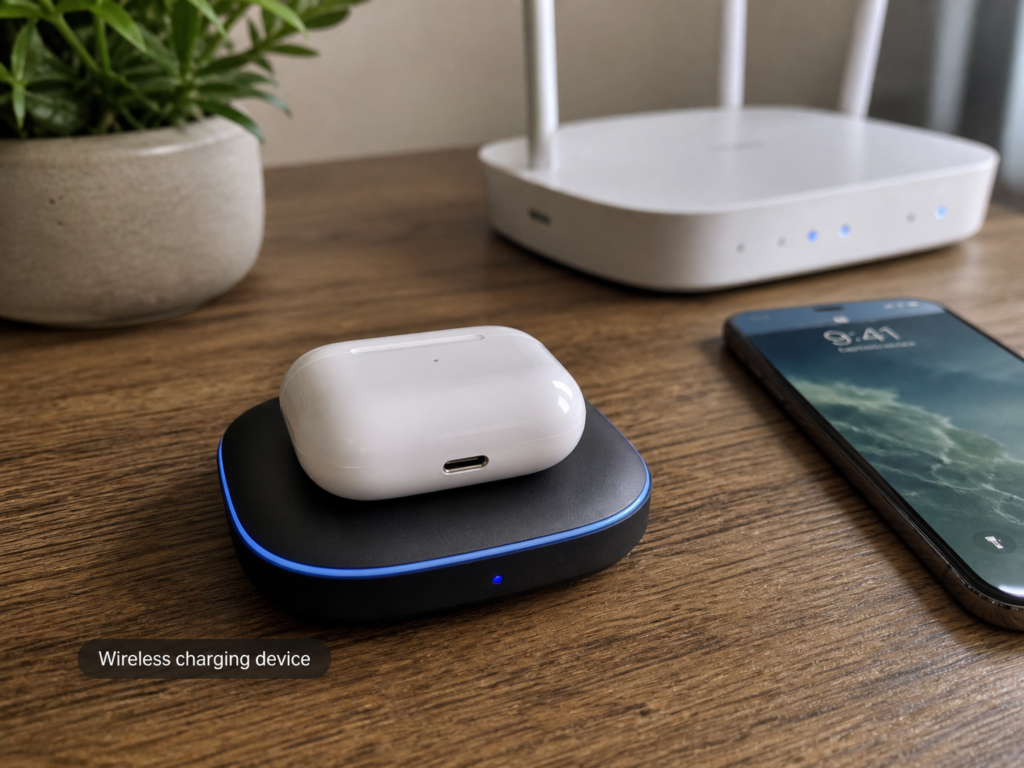
**Case 4: Qi wireless charging pad connected to mains electricity (no communication function, with South African plug)**
Known facts: connected to 230V mains, only has wireless charging function, no communication modules such as Bluetooth and Wi-Fi.
Points to be checked: whether the specific product falls under the current VC, whether it is a radio device managed by ICASA, and whether relevant exemption or type approval requirements apply.
Reference standards: evaluate according to the power supply, wireless power supply, plug, and other relevant standards specified by the VC. The specific parts of SANS 164 should also be confirmed according to the plug used by the product.
This type of product cannot be directly deemed to fall within the NRCS mandatory scope just because it is connected to mains electricity; products without communication functions usually do not belong to communication type approval devices because of Qi power supply itself, but the current ICASA requirements should still be checked.
**Case 5: Smart charging base with Wi-Fi function (connected to mains electricity, remote control available)**
Known facts: connected to 230V mains, built-in Wi-Fi communication module, can remotely control charging, sold in bulk.
Points to be checked: ① Whether it falls within the scope of NRCS VC; ② Whether ICASA radio type approval is required.
Reference standards: evaluate according to the product safety and plug standards specified by the VC, and check ICASA’s radio-related requirements.
This type of product may involve both NRCS and ICASA compliance matters. The specific scope and document requirements should be confirmed with the corresponding competent authorities respectively, and you cannot only complete one of them.
**Case 6: South African plug power strip with 2 USB ports (sold in local supermarkets)**
Known facts: connected to 230V mains, with 2 USB charging ports, it is a combined product, sold in local South African supermarkets.
Points to be checked: whether the specific product falls under the current VC, and what requirements apply to the socket, plug, and USB power supply parts respectively.
Reference standards: evaluate according to the socket, plug, power supply, and other relevant standards specified by the VC. The specific applicable parts of the SANS 164 series should also be confirmed according to the product structure. The general term “socket safety standard” cannot replace specific standards.
This type of multi-functional combined product needs to be checked item by item according to the actual product composition. SANS IEC 62368-1 cannot be directly determined to be applicable just because it is connected to mains electricity or has USB ports.
Core Summary
Finally, we condense the core knowledge points of the whole article for your memory:
First, NRCS is South Africa’s compulsory specification regulator, only responsible for approval and supervision, not testing; the compliance certificate is LOA. Charging products usually focus on electrical safety, and some products may also involve other mandatory requirements such as energy efficiency.
Second, the core of judging the mandatory scope is the VC list, which should be comprehensively judged in combination with product category, power supply method, and sales form. There is no absolute conclusion. Connection to mains electricity, containing chips, or being sold separately cannot replace the VC scope judgment alone. If in doubt, be sure to confirm with the official.
Third, the applicable standards are the SANS standards specified by the VC, most of which refer to IEC standards; whether IEC or CB reports can be used as application materials depends on the qualification of the issuing institution, report scope, standard version, South African national differences, and NRCS audit requirements. No report can replace LOA; products with wireless communication functions also need to check ICASA requirements additionally.
Fourth, accessories, kits, model families, and product changes cannot be handled according to fixed automatic rules, but should be subject to LOA documents, applicable VC, NRCS’s current guidelines, and case-by-case audits. Violations may result in products being detained, recalled, prohibited from sale or import, and may bear fines or other legal liabilities in accordance with applicable laws; platform delisting depends on platform rules.
After learning this content, you should have mastered the following abilities: you can use the six-step judgment method to quickly judge whether a charging product requires NRCS certification, you can initially match the corresponding reference standards, you can avoid high-risk cognitive misconceptions, you can query and verify the applicable scope and validity of standards through official channels, you can identify whether product changes require re-evaluation of compliance, and you also know the basic process and required materials for LOA application. If there are still uncertainties, be sure to refer to the latest announcements on the NRCS official website, or consult a formal recognized institution. Do not act based on experience.