
If you are in the business of charging cables, USB-C cables, chargers or power adapters for the Australian and UK markets, you will most likely be overwhelmed by certification costs: some agencies quote thousands, some quote tens of thousands; some say CE can no longer be used in the UK, some say RCM is the SAA certificate — the more you look it up, the more confused you get. This guide is specifically for charging products, covering everything from basic concepts to cost calculation and pitfall avoidance tips, to help you understand where to spend money and how to spend it without stepping into traps.
Let’s start with the core conclusion: there is no unified comparable pricing for RCM and UKCA. You must first determine the product’s compliance path before calculating the cost. All fixed total prices quoted without considering product configuration or compliance requirements are basically unreliable. This article mainly covers the Australian and UK GB (England/Scotland/Wales) markets; the compliance path for Northern Ireland (NI) will be listed separately. Price and policy information shall be marked with the actual verification date; if policies or quotation conditions change, re-verification shall be conducted.
Step 1: First Determine the Compliance Path for Your Product
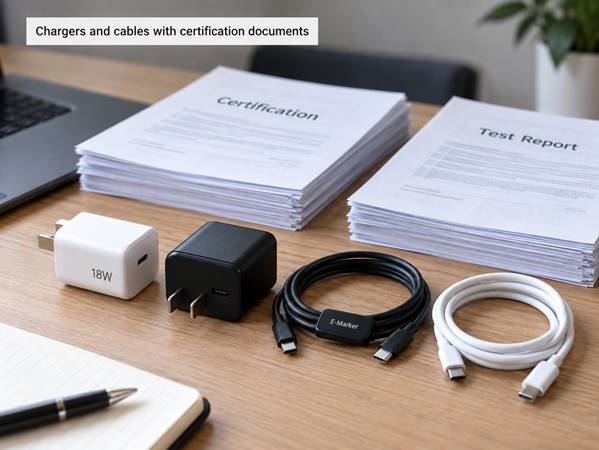
The core of cost differences is different compliance paths. Even for 18W mains chargers, the risk level must still be determined according to the specific definitions in the EESS Equipment Risk Level List; compliance evidence and service costs for different levels shall be calculated based on specific products. Similarly, for USB-C cables, those with E-Marker have many more test items than passive cables. Learning to determine the path by yourself can not only quickly estimate the budget, but also avoid being tricked by agencies into doing unnecessary projects.
How to Determine Australia RCM Compliance?
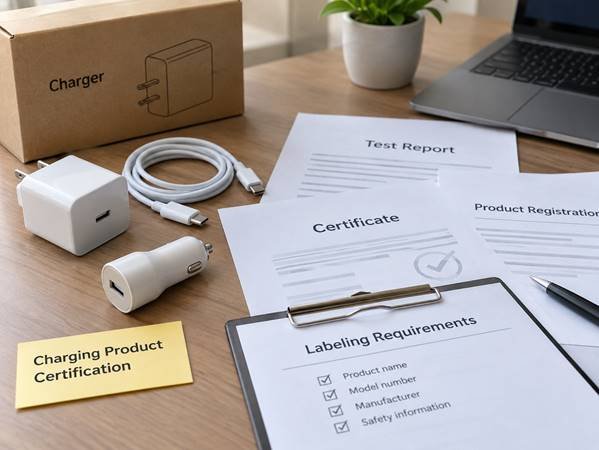
To determine the RCM path, you cannot only look at power; you must confirm it in combination with the official list. The core is four steps:
1. First check if it is within the regulatory scope: Combine product parameters and intended use. For example, purely low-voltage products not on Australia’s official regulatory list may not need to go through the RCM process.
2. Check the official EESS list to determine the safety level: Confirm which risk level the product falls under in EESS, or whether it is outside the EESS scope. Special note here: power is not the only basis for judging risk level. For example, some low-power mains-powered products may also be classified as Level 2.
3. Check ACMA rules: Confirm whether the product is subject to EMC, radio, or regulated cabling requirements. For example, verify whether the cable falls under customer cabling as defined by ACMA rules; ordinary USB-C charging/data cables do not automatically become regulated cables solely because of the USB-C interface.
4. List all required materials clearly: Based on the results of the first two steps, confirm the test reports/certificates to prepare, responsible supplier recordation, product registration, labeling requirements, etc.
The entire determination covers dimensions including product parameters, intended use, EESS list results, ACMA rule results, responsible entity, compliance evidence, etc. A conclusion cannot be drawn based on only one condition.
How to Determine UKCA/CE Compliance?
For determining UK compliance paths, there is a “three questions on regulatory boundaries” that is very suitable for beginners, to quickly rule out inapplicable rules first:
1. Is the mains input within the LVD voltage range? That is, 50-1000V AC and 75-1500V DC; only products within this range need to meet LVD safety requirements.
2. Is it an independent external power supply? If yes, it triggers ecodesign/energy efficiency requirements; passive charging cables and products without a power supply do not.
3. Does it have radio frequency transmission/reception functions? For example, a charger with Bluetooth needs to be checked whether it falls under the jurisdiction of RER.
A high-frequency question needs to be clarified here: GB currently does not have a universal USB-C port mandatory system identical to the EU RED common charger rule. Northern Ireland applies the relevant requirements in the EU RED for covered radio equipment; independent charging cables, independent chargers, and power adapters themselves are not such terminal radio equipment, and do not need additional certification for “mandatory USB-C”.
The specific determination process has five steps:
1. First confirm the sales location: Is it GB or NI? For NI, follow the CE/UKNI rules directly, no need to consider UKCA.
2. Use the “three questions on regulatory boundaries” to match applicable regulations: For example, ordinary passive USB-C cables, because their voltage is below the LVD range, may only need to meet RoHS and corresponding product safety requirements.
3. Choose the compliance mark: The GB market can directly use CE, or actively choose UKCA; both are legal.
4. Check the adoption of standards: Whether the manufacturer can complete the conformity assessment on its own shall be judged according to the procedures of each applicable regulation; full adoption of relevant designated standards usually helps to prove compliance, but “low risk” is not used as a legal classification.
5. Confirm the conformity assessment procedure: Most conventional charging products can have their conformity assessment completed by the manufacturer on its own, but this shall be subject to specific regulations. When third-party involvement is required for GB, use a UK Approved Body; if third-party involvement is required for NI, it shall be handled in accordance with the rules of EU Notified Body or UK Approved Body with UKNI marking.
There is also a key tip: even for products with radio frequency functions such as Bluetooth, as long as the designated radio standards are fully adopted, self-declaration may still be possible, and mandatory third-party certification is not necessarily required — many agencies will trick you into paying extra by claiming “radio frequency must be certified”, but in reality, it shall be judged according to the conformity assessment procedures of applicable regulations.
Overview of Compliance Paths for Charging Products
For your quick reference, we have compiled the core paths of common charging products into a table. The final result shall still be subject to the latest official lists and regulations:
| Product Type | Target Market | Typical Regulatory Attribution | Responsible Entity Requirements | Core Compliance Documents | Main Cost Items |
| Ordinary passive USB-C cable | Australia RCM/EESS (if applicable) | ACMA customer cabling rules (if applicable) + EESS (if applicable) | Responsible supplier registered in EESS (Australia requirement; New Zealand obligations shall be verified separately) | Cable test report, declaration of conformity | Testing fee, document fee, recordation fee (if required) |
| Ordinary passive USB-C cable | UK GB | Low risk, mostly subject to RoHS + general safety requirements | Manufacturer + UK importer (if manufacturer is not in the UK) | Test report, technical documentation, declaration of conformity | Testing fee, document fee, entity fee (if required) |
| Ordinary passive USB-C cable | Northern Ireland NI | Same as EU low-risk rules | Responsible economic operator in NI/EU | Test report, technical documentation, declaration of conformity | Testing fee, document fee, entity fee (if required) |
| 18W USB-C wall charger | Australia RCM/EESS (if applicable) | EESS risk level and ACMA EMC applicability shall be determined based on specific products | Responsible supplier registered in EESS (Australia requirement; New Zealand obligations shall be verified separately) | Safety + EMC test report, EESS registration, declaration | Testing fee, registration fee, recordation fee, document fee |
| 18W USB-C wall charger | UK GB | LVD + EMC + RoHS + Ecodesign | Manufacturer + UK importer (if manufacturer is not in the UK) | Safety + EMC + energy efficiency test report, technical documentation, declaration | Testing fee, document fee, entity fee (if required) |
| 18W USB-C wall charger | Northern Ireland NI | Same as corresponding EU regulations | Responsible economic operator in NI/EU | Safety + EMC + energy efficiency test report, technical documentation, declaration | Testing fee, document fee, entity fee (if required) |
Special Notes on RCM Certification Costs
For RCM quotations, in addition to general inquiry content, you need to confirm several additional exclusive items, otherwise it is easy to have missing items and extra charges.
Key Points for Inquiry and Determination of Typical Products
• Ordinary passive USB-C charging cable: Don’t just ask “how much does RCM cost” right away. You must first determine whether the product is within the EESS/ACMA regulatory scope through the applicability matrix, then check the corresponding cost items — not all USB-C cables require the same tests.
• 18W mains USB-C wall charger: First, confirm the EESS risk level. Different levels have very different compliance evidence requirements and very different costs. Evidence and registration requirements may vary for different EESS levels, and fees shall be compared based on the determination result and quotations.
5 Things You Must Additionally Ask About in RCM Inquiries
1. The determination result of the EESS risk level, and the corresponding compliance evidence requirements;
2. Service content and validity period of responsible supplier recordation;
3. Confirm whether the product is a device that must be registered in the EESS database, as well as the implementation requirements and registration status of the sales location;
4. ACMA compliance applicability determination, including the applicability of customer cabling, EMC, and radio rules;
5. Difference assessment requirements for Australian-standard plugs and power cords.
Scenario-based Comparison: Which is More Expensive, RCM or UKCA?
Many people will directly ask “which is more expensive, RCM or UKCA”. In fact, there is no absolute answer; it depends entirely on your product situation and existing evidence. We use a unified caliber (single model, basic product compliance, complete documentation, no rectification, excluding expediting/annual fees, only counting first-time direct costs) to compare three common scenarios:
Scenario A: Already Have Complete Traceable IEC/EN/CB Evidence
If you already have internationally accepted, traceable complete test reports such as CB reports, then whether you do RCM or UKCA, the testing cost may only require difference assessment, and the gap only lies in the number of difference items between Australian and British standards; document costs are similar, both need to be adjusted to compliance documents for the corresponding region; the difference in recordation/registration costs will be larger — if RCM requires EESS registration and responsible supplier recordation, there will be extra fees, while UKCA/CE will not have this fee if statutory recordation is not required; the logic of entity service costs is similar, both depend on whether you have a local compliance entity.
In terms of cycle, this situation usually takes 1-2 weeks (document adjustment + recordation, if required), and the gap is mainly in the duration of recordation review.
Core conclusion: The difference mainly comes from statutory recordation requirements, and there is no absolute higher or lower cost.
Scenario B: Only Hold Incomplete Regional Compliance Reports
For example, if you have a CE report and want to convert it to RCM, or have an RCM report and want to convert it to UKCA, the testing cost in this case depends on the difference between the existing report and the target market standards, and some items may need supplementary testing; document costs are similar, both need to re-produce technical documents for the corresponding region; recordation/registration and entity service costs are the same as Scenario A, depending on the requirements of the corresponding market.
The cycle is usually 2-4 weeks (difference assessment + supplementary testing + documentation + recordation, if required), and the gap depends on the number of supplementary test items.
Core conclusion: Cost and cycle depend on the standard coverage and traceability of existing reports, and there is no absolute higher or lower.
Scenario C: No Available Compliance Evidence and With Wireless Function
If it is a brand-new product with no reports at all, and also has radio frequency functions such as Bluetooth, it is usually necessary to assess radio, EMC and related safety requirements; whether EESS safety, LVD, energy efficiency, RF exposure or other requirements also apply shall be determined item by item based on the product’s input voltage, functions, frequency band, intended use and sales location. Document costs are similar, both require a full set of technical documents; recordation/registration and entity service costs are still the same as the first two scenarios.
The cycle is usually 4-6 weeks (full testing + documentation + recordation, if required), but in addition to recordation, the actual gap may also be mainly affected by the applicable test scope and standard differences.
Core conclusion: The cost and cycle of products with wireless functions cannot be judged solely by recordation requirements; the applicable test scope and product configuration are equally critical.
These Situations Will Change the Conclusion
The above comparison is not fixed; several variables will directly affect the results:
• Policy changes: If the UK adjusts its CE recognition policy in the future, UKCA costs will change accordingly;
• Multi-model bundling: The multi-model billing rules for the two types of certification are different and shall be judged based on specific quotations;
• Product functions: If the product falls into a high-risk category and requires third-party certification, the gap in cost and cycle will widen;
• Report traceability: Evidence lacking complete reports, sample correspondence or traceable data is usually difficult to be used as sufficient compliance evidence alone, and supplementary assessment or testing may be required. ISO/IEC 17025 accreditation can enhance the credibility of evidence, but whether it is acceptable shall be assessed item by item according to target market regulations, product level, report content and the issuing body’s capability.
Pitfall Avoidance Guide: Don’t Fall for These Cost and Cycle Misconceptions
There are many pitfalls in the certification industry. Many people spend money but get fake certificates, or delay their launch time, all because they fell for these common misconceptions.
Cost-related Misconceptions
• Only look at the total price without looking at the breakdown: Low-price quotations are likely to miss core items such as testing and recordation, with various subsequent extra charges and many hidden costs, resulting in higher total spending in the end.
• Thinking self-declaration is zero cost: Self-declaration is not just writing a declaration by yourself; it must be based on sufficient technical documentation, risk assessment and applicable conformity evidence; the form of required evidence shall be determined according to specific regulations. It also needs to meet requirements such as statutory recordation and entity information disclosure, which has fixed costs and cannot be zero cost.
• Confusion about validity period: It is necessary to distinguish three types of “validity periods”: First, the document retention period. The UK requires 10 years of retention, and Australia and New Zealand implement it in accordance with corresponding regulations; second, the ongoing compliance obligation. When changes in products, supply chains, etc. that may affect conformity occur, an impact assessment shall be conducted, and it is not that you can ignore it after 10 years of retention; third, the validity period of certificates/services. The validity period of third-party certificates depends on the body’s rules, and the validity period of recordation/agency services depends on the contract.
• Thinking regional reports can be directly used universally: Converting CE to RCM requires difference assessment, and converting to UKCA also requires adjusting documents and entity information; they cannot be directly reused for free.
Cycle-related Misconceptions
• Ultra-short cycle certification is unreliable: If the service provider claims that it can issue third-party certificates or compliance documents without any applicable assessment or evidence, you should be vigilant; whether the cycle is reasonable must be judged in combination with existing evidence, test scope, document work and recordation requirements.
• Only counting laboratory testing time: Many people only count testing time when calculating the cycle, ignoring links such as path determination, data assessment, recordation review, and rectification, which ultimately delays the launch time.
Exclusive Pitfall Avoidance for Charging Products
• Charging cables: Test items are determined according to structure, rated voltage, and target regulations; there is no universal “USB-C cable certification package”, so don’t think all cables have the same price.
• Chargers: False power labeling and non-compliant EMC are the most common reasons for rectification, and rectification costs account for a high proportion. Therefore, getting the product itself right before doing certification can save a lot of money.
• Labels and entity information: The position of labels, whether electronic labels can be used, and the disclosure requirements for entity information vary from market to market. They must follow the regulations, and should not be affixed casually.
4 Signs of Unreliable Low Prices
If you encounter a quotation that meets these four criteria, just pass it directly; it is most likely a pit:
1. Directly quotes a fixed total price without asking about your product’s power, functions, whether it has radio frequency, or whether it is connected to mains power;
2. Claims that one set of CE/RCM/UKCA certificates is globally applicable;
3. Does not specify the test standards, report holder, or whether statutory recordation/entity arrangement services are included;
4. Promises to issue certificates directly without testing.
How to Save Costs? Summary of Practical Tips
Compliance cost is not the lower the better, but there is no need to spend money unjustly. Mastering these methods can not only ensure compliance but also save a lot of money.
4-Step Method to Estimate Budget by Yourself
You don’t need to go to an agency; you can estimate a rough budget by yourself first:
1. List product information clearly: model, power, functions, target market, launch time;
2. Determine the compliance path according to the determination method mentioned earlier;
3. Evaluate the reusability of existing reports according to the level of evidence strength;
4. Reserve a 10%-20% buffer budget to deal with unexpected situations such as rectification and supplementary materials — don’t make the budget too tight, as the rectification probability for charging products is not low.
Cost-saving Tips for Single Certification
• For RCM: CB reports can be used as the basis for assessing Australian compliance evidence, but EESS/ACMA applicable requirements, standard differences, recordation and labeling obligations must still be checked; bundled applications for models of the same series and same circuit have lower average cost per model; prepare complete documentation and compliance evidence for key components in advance to avoid supplementary materials and additional assessment fees.
• For UKCA/CE: GB can continue to use the CE mark under applicable circumstances, or use UKCA; the costs of the two paths shall be compared based on existing evidence, document work and service quotations. For low-risk products, choose self-declaration, no need to spend money on third-party certification; agency prices shall be compared based on actual quotations with the same scope, same taxes and fees, and same delivery conditions.
Cost-saving Tips for Simultaneous Dual Certification
If you are targeting both Australian and UK markets, doing both certifications together can save a lot of money:
• Share CB test reports as the basis, and apply for compliance for both markets at the same time to reduce duplicate testing;
• Find the same agency with dual-market qualifications to handle it, which usually offers bundled discounts and also reduces communication costs;
• Consider Australian/British standard plugs and label positions at the product design stage to reduce the cost of later revisions.
3 Investments That Absolutely Cannot Be Saved
No matter how much you want to save money, these three items cannot be saved; saving them is planting a mine for yourself:
1. Statutory recordation, labeling, and economic operator information obligations (when applicable, not all products require paid recordation): Failure to complete them is non-compliance, and if found, you will be penalized, have goods detained, and be delisted.
2. Core safety, EMC and other applicable test evidence: Sufficient compliance evidence must be formed before placing on the market. For high-sales products, it is best to reserve a budget for spot checks and rectification.
3. Retention of complete technical documentation: Self-declaration without complete documents is non-compliance, and if you cannot produce them during regulatory spot checks, you will be heavily fined.
Frequently Asked Questions
How Much Does RCM Certification Cost?
There is no unified price. It is necessary to first confirm the compliance path such as the product’s EESS risk level and ACMA regulatory requirements. You can refer to the price sample template and RCM inquiry determination points, and find more than 3 agencies with the same qualifications to compare quotations under the same caliber.
How Much Does UKCA Certification Cost?
There is no unified price. It is necessary to first confirm the sales location (GB/NI), applicable regulations, and compliance mode (self-declaration/third-party certification). You can refer to the price sample template and UKCA/CE inquiry determination points, and compare quotations under the same caliber.
What is Needed for an Australian Charger to Get RCM?
It is necessary to follow the RCM compliance determination process, first confirm the EESS safety risk level, then confirm ACMA’s EMC and other requirements, and prepare materials such as corresponding test reports, responsible supplier recordation, product registration (if required), and compliance labels.
Should I Use CE or UKCA for Selling Chargers in the UK?
The GB market has long recognized CE. Using CE requires compliance with corresponding UK regulations, and you can also actively choose UKCA; the NI market applies the CE or CE+UKNI path, and UKCA cannot be used alone.
Do USB-C Charging Cables Need UKCA?
It needs to be judged through the three questions on regulatory boundaries. Ordinary passive USB-C cables are low-risk products. After meeting the corresponding regulatory requirements, they can be self-declared, and the CE or UKCA mark can be selected according to the sales location.
How Long is the RCM and UKCA Cycle?
You can refer to the general segmented cycle model, which ranges from 1-2 weeks to 4-6 weeks, depending on factors such as product type, existing report situation, whether rectification is required, and whether recordation is required.
Final Summary
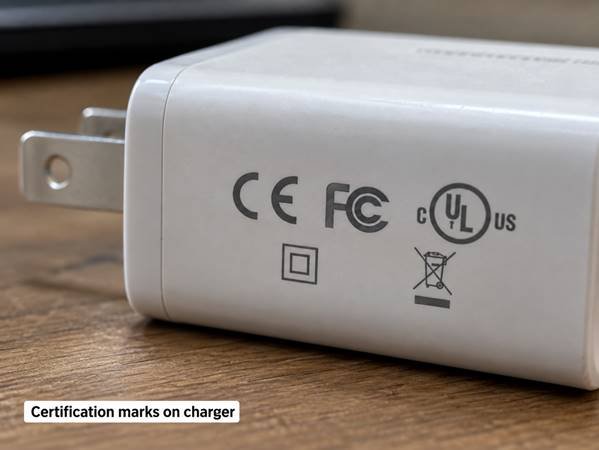
The cost of RCM and UKCA is never a “fixed price”. The core logic is: first determine the compliance path, then compare quotations under the same caliber, and finally choose the optimal solution based on your own situation. Don’t be greedy for cheap and find unreliable agencies, and don’t be tricked into doing unnecessary projects — compliance is the foundation of going overseas. Spending money wisely can both avoid risks and control costs. (A physical comparison picture of different compliance marks printed on the charger shell can be placed here.)