
Many new Amazon sellers encounter this problem when sourcing products: the factory says this charger has no certification, can we list it for sale first? Or they get a bunch of products printed with CE and FCC marks, thinking they can send them directly to FBA, only to have the inventory frozen right after warehousing. Can uncertified electronic products really be sold on Amazon? Today, we will take the most commonly sold charging products such as chargers, USB-C cables, and data cables as examples, and explain this matter thoroughly from basic judgment to practical pitfall avoidance.
Quick Conclusion: Whether It Can Be Sold Depends on 2 Core Premises
First, let’s give you the most straightforward conclusion: whether a product can be sold depends on two core premises. Not all uncertified products are absolutely prohibited from sale, and having documents provided by the factory does not necessarily mean compliance.
First premise: Check whether the product belongs to categories subject to “local regulations + mandatory Amazon category requirements”. If yes, it must not be listed without valid compliance documents; if it is a non-mandatory product, it can theoretically be listed, but you must bear the product safety responsibility yourself, and you must never falsely claim certification on the listing page. A special reminder for new sellers: successfully creating a listing does not equal compliance. Amazon’s compliance spot checks run through the entire process of listing, warehousing, and operation. Even a listing that has been selling for half a year may be required to submit supplementary materials due to spot checks.
Second premise: Compliance documents do not have to be obtained at your own expense. Documents provided by suppliers or factories are valid as long as they meet the requirements of the target site, cover all parameters of the product you sell, and you have the legal right to use them. But remember: the provision of documents by suppliers does not automatically exempt the seller from liability. The respective responsibilities of sellers, brand owners, manufacturers, importers, distributors, etc., depend on the regulations of the target market and the actual supply chain identity; sellers should also confirm whether they are simultaneously importers, brand owners, or other legally responsible entities. All requirements shall be subject to the latest rules in Amazon’s backend. Do not believe verbal promises from communities or third-party service providers.
Core Influencing Factors: Why Compliance Requirements Vary
You may ask: why do some chargers have more requirements and others fewer? The level of compliance requirements mainly depends on several core variables.
Most Core: Product Risk Level
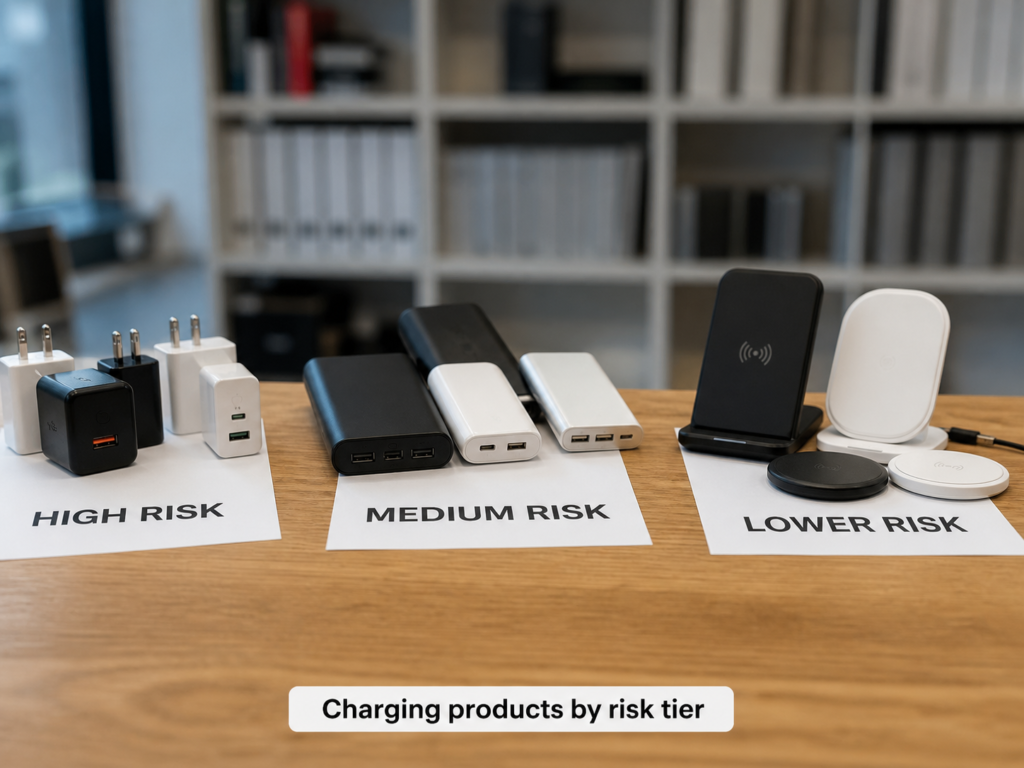
The higher the risk of a product, the more mandatory requirements there are. Let’s take common charging products as examples:
| Type of Charging Product | Risk Level | Characteristics of Compliance Requirements |
| Mains-powered chargers, power adapters | High | Have the most mandatory requirements across all sites, and are the focus of compliance spot checks |
| Active cables (USB-C cables with E-Marker chips, cables with conversion functions) | Medium | Requirements are matched according to specific functions; for example, cables with video conversion must comply with corresponding EMC requirements |
| Passive ordinary cables (chip-free charging cables, data cables) | Low | Most sites have no mandatory certification requirements |
| Charging products with wireless functions and lithium batteries (such as wireless chargers, power banks) | High/Medium | Need to additionally meet compliance requirements related to wireless, battery, and transportation |
Simply put, as long as the product involves mains power connection, has active circuits, comes with a battery, or has wireless functions, you should be more careful and prioritize confirming compliance requirements.
Regulatory Differences Across Sales Sites
The mandatory compliance catalogs of different countries and regions are different, and documents are not universally applicable. For example, if you have a US FCC certificate, you cannot use it directly to sell in the EU, and the EU CE mark cannot be used in Japan. Also note: the requirements of some Amazon categories may be stricter than local regulations. For example, some products are not subject to mandatory safety certification under local laws, but Amazon’s corresponding category requires a report issued by an NRTL. In this case, you must follow Amazon’s requirements, not just look at local laws.
Fulfillment Methods and Trigger Scenarios
Many people think that FBA has strict requirements, while FBM (fulfillment by merchant) does not require compliance. This is not true. Whether it is FBA or FBM, products cannot be exempted from applicable product safety and market access requirements due to different fulfillment methods; however, FBA also involves warehousing, storage, and platform audit rules, and FBM’s import and transportation arrangements may also change the roles of relevant entities, which need to be verified separately.
FBA compliance risks are usually triggered during the warehousing or sales stage. Once detected, inventory may be frozen, unable to be removed, or even destroyed, and you will also have to pay disposal fees. FBM risks may be triggered by consumer complaints, regulatory spot checks, etc., and the consequences may include product recalls, mandatory returns, and even consumer liability claims.
There are several high-risk trigger scenarios that are more likely to be inspected: hijacked listings (because you cannot confirm the compliance of the original listing), products with many safety complaints, and high-power multi-functional products (such as 100W multi-port chargers).
10-Second Quick Risk Assessment
Here is a simple judgment method: count against these dimensions: whether it connects to mains power, whether it has a lithium battery, whether it has wireless functions, whether it contains active chips, and how many sites you plan to sell on. The more risk items that apply, the more you should confirm compliance requirements before purchasing, instead of finding out that the products do not meet the requirements after they have been shipped.
4 Levels of Risk for Non-Compliant Listings (From Minor to Severe)
Some people may think: I’ll list it first and deal with it if I get caught. Let’s talk about the four levels of risk for non-compliant listings, so you can weigh the cost yourself.
Level 1: Listing Rejected at the Listing Stage
The most common situation is that the system review gets stuck when publishing the product, requiring you to submit compliance documents; or the category review fails, and the product cannot be launched at all. Also note: the fact that old listings of the same category can be sold does not mean that your new listing is exempt from review. Amazon’s requirements are dynamically updated. Previously listed products may not have been subject to the new rules, but newly listed products must meet the latest requirements.
Level 2: Listing Removal + Inventory Loss During the Operation Stage
Even if you successfully list the product, subsequent random spot checks, peer reports, and consumer complaints may trigger compliance reviews, leading to the direct removal of the listing. If it is FBA inventory, it will be frozen, unable to be removed, or even directly destroyed, and you will have to pay disposal fees. In addition, during cross-border transportation, customs may detain or return the products due to non-compliance, resulting in the loss of both money and goods.
Level 3: Account Stage, From Warning to Store Suspension
The severity of the penalty depends on the nature of the violation, evidence, and platform policies. Minor violations may result in a warning, or restrictions on functions such as advertising and brand registry; for serious or repeated violations, such as using forged documents or falsely promoting certification, it is very likely that the store will be directly suspended and even funds will be frozen. What’s more troublesome is that associated stores under the same entity may be affected jointly. If one store has an accident, the others will also suffer.
Level 4: Legal Stage, Regulatory Penalties + Civil Compensation
If detected by local regulatory authorities, such as the US CPSC (Consumer Product Safety Commission), you may face high fines. If the product causes a safety accident, such as a charger catching fire or electric shock, the seller must bear legal liability and civil compensation, which may amount to an astronomical figure. Many people also purchase product liability insurance, but if your product has no compliance documents, the insurance company may refuse to pay after an accident, and in the end you have to bear all losses yourself.
Supporting Checklists and File Retention
For the convenience of your practical operation, I have sorted out three practical checklists. You can save them and check against them every time you purchase or modify products.
Pre-Purchase Compliance Checklist
Completing these items can only reduce the risk of omission, and does not mean that statutory conformity assessment, registration, testing have been completed or Amazon review has been passed; for complex or high-risk products, sufficient time should be reserved to verify applicable regulations and documents:
• The target site and precise category have been confirmed
• The core product specifications (power/interface/whether with wireless/battery) have been clarified
• Amazon’s official compliance requirements have been verified
• The supplier’s compliance documents have been checked (coverage/legitimacy)
• The parameters and appearance of the physical product are consistent with those in the report
• Your own obligations as a responsible entity have been clarified
Product Modification Triggered Re-Evaluation Checklist
As long as the product undergoes the following changes, you must recheck whether the original compliance documents are still valid. Don’t think that doing it once is enough for good:
• Changes in rated power, voltage, or plug specifications
• Replacement of PCB boards, core chips, or wireless modules
• Changes in manufacturing factories, key safety components, or housing flame-retardant materials
• Adjustments to brand, model, or appearance structure
Product Compliance Files to Be Retained
These materials must be organized and stored properly. It is best to keep one copy in the cloud and one locally, so that you can take them out immediately when Amazon conducts spot checks:
• Product specification sheets, key material change records
• Compliance documents (test reports/DoC/certificates), photos of product labels
• Local responsible person information, EPR registration number (if applicable)
Common Misconceptions: Pitfalls of “Fake Compliance” Cognition
Next, let’s talk about several “fake compliance” misconceptions that new sellers are most likely to fall into. Many people are penalized even after spending money on certification precisely because of these cognitive errors.
1. **Misconception: The factory says it has certification = I can sell it directly**
Correct explanation: The certification the factory mentions may have been done for other customers, may be for old models, or may not have authorized you to use it at all. You must check the coverage of the documents, the legal right to use them, and your own entity obligations yourself. You cannot just listen to the factory’s verbal promises.
2. **Misconception: FBM self-fulfillment does not require compliance**
Correct explanation: Whether it is FBA or FBM, products cannot be exempted from applicable product safety and market access requirements due to different fulfillment methods. FBA also involves Amazon’s warehousing, storage, and audit rules; FBM’s import and transportation arrangements may also affect the roles of entities such as the actual importer. Don’t think you can take advantage of loopholes with self-fulfillment.
3. **Misconception: Others are selling it = I can sell it too**
Correct explanation: Amazon’s compliance review is a spot check system and has a lag. The fact that others have not been caught does not mean their products are compliant. Especially for hijacked listings, you cannot confirm the compliance of the original listing. If something goes wrong, you, as a hijacker, cannot be exempted from your own responsibility.
4. **Misconception: The product has a certification mark = it is truly compliant**
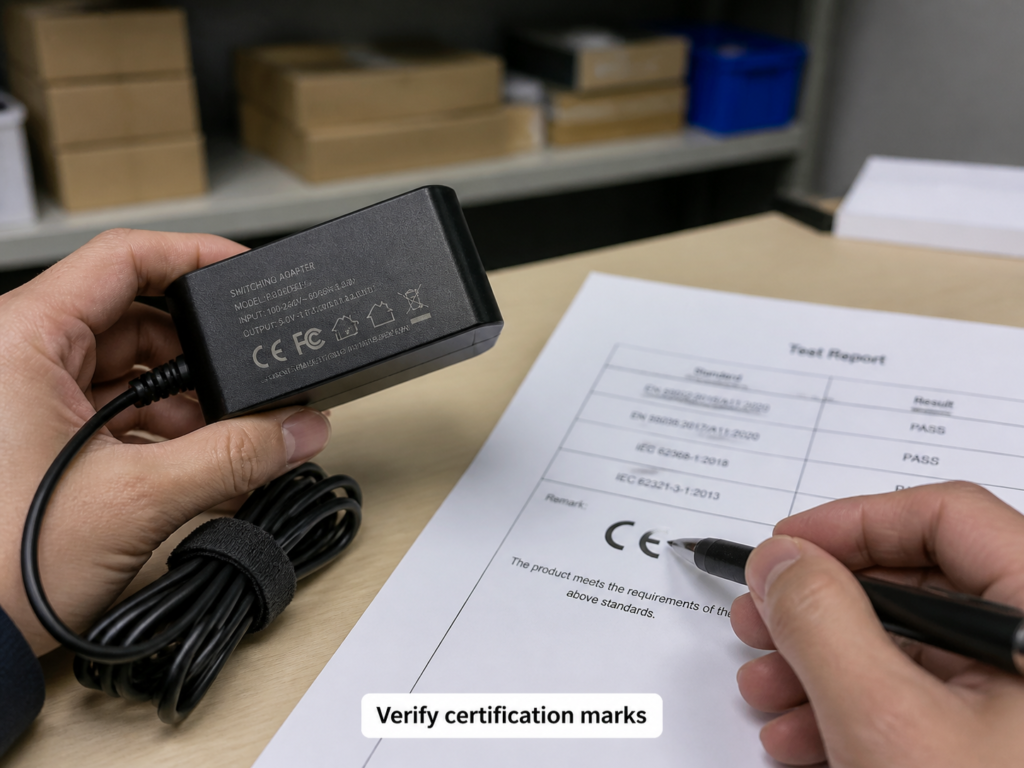
Correct explanation: Certification marks must be supported by corresponding test documents or declarations, and cannot be printed on products casually. Conversely, if the product itself has no mandatory certification requirements, you cannot falsely claim certification. For example, for an ordinary passive data cable, if you put a CE mark on it and say “CE certified” on the listing page, it is false advertising and you will be penalized.
5. **Misconception: Compliance documents are permanently valid after being done once**
Correct explanation: All compliance documents have scope of application, but not all have a fixed validity period. When products are modified, key components or production conditions change, regulations or standards change affecting applicability, certificates are suspended or revoked, or the platform puts forward new requirements, you should recheck whether existing test reports, declarations or certificates still cover current product and market requirements. Don’t wait until you are inspected to find that the documents are no longer valid.
Compliance Decision-Making Path When Information Is Incomplete
Some people may ask after reading this: I have already sourced the products, but I don’t have compliance documents. What should I do? Don’t panic. Products with different risk levels have different handling methods.
High-Risk Products (Wall Chargers, Charging Products with Wireless/Battery)
The priority is to replace with a supplier that can provide complete corresponding compliance documents, or choose a mature model that already has compliance documents. This is the most time-saving and safest option. If you really want to sell this product, the second option is to first confirm the specific requirements of the target site, then make up the compliance assessment, and include the cycle and cost of the supplementary assessment into the profit calculation to see if it can still make money. What you must never do: forge or use others’ documents, or list the product while concealing product parameters. Once detected, the consequences are the most serious, and the gains do not make up for the losses.
Low-Risk Products (Passive Ordinary Data Cables, Accessories Without Circuit Conversion)
First verify local regulations and Amazon’s requirements. If it is confirmed that there are no mandatory certification requirements, you can list the product truthfully, but you must never falsely claim certification or special safety performance, and the listing description must be completely consistent with the physical product. Also note that even if there are no mandatory certification requirements, you still have to bear the legal responsibility for product safety, and cannot sell inferior products with safety hazards.
Situation Where Products Have Been Purchased But No Compliance Documents Are Available
First evaluate the cost, cycle, and expected sales volume of supplementary compliance work. If it is cost-effective, do it. If not, immediately stop selling on Amazon in this target market, either transfer to other channels or markets that are confirmed to be legal and compliant for disposal, or directly rework or scrap the products. Never take chances and force the listing, otherwise when the store is suspended and inventory is frozen, the loss will be even greater.
Summary
After reading this, I believe you already have a clear answer to the question “Can uncertified electronic products be sold on Amazon?” To summarize, after learning this content, you can at least independently handle these 5 things:
First, you can independently judge the mandatory compliance scope of charging products at the corresponding Amazon site, and know what requirements systems such as FCC, CE, and PSE correspond to respectively;
Second, you can distinguish the three situations of true compliance, unverified supplier documents, and fake compliance, and clarify your own obligations as a seller as a responsible entity;
Third, you can learn about the compliance materials that the platform may require through official Amazon channels, and check local statutory requirements in combination with the rules of the competent authorities;
Fourth, you can identify common compliance misconceptions, and complete pre-purchase compliance preliminary screening and document verification;
Fifth, when information is incomplete, you can choose a legal and compliant disposal path and will not blindly fall into pitfalls.
In fact, compliance has never been an obstacle to doing business, but the foundation that protects you to operate for a long time. Especially for charging products that are directly related to electricity safety, solidifying compliance in advance will help you avoid fewer pitfalls later and run your business stably.