
Many cross-border e-commerce sellers and buyers who purchase charging products via overseas shopping most often ask the same question when shipping chargers or charging cables to the U.S. for the first time: Will U.S. Customs check FCC certification? Will the goods be detained for lack of certification?
Here is the core answer directly: U.S. Customs and Border Protection (commonly known as CBP) may inspect devices subject to FCC requirements during the import process, request documentation, detain goods, or coordinate with the FCC when necessary, but CBP does not conduct a full technical compliance determination on behalf of the FCC for every shipment. Whether an inspection is conducted specifically depends on the goods, declaration information, case circumstances, and enforcement information; there is no unified random inspection rate for charging products in public information.
First, we need to clarify the three most easily confused compliance boundaries, otherwise it is easy to either be overly anxious or fall into pitfalls: First, pre-import requirements — as long as a product falls within the scope of FCC regulation and requires authorization, in principle, the corresponding compliance procedures should be completed before importing into the U.S., rather than being supplemented after customs inspection. Second, responsibilities at the time of entry — CBP is mainly responsible for inspections during the entry process. Even if the goods are successfully cleared and released, it does not mean that the product fully meets all FCC requirements; customs simply did not find problems during this entry, which does not mean the product has completed all compliance. Third, post-entry responsibilities — even after passing customs, subsequent sales on platforms, market spot checks, or consumer complaints may trigger compliance verifications by the FCC or other parties, and responsibility does not disappear once customs clearance is completed.
It should also be reminded that there is currently no publicly available unified FCC random inspection rate for charging products, and no one can accurately predict whether a specific shipment will be inspected. Do not apply the requirements of the discontinued paper Form 740; currently, the requirements of the FCC, CBP, applicable ACE declaration rules, and carrier operating requirements shall prevail, and specific declaration fields should be confirmed with the customs broker or carrier.
Quick Judgment of FCC Compliance for Charging Products
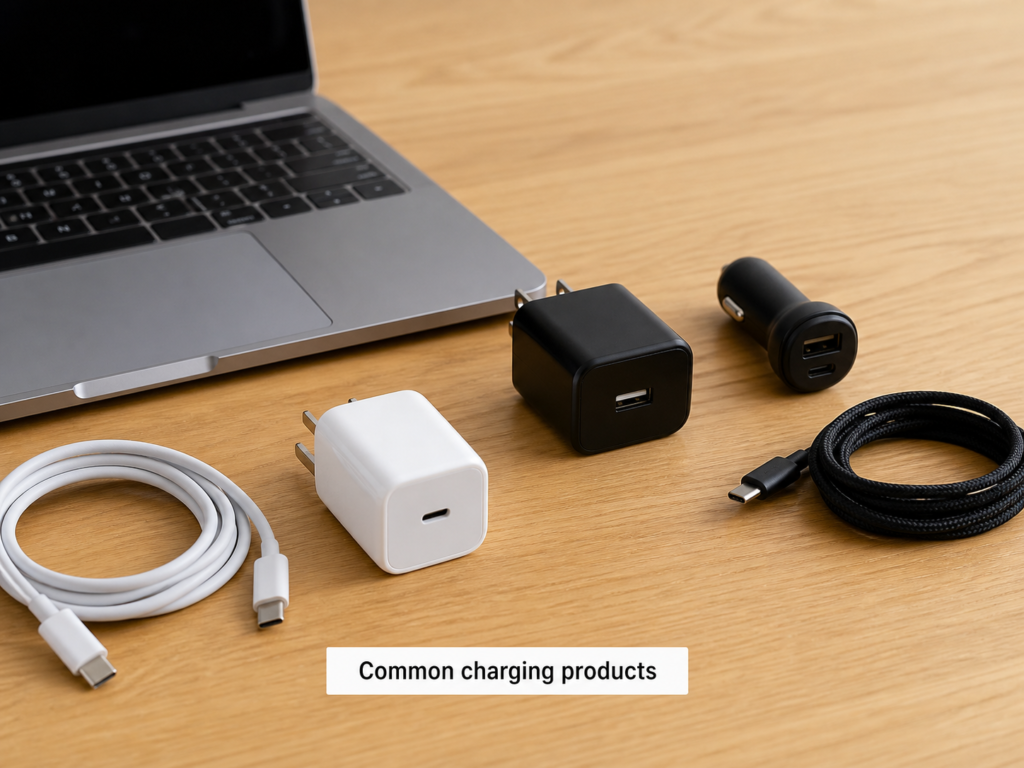
After understanding the basic rules, what everyone is most concerned about is definitely: Does the charging cable or charger I sell or ship need FCC compliance? What type of compliance is required? You can make a preliminary judgment according to these three steps.
Step 1: First check whether the product has **intentional radio frequency emission function** — for example, products with Bluetooth, Wi-Fi, or wireless data transmission usually fall under the supervision scope of intentional radiators and generally require Certification. However, whether the finished product needs to obtain an FCC ID on its own, and whether it can rely on the authorization conditions of already approved wireless modules, must be confirmed item by item in combination with the module installation method, antenna, and hardware and software configuration.
Step 2: Then check whether there is **digital or active circuit, or wireless power transmission function** — for example, chargers with switching power supplies, fast charging cables with E-Marker chips, and wireless charging pads. As long as these functions are present, it is necessary to evaluate the relevant rules for unintentional radiation or radio frequency equipment.
Step 3: Combine the product’s operating frequency band, power, and device classification, and compare with the specific FCC rules to determine the final authorization type.
A boundary to note here: whether a product is completely passive or has hidden circuits cannot be judged only by its appearance; it shall be subject to the product specification sheet, disassembly materials, or official documents from the supplier. For example, some USB-C cables look no different from ordinary cables, but have a hidden E-Marker chip inside, so they cannot be simply judged as pure passive products.
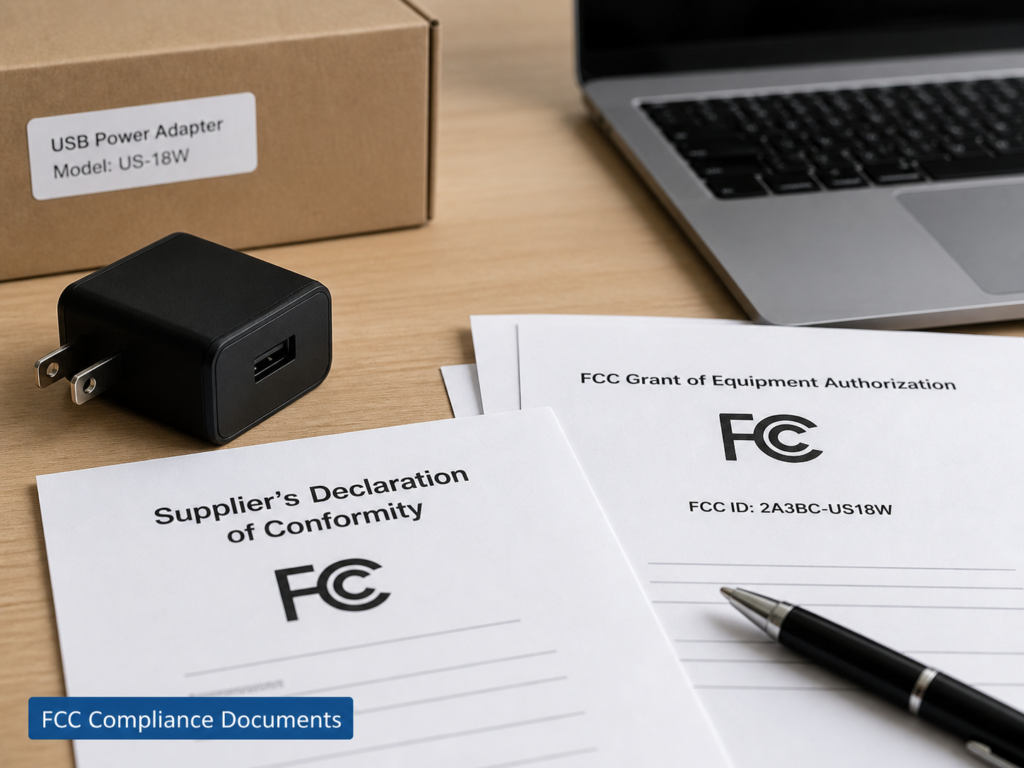
For your convenience in comparison, I have compiled the compliance requirements for common charging products into a table. The following are references for conventional situations, and the final determination must still be combined with the actual specifications of the product and the current FCC rules:
| Product Type | Core Features | Applicable Rules | Common Authorization Types | Recommended Documents for Entry |
| Chip-free ordinary charging cable | Pure passive, no active circuit | None (usually no device authorization required) | No authorization required | Product specification sheet, statement of no active circuit |
| USB-C fast charging cable with E-Marker chip | Contains E-Marker chip | Determined by chip function; power identification only may not require authorization | Evaluated based on function | Chip function description, product specification sheet |
| Wired charger with digital circuit (including PD fast charging) | Has switching power supply or digital control | Usually requires evaluation of Part 15 unintentional radiator requirements | SDoC can usually be used when applicable conditions are met; some devices or special configurations may require other authorizations or applicable exemptions | SDoC declaration, test report, product specification sheet |
| Smart charger with Bluetooth/Wi-Fi | Contains intentional radio frequency emission function | Applicable requirements such as Part 15 intentional radiators | Usually requires Certification; the finished product path should also be judged in combination with module authorization conditions | FCC ID authorization record, label photo |
| Wireless charging pad/magnetic charger for power transmission only | Wireless power transmission, no communication function | Evaluate Part 18 and/or Part 15 based on operating frequency, transmission method, and device configuration | May be SDoC, Certification, module authorization conditions, or applicable exemptions | Compliance declaration or authorization record, RF parameter description |
| Wireless charger with communication function | Wireless charging + Bluetooth/Wi-Fi | Evaluate Part 15 and Part 18 requirements as appropriate | Usually requires obtaining or relying on the corresponding Certification for the transmitter, while completing other applicable requirements for the finished product | FCC ID authorization record, finished product test report |
Consequences of Non-Compliance and Boundaries of Responsibility
Many people’s understanding of the consequences of violations is either “at most the goods will be detained” or “will be fined until bankruptcy”, but in fact, it should be viewed in two stages, with different boundaries of responsibility.
CBP’s Import Stage Disposition (Entry Phase)
• **Problems with documents or labeling**: When documents are missing or labeling does not meet requirements, CBP may request supplementary documents, or take measures such as suspension, refusal of entry, or return of goods. Whether correction is allowed and the correction period shall be subject to the official notice of CBP or the FCC.
• **Doubts about compliance validity**: For example, if the certified model is inconsistent with the actual goods, the authorization document does not match the product, or the product is claimed to be passive but actually has an active circuit, such cases may be further verified and handled based on the results.
• **Suspected intentional violation or serious circumstances**: For example, forging certification documents or labels, using others’ FCC ID without authorization, or intentionally concealing wireless functions may result in refusal of entry, detention, or other administrative dispositions, and may be coordinated with the FCC for follow-up handling.
The specific disposition shall be subject to the official notice of CBP or the FCC. CBP is mainly responsible for administrative dispositions during the entry stage, while the FCC is responsible for communication and radio frequency compliance enforcement within its scope of authority.
FCC’s Market Stage Enforcement (Post-Entry)
Even if the goods are successfully cleared through customs, it does not mean everything is fine. Platform audits, consumer complaints, or reports from competitors may prompt the platform or relevant authorities to conduct further verifications, but this does not mean that the FCC will necessarily open a case.
If the FCC finds that a product is non-compliant, it may take statutory measures such as requiring cessation of sales, product recall or correction, and imposing fines. The specific handling depends on the facts of the violation and applicable laws. Whether CBP will strengthen subsequent inspections and whether import eligibility will be affected shall also be subject to the specific case and the official decision of the competent authority, and cannot be regarded as an automatic consequence of all FCC violation cases.
It should be clarified here that the FCC’s enforcement is based on federal communication-related regulations, which are independent of customs entry dispositions. The final penalty shall be subject to the FCC’s official decision.
General Compliance Boundaries
There are three general boundaries that must be clearly remembered to avoid pitfalls:
1. Customs clearance and release only means passing the entry stage, and does not exempt you from subsequent FCC compliance responsibilities for market sales. Compliance documents must be kept for a long time.
2. FCC compliance is only one of the U.S. import requirements. Requirements such as electrical safety, energy efficiency, and lithium battery transportation need to be judged separately. Do not assume that passing FCC compliance means all requirements are met.
3. Rules for different import channels are different: the inspection standards and requirements for commercial bulk import, international express delivery, and personal carry-on cannot be confused. Do not apply the rules for personal carry-on to commercial imports.
Clarification of Common Misconceptions
Regarding U.S. Customs and FCC certification, there are several very common misconceptions that many people have fallen for. Here is a one-time clarification:
1. **Misconception: All charging products need an FCC ID to pass customs**
Clarification: Ordinary charging cables that are pure passive and have no chips usually fall within the scope of no device authorization required; wired chargers with digital circuits may use SDoC when applicable conditions are met, and do not necessarily need an FCC ID. Not all charging products require an ID.
2. **Misconception: Products with FCC labeling will definitely pass customs**
Clarification: FCC labeling must correspond to a real and valid compliance path, including applicable FCC ID certification or SDoC. If the labeling is printed arbitrarily or does not correspond to the actual product, it may instead trigger further verification.
3. **Misconception: Charging products for personal use will absolutely never be inspected**
Clarification: Devices for personal use may be eligible for the device authorization import exception when they meet the specific conditions specified in 47 CFR §2.1204, but this does not guarantee that they will not be inspected, nor does it exempt them from truthful declaration and other applicable safety, transportation, and import requirements.
4. **Misconception: The test report provided by the supplier is the FCC compliance certificate**
Clarification: Test reports are usually supporting materials to prove technical conformity, and cannot replace the required SDoC or Certification. For devices using SDoC, the responsible compliance party shall issue a compliant SDoC and retain the corresponding technical materials; for devices that require Certification, the valid Grant and FCC ID shall be verified.
5. **Misconception: If a certified wireless module is used, the finished product does not need FCC compliance**
Clarification: Separate certification of a wireless module does not automatically cover the finished product. If the module meets the modular authorization conditions and is installed in accordance with the Grant requirements, the finished product may not need to obtain a new FCC ID for the transmitter; however, the host device must still meet other applicable test, declaration, labeling, and instruction manual requirements, depending on the module authorization conditions and the finished product configuration.
6. **Misconception: Samples and gifts do not need FCC compliance**
Clarification: A small number of samples used for testing, display, or research and development may meet limited exemption conditions, but the requirements are very strict. The applicable clauses need to be verified in advance, and not all samples can be exempted.
7. **Misconception: Customs release means full FCC compliance**
Clarification: Customs is only responsible for inspection and disposition during the entry stage. Release only means that there was no further interception or handling during this entry, and does not mean that the product fully meets all FCC rules. It may still be inspected during subsequent market supervision.
Quick Decision-Making Tool and Action Points
If you don’t have time to read the full article, or want to quickly confirm what you should do, you can refer to the following content.
Three-Step Self-Inspection Decision Tree Before Entry
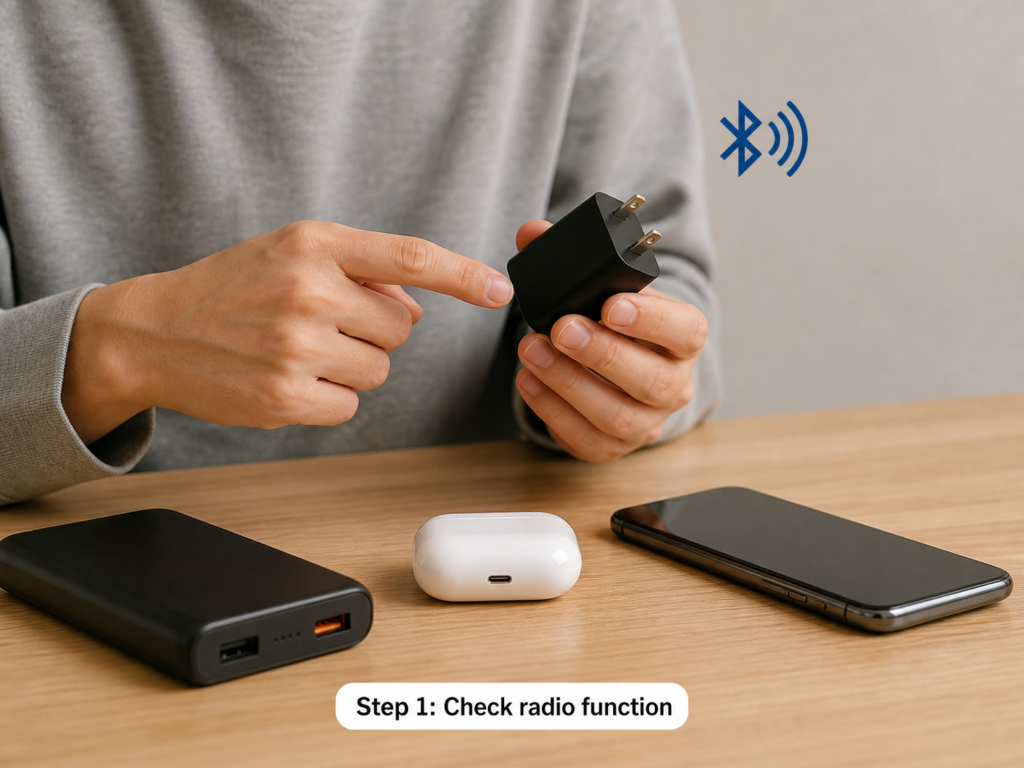
Step 1: Check whether the product has intentional radio frequency emission functions such as Bluetooth, Wi-Fi, or wireless data transmission? If yes, it usually falls under the supervision scope of intentional radiators and generally requires Certification; however, whether the finished product needs to obtain an FCC ID on its own, and whether it can rely on the authorization conditions of approved modules, must be confirmed in combination with module installation, antenna, and hardware and software configuration.
Step 2: Check whether there are digital circuits or wireless power transmission functions? If yes, it is necessary to evaluate Part 15 or Part 18 rules to determine whether it is SDoC, Certification, module authorization conditions, applicable exemptions, or other paths.
Step 3: Verify the product specifications and current FCC rules to confirm the final authorization type, labeling requirements, and documents that need to be prepared.
If you are unsure, prioritize consulting a professional compliance agency, or directly check the official FCC rules, and do not judge based on experience.
Action Points for Different Groups
• **Personal use users**: Declare truthfully, keep the product purchase voucher or specification description, and do not carry charging products that obviously exceed the scope of personal use.
• **Cross-border sellers, U.S. importers**: Confirm the compliance type of the product according to the decision tree before shipping, verify the consistency between compliance documents and the actual goods, and do not wait until the goods are detained to make supplements.
• **Users who have already encountered verification**: First confirm the specific official requirements, submit the corresponding documents according to the product type, never forge documents, and seek assistance from professional agencies if there are problems.
3 Things You Can Remember Directly
1. CBP may inspect charging and wireless devices subject to FCC requirements during the import process, but will not conduct a full technical compliance determination on behalf of the FCC for every shipment; there is no unified random inspection rate for charging products in public information.
2. For charging and wireless devices subject to FCC rules, applicable device authorizations shall be completed or applicable exceptions shall be met before entering the U.S. market. Pure passive products usually do not require device authorization, but products with digital circuits, wireless power transmission, or radio frequency emission functions must determine whether it is SDoC, Certification, module authorization conditions, or other paths according to specific rules.
3. Declaring truthfully and preparing compliance documents consistent with the actual goods in advance can effectively reduce the time and economic losses caused by verification, which is the most cost-effective way to avoid pitfalls.
In general, for charging and wireless devices subject to FCC rules, applicable device authorizations shall be completed or applicable exceptions shall be met before entering the U.S. market. Customs inspection is uncertain, but confirming product functions in advance, declaring truthfully, and preparing consistent compliance documents can reduce risks in customs clearance and subsequent sales. If you encounter uncertain situations, prioritize consulting a professional compliance agency or a customs broker familiar with electronic product clearance, and do not operate based on experience or old information found online.