
Many cross-border sellers who are new to the European market, or suppliers who plan to supply wireless chargers to EU customers, are often stumped by the same question: Do wireless chargers need to comply with the EU RED Directive? Some say all products with “wireless” in their name need to comply, others say pure charging ones don’t. Opinions vary, but many people fall into pitfalls: either their goods are detained by customs and returned or even destroyed, or their product listings are directly taken down by platforms, and in serious cases, they have to bear legal liability.
In fact, there is no one-size-fits-all answer to this question. The core is to understand what the RED regulates, and which category your wireless charger belongs to. We will first present the core conclusion, then break down the judgment methods and key points to avoid pitfalls step by step.
Conclusion First: Compliance Requirements for 3 Common Types of Wireless Chargers Are Different
Currently, wireless chargers on the market are mainly divided into three categories, and the corresponding RED requirements are not exactly the same:
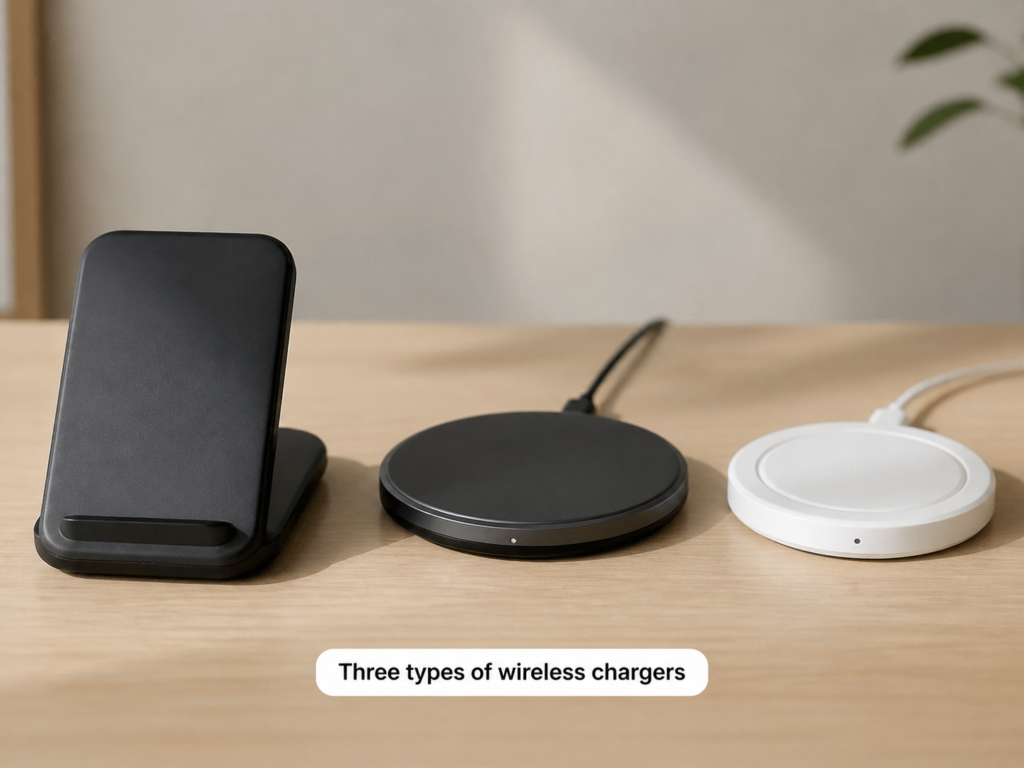
The first type is smart models with independent communication functions, such as wireless chargers that can connect to Bluetooth, Wi-Fi, support APP control, or NFC tap-to-connect. **They usually must undergo compliance assessment in accordance with the RED Directive.**
The second type is the most common ordinary Qi inductive wireless charger — the basic model that charges when you place a device on it, has no additional pairing or networking functions, and is only used for charging. It cannot be deemed not to require RED compliance just because it “has no Bluetooth or Wi-Fi”. Instead, the assessment should be conducted in combination with the wireless power transmission technology, actual transmission and reception methods, operating frequency band, product configuration, and applicable harmonized standards. When actually sold to the EU market, the manufacturer shall make a judgment based on the applicability of the RED and the compliance documents of the whole product.
The third type is radio frequency (RF) long-distance wireless chargers, that is, models that do not need to be close to the device and can charge from tens of centimeters or even several meters away. They usually need to undergo compliance assessment in accordance with the RED Directive.
If a product falls under the scope of RED compliance but fails to comply, the consequences are straightforward: customs will detain the goods if found, which will either be returned or destroyed; European e-commerce platforms such as Amazon and Cdiscount may take down listings if they are found in random inspections, and even restrict store permissions; the final legal liability shall be borne by the seller or the EU importer, and fines may be imposed.
Of course, certain scenarios cannot be generally referred to as “exempt”. For samples that are only for R&D and testing and have not been placed on the EU market, whether the RED applies shall be judged in combination with the supply method and usage restrictions; equipment exclusively for national defense, national security, public security and other scopes explicitly excluded by the RED may not be subject to the RED, but this cannot be generalized to all military or aviation equipment. Personal items carried for personal use usually do not count as commercial placement on the market, but there is no quantity exemption clause for “1-2 pieces” in the regulations.
First Understand 3 Core Concepts to Avoid Confusion in Judgment
You may be curious: since they are all wireless chargers, why are the requirements so different? This requires first understanding two easily confused “wireless” concepts, and what exactly the RED Directive regulates.
What is the RED Directive?
The full name of RED is the EU Radio Equipment Directive, with the official number 2014/53/EU. In plain terms, it is a mandatory regulation of the EU for products that meet the definition of radio equipment and have related radio transmission or reception functions.
It has three core purposes: first, to prevent radio signals from different devices from interfering with each other; second, to ensure the electrical safety of devices; third, to control the radio radiation of devices within the human safety limit.
Key Distinction: “Wireless Power Transmission” and “Wireless Communication” Are Not the Same Thing
Many people think that as long as the word “wireless” is in the name, it is regulated by the RED. In fact, such a simple judgment cannot be made. The RED mainly applies to devices that are used for radio communication, radio determination, or intentionally transmit and receive radio waves within the applicable scope. Whether wireless power transmission equipment is subject to the RED shall also be judged in combination with its technical implementation, transmission frequency band, equipment definition and applicable harmonized standards.
Here, the two types of “wireless” functions of wireless chargers should be separated:
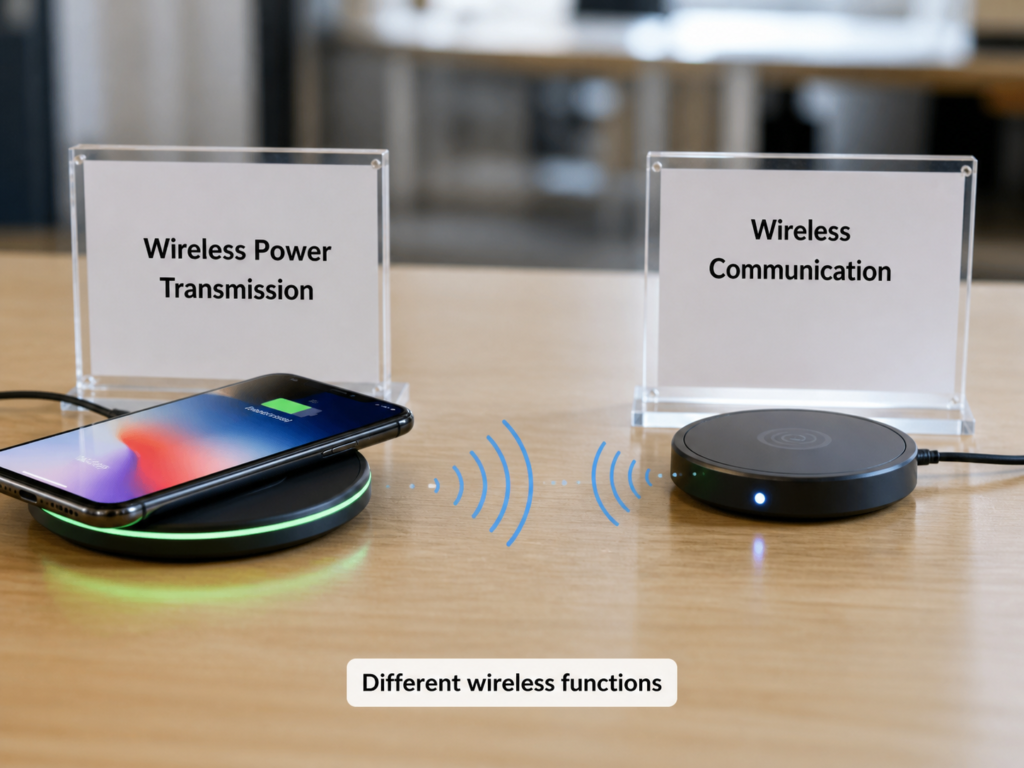
One is **wireless power transmission** — it transmits electricity through the air via coil induction or RF waves, which is the basic charging function of wireless chargers. For example, ordinary Qi chargers transmit energy through electromagnetic coupling between the transmitter and receiver.
The other is **wireless communication** — functions used for pairing, control, networking, and data transmission, such as Bluetooth, Wi-Fi, and NFC. These functions usually transmit or receive radio waves for the purpose of transmitting information.
In short: wireless power transmission and wireless communication are different in function, but it cannot be concluded that wireless power transmission equipment does not fall under the RED just on the grounds that it “does not transmit information”. Ultimately, it still depends on the specific technology, frequency band, transmission and reception methods, as well as applicable regulations and harmonized standards.
What is the Relationship Between RED and the CE Mark?
Many people also confuse RED with CE. In fact, the two are concepts at completely different levels.
CE is the unified mark for EU product compliance, not a single certification — the EU has dozens of different compliance regulations or directives, such as the LVD for electrical safety and the EMC for electromagnetic compatibility. As long as a product meets all applicable regulatory requirements, the CE mark can be affixed.
The RED is just one of the many regulations covered by CE, and it mainly applies to radio equipment. Products that meet the RED requirements must also be included in the overall CE compliance system management together with other applicable requirements. It is not that passing the RED assessment equals full CE compliance.
3-Step Judgment Method: You Can Figure Out Whether RED Assessment Is Needed by Yourself
After understanding the basic concepts, you can use the following 3 steps to judge by yourself whether the wireless charger you have needs to be assessed in accordance with the RED.
Step 1: First Look at the Type of Wireless Function (Core Basis)
This is the core judgment criterion. First, check whether your wireless charger has additional wireless communication functions besides charging:
• If it has independent wireless communication functions, such as Bluetooth, Wi-Fi, NFC, or APP remote control, there is no doubt that it usually needs to comply with the RED.
• If it only has inductive power transmission function and no additional communication modules, it cannot be directly concluded that RED is not required. You should continue to check the wireless power transmission technology, actual transmission and reception methods, operating frequency band, product configuration and applicable harmonized standards.
• If it uses RF long-distance power transmission technology, regardless of whether it has a communication function, it usually needs to be assessed in accordance with the RED, because such products intentionally use radio waves or related frequency spectra to transmit energy.
Step 2: Then Look at the Operating Frequency and Technical Implementation
The RED does not have a general threshold of “only applicable above 9kHz” that can be used alone for all products. Whether a product falls within the scope of the RED cannot be judged only by a frequency number. Instead, it should be judged based on whether the product is a radio device as defined by the RED, what kind of wireless power transmission or communication technology it uses, the actual transmission frequency band, and the applicable harmonized standards.
The actual operating frequency bands of Qi and other wireless power transmission products depend on the specific standards, versions and product implementations, and cannot be summarized by a single frequency range. Even if the operating frequency of a product is lower than a certain empirical frequency band, it cannot be directly concluded that the RED does not apply just based on the frequency.
For wireless power transmission systems, you can further check whether relevant harmonized standards apply, such as ETSI EN 303 417. Ultimately, the technical documents, test documents of the specific product and the manufacturer’s applicability judgment shall prevail, rather than replacing the assessment with statements like “ordinary Qi definitely does not need RED” or “all wireless chargers must have RED”.
Step 3: Finally Check Whether It Falls Within the EU’s Jurisdiction
If a product is commercially sold or supplied to the EU EEA, that is, the commonly referred to European Economic Area, including the 27 EU member states as well as Norway, Iceland and Liechtenstein, compliance obligations related to placing products on the EU market need to be considered. Specifically including:
• Goods sold to the EU EEA;
• Goods used for commercial purposes or given away for free within the EU;
• Goods directly mailed to the EU via cross-border e-commerce;
• Goods stored in EU overseas warehouses for delivery.
If a product is only sold in non-EU regions, it usually does not trigger the obligation of placing on the EU market. But this is only a judgment based on the sales scenario, and cannot in turn prove that the product itself has no radio function.
For your convenience, we have compiled a comparison table of the applicability of common products:
| Compliance Category | Common Product Examples |
| Usually require RED assessment | Smart wireless chargers with communication functions such as Bluetooth, Wi-Fi, NFC; RF wireless power transmission products; all-in-one chargers with integrated wireless communication functions |
| Require assessment based on specific products | Ordinary Qi desktop wireless chargers, in-car magnetic Qi chargers, ordinary power banks with wireless reverse charging function, wireless charging receiver accessories |
| Usually not classified as RED radio equipment | Pure wired chargers, pure contact magnetic conductive chargers, and the products do not contain other wireless functions such as Bluetooth, Wi-Fi, NFC |
It should be specially noted here: although contact magnetic conductive chargers are also magnetic, they conduct electricity through physical metal contacts, not through air induction power transmission. In essence, they are still a variant of wired charging.
However, receiver patches or receiver accessories cannot be excluded from the RED just by their names. If they are part of a wireless power transmission system, or themselves contain other wireless functions, they still need to be assessed based on the specific technology, transmission or reception functions, and the overall product configuration.
Core Requirements of RED Compliance and True/False Identification
If your wireless charger needs to comply with the RED, what requirements exactly does it need to meet? And how to judge whether the compliance documents provided by the supplier are real or fake?
3 Core Requirements of the RED
In short, to comply with the RED, you need to pass three checks:
1. **Spectrum compliance**: You must not use radio frequency bands in violation of regulations, and transmission behavior must not cause harmful interference to other legal devices.
2. **Electromagnetic compatibility**: The device itself will not fail to work normally due to normal external electromagnetic interference, and at the same time will not cause non-compliant interference to surrounding devices. Devices falling within the scope of the RED are usually subject to whole-product assessment in accordance with Article 3(1)(b) of the RED and corresponding standards.
3. **Safety and health**: The electrical safety performance must meet the requirements, and the human body’s exposure to radio radiation must also be within the applicable safety limits.
How to Identify Real Compliance vs. Fake Compliance?
Many suppliers use “having the CE mark” as a cover. In fact, the CE mark itself cannot prove that the product has completed all applicable regulatory assessments. To confirm whether RED-related compliance has really been completed, you need to look at two things:
First, look at the **mark**: You should check whether the CE mark is clear, visible and has appropriate durability as required by regulations. The CE mark can be marked on the product, packaging or accompanying documents according to the product situation, and the specific position and form must meet the requirements of applicable regulations. Do not use whether it is silk-screened, injection-molded, or whether “complies with 2014/53/EU” is directly written on the packaging as the sole basis for judgment.
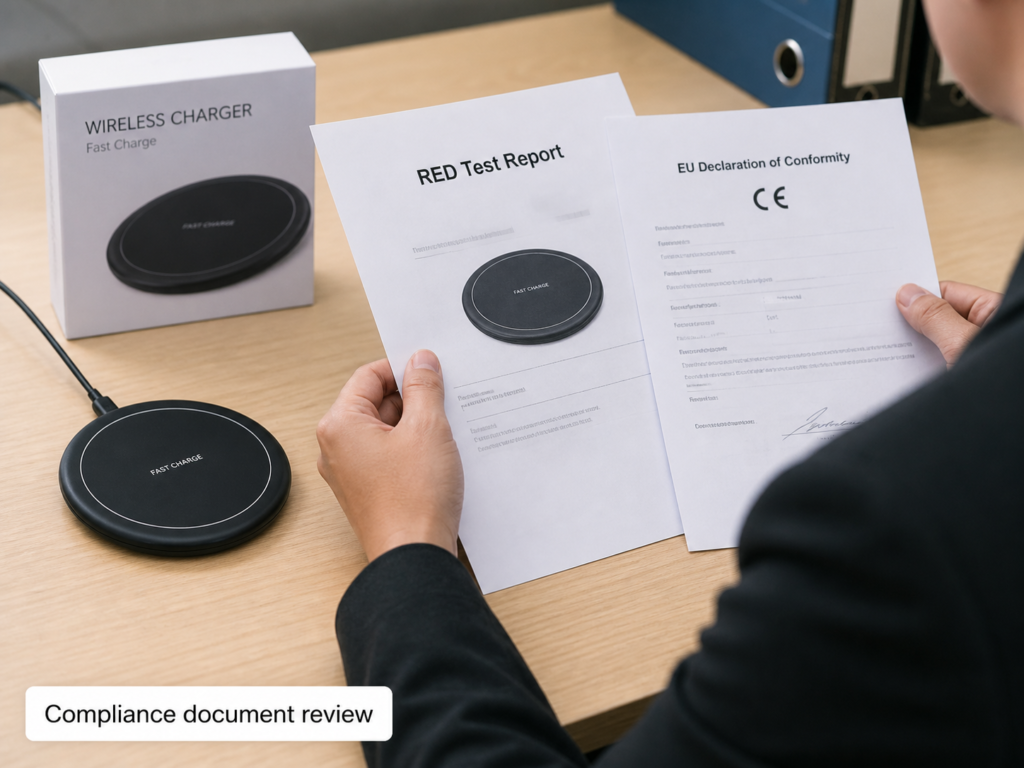
Second, look at the **documents**: The supplier should be able to provide the RED test report for the corresponding model, as well as the EU Declaration of Conformity (DoC) signed by the manufacturer. Special attention should be paid here: **having the CE mark does not mean automatic compliance with the RED**. You must check whether the RED and other applicable regulations are clearly listed in the DoC, and confirm that the documents cover the version of the wireless charger you actually sell.
Common Questions About the Notified Body Number (NB Number)
Many sellers ask: Is it necessary to have a RED certificate with a Notified Body number (NB number) to be compliant?
Actually, no. For products that adopt applicable EU harmonized standards and can complete self-declaration in accordance with the corresponding conformity assessment procedures, the manufacturer does not necessarily need to be reviewed by a Notified Body, so there is not necessarily an NB number.
Products with an NB number may have been assessed with the participation of a Notified Body, but **the absence of an NB number does not mean non-compliance**. The key is to see whether the entire conformity assessment process meets the regulatory requirements, and whether the technical documents, test reports and DoC are consistent with the actual product.
Special Reminder: Module Compliance Cannot Replace Whole-Product Compliance
This is a pitfall that many sellers easily fall into: suppliers say “our Bluetooth module has passed RED, so the whole product does not need to be tested again”, which is wrong.
The fact that the built-in Bluetooth and Wi-Fi modules have RED reports does not mean that the entire wireless charger automatically complies with the RED — because the antenna position of the whole product, shell material, interference from the power circuit, software settings, etc., will affect the final radio performance and electromagnetic compatibility performance.
Therefore, the whole product should retain test and technical documents under actual working conditions, and module reports cannot directly replace whole-product compliance documents.
In Addition to the RED, Wireless Chargers Also Need to Be Assessed for These EU Regulations
Many people think that as long as a wireless charger passes the RED assessment, it’s done. In fact, that’s not the case. As electronic and electrical products, wireless chargers also need to be assessed for other applicable EU regulations based on the specific product, input method, function and sales method, so that a relatively complete compliance judgment can be completed.
LVD Low Voltage Directive
The LVD directly applies to equipment with a rated voltage of 50-1000V AC or 75-1500V DC.
Most consumer-grade wireless chargers with USB input have low-voltage DC inputs such as 5V, 9V, 12V or 20V, which are usually lower than the 75V DC voltage threshold of the LVD. Therefore, the main body of the charger often does not directly fall within the voltage range of the LVD. But this does not mean that it has no electrical safety requirements: if the product falls within the scope of the RED, its electrical safety requirements are usually assessed through Article 3(1)(a) of the RED and corresponding standards; if there are other applicable regulations, they should also be considered together.
Note: If the wireless charger is a set with a power adapter connected to the mains, the adapter usually needs to be separately confirmed for applicable requirements such as the LVD, and the report of the wireless charger main body cannot directly replace it.
EMC Electromagnetic Compatibility Directive
For wired electronic equipment that does not fall within the scope of the RED, it is usually necessary to assess its electromagnetic compatibility in accordance with the EMC Directive to ensure that the equipment does not interfere with other equipment when working, and at the same time can resist electromagnetic interference in the normal environment.
If the product falls within the scope of the RED, its electromagnetic compatibility requirements are usually subject to whole-product assessment through Article 3(1)(b) of the RED and corresponding harmonized standards, including applicable power supply conduction and radiation items. The EMC Directive generally no longer applies to the same radio equipment in parallel with the RED, and it cannot be simply understood that a separate set of EMC Directive documents must be issued in addition to the RED test.
Environmental Protection and Energy Efficiency Regulations
• **RoHS Directive**: Currently restricts 10 substances, including lead, mercury, cadmium, hexavalent chromium, PBB, PBDE, DEHP, BBP, DBP and DIBP.
• **ErP Energy Efficiency Regulations**: Applicable ecodesign and energy efficiency regulations should be checked based on the wireless charger main body, the accompanying power adapter and their working modes. External power supplies and power consumption requirements for standby, off or network standby may apply to relevant components or products, but it cannot be generally asserted that all wireless chargers are covered by the same ErP limits.
• **WEEE Directive**: Involves the recycling responsibility for waste electrical and electronic equipment. Products and supply chains usually need to complete producer registration, fulfillment of recycling responsibilities and corresponding marking and other matters according to the requirements of the selling country, and cannot only look at whether the product itself has a recycling mark.
GPSR General Product Safety Regulation
The GPSR applies from December 13, 2024, and is used to strengthen general product safety and online sales liability in the EU market. It also raises the requirements for e-commerce platforms and relevant operators regarding product information and safety.
Products should have corresponding traceable information of the manufacturer, importer and responsible economic operator within the EU. Products of non-EU manufacturers usually require a responsible economic operator within the EU, but this responsible person does not have to be an authorized representative; it may also be an importer or other economic operator that assumes corresponding functions in accordance with the law.
In addition, corresponding technical and safety documents should be kept in accordance with the GPSR and other applicable regulations. The GPSR is a general product safety regulation; if a product is already subject to specialized EU regulations, the GPSR is usually considered as a supplementary requirement, and it cannot be simply generalized that all products must prepare exactly the same set of technical documents.
6 High-Frequency Compliance Misconceptions, Don’t Fall for Them Again
In the actual compliance process, many people fall into some common pitfalls. We have compiled the 6 most frequent misconceptions to help you avoid them.
Misconception 1: All wireless chargers need RED, or none do
This is the most common extreme perception. The correct approach is: whether the RED applies depends on the type of wireless function, technical implementation, transmission and reception methods, operating frequency band, product configuration and sales scenario. “Wireless power transmission” and “wireless communication” cannot be simply confused.
For example, smart wireless chargers with Bluetooth usually need to be assessed in accordance with the RED; for ordinary Qi, in-car Qi and wireless reverse charging products, conclusions cannot be drawn directly just based on the product name. Pure wired chargers usually do not belong to RED radio equipment when they do not contain other wireless functions.
Misconception 2: Having Qi certification equals compliance with the RED
Qi is a compatibility certification in the field of wireless charging, mainly used to verify whether wireless chargers and receiving devices of different brands can charge normally in accordance with relevant technical requirements, and it is not equivalent to compliance with the EU RED regulation.
Therefore, even if there is Qi certification, the RED applicability and whole-product compliance assessment still need to be completed separately, and Qi materials cannot directly replace RED documents.
Misconception 3: The CE report of a wired charger can be used for a wireless charger
Wired chargers usually need to be assessed for electrical safety, EMC, RoHS, as well as other applicable regulations such as ecodesign, WEEE and GPSR based on the input voltage and product functions; the main body of low-voltage USB wired chargers may not reach the LVD voltage threshold either.
In any case, the compliance documents of wired chargers cannot replace the RED whole-product assessment of products with radio functions. If a wireless charger has Bluetooth, Wi-Fi, NFC or other wireless functions that may fall within the scope of the RED, the corresponding whole-product test and DoC documents must be checked.
Misconception 4: Small sellers or small shipments don’t need to care about the RED
As long as it is commercial sales targeting the EU, including scattered cross-border B2C orders, it is necessary to meet the relevant regulatory requirements based on the actual situation of the product. Don’t think that if you sell less, you won’t be inspected. Platform random inspections, customs spot checks and consumer complaints may all trigger compliance reviews. Once found, the consequences will be listing removal, goods detention, etc., which is not worth the loss.
Misconception 5: Having a “CE certificate” means compliance
There is no such thing as a unified “CE certificate” in the EU at all. The core document of CE compliance is the **EU Declaration of Conformity (DoC) signed by the manufacturer**, and what laboratories issue are usually test reports, which are used to support the manufacturer’s compliance judgment.
The marketing of “pay for a CE certificate and pass guaranteed” on the market cannot replace real conformity assessment. Even if you get a so-called certificate, if the model, configuration, test scope or applicable regulations do not match, it may still be judged as non-compliant when inspected.
Misconception 6: Low-power wireless chargers are exempt from the RED
The RED does not set a universally applicable exemption rule based on power level. Power may affect test items and limits, but it will not determine that a product does not fall within the scope of the RED just because it is “low-power”.
For example, a 5W low-power wireless charger, if it has Bluetooth function, still needs to be assessed in accordance with the RED requirements. For pure wireless power transmission products, you cannot only look at the power level, but should judge in combination with the technical implementation, transmission and reception methods and applicable standards.
Quick Self-Check List: Complete Preliminary Judgment in 2 Minutes
After talking so much, you may still find it a bit complicated. We have compiled a quick self-check list that can be used for preliminary judgment before procurement or listing.
First ask yourself 3 core questions:
1. Does the product transmit energy through the air via coils or RF waves, instead of conducting electricity through physical contacts?
2. Is the product commercially sold or given away to the EU EEA?
3. Does the product have independent wireless communication functions, or adopt RF wireless power transmission technology?
Preliminary classification based on the answers:
• If the product is sold to the EU and has wireless communication functions such as Bluetooth, Wi-Fi, NFC, it usually needs to be assessed in accordance with the RED.
• If the product is sold to the EU and adopts wireless power transmission technology, you should further check its transmission and reception methods, operating frequency band, product configuration and applicable harmonized standards. You cannot exclude the RED just because there is no communication module.
• If the product is not placed on the EU market, it usually does not trigger the compliance obligation of placing on the EU market; but as long as it is sold to the EU, even if the product is not a wireless charger, the RED may apply because it has independent wireless communication functions such as Bluetooth, Wi-Fi, NFC.
• If the product is a pure wired or pure contact conductive product and does not contain other wireless functions, it usually does not belong to RED radio equipment, but other applicable regulations still need to be assessed.
That is to say, you cannot directly determine that the RED is not needed based on either of the questions “whether it is a wireless charger” and “whether it is sold to the EU”. You should check the wireless power transmission function, other radio functions and sales scenarios separately.
Finally, be sure to check 3 items of documents before procurement or listing:
1. Are the product model and configuration on the report and DoC provided by the supplier completely consistent with the version you actually want to sell — many suppliers use reports of old models to make up the number, and new models with changed configurations may no longer be applicable.
2. Is there an EU Declaration of Conformity (DoC) for the corresponding model, and confirm that the RED and other applicable regulations are listed in it.
3. If the set comes with a power adapter, confirm whether the adapter has independent compliance documents. This item cannot be missed.
Final Summary
Whether a wireless charger needs to comply with the EU RED Directive cannot be judged only by the product name, nor only by whether it has Bluetooth. Ordinary Qi wireless chargers cannot be deemed not to require RED just because they do not have communication functions such as Bluetooth and Wi-Fi. The assessment should be conducted in combination with the wireless power transmission technology, actual transmission and reception methods, operating frequency band, product configuration and applicable harmonized standards.
In addition to the RED, regulations such as RoHS, WEEE, applicable ecodesign or energy efficiency requirements, GPSR and electrical safety should also be assessed based on the specific product and sales method. For the low-voltage wireless charger main body and the accompanying power adapter, their respective applicable regulations should also be confirmed separately, and all regulations cannot be uniformly regarded as automatically applicable.
Before procurement or listing, focus on checking the actual sales version, whole-product test documents, EU Declaration of Conformity, and the compliance documents of the power adapter in the set, so as to reduce the risks of customs detention, platform listing removal and subsequent liability.