
Cross-border sellers and purchasers exporting products such as charging cables, USB-C cables, and chargers to the EU have most likely heard of “EUICOS registration” mentioned by freight forwarders or platforms — but when they actually search for the official system, they either cannot find the corresponding entry, or click on websites of unknown origin and almost fall for phishing scams.
It should be noted first that “EUICOS” is not the official name of an EU system. When encountering this term, you cannot judge which business it corresponds to based solely on the name, let alone directly register an account or upload enterprise information. You should ask the other party to provide the specific full official name of the system, the competent authority, the business purpose, and the official link, and then confirm whether you need to participate in the relevant process.
This article will combine the actual scenarios of charging products to introduce the ICS2 Import Control System and Application for Customs Action (AFA) that may be mentioned by third-party service providers, helping you judge what to pay attention to during registration, document preparation, and document submission.
First Step for Beginners: Don’t Be Misled by Common Names
Why Searching for “EUICOS Registration” Directly Is Prone to Pitfalls
“EUICOS” is not a uniformly named official EU system. When someone mentions this name, you must first verify four core pieces of information: the full official name, the competent authority, the business scenario, and the official website entry. Never register an account or upload materials based solely on the name — at best, you will follow the wrong process and delay things; at worst, you will encounter phishing websites and leak enterprise information.
How to Judge Which Process the Other Party Is Actually Referring To
When freight forwarders, platforms, or third-party service providers use “EUICOS”, they may be referring to different services or systems, and it cannot be directly assumed that it must be ICS2 or AFA. In actual communication, you can first clarify the business purpose:
• If the other party requires you to provide transportation and commodity data before the goods enter the EU, it is usually necessary to further confirm whether it involves the **ICS2 Import Control System** and ENS (Entry Summary Declaration);
• If the other party requires you to submit materials such as trademarks, design patents, and genuine product images for the purpose of assisting customs in identifying counterfeit goods, it usually involves **Application for Customs Action (AFA)**;
• If the other party cannot provide the official system name, competent authority, and official link, you should treat it with caution and do not submit business licenses, identity certificates, EORI numbers, or intellectual property documents first.
Scope of Application and Applicable Groups
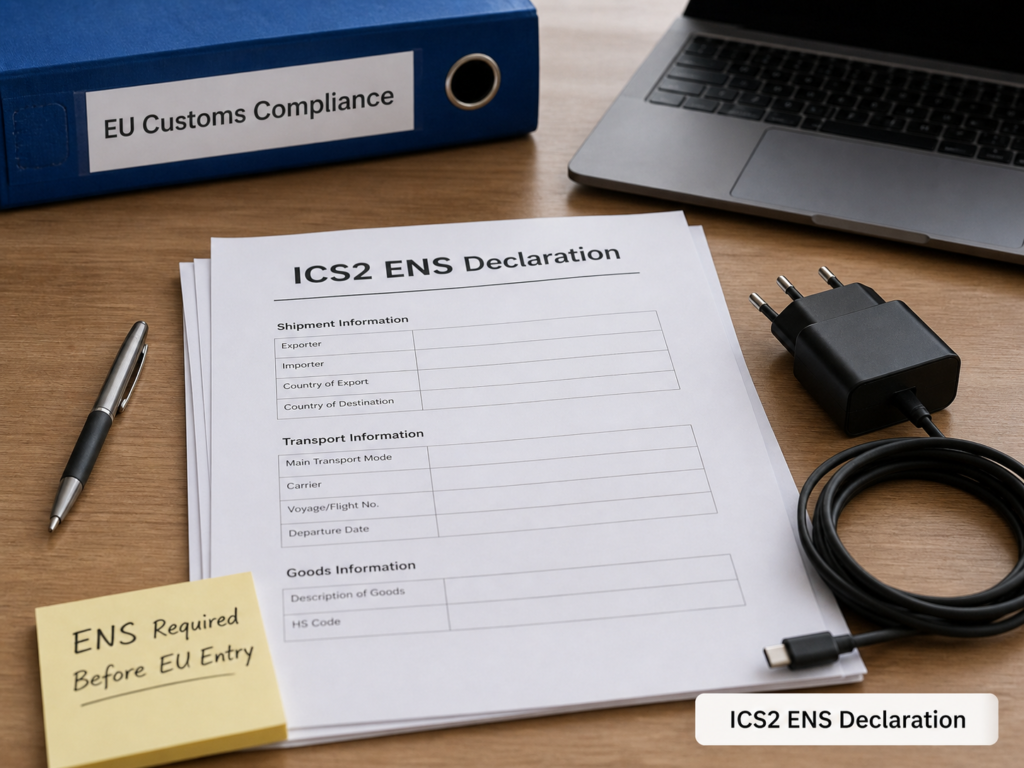
The applicable boundaries of ICS2 and AFA are not the same.
ICS2 is mainly applicable to goods entering the EU customs territory from third countries and requiring ENS submission according to the mode of transport and implementation stage. Whether submission is required, who submits it, and what data to submit should be judged based on the actual mode of transport, carriage arrangements, and official rules.
AFA is a procedure for intellectual property rights holders to apply for customs action, focusing on enabling customs to identify and handle relevant risks in accordance with the law when supervising or controlling suspected infringing goods.
Situations such as personal items, passenger luggage, and goods already in free circulation within the EU cannot be simply summarized as not involving these processes at all; they should be judged in accordance with applicable customs rules and member state practices respectively.
5 Most Easily Confused Core Concepts
Clarify several high-frequency and easily confused concepts before getting started, so that you won’t get more confused later:
1. **EORI number**: Equivalent to the unique identity number of an enterprise in EU customs. It is ≠ VAT (Value Added Tax number) nor ≠ IOSS (Import One-Stop Service number). Having an EORI number does not mean you automatically obtain import qualification.
2. **ENS declaration**: That is, the Entry Summary Declaration, which is the core data in the ICS2 system, used for safety and security risk analysis of goods before they enter the EU, and ≠ formal import customs clearance.
3. **IOSS**: A one-stop VAT declaration for low-value e-commerce goods, which only deals with tax-related matters, and is a different process from customs pre-arrival safety declaration.
4. **CE marking**: A conformity mark used after a product meets the requirements of applicable EU product regulations. It cannot replace any customs declaration; having CE does not mean you can be exempted from ENS or import declaration obligations.
5. **Formal import declaration**: It is a declaration that places goods under the corresponding customs procedure and handles tax, supervision, and release accordingly. Import declarations can be submitted in advance before the goods are presented to customs; ENS and import declarations have different purposes, and ENS cannot replace import declarations.
Basics of Compliance Classification for Charging Products
Whether you are preparing commercial materials, participating in ICS2 data provision, or applying for AFA, you must first clarify the compliance positioning of the product itself. Charging products should be judged item by item for applicable regulations according to their function, rated voltage, whether they are external power supplies, whether they contain batteries, and whether they have radio communication or radiodetermination functions.
LVD, EMC, RoHS, Ecodesign, Battery Regulation, and RED may all apply, but they should not be regarded as a fixed and inevitable combination for all chargers, cables, or wireless chargers. For example, LVD only applies to equipment whose rated voltage falls within its applicable scope; Ecodesign requirements for external power supplies also only apply to products within the scope defined by regulations and not excluded. USB interface specifications themselves are usually not generally mandatory EU product regulations; devices only used for wireless power supply are not naturally radio equipment under the RED definition.
Category 2: Application for Customs Action (AFA)
If ICS2 focuses on the safety and security risk analysis of goods before they enter the EU, then AFA is more like a “counterfeit interception net” for brand owners — after the right holder submits an application, customs can take action in accordance with relevant rules when supervising or controlling suspected infringing goods. For products that are easily counterfeited such as USB-C cables, chargers, and power adapters, AFA has practical value.
Function and Applicable Boundaries
The core function of AFA is customs protection of intellectual property rights, which is approved by the customs of each member state. Relevant information is used in the COPIS system for customs law enforcement cooperation, and EUIPO provides cooperation support.
For charging industry practitioners, if you want to prevent USB-C cables, chargers and other products that counterfeit your trademarks, design patents, and patents, you can consider applying for AFA. Applicable subjects include charging brand owners, intellectual property rights holders, and sellers or purchasers holding valid authorizations.
It should be noted that AFA only deals with intellectual property infringement issues. Issues such as unqualified product quality and lack of CE marking, which are safety and compliance issues, fall under the jurisdiction of market supervision departments and cannot be resolved through AFA.
Application Qualification and Preparatory Document Preparation
Application Qualification Judgment
AFA application qualification depends on two things: whether your right is protected in the member state where you request customs action, and whether you submit a national application or a Union application.
• Nationally valid trademarks, design patents, and other protected rights can usually be used to submit national applications to the relevant member states;
• Copyright may apply to original product appearances, packaging, logos, etc., but it must be able to clearly identify suspected infringement situations;
• Other rights such as patents also need to comply with the customs rules of the corresponding member states;
• If you intend to submit a Union application, you should also check whether the right is a right allowed as the basis for a Union application under Regulation (EU) No 608/2013, and confirm the actual territorial scope of protection.
The applicant can be the right holder himself, or an agent or licensee holding a valid power of attorney. Non-EU right holders must designate a legal service address within the EU, which can be provided by an EU representative or a lawyer.
Exclusive Document List for Charging Products
The documents required to apply for AFA can be divided into four categories:
• Subject documents: business license, legal person identity certificate, EU representative/agent power of attorney (if applicable);
• Right certificates: corresponding intellectual property certificates, renewal certificates (if any);
• Product identification documents: high-definition images of genuine products, comparison materials of known infringement characteristics, product model list;
• Auxiliary documents: EU DoC, description of known infringement channels.
Step-by-Step Application Process
AFA applications can be accessed through the official entry of the corresponding member state’s customs or the EUIPO cooperation portal, and operate according to the following steps:
1. Register an enterprise account, the specific rules are subject to official prompts;
2. Select the corresponding right type, such as trademark, design patent, copyright, patent, etc.;
3. Fill in the right holder information, EU service address, agent information (if any);
4. Fill in the right details, including right number, validity period, covered product categories;
5. Select the application scope according to the territorial scope of right protection and the flow of goods. When eligible for a Union application, you can designate one or more member states in the Union application to request customs action;
6. Submit for review, the review cycle is subject to official announcement;
7. After passing the review, you will get an exclusive application number, and your intellectual property will be included in the customs risk screening scope.
Do not interpret the Union application as automatically covering all EU member states. Whether a Union application can be submitted and which member states can be designated should be judged based on the type of right, actual scope of protection, and application conditions.
Document Upload and Exclusive Requirements for Charging Products
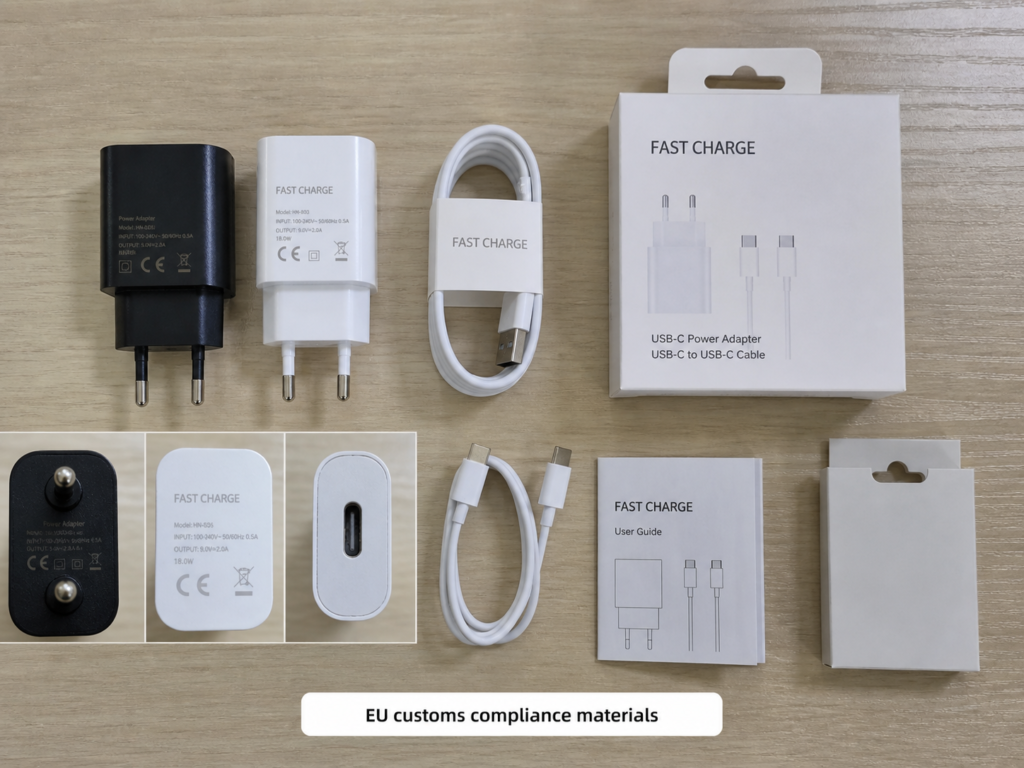
AFA applications should submit right certificates, authorization or agent certificates (if applicable), and information sufficient to help customs identify genuine and suspected infringing goods in accordance with the requirements of the application form and the competent customs.
For charging products, the following materials are usually very helpful:
• Nameplate, pins, fast charging logo, and shell appearance materials of chargers or power adapters;
• Interface type, cable appearance, connector shape, packaging and brand identification materials of USB cables or connectors;
• Packaging identification materials such as brand Logo, anti-counterfeiting marks, and barcode samples;
• Description of differences between known infringing products and genuine products, such as interface Logo details, cable texture or connector shape differences.
Genuine product images, packaging, anti-counterfeiting materials, and comparison materials of known counterfeit products are all very valuable, but not all applications must submit the same type of image, nor do there necessarily exist counterfeit samples for comparison. The upload format, correction requirements, and depth of materials shall be subject to the requirements of the competent customs.
Common Reasons for Rejection
AFA applications are usually rejected due to the following problems:
1. The right has expired, or does not cover the region where the application requests action;
2. The authorization or agent certificate does not meet the requirements of the competent authority;
3. The product identification materials lack key details, making it difficult for customs to judge what goods to identify;
4. The product description is too vague, and customs does not know what type of product to pay attention to.
Whether the authorization document needs to be signed, certified, or in a specific form shall be subject to the requirements of the customs of the member state where the application is filed, and it cannot be generally required that an official seal must be affixed.
Application Maintenance and Common Problem Handling
Validity Period and Information Update
AFA has its own independent validity period, which is managed separately from the validity period of the intellectual property right itself, and it must be renewed in time according to official prompts. If your intellectual property right is renewed, the right holder/agent changes, or new product models are added, you must update the filing information in time.
Cooperation Process After Goods Detention
If customs seizes suspected infringing goods, it will send you a detention notice. You need to confirm whether the goods are infringing products within the specified time limit (specifically subject to the requirements of the corresponding member state), and if necessary, supplement appraisal opinions or initiate judicial procedures. If there is no response after the deadline, customs may release the goods.
Also note: Passing the AFA application does not mean that customs will definitely seize or detain the goods. Customs will take action according to risk levels, inspection plans, etc. Don’t think that filing is all you need to do.
Common Pitfall Avoidance Points
• Don’t apply only when the peak season is approaching; the review cycle may become longer during the peak season, and you may not keep up with the delivery schedule;
• Do not default that the Union application can cover all countries just based on the transportation route. You should select the member states requesting customs action according to the actual territorial protection scope of the right and the flow of goods;
• Don’t upload expired right certificates, so as not to affect the application processing.
General Operation Guide for Charging Industry Practitioners
Whether providing materials for ICS2 or applying for AFA, charging industry practitioners can follow a set of general operation logic to reduce the probability of pitfalls.
Pre-Delivery Decision-Making Process
Follow these steps, and you basically won’t miss key links:
1. First verify the official entry: confirm what business the “EUICOS” mentioned by the other party actually corresponds to, find the official page before operating, and don’t click on unfamiliar third-party links;
2. Clarify the subject responsibility: determine whether to apply by yourself, declare by the carrier, or entrust a freight forwarder or platform to handle it. After entrustment, you should still ensure that the commercial materials you provide are true and accurate; the legal declaration responsibility of ENS shall be determined according to the actual declarant, the submitted data, and applicable customs rules;
3. Prepare core materials: sort out the product and transportation data required by the carrier when involving ICS2; prepare right certificates and product identification materials when applying for AFA, and ensure that all information is true and accurate;
4. Check product compliance requirements: confirm that the applicable compliance documents are ready for your charging product type;
5. Confirm the deadline: whether it is the carrier’s data submission deadline or the AFA review cycle, you must leave enough time in advance, and don’t submit it just on the delivery day;
6. Handle abnormalities in a timely manner: pay attention to notifications after submission, and handle requests for supplementary materials or corrections immediately;
7. Keep all documents and receipts, file them by category, for subsequent verification.
Data Consistency Management (Core of General Pitfall Avoidance)

Whether it is ICS2 or AFA, you should avoid that interrelated information cannot be explained — for example, the goods model cannot correspond to the invoice, the quantity is inconsistent with the packaging information, or the right materials are irrelevant to the actual product.
The core requirement is: interrelated information in customs and commercial materials should be true, consistent, and mutually explainable. Subject information, goods identification, quantity, packaging, weight caliber, transportation information, value, and classification should be carefully checked in particular.
Different documents have different purposes, and it is unnecessary and unrealistic to require all texts to be consistent word for word. Commercial invoices, transport documents, technical documents, and platform product pages can use descriptions of different granularity; but the model, subject information, and key identification information of the same product should be able to correspond.
If you have many SKUs, it is recommended to establish a product information matrix table, uniformly enter the product name, parameters, HS code, and compliance number of each model, and all channels share the same set of basic information to avoid errors.
General Rules for Document Management
Documents of both types of processes can be managed according to this rule, which meets official requirements and is also convenient for you to find:
• **Format and language**: Subject to the prompts on the official entry, PDF format and English content are recommended to avoid system incompatibility;
• **Naming suggestions**: Name in the format of “waybill number/batch number/abbreviation of right holderdocument type”, do not use Chinese or special symbols to avoid system identification failure;
• **Clarity requirements**: The text, seals, and numbers in the document must be clearly legible, and there must be no alteration or cropping;
• **Retention requirements**: Save by category of customs declaration, product compliance, intellectual property, and taxation, and the retention period shall be subject to the latest regulations and importer requirements.
Operation Differences of Different Sales Models
• **Self-delivery model**: The seller provides accurate product materials, and the carrier, freight forwarder, or subject legally participating in the declaration handles ENS-related declarations. The seller keeps the documents for future reference;
• **FBA/overseas warehouse model**: Send compliance and product materials to the overseas warehouse or freight forwarder in advance, and confirm clearly who the declaration subject is to avoid information disconnection;
• **Platform drop-shipping model**: Confirm whether the platform or logistics party actually handles ENS data submission, import declaration, or only collects documents on behalf, and ask for a retainable receipt or record.
Self-Handling vs. Entrusting a Service Provider: How to Choose?
• **Situations suitable for self-handling**: Enterprises with a large number of applications, full-time compliance personnel, and familiarity with EU customs rules have higher flexibility in independent control;
• **Situations suitable for entrusting service providers**: Small and medium-sized sellers, entities entering the EU market for the first time, and entities with few product models, it is more worry-free to find a professional service provider;
• **Service provider selection criteria**: Prioritize service providers with experience in charging product compliance, who can clearly state the official basis, and have clear responsibility division. Don’t believe promises like “guaranteed pass” or “100% pass” — the final review right is in the competent authority, and no one can guarantee it.
Minimum Executable Checklist Before Delivery
You can use this checklist to check basic materials and responsibility arrangements before delivery, but it shall still be subject to applicable official rules, carrier requirements, and specific freight conditions.
ICS2 Pre-Declaration Checklist
• The official entry, actual transport mode, and relevant declaration subject have been confirmed;
• It has been confirmed whether it is necessary to provide an EORI number or other customs identification information;
• The product description is specific and accurate, which can identify the nature of the goods and meet the requirements of the carrier or applicable data set;
• Interrelated goods identification, quantity, packaging, weight caliber and other information in invoices, waybills and declaration materials are true and mutually explainable;
• Compliance documents for charging products are ready, so that they can be provided when required by the carrier, customs or other competent authorities;
• The required materials have been provided before the deadline required by the carrier.
AFA Intellectual Property Application Checklist
• The official entry and application process of the corresponding member state’s customs have been confirmed;
• It has been confirmed that the intellectual property right is effectively protected in the member state where action is requested;
• A legal service address within the EU (EU representative/lawyer) has been prepared;
• Appearance, packaging, brand identification, anti-counterfeiting or other key materials that can help customs identify products have been prepared;
• The right holder name and product model on all documents are consistent with the actual situation;
• Sufficient review time has been reserved (plan in advance during peak season).
Official Entry Verification Checklist (Must Do)
EU customs rules are updated from time to time. Before each operation, you must verify the latest official information. It is recommended to record the access date to avoid using outdated rules:
• EU Customs ICS2 official page, check the implementation stage and latest rules;
• The official entry for AFA/COPIS applications of the corresponding member state’s customs, check the application requirements;
• EUIPO official page for intellectual property customs cooperation, check the cooperation process;
• Carrier’s official declaration guide, check the deadline and document requirements;
• Official page of EU regulations applicable to charging products, check compliance requirements.
Final Summary
Understanding the so-called “EUICOS system” is essentially learning not to be led by non-official names, and being able to actively correspond to the truly applicable official rules and requirements.
For data arrangements before goods enter the EU, you should first confirm whether ICS2 is involved, who submits the ENS, and what materials the carrier needs; for counterfeit prevention, you should judge whether to apply for AFA according to the actual territorial protection scope of intellectual property rights and the flow of goods. No matter which process you participate in, you should first verify the official entry, clarify the division of responsibilities, ensure that the materials are true and accurate, and reserve time for supplementary information and transportation abnormalities. Only in this way can we more steadily reduce delays and compliance communication costs.