
When choosing GaN chargers, friends engaged in cross-border procurement or overseas e-commerce mostly first look at size, power, and price, and easily overlook compliance issues—only when goods are detained by customs or platform listings are taken down do they find that the cost of supplementary certification is higher than the profit. Although GaN chargers use new materials, they are essentially consumer power adapters. Compliance rules in global markets have common points, as well as special requirements for high-power, small-volume products. This article explains the key global regulatory points that must be understood for GaN charger procurement, from basic entry-level knowledge to practical pitfall avoidance, so that even first-time novices can follow and use it.
I. Get Started First: Basic Logic of Regulatory Procurement
What Products Fall Under the Compliance Jurisdiction
GaN (gallium nitride) is a new type of semiconductor material. Chargers made with it are smaller in size and higher in power density than traditional silicon-based chargers, meaning they are much smaller for the same power. However, in terms of regulatory classification, **no country or region in the world has exclusive regulations for GaN materials**, and all requirements are implemented in accordance with the rules for consumer power adapters.
The compliance scope we discuss specifically refers to independently sold USB/USB-C chargers for civilian consumer electronics; power supplies dedicated to industrial/medical use and sold bundled with equipment without separate sale have different rules and are not within the scope of this article. A special boundary to note: if the charger has wireless charging, Bluetooth, or WiFi functions, in addition to power supply rules, it must additionally comply with wireless equipment regulations, which is equivalent to an extra layer of compliance requirements.
What Is the Use of Compliance?
Simply put, it is spending small money to avoid big losses: first, to avoid customs detention of goods and high fines. Markets with strict supervision such as Europe, the United States, Japan, and South Korea inspect power supply products very closely; second, to avoid e-commerce platform delisting and account penalties. For example, Amazon’s compliance requirements for power supply products are almost synchronized with local regulations; third, to avoid accountability and compensation after safety accidents. Once problems such as fire or injury occur, non-compliant products must bear full responsibility; fourth, to reduce the additional costs of rectification and retesting. The cost of supplementary certification afterwards is often several times that of doing it in advance.
Compliance Similarities and Differences Between GaN and Silicon-Based Chargers
The basic compliance requirements of the two types of products are generally the same: both must check safety, electromagnetic compatibility, energy efficiency, environmental protection and other requirements according to the target market. The difference is mainly in risk points: due to their small size and high power, GaN chargers are more prone to three types of problems: excessive temperature rise, insufficient internal insulation distance, and excessive electromagnetic interference, so compliance is more difficult than traditional silicon-based chargers.
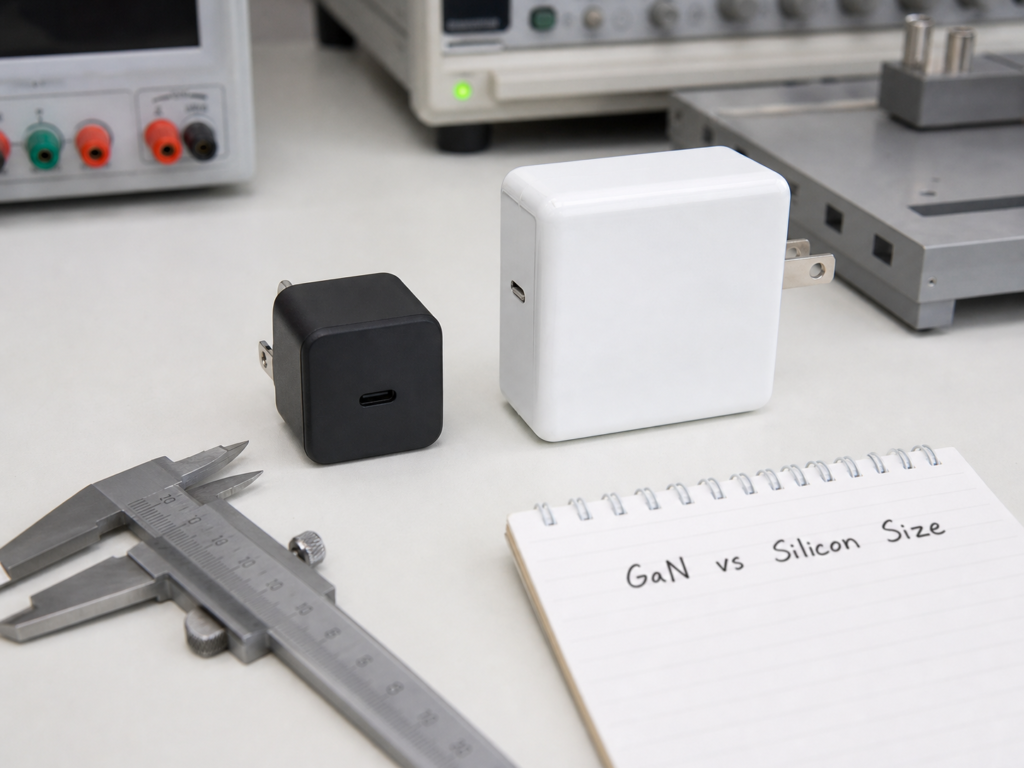
A common misconception needs to be corrected here: not all GaN chargers have higher energy efficiency than silicon-based ones. The conversion efficiency of inferior GaN solutions may not be as good as that of high-quality silicon-based chargers. Don’t assume that energy efficiency meets standards just because you see the “GaN” label.
4 Cognitive Pitfalls That Novices Are Most Likely to Fall Into
If you don’t understand these misconceptions, you will make mistakes from the first step of procurement:
1. **Compliance = mandatory third-party certification?** Not necessarily. Some markets allow manufacturers to issue a Declaration of Conformity (DoC) and keep technical documents and test evidence; other products or channels may require third-party certification. Mainstream e-commerce platforms usually put forward additional document requirements, so those doing online sales should prepare according to the specific rules of the platform and the target market.
2. **One certification is valid globally?** This cannot be understood that way. Regulations, registration and labeling rules in each market are not exactly the same. International standard test reports or CB reports can sometimes be used as the technical basis for the certification procedures of the target country, but whether local certification, registration, DoC or other documents are still required must be confirmed according to the target market and product category.
3. **Advanced GaN technology = automatic compliance?** New technology does not mean compliance with regulations. On the contrary, due to small size and high power density, there are more compliance risks than traditional silicon-based products.
4. **Test report = certification certificate?** Not the same. A test report is one of the technical evidences for conformity assessment, which usually indicates that the submitted sample has completed the corresponding test under specific conditions; the role and legal status of a third-party certification certificate depend on the specific certification system. For regulations that allow manufacturer self-declaration, DoC and technical documents may be the main compliance documents. Test reports, third-party certification certificates and DoC cannot be confused.
II. Mandatory Compliance Requirements in Major Global Markets
According to the market categories that everyone often deals with, the core requirements do not need to be memorized by rote, just check them against before procurement.
North American Market (United States + Canada)
When procuring for the United States, different obligations should be checked separately: for electromagnetic compatibility, it is usually necessary to confirm the equipment authorization method applicable to FCC Part 15. Some unintentional radiation equipment may be subject to the Supplier’s Declaration of Conformity (SDoC), depending on the equipment category and applicable rules; for energy efficiency, the federal DOE external power supply requirements should be checked, and for products sold to California, the applicable scope and requirements of California CEC should also be confirmed. At the US federal level, not all independent power adapters must obtain third-party safety certifications such as UL and ETL, but NRTL safety certification recognized by OSHA may be affected by workplace, specific procurement, state or platform and retailer requirements, so it should be confirmed according to the sales channel and target state.
For Canada, the applicable radio interference requirements and supplier declaration of conformity requirements of ISED should be checked; electrical safety certification should also be confirmed according to the sales province, product category and sales channel. UL, ETL, CSA, cUL cannot be generalized as unified mandatory certifications for all North American markets.
Special note for the North American market: high-power or small-volume GaN chargers should verify temperature rise and accessible surface temperature under specified input, load, ambient temperature and abnormal conditions in accordance with the applicable safety standards adopted by the target market. 65W can be used as an empirical segment for procurement risk screening, but it is not a regulatory temperature rise threshold in the United States or Canada.
European Union and European Economic Area
Applicable EU electrical products usually need to complete conformity assessment and affix the CE mark in accordance with relevant regulations or directives. Safety, EMC, RoHS and ecodesign/energy efficiency requirements need to be checked separately. CE cannot be understood as a single third-party certification, or as a certificate that automatically covers all requirements. Manufacturers usually also need to prepare technical documents and, where applicable, sign the EU Declaration of Conformity (DoC).
Regarding USB-C, it should first be confirmed whether the product belongs to the radio equipment and other applicable categories listed in Directive (EU) 2022/2380. For devices falling within the scope, the corresponding USB-C and charging protocol requirements apply from December 28, 2024; the applicable date for laptops is April 28, 2026. Independently sold chargers cannot be generalized as requiring USB-C under this rule just because they are “independently sold”; whether it applies should be judged in combination with product definition and sales objects.
When selling to EU member states, the responsibilities of importers/manufacturers, the General Product Safety Regulation (GPSR) and other applicable product regulations should be checked separately, and WEEE producer registration, recycling and reporting obligations should be fulfilled according to the selling member state. Platforms may require additional supporting documents, but WEEE registration is not a unified EU registration, nor can it be generalized as a unified pre-condition for customs clearance of all products.
Special note for the EU market: for small-volume GaN chargers, it is necessary to focus on confirming that the internal insulation distance meets the standards. Local requirements for electric shock protection are strict, and too small a size can easily lead to insufficient creepage distance.
UK Market
According to the current regulations of the UK government, the applicable product regulations, conformity assessment methods and CE/UKCA marking policies for Great Britain and Northern Ireland should be confirmed separately. UKCA cannot be generalized as a “certification” uniformly issued by third-party institutions; for products that allow manufacturer self-declaration, the corresponding procedures can also be completed through the manufacturer’s Declaration of Conformity. The UK government’s policy on accepting the CE mark in the Great Britain market has been adjusted many times, so it is not appropriate to state it as a fixed transition deadline, and different rules apply to Northern Ireland.
In addition to basic safety and electromagnetic compatibility requirements, it must also comply with the applicable energy efficiency and environmental protection rules in the UK. British plugs must have fuses, and product labels must comply with local labeling specifications.
Core Asia-Pacific Markets
• **Japan:** According to the Electrical Appliance and Material Safety Law of Japan and the classification of the Ministry of Economy, Trade and Industry (METI), confirm whether the specific AC adapter belongs to specified or non-specified electrical appliances, then determine whether diamond PSE or circular PSE is required, as well as the testing institution and supplier declaration obligations. It cannot be generally asserted that all chargers require diamond PSE.
• **South Korea:** It is necessary to check KC safety, electromagnetic compatibility and supporting energy efficiency requirements according to product category.
• **Australia/New Zealand:** The two countries should check EMC, radio, electrical safety and energy efficiency requirements separately. Where applicable in Australia, the responsible supplier should complete EESS registration and use the RCM as required; products involving energy efficiency should also check GEMS registration. RCM is not equivalent to automatically covering all energy efficiency obligations, nor is it a third-party certification mark that cannot be affixed by the responsible supplier itself.
• **China:** For sales in Chinese mainland, it is necessary to confirm whether CCC mandatory certification and other relevant requirements apply according to product category.
Emerging Markets
Rules in emerging markets such as Southeast Asia, India, the Middle East, and Latin America are updated rapidly. Be sure to verify the latest requirements before procurement. Common local compliance items include: India BIS registration, Singapore Safety Mark, Thailand TISI, Malaysia SIRIM, Saudi Arabia SASO/SABER, UAE ECAS, Brazil INMETRO, Mexico NOM.
Multi-Market Cost Reduction Tool: CB Certification
When the certification body of the target country participates in the IECEE CB system for relevant IEC standards and accepts the product scope, it can be evaluated to use CB reports or certificates as the technical basis for local certification. This has the opportunity to reduce repeated testing, but whether it saves costs depends on the target country, product model, standard version and national differences. “Simultaneously laying out 3 or more markets” cannot be used as a fixed applicable threshold.
It should be noted that CB cannot be directly used as a marketing authorization for all markets. Conversion still requires checking national differences, plug styles, local labels, product variants and exclusive test items of the target market, and conversion requirements should be confirmed country by country before procurement.
III. Core Compliance Dimensions That Must Be Checked in Procurement
This part is the key point of practical operation, arranged in descending order of priority:
1. Electrical Safety (Highest Priority, Major Cause of Goods Detention)
Electrical safety is the focus of inspection in all markets, and the consequences of problems are the most serious. Core inspection items include:
• **Electric shock protection:** First confirm the protection level of the equipment and whether it belongs to Class II, then check the corresponding labeling, insulation and electric shock protection requirements according to applicable standards. The double insulation “回” mark is only applicable to corresponding Class II equipment, and not all chargers must be marked with it;
• **Protection functions:** Verify applicable protection and abnormal operating conditions such as overcurrent, overvoltage, short circuit, and overheating according to the safety standards of the target market. There is no fixed list of four items applicable to all markets and all chargers;
• **Temperature rise compliance:** Temperature rise and accessible surface temperature must be determined under specified input, load, ambient and contact conditions. 70°C cannot be used as a global universal limit;
• **Multi-port models:** The power reduction logic during simultaneous output meets applicable safety requirements, and there will be no overheating or overload due to multi-port loads.
GaN-specific risks: due to small size and insufficient heat dissipation space, internal insulation distance is also prone to be insufficient, and high-power models are especially prone to excessive temperature rise problems.
Appearance and operation inspections can only be used as screening, and cannot be used to judge compliance. Testing should be carried out by a qualified laboratory under specified environmental, input, load and abnormal conditions in accordance with the applicable safety standards of the target market, and mass production consistency should be checked.
2. Electromagnetic Compatibility (EMC)
Electromagnetic compatibility, simply put, is the ability of electrical appliances to not interfere with each other when working: they neither interfere with other electrical appliances nor are interfered with by other electrical appliances.
Core inspection items: during fast charging, it should not cause abnormal interference to devices such as WiFi, Bluetooth, and radios; when high-power electrical appliances are started nearby, charging should also remain normal.
GaN devices may support higher switching frequencies or faster switching edges, but the actual frequency and EMC performance depend on the overall design. It cannot be asserted that the switching frequency must be much higher than silicon-based just because GaN is used. Layout, filtering, shielding, control strategies, etc. will all affect the results.
For entry-level inspection, you can first confirm whether the documents cover the EMC requirements of the target market, but daily observation of whether WiFi speed drops or Bluetooth disconnects cannot replace standardized conducted emission, radiated emission and immunity tests.
3. Energy Efficiency Requirements
Now many markets are strengthening energy efficiency supervision, and non-compliance may lead to platform delisting, customs clearance or sales restrictions.
Core inspection items: confirm standby power consumption, average efficiency and specified load point requirements in accordance with the energy efficiency regulations and test methods applicable to the target market and product category; for multi-port models, also check whether both single-port and combined output are within the applicable scope, and cannot only test single port.
Test methods vary by regulation, product type and standard. 10%, 50%, 100% are not globally unified test points for external power supplies. During procurement, verify separately: whether EU ecodesign or energy efficiency label rules trigger EPREL obligations; whether US DOE external power supply standards and related filing and record requirements apply. Platform requirements need to be confirmed separately, and it cannot be asserted that failure to complete a certain database registration will make it impossible to list on all platforms.
Pitfall avoidance tip: Do not assume energy efficiency meets standards solely based on the GaN label. Be sure to check the official energy efficiency test report or compliance document corresponding to the product model.
4. Environmental Protection and Recycling Obligations
This part is easy to overlook, but the rectification cost for non-compliance is high, and it often leads to platform delisting.
Core requirements: First, check restricted substances, homogeneous material limits, applicable exemptions and supply chain declarations in accordance with the target market’s RoHS or similar regulations. Do not state that substances such as lead, mercury, and cadmium are absolutely prohibited in all markets; the specific list of restricted substances, concentration thresholds and exemptions may vary; second, fulfill the locally applicable recycling responsibilities, affix corresponding recycling marks, and some markets also require completion of recycling registration; third, packaging complies with the target market’s environmental protection rules, such as plastic reduction, recyclable marks, etc.
5. Labeling and Interface Specifications
This is the easiest item to check, and also the place where pitfalls are most likely to occur.
Labeling requirements: parameters, brand, origin, and certification marks must be clearly marked, and the labels must not be easy to fall off, and cannot be scraped off by hand;
Interface requirements: first confirm whether the product is subject to specific mandatory regulations in the target market. For example, the EU common charger rules mainly target the radio equipment categories and their charging solutions listed in Directive (EU) 2022/2380. For applicable products, USB-C requirements should be checked according to specific dates such as December 28, 2024 or April 28, 2026 for laptops; whether independent chargers are bound by this rule needs to be judged separately;
Language requirements: labels and instructions must include the official language of the target market, and cannot only be in Chinese or English.
Common pitfalls: blurred labels, false parameter labeling, random printing of certification marks. For example, printing the UL mark without passing the corresponding UL certification may lead to product detention or sales restrictions if inspected.
6. Additional Compliance Requirements for Additional Functions
If the charger has additional functions, corresponding compliance requirements need to be added. The more functions, the higher the compliance cost. Confirm the necessity before procurement: those with wireless charging need to additionally comply with wireless transmission safety and electromagnetic compatibility requirements; those with Bluetooth/WiFi/NFC need to additionally comply with wireless equipment regulations.
IV. Methods for Auditing Supplier Certificates and Documents
Many suppliers provide inapplicable, expired or incomplete scope documents. Be sure to check step by step, and don’t just leave it alone after getting the certificate.
3 Steps to Verify Certificate Authenticity
Step 1: Check whether the institution issuing the document has obtained the required accreditation within the scope of the target market and corresponding product standards. Institutions such as SGS, TÜV, UL, and CSA may provide different types of testing, certification or inspection services. The institution name itself cannot be equated with a certificate recognized by the target market; whether it is acceptable should be judged according to the target regulations, certification scheme and institution qualifications.
Step 2: Confirm whether the document type is a test report, certification certificate or inspection report, and ask the supplier to provide the number, verify it yourself through the institution’s official database or written channels, and never accept the situation where only screenshots are provided.
Step 3: Confirm the number, applicable standards, manufacturer, model, production location and change status, verify that the document is still valid and the scope covers the actual sold products. Only marks or screenshots cannot prove compliance.
Key Points for Checking Certificate Coverage Scope
Even if the certificate is real, it does not mean that your product can use it. The following points must be checked:
• The product model and appearance are completely consistent with the procured product;
• The rated power, number/type of interfaces, and plug version are consistent with the procured product;
• The covered target sales market is correct;
• Multi-port models cover all applicable output combinations;
• All plug versions of interchangeable plug models are within the certification scope.
Test Report and Product Consistency Verification
Having a certificate alone is not enough. You also need to check whether the test report is consistent with the actual product:

• Check that the product photos and key components (GaN chip, transformer, fuse) in the report are consistent with the sample;
• Confirm that the report is for the whole machine test, not just a test report for the GaN chip. Chip reports cannot replace whole-machine compliance documents;
• Confirm that the report covers applicable scenarios such as normal operation, abnormal overload, and simultaneous multi-port output.
If the report model or actual product is inconsistent with the document, release should be suspended, and model aliases, series coverage, variant scope and the certification body’s change approval should be checked. Evaluation can only continue if the certification body or technical documents can prove that it still belongs to the same certification scope; when consistency cannot be proven, the product shall not be sold under this report or certificate.
List of Required Compliance Documents
When procuring, be sure to ask the supplier to provide documents matching the target market: mandatory certification certificates of the target market or other applicable conformity documents, Declaration of Conformity (DoC) issued by the manufacturer, product specifications/label drafts/instructions, list of key components, energy efficiency and environmental protection related test reports or declarations.
OEM/ODM Private Label Authorization Confirmation
If selling under your own brand, be sure to confirm the following matters:
• Check the applicant, brand, manufacturer, production address, model and change rules of the certification scheme listed on the certificate;
• In case of private labeling, factory or address change, confirmation from the certification body should be obtained, and corresponding change, expansion or re-evaluation procedures should be fulfilled;
• Confirm whether the own brand party assumes manufacturer responsibility under the target regulations. A single “authorization letter” cannot solve all compliance obligations;
• Certification documents should clearly cover the actual sales brand, or confirm that the target scheme allows corresponding brand changes and affixing methods.
Pitfall avoidance: Products that are attached to others’ certificates have high risks. Even if the factory does have the certificate, it cannot be directly presumed that own brand products are automatically covered.
V. Advanced: Compliance Decisions for Different Procurement Scenarios
This part is suitable for sellers with certain experience, which can not only meet compliance requirements but also control costs.
Adjust Compliance Depth According to Sales Channels
Document and audit requirements vary by channel, but channel differences cannot be interpreted as product regulation exemptions:
• **Third-party e-commerce platforms (Amazon, etc.):** May require complete and verifiable certification or test documents, and all parameters of the listing must be consistent with the compliance documents;
• **Offline physical retail:** Should comply with local mandatory certification and consumer protection regulations, and meet the retailer’s document and labeling requirements at the same time;
• **Cross-border direct mail of small parcels:** Supervision, import declaration and platform audit methods may be different, but small parcels, low quantity or direct mail usually do not automatically exempt product safety, EMC, energy efficiency, environmental protection, labeling and product liability requirements. Whether there are low-value or small-batch simplification procedures must be confirmed country by country;
• **Bundled sales (sold with equipment):** It cannot be presumed that there is no need to separately meet charger requirements just because they are sold with equipment. The safety, EMC, energy efficiency, environmental protection and supply chain document obligations applicable to chargers should be confirmed country by country, and only exemptions or simplification procedures explicitly stipulated by regulations can apply.
Judge Compliance Difficulty and Cost by Power Segment
Segments such as 20W, 25W, 100W can only be used as empirical classifications for engineering and procurement risks, cannot be used as regulatory conclusions, nor can they be used to deduce certification difficulty, energy efficiency requirements or safety requirements. Regulatory thresholds may be divided by input power, output power, product category, port and use, and standards vary by market.
In actual procurement, requirements should be confirmed item by item according to the target market, input and output parameters, port combination, product category and applicable standards. Products with higher power or smaller size are usually worth investing more in pre-testing and consistency audits, but specific requirements are still subject to applicable regulations and standards.
Judgment of Certification Validity for Customized Procurement
For customized products, whether the original certification continues to apply depends on the specific certification system and the scope of change:
• **Only changing the outer packaging logo and instruction language:** When the product itself remains unchanged, the original certification may be used, but it should be confirmed whether brand, label and document obligations need to be updated, and confirmed with the certification body in advance;
• **Changing the number of interfaces, appearance color, plug version:** These are product changes that require evaluation, and it should be confirmed whether they are within the variant scope of the original certification;
• **Changing internal solutions, power, fast charging protocols:** Should be submitted to the certification body for change evaluation before mass production. Perform document update, supplementary testing, certificate expansion or re-certification according to the evaluation results. Before confirmation by the certification body, it shall not be assumed that the original certificate continues to cover the changed product.
Note: Be sure to consult the certification body before customization, and clarify the party responsible for compliance and rectification costs in the contract.
Cost Optimization Methods for Multi-Market Layout
• Prioritize evaluating products with CB certification, and reduce repeated testing costs through conversion on the premise that the certification body of the target country accepts it;
• Choose universal models with wide voltage (100-240V) and interchangeable plugs to reduce product versions for different markets;
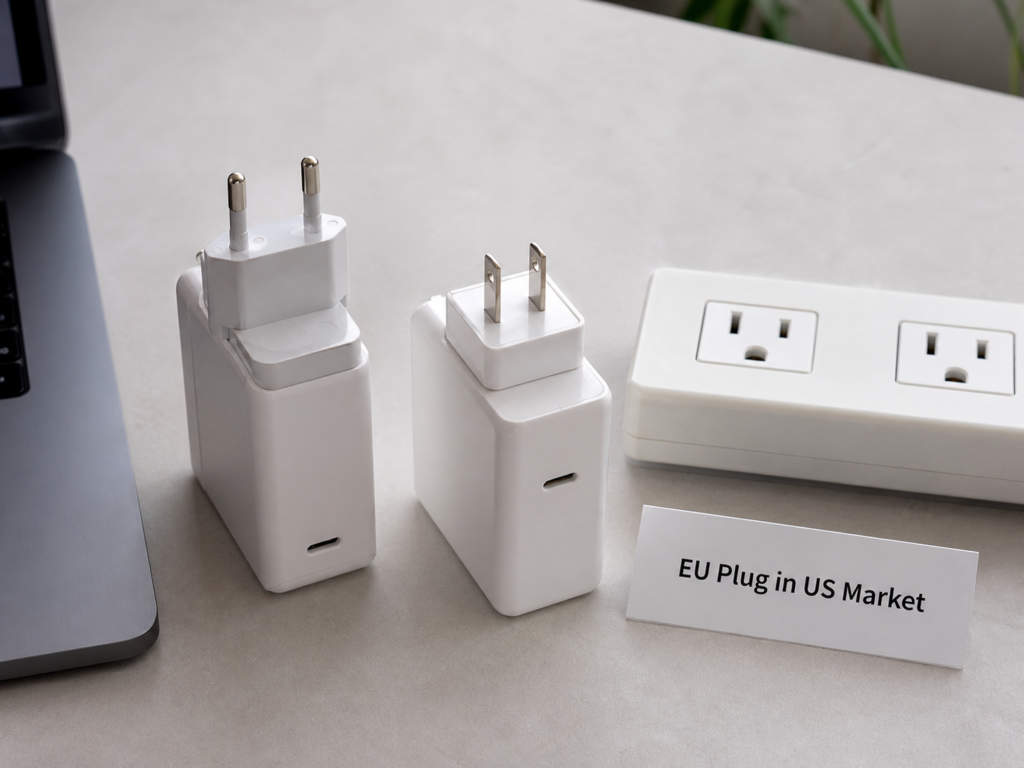
• Configure labels and instructions separately for different markets to avoid mixed use of certification marks. For example, products sold to the EU should not print the UL mark without basis.
Pitfall avoidance: Do not stick certification marks of uncovered markets on products just to appear compliant. For each mark, confirm its applicable market, use conditions and actual certification scope.
Compliance Trigger Conditions for Mass Production Changes
If there are changes after mass production of the product, first judge whether the certification needs to be re-evaluated.
**Matters that usually trigger change evaluation:** Replacement of key components such as GaN chips, main control chips, transformers, safety capacitors; adjustment of output power, number of ports, fast charging protocols; modification of shell structure, heat dissipation design, plug structure; change of manufacturer or production address.
**Matters that may only require recording, approval or document update:** Replacement of outer packaging boxes, adjustment of instruction language (content unchanged); appearance silk screen adjustment that does not affect electrical performance. However, whether simplified processing is possible still needs to be confirmed according to the certification scheme.
Decision tip: When changes involve key components, structure, power, ports, manufacturing location, etc., change evaluation must be carried out according to the certification scheme. Before obtaining confirmation from the certification body, it shall not be claimed that the original certificate covers the changed product, nor can it be generally asserted that the certificate will be automatically invalidated.
VI. Common Compliance Pitfalls and Pitfall Avoidance Methods
Common Certification Pitfalls
• **Fake/PS certificates:** Only accept documents that can be verified through the official database or written channels of the target institution, and reject suppliers that only provide screenshots;
• **Counterfeit/attached certificates:** Check the certificate holder, applicant, brand, manufacturer, production address and model, and require explanation of whether private labeling and changes have been confirmed by the certification body;
• **Model mismatch:** Check the certificate model, parameters and appearance against the procured product word by word. If differences are found, suspend release and confirm whether it is a model alias, series coverage or approved variant;
• **Expired, revoked or scope-changed certification:** Check the status again before procurement to confirm that the document covers the current sold products and production version.
Product Compliance Pitfalls
• **False power labeling:** The nominal value is inconsistent with the actual value, which may cause safety, energy efficiency and consumer protection problems. The pitfall avoidance method is to actually test the full load output or request a third-party test report corresponding to the actual model;
• **Inferior GaN solution:** Poor device and whole machine design may lead to excessive temperature rise and electromagnetic interference. The pitfall avoidance method is to request information on GaN chips and key components and test reports of key items;
• **Interface does not comply with new regulations:** For products belonging to the applicable equipment categories of Directive (EU) 2022/2380, check USB-C requirements according to specific dates such as December 28, 2024 or April 28, 2026 for laptops; whether independent chargers are bound by this rule needs to be judged separately;
• **False multi-port power labeling:** The total power is nominal but single-port or combined output cannot reach it. The pitfall avoidance method is to check the multi-port combined output data in the test report.
Logistics and Customs Clearance Pitfalls
• **False declaration (fraudulent product name, power, origin):** Leads to goods detention and fines. The pitfall avoidance method is to declare truthfully, with all parameters consistent with compliance documents;
• **No local import responsible person:** Markets such as the EU may involve importers, authorized representatives, WEEE, packaging law or other producer responsibilities. The pitfall avoidance method is to confirm the local responsible entity and recycling service provider in advance;
• **Plugs do not meet local requirements:** For example, using European plugs in the United States. The pitfall avoidance method is to confirm that the plug version meets the target market before procurement.
Platform Operation Pitfalls
• **Listing parameters are inconsistent with certification:** May be delisted by the platform. The pitfall avoidance method is to make all promotional parameters completely consistent with compliance documents;
• **No brand or certification authorization:** Factory documents do not cover the seller’s brand. The pitfall avoidance method is to require the factory to provide formal authorization or change confirmation matching the target certification system;
• **Incomplete energy efficiency documents:** Some platforms may require energy efficiency database registration or other certificates. The pitfall avoidance method is to confirm the specific document requirements of the target market regulations and the platform in advance.
Supplier Risk Warning Signs (Suspend Cooperation If They Appear)
• Only provide certificate screenshots, not queryable numbers;
• Claim “globally universal certification” but do not specify which countries are covered;
• Refuse to provide the list of key components or change control plan;
• The appearance, interface and weight of the sample are obviously inconsistent with the mass production model;
• The quotation is far lower than the market average price, and there is a high probability of compliance loopholes.
VII. Quick Compliance Self-Check List Before Procurement
Check item by item against the following list before procurement. It can be used to systematically check common market access, document consistency, labeling and supplier change risks, but it cannot replace target market regulatory review, certification body evaluation and laboratory testing.
Basic Information Matching Self-Check
□ All mandatory regulatory requirements of the target sales market have been clarified
□ The power, interface, and plug version of the procured product meet the target market requirements
□ The regulatory requirements corresponding to the procurement volume and sales channel have been confirmed
□ Additional compliance requirements for additional functions (if any) have been clarified
Certification Document Authenticity Self-Check
□ The institution, laboratory or certification scheme issuing the document has the required qualifications within the scope of the target market and corresponding standards
□ The document number can be verified through the institution’s official database or written channels, and the status is valid
□ The model, parameters and appearance covered by the document are completely consistent with the procured product, or there is series, alias or variant coverage confirmed by the certification body
□ The document covers the target sales market and all product variants
□ It has been confirmed that private labeling, brand, manufacturer, production address and change status meet the requirements of the certification scheme
Physical Product Compliance Self-Check
□ Labels are clear and complete: parameters, certification marks, origin, and brand are all present, and the use method meets the target market requirements
□ It has been confirmed whether the interface is within the scope of mandatory requirements of the target market
□ Insulation, electric shock protection marks and shell requirements have been checked according to the equipment protection level and applicable standards
□ Labels and instructions include the official language of the target market
□ The power distribution label of the multi-port model is clear and consistent with the test report and actual output
Risk Pre-Control Self-Check
□ The factory has been required to provide test reports for key items (safety, electromagnetic compatibility, energy efficiency)
□ The procurement contract has agreed on compliance responsibilities (e.g., the supplier shall bear losses if the certification is false)
□ Local import responsible person, producer responsibility entity or recycling service provider has been confirmed (if required)
□ High-power/customized models have completed key item pre-testing or change evaluation according to the applicable standards of the target market (if required)
□ The notification, recording and re-evaluation rules for mass production changes have been clarified
Conclusion
After reading this content, you should be able to quickly list the compliance requirements that need to be checked in core markets such as North America, the EU, and Asia-Pacific, complete basic reviews of certificate authenticity, coverage scope and product consistency, select appropriate compliance solutions according to sales channels, product parameters and customization needs, and also identify common compliance pitfalls and supplier risk signals.
The compliance of GaN chargers seems complicated. When procuring, as long as you grasp the core points of “preparing according to market requirements, distinguishing document types, checking certificates and reports without fail, keeping physical products consistent with documents, and evaluating changes in advance”, you can detect risks earlier and reduce the possibility of goods detention, delisting and repeated testing.