
If you plan to sell products such as chargers, power adapters, and fast charging cables to Mexico, you have most likely heard of NOM certification — many sellers stumble on this with their first shipment: goods are detained by customs upon arrival at the port, e-commerce listings are forcibly removed, with penalties ranging from fines to return of the entire batch. In fact, as long as you understand the rules and processes, NOM-related compliance is not that difficult to handle. This article focuses specifically on charging products, starting from the most basic “whether to apply” to maintenance after obtaining the certificate, explaining everything step by step, so that even if you are new to this, you can follow the entire process.
First, Judge: Does Your Charging Product Need NOM Certification?
Many people think that all charging products require NOM certification, but that is not the case. First, clarify what NOM is, then conduct a self-check against specific products and applicable requirements.
What is NOM Certification?
NOM is the abbreviation of “Norma Oficial Mexicana”, which can be understood as “Mexican Official Standard” in Chinese. It is not a single certification certificate itself. Whether a product requires certification and which NOM applies depend on the specific product, technical parameters, and import and sales requirements. Conformity certificates are usually issued by accredited and approved Product Certification Bodies (Organismo de Certificación de Producto, OCP for short) in accordance with specific NOMs and certification schemes; the Mexican Secretariat of Economy (SE for short) is responsible for the supervision of relevant regulations, standards, and conformity assessment systems.
It is necessary to specifically distinguish three easily confused concepts: NOM standard number (the requirement number for a certain type of product), NOM conformity certificate (the document proving that the product meets relevant requirements), and NOM mark (the product label used in accordance with regulations). The three cannot replace each other — even if the NOM mark is printed on the product, it cannot replace the formal certificate or other applicable compliance documents.
Mandatory Scope for Charging Products
Not all charging-related products require the same type of NOM. Whether chargers, adapters, charging cables, and plugs are regulated should be judged in combination with the specific NOM, product use, rated parameters, product classification, and whether they are imported or sold independently.
• **Usually require key verification**: Wall-plug chargers, power adapters, and other products connected to the mains. Such products usually need to be checked against safety NOMs, energy efficiency NOMs, and labeling requirements, but an absolute conclusion cannot be drawn solely based on “being connected to the mains”.
• **USB-C cables and other charging cables**: Whether NOM certification or other compliance procedures are required cannot be judged solely by whether they have a fast charging chip. Cables with chips are not necessarily independently mandatory certification products, and ordinary passive cables cannot be completely excluded either. Confirmation should be based on the specific model, rated value, use, product classification, and import and sales methods.
• **Industrial-specific charging modules, accessories sold with the whole machine, etc.**: Whether they fall within the mandatory scope depends on the specific product use, import method, and exclusion clauses of the applicable NOM, and a conclusion cannot be drawn directly based only on “whether they are sold separately on the shelf”.
• **Plug and socket-related products**: It is necessary to check configuration, dimensions, rated values, polarity, grounding, and mechanical safety in accordance with applicable NOM/NMX technical requirements, rather than simply judging by the category of “Mexican standard plugs”.
• **Products with special functions**: Products with wireless communication or radio frequency transmission functions such as Bluetooth and Wi-Fi usually also need to be checked against the type approval or other telecommunications compliance requirements of the Mexican Federal Telecommunications Institute (IFT). The wireless charging function itself does not automatically trigger IFT certification; it still needs to be judged based on the communication and radio frequency transmission characteristics of the device.
If you are still unsure, do not take “whether connected to the mains, whether there is an active chip, whether sold separately” as a fixed three-step certification rule. A more prudent approach is to organize the complete product model, input and output parameters, use, structural description, and import and sales methods, and then confirm with the applicable NOM, OCP, or Mexican import compliance consultant.
Relationship with Common International Certifications
Many people ask: I have CE, FCC, and UL certifications, can they replace NOM? The answer is **they cannot be directly replaced**. CE, FCC, and UL cannot replace the applicable Mexican NOM certification or labeling requirements. Among them, FCC mainly involves US electromagnetic compatibility and radio requirements, and cannot replace Mexican product safety certification.
However, CE, UL, or IEC-related test data can be used as supplementary technical documents. Whether and to what extent they are accepted shall be judged by the OCP based on the specific NOM, report scope, and certification scheme.
If you have a valid CB report with a matching scope, the OCP may use it as a technical basis to reduce duplicate testing. But a CB report is not a pass to automatically convert to a NOM certificate. The OCP still needs to review the standard version adopted by the report, product scope, qualification of the reporting body, sample information, and Mexican national differences, and determine what additional tests are required. In some cases, full or partial retesting may still be required, and it cannot be promised that only difference items will be tested additionally.
4 Pre-Application Verification Steps: Get the Right Direction Before Starting
After confirming that the product may require NOM certification, do not rush to submit the application. There are 4 things to verify first, which can help you avoid many detours and unnecessary expenses.
Step 1: Confirm the Corresponding Certification Type for the Product
Charging products cannot be simply classified into three unified NOM certifications: safety, energy efficiency, and labeling. In actual application, the following aspects should be checked separately:
| Verification Direction | Applicable Products | Core Requirements | Mandatory or Not |
| Safety requirements | Products that may involve electrical safety, such as chargers and adapters | Safety indicators such as insulation strength, leakage current, temperature rise, and overload protection | Determined according to the specific NOM and product scope |
| Energy efficiency requirements | External power supplies, adapters, and other products that may be included in energy efficiency regulation | Conversion efficiency, standby power consumption, etc. | Determined according to the specific NOM, power, and product form |
| Labeling and commercial information | Products included in the scope of relevant NOM or labeling regulations | Spanish information, rated parameters, responsible party information, and other specified content | Determined according to the specific labeling NOM and product scope |
Labeling is not a unified product certification category alongside safety certification and energy efficiency certification. Different products may be subject to different labeling or commercial information regulations, such as NOM-024-SCFI-2013, NOM-050-SCFI-2004, etc. Label content, language used, responsible party information, certification marks, and label placement shall all be subject to the specific NOM and certification scheme applicable to the product.
In short, chargers and adapters usually need to focus on checking safety requirements; some external power supplies also need to check energy efficiency requirements; for labeling, the applicable labeling and commercial information regulations must be confirmed separately. Which requirements ultimately apply shall be determined by the specific product classification and OCP review results.
Step 2: Confirm Certificate Holder Qualifications and Solutions
This is a pitfall that many overseas sellers easily fall into, but the holder rules for all NOM certificates cannot be generalized into one model. The qualification requirements for applicants, certificate holders, manufacturers, importers, and Mexican contacts or representatives may vary depending on the specific NOM and OCP certification scheme.
Before application, confirm with the OCP responsible for the product:
• Who can act as the applicant or certificate holder;
• Whether a local Mexican entity or local responsible party must bear relevant responsibilities;
• Whether overseas manufacturers can act as applicants or certificate holders;
• Whether Mexican importers, distributors, or local representatives are required;
• Which links the RFC tax number, importer information, and label responsible party information apply to respectively.
If the certification scheme requires a local Mexican entity or local responsible party, it shall be borne by a qualified importer, distributor, or representative. Whether overseas manufacturers can directly apply for or hold certificates must be confirmed by the OCP based on the specific scheme, and cannot be generalized.
Step 3: Choose a Suitable Application Path
According to the existing materials you have, you can choose different application paths, but the test scope and required documents must be determined by the OCP based on the specific NOM and certification scheme:
• **Direct application**: When there are no existing test reports that can be accepted, it is usually necessary to arrange corresponding tests according to the specific scheme. The test scope may be relatively complete, which is suitable for new products entering the Mexican market for the first time and lacking relevant technical materials.
• **CB or other reports as technical basis**: If there is a CB report or other test materials that meet the requirements and have a matching scope, the OCP may reduce some duplicate tests based on this. However, whether to accept, what content to accept, and whether partial or full retesting is still required shall be determined after OCP review.
• **Series certification**: If there are multiple models of products with the same circuit and structure or acceptable differences, you can apply for series evaluation. Which models can be combined and which models need to submit samples or be tested separately shall be judged by the specific certification scheme and OCP.
Step 4: Prepare Application Materials in Advance
Preparing all materials in advance can avoid delays caused by repeated supplementary documents. Materials are divided into two categories:
• **Required materials**: Product technical documents (specifications, circuit schematics, bill of materials BOM), draft labels and manuals, applicant or holder information, manufacturer information, and qualification documents required by the OCP.
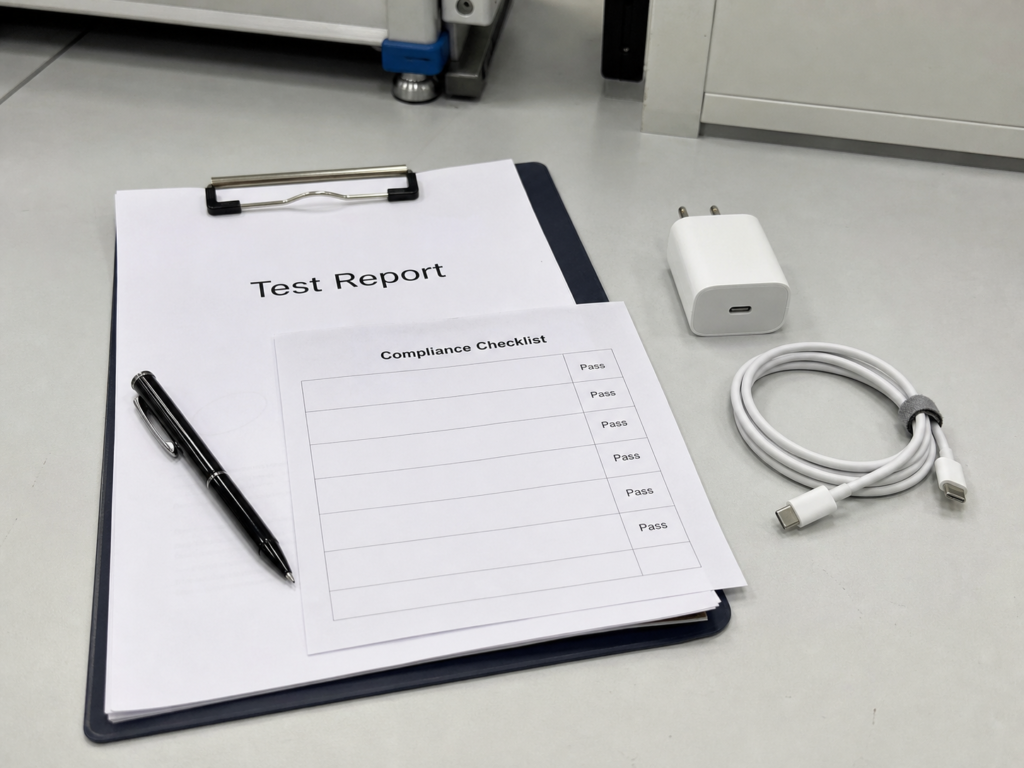
• **Accelerating materials**: Valid CB reports, other safety certification certificates, IEC or other relevant test materials, ISO 9001 quality management system certificates, etc.
It should be noted that ISO 9001 is a quality management system certificate, which does not mean that the product meets NOM, nor can it replace product testing or automatically exempt testing. Whether CB reports and other safety materials can reduce testing shall be judged by the OCP in accordance with the specific NOM, report scope, and certification scheme.
6-Step Formal Application Process: Checkpoints for Every Step
After completing these preliminary preparations, you can enter the formal application process. The entire process usually includes links such as application, material review, sample evaluation, report review, certificate issuance, and market launch labeling, but the specific steps may vary depending on the product and certification scheme.
Step 1: Select a Compliant Certification Service Provider
Choosing the right service provider is the first and also a very critical step. It is necessary to first distinguish the legal identities of consulting agents, laboratories, and OCPs: consulting agents can assist in preparing materials and communication, laboratories are responsible for testing, and OCPs conduct product certification and issue certificates within their accredited and approved scopes. The three are not the same type of institution.
To judge whether an institution is compliant, you cannot only look at the so-called “SE official authorization”, nor only look at whether the other party claims to cover “charging products”. You should directly verify the accreditation and approval status of the OCP, as well as the specific NOMs and product categories it covers, in the directories published by the Mexican accreditation body and the Ministry of Economy or competent authority.
When selecting, you can prioritize institutions that have experience in handling chargers, adapters, or related electronic products, with transparent quotations and clear explanations of the test scope and follow-up services.
**Checkpoint**: Request the official qualification information of the institution, verify that its accreditation and approval scope covers your specific NOM, product type, and certification scheme, then proceed with further discussions.
Step 2: Submit Application and Preliminary Material Review
After selecting the institution, you can submit the application. The application content includes product parameters, manufacturer information, applicant or holder information, import and sales arrangements, and the type of certification to be applied for, along with the prepared materials.
There are three common reasons for failure in the preliminary material review: incomplete parameters in the specification, labels that do not have required Spanish information or safety warnings, and the qualifications of the applicant or responsible party do not meet the requirements of the specific scheme.
**Checkpoint**: Confirm that the OCP has stated the applicable NOM and material requirements in writing, and after obtaining the preliminary material review result, send samples and pay fees according to the institution’s arrangement, to avoid additional costs caused by non-compliant product classification or applicant entity.
Step 3: Sample Testing (Core Link)
Testing is the core of the entire process, which directly determines whether the product can pass the relevant conformity assessment.
Samples should be mass-produced versions as much as possible, and hand-made samples with significant differences from mass-produced products cannot be used. For series applications, which models are representative models and which different models need to submit samples shall be determined by the laboratory and OCP according to the specific scheme, and the number of samples cannot be uniformly understood as 2 to 10 units.
The test content also depends on the specific NOM and existing technical materials. When there are no acceptable reports, relatively complete safety, energy efficiency, or structural tests may be required; when there are CB or other reports, the OCP may reduce some duplicate tests, or may require partial or even full retesting.
There is no unified number of weeks for the test cycle applicable to all charging products. Laboratory scheduling, product complexity, material correction, sample transportation, test items, and OCP review all affect the time. The cycle provided by the undertaking institution can only be used as a case estimate and should not be interpreted as a regulatory requirement or guaranteed cycle.
**Checkpoint**: If the test fails, the laboratory or OCP will explain the rectification items. You can request progress feedback according to the project agreement, and confirm whether supplementary testing, re-sending samples, or updating materials are required after rectification.
Step 4: Report Review and Factory Verification (As Needed)
After passing the test, the laboratory will issue a test report in accordance with the applicable scheme, and then submit it to the OCP responsible for the product and specific NOM for review.
Whether to conduct factory visits, supervision audits, or sampling depends on the applicable NOM certification scheme, certificate type, and written requirements of the OCP. There is no general rule that first-time applicant charger manufacturers or large-volume import brands will definitely receive factory verification, nor is there a general rule that ISO 9001 certificates can automatically simplify the verification process.
ISO 9001 can be submitted as enterprise quality management materials, but it cannot replace product conformity assessment, nor does it automatically exempt factory visits, supervision, or sampling required by regulations.
**Checkpoint**: If the OCP requires a factory visit or document verification, confirm in advance that the key components of the product, production materials, and the submitted BOM are consistent. Any differences should be proactively explained and evaluated in accordance with OCP requirements.
Step 5: Certificate Issuance
The OCP responsible for the product and specific NOM completes the review and issues the product conformity certificate within its accreditation and approval scope. General product NOM certificates should not be stated as being directly issued by the SE.
After receiving the certificate, be sure to check several core pieces of information: model scope, applicant or holder information, manufacturer information, validity period, applicable standard number, and the products and configurations covered by the certificate.
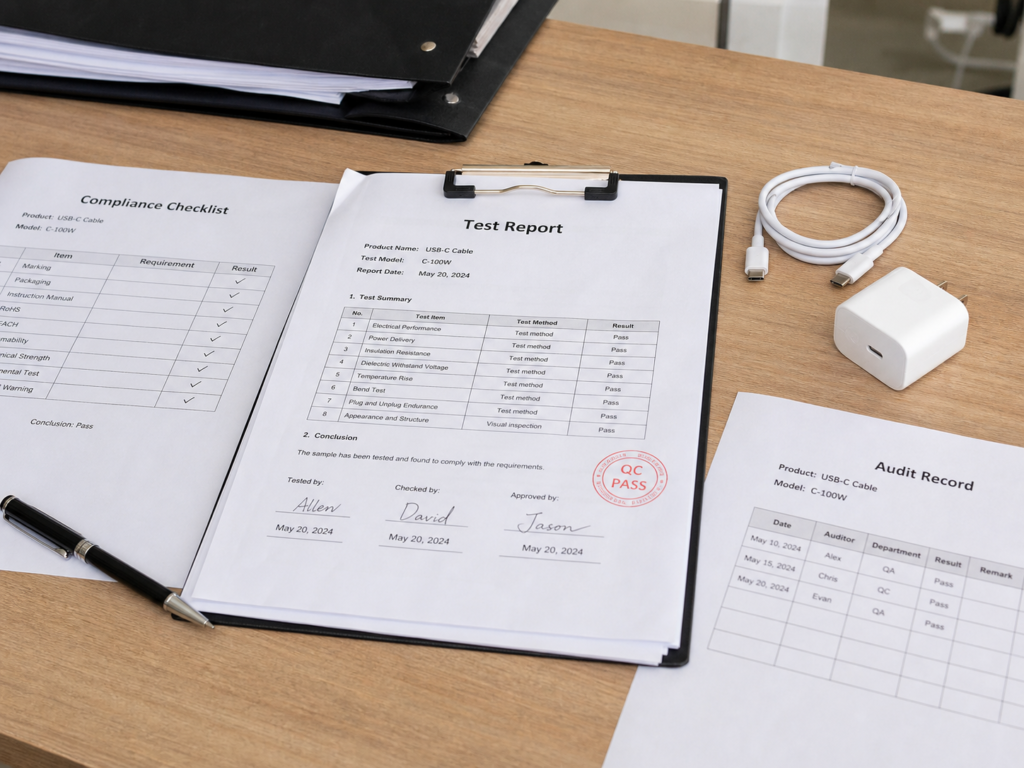
There is no unified 1 to 2 week time limit for review and issuance applicable to all products; the specific time depends on whether the materials are complete, whether the test is completed, OCP scheduling, and whether there are correction matters.
**Checkpoint**: Check all information immediately after receiving the certificate, confirm that it is consistent with the application content, test samples, and actual sold products, then confirm the completion.
Step 6: Product Labeling and Compliant Market Launch
After obtaining the certificate, it is also necessary to complete product labeling in accordance with the applicable safety, energy efficiency, and labeling NOMs before the product can be sold on the market in accordance with relevant requirements.
There is no unified list of label content, certification marks, certificate numbers, responsible party information, and label carrier positions applicable to all charging products. Confirm according to the specific NOM and labeling regulations:
• Which information must be in Spanish;
• Whether it is necessary to mark the rated input and output voltage, current, and power;
• Whether it is necessary to mark the place of origin, importer, or other responsible party information;
• Whether it is necessary to use the NOM mark, certification body mark, or certificate number;
• Which content must be marked on the product body;
• Which content can be marked on the packaging, manual, or other specified positions.
It cannot be generally required that the certificate number and all information be printed in a conspicuous place on the product body, nor can the label position be judged only by common industry practices.
When launching on the market, whether certificates, labels, or other compliance documents need to be submitted for customs clearance shall be confirmed according to the specific product, import procedure, and customs requirements. Whether e-commerce platforms require uploading NOM certificates, label photos, or other materials is part of the platform’s own compliance policy, which shall be subject to the current rules of the specific platform.
**Overall cycle reference**: The processing cycle is jointly determined by the specific NOM, OCP, laboratory, material completeness, sample transportation, whether factory visits are required, and rectification status. The undertaking institution should provide a case estimate after reviewing the materials, and should not uniformly promise a fixed 3 to 5 weeks or 6 to 8 weeks for the CB path or direct application.
Exclusive Testing Focus and Rectification Ideas for Charging Products
For charging products, the testing link is the most likely to get stuck. Many products fail the test and need rectification due to lack of attention in the early stage, which delays time and increases costs. Below we specifically explain the testing focus of charging products, as well as ideas for early self-check and rectification, to help you solve problems before sending for testing.
Safety Testing (Chargers/Adapters)
Safety testing is usually the part that chargers and adapters need to focus on. High-frequency test items include: insulation strength, leakage current, temperature rise, abnormal overload protection, and creepage distance.
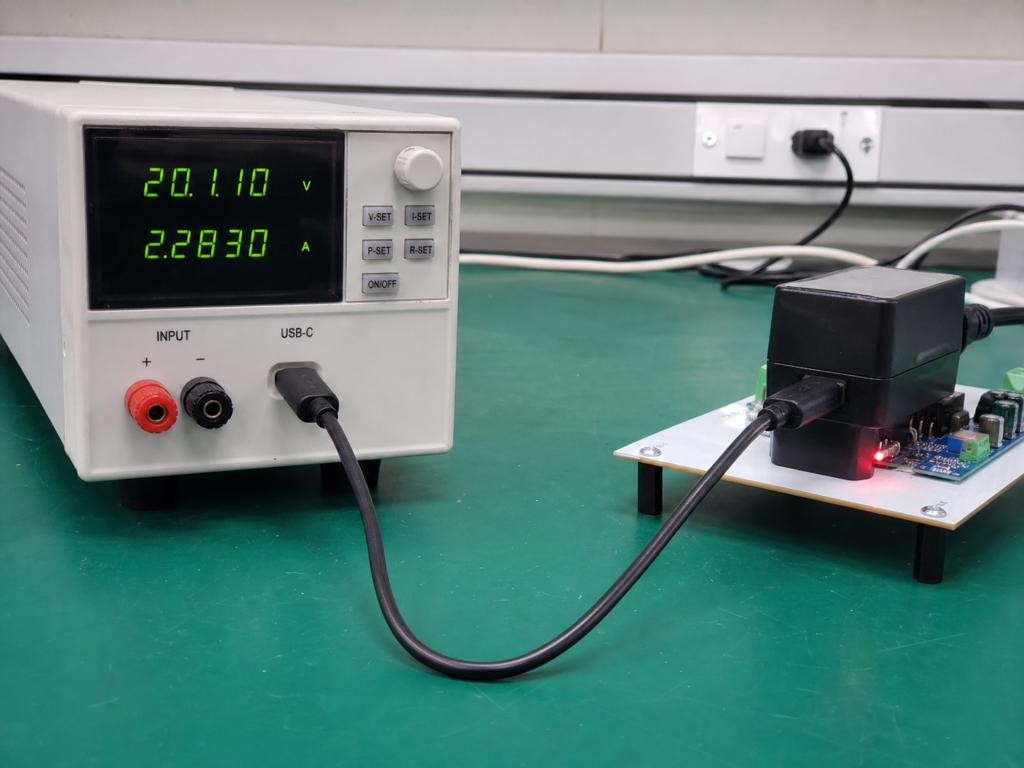
There are three main common reasons for failure: insufficient thickness of insulating materials, failure of output overvoltage protection, and insufficient internal wiring spacing.
The corresponding basic rectification ideas are also very clear: replace insulating materials that meet the requirements, adjust the parameters of the protection circuit, optimize the internal layout and widen the wiring spacing. The specific limits and test methods shall still be subject to the applicable NOM and laboratory test scheme.
Plug and Interface Testing
Plugs and interfaces of charging products are also parts that require key inspection. High-frequency test items may include plug configuration, dimensions, rated values, polarity, grounding, mechanical strength, as well as the fixing strength, output performance, bending or tensile requirements involved in USB-C interfaces and charging cables under specific standards.
There is no independent “Mexican standard plug” certification category in Mexico that can cover all products. The commonly used plug and socket configurations in Mexico are compatible with and adopted from the North American NEMA system, but whether they are qualified depends on the applicable NOM/NMX technical requirements, rated parameters, structure, and product category. North American plugs are not automatically qualified just because they are “US standard”, nor can self-testing by appearance or caliper replace certification testing.
Common reasons for failure may include non-compliant blades or structures, insufficient interface fixing strength, inconsistent charging performance with nominal values, etc. Enterprises can check the plug configuration, rated parameters, interface firmness, and cable connections before sending for testing, but these self-checks cannot replace laboratory certification testing.
Energy Efficiency Testing (High-Power Adapters)
Energy efficiency testing mainly targets external power supplies and adapters that may be included in the scope of relevant energy efficiency NOMs. High-frequency test items may include average conversion efficiency and no-load standby power consumption — simply put, it depends on whether the product wastes electricity.
Common reasons for failure are excessive standby power consumption and unqualified conversion efficiency under low load.
The prediction method is to first confirm whether the product falls within the scope of the applicable energy efficiency NOM, and then check the specification and internal test data against the corresponding requirements. If the values in the specification cannot meet the requirements, the scheme should be adjusted as soon as possible, instead of waiting for rectification after sending for testing.
Label Inspection
Label inspection seems simple, but it is a place where many people easily stumble. High-frequency inspection items include: whether the label meets the applicable language requirements, whether the responsible party information is complete, whether the rated parameters are accurate, and whether the label is placed in the specified position.
Common reasons for failure include all-English labels, missing required place of origin or responsible party information, and incorrect parameter marking, such as marking wide-range input as only 110V.
The rectification idea is also very straightforward: find a professional Spanish translator to review the label content in advance, and ask the OCP to confirm the fields and positions required by the specific NOM. Do not rely solely on machine translation, especially for safety warning content; inaccurate translation can easily cause labels to fail to meet requirements.
Certificate Maintenance and Change Rules
Obtaining a NOM certificate is not a once-and-for-all matter; there are clear rules for subsequent maintenance and changes. The validity period of the certificate, supervision frequency, and change methods shall all be subject to the specific NOM certification scheme and OCP rules.
Validity Period and Renewal
There is no unified rule for the validity period of NOM certificates that “usually 1 year, 3 years for some products” applicable to all products. It shall be subject to the validity period stated on the certificate and the specific certification scheme.
Renewal, supervision, or sampling shall be handled in advance according to OCP requirements. Whether document review, sampling, factory audit, or retesting is required shall be evaluated and determined by the OCP based on the product type, certificate scheme, supervision results, and product changes. It cannot be guaranteed that as long as the product design and structure remain unchanged, retesting will definitely be exempted.
If renewal or supervision is not handled as required, the certificate may become invalid, and after that, it cannot continue to be used to prove that the product meets the relevant import and sales requirements. Therefore, you should confirm the follow-up arrangements with the OCP before the certificate expires, instead of waiting until the certificate has become invalid to handle it.
Certification Handling for Product Changes
Changes are inevitable during the sales process of products. Any change that may affect the safety structure, key components, input and output parameters, model, manufacturer, or label information shall be submitted to the OCP for evaluation before the change, for example:
• Changing the circuit;
• Replacing the plug type or important structure;
• Adjusting input and output parameters;
• Replacing key components such as main control chips and transformers;
• Replacing the manufacturer;
• Modifying models, silk screens, and labels that may affect the certification scope or rated parameters.
These changes do not necessarily require full retesting. The OCP may handle them by means of document changes, supplementary testing, certificate extension, or re-certification according to the specific situation.
On the contrary, even if it is replacing packaging, shell color, or adjusting silk screen content, it cannot be assumed in advance that no declaration is required. If these changes affect the flame-retardant structure, labels, rated parameters, certification samples, or certificate information, OCP evaluation may also be required.
If you are unsure whether a change requires re-processing, the safest way is to submit a change application to the OCP in advance, and let them judge which handling method to adopt, instead of making assumptions on your own.
Compliance Requirements for Certificate Use
There are also rules for the use of certificates, which cannot be messed up:
• It is forbidden to lend certificates, use them beyond the model scope, forge or alter certificates;
• The actually sold models must fall within the coverage scope of the certificate and applicable NOM, and model differences shall be confirmed by the OCP first;
• E-commerce platforms may require submission of NOM certificates, labels, or other compliance materials according to category and internal policies, which shall be subject to the current rules of the platform;
• If you need to change the importer, local representative, or other responsible parties, you should first confirm with the OCP whether certificate transfer, information change, or re-application is required, and you cannot modify the certificate information without authorization.
Common Misconceptions and Cost-Reducing, Time-Saving Tips
Finally, we have sorted out the cognitive misconceptions that people are most likely to fall into, as well as practical cost-reducing and time-saving tips, to help you complete relevant compliance in a cost-effective and efficient manner.
5 Common Cognitive Misconceptions
Many people’s misunderstandings about NOM may eventually turn into real financial losses. These 5 pitfalls must be avoided:
1. **Misconception: Small parcel self-shipping does not require handling**
**Truth**: Mandatory products for commercial import and sale shall, in principle, meet the applicable NOM and customs requirements. However, personal use, low-value goods, express or postal transportation, and other specific import procedures may apply statutory exemption or simplified rules. Verification shall be made according to the identity of the importer, product use, cargo value, transportation method, and specific NOM. It cannot be generally considered that all small parcels must first obtain a product certificate, nor can it be asserted that goods will definitely be detained or stores will be closed if found.
2. **Misconception: With CE/FCC, you can sell directly**
**Truth**: CE, FCC, and UL cannot directly replace the applicable NOM certification or labeling requirements. They can be used as supplementary technical materials; whether they are accepted and whether they can reduce testing shall be judged by the OCP according to the specific NOM and certification scheme.
3. **Misconception: All charging cables need to be handled, or only USB-C cables with fast charging chips need to be handled**
**Truth**: It cannot be directly judged by the USB-C interface or the presence or absence of a chip. Whether a cable is a mandatory product depends on the specific model, product classification, rated value, use, whether it is imported or sold independently, and the applicable NOM. The OCP or competent authority shall confirm whether a certificate, label, or other compliance documents are required.
4. **Misconception: Certificates can be fixedly issued to overseas factories, or all certificates must be held by Mexican entities**
**Truth**: The qualification requirements for applicants, holders, manufacturers, importers, and local representatives depend on the specific NOM and OCP certification scheme. If the scheme requires a local Mexican entity or local responsible party, it shall be borne by a qualified importer, distributor, or representative; whether overseas manufacturers can act as applicants or holders shall be confirmed by the OCP.
5. **Misconception: One application is valid for all models**
**Truth**: Only series products that meet the specific certification scheme and can be combined in terms of structure and technical scope may share a set of certification arrangements. Products with different structures, parameters, or certification scopes cannot be directly shared, and the actual model scope shall be confirmed by the OCP.
Practical Tips for Reducing Costs and Speeding Up the Process
If you want to spend less and complete the certification faster, you can try these methods:
• **Cost-reducing tips**: Submit valid CB reports or other technical materials with matching scope to strive for reducing duplicate testing; combine applications for multi-model products that meet the conditions for series certification; prepare all materials in advance to avoid additional expenses caused by supplementary documents and retesting.
• **Time-saving tips**: Self-check the product’s plug configuration, rated parameters, interface structure, and labels before sending for testing, to avoid rectification and rework due to small problems; choose a service provider that can coordinate the laboratory and OCP and clearly explain the test scope, to reduce sample circulation and communication time.
It should be noted that whether any report can be accepted, whether series models can be combined, and whether testing can be reduced shall be confirmed by the OCP based on the specific NOM and certification scheme, and cannot be based solely on the oral promise of the service provider.
Method for Judging Quotation Rationality
Many people do not know how much the NOM-related compliance quotation is normal, and are afraid of being cheated. In fact, as long as you understand the core factors affecting the quotation, you can judge whether the quotation is reasonable:
• Core influencing factors: product type, number of applicable NOMs, whether there are already acceptable CB or other test reports, whether local responsible party services are required, number of models, test items, and whether factory visits are required;
• Formal quotations usually list test fees, certificate application fees, material review fees, and local holder or representative service fees separately (if required by the specific scheme). The service items included by different institutions may be different, and the other party should be required to write them clearly;
• Pitfall avoidance tip: If you encounter a quotation that is much lower than other institutions, you must be vigilant. It may be that the test scope is insufficient, follow-up supervision or change services are not included, or there may be problems with the authenticity and applicable scope of the certificate. You should verify the OCP qualification, certificate-covered models, and specific NOM, instead of only looking at the total price.
Having read this, you should have a clear understanding of the entire process of Mexico NOM-related compliance. You can first judge whether your charging product needs to apply for relevant certification according to the specific model, parameters, use, and import method; then choose a suitable application path according to existing materials, follow the application, testing, review, and labeling process, and keep an eye on each checkpoint.
You also need to remember that NOM is not a “universal certification label” that can be summarized by a single rule. Safety, energy efficiency, labeling, telecommunications, and customs requirements may apply different regulations or standards respectively, and materials such as CB, CE, FCC, and UL cannot automatically replace Mexican requirements. For changes in products or certificate holders, you should confirm with the OCP in advance whether updating, supplementary testing, or re-certification is required.
For sellers of charging products in the Mexican market, confirming the applicable NOM and import procedures in advance, preparing true and consistent product materials, and advancing in accordance with the specific certification scheme can reduce the risks of cargo detention, supplementary documents, and rectification, and make the product launch more steadily and compliantly.