
If you are in the business of charging products for the Middle East market, you have most likely heard of the G Mark — many sellers have suffered significant losses from detained goods, returned shipments, and even fines due to non-compliant labels. However, many people’s understanding of the G Mark remains at the vague level of “need to stick a G-shaped label”: Which charging products need to be labeled? How to label it to avoid violations? Does having a G Mark mean you can sell freely in the six Gulf countries? If these questions are not clarified, it is easy to fall into pitfalls.
In this article, we will start from the actual scenarios of charging products, thoroughly explain the G Mark usage specifications, from entry-level judgment to compliance self-inspection, which you can apply right after reading.
First, Understand: What Exactly is the G Mark
When many people first come into contact with the G Mark, they confuse it with a national certification. In fact, it is a conformity mark for low-voltage electrical equipment launched by the Gulf Cooperation Council (GCC for short, a regional cooperation organization composed of six Gulf countries: Saudi Arabia, the United Arab Emirates, Qatar, Kuwait, Oman, and Bahrain).
Simply put, the six GCC countries established the Gulf Standardization Organization (GSO for short) specifically to unify the access requirements for low-voltage electrical appliances in the region. GSO formulates unified technical regulations, label specifications, and a catalog of regulated products. Products falling within the scope of the GCC Technical Regulations for Low-Voltage Electrical Equipment and the Catalog of Regulated Products may use the G Mark only after completing the conformity assessment required by the regulations, having the corresponding conformity documents, and meeting the labeling requirements.
Here, we must first clarify the division of labor of the three parties to avoid confusion about who to contact:
• GSO is the “rule-maker”: it is in charge of regulations, label styles, and which products are subject to regulation, and does not directly issue certificates to enterprises;
• Conformity assessment bodies implement necessary testing, assessment, or type inspection in accordance with applicable technical regulations and conformity assessment procedures, and issue corresponding certificates when required by regulations; the manufacturer remains responsible for technical documents, production consistency, and declarations of conformity;
• The competent authorities of each member state are the “local regulators”: they are in charge of market inspection and import customs clearance approval in their own countries.
We also need to correct a most basic understanding: the G Mark is not an independent “certification”, but a mark indicating that the product complies with GCC low-voltage electrical appliance regulations — just like you can only get a pass certificate after passing an exam, the G Mark is the “pass mark” affixed to the product, and it is not the exam itself. It only applies to low-voltage electrical appliances included in the regulatory scope; not all products can be labeled with it, nor do all products need to be labeled with it.
Many people think that with the G Mark, they can directly sell products in the six GCC countries, but this is not correct. The G Mark is a basic requirement for regional compliance, but each country also has its own local regulations on import registration, labels, plugs, etc. When entering a specific country, you must separately verify the local requirements, and you cannot directly ship goods just because you have the G Mark.
The 3 Most Common Cognitive Pitfalls
People who are new to the G Mark are prone to three misconceptions. We will clarify them here in advance to avoid detours:
First, the G Mark is not a quality grade medal. It is only a certificate that the product meets the minimum safety access requirements, and does not represent better performance or higher quality. It cannot be used to promote content such as “top quality” or “industry number one”.
Second, the G Mark is not a mark of origin. It has nothing to do with where the product is produced. Whether it is made in China, Malaysia, or locally, it can be labeled as long as it meets the requirements of GCC regulations; conversely, even products produced locally in the Gulf cannot be labeled if they do not meet the requirements.
Third, the G Mark is not just any letter G or corporate logo. The official G Mark is a G-shaped pattern with the outline of the Gulf map. It must use the official vector image released by GSO. Self-drawn ones or ones with a G typed in a common font are considered violations.
Many people also confuse the G Mark with other common marks. Here is a brief explanation of the core differences:
• CE is the EU conformity mark, FCC mainly involves the regulatory compliance of US federal communication equipment, and RoHS is the restriction of hazardous substances requirement. The legal nature and scope of application of the three are not the same. They cannot automatically replace the applicable GCC conformity assessment and G Mark requirements; whether they can be used as part of the technical evidence shall be confirmed in accordance with GCC regulations and the requirements of the conformity assessment body.
• Compared with Saudi Arabia’s SABER, the G Mark is a compliance mark for the entire GCC region, while SABER is a local product registration platform in Saudi Arabia. When entering Saudi Arabia, in addition to the applicable GCC/G Mark compliance requirements, applicable procedures such as product registration, conformity certificate, and shipment certificate shall also be completed in accordance with the current rules of SASO and SABER; the specific procedures depend on the product category, import method, and current rules.
• Compared with individual certifications of other countries, the issuing entity and scope of application are different, and they cannot be used interchangeably. For example, the local certification mark of the United Arab Emirates cannot be used as the G Mark.
Why You Must Understand the G Mark for Charging Products
For products such as chargers, charging cables, and wireless chargers, the G Mark is directly related to whether they can be successfully sold into the Middle East market:
First is customs clearance. If regulated charging products do not have a compliant G Mark, they are likely to be detained or returned by customs, which not only delays sales but also incurs additional costs such as port detention fees and return shipping fees.
Second is platform requirements. Some platforms, sites, or specific product categories may require submission of GCC compliance documents or other local compliance materials. The actual requirements shall be subject to the current official seller rules of the target site and platform.
Finally is consumer awareness. Local users have developed the habit of looking for the G Mark when buying low-voltage charging products. Products with the mark are considered safer and have a higher conversion rate.
How to Judge Whether Your Charging Product Needs the G Mark
The biggest headache for many people is “does my product need to be labeled with the G Mark?” In fact, as long as you follow the four-step process, you can make a preliminary judgment, and finally verify it against the official catalog for confirmation.
General Four-Step Judgment Process
Step 1: First confirm whether the product falls within the scope of the GCC Technical Regulations for Low-Voltage Electrical Equipment — simply put, it is a low-voltage product that runs on electricity, not purely mechanical, nor high-voltage.
Step 2: Conduct initial screening by rated voltage: AC rated voltage of 50–1000 V and DC rated voltage of 75–1500 V are the initial voltage screening scope of the low-voltage regulations, but the final applicability must still be confirmed in combination with the nature of the equipment, the catalog of regulated products, exclusions, and the version of the regulations.
Step 3: First check whether it is a category explicitly excluded by the regulations, such as non-commercial products for personal use mentioned later, or other exclusion categories listed in the regulations.
Step 4: Check the latest version of the catalog of regulated products and the regulation version on the official GSO website for final confirmation — because the catalog will be updated, you cannot use information from a few years ago as a basis.
Preliminary Judgment of Common Charging Products
To facilitate everyone’s understanding, we have compiled the general situation of several types of common charging products. Note that this is only a preliminary reference, and the final shall be subject to the latest catalog:
• Wall-plug AC chargers and laptop power adapters: These charging products that are directly plugged into the mains are usually within the regulatory scope, and basically all need to be labeled with the G Mark.
• Desktop multi-port charging docks and wireless charging stands: As long as they are connected to the mains, they generally fall within the regulatory scope.
• Car chargers: There is no unified “yes/no” conclusion. It needs to be judged against the latest catalog in combination with the rated input voltage and product functions. You cannot take it for granted that all car chargers need it or none need it.
• Charging cables/data cables: For ordinary passive charging cables, first conduct initial screening by rated voltage; if it is an active cable with a circuit (such as a USB-C cable with an E-Marker chip), it must also be judged in combination with voltage and function. Not all cables need it, nor do all cables with chips need it.
• Charging adapters with mains plugs and extension charging sockets: These products that are directly connected to the mains are usually within the regulatory scope.
We must emphasize again: the final judgment of all categories must verify the rated voltage, purpose, and latest catalog requirements, and cannot only look at the product name.
These Situations Can Be Initially Excluded (Final Subject to Regulations)
There are several types of situations that can be used as initial screening directions, but conclusions cannot be drawn directly without referring to the provisions of the regulations:
1. Products carried in personal luggage for non-commercial purposes, such as chargers you bring when traveling abroad, usually do not fall into the scenario of commercial placement on the market;
2. A product can be excluded only if it clearly falls into the exclusion categories listed in the low-voltage technical regulations; industrial or professional use itself cannot automatically exempt from applicability judgment;
3. Whether built-in modules need separate G Mark conformity assessment shall be judged in combination with whether they are placed on the market as independent equipment, the applicable regulations for the whole machine, and the specific product catalog. They cannot be directly excluded solely on the grounds of “not sold separately”.
Judgment Rules for Special Sales Scenarios
When actually selling goods, some special situations are often encountered, and judgment cannot be made directly based on a single product:
• **Charger + charging cable set**: If the main product (such as a charger) is within the regulatory scope and needs to be labeled, then the accessory (charging cable) only needs to be compliant together with the main product; but if the accessory is removed and sold separately, it must be separately judged whether it needs the G Mark.
• **Products of the same series with different configurations**: For example, the same charger has different power, different plugs, different interfaces, and different circuit designs. As long as there is one change, the compliance must be re-evaluated, and the original conclusion cannot be directly applied, even if the model names are similar.
• **Charger included with the whole machine**: For example, a charger given away when buying a mobile phone cannot be directly said to not need compliance just because it is a free gift, nor can it be directly said to need compliance. It must be judged in combination with who the responsible party is and whether the charger itself has separate compliance, and cannot be generalized.
These Bases Cannot Be Used to Draw Conclusions
Many people fall into these pitfalls when making judgments, so you must pay attention: you cannot look at the interface type (USB-A or USB-C), cannot look at the power level (low power may also be within the regulatory scope), cannot look at the product’s place of origin, and cannot look at the industry’s common name for the product. These have nothing to do with whether the G Mark is needed and cannot be used as a basis for judgment.
Prerequisite for Legally Using the G Mark: Are Your Compliance Documents Really Valid?
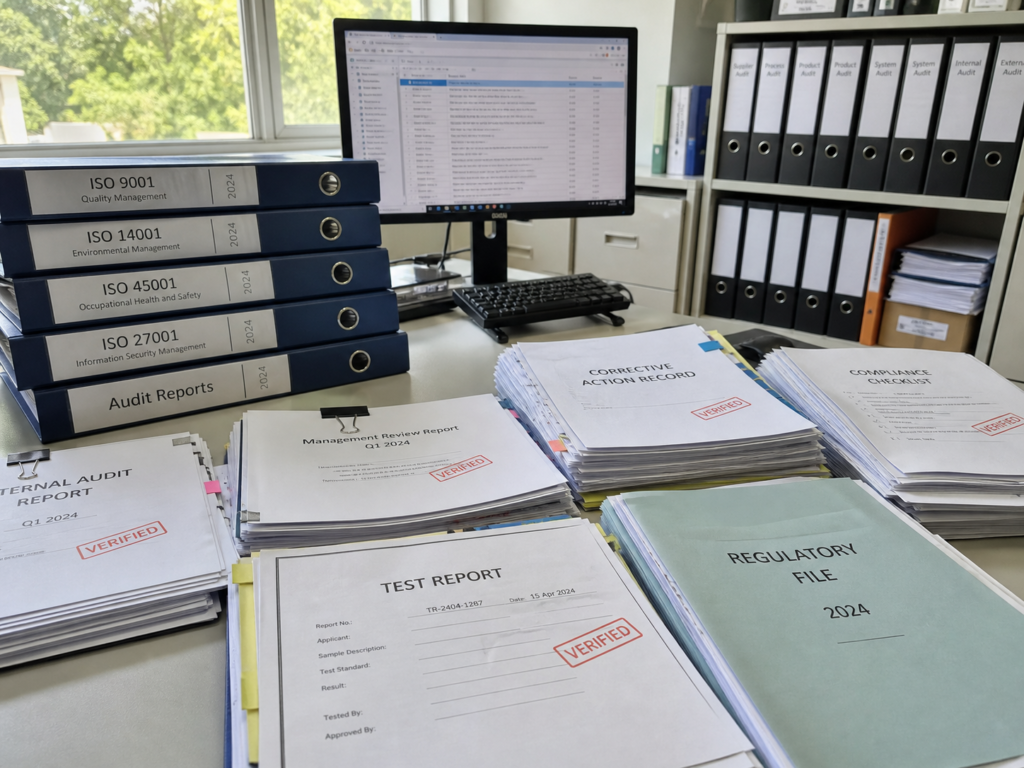
Many people think that as long as the G Mark is printed on the product, it is enough, but that is not the case — the prerequisite for using the G Mark is to prepare complete and effective compliance materials in accordance with applicable regulations and conformity assessment procedures. A test report alone does not count.
Compliance Documents and Materials to Be Prepared

Technical documents, test evidence, declarations of conformity shall be prepared in accordance with applicable regulations and conformity assessment procedures, and certificates from conformity assessment bodies shall be obtained and production consistency records shall be kept when required by regulations. Common materials include:
1. Product technical documents: including applicable regulations, risk assessment reports, circuit structure diagrams, list of key safety components, etc.;
2. Test report: used to prove that the product meets applicable requirements such as safety and electromagnetic compatibility (EMC, the requirement that products do not interfere with each other);
3. Declaration of conformity signed by the manufacturer: that is, the manufacturer promises that the mass-produced products are consistent with the tested samples;
4. When required by the applicable conformity assessment procedures, assessment, type inspection, or corresponding certificates shall be carried out or issued by a designated or accredited conformity assessment body;
5. Mass production consistency control records: used to prove that the produced products continuously meet the assessed design and requirements;
6. Registration/filing documents required by the target member state: This is a local market access requirement, which shall be verified separately, and is not a unified mandatory document for the G Mark in all situations.
Special reminder here: **The test report is only evidence of technical conformity and cannot alone replace the declaration of conformity or other conformity assessment results required by regulations.** Whether a certificate from a designated conformity assessment body is required shall be confirmed according to the product category, regulatory catalog, and applicable conformity assessment modules. The storage, update, and use of documents shall also be managed in combination with applicable regulations and product changes.
Documents Must Meet These Conditions Simultaneously to Be Valid
Even if you have the relevant documents, it does not mean they can definitely be used. You must pay attention to the following conditions at the same time:
First, the validity period, suspension, and revocation status of the type inspection certificate or other certificates shall be confirmed in accordance with the certificate and applicable regulations; test reports, technical documents, and declarations of conformity shall be kept in accordance with regulatory requirements.
Second, when changes that may affect conformity occur to the product’s model, rating, key safety structure and components, manufacturing plant, brand, or responsible party, the required change assessment shall be completed before continuing to use the mark; enterprises cannot determine on their own that the documents continue to cover the product solely based on similarity.
Third, if products of the same series share one document, it must be evaluated and confirmed by the conformity assessment body or the applicable responsible party. Enterprises cannot just say “these two are similar, sharing one certificate is fine”.
In These Situations, You Cannot Directly Use the Mark Even If You Have Documents
There are several common scenarios where use is prohibited or pending confirmation. Even if you have relevant documents before, you cannot directly continue to use the G Mark:
• The product has been revised, such as changing the shell, replacing key safety components, adjusting power or circuit, and has not been re-submitted to the body for evaluation;
• The manufacturing plant, brand, or responsible party has changed, and the documents have not been updated or confirmed in accordance with the change procedure;
• Product batch sampling inspection fails to meet the consistency requirements;
• The documents are only issued by a single country and do not meet the GCC regional compliance assessment requirements;
• The import registration/filing required by the target member state has not been completed.
Who Is Responsible for Compliance
The division of responsibilities must also be clarified:
The manufacturer is mainly responsible for the consistency of the product, the integrity of technical documents, and the compliance of the label;
Importers and sellers need to verify whether the compliance documents are valid and whether the label is consistent with the actual product;
In addition, each member state may have different registration requirements for local responsible parties. For example, some countries require a local importer, which must be confirmed in advance.
How to Design the Label Itself to Be Compliant
After clarifying whether to use it and whether it can be used, the next step is the design requirements of the label itself. This part is where small problems are most likely to occur, and many people have their goods detained due to incorrect patterns or proportions.
Standard Style and Required Elements

The core graphic of the G Mark is **a G-shaped pattern with the outline of the Gulf map**. It must use the latest version of the official vector image released by GSO. You must never draw or modify the shape yourself, even if you think it is “almost the same” — many sellers casually use a G font with a circle, or modify the map outline, which are all considered violations.
Whether it is necessary to mark the conformity assessment body number, certificate number, or other traceability information in addition to the G Mark graphic shall be implemented in accordance with applicable regulations, official label guidelines, and certificate requirements; only when a QR code is required shall the QR code point to real, corresponding, and verifiable compliance information.
Size, Proportion, and White Space
The G Mark must be scaled proportionally, and cannot be stretched, compressed, rotated, or mirrored. Otherwise, pattern deformation is considered a violation. The specific size and white space requirements shall be subject to the official specifications and the requirements of the certification body. The core principle is to ensure that it is clear and legible, and cannot be so small that it is invisible.
Color and Clarity
In terms of color, the G Mark can use the official standard color, or monochrome black, monochrome white, or reverse version (that is, a white mark printed on a dark background), but it must form a clear contrast with the background color so that people can see it clearly at a glance.
It is forbidden to add fancy designs such as gradients, shadows, 3D effects, or frame decorations to the G Mark. When printing or engraving, the edges must be clear, and there must be no blurring, missing color, or jaggedness.
Durability Requirements
The label must remain clear, legible, durable, and not easily erased under normal use and conditions required by regulations; if the equipment cannot be directly labeled due to its nature, size, or technical reasons, it shall be labeled on the packaging or accompanying documents in a manner permitted by the regulations, and the labels used must also meet the durability requirements.
When enterprises conduct internal verification, they can use methods such as dry cloth wiping and bending tests for preliminary inspection. The specific requirements shall be subject to compliance standards.
There are two special precautions for charging products: First, for products that generate heat (such as chargers), the label cannot be printed on high-temperature areas, otherwise it will easily fall off and fade after long-term use; second, labels on flexible cables must be able to withstand bending during normal use, and cannot fall off after a few folds.
How to Place the G Mark on Different Carriers
The G Mark is not just printed on the product. There are also requirements for its use on packaging, manuals, e-commerce pages, etc. We will explain them separately by different carriers.
Placement Requirements on the Product Body
The G Mark shall be preferentially placed on the product body or data nameplate at a position that is clear, legible, durable, and easy for regulators to identify; if the body cannot be labeled, it shall be placed on the packaging or accompanying documents as permitted by the regulations. The specific position shall be subject to applicable regulations and conformity assessment requirements.
Placement Requirements on Packaging
When the product body cannot be labeled as required, the mark shall be placed on the packaging, accompanying documents, or other carriers permitted by the regulations in accordance with applicable regulations; whether the minimum sales packaging must be labeled and what information it needs to contain shall be confirmed according to the target market and specific regulations, and cannot be generalized.
Logistics outer boxes (that is, large shipping boxes) can be labeled according to the requirements of the importing country. Whether labeling is required and what information to label shall be subject to the requirements of the target market.
If it is a set product, the label on the packaging must cover all accessories within the regulatory scope, and cannot only label the main product.
Label, Manual, and Language Requirements
The information items on the product label and manual shall be verified in accordance with the regulatory requirements of the target member state. Rated parameters, manufacturer/importer information, and warning statements must be consistent with those in the compliance documents and cannot be changed arbitrarily.
In terms of language, there is currently no unified mandatory rule across the GCC. Some countries require Arabic, and some allow English. The specific implementation shall be in accordance with the regulations of the target country, and the common practice is Arabic paired with English.
Usage Requirements for E-commerce Sales Pages
Now many people do e-commerce, and there are three points to pay attention to when using the G Mark on e-commerce pages:
First, you must hold valid compliance documents to display it. You must never use an edited image to fraudulently use it. Placing the mark without a certificate is a violation;
Second, the label style and related information displayed on the page must be consistent with those on the actual product and compliance documents, and the style cannot be changed;
Third, it is forbidden to use the G Mark for exaggerated publicity. For example, you cannot say “G Mark certified, globally applicable” or “G Mark best quality”, because the G Mark is only an access mark, not a quality grade, nor is it globally applicable.
Rules for Placing Alongside Other Marks
If other marks such as CE, UKCA, and SABER are also to be affixed to the product, please note:
• Each mark must remain independent and clear, and cannot be spliced together;
• The G Mark cannot be combined with a corporate trademark or other certification logos to form a new pattern;
• Multiple marks cannot cover each other to avoid confusing consumers about their meanings.
Common Violation Situations and Possible Risks
We have compiled the most common types of G Mark violations for charging products and the corresponding risks, so you can compare and avoid pitfalls.
5 Common Types of Violations for Charging Products
The first type is qualification violations: for example, printing marks privately without valid documents, using documents of other models or brands, and continuing to use expired documents. These are relatively serious.
The second type is style violations: for example, using an ordinary letter G to impersonate the G Mark, deformed proportions, too small size to see clearly, no contrast between color and background, and modifying the graphic yourself. These are the most common small mistakes, but they may also affect customs clearance.
The third type is placement violations: for example, affixing the mark in a blocked position, or not labeling the corresponding carrier as required (for example, only the e-commerce page has the mark, but the actual product does not).
The fourth type is scope violations: for example, the product is not within the regulatory scope at all, but is illegally labeled with the G Mark, or the mark is used beyond the product scope covered by the documents.
The fifth type is consistency violations: for example, the parameters, structure, and plug of the actual product are different from those in the compliance documents, but the mark is still used.
Risk Levels of Different Violations
Violations of different degrees have different consequences:
• Minor layout problems, such as slightly smaller size or slightly offset position, will generally be required to be rectified. Although they will not result in direct fines, they will affect customs clearance efficiency and delay sales;
• If the certificate and model are inconsistent, for example, the parameters have changed but the documents have not been updated, the goods may be detained and supplementary testing may be required, and the product cannot be launched on the market;
• If the mark is used without a certificate or the mark is forged, the consequences are serious, and you may face return shipment, fines, sales suspension, or even recall. The specific penalty intensity depends on the laws of each member state and the decision of the law enforcement agency.
Basic Principles of Rectification
If you accidentally violate the rules, remember three principles:
First, before the rectification is completed, you cannot continue to use the non-compliant label, nor can you sell the corresponding product;
Second, if it involves qualification or scope issues, it must be submitted to the conformity assessment body for re-evaluation. After supplementary testing or updating documents, the use of the mark can be resumed;
Third, the specific disposal plan shall be subject to the formal confirmation of the certification body and the competent authority. Do not rectify on your own assumptions.
How to Check the Differences Among GCC Member States
Many people think that with the G Mark, they can sell freely in the six GCC countries, but this is a big misunderstanding — the G Mark is only the basis of regional compliance, and is not equivalent to automatically obtaining import access to all member states. To enter a specific country, you must also meet the local additional requirements.
Core Principles
First, remember two core principles:
1. For products that fall within the regulatory scope of the GCC Technical Regulations for Low-Voltage Electrical Equipment and are subject to G Mark requirements, failure to complete the corresponding conformity assessment and labeling requirements usually means they cannot be placed on the market as compliant products; products that are not within the regulatory scope or are subject to exclusions cannot apply this absolute conclusion;
2. Products holding valid G Mark compliance documents need to additionally meet the local regulations of the target country before entering the local market.
Verification Dimensions of Major Member States
Local requirements vary from country to country, and the specifics shall be confirmed according to product categories and the latest regulations:
• **Saudi Arabia**: Requirements such as Saudi Arabia’s SABER product registration and shipment compliance certificate shall be verified separately; some categories may also involve energy efficiency labels, plugs must meet local specifications, and labels have language requirements;
• **UAE and other member states**: Whether registration, filing, or specific compliance certificates with the competent authority are required shall be confirmed country by country according to product category, importer identity, and current official systems, and cannot be generalized as all charging products requiring local registration. At the same time, plug specifications, language labels, importer information, and customs clearance requirements must also be verified.
Compliance Strategy for Multi-Country Sales
If your products are to be sold in multiple GCC countries, you can follow this approach for compliance:
1. First complete the GCC regional compliance assessment and obtain the G Mark compliance documents, which is the basis;
2. Then supplement local registration, labels and other requirements country by country. Don’t try to get everything done in one step;
3. Manage regional versions of plugs, labels, and manuals, such as Saudi version and UAE version, and do not mix them;
4. Never use the registration number of a single country as a regional universal number.
In addition, if you encounter situations such as adding new target countries, changing product configurations, changing responsible parties, or updating regulations, you must re-evaluate compliance and cannot directly apply the original conclusion.
Compliance Self-Inspection Checklist and Common Scenario Cases
One-Page Compliance Self-Inspection Checklist
You can conduct a preliminary self-inspection of G Mark compliance by yourself according to these five dimensions:
| Inspection Category | Key Inspection Points |
| Applicability Inspection | Does the product fall within the regulatory scope? Does the sales scenario (set/free gift/sold separately) meet the requirements? |
| Qualification Inspection | Are the compliance documents valid? Are the product parameters, structure, and responsible party within the scope covered by the documents? Have the local requirements of the target country been completed? |
| Label Body Inspection | Is the graphic the official version? Do the proportion, color, and clarity meet the requirements? Is the associated information correct? |
| Carrier Placement Inspection | Do the labels on the product, packaging, manual, and e-commerce page meet the requirements? Is the information on each carrier consistent? |
| Target Country Requirements Inspection | Do local registration, plug specifications, language, labels, etc. meet the requirements of the target country? |
Judgment Cases for 5 Common Scenarios
We have compiled the 5 most common scenarios in the charging industry to help you understand how to actually apply these rules:
**Case 1: 65W wall charger with UK plug replacement**
Judgment logic: First check whether the original compliance documents cover this UK plug, then check whether the plug requirements of the target country allow it.
Handling method: If the original documents do not cover this plug, it must be submitted to the certification body for change assessment, and cannot be replaced directly.
Common misunderstanding: Many people think that for the same power and same model, just changing the plug does not require re-evaluation. In fact, the plug is a key safety component, and changes must be reconfirmed.
**Case 2: Adding an E-Marker chip to an ordinary USB-C cable**
Judgment logic: It is necessary to check whether the changed product functions and rated voltage fall within the regulatory scope, not just whether there is a chip.
Handling method: If the changed product falls within the regulatory scope, the corresponding compliance assessment must be completed before the G Mark can be used.
Common misunderstanding: Some people think that “as long as it is a cable, it does not need the G Mark”, while others think that “as long as there is a chip, it must have the G Mark”. Both are wrong. A comprehensive judgment must be made in combination with voltage, function, and catalog.
**Case 3: Adjusting the input voltage range of a car charger**
Judgment logic: Check whether the new input voltage is within the scope of the low-voltage regulations, and then check whether it meets the requirements of the product catalog.
Handling method: If it falls within the regulatory scope and is not covered by the original documents, supplementary testing and document updating are required.
Common misunderstanding: Many people think that car chargers either never need the G Mark or always need it. In fact, the judgment for car chargers must be combined with input voltage and function, and there is no unified conclusion.
**Case 4: Splitting a charger + charging cable set for separate sale**
Judgment logic: Check separately whether the charger and charging cable fall within the regulatory scope. You cannot use the mark directly just because the set has a certificate.
Handling method: After splitting for separate sale, it shall be reconfirmed whether the accessory is a regulated device and whether the set documents clearly cover the scenario of its independent placement on the market; if not covered, supplementary assessment or obtaining corresponding documents shall be carried out in accordance with applicable procedures, and the conclusion for the set cannot be applied on your own.
Common misunderstanding: Some people think that since the set has a certificate, the accessories can still use the mark directly after splitting. In fact, after separate sale, the applicable scope of the product and document coverage must be reconfirmed.
**Case 5: Changing the manufacturing plant for the same model of charger**
Judgment logic: Check the coverage of manufacturing plants in the original compliance documents to see if the new plant is included in the documents.
Handling method: Before changing the manufacturing plant, a change shall be submitted to the conformity assessment body and the impact on technical documents, certificates, factory audits, or testing shall be confirmed; after completing the required change assessment and updating the documents, it can be confirmed whether the original G Mark can continue to be used.
Common misunderstanding: Many people think that for the same model and same design, just changing the manufacturing plant does not affect compliance. In fact, the manufacturing plant is an important coverage item of compliance documents, and changes must be confirmed by the body.
Summary and Official Inquiry Channels
What You Can Do After Learning
After reading this article, you should be able to independently complete the following judgments:
• Can judge whether common charging products need the G Mark according to the four-step process;
• Can identify the standard style of the G Mark and avoid common design errors;
• Can verify the validity and coverage of compliance documents, and know in which situations the mark cannot be used;
• Can correctly place the G Mark in different scenarios such as products, packaging, and e-commerce pages in accordance with specifications;
• Can complete basic compliance self-inspection and identify most common violation risks;
• Know that the G Mark is only a basic regional requirement, and local regulations must be additionally verified when entering a specific country.
Official Inquiry Channels
Because regulations and catalogs will be updated, all judgments must ultimately be subject to the latest official version. Here are several most authoritative inquiry channels for you:
1. GSO official website: You can check the latest technical regulations, label specifications, and catalog of regulated products;
2. GSO accredited conformity assessment body database: You can verify the validity of compliance documents;
3. Official platforms of the competent authorities of each member state: You can check the requirements for local registration, labels, and customs clearance;
4. Saudi SABER official platform: You can check the local product registration requirements in Saudi Arabia.
One final reminder: When making formal compliance decisions, be sure to check the latest official regulations, and do not only rely on second-hand information to avoid pitfalls due to outdated information.