
If you buy chargers or power adapters in India, or do business exporting charging accessories to India, you must have heard of the “BEE star label”. Many people confuse it with BIS certification, or think that all chargers must be labeled, and that the higher the star rating, the faster the charging – these common misconceptions may lead to buying the wrong product at best, or facing compliance risks at worst. This article will thoroughly explain India’s BEE star rating energy efficiency labeling system from basic concepts to practical pitfall avoidance, covering from introductory knowledge to semi-proficient compliance judgment, which both ordinary consumers and cross-border practitioners can understand.
Basic Understanding: First Master the Core Concepts
To clarify the BEE star rating system, we must first thoroughly explain several most easily confused basic concepts to avoid confusing one with another later.
The core framework of the entire system is the S&L Program, short for “Standards & Labelling Program”, which is the core project of BEE’s energy efficiency management. It is not a general rule, but is divided into separate Product Schedules according to different product categories: each Product Schedule corresponds to only one type of product, clearly specifying the jurisdiction scope, energy efficiency standards, label design and posting requirements, and is the direct basis for judging product compliance.
The 1 to 5 star labels we usually see are star labels, which are energy efficiency grading labels under the S&L Program. Here is a premise to remember first: only products of the same category and same power range can be compared in energy efficiency by star rating; the more stars, the higher the energy efficiency. Products cannot be labeled at will; they must first pass testing and apply to BEE for label registration qualification to be legal and effective, which is equivalent to an official energy efficiency “ID card”.
The competent authority of the entire system is BEE (Bureau of Energy Efficiency), affiliated to the Ministry of Power of India, and is the official agency specifically responsible for energy efficiency management in India. BEE is mainly responsible for energy efficiency policies, S&L rules, energy efficiency label registration and program implementation; product safety certification is usually handled by BIS in accordance with the corresponding QCO, import customs clearance is handled by customs, and market supervision and law enforcement may be jointly undertaken by BEE, state-designated agencies and other competent authorities according to legal division of labor. The BEE label itself is not equivalent to product safety access.
BEE promotes star labels for two core purposes: for consumers, they can quickly screen for more power-saving products through star ratings without studying complex energy efficiency parameters by themselves; for manufacturers, energy efficiency thresholds will force enterprises to optimize design and reduce product energy consumption levels.
The S&L Program has two implementation forms, and not all categories are mandatory:
- Mandatory category: Products included in the mandatory S&L Program must meet the corresponding energy efficiency requirements and be labeled in accordance with regulations before they can be sold on the market; those that do not meet the standards cannot be sold.
- Voluntary category: There are no mandatory requirements for such products for the time being. Enterprises can voluntarily apply for registration and labeling to reflect the energy efficiency advantages of their products, but they cannot mislead consumers by claiming it is a mandatory compliance requirement.
It should also be specially noted that the S&L catalog, energy efficiency thresholds, and implementation rules are all dynamically adjusted; there are no rules that are valid for life – a category that is voluntary today may become mandatory tomorrow; this year’s energy efficiency threshold may be raised next year, and any judgment must be based on the latest official notification.
Legal Basis and Verification Rules: How to Check Reliably
Since the rules are dynamic, how can we judge without being misled by outdated third-party information? This requires first understanding the legal hierarchy of the entire system and the correct verification methods.
BEE’s energy efficiency system involves multiple layers of laws, rules and product documents, and the priority can be understood from high to low as follows:
- At the top is the parent law, the Energy Conservation Act, 2001 and its amendments, which is the legal basis for BEE to carry out energy efficiency projects, equivalent to the “general charter” of the entire system.
- The general legal basis also includes the Energy Conservation (Energy Consumption Standards and Labelling) Rules, 2006 and subsequent amendments. However, the applicable scope, star rating thresholds, registration and label requirements of specific products shall still be subject to the latest S&L schedule, notification and approved template for that product.
- Next are Product Schedules / special notifications, which are the most frequently used rules in daily life – each type of regulated product has a separate Product Schedule or special notification, which clearly specifies the jurisdiction scope, mandatory/voluntary attribute, implementation time, energy efficiency threshold, and label template, and is the direct basis for judging product compliance.
- Then are referenced standards, that is, IS (Indian Standard) or IEC (International Electrotechnical Commission) test standards specified in the Product Schedule, which stipulate specific energy efficiency test methods, such as test voltage, load points, and instrument accuracy requirements.
- The most practical are official query results, that is, the product catalog and registration information published on BEE’s official website. The registration status and star rating of a specific product shall be subject to the corresponding official query system and official documents.
If different rules have inconsistent statements, remember one principle: the latest released official notifications and Product Schedule texts for the product shall prevail; old rules yield to new rules, and general rules yield to rules for specific categories.
The BEE S&L page is the main query entry, but the latest rules, notifications, Product Schedules and amendment documents issued by the Ministry of Power and the Official Gazette of India should also be checked. The specific product registration status shall also be subject to the corresponding official query system and official documents. When checking, don’t just look at the general idea; confirm these must-check information clearly: the applicable scope of the corresponding Product Schedule, mandatory/voluntary status, implementation date, transition period, test standards, and official label template.
Whether it is ordinary consumers checking products or cross-border sellers doing compliance, they should develop the habit of archiving: record the query date, save the link or screenshot of the official page, and don’t draw conclusions based solely on third-party verbal promises (such as statements from freight forwarders or suppliers). In case of subsequent rule updates or disputes, these archives are the basis.
Here we must specially emphasize a core judgment principle, which is also a disaster area where many people stumble: It is absolutely impossible to directly determine whether a product is under BEE’s jurisdiction solely based on power, interface type, or product name (such as “charger”). For example, also called “65W charger”, a wall-plugged IT adapter may be in the schedule, while a car charger may not; also with Type-C interface, some are power adapters, some are just adapters, and the requirements are completely different. All conclusions must correspond to specific Product Schedules and the latest official notifications, and cannot be taken for granted.
Applicability Verification for Charging Products: Four Steps to Determine If Labeling Is Required
After clarifying the general rules, we return to the charging products that everyone is most concerned about: which ones need BEE, and which ones don’t? Follow this four-step verification method to check in order, and you will basically not make mistakes.
Step 1: First determine product attributes: Confirm whether the product is an independent product with AC-DC power conversion function. Simply put, it is whether it can convert the alternating current from the wall into direct current for equipment – wall-plugged power adapters belong to this category, while ordinary passive charging cables and adapters without conversion circuits usually do not belong to the objects of energy efficiency labels.
Step 2: Match with official schedules: After confirming that it is an AC-DC conversion product, find the corresponding official technical definition in the S&L Product Schedules, and match with technical parameters; you cannot directly determine by product name or HS code. For example, you cannot say “My product’s HS code is 850440, so it must have a BEE label” – HS codes are used by customs, and do not necessarily fully correspond to BEE’s jurisdiction scope; they must be subject to the technical definition of the Product Schedule.
Step 3: Verify implementation status: After finding the corresponding Product Schedule, confirm whether the schedule is currently mandatory or voluntary, the official implementation date, and whether there is a transition period. If a special notification stipulates a transition period, the start and end dates of the transition period, applicable products, and registration, testing, sales and label requirements during the transition period shall be checked item by item; it is not allowed to presume that registration or labeling is unnecessary just because there is a transition period.
Step 4: Verify sales scenarios: Even if the product meets the technical definition of the schedule, it also depends on the sales scenario: is it sold independently or bundled with complete devices such as mobile phones and laptops? Is it priced separately or given away for free? Is it for ordinary consumer use or for special scenarios such as industrial and medical use? These scenario differences will affect compliance requirements and cannot be generalized.
To facilitate everyone’s understanding, we have sorted out the common category boundaries of charging products, but note that these are only the current general situation, and the final shall still be subject to the latest Product Schedule. The core conclusion is put first: BEE does not impose universal star rating obligations on all chargers; only categories explicitly listed in the S&L Program and meeting the technical definitions of the schedule need to comply, and there is no such thing as “all chargers must have BEE labels”.
At present, it cannot be generally concluded that all IT equipment power adapters have been included in BEE’s mandatory S&L Program. The definition, applicable scope and mandatory or voluntary status of specific external power supplies, USB Type-C chargers or IT equipment adapters shall be confirmed with BEE’s current product catalog, corresponding Product Schedule and latest notifications. When there is no corresponding schedule basis, it shall not be directly claimed as a mandatory category product.
Categories usually not included in BEE energy efficiency label objects include passive charging cables (ordinary data cables, no power conversion function), and ordinary adapters without power conversion function (such as Type-C to Lightning pure adapters). However, these products shall still be checked for BIS, e-waste/RoHS and other applicable requirements respectively; “no need for BEE star label” shall not be interpreted as “no need for any compliance”.
Categories not yet generally included include car chargers, wireless chargers, and industrial power adapters – it is not that these definitely do not need it, but that they have not yet been generally included in the S&L mandatory catalog. The specific situation shall be checked in real time against the latest schedule, because BEE updates the catalog irregularly.
As for the adapters bundled with complete devices that people often ask about: you cannot directly think that “those given away with complete devices do not need labeling”. You must look at the specific provisions of the corresponding Product Schedule. Some schedules clearly state that adapters bundled with complete devices do not need separate labeling, while some may have other requirements. Everything shall be subject to the schedule text.
Many people confuse BEE with other compliance requirements for charging products in India. Here is a table to clarify the boundaries of several common regulatory agencies to avoid confusion:
| Regulatory Body | Core Jurisdiction | Main Basis | Relevance to Charging Products |
|---|---|---|---|
| BEE (Bureau of Energy Efficiency) | Energy efficiency policy, energy efficiency rating and label management, as well as S&L Program implementation and related compliance supervision | Energy Conservation Act, S&L Product Schedules | Regulates whether charging products “save electricity”; only categories included in the Program require labeling; market supervision and law enforcement may be jointly undertaken by BEE, state-designated agencies and other competent authorities according to legal division of labor |
| BIS (Bureau of Indian Standards) | Electrical safety and product quality | Mandatory Quality Control Orders (QCO) | Regulates whether charging products are “safe”; categories included in QCO require BIS certification |
| WPC (Wireless Planning Commission) | Wireless transmission equipment management | India’s wireless-related laws and regulations | Only regulates products with wireless transmission functions; wireless charging itself is not necessarily under WPC supervision, and needs to be verified based on the wireless parameters of specific products |
| Hazardous Substance Control | E-waste and hazardous substance restriction | E-Waste Management Rules and their amendments | Regulates the hazardous substance content of products; verification is required according to the categories of regulated EEE and exemption clauses |
Simply put, these regulations are independent of each other. A charging product may need to meet multiple requirements at the same time, or may only need to meet one, or none at all. You need to check their respective catalogs separately and cannot confuse them.
Label Interpretation and Rating Logic: Understanding the Logic Behind Star Ratings
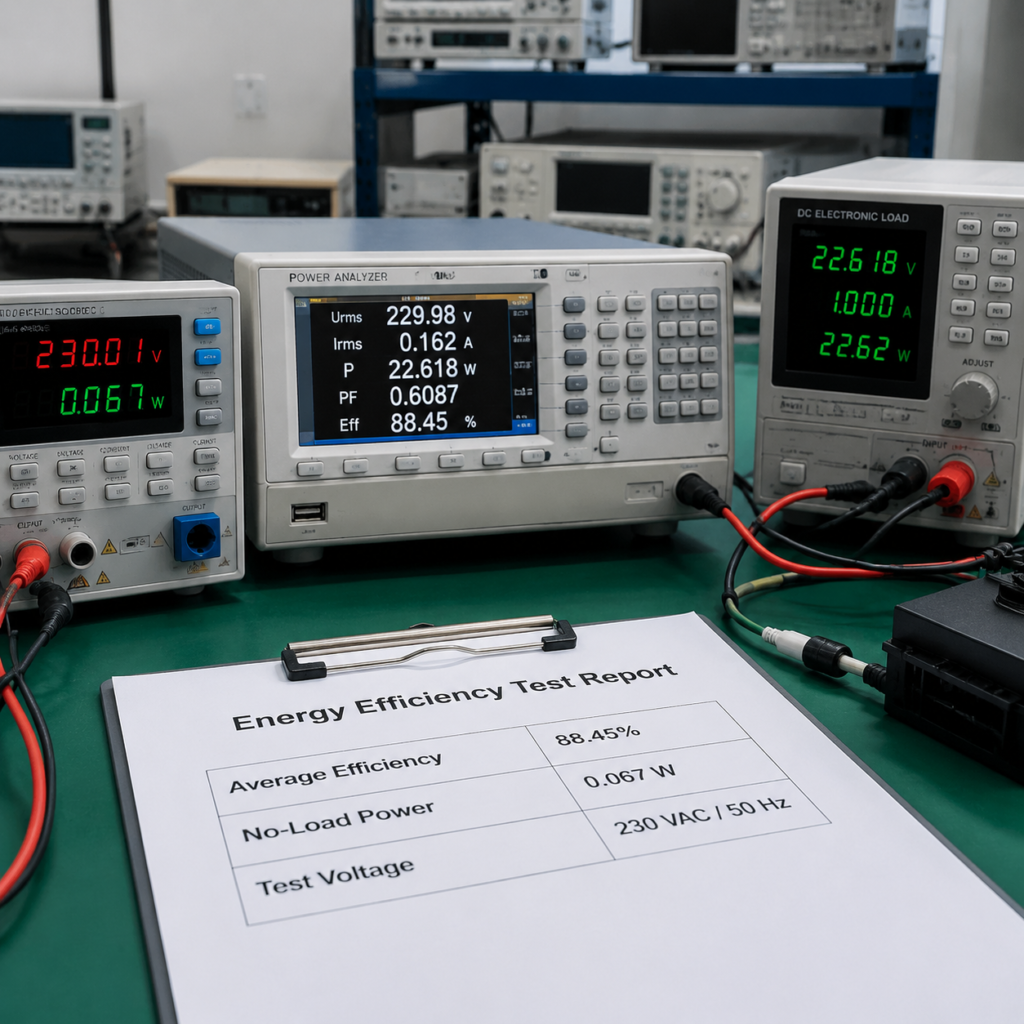
After clarifying which products need labeling, let’s talk about how to understand BEE’s star labels and how star ratings are evaluated – you don’t need to understand complex testing, as long as you know the core logic, you can avoid most pitfalls.
First of all, an important premise must be clarified: There is no universal label format across all Product Schedules. The fields of the label, the display method of the registration number, and the layout design shall all be subject to the applicable Product Schedule, registration terms and BEE-approved templates, and manufacturers cannot modify them at will.
Common fields on labels for mandatory products are as follows (for reference only, specific subject to the schedule): BEE official logo, star rating label, product brand and model, corresponding Product Schedule name, registration-related information (such as registration number). The label fields of voluntary products are different from those of mandatory products; it is absolutely forbidden to use mandatory label templates fraudulently, otherwise it is a violation.
There is also a point that is easily overlooked: when looking at the label, first confirm what object the label corresponds to – is it the independent power adapter itself, or a complete device such as a mobile phone or laptop? For example, the BEE label on the packaging box when buying a mobile phone may be for the mobile phone, not the charger inside. Don’t confuse one with the other.
There are actually only two core energy efficiency parameters on the label, which can be understood in plain language:
The first is conversion efficiency: that is, how much of the input mains power is converted into useful output power, and the rest is wasted as heat. The higher the ratio, the less the loss, the less heat the charger generates, and the more power it saves.
The second is no-load standby power consumption: that is, the power secretly consumed when the charger is plugged into the wall but not connected to the device, which is commonly referred to as “vampire power”. The lower this value, the more power-saving it is during standby.
Here we emphasize again: these two parameters and the corresponding star ratings are only meaningful when compared between products of the same category and same power range. Comparing the efficiency of a 10W small charger with a 100W high-power adapter is like comparing the fuel consumption of a car with a truck – it is completely incomparable.
Many people think that the 1 to 5 star standard is unified nationwide, but it is not – star rating thresholds, power grouping, and judgment methods are all subject to the corresponding S&L Schedule, and there are no universal values across categories. The number of stars, grouping and thresholds are completely subject to the specific Product Schedule; in schedules that adopt a 1–5 star grading system, a higher star rating indicates a higher energy efficiency level specified in that schedule, but 1-star, 3-star or 5-star cannot be interpreted as the general minimum access, medium level or absolute highest energy efficiency in the market across schedules.
It should also be specially noted that the same star rating for different power ranges has different energy efficiency thresholds, and cannot be directly compared across power ranges. For example, a 3-star adapter in the 65W power range and a 3-star adapter in the 20W power range may have different conversion efficiency requirements, so it is impossible to directly say which one is more power-saving.
If you want to go deeper into the rating logic of star ratings, the core is actually very simple, only looking at two energy efficiency indicators, regardless of complex circuit design: the core evaluation dimensions are average conversion efficiency and no-load standby power consumption. As for how to calculate average efficiency, which load points to test, and how much weight each load point accounts for, all are stipulated by the IS/IEC standards referenced in the Product Schedule, not by the manufacturer.
Here’s a precautionary reminder for everyone: the energy efficiency values on the label are measured under standard laboratory conditions, and may be different from actual usage. The input voltage, load settings, instrument accuracy, product preprocessing time, and ambient temperature during testing must be strictly implemented in accordance with the referenced standards to ensure the comparability of test results. However, in actual use, due to different loads (for example, fast charging a mobile phone and slow charging an earphone have completely different loads), different ambient temperatures, and different quality of the matching charging cable, the actual energy efficiency performance will vary, and the label values cannot be completely applied to actual usage scenarios.
The registration of star labels is not once and for all. The relevant rules shall also be subject to the corresponding Product Schedule and registration terms, and there is no universal standard. Here are only a few common rules:
- Applicant entity: The applicant entity, whether overseas manufacturers can apply, whether an Indian importer or authorized representative is required, and document requirements must be confirmed according to the specific S&L Schedule, BEE registration portal and latest application guidelines. It should not be generally asserted that overseas enterprises cannot apply directly.
- Registration coverage: Usually one registration corresponds to a specified model or model family (that is, models of the same series with consistent core circuit design and only minor changes in power or appearance), but it must comply with the model series rules of the schedule, and unrelated models cannot be included at will.
- Changes requiring re-evaluation: If the product has core changes that affect energy efficiency, such as changes in the input stage circuit, replacement of the transformer, replacement of the main control chip, changes in the rectifier circuit or power factor correction (PFC) circuit, or changes in output power specifications, it must be re-tested and evaluated, and the original registration cannot be used.
Authenticity Verification and Pitfall Avoidance: Don’t Get Tricked by Fake Labels
Since there are so many rules for labels, how to judge whether the BEE label in hand is real or fake? What to do when you can’t find the record? This part is semi-proficient pitfall avoidance content, which is useful for both consumers and practitioners.
Priority should be given to checking the registration record through the BEE official query system, and comprehensive judgment should be made in combination with the applicable Product Schedule, approved label template, registration certificate or official written reply, and product physical information; when it cannot be matched, conclusions cannot be drawn based solely on a single page. The operation is not difficult:
Step 1: First find the BEE registration-related information on the product body, packaging or e-commerce page, such as registration number, product model, brand name.
Step 2: Enter the S&L project section on BEE’s official website and find the “Star Label Query” system.
Step 3: Enter the corresponding fields to query, then check the queried registration information with the physical product one by one.
When checking, focus on these information: brand, manufacturer/importer, model, corresponding Product Schedule, star rating, power specification, registration validity period, registration status (whether valid, whether it has been revoked). The principle of checking is simple: all information must be completely consistent with the physical product, packaging, and sales page. As long as one does not match, you should be vigilant.
Many people directly say that the product is fake when they can’t find the record, but in fact it is not necessarily true; it may be that the query method is wrong. When encountering abnormal queries, you can investigate step by step according to these three steps:
Step 1: Self-check: Is the selected Product Schedule wrong? For example, you are checking a home appliance schedule, but the actual product is an IT adapter; is the suffix of the brand or model consistent? For example, the product is printed with Model A123, but you enter A12, missing the suffix, you will definitely not find it; is the registered subject corresponding? For example, the registration is in the name of an Indian importer, but you enter the name of a Chinese brand, which may also not be found; also, is the rule period wrong? For example, the system for newly registered products has not been updated, or the old registration has expired.
Step 2: Supplementary verification: If the self-check is correct, you can check BEE’s official announcements, Product Schedule attachments, or find compliance documents officially released by the brand. For example, some brands will put BEE registration certificates on the compliance page of their official websites.
Step 3: Upgraded verification: If you still can’t confirm, you can send a written email to the brand, Indian importer or BEE official channel to inquire, and save all communication records. Don’t draw conclusions casually.
Remember an important principle: It is not allowed to directly conclude that a product is illegal just because no record is found on the official website. System delays and information entry errors are possible, and multiple verifications are required.
We have sorted out several of the most common non-compliant situations, which you can compare to avoid pitfalls:
First: Mandatory products do not have BEE labels, or label information is missing, or voluntary products fraudulently use mandatory label templates;
Second: The star rating, power, and model marked on the label are inconsistent with the official registration information, for example, the actual 2-star is marked as 5-star;
Third: Voluntary labels intentionally mislead consumers by claiming to be mandatory compliance, or fraudulently use the registration information of other products.
The risks of non-compliance are different for different groups:
For individual users, the biggest problem is that there is no official energy efficiency guarantee, the actual energy consumption may be much higher than advertised, the heat generation is more obvious, and even the service life of the product may be affected due to poor energy efficiency design.
For cross-border operators, the risks are much greater: they may be required to rectify, the label may be revoked, they may face market supervision penalties, e-commerce platform delisting, and even pay liquidated damages to customers due to breach of contract, affecting subsequent business.
Practical Guide: Implementation Methods from Purchase to Compliance
After talking about so many rules, finally landing on actual use, we have sorted out operational guidelines that can be directly applied for individual users and cross-border operators respectively.
Purchase Logic for Individual Users
If you are an ordinary user buying a charger in India, follow these three steps to choose correctly:
Step 1: Determine demand first, then compare star ratings: First determine the power and interface you need, such as a 65W Type-C charger, and then compare star ratings only among products of the same power range, same category, and already included in the S&L Program, otherwise the comparison is useless.
Step 2: Choose star rating according to usage scenario: If it is used plugged into the wall for a long time, such as a charger in the bedroom or study, which is plugged in all year round, you should compare the no-load power consumption and average efficiency in the label or technical data at the same time; a high star rating does not necessarily mean that the no-load power consumption is the lowest among all similar products, nor can you judge that long-term wall plugging is definitely more power-saving solely based on the star rating. If it is only taken for occasional business trips and not used much, you don’t need to fuss too much over the star rating, just choose according to your budget.
Step 3: Don’t confuse energy efficiency with safety and speed: When purchasing, be sure to check both the BEE label (for energy efficiency) and applicable BIS requirements (related to safety and product quality) at the same time. A high star rating does not mean safety, nor does it mean fast charging – charging speed depends on power and fast charging protocols, and has no direct relationship with energy efficiency. Whether BIS compliance or certification must be obtained shall be verified according to the BIS standards, CRS/ISI requirements and effective QCO applicable to specific products, and the BEE label shall not be regarded as a safety certification.
Finally, a supplementary note: how much electricity can actually be saved depends on the daily wall plugging time, load situation, matching charging cable and equipment. You cannot just look at the star rating to assert how much electricity bill can be saved a year, which is inaccurate.
Basic Compliance Process for Cross-Border Operators
If you are a cross-border operator exporting charging products to India, the basic BEE compliance can be followed in these six steps:
Step 1: Product definition: First thoroughly understand your own products, clarify the function (whether it is AC-DC conversion), technical parameters (power, input and output voltage), sales form (sold independently or bundled with complete devices), target scenario (consumer grade or industrial use). If these information are not clear, the subsequent verification is useless.
Step 2: Applicability verification: Query the latest S&L schedule according to the four-step method mentioned earlier, confirm whether the product is mandatory or voluntary, implementation date and transition period. Don’t listen to one-sided words from suppliers or freight forwarders; checking official information by yourself is reliable.
Step 3: Parallel compliance check: Don’t just check BEE, but simultaneously check other relevant compliance requirements, such as BIS’s QCO safety requirements, WPC (if there is wireless function), e-waste control, etc. These are independent compliance items, don’t miss them.
Step 4: Registration preparation: Confirm the qualification requirements for the applicant entity and overseas manufacturers, Indian importers or authorized representatives, and prepare documents according to the specific S&L Schedule, BEE registration portal and latest application guidelines; select a laboratory that meets the requirements of the corresponding Product Schedule, BEE application guidelines and applicable standards, and verify its NABL accreditation scope or BEE designated/accepted qualification, complete energy efficiency testing according to the standards referenced in the corresponding Product Schedule, and obtain a qualified test report.
Step 5: Implementation: After passing the test, submit a registration application to BEE. After obtaining approval, print the label according to the officially approved label template, paste it on the product or packaging as required, and the e-commerce sales page shall also display the label information as required.
Step 6: Dynamic maintenance: If the core design of the product changes, the energy efficiency shall be re-evaluated as required; also regularly monitor BEE’s regulations and schedule updates, for example, the original voluntary project becomes mandatory, or the energy efficiency threshold is raised, adjust in time, don’t wait until something goes wrong to find out.
If your adapter is exported to India together with the complete device, here are two practical tips:
First, compliance judgment must be strictly in accordance with the rules for bundled adapters. You cannot directly assume exemption just because it is “bundled with the complete device as a gift”. Be sure to first check the specific clauses of the corresponding Product Schedule.
Second, in practice, you must retain relevant evidence: such as the supporting proof of the complete device and the adapter (such as the complete device’s BOM list, indicating that the adapter is a standard accessory), import declaration documents (declaring the complete device, not a separate adapter), and evidence of non-independent sales (such as the adapter is not sold separately on the shelf, only bundled with the complete device as a gift), to avoid being identified as independently sold products by customs or market supervision departments and required to make up compliance.
Common Misconceptions and System Boundaries
Finally, we clarify several most frequent cognitive misconceptions, and at the same time talk about the limitations of the system itself, to avoid everyone’s over-interpretation.
Clarification of High-Frequency Cognitive Misconceptions
The first misconception, which is also the most widely believed: Higher star rating = faster charging. This is completely wrong. The star rating only represents the energy efficiency under standard conditions, that is, whether it saves electricity, and has nothing to do with power size or fast charging protocols. For example, a 10W 5-star charger is definitely slower to charge than a 65W 1-star charger, because the power difference is too big.
The second misconception: All charging accessories need BEE labels. Wrong, only categories included in the S&L Program need it. Ordinary charging cables and adapters usually do not belong to the objects of BEE energy efficiency labels, but still need to be checked for BIS, e-waste/RoHS and other applicable requirements; car chargers and wireless chargers are not yet generally included, don’t scare yourself.
The third misconception: Products with the words “energy saving” are BEE approved. Wrong, it must be a star label of BEE’s official template, and have corresponding official registration information. The words “energy saving” and “high efficiency” printed by manufacturers themselves have nothing to do with BEE.
The fourth misconception: Star labels are valid for life. Wrong, label registration has a validity period. After the standard or Product Schedule is updated, it shall be implemented in accordance with the effective date, transition period, old label disposal and re-evaluation/renewal requirements stipulated in the official notification; it cannot be generally asserted that the original star rating will be invalid immediately, and there is no once-and-for-all star rating.
Limitations of the System Itself
It should also be noted that the BEE star label is not omnipotent; it has its own boundaries, and do not over-interpret:
First, the star rating only reflects the energy efficiency under standard laboratory conditions, not equal to the actual total power consumption, not equal to the service life of the product, let alone equal to safety. BEE star rating does not represent electrical safety; whether BIS compliance or certification must be obtained shall be verified according to the BIS standards, CRS/ISI requirements and effective QCO applicable to specific products, and the BEE label shall not be regarded as a safety certification.
Second, the energy efficiency of the adapter is not equal to the efficiency of the entire charging system. The loss of the charging cable and the loss of the charging circuit inside the device will affect the overall charging efficiency. Even if the adapter is 5-star, with a poor-quality charging cable, the actual overall efficiency will be reduced.
Third, for different versions of Product Schedules, the same star rating cannot be directly compared. For example, the 5-star in different versions of the schedule may have different energy efficiency thresholds, and the new version usually has higher requirements. When comparing, you should look at the corresponding rule version.
Finally, a reminder again: BEE’s S&L Product Schedules are updated irregularly. Voluntary projects may become mandatory, energy efficiency thresholds may be raised, and label formats may also be adjusted with standard revisions. Whether you are a consumer or a practitioner, you must take the latest official information as the criterion, and don’t use old experience from a few years ago as the basis.

This concludes the content on India’s BEE star rating energy efficiency labeling system. After reading this article, you should be able to clarify BEE’s institutional positioning and functional boundaries, understand the core role of star labels and the two implementation forms of mandatory and voluntary; be able to verify the applicable requirements for charging products through BEE official channels according to the four-step method; be able to understand the core information of BEE star labels, and distinguish that energy efficiency, charging speed, and safety are three completely different dimensions; be able to verify the authenticity of labels through the official system, and know how to investigate step by step when encountering abnormal queries, instead of jumping to conclusions; whether you are an individual buying a charger, or making basic compliance judgments for cross-border charging products, you can have a clear idea and avoid most common pitfalls.