
For cross-border sellers or product managers targeting the Japanese market, when they first come into contact with products with wireless functions, they will most likely encounter issues related to the “TELEC mark” — either customs detains goods on the grounds of non-compliant marking, or e-commerce platforms require submission of marking certificates. Many people have only a superficial understanding of this mark: what exactly is it? Which products need to be labeled? Where and how to label to be compliant? If you accidentally step into a pit, the light consequence is goods being detained and products being removed from shelves, and the serious consequence will affect subsequent market entry.
This article focuses on mark definition, applicability judgment, style rules, labeling requirements, change judgment and violation response, helping you sort out practical rules from beginner to advanced level and reduce compliance risks.
1. Basic Cognition: The Relationship Between Giteki Mark and Japan Radio Compliance
The “TELEC mark” that many people often refer to actually has the official name Giteki Mark (called “Technical Suitability Mark” in Chinese), which is a mandatory compliance publicity certificate for radio products stipulated by Japan’s Radio Law, used to prove that the product’s radio transmission parameters comply with Japan’s statutory technical standards.
The reason it is commonly known as the “TELEC mark” is that TELEC is one of the mainstream registered certification bodies recognized by Japan’s Ministry of Internal Affairs and Communications (MIC), and many products’ compliance certifications are issued by it. Over time, people have used the institution’s name to refer to the mark. But it must be clear: TELEC is the name of a certification body, not the name of the mark itself; Japan has other officially recognized registered certification bodies, and as long as the certification is approved in compliance, the corresponding mark is the unified Giteki Mark.
Note: This mark only proves that the radio transmission parameters are compliant, does not cover product quality or durability, nor does it involve electrical safety (electrical safety is regulated by other rules such as PSE certification), and cannot be regarded as a universal compliance certificate.
Regulatory Logic and Compliance Pathways
The core regulatory roles and logic of Japan’s radio compliance are very clear:
• The competent authority is Japan’s Ministry of Internal Affairs and Communications (MIC): responsible for formulating the Radio Law and all mark usage rules, it is the rule-maker and final regulator;
• Registered certification bodies (including TELEC): institutions registered by MIC that can carry out certification business within the statutory scope.
The core logic of compliance is: products must first obtain valid certification through statutory channels before they can legally affix the Giteki Mark for public publicity — a mark without corresponding valid certification, no matter how similar it is printed, is a violation.
Beginner readers do not need to delve into the details of different certification paths, they only need to know that different device types may apply to different certification processes, but the final compliance mark is the Giteki Mark.
The Difference Between Mark and Certification Certificate
The division of labor between the mark and the certification certificate is completely different, do not confuse them:
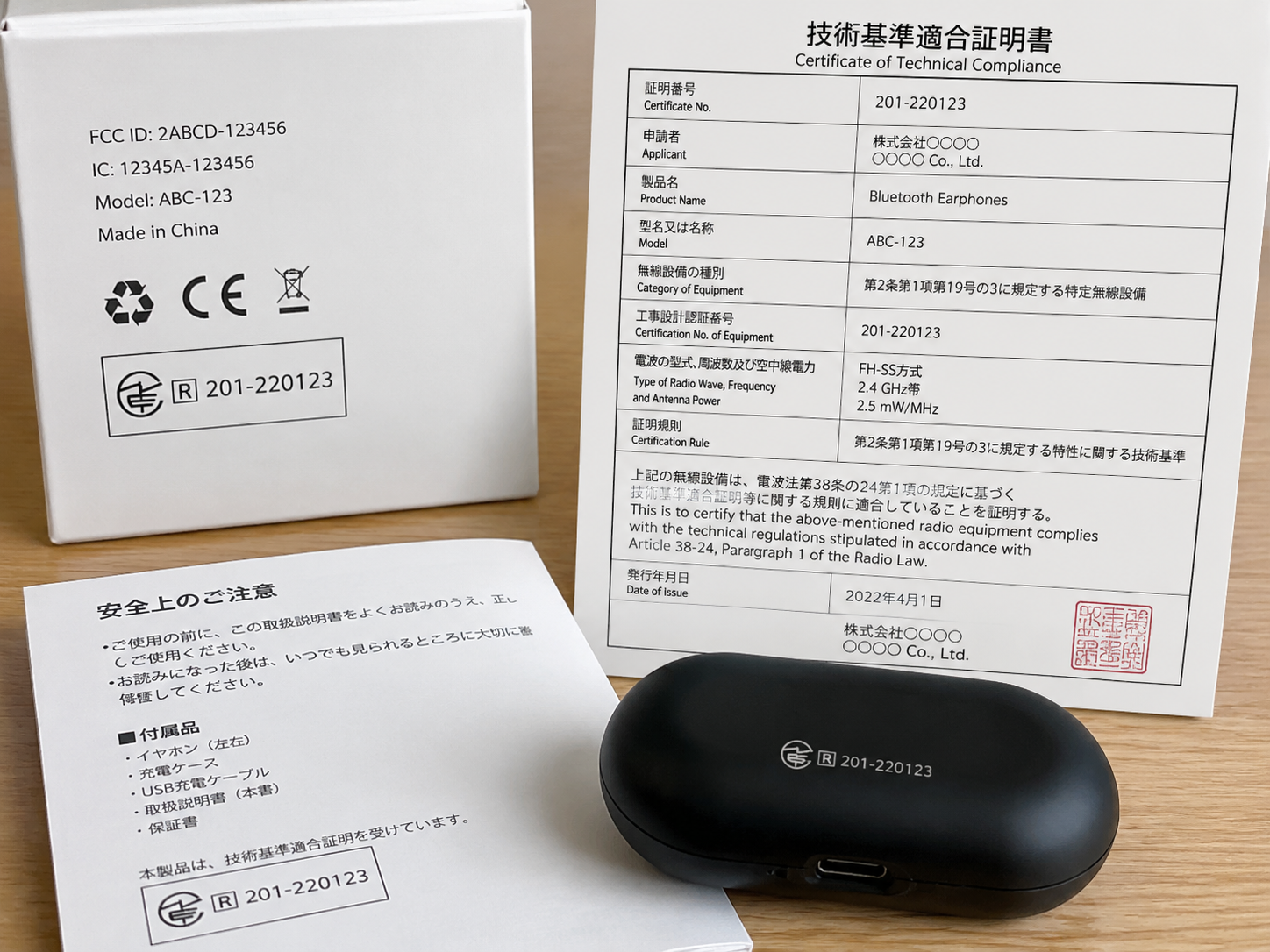
• The mark is a simplified publicity certificate affixed to the product, packaging or manual, displayed to consumers, customs, and platforms, with the core being the Giteki Mark graphic and the corresponding certification number;
• The certification certificate is a core document kept by the manufacturer or importer, which is the fundamental basis for the legal use of the mark, and records detailed information such as the product model, wireless configuration, and scope of application covered by the certification.
The mark itself usually does not carry the complete product model, and the matching between the product and the certification needs to be jointly verified through the certificate, official database query results, and physical configuration.
2. Applicability Judgment: Which Products Need to Be Affixed with the Giteki Mark
You don’t need to memorize complex category lists, you can judge step by step according to the three-level logic of “initial screening – confirmation – exclusion of exemptions”:
Three-Level Judgment Logic
The first step is initial screening of two prerequisites, only those that are met at the same time need further judgment:
1. The product will enter Japan for commercial sale or use — products that do not involve sales, import, commercial display or use in the Japanese market at all are not subject to this marking requirement;
2. The product actively transmits radio waves — note that it is “active transmission”, not “capable of receiving”. For example, Bluetooth headsets actively send Bluetooth signals, which are within the initial screening scope; pure wired headsets only transmit sound and do not transmit radio waves, so they can be directly excluded.
The second step is to confirm whether it is a designated radio device that requires certification: products that meet the initial screening conditions must also be combined with parameters such as device category, operating frequency band, and transmission power to confirm whether they belong to the category that requires obtaining technical standard conformity proof/certification as stipulated in the Radio Law. The power thresholds corresponding to different device categories and different frequency bands are not uniform, and beginner readers can confirm through the MIC official list or certification bodies.
The third step is to exclude statutory exemption scenarios: even if the device requires certification, if it meets the statutory exemption conditions, it does not need to be labeled, but all exemptions must meet the conditions clearly listed in the regulations, and cannot be determined to be applicable on their own.
Common Statutory Exemption Scenarios
At present, common exemptions are mainly divided into four categories, each with strict application restrictions:
1. Very low power device exemption: Only very low power categories clearly listed by the MIC official can be exempted. It is not possible to not label just because you judge that “the product power is low” on your own. The specific categories need to be checked against the MIC official list;
2. Test/exhibition sample exemption: Non-sales, non-commercial test or exhibition samples entering the country for a short period of time need to apply for exemption from the official in advance according to the corresponding system, and can enter the country as required after approval, and absolutely must not be sold in the market;
3. Passenger short-term personal use exemption: Only applicable to personal belongings carried by passengers when entering the country for a short period of time, for non-sales purposes and within the scope clearly listed in the regulations, such as mobile phones and headsets for passengers’ daily personal use, no additional labeling is required; but cross-border personal purchases, commercial gifts, and devices used in Japan for a long time are not within the scope of this exemption;
4. Pure passive component exemption: Wired devices, shells, cables, brackets, etc. that do not have active transmission functions do not need to be labeled as long as they do not transmit radio waves themselves; ordinary wired chargers usually do not trigger Giteki mark requirements due to radio transmission, but may still involve other compliance obligations such as PSE.
Common Misjudgment Scenarios
In actual operation, many people make misjudgments due to incomplete understanding of the rules. The following are the most common types:
• Misconception: Only Bluetooth and WiFi products need to be labeled. In fact, as long as the product actively transmits radio waves and reaches the certification threshold of the corresponding category, it may be required. For example, walkie-talkies, remote control toys, and wireless microphones are all common categories that require certification, and cannot be judged solely by product name;
• Misconception: Pure wired devices also need to be labeled. Devices without wireless transmission functions, such as wired mice, wired headsets, and ordinary power strips, will not trigger Giteki mark requirements due to wireless transmission;
• Misconception: Pure receiving devices definitely do not need to be labeled. Pure receiving radios, broadcast receivers, etc. usually do not trigger requirements due to transmission, but if the device also has transmission functions such as Bluetooth and intercom, it must be re-judged as a whole device;
• Misconception: If the wireless module has certification, the finished product does not need to be labeled. The certification of the module only proves the compliance of the module itself. After the module is installed into the finished product, the radio frequency characteristics of the finished product may change. Therefore, the finished product still needs to confirm its own compliance labeling method according to the rules, and cannot directly use the mark on the module as the finished product mark;
• Misconception: With FCC/CE certification, the TELEC mark can be used directly. Japan’s radio certification is an independent regulatory system, which has no general mutual recognition relationship with the US FCC and EU CE. You must obtain Japan’s compliance certification separately before labeling;
• Misconception: All products purchased by individuals are exempt for personal use. Only personal belongings carried by eligible passengers for a short period of time are applicable. Bulk imports, commercial sales, and cross-border direct mail to individuals all need to meet the marking requirements as stipulated.
3. Mark Composition: Compliant Style and Authenticity Verification
When you get a Giteki mark, you can first conduct initial screening from the core information, and then confirm compliance through the complete verification chain.
Core Information of Compliant Marks
A compliant Giteki mark usually contains the following core information, and the specific labeling requirements shall be subject to the records on the certificate:
1. Official fixed graphic: that is, the standard pattern of the Giteki Mark, uniformly stipulated by Japan’s Ministry of Internal Affairs and Communications. The shape, proportion, and lines shall not be modified at will, otherwise it is non-compliant;
2. Certification number: the identification number corresponding to a specific certification scope, equivalent to the “traceability code” of the certification. This number is not the manufacturer’s internal item number, nor is it generated separately for each physical product or each brand — if the same certification covers multiple models with the same parameters, they will share the same number, and the specific coverage scope shall be subject to the certificate and official records;
3. Category code (not required for all devices): common category codes are “R” and “T”. R corresponds to the technical standard compliance of radio equipment, and T corresponds to the technical standard compliance of telecommunications terminal equipment. Not all devices need to be labeled with a category code, which shall be confirmed according to the regulations and certification types applicable to the device.
Distinction from Similar Marks
There are several marks on the market that are often confused with the Giteki mark, and their regulatory scopes are completely different:
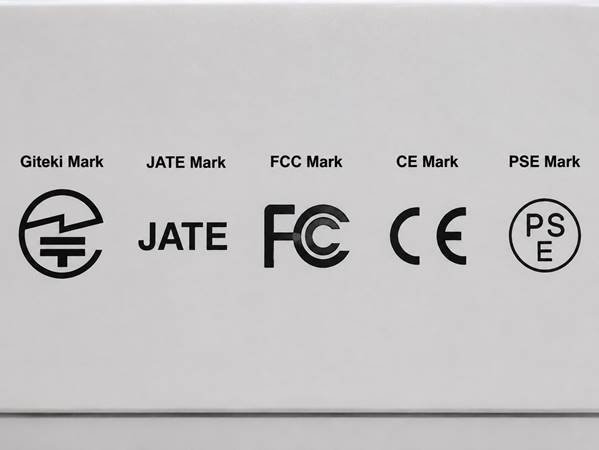
• Difference from JATE mark: JATE mainly regulates the compliance of terminals connected to public telecommunications networks, which is not in the same regulatory dimension as the R mark of radio transmission equipment, and cannot replace each other;
• Difference from FCC, CE, and PSE marks: the three correspond to US radio compliance, EU general compliance, and Japan electrical safety compliance respectively, with different applicable regions or regulatory dimensions. They have no general mutual recognition with Japan’s radio compliance and cannot replace the Giteki Mark.
Complete Verification Chain for Authenticity and Compliance
Complete compliance verification needs to be carried out in four steps, and database query alone is not sufficient for confirmation:
1. Appearance initial screening: If the mark has no certification number, the graphic is deformed, or only the four English letters “TELEC” are printed without the official Giteki Mark graphic, there is a high probability of problems, but appearance can only be used for initial screening;
2. Official database query: Enter the number through the MIC official database or the query system on the official website of the corresponding certification body to confirm that the certification is real and in normal status; note that the official database may have update delays and incomplete public information, and the query results cannot be used as the sole basis;
3. Certification document verification: Verify the records of the certification certificate and report to confirm that the product model, wireless configuration, and labeling method are all within the certification coverage;
4. Physical configuration verification: Confirm that the parameters such as the module, antenna, frequency band, and power of the physical product are consistent with the certification documents, and there is no unauthorized change.
Only when all the above four steps are matched can the mark be confirmed to be compliant and valid.
4. Practical Rules: Compliance Requirements for Mark Affixing and Production
The core principle of all labeling requirements is: must be based on the labeling scheme declared and approved during certification, and the position, carrier or style shall not be changed without authorization.
Basic Rules for Labeling Position and Carrier
Under normal circumstances, the mark is preferentially affixed to the outer surface of the product body, such as the bottom shell, back, and nameplate position, requiring that ordinary people can directly view it without disassembling the machine or using tools.
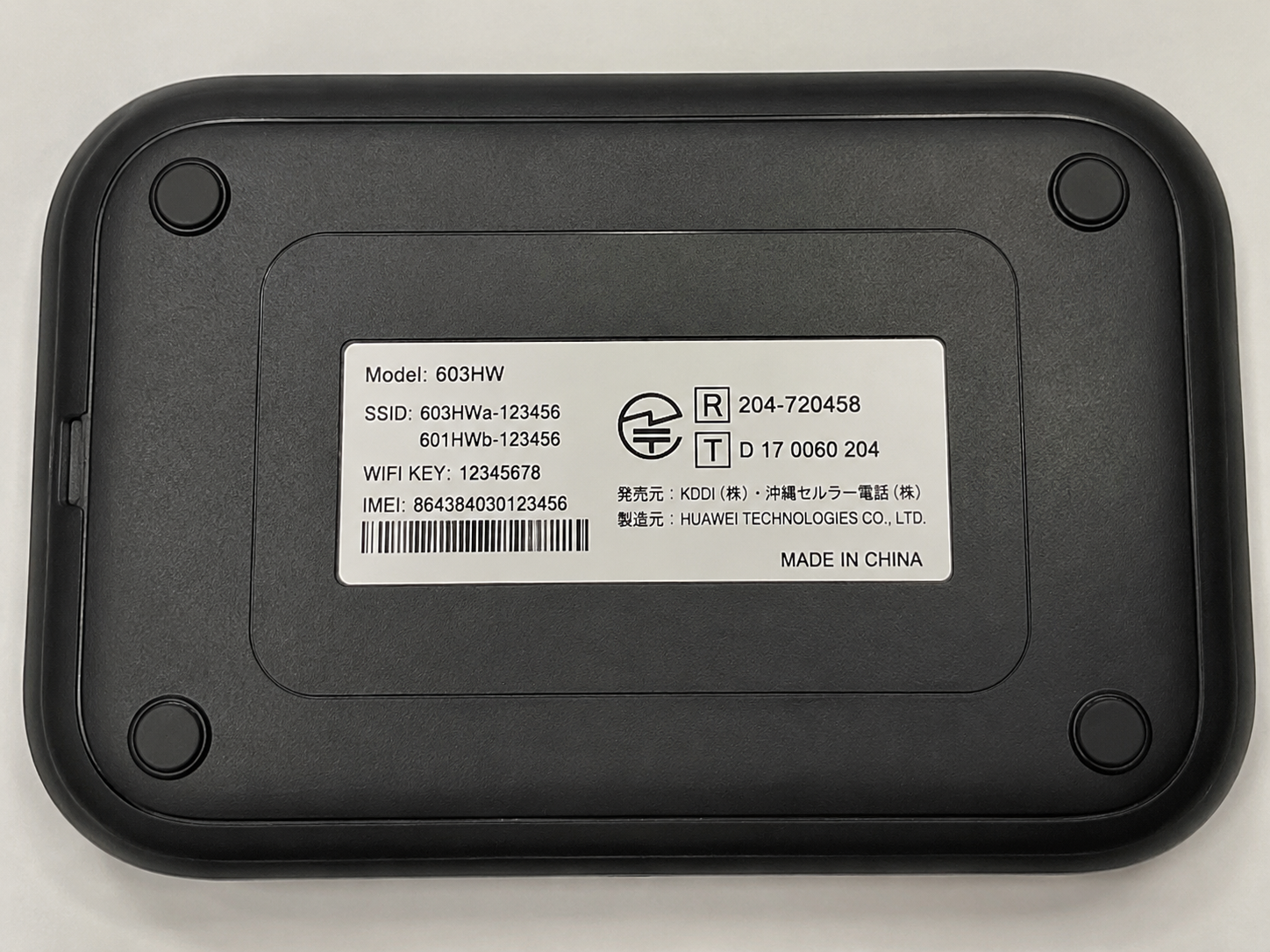
If the product is too small and the body really cannot print a clear mark, alternative carriers can be used, but the alternative plan must be reported to the certification body during the certification stage, and can only be used after confirmation and inclusion in the certificate scope, and cannot be decided on your own. Common legal alternative carriers need to be confirmed according to the device category, which may include charging cases, minimum sales packaging, manuals, etc. Not all small devices can freely choose packaging or manuals as alternatives.
If smart devices with screens use electronic marks, they also need to be confirmed by certification: electronic marks must be placed in a position that users can view through normal operation of the device without networking or relying on paid services (such as the “About This Device” page), cannot be hidden in deep settings, and the labeling content must be consistent with the certification requirements.
It is forbidden to affix the mark on temporary protective films, the inside of disposable packaging, parts that are easy to wear or easy to discard, otherwise it will be regarded as failing to publicize as required.
Format and Durability Requirements
The format and durability must meet the following basic requirements:
• Clear and legible: People with normal vision can clearly recognize the graphic and number of the mark, the graphic proportion is correct, there is sufficient contrast with the background color, and it can be printed in monochrome;
• Durable and firm: It shall not fall off or fade during normal transportation, use, and cleaning, and key information shall not be blocked by other components (such as the number being blocked by screws).
Before mass production marking, it is recommended to send the label drawing to the certification body for verification to avoid rework due to style problems.
Special Labeling Rules for Different Product Forms
For some products with special forms, the labeling rules need to be judged separately in combination with the certification scope:
Complete Sets of Equipment and Multi-piece Independent Wireless Sets
If it is a set of equipment sold as a set (such as a wireless keyboard and mouse set, a one-to-two wireless microphone), each independent radio transmission unit needs to be confirmed separately according to its own certification scope and approved labeling method, and it is not possible to just affix one mark on the outer packaging to cover all transmission units; passive accessories (such as charging cables, protective cases) do not need to be labeled; whether components such as USB receivers need to be labeled needs to be judged according to whether they have two-way transmission functions, and pure receiving ones do not need to be labeled.
Modular Products
For finished products using ready-made wireless modules, the labeling requirements need to be judged separately according to different scenarios:
1. Module sold separately: If the wireless module is sold as an independent radio device, the module itself needs to be affixed with the Giteki mark corresponding to its own certification as required;
2. Module installed in the whole machine: The finished product cannot directly use the mark on the module as its own compliance publicity mark. Whether the certification of the module can be cited to complete the compliance of the whole machine depends on whether the assembly method, antenna, shell, radio frequency parameters, and software of the module are still within the scope of the original certification of the module. The certification body needs to confirm the compliance of the whole machine before determining the labeling method and the number used for the whole machine;
3. Replacing the module or antenna: If the wireless module, antenna is replaced or the radio frequency related structure is adjusted during the production of the finished product, it must be re-verified whether it is still within the scope of the original whole machine certification. If it exceeds the scope, it is necessary to re-apply for certification and replace the corresponding mark.
4 Items Must Be Checked Before Mass Production Marking
Many sellers find that the mark is wrong after mass production, resulting in heavy losses. It is recommended to check the following 4 items after proofing and before mass production:
1. Confirm that the certification certificate is in normal status, and the model and wireless configuration of the product to be mass-produced are within the certification coverage;
2. Confirm that the graphic, certification number, and category code (if any) of the label drawing are completely consistent with the records on the certificate, without deformation, errors or omissions;
3. Confirm that the wireless module, antenna, and radio frequency parameters of the product are consistent with the status during certification, and there is no unauthorized change;
4. Confirm that the marking information on the outer packaging, manual, and Japanese e-commerce detail page is completely synchronized with that on the product to avoid inconsistent information.
5. Advanced Judgment: Coverage Scope, Changes and Self-Inspection Methods
In actual operation, complex scenarios such as product modification and certification status changes are often encountered. The following judgment logic can help you sort out the compliance boundaries.
Core Rules for Certification Coverage Scope
The judgment of all complex scenarios is based on two basic rules:
1. Scope correspondence rule: One certification number only corresponds to a specific certification scope, which may cover one or more products of the same parameter series, but absolutely cannot be borrowed across categories or across parameter ranges. For example, two headsets with the same appearance but different Bluetooth chips cannot share the same certification number; after OEM/ODM products change brands or models, they must first confirm whether the original certification coverage is applicable, and cannot directly copy it;
2. Status validity rule: After the certification expires, is revoked or cancelled, it is not allowed to continue to produce or sell products with the corresponding mark; exceptions may only be made when confirmed in writing by MIC or the certification body. The validity of certification cannot be judged only by “whether there is a certificate”, but also by comprehensive judgment based on dimensions such as whether the applicable regulatory standards have changed, and whether the current production batch is still within the certification coverage. All status-related confirmations shall be subject to the official requirements of MIC or the certification body.
Judgment Process for Product Modification/Change
Product iteration and modification is common. The core judgment standard for whether to re-certify and change the mark is: whether the change will affect the radio frequency characteristics and whether it exceeds the scope of the original certification.
Changes that may affect radio frequency characteristics include but are not limited to: adjustment of shell or metal structure, replacement of antenna position/model, change of power supply scheme, replacement of radio frequency chip, adjustment of power control logic, change of frequency band switching function, firmware update involving transmission parameters, change of module assembly method, etc.
• If the change only involves appearance, packaging, non-radio frequency hardware (such as replacing the key material), or software updates that do not affect transmission parameters (such as modifying the UI interface), you can first conduct a preliminary assessment against the certification report, schematic diagram, antenna and assembly conditions, and after confirming that it does not affect the original certification conditions, then confirm with the certification body, usually the original mark can be used;
• If the change involves radio frequency related parameters and exceeds the original certification coverage, you must re-apply for certification and use a new mark, and cannot continue to use the old mark.
Responsibility and Archiving Requirements
Japanese importers/domestic sellers are the first responsible parties for mark compliance. Before shipment, they must complete the verification of the mark and certificate and confirm that all labeling meets the requirements; overseas manufacturers are responsible for providing test reports, original certification documents, module/antenna specifications and other materials to cooperate with compliance verification. The specific division of legal responsibilities will vary depending on the type of illegal act, device category and role division, and shall be subject to applicable regulations in the end.
The core documents that all parties need to keep include:
• Japanese importers/sellers: need to keep certification certificates, label drafts, batch shipment records, etc., for regulatory spot checks;
• Overseas manufacturers: need to keep test reports, original certification documents, specifications of wireless modules and antennas, etc., to cooperate with compliance verification.
The archiving period shall at least cover the complete product sales cycle + the regulatory traceability requirement period, and the specific period shall be subject to official regulations.
3-Step Quick Compliance Self-Inspection Method
Whether it is your own product to be shipped, or a sample provided by a supplier claiming to have certification, you can use these three steps to quickly self-check:
1. Check the number status: Query the certification number through the official website of MIC or the certification body to confirm that the certification is real and in normal status;
2. Check the mark style: Verify that the core information such as the graphic and number of the mark is complete and clear, without deformation or occlusion, and meets the requirements of the certification documents;
3. Check matching consistency: Verify that the product model and wireless configuration (module, antenna, frequency band, power) are consistent with the records of the certification certificate and report, and there are no changes beyond the certification coverage.
6. Pitfall Avoidance Guide: Common Practical Risks and Violation Response
Common Practical Pitfalls for Overseas Sellers
Many sellers do not intentionally violate regulations, but ignore details during operation, which eventually leads to losses. The following are the most common types of pitfalls:
1. The mark size is too small and the position is too hidden: If the mark is too small to be recognized, or affixed in a position that is not easy to find, it may be found non-compliant by Japanese customs spot checks, which will lead to cargo detention;
2. The e-commerce detail page does not display the mark as required: Some wireless categories on Japanese e-commerce platforms may require the display or submission of the Giteki mark and certification number on the detail page, and those that do not meet the requirements may be removed from the platform;
3. Borrowing the certification number of products with the same chip and same appearance: For example, if you see that someone else’s headset uses the same Bluetooth chip as yours and has a similar appearance, you directly use the other party’s certification number. Once this behavior is spot-checked, it may lead to cargo detention, product removal, recall, and corresponding compliance penalties;
4. Failure to re-certify after replacing the module/antenna, and continuing to use the old mark: For example, after the original module is out of stock, a module with similar performance is replaced, thinking that there is no need to re-certify, but as a result, the radio frequency parameter change exceeds the original certification scope, which is a violation of the mark usage.
Boundary Reminder for Samples and Exemptions
Regarding the use of marks for test samples, many people are easy to step on the boundary, so special attention is needed: test/exhibition samples that have not obtained formal certification cannot be affixed with the Giteki mark at will; whether they can enter the country and whether they can be used temporarily need to be applied for in advance according to the corresponding exemption system, and used strictly in accordance with the requirements after approval, and absolutely must not be sold in the market, even at a discount. Samples that have obtained formal certification also need to be correctly labeled according to certification requirements, and shall not be modified at will.
Common Risks of Illegal Use
If you use the Giteki mark in violation of regulations, you may face various risks. The specific consequences depend on the type of illegal act and the applicable regulatory provisions:
• Circulation end risks: The most common are customs detention of goods and removal from e-commerce platforms. In serious cases, you may be ordered to rectify, recycle or recall sold products;
• Legal end risks: Serious cases may involve administrative sanctions or criminal liability, which shall be subject to the latest Radio Law and official rules;
• Long-term impact: Violation records may affect the enterprise’s subsequent certification applications, as well as credit records in regulatory authorities and platforms.
Basic Remedial Path After Violation
If you find that there is a compliance problem with the mark, you can follow the steps below to minimize losses:
1. Immediately suspend the use of suspicious marks, remove products of the involved batch from shelves, stop related publicity, and avoid further expansion of the violation scope;
2. Verify the certification certificate, product model, wireless configuration, and shipment records as soon as possible to clarify the product scope and cause of the violation;
3. If the product has not obtained compliance certification, apply for formal Japanese radio compliance certification as soon as possible; if the product has flowed into the market, it is necessary to rectify or recall it in accordance with the requirements of the Japanese regulatory authority, and must not take chances to delay.
Core Competency Summary
This article covers the core rules of the Giteki mark from beginner to advanced level. After learning, you can master two types of practical abilities:
Beginner Level (Can Use It After Reading)
• Can recognize compliant Giteki Marks, and distinguish similar marks such as JATE, FCC, CE, and PSE;
• Can initially judge whether a product needs to be affixed with the Giteki mark through three-level logic, and avoid common application misconceptions;
• Can verify the style and position requirements of the mark according to the rules, and complete the basic verification before mass production.
Advanced Level (Can Judge and Avoid Pitfalls)
• Can self-check the compliance of the mark through the 3-step method, and avoid common pitfalls for overseas sellers;
• Can judge whether certification and marks need to be updated in scenarios such as product modification, module replacement, and brand change;
• Can clarify the compliance requirements of different sales scenarios, and understand the basic rules of responsibility and archiving.
The final compliance judgment shall be based on valid certification documents, official query results from MIC or certification bodies, and the formal confirmation opinions of the responsible entity in Japan.