
If you are planning to launch products with wireless functions into the Japanese market, you will most likely hear the term “TELEC technical file”. Many beginners, when first exposed to it, either regard it as a simple test report, or mistakenly think it is the same type of document as the Technical File of EU CE certification, which easily leads to errors or omissions in documents and affects certification efficiency.
First of all, it needs to be clarified that the “technical file” here is an industry common name in the Chinese-speaking community, referring to the full set of compliance document package for Japan Radio Technical Conformity Certification. It does not belong to the same system as the EU Technical File. Its core is to answer three questions: what kind of device this is, how it emits radio waves, and why it meets the requirements of Japan’s . It has two functions: first, as the core basis for certification review; second, for regulatory authorities to check after the product is launched on the market.
1. Basic Knowledge for Beginners: TELEC Technical File and Fundamentals of Japan Radio Certification
To understand the requirements of the technical file, you must first sort out the core roles and basic rules in Japan’s radio certification to avoid confusing institution names and certification types.
Clarification of Core Stakeholder Relationships
The top-level regulator is the Ministry of Internal Affairs and Communications of Japan (abbreviated as MIC). As the competent authority for radio in Japan, it undertakes functions such as regulatory enforcement, formulation and release of technical standards and implementation rules under the framework of the , such as delimiting the scope of equipment requiring certification and clarifying corresponding technical standards, but it does not directly issue certificates to enterprises.
The specific certification review and certificate issuance work is completed by Registered Certification Bodies (abbreviated as RCBs, third-party institutions registered and approved by MIC that specifically undertake the review and issuance of radio technical conformity certification) recognized by MIC. The most well-known and longest-established RCB is the Telecommunications Technology Association (abbreviated as TELEC). Therefore, the industry has gradually commonly referred to Japan’s radio technical conformity certification as “TELEC certification” — but it should be noted that TELEC is only one of many RCBs, neither a regulatory authority nor the only certificate-issuing institution.
In addition, there are several directly related roles: the manufacturer/applicant is the producer of the product or the initiator of the application; the testing laboratory is an institution that conducts radio frequency tests in accordance with Japanese technical standards and issues test reports, which needs to meet corresponding qualification requirements; overseas manufacturers usually need to designate a Japanese domestic partner to cooperate in undertaking post-market compliance work, and the specific arrangement is subject to the requirements of the selected RCB.
Two Core Certification Paths (Which Determine Differences in Document Requirements)
Japan’s technical conformity certification mainly has two statutory paths. Which one to choose directly determines the scope of document preparation, and there is no need to blindly prepare according to the full checklist.
The first is Certification of Conformity to Technical Standards (simply put, it is an individual compliance certificate for single-unit/small-batch equipment, only covering specific equipment within the application scope, and does not involve subsequent mass production consistency requirements), which is applicable to single-unit, small-batch or customized equipment. For example, industrial sensors customized for Japanese factories with only 10 units produced, the focus of certification is to prove that “this specific batch of equipment meets the requirements”, so the document requirements are relatively simple.
The second is Construction Design Certification (simply put, it is a design compliance certification for mass-produced equipment, the core is to verify that the product design meets the requirements, and the mass production link can ensure that the radio frequency performance of each product is consistent with the certified prototype), which is applicable to mass-produced consumer or commercial equipment. For example, for Bluetooth headsets with annual sales of hundreds of thousands of units, the review focuses on design compliance and mass production consistency. Therefore, in addition to basic tests and technical documents, additional documents related to mass production quality control are required, with stricter requirements.
2. First Step: Determine Whether Your Product Needs TELEC Technical Documents
Many people are eager to find a document checklist as soon as they start. In fact, the first step should be to determine whether the product falls within the scope of regular technical conformity certification to avoid wasting time and cost.
Three Core Necessary Conditions for Determination
To judge whether it is necessary to prepare a special technical file for technical conformity certification, the core depends on three necessary conditions that must be satisfied simultaneously: products that meet all three conditions at the same time usually need to apply for radio technical conformity certification according to the corresponding category and prepare a special technical file; if any condition is not met, although it is most likely not within the scope of regular technical conformity certification, it may still involve other radio use rules, individual licenses or restriction requirements. It cannot be directly determined that it can be used freely in Japan. It is recommended to consult an RCB or professional institution for confirmation in combination with the specific situation of the product.
First, the product will be sold or used in the Japanese market. If it is only for other markets, there is no need to consider Japanese related requirements.
Second, the product has active radio transmission function. Pure receiving equipment (such as ordinary FM radios, GPS locators that only receive signals) and passive equipment (such as battery-free passive RFID tags) do not fall into this category, because they do not actively emit radio waves that interfere with the radio order.
Third, the product does not belong to “weak radio equipment” stipulated in Japan’s , and falls into the specified radio equipment categories, with frequency band/power/usage meeting the corresponding technical standards. Special attention should be paid here: the judgment standard for weak radio equipment is not the nominal transmit power, but whether the electric field strength of the equipment exceeds the limit at the measurement distance specified by regulations. For example, some products have a nominal transmit power of only 1mW, but with high antenna gain, the electric field strength at the specified distance exceeds the limit, so they still do not belong to weak radio equipment and need to be certified as required.
Examples of Commonly Covered and Exempt Products
For quick comparison, the following are common product examples:
Typical products that need to prepare TELEC technical documents include: Bluetooth headsets, WiFi routers, smart watches with cellular or Bluetooth functions, walkie-talkies, IoT wireless sensors, cellular terminals such as mobile phones.
Common situations that can be exempted from regular technical conformity certification include: pure receiving broadcast equipment, passive RFID tags, ultra-short-range wireless charging devices that meet specific electric field strength limits, operating frequency and usage scenario requirements (such as some low-power consumer electronics wireless charging bases, which need to be checked against regulations in combination with power supply methods and frequency parameters).
It should be reminded that it is forbidden to self-judge exemption based on “low power” or “short distance”. Either carefully check the specific limits of the , or apply for pre-assessment from RCBs such as TELEC to avoid compliance problems after the product enters the Japanese market.
Key Document Focus for Different Standards/Frequency Bands
If the product is determined to require certification, there are differences in the focus of document preparation for different radio standards, and there is no need to blindly pile up documents. The following are the core document focuses of common standards, which can be prepared for reference:
| Radio Standard/Product Type | Core Focus of Document Preparation |
| BLE/2.4G WiFi | Frequency band occupancy, adjacent channel power, maximum transmit power |
| 5GHz Wi-Fi | For devices using 5GHz frequency bands that require DFS (Dynamic Frequency Selection, a function that automatically avoids dedicated frequency bands such as meteorological radars) under Japanese regulations, DFS conformity documents must be supplemented; 5GHz Wi-Fi in non-DFS bands does not require this |
| Sub-GHz IoT (low-power wireless below 1GHz) | Operating frequency band, occupied bandwidth, transmission timing |
| Cellular terminals (LTE/5G) | Network compatibility documents; if the device is portable/worn close to the body and meets the applicable conditions for human exposure assessment, SAR (Specific Absorption Rate, an indicator measuring the level of radio energy absorbed by the human body) related test documents must be supplemented. Whether it applies is subject to the human exposure requirements of the corresponding technical standards |
| NFC/RFID | Operating frequency, electric field strength, communication distance |
| UWB (Ultra-Wideband wireless technology) | Transmit power spectral density, operating frequency band limitations |
| Short-range wireless power supply/wireless charging | Operating frequency band, electric field strength parameters; for wireless power supply equipment that falls within the scope of technical conformity certification, corresponding radiation limit conformity documents must also be supplemented. Whether it falls within the certification scope is determined based on equipment type, power, frequency and usage scenario |
Three Core Factors Affecting the Stringency of Document Requirements
In addition to standards, there are three core factors that determine the stringency of document requirements, which can be expected in advance:
The first is equipment type. Low-power consumer devices (such as Bluetooth speakers, ordinary WiFi routers) have fewer test items, shallow document depth requirements, and basic mass production control requirements; while professional radio equipment and cellular terminals have more comprehensive test items, higher document requirements, and stricter mass production control.
The second is the certification path. Among the two statutory paths, Construction Design Certification (mass production) has the strictest requirements, followed by Certification of Conformity to Technical Standards (single unit/small batch); products using certified modules that meet the simplification conditions have relatively lower document requirements.
The third is the number of wireless functions. If the device supports multiple standards at the same time (such as having Bluetooth, WiFi, and cellular functions at the same time), it is necessary to supplement coexistence interference test documents for different standards, which has higher requirements than single-standard devices.
3-Step Quick Determination Method for Beginners
If you are still unsure, you can screen and judge step by step through 3 steps:
Step 1: Confirm whether the product has active radio transmission function. If not, it is directly excluded from the scope of regular technical conformity certification.
Step 2: Check whether the product is a weak radio equipment and whether the standard is within Japan’s specified radio equipment categories.
Step 3: If it is still uncertain, it is recommended to apply for pre-assessment from RCBs such as TELEC or qualified professional institutions to obtain a clear conclusion and avoid compliance risks caused by misjudgment.
3. Core Requirements: 8 Categories of General TELEC Application Document Checklist
After confirming that the product requires certification, you can start preparing core documents. No matter which certification path you choose, the core documents can be classified into 8 categories, which can be used as a basic checklist, and then adjusted according to the certification path and product type.
1. Applicant Entity and Authorization Category
This type of document is used to clarify the compliance responsible entity, mainly including the basic contact information of the manufacturer, Japanese domestic partner (importer/agent), as well as application forms, authorization letters, liability statements and other documents.
Such documents are usually provided with official templates by the RCB, and you can fill in the information as required without drafting them yourself. It should be noted that the information of the Japanese domestic partner must be accurate, as subsequent review communication and post-market regulatory docking will usually directly contact this entity.
2. Product Model and Version Category
This type of document is used to clarify the specific product applying for certification, including the product model, hardware/firmware version number, and a plain language description of the wireless function — for example, directly write “2.4G Bluetooth connects to mobile phone for audio transmission”, try to avoid overly obscure professional terms, so that reviewers can quickly understand.
If there are multiple models in the same series, or different versions across regions, it is necessary to clearly explain the differences between different versions (for example, only the appearance color is different, or the memory configuration is different), and you cannot only provide internal numbers for reviewers to check by themselves.
3. Radio Frequency Technical Parameters Category
This is the most core basic data in the technical file, mainly including three core parameters: operating frequency band, maximum transmit power, and modulation method.
For multi-standard devices, the independent parameters of each standard must be listed separately and cannot be mixed. If the product parameters support user configuration (for example, the transmit power can be adjusted, the frequency band can be switched), the default configuration and the limit range of user operations must be specified — that is, users must not be allowed to adjust parameters beyond the regulatory limits.
4. Drawings and Key Component BOM Category
This type of document is used to let reviewers intuitively understand the RF structure of the product, including whole device appearance photos and internal structure photos. Key RF components such as antennas, wireless modules, and shielding cases must be marked in the photos. No professional photography is required, but they must be clear and distinguishable.
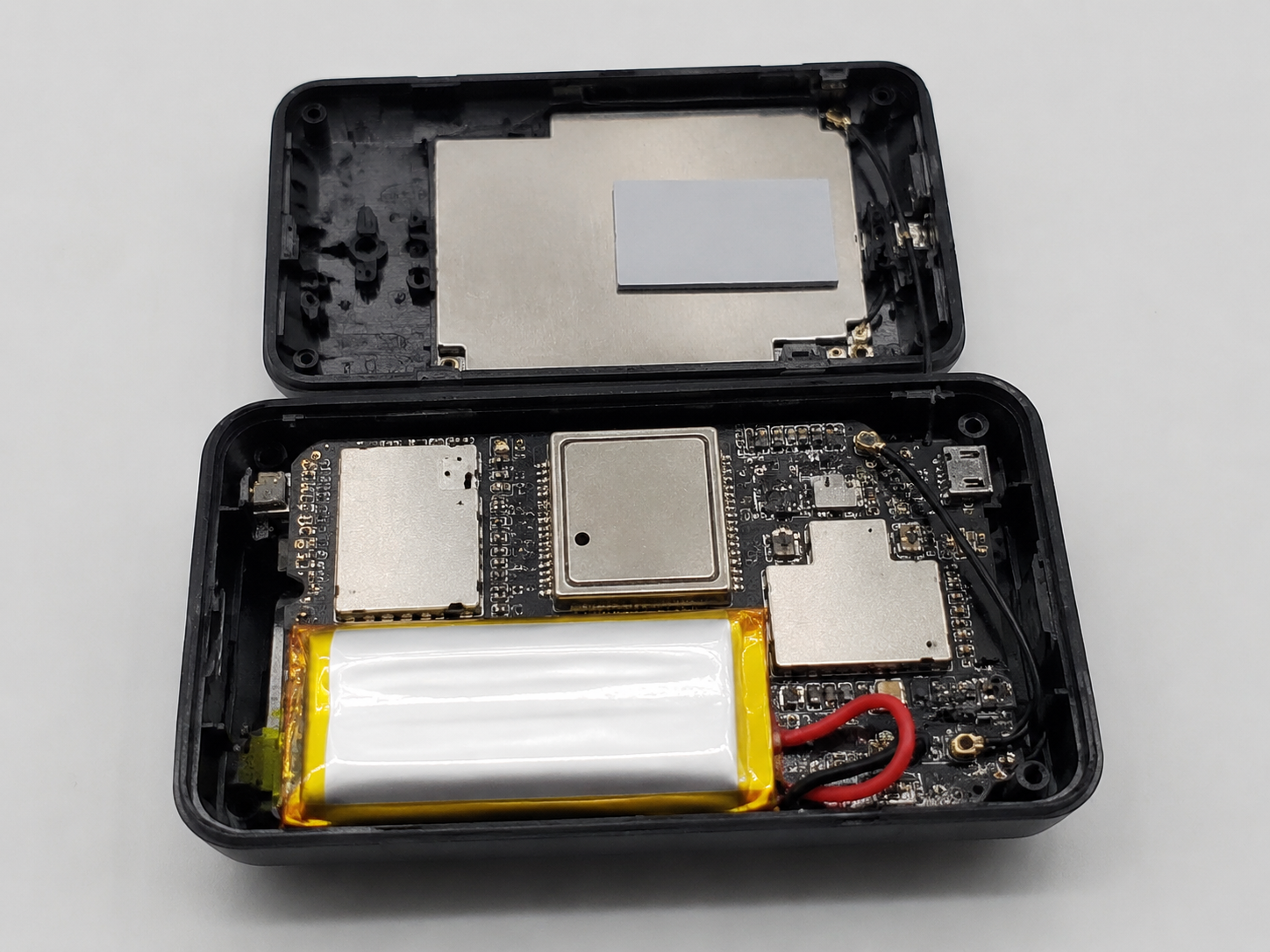
In addition, a simplified RF signal path diagram needs to be provided. There is no need to draw complex circuit diagrams, as long as it can clearly show the path of the signal from the wireless module to the antenna. There is also the BOM (Bill of Materials) of key RF components, which only needs to list RF-related parts (such as wireless modules, antennas, RF chips, shielding cases, etc.), including model, supplier, and specification parameters, and does not need to list all electronic components.
5. Antenna and Wireless Module Category
Antennas and wireless modules are the two most critical components that affect RF performance, so separate documents need to be prepared.
The antenna part needs to explain the type, gain, installation position of the antenna, and whether it is detachable. If a wireless module that has passed TELEC certification is used, the manufacturer, model, and valid TELEC certificate of the module must be provided — this is one of the basic conditions for applying for simplified assessment.
6. Compliance Test Evidence Category (TELEC Test Report Requirements)
Many people mistakenly think that the technical file is the test report. In fact, the test report is only one type of core compliance evidence.
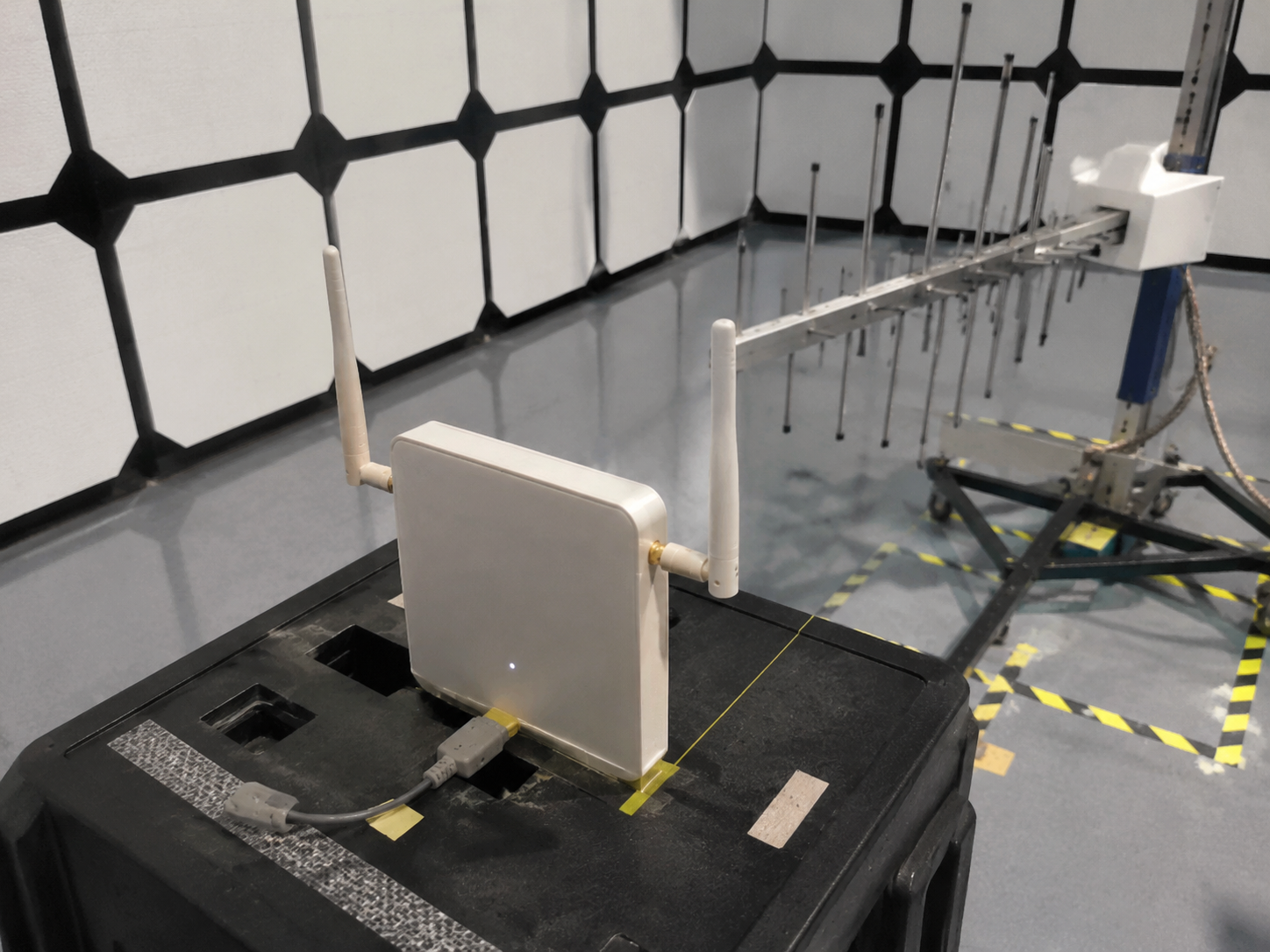
The general acceptance requirements for test reports by most RCBs include: first, the testing laboratory has ISO/IEC 17025 accreditation covering the corresponding test items; second, the test is strictly implemented in accordance with Japan’s current technical standards, and the standard clauses and versions based on are consistent with the application documents; third, the report format and content depth meet the specific requirements of the RCB. In addition, some RCBs may also have additional requirements for test witnessing, raw data retention, etc. Whether the report is ultimately acceptable is subject to confirmation by the selected RCB.
The test report must include the following core content: corresponding test standard clauses, hardware/firmware version of the prototype, test mode adopted, whether the test is conducted under the maximum transmit power configuration, antenna configuration used for the test, and prototype photos.
The laboratory will usually cooperate to provide qualification certificates and other related documents. Manufacturers can confirm with the laboratory in advance whether they meet the requirements of the target RCB.
7. Label and User Manual Category
This type of document is a high-incidence area for corrections, as many people easily overlook format details.
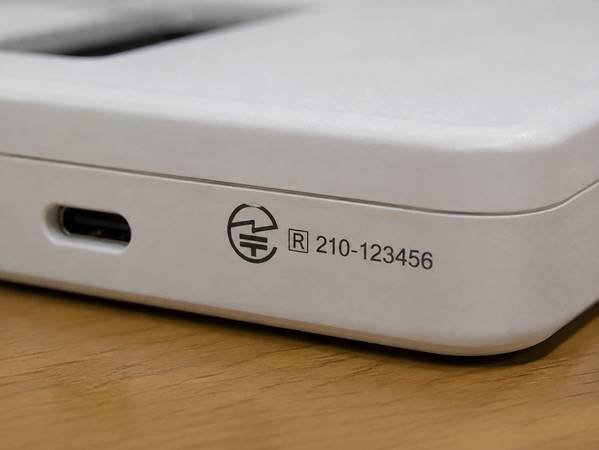
First is the design drawing of the technical conformity mark. The format, size, and pasting position of the mark must comply with MIC rules and certificate requirements, and the proportion or style must not be changed arbitrarily. The certification number must be marked as required, completely consistent with the content on the certificate. Specific equipment categories that meet MIC regulations can use electronic labels instead of physical labels, which must meet the requirements that the certification number and compliance information can be easily viewed and verified. The specific applicable scope and display rules are subject to MIC and RCB requirements.
Second is the user manual. Most consumer wireless devices require a Japanese version of the user manual, which includes specified compliance warnings (such as “Do not replace the antenna without permission”, etc. The specific warning content is subject to the requirements of the corresponding equipment category). The labeling requirements on outer packaging and manuals must be implemented according to product categories, and must not be omitted.
8. Mass Production Consistency and Change Control Category
This type of document is mainly for the mass production Construction Design Certification path. Certification of Conformity to Technical Standards (single unit/small batch) usually does not need to be provided, subject to RCB requirements.
Its core function is to prove that the enterprise has the ability to ensure that the RF performance of mass-produced products is consistent with the certified prototype. It mainly includes: firmware version locking rules, RF firmware upgrade restrictions (users must not be allowed to upgrade RF firmware arbitrarily to modify parameters), evaluation process for supplier changes of key RF components, RF sampling inspection requirements at the factory, and BOM version management rules.
The content does not need to be too complicated, but must be implementable, otherwise reviewers may think that the enterprise cannot guarantee mass production consistency.
4. Advanced Determination: Differences in TELEC Technical Document Requirements Under Different Scenarios
The above 8 categories are the general basic checklist, but in actual operation, there are differences in document requirements for different certification paths, product types, and applicant entities. Clarifying these differences can reduce useless work.
1. Document Differences for Different Certification Paths and Module Usage Scenarios
The official certification paths stipulated in Japan’s are Certification of Conformity to Technical Standards and Construction Design Certification. Products using certified wireless modules can apply for simplified assessment (commonly known as “module inheritance” in the industry) on the premise of meeting conditions, which is not an independent certification path. The specific scope of simplification needs to be reviewed and confirmed by the RCB.
• Whole device new Construction Design Certification (mass market launch): Need to prepare all 8 categories of documents, the review focuses on mass production consistency management, so the 8th category of mass production management documents needs to be perfected with emphasis.
• Simplified application using certified modules (commonly known as module inheritance): Note that using a certified module does not automatically exempt the whole device from compliance assessment obligations. Whether the test results and certification conclusions of the module can be used depends on the construction design scope covered by the module certificate, the antenna/installation conditions of the whole device, the host function settings, etc. The final judgment is subject to the RCB. Usually, the following basic conditions must be met to have the opportunity to apply for simplification: first, the module model is completely consistent with the certified model; second, the antenna type, gain, and installation conditions do not exceed the limited scope of the module certificate; third, the host does not open prohibited frequency bands or increase the module’s transmit power; fourth, the manual labeling meets relevant requirements; fifth, the RF firmware of the module has not been modified.
• Single unit/small batch Certification of Conformity to Technical Standards: Applicable to custom prototypes, small-batch trial production and other scenarios. No need to provide the 8th category of mass production management documents, only need to prepare test and technical documents for the corresponding single unit/batch of equipment.
2. Review Focus for Different Product Types
Different types of products have different review focuses, so you can improve key documents targeted, no need to spread effort evenly:
Short-range consumer products such as Bluetooth and WiFi have review focuses on frequency band, power, and consistency of multi-mode coexistence, with fewer test items and relatively simplified document requirements.
For IoT low-power module products, the review focuses on the certification boundary of the module, that is, whether the whole device’s antenna, housing, and installation position exceed the scope of the module certificate. Many enterprises easily have non-compliance issues here, mistakenly thinking that using a certified module can directly meet the whole device requirements.
Cellular terminals and professional radio equipment need to supplement network compatibility descriptions and SAR test documents that meet applicable conditions, with more comprehensive test items and stricter mass production management requirements, so the workload of document preparation is relatively larger.
3. Special Requirements for Overseas Manufacturers
If you are an overseas manufacturer, not a local Japanese enterprise, there are several special precautions:
First, most RCBs require overseas manufacturers to designate a Japanese importer or agent to cooperate in post-market compliance work (such as document retention, regulatory communication, recall cooperation, etc.). The specific applicant entity arrangement and responsibility division are subject to the rules of the selected RCB.
Second, core compliance documents directly facing users or regulators (such as labels, user manuals, warnings) require Japanese versions for most equipment categories, subject to the corresponding technical standards.
Third, technical documents such as test reports and technical parameters can be in English. Most RCBs require a Japanese key parameter comparison table (covering core information such as model, operating frequency band, maximum transmit power) to facilitate review, subject to RCB requirements.
4. Reference Rules for Document Update for Product Changes
If a product changes after certification, it is necessary to evaluate the impact of the change on RF performance and certification conformity. The specific handling method needs to be determined based on the certified construction design scope, certificate additional conditions, test results and RCB confirmation results. There is no unified fixed handling rule. Common change impact classifications in practice (for reference only, do not constitute legal standards) include:
• Changes that usually only require filing or supplementary explanation, no retesting needed: Generally changes that do not affect RF performance at all, such as replacing a non-metallic housing that does not block the antenna, adjusting outer packaging design, only modifying firmware UI interface, replacing non-RF components with same-specification substitutes, etc. Whether it can be only filed is subject to RCB judgment.
• Changes that usually require supplementary assessment and retesting depending on the situation: Generally changes that may slightly affect RF performance, such as replacing an antenna with the same nominal gain but different shape and radiation pattern, replacing RF key components with same-specification ones from different suppliers, minor adjustment of antenna installation position but no significant change to the surrounding shielding environment, etc. Note: Even if the antenna’s nominal gain is the same, changes in radiation pattern, matching characteristics or installation environment may have a substantial impact on RF performance. Whether retesting is needed and which items to retest must be evaluated and determined by the RCB.
• Changes that usually require supplementary relevant tests and updated test reports: Generally changes that significantly affect RF performance, such as changing antenna type or gain, increasing transmit power, replacing wireless module, modifying module RF firmware, adjusting shielding structure or RF matching circuit, replacing metal housing, changing antenna installation position and significantly changing the surrounding RF environment, etc. The specific test items are subject to RCB requirements.
• Changes that usually require re-submitting certification application: Generally major changes in the product’s core wireless standard, main model, intended use, which is equivalent to forming a new compliance entity. The specific judgment needs to be combined with the degree of change.
For whole devices using certified modules, whether the change will break the applicable boundary of the module certificate can also be evaluated according to the same logic. As long as the modification affects the original RF performance or limited use conditions of the module, usually the simplified qualification of module certification can no longer be used, and the whole device needs to be re-evaluated.
5. Practical Rules: Document Submission, Review Correction and Retention Requirements
After the documents are prepared, the practical rules for submission, review correction and subsequent retention also need to be noted to avoid delaying progress due to process issues.
1. Submission Channels and Forms
There is no need to submit documents directly to MIC, just submit to TELEC or other MIC-registered RCBs.
The submission form is mainly electronic. Some professional radio equipment may need to submit paper copies as required by the selected RCB, subject to RCB notification. Overseas manufacturers can submit by themselves or entrust a Japanese importer/agent to submit. The specific submission entity requirements are subject to the selected RCB’s regulations.
2. Common Correction Reasons and Handling
Correction is a common part of certification review, just submit revised documents as required.
The most common correction reasons include: inconsistent parameters (for example, the power on the application form does not match that on the test report), incorrect technical conformity mark format, incomplete Japanese documents, unclear description of multi-model differences, insufficient mass production management documents, etc.
The correction time limit is determined by the RCB according to the complexity of the correction content. In practice, it is usually about 1 to 2 weeks, subject to official notification. The core principle of correction is: all modifications must be consistent with the test report and mass production products. Do not arbitrarily modify documents to pass the review if they are inconsistent with the actual product, otherwise more serious consequences will be faced if found in subsequent inspections.
3. Retention Requirements After Certification Approval
After certification is passed, the technical file is not no longer used, it must be retained as required for regulatory spot checks.
The retention responsible entity needs to be determined based on the certification path, applicant entity arrangement and RCB requirements, usually borne by the Japanese certificate holder or responsible entity (such as importer, agent). Retained documents include the final version of the full set of technical files, all change records, test records, which must be traceable and correspond to each modification and each batch of products.
In terms of retention period, it is recommended in practice to cover the entire sales cycle of the product, plus the regulatory traceability period after sales stop. The final requirement is subject to MIC or RCB regulations.
According to the relevant provisions of Japan’s and specific violation circumstances, failure to retain technical files as required may face penalties such as fines and certification revocation, subject to the determination of the regulatory authority.
6. Pitfall Avoidance Self-Check: Common Misconceptions and Pre-Submission Verification Checklist
Pits that beginners are prone to step into and self-check methods before submission can greatly reduce the probability of correction and rework.
1. Clarification of 4 Types of High-Frequency Cognitive Misconceptions
First, the most common cognitive misconceptions, many people have judgment deviations before preparing documents:
• Judgment misconceptions: ① Mistakenly use nominal transmit power to determine whether it is a weak radio equipment: the actual judgment basis is the electric field strength limit at the measurement distance specified by regulations, which has no direct corresponding relationship with nominal power; ② Mistakenly think that all products with wireless functions need technical conformity certification: pure receiving equipment, passive equipment, and weak radio equipment that meet requirements can be exempted from regular technical conformity certification, but it is still necessary to confirm whether other radio rules are involved.
• Document misconceptions: ① Mistakenly think that technical file equals test report: it is actually a full set of compliance document package containing multiple types of content, and test report is only one type of evidence; ② Mistakenly think that all documents need to be in Japanese: only core documents facing users/regulators such as labels, manuals, warnings usually require Japanese, technical documents can use English plus parameter comparison table as required by RCB; ③ Mistakenly think that overseas laboratory reports cannot be used at all: as long as they meet the selected RCB’s requirements for qualification, test methods, report format, etc., overseas laboratory reports may also be accepted, the final result is subject to RCB confirmation.
• Module misconceptions: Mistakenly think that using a module with TELEC certification automatically makes the whole device compliant: module certification has clear applicable boundaries. If the whole device’s antenna, housing, installation position or power settings exceed the module certificate scope, the whole device will no longer meet the conditions for simplified assessment, and compliance needs to be re-evaluated.
• Change misconceptions: Mistakenly think that appearance or minor hardware changes do not affect certification: the impact of changes cannot be judged subjectively, the core depends on whether the RF performance is changed. All RF-related changes should be evaluated first before implementation.
2. 3 High-Frequency Practical Pitfalls for Beginners
In addition to cognitive misconceptions, there are three practical pitfalls that beginners easily fall into, all of which can be avoided in advance:
The first is that the antenna parameters and installation position of the test prototype are inconsistent with the mass production product. Some enterprises use temporarily matched antennas or trial assembly structures for testing, which are different from the final mass production state. Such differences will directly lead to invalid test results and failed review. It is necessary to ensure that the RF configuration of the test prototype is completely consistent with the final mass production state, and do not use temporarily configured prototypes for testing.
The second is that the format, position, and certification number marking of the technical conformity mark do not meet requirements. The technical conformity mark has strict proportion and size requirements, and cannot be drawn by yourself. The certification number must be completely consistent with the certificate content, and the position must be clear and visible, otherwise it is easy to be required to correct.
The third is that the qualification of the Japanese importer/agent is not confirmed in advance. Some enterprises randomly choose local Japanese partners as agents, and only find out that the other party does not meet the RCB’s requirements when submitting, which delays the application progress. It is recommended to choose an importer or professional agent with relevant experience in advance to avoid subsequent problems.
3. 5-Step Quick Verification Checklist Before Submission
If it is your first time preparing documents, you can quickly verify through the following 5 steps before submission, which can avoid most low-level errors:
1. Check against the 8 core categories of the checklist to see if required documents are missing, especially the exclusive documents corresponding to the selected certification path (e.g., Construction Design Certification requires mass production management documents).
2. Check the product model, RF parameters, hardware/firmware version numbers in all documents to ensure they are completely consistent and there is no contradiction.
3. Check whether the core Japanese documents (labels, manuals, warnings), technical conformity marks and certification numbers meet the specifications and are error-free.
4. Confirm that the test report meets the acceptance conditions of the selected RCB, and the test prototype configuration is completely consistent with the mass production version.
5. If applying for simplified assessment using a certified module, check whether all 5 basic conditions are met. If any one is not met, you cannot apply through the simplified process.
4. Advanced Determination: 3 Core Standards for Qualified Documents
If you want to judge the qualification of documents in advance without waiting for the RCB’s correction notice, you can refer to the following three core standards. If they are met, the pass rate is usually high:
The first is logical consistency. The whole set of documents should clearly answer the three core questions mentioned at the beginning: what kind of device this is, how it emits radio waves, and why it meets the requirements of Japan’s . All content is centered on the core logic, with no logical contradictions.
The second is traceability. Each key parameter, each test result, each change must have a clear source basis, for example, parameters come from specifications, test results come from reports, changes have evaluation records, and must not be filled out out of thin air.
The third is information exclusivity. Do not apply general templates, it must reflect the unique RF characteristics of this product. For example, UWB device documents need to focus on power spectral density related content, and cannot directly apply the template of Bluetooth devices only by modifying the model.
7. Summary
In general, the core logic of the TELEC technical file is to prove through a full set of structured documents that wireless products meet the relevant technical requirements of Japan’s and can maintain compliance consistency during mass production.
This article is introductory reference content. In actual application, the scope of document preparation needs to be adjusted according to the product’s specific frequency band, purpose, certification path and the specific requirements of the selected RCB. For compliance judgments, document details or change handling that are uncertain, it is recommended to consult RCBs such as TELEC or institutions with professional qualifications in advance, and apply for pre-assessment if necessary, to avoid affecting the certification progress or compliance due to misjudgment.