
If you operate in the U.S. market and sell energy-consuming products such as LED lights, power adapters, and refrigerators, you have most likely heard of the term “DOE” — it may come up when customs detains your goods and requires DOE filing, when e-commerce platforms delist your listings and demand compliance proof, or when distributors urge you to provide qualifications. Many newcomers treat it as an ordinary “certification” when they first encounter it, thinking they can just pay for a certificate, and end up falling into many pitfalls. In this article, we will thoroughly explain the entire process of DOE energy efficiency compliance, from whether you need to apply, how to prepare, how to file, to how to maintain compliance after launch and how to avoid pitfalls. After reading this, you will be able to sort out most issues on your own.
First Things First: What Is DOE Energy Efficiency Compliance, and Why It Cannot Be Skipped
Plain-Language Explanation of DOE Energy Efficiency Filing
DOE is the abbreviation for the U.S. Department of Energy. The so-called DOE energy efficiency compliance process is, in plain terms, a mandatory filing requirement for regulated energy-consuming products sold in the United States. Its core logic is simple: your product must first meet the statutory minimum energy efficiency standards, then the compliance information must be entered into the DOE’s official system for public and regulatory inquiry.
It is essentially a filing system, not a certification issuance system — there are no paper certificates, nor is there a “certification issuing body”. All compliance information is publicly available in the official directory. The corresponding federal regulations are divided into two categories: household and consumer products fall under Title 10, Part 430 of the Code of Federal Regulations (10 CFR 430), and commercial and industrial equipment falls under 10 CFR 431. All requirements are statutorily mandatory.
Actual Consequences of Non-Compliance
Many newcomers think “I’ll just sell first and deal with it if I get caught”, but the cost of DOE non-compliance actually starts from the moment the product enters U.S. customs:
- Import phase: During import, U.S. Customs and Border Protection (CBP) may require submission of DOE filing or other compliance proof; products that cannot be proven to meet applicable energy efficiency requirements may be detained, refused entry, or required to make corrections, depending on the product category and enforcement circumstances;
- Sales phase: E-commerce platforms such as Amazon and Walmart conduct regular inspections, and non-compliant product listings are directly delisted; offline distributors will also reject products without valid filing;
- Regulatory phase: The DOE conducts random spot checks on products on the market. If the measured energy efficiency does not match the filed information, penalties such as fines, product recalls, and even removal from the official compliance directory may apply, with specific measures determined by the severity of the violation.
It is also important to note that liability does not only fall on U.S. importers. Manufacturers, brand owners, and even cross-border e-commerce sellers may be held liable as long as they are part of the product’s U.S. sales chain. There is no such thing as “I am a Chinese seller so they can’t do anything to me”.
5 Most Commonly Confused Compliance Concepts
The most common mistake newcomers make is confusing DOE with other U.S. compliance requirements, either missing necessary procedures or wasting money unnecessarily. The table below clarifies several common concepts:
| Name | Regulated Content | Mandatory Status | Core Relationship with DOE |
|---|---|---|---|
| DOE Energy Efficiency Filing | Product energy consumption/energy efficiency level | Mandatory (for regulated product categories) | It is itself the energy efficiency access threshold |
| FCC Compliance | Electromagnetic compatibility, radio frequency requirements | Mandatory (applies to digital/wireless/radio frequency devices regulated by FCC rules) | Parallel requirement with different regulatory focuses; cannot replace each other |
| FTC EnergyGuide Yellow Label | Consumer-facing energy efficiency information disclosure | Mandatory (for corresponding product categories) | The energy consumption data on the label must be completely consistent with the DOE filing parameters |
| Energy Star | Higher-level energy efficiency label | Voluntary | Equivalent to an “excellent student medal”; application is only possible after completing DOE filing |
| California CEC Filing | Local California energy efficiency requirements | Mandatory (for regulated product categories sold in California) | State-level requirements may be stricter than federal DOE requirements; separate confirmation is required for sales to California |
Take the most common misconception: many people think that after completing FCC-related compliance, they don’t need to do DOE. In fact, as long as a product falls under the regulatory scope of both DOE and FCC, the two are parallel mandatory requirements and cannot replace each other — FCC regulates “whether the product will interfere with other electronic devices or emit radio signals in violation of regulations”; product safety requirements correspond to separate safety standards or certifications and have nothing to do with FCC. DOE, on the other hand, regulates “how much electricity the product consumes” — they are completely different matters, and neither can be missing. Others equate DOE with the yellow label, but in fact, DOE is the entry ticket for “whether you can sell in the U.S.”, while the yellow label is the disclosure requirement for “how to show energy consumption to consumers when selling”. The two must be used together, and the data must match.
Pre-Application Judgment: 3 Steps to Confirm If Your Product Needs DOE Filing
Not all products sold in the U.S. need DOE filing, nor is it true that “any product with electricity needs it”. The core logic for judgment is meeting three conditions simultaneously: the product is sold in the U.S. (including online sales to U.S. consumers), it is an energy-consuming product, and it is listed in the DOE’s official regulated product directory. Responsible parties are not limited to U.S.-based enterprises; manufacturers, private brand owners, and cross-border sellers are all liable.
3-Step Self-Check Method
You can check step by step in the following order, no need to immediately pay a service provider:
- First confirm the sales scenario: As long as the product will be imported into the U.S., distributed within the U.S., or sold to U.S. consumers through e-commerce platforms, it meets the first condition — even if you are a Chinese seller with a warehouse in China selling on Amazon U.S. site.
- Then confirm product attributes: Don’t just look at “whether it uses electricity”; check whether the core function of the product relies on energy (including electricity, gas, and even water). For example, some showerheads and faucets do not use electricity but are water-saving energy-consuming accessories and are within the scope of DOE regulation; conversely, some decorative products with small lights whose core function is not energy consumption may not require filing.
- Finally check the official regulated directory: This is the most accurate step. Do not judge by the common name of the product; match the official classification in the product directory on the DOE official website. For example, if you sell “fast chargers”, the official DOE classification is “external power supplies”. Misclassification can easily lead to missed or incorrect judgments.
Examples of Common Regulated Product Categories
To give you a general idea, below are several types of the most common regulated products. The specific scope shall still be subject to the official directory:
- Household consumer products: Refrigerators, air conditioners, washing machines, water heaters, LED lighting products, power adapters, televisions, etc.;
- Commercial/industrial products: Three-phase motors, water pumps, commercial refrigeration equipment, commercial air conditioners, boilers, etc.;
- Plumbing products: Some water-saving/energy-consuming accessories such as showerheads, faucets, toilets, etc.
Judgment Boundaries for Exemptions
Some special situations may be exempt from DOE requirements, such as custom products for special purposes and specific categories of extremely low power, but you must never make a self-judgment — for example, many people think “low-power products are definitely exempt”, but in fact many low-power external power supplies and LED lights are still within the regulatory scope. All exemptions must have clear official rule-based grounds. If you are unsure, it is better to verify thoroughly than to take chances.
4 Pre-Application Preparations: Avoid Rework and Waste of Money
After confirming that filing is required, don’t rush to send samples for testing. First complete the following 4 tasks, which will help you avoid many detours and save a lot of rework costs.
Confirm the Corresponding Energy Efficiency Standards and Effective Versions
DOE energy efficiency standards are divided into two parts, which must not be confused: one part is test methods, which specify the procedures and conditions under which energy efficiency testing is valid; the other part is compliance limits, which specify the energy efficiency level a product must reach to be considered compliant.
The applicable version cannot be determined solely by the filing submission date; it must be comprehensively judged in combination with the compliance date specified in the regulations for the specific category, transition period rules, and old inventory sales terms — the effective rules vary greatly by category. Some categories are calculated by the date of manufacture, while others are calculated by the date of import or first sale. When standards are updated, it is necessary to specifically check the sales grace period for old products.
When making inquiries, be sure to first match the official DOE product classification, then check the currently effective standards for the corresponding category. The most common pitfall is looking for regulations using the common name of the product, for example, treating a “desktop small air conditioner” as an ordinary fan, resulting in wrong standards and wasted testing.
Confirm Test Requirements and Laboratory Qualifications
Testing must use the currently effective official DOE test methods; enterprise-defined methods cannot be used, otherwise the test results will be invalid.
Test qualification requirements vary by category: whether it is mandatory to use a third-party laboratory accredited by the DOE or under a relevant accreditation system, and whether manufacturer self-testing and compliance data-based declaration are accepted, must be confirmed according to the official rules for the specific product. Common DOE-recognized laboratory accreditation channels include NVLAP, A2LA, etc. If a category requires third-party testing, a laboratory with qualifications for the corresponding category must be selected.
Don’t just rely on the service provider’s word for the laboratory’s qualifications; verify them on the DOE official website or through the official channels of the accreditation body. Otherwise, if you choose an unqualified laboratory, you will spend money and the report will be useless. If you are not sure about your product’s energy efficiency, you can do a pre-test first to assess whether it can meet the standards, so as to avoid the higher cost of rectification and retesting if the formal test fails.
There is also a red line: test samples must be completely consistent with the final mass-produced products. You cannot use specially optimized “custom test samples” for testing. Otherwise, if a spot check is conducted after the product is launched and the measured parameters do not match the filed parameters, the penalty will be very severe.
Confirm the Declaring Entity and Basic Materials
There is a hard requirement for DOE filing: there must be a U.S.-based enterprise as the responsible party; individuals cannot serve as the responsible party. This responsible party can be a U.S. importer or your authorized U.S. agent, but it must be a properly registered enterprise.
Basic materials that need to be prepared in advance include: product specifications, difference descriptions for different models, product nameplate design drawings, qualification documents of the U.S. responsible party, and brand information. It is recommended that you create a product compliance information form to record the category, applicable standards, and responsible party for each model, which will be much more convenient for future maintenance or inquiry.
Estimate the Application Cycle and Budget
There is no unified fixed cycle or unified pricing for DOE filing; both depend on the specific product situation:
- The cycle is mainly affected by product category, test complexity, completeness of materials, and the current review queue volume of the DOE, with a common range of 2 to 12 weeks. The following are only common empirical ranges when materials are complete, samples pass the test at one time, and laboratory scheduling is normal: simple small products such as power adapters may take 2 to 4 weeks, while complex commercial equipment may take two to three months;
- The cost mainly depends on the number of test items, the number of basic models declared, and the laboratory’s fee standard. The more models there are and the more complex the testing, the higher the cost.
Don’t believe in “all-inclusive fixed price” promotions; in most cases, either items are missing or unqualified laboratories are used. The specific situation must be evaluated in combination with your product.
Core Application Process: 6 Steps to Complete DOE Energy Efficiency Filing
After the preparatory work is done, you can follow the 6 steps below. The entire process is completed online, and no paper materials need to be mailed.
Step 1: Divide Basic Model Groups and Select Test Samples
First, you need to understand a core concept in DOE: Basic Model. You can think of it as a “product group with the same energy efficiency” — products in the same group have the same core design that determines energy consumption, so they can share the same test report, eliminating the need for separate testing for each sales model, which saves a lot of money.
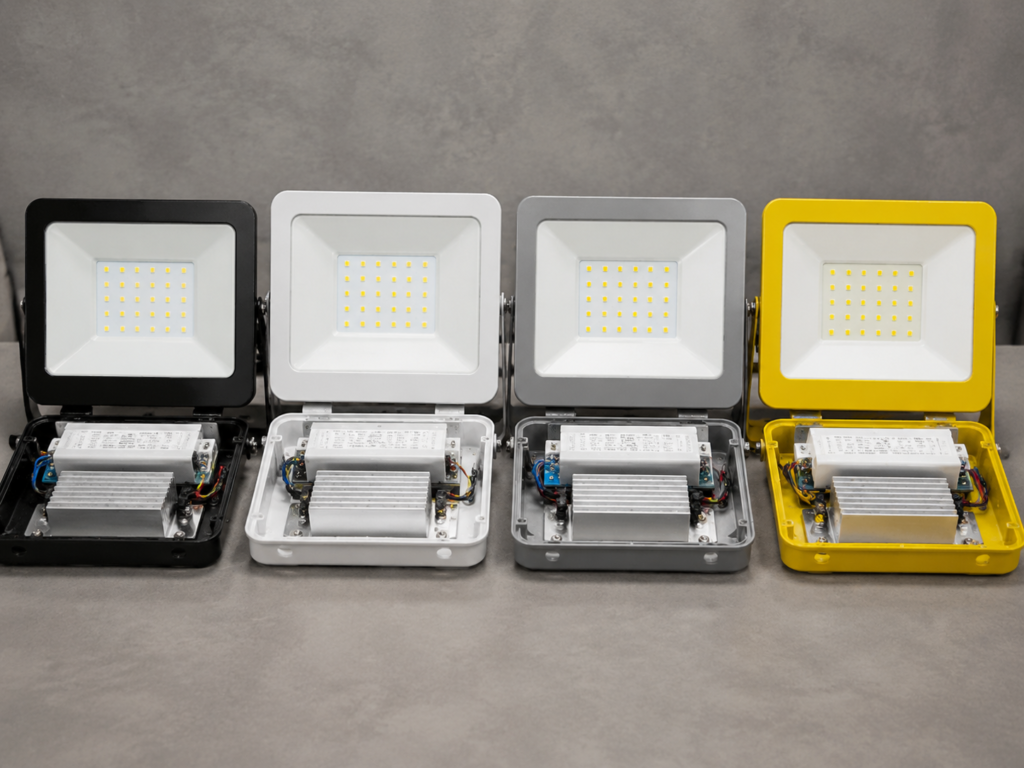
How to judge whether several models can be classified into the same basic model? The core is to look at the key characteristics that affect energy consumption: for example, core energy efficiency components such as compressors and motors, capacity, control logic, and core structure — these parts that directly determine energy consumption, if different, cannot be grouped together. Brand name, color, exterior decoration, and adjustments to small components that do not affect energy efficiency do not affect grouping.
If it is a private label product, you must verify whether the core configuration is exactly the same as the original manufactured model. Only if you can provide proof of equivalence can you share the report; if you cannot prove it, you must test it separately as a new basic model. Never force models with different core components into the same group just to save money — it will be a big problem if discovered later.
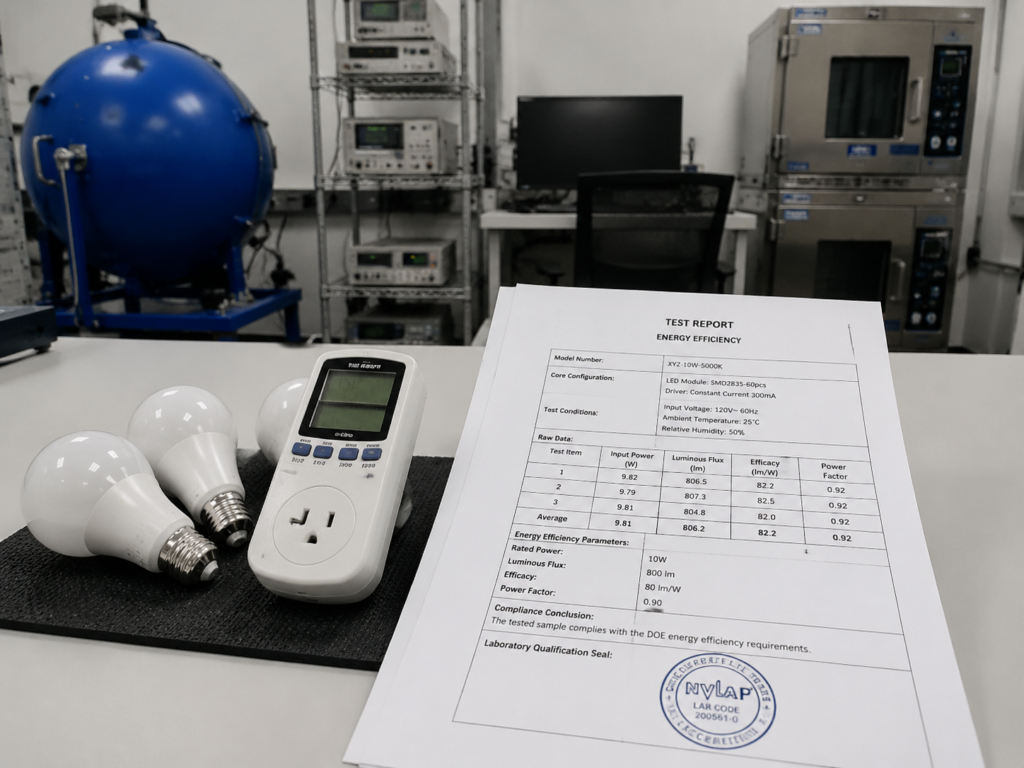
Step 2: Send Samples for Testing and Obtain a Compliant Test Report
Send samples that are in mass production status to a qualified laboratory for testing according to the official test methods for the corresponding category. Note the required contents of the test report: it must include model number, core configuration, test conditions, raw data, energy efficiency parameters, compliance conclusion, and the laboratory’s qualification seal — none can be missing.
Different categories have specific rules for numerical rounding, tolerances, and calculation methods. You cannot arbitrarily round numbers on your own; otherwise, even if the actual test meets the standards, it may be judged non-compliant due to incorrect calculation methods. If the test fails, the product must be rectified before retesting. Tampering with test data is strictly prohibited and is a red line.
Step 3: Register a CCMS System Account
All DOE filings must be submitted online through the official Compliance Certification Management System (CCMS). The next step is to register a CCMS account using the enterprise entity information of the U.S. responsible party. It is necessary to ensure that the account entity information is completely consistent with the qualification documents of the responsible party; registration with individual identity will be directly rejected.
Step 4: Fill in Information Online and Upload Materials
After the account is registered, you can fill in product information and upload materials in the system. The core information to be filled in includes: brand, basic model and corresponding sales models, energy efficiency parameters, information of the responsible party and laboratory, and applicable standard version. Materials to be uploaded include: test report, product specifications, model difference description, and nameplate design drawing.
When filling in, be sure to check carefully. All parameters must be completely consistent with those on the test report. No models can be missing, no units can be wrong, and the product category cannot be selected incorrectly. If there are errors or omissions in the information, the system will send it back for correction, delaying the process by several weeks for no reason.
Step 5: Wait for Official DOE Review
After submission, wait for the official DOE review. The review mainly covers three items: whether the materials are complete, whether the laboratory qualification of the test report is valid, and whether the energy efficiency parameters meet the compliance limits.
The review cycle is still 2 to 12 weeks. Simple categories are faster, while complex categories or peak declaration periods are slower. If you receive a correction notice, you must complete the modifications and resubmit within the specified time limit. If it is still unqualified after correction, it will be directly rejected, and you will have to prepare the declaration materials again.
Step 6: Review Passed, Filing Completed
After the review is passed, you will receive a DOE filing number, and the product information will be included in the DOE’s official public compliance directory, which means the filing is completed.
The DOE adopts a filing system with no paper certificates. The filing number is the official compliance certificate. You can enter the filing number or product model on the DOE official website to check the compliance status of the product. Only if it can be found is the filing truly successful.
Post-Filing Market Launch Requirements: Customs Clearance, Labeling, and Consistency Must All Be in Place
Completing the filing does not mean everything is fine. Before the product is launched, you must also do the following things well, otherwise problems may still occur.
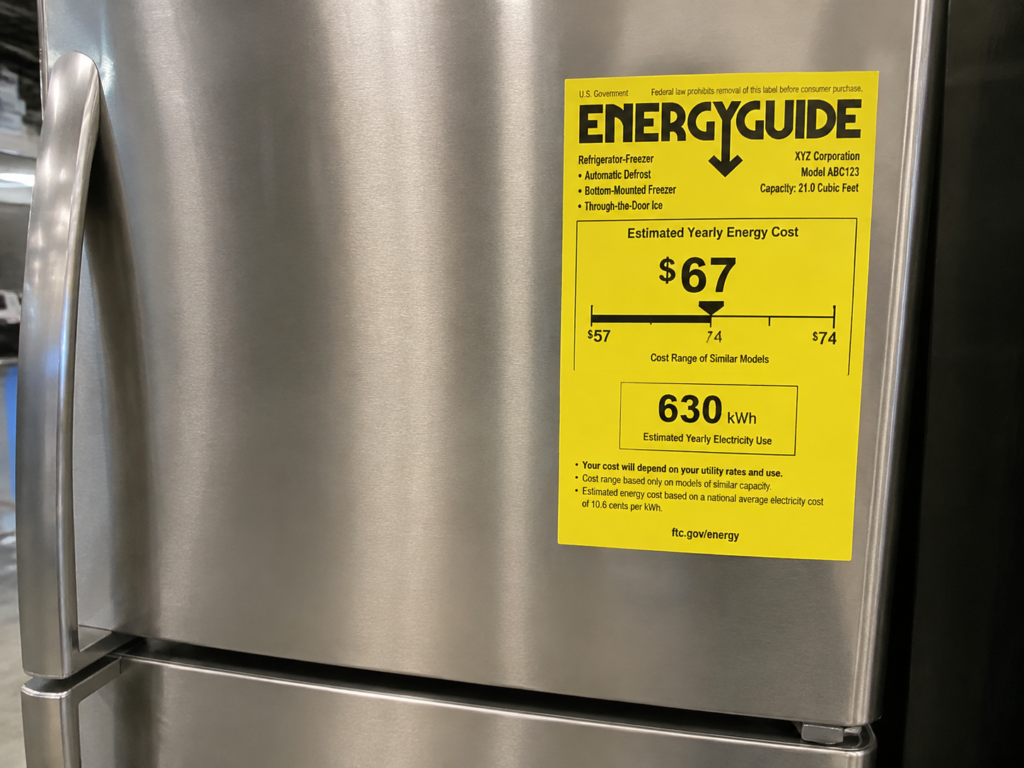
Compliance Requirements for Energy Efficiency Labels
The DOE itself does not have an exclusive energy efficiency label. Many regulated categories need to be used with the FTC EnergyGuide yellow label, which is the yellow energy consumption label commonly seen by consumers. Note here: all energy consumption data on the label must be completely consistent with the energy efficiency parameters filed with the DOE; you cannot change the numbers or omit the label.
For online sales, the product detail page must also display the energy efficiency label in accordance with FTC requirements; it cannot be hidden or only partially shown. DOE filing shall not be promoted as a “DOE certification certificate” to avoid misleading consumers or even triggering regulatory penalties.
Notes on Import Customs Clearance
During product import customs clearance, U.S. Customs may verify the DOE filing status. This part of the compliance responsibility is mainly borne by the U.S. importer, but the seller must also cooperate in providing relevant information. In addition, the model number on the product nameplate must correspond one-to-one with the filed model number. The situation of “same model name but different actual configuration” is not allowed, otherwise it will be judged non-compliant.
Supply Chain Consistency Check
The core energy efficiency components of mass-produced products must be completely consistent with those of the test samples and cannot be replaced without authorization — for example, if you originally used Brand A motors and later switched to Brand B to save money, even if the appearance is the same, as long as the energy consumption changes, it is non-compliant.
In addition, the energy efficiency parameters in distributors’ promotional materials and e-commerce pages must also be consistent with the filed information. You cannot falsely claim better energy efficiency performance — for example, if the filed annual energy consumption is a certain value, but the page promotes a lower annual energy consumption; or the filed efficiency value does not reach the advertised high efficiency level, you will be fined if reported by consumers or caught in a spot check.
4 Quick Pre-Launch Checks
Before launch, you can quickly go through these 4 items, and ship only when there are no issues:
- □ Product category, applicable standard version, and effective date have all been confirmed correct
- □ Test methods, sample configuration, and test results all match the filing requirements
- □ The DOE filing number can be found in the official system, and the parameters on the label, nameplate, and webpage are completely consistent
- □ Other compliance requirements (such as FCC, California CEC, etc.) have been handled separately without omissions
Don’t Neglect After Filing: Judgment and Operations for Continuous Compliance
Many people think that once the filing is done, it’s done once and for all. In fact, DOE compliance is a long-term matter. Product changes and regulation updates require follow-up, otherwise the previous filing may become invalid.
Do You Need to Re-file When Products Change?
The judgment principle is simple: any change that may alter the product’s energy consumption performance requires a re-evaluation of compliance. There are two specific situations:
- Mandatory retesting + re-filing: In three cases, retesting and re-submission of filing are mandatory: changes to core energy efficiency components that affect energy consumption, updates to corresponding energy efficiency standards where the transition period for the old version has ended and it is no longer applicable, and new models that do not comply with the original basic model grouping rules;
- Only need to update filing information: If there are only changes to non-energy efficiency components, adjustments to brand or model naming (that do not affect energy efficiency), or changes to the U.S. responsible party information, retesting is not required; you only need to update the filing information in the CCMS system.
When in doubt, it is better to conduct more evaluation than to make changes without updating the filing, otherwise it will be treated as non-compliant if found in a spot check.
How to Respond to Regulation Updates
DOE energy efficiency standards are updated regularly. You can follow the latest developments on the “Appliance and Equipment Standards Program” page of the DOE official website, focusing on three key time points: the effective date of the new standard, transition period rules, and the sales grace period for old inventory.
When responding, it is best to schedule backwards according to the product’s launch plan and confirm the applicable standard version in advance. Don’t wait until it’s time to ship to find out that the standard has changed; rushing work temporarily is prone to errors.
How to Respond to Market Spot Checks
The DOE conducts regular spot checks on products on the market. The frequency of spot checks varies by category. High-risk categories such as lighting products, major home appliances, and external power supplies have higher spot check frequencies. The spot checks mainly cover two items: first, whether the energy efficiency of the actual product is consistent with the filed parameters, and second, whether test records and filing materials are complete and retrievable.
If a spot check fails, the consequences are more serious than not having filed: not only will you face fines and product recalls, but you may also be removed from the official compliance directory, with specific measures determined by the severity of the violation, and even restricted from subsequent import and sales. Therefore, you must always do a good job in consistency management and do not falsely label parameters.
Compliance Record Keeping and Regular Self-Checks
All DOE compliance-related materials must be properly kept, including test reports, raw test data, filing records, model correspondence tables, change records, etc. The retention period must strictly follow the explicit requirements of the regulations for the corresponding category. Different categories have different specified years, and the retention period shall not be shorter than the statutory minimum requirement.
It is recommended that you check the filing status of your products on the DOE official website every six months to avoid being removed from the compliance directory without knowing it due to failure to adjust in time after standard updates.
Newbie Pitfall Avoidance: Common Pitfalls and Investigation Logic
We have compiled several types of pitfalls that newbies are most likely to encounter. Avoiding them in advance can save a lot of money and time.
3 Most Common Pitfalls in the Testing Phase
- Testing with unqualified laboratories: Many small laboratories chosen for cheap prices do not meet the DOE qualification requirements for the corresponding category, and the test reports are directly invalid, costing money and delaying time;
- Testing with “custom test samples”: Specially optimized samples made to meet the standards have different configurations from mass-produced products. Spot checks after launch will almost certainly find the problem, and fines are much more expensive than retesting;
- Forcibly reusing reports across basic models: Thinking that two products with similar appearances can share one report, but in fact the core energy efficiency components are different and energy consumption varies greatly, it will be deemed non-compliant if discovered.
3 Most Common Pitfalls in the Declaration Phase
- Using an individual as the U.S. responsible party: The DOE explicitly requires that the responsible party must be a U.S.-based enterprise, and account registration with individual identity will be directly rejected;
- Falsely labeling energy efficiency parameters: To make products more marketable, the declared parameters are inconsistent with the test report, or are intentionally filled in with a more favorable energy efficiency level than the test results — different categories have different energy efficiency indicator directions: some look at efficiency values (the higher the better), some look at energy consumption values (the lower the better), which cannot be simply understood as “the higher the value, the better”. Such false labeling is compliance fraud and will face severe penalties if discovered;
- Filling in wrong basic information: Misspelled model numbers, wrong units, wrong category selection — these small mistakes will cause the filing to be sent back for correction, delaying the process by several weeks for no reason.
2 Major Pitfalls in Choosing a Service Provider
- Believing “guaranteed pass” promises: The DOE conducts official reviews, and no institution can guarantee 100% passage. Those who say “guaranteed pass” are either scamming money or providing you with a fake filing;
- Choosing “fake filing” for cheap prices: Some service providers offer extremely low prices, but in fact they do not enter the information into the DOE’s official system at all, and just give you a fake filing number, which will be exposed as soon as you check.
The way to verify the authenticity of the filing is simple: ask the service provider to provide the official inquiry path, and verify the filing status on the DOE official website yourself. Only if public compliance information can be found is it real.
4-Step Investigation Logic for Compliance Doubts
If you have doubts about your product’s compliance, don’t guess randomly. Investigate step by step in the following order:
- First check the basics: Confirm whether the product classification, applicable regulation version, and effective date are correct. If this step is wrong, everything after is wrong;
- Then check the testing: Verify whether the test methods, sample configuration, and test data meet DOE requirements, and whether the laboratory has qualifications for the corresponding category;
- Then check consistency: Compare filing records, product nameplates, energy efficiency labels, and sales materials to see if all parameters are consistent;
- Finally make corrections: If gaps are found, make corrections before selling or importing. Never take chances; U.S. regulation is not a mere formality.
Newbie Action Toolkit: Ready-to-Use Judgments and Checklists
Finally, we have compiled several practical tools for you. Newbies can use them directly. They are a condensed review of the core content above, so you don’t have to search back and forth.
30-Second Judgment on Whether DOE Filing Is Needed
When in doubt, ask yourself three questions first. If all apply, filing is needed:
- Is the product sold in the U.S. (including online sales to U.S. consumers)?
- Is the product an energy-consuming product (look at the core function, not just whether it uses electricity)?
- Can the corresponding category be found in the DOE official regulated directory?
Pre-Application Checklist
Before officially starting the application, check these 5 items first. Start only when all are ready, which will help you avoid many detours:
- □ The product category and corresponding energy efficiency standard version have been confirmed
- □ A testing laboratory with DOE-recognized qualifications for the corresponding category has been found
- □ A U.S.-based enterprise responsible party (not an individual) has been confirmed
- □ Basic product materials (specifications, nameplates, model difference descriptions) have been sorted out
- □ The application cycle and budget have been preliminarily evaluated
Quick Pitfall Avoidance Tips
Choose laboratories with qualifications for the corresponding category to test real mass-produced machines, declare parameters truthfully, the U.S. responsible party must be a formal enterprise rather than an individual, be sure to verify the status in the DOE official database after filing is completed, and do not easily believe promises of “guaranteed pass” or “low-cost fast filing”.
When to Seek Professional Support
If your situation is relatively simple and the product category is clear, you can handle it yourself by spending some time researching. But if you encounter the following situations, finding a professional compliance service provider will save more time and money:
- The product category boundary is vague, and you are not sure whether it is within the scope of DOE regulation;
- It is your first time applying, and you are not familiar with the CCMS system and declaration rules;
- You need to handle multiple projects at the same time, such as FTC labels, Energy Star, state-level compliance, etc.;
- There are many product models, and basic model grouping needs to be planned to save testing costs.
What You Can Do After Reading This
After reading this article, you should be able to do the following independently:
- Accurately judge whether your product needs DOE energy efficiency filing;
- Proceed with the application according to the logic of “define groups → test samples → prepare materials → submit declaration → make labels → conduct regular maintenance”;
- Clearly distinguish the differences between DOE and FCC, FTC labels, Energy Star, and state-level requirements, without confusing concepts;
- Avoid most common application pitfalls for newbies, and know how to investigate step by step when encountering compliance doubts;
- Judge when you can handle it yourself and when you need to seek professional support.
Overall, DOE energy efficiency filing may seem to have many processes and miscellaneous details, but its core logic is simple: first confirm whether the product is within the regulatory scope, then test the energy efficiency accurately and declare truthfully according to official requirements, maintain consistency between the product and the filing after launch, and adjust in line with regulation updates. It is not a “pay for a certificate” threshold, but a basic compliance requirement for energy-consuming products in the U.S. market. Clarifying and preparing early can avoid the big troubles of subsequent goods detention and fines.