
Almost everyone working in the U.S. market has encountered questions related to the NRTL mark: Customers say they only accept the UL mark and not the ETL mark — is this reasonable? Since both are NRTL certifications, can marks from different bodies be used interchangeably? If I want to replace the ETL mark with the UL mark, can I just stick it on directly? The core of these questions all lies in the mutual recognition rules for NRTL marks.
Many people’s understanding of mutual recognition is either too absolute — “all NRTL marks are the same and recognized everywhere” — or too vague — “it seems UL is more formal, and others are not”. In fact, NRTL mutual recognition has clear regulatory boundaries and applicable conditions. Once you understand them, you will no longer be confused whether you are choosing a certification body, responding to customer requirements, or passing regulatory inspections.
Beginner’s Primer: First Understand the Basic Definitions of NRTL and Mutual Recognition
Let’s first clarify three core terms in plain language to avoid getting confused by terminology at the start:
The first is NRTL. Many people think NRTL is a specific certification body, but it is not. It is the collective term for “Nationally Recognized Testing Laboratories” uniformly administered by the U.S. Occupational Safety and Health Administration (OSHA), equivalent to an “official license” that OSHA issues to third-party safety certification bodies. Only bodies that hold this license are qualified to issue legally recognized product safety certifications in the United States.
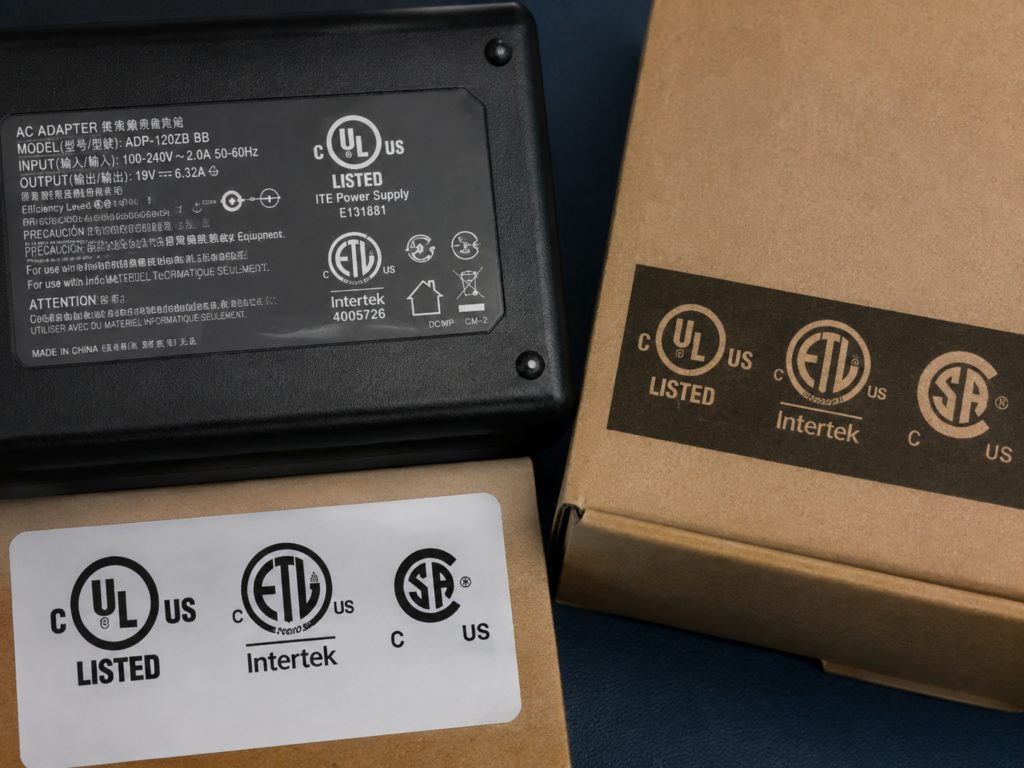
The second is NRTL Mark. It is the conformity mark that is allowed to be printed on product nameplates and packaging after the product has passed the safety test of an NRTL body and is subject to the body’s ongoing factory supervision, equivalent to the product’s “U.S. safety ID card”. Common marks such as UL, ETL, and CSA are all NRTL marks.
The third is Mark Mutual Recognition. Simply put, it is the rule that certifications issued by different NRTL bodies are equally recognized by the regulatory authority under the premise of meeting specific conditions. Note that there is a premise here — “meeting specific conditions”; it is not that any two NRTL marks can be swapped or recognized arbitrarily.
3 Core Meanings of Mutual Recognition (Avoid 90% of Beginner Confusion)
Many people’s misunderstandings about mutual recognition essentially stem from failing to distinguish its three different meanings:
First layer, complete equivalence at the regulatory level. Under the framework of OSHA’s NRTL system, all valid certifications issued by compliant NRTLs have exactly the same legal effect.
Second layer, market acceptance is not necessarily uniform. Regulatory equivalence is a matter at the supervision level, which does not mean that all purchasers, clients, and platforms will accept all NRTL marks.
Third layer, marks cannot be directly substituted. Having an NRTL certification from Body A does not mean you can replace the mark on the product with that of Body B on your own; to change the mark, you must go through the official certificate transfer process.
Examples of Common Mainstream NRTL Marks
There are currently more than 20 NRTLs recognized by OSHA, and the most commonly encountered ones are:
- UL Mark: Issued by UL Solutions, it is the earliest and most well-known NRTL mark to enter the U.S. market. Many people’s understanding of NRTL starts with UL, which easily leads to the misunderstanding that “only UL is formal”.
- ETL Mark: Issued by Intertek, it is also a long-established NRTL body with a high market share, and is often used as a cost-effective alternative.
- CSA Mark: Issued by the Canadian CSA Group, CSA holds both U.S. OSHA and Standards Council of Canada (SCC) accreditation qualifications. It should be noted that only when the certificate, body database records, and product mark clearly carry regional identifiers such as US, C-US, c/us, etc., do they correspondingly cover the U.S. or Canadian market; a single CSA mark cannot be assumed to cover both countries by default.
In addition, bodies such as MET, TÜV Rheinland, and NSF are also NRTLs recognized by OSHA; the specific list is subject to the real-time updates on OSHA’s official website.
Practical Role of Mutual Recognition Rules
This set of mutual recognition rules is not formulated out of thin air; it has practical value for both enterprises and the market:
First, it breaks the monopoly of a single body. Enterprises can independently choose a suitable NRTL body according to their own budget, cycle, and product type, without having to scramble to find a specific one.
Second, in scenarios such as cross-body certificate transfer and cross-border report evaluation, if the new body accepts existing test data and the standard differences are controllable, it may reduce repeated testing, lower compliance costs, and shorten the time to market.
Finally, it unifies the safety recognition standards at the regulatory level within the United States, avoiding inconsistent regulatory requirements across regions. There will be no situation where California recognizes UL but Texas does not; as long as it is a valid NRTL mark, it is recognized at the regulatory level across the entire United States.
Core Rules for Internal NRTL Mutual Recognition Within the United States (Most Commonly Used)
NRTL mutual recognition within the United States is the most commonly encountered scenario. It is not an industry agreement, but has clear legal basis and effective conditions.
Legal Regulatory Basis for Mutual Recognition
The legal effect of NRTL mutual recognition comes from three levels of regulations:
First, OSHA’s NRTL program itself clearly stipulates that all valid certifications issued by NRTLs recognized by OSHA have completely equivalent regulatory effectiveness, and no federal-level occupational safety inspection may treat them differently.
Second, the National Electrical Code (NEC), as the general safety standard followed for electrical installation acceptance in most parts of the United States, requires that equipment that needs to be Listed or Labeled shall generally accept the listing mark issued by an NRTL recognized by OSHA and whose authorization scope covers the corresponding standards; whether specific equipment needs to be listed and whether it meets installation requirements still needs to be judged in combination with NEC provisions, local electrical codes, and the AHJ.
Third, local regulatory authorities shall not unreasonably discriminate against any OSHA-recognized NRTL mark, and cannot reject valid certifications solely on the basis of brand differences.
4 Necessary Conditions for Internal Mutual Recognition to Take Effect (None Can Be Missing)
Not just any NRTL mark can be recognized; four conditions must be met simultaneously. If any one is missing, mutual recognition is not valid:
First, legal body qualification. The issuing body must have obtained OSHA’s NRTL recognition when issuing the certificate, and is currently not prohibited by OSHA from carrying out related business. Under normal circumstances, you can directly check OSHA’s current list of valid NRTLs to confirm; if the body’s qualification has been terminated, it needs to be judged in combination with the certificate issuance date and validity period, and the specifics shall be subject to OSHA’s official instructions.
Second, matching authorization scope. The authorization of each NRTL does not cover all product categories. OSHA clearly stipulates the product categories and corresponding standards for which each body can carry out certification. For example, if an NRTL is only authorized to certify IT equipment, then the home appliance certification it issues is out of scope, naturally invalid, and cannot be mutually recognized.
Third, normal certificate status. The certification certificate must be within the validity period and not suspended or revoked. If the body finds that production does not meet requirements in subsequent factory supervision spot checks, it may suspend or even revoke the certificate, at which point the mark on the product loses its compliance validity.
Fourth, product consistency with certification. The model, key structure, and manufacturing factory of the actual product must completely match those described on the certificate. If key components are replaced without authorization, the product structure is modified, or the manufacturing factory is changed without updating the certification, then the original certificate does not cover this product, and the affixed mark is not valid.
Role Boundaries of the On-Site Acceptance Party
When you install products in U.S. buildings or use them in workplaces, you will encounter departments responsible for inspection, such as fire departments, building safety departments, and occupational safety inspectors. These departments have a unified abbreviation in the United States called AHJ (Authority Having Jurisdiction), which simply refers to the local department that has the final say on compliance inspections.
The powers and responsibilities of the AHJ have clear boundaries: in conventional scenarios, the AHJ usually should not reject valid OSHA-recognized NRTL marks solely due to brand differences; but the AHJ has the right to require supplementary materials such as certification certificates, official listing pages, applicable standard descriptions, and installation manuals in combination with the installation scenario, product applicability, local regulations, etc., and has final approval authority over on-site installation and product applicability. If you believe you have encountered unfounded brand discrimination, you can first present the official OSHA NRTL list and proof of the corresponding body’s authorization scope to the AHJ, or contact the issuing NRTL for communication assistance, or consult and coordinate with the OSHA NRTL Program Office or regional office.
Applicable and Non-Applicable Scenarios for Internal Mutual Recognition
You can use this simple division to quickly judge whether the mutual recognition rules can be applied:
Applicable scenarios: Federal or state-level occupational safety inspections, ordinary electrical installation acceptance (such as acceptance of lamps and electrical appliances in shops and offices), and procurement requirements that only state “NRTL certification required” without specifying a specific body — in these cases, any valid NRTL mark is acceptable.
Non-applicable scenarios: Where a specific NRTL mark is clearly specified in procurement contracts or project specifications (such as “only UL Listed accepted”), this is a commercial agreement that takes priority over regulatory equivalence, and must be followed according to the contract; this does not count as a failure of the mutual recognition rules. Where some localities have additional statutory requirements for special products, for example, some states have special certification requirements for fire protection products, you must follow local regulations.
NRTL Cross-Border Conformity Assessment Cooperation and Common Rules
NRTL is a U.S. domestic certification system. Cross-border cooperation is mostly mutual recognition of conformity assessment between regulatory authorities or multi-qualification accreditation of bodies. Not all scenarios fall under statutory mark mutual recognition, which needs to be judged in combination with specific rules.
1. Conformity Assessment Cooperation in North America (Most Mature, US, Canada, Mexico)
The conformity assessment cooperation of the three North American countries is currently the most mature, and is mainly divided into two types:
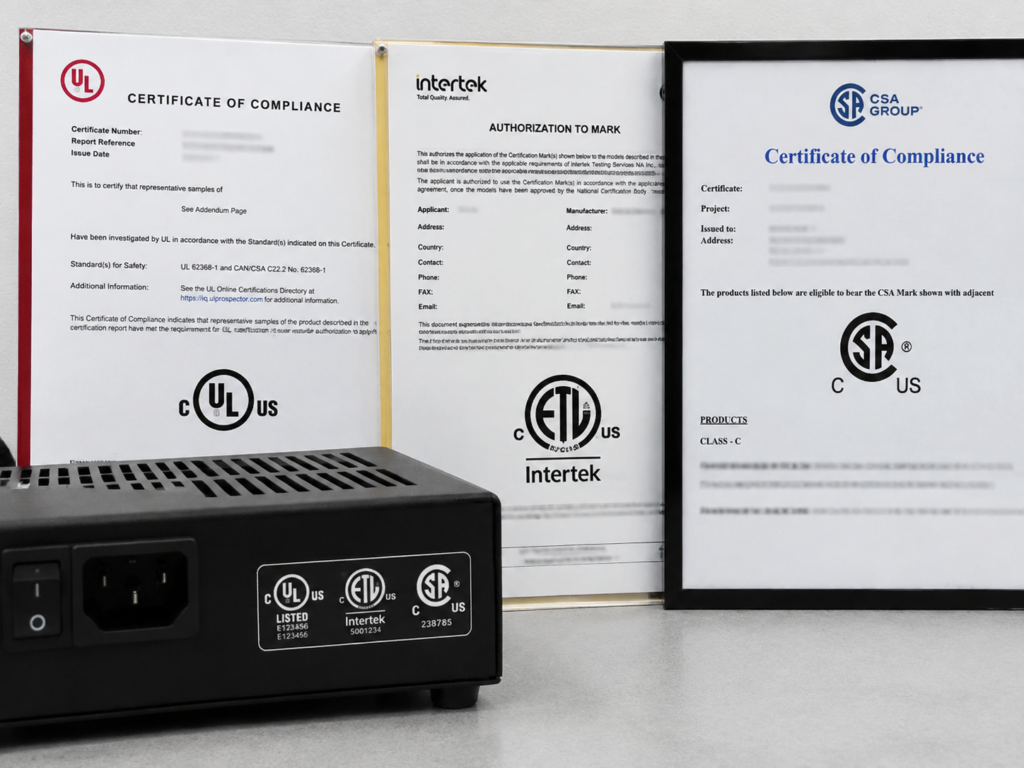
The first is U.S.-Canada dual recognition certification from the same body. OSHA’s NRTL recognition only covers the U.S. market, and Canada’s SCC recognition only covers the Canadian market. The two systems are independent of each other, and there is no automatic mutual recognition of a single qualification. Some bodies hold both OSHA NRTL recognition and Canada SCC safety certification body accreditation qualifications, and can issue certifications that meet both U.S. and Canadian standards based on the same test data. The corresponding regions will be clearly marked on the certificate and mark, with common identifiers such as cULus, cETLus, CSA C/US, etc. The specific coverage scope shall be subject to the certificate and the body’s public database records.
The second is conformity assessment cooperation under the framework of the United States-Mexico-Canada Agreement (USMCA), which covers some electrical and mechanical products, and can reduce cross-border repeated testing under the premise of meeting the agreement’s requirements. However, this mechanism is not equivalent to the automatic validity of the NRTL mark in Mexico — products entering Mexico still need to meet local requirements such as NOM mandatory certification and import supervision, and the NRTL mark cannot directly replace the local compliance process.
2. U.S.-EU Conformity Assessment Cooperation and Report Reuse
The United States and the European Union have signed an official Mutual Recognition Agreement (MRA) for testing and certification, but the scope of mutual recognition, applicable departments, and product categories shall be subject to the officially announced specific provisions, and cannot be generally equated with “CE certification can be directly converted to NRTL”.
Its core logic is: the CE mark itself cannot be used as the basis for NRTL certification recognition — because CE certification includes multiple modes such as enterprise self-declaration, and not all tests are completed by third-party bodies. If you hold a complete test report issued by an EU Notified Body (NB) or a laboratory with ISO/IEC 17025 qualification, you can submit it to the target NRTL for evaluation; the NRTL will decide whether to reuse the test data based on its own OSHA authorization scope, applicable U.S. standard requirements such as UL/ANSI/CSA, report completeness, and standard differences. Usually, it is still necessary to supplement the U.S. standard difference items, label review, and factory supervision evaluation, and only after passing can the NRTL certificate be obtained.
The acceptable scope of cross-border reports shall be subject to the specific MRA provisions, OSHA’s authorization requirements for NRTLs, and the target NRTL’s policies; highly regulated products such as explosion-proof, gas, and medical products usually need to be separately checked against the regulatory requirements of the U.S. competent authority (for example, medical devices need to comply with relevant FDA regulations), and cannot be directly processed according to the ordinary NRTL certificate transfer process.
3. Cooperation in Other Regions
The vast majority of countries and regions such as Australia, New Zealand, and Asia do not have official comprehensive mutual recognition agreements with NRTL, and direct certificate transfer is not possible. Some bodies have private certificate transfer cooperation, such as using a test report from a certain country to transfer to NRTL. This does not fall under statutory mutual recognition, its effectiveness is not necessarily guaranteed, and it may not be recognized by the regulatory authority or purchaser, so you must verify it clearly in advance.
Two General Modes of Cross-Border Certification
The specific rules of cross-border certification seem numerous, but there are actually only two core modes. We have compiled a simple comparison table for easy understanding:
| Cooperation Mode | Core Logic | Common Scenarios |
|---|---|---|
| Test data evaluation and reuse | The target certification body evaluates the existing test report, and only supplements the standard difference items of the target market if it meets the requirements | Applying for NRTL evaluation with EU conformity reports, transferring reports from non-mutual recognition regions to NRTL (all require body evaluation, not legally mandatory) |
| Multi-region recognition by the same body | The body holds recognition qualifications from multiple regional regulatory authorities at the same time, and can issue certification certificates covering multiple regions based on the same test data | The same body issues U.S.-Canada dual recognition certification (such as cULus, cETLus, CSA C/US, etc.) |
Boundaries Where NRTL Marks Cannot Be Directly Mutually Recognized/Substituted (Must-Learn for Intermediate Proficiency)
Many people think that mutual recognition means “all NRTLs are the same, use any you want”, but that’s not the case. It has clear boundaries, and crossing these boundaries will make mutual recognition invalid.
1. Commercial Requirements Take Priority Over Regulatory Equivalence
Regulatory equivalence is a supervisory requirement, but if a specific NRTL mark is clearly specified in procurement contracts, project specifications, e-commerce platform entry rules, insurance company underwriting requirements, or industry association standards, this is a civil or industry agreement that must be implemented as required, and does not count as a failure of the mutual recognition rules. After all, if you want to enter the platform, get insurance, or win a project, you must comply with the rules of the corresponding entity.
2. Invalid When the Body’s Authorization Scope Does Not Match
Even if the body is a formal NRTL, if your product is not within its OSHA authorization scope, the certificate it issues is invalid and naturally cannot be mutually recognized. When checking qualifications, you cannot only look at whether the body is on the NRTL list; you also need to check the specific list of authorized standards on OSHA’s official website to confirm that the corresponding product category and applicable standards are within the scope. For example: if an NRTL is only authorized to certify low-power power supplies, you will definitely not pass the acceptance if you take the large home appliance certification it issued, even if the body is indeed on OSHA’s list.
3. Invalid When the Certificate/Product Status Does Not Match
In addition to obvious invalid situations such as expired, suspended, or revoked certificates, there are also some easily overlooked scenarios: for example, if the key components of the product (power module, heating element, safety protection structure, etc.) are changed, or the manufacturing factory is relocated or the production line is adjusted, but no application for certification update is submitted to the certification body, then the original certificate does not cover the changed product, and even if the mark is real, it is non-compliant.
4. Marks Cannot Be Replaced/Reapplied Without Authorization
Each NRTL’s mark is exclusively authorized for use by that body. Having certification from Body A does not mean you can replace the mark A on the product with that of Body B on your own, even if both are formal NRTLs. To change the NRTL body and mark, you must go through the official certificate transfer process: first submit the existing test data to the new body for evaluation, and after passing, you must also undergo the new body’s factory supervision audit. After all are qualified, the new body will authorize you to use their mark.
The factory supervision systems of different NRTLs are independent of each other, and there may be differences in audit frequency and requirements. The factory audit results of Body A will not be directly recognized by Body B, and a re-audit is required. For old products that have already been produced, you cannot privately replace the old mark with a new one. If you need to deal with old inventory, it must be evaluated by the new body and the mark change must be completed as required; private covering or reapplication is not allowed.
5. Exceptions for Special Products/Scenarios
High-risk special products often have additional federal or state regulatory requirements, and the ordinary NRTL mutual recognition rules do not apply: gas appliances usually need to be checked against gas safety standards such as ANSI/CSA, local gas/building codes, AHJ requirements, and the listing qualification of the corresponding certification body; medical devices need to additionally meet FDA market access requirements, and NRTL safety certification is only part of it; explosion-proof products need to be checked against relevant standards for Hazardous Locations and the special authorization scope of the corresponding NRTL. There are also products subject to special local regulations in some regions, for example, some products in California have additional safety or environmental protection requirements, which also need to comply with local regulations.
Practical Guide: Mutual Recognition Validity Judgment and Operation Steps
Having talked about so many rules, how to operate in actual scenarios? We have compiled the four most common scenarios, which you can follow directly.
Scenario 1: Judging Whether an NRTL Mark Is Compliant in the United States
If you get a product with an NRTL mark and want to confirm whether it is truly compliant, you can follow four steps:
- Verify body qualification. Open OSHA’s official NRTL query page, enter the name of the issuing body to search, and confirm that it is on OSHA’s list of valid recognitions. If not, either the qualification has been revoked, or it is not a formal NRTL at all.
- Check authorization scope. On OSHA’s query page, find the list of authorized standards for the body, and confirm that the safety standards and product categories corresponding to your product are within its authorization scope to avoid out-of-scope certification.
- Verify certificate status. Log in to the public certification database of the NRTL body, enter the product model to query, and confirm that the certificate is within the validity period and not suspended or revoked.
- Check product information. Compare the model, rated parameters, and mark style on the product nameplate with the records in the database to see if they are completely consistent, to avoid counterfeit or misappropriated marks.
Common verification tools are the official OSHA NRTL query page and the public certification directories of each NRTL body, all of which are available for free query.
Scenario 2: Validity Judgment of North American Dual Recognition Certification
If you want to confirm whether the certification you hold can be used in both the U.S. and Canada, follow these three steps:
- First confirm that the issuing body holds both OSHA (U.S.) and SCC (Canada) recognition qualifications. Certificates issued by bodies with only a single qualification cannot directly cover the markets of both countries.
- Check whether there are corresponding regional identifiers on the certificate or product mark, such as “cULus”, “cETLus”, “C-US”, etc. Only with these identifiers does it mean that the certification covers the corresponding region.
- If the certification only covers the U.S. but you need to enter the Canadian market, you can contact the original certification body to apply for supplementary difference testing of Canadian standards. After passing, you can affix the corresponding mark without having to redo the certification completely.
Scenario 3: Key Operation Points for Applying for NRTL Evaluation With EU Test Reports
If you already have a complete test report issued by an EU Notified Body (NB) and want to apply for NRTL certification, you can evaluate the feasibility according to this process:
- First confirm the target U.S. compliance path for the product. For highly regulated products such as explosion-proof, gas, and medical products, you must first check the requirements of the corresponding competent authority, and cannot directly apply according to the ordinary NRTL process.
- Select an NRTL body with OSHA authorization for the corresponding product, and submit the complete test report, technical documents, and laboratory qualification certificate.
- The NRTL body will evaluate the difference between the report and U.S. standards (UL/ANSI/CSA, etc.), arrange to supplement the testing of the difference part, and at the same time review the product labels, manuals and other content required by the U.S. market.
- After all tests, document review, and factory supervision evaluation are passed, the body will issue an NRTL certificate, authorizing the use of the corresponding NRTL mark.
Scenario 4: Key Operation Points for Replacing NRTL Body/Mark
If the customer does not accept your existing NRTL mark and needs to change to another one, don’t rush to pay; first follow these points:
- First confirm the necessity. First communicate with the customer, explain that the existing mark is an OSHA-recognized NRTL and is equivalent in terms of regulations. Maybe the customer will agree after understanding, to avoid unnecessary cost expenditure. If the customer insists on changing, then start the process.
- Evaluate the new body’s qualification. Confirm that the new body’s OSHA authorization scope covers your product category and corresponding standards. Don’t find out that it doesn’t have this qualification after you’ve approached the body.
- Submit existing test data for evaluation. Submit all your existing test reports and certificates to the new body, let them evaluate whether they can be reused, to minimize repeated testing and save cost and time.
- Complete factory audit. The new body will arrange a factory supervision audit, and only after passing can you get the mark use authorization — because the factory systems of different bodies are independent, this step basically cannot be omitted.
- Distinguish between old and new inventory. For old products that have already been produced, you cannot privately replace them with the new mark; the new mark can only be used on newly produced products. Old inventory needs to be handled through negotiation with the customer, or sold to markets that accept the old mark.
Finally, there are two general operation precautions: First, you must confirm the mutual recognition requirements with the purchaser and target body clearly in advance. Don’t wait until the products are all produced to find that they do not meet the requirements, causing losses. Second, test reports, original certificates, and database query records must all be archived for regulatory spot checks. Don’t be unable to produce proof when the time comes and be judged non-compliant.
Common Misconceptions and Pitfall Avoidance Guide (Must-Learn for Intermediate Proficiency)
We have compiled six of the most common pitfalls to help you avoid detours:
Misconception 1: Only the UL Mark Is a Legal U.S. Certification
Clarification: UL is only the NRTL body that entered the U.S. market early and has the highest popularity. The regulatory effectiveness of its certification is completely consistent with all other NRTL certifications recognized by OSHA. There is no such thing as “more authoritative” or “more legal”.
Pitfall avoidance: First check whether the requirement is “NRTL Listed required” or a clearly specified UL mark. If only NRTL is required, choosing other compliant bodies can usually reduce costs, and there is no need to blindly pursue high-priced certification.
Misconception 2: NRTL Marks Can Be Mutually Recognized Globally
Clarification: Only regions and product categories covered by official conformity assessment cooperation can achieve partial process simplification. The vast majority of countries and regions in the world have no official comprehensive mutual recognition with NRTL and cannot use it directly.
Pitfall avoidance: Check the official regulatory requirements of the target market in advance, and do not credulously believe the exaggerated publicity of bodies about “global mutual recognition”.
Misconception 3: Mutual Recognition Means Directly Changing the Mark Without Any Testing
Clarification: Whether it is cross-body certificate transfer or cross-border certification, in the vast majority of scenarios, only test data that meets the requirements can be reused. It is still necessary to supplement standard differences, label review, factory evaluation, etc., and it is impossible to directly change the mark.
Pitfall avoidance: Ask clearly about the supplementary test items, costs, and cycles in advance during consultation, to avoid additional costs after signing the contract.
Misconception 4: Private Cooperation Between Bodies for Certificate Transfer Equals Official Mutual Recognition
Clarification: Private certificate transfer cooperation between some bodies does not fall under official mutual recognition at the regulatory level, and may not be recognized by the AHJ or purchaser.
Pitfall avoidance: Require the body to present the official rule basis, or verify it yourself on the regulatory authority’s official website. Don’t just listen to one side of the story from the body.
Misconception 5: Having an NRTL Mark Equals Full Product Compliance
Clarification: NRTL only covers product safety certification. The U.S. market also has multiple compliance requirements such as FCC electromagnetic compatibility, energy efficiency, food contact materials, and chemical substance restrictions, which need to be met separately.
Pitfall avoidance: List all U.S. market access requirements according to the product category, and check them one by one to avoid omissions.
Misconception 6: Certificate Pictures Are More Credible Than Public Databases
Clarification: Certificate pictures may be forged, expired, or not cover the actual model. The public database of the NRTL body is updated in real time, and the information is more authoritative.
Pitfall avoidance: Whether it is your own certificate or a supplier’s certificate, priority is given to verifying the validity through the official NRTL database, and do not only rely on the certificate picture.
Learning Summary: 4 Things You Can Now Judge Independently
After mastering the core rules of NRTL mark mutual recognition, you can at least independently complete the following four things:
First, able to distinguish between regulatory equivalence and commercial requirements. Quickly judge the regulatory effectiveness of any NRTL mark in the United States, distinguish the difference between “statutory compliance” and “customer-specified requirements”, and will not panic when a customer asks for a specific mark.
Second, able to judge the feasibility of cross-border certification. Judge whether the product meets the conditions for North American dual recognition and EU report reuse, identify the traps of unofficial certificate transfer, and avoid invalid expenditures.
Third, able to verify the authenticity of NRTL certificates. Verify the validity of the certificate step by step, identify fake certificates and out-of-scope certifications, know how to use official tools such as OSHA’s official website and the body’s public database for queries, and do not rely solely on certificate pictures for judgment.
Fourth, able to make basic compliance decisions. Choose a suitable certification path according to project requirements, and reasonably control costs; when encountering mutual recognition disputes, know what channels to use for verification or consultation and coordination.
The rules of NRTL mark mutual recognition seem complicated, but in fact the core is four sentences: equivalent at the regulatory level, commercial requirements take priority, conditions must be met for effectiveness, and cross-border situations depend on the rules. Understanding these points, you can solve most of the safety certification mutual recognition problems in the U.S. market by yourself.