
Cross-border sellers, foreign trade factories operating in the Japanese market, or buyers planning to purchase electrical products from Japan have mostly heard of “PSE”, but the most common question is: Do the products they hold need to fulfill PSE obligations? If yes, which category do they fall into, the diamond type or the circular type?
The core basis for judging these issues is the PSE applicable product category list officially issued by Japan — this is the core official legal basis for judging the necessity and category of PSE compliance. The specific determination needs to be comprehensively confirmed in combination with the product’s listing status, purpose and component composition. The industry often refers to “PSE certification”, but strictly speaking, Diamond PSE (official name: “Specified Electrical Appliances and Materials”) requires conformity inspection by a third-party organization accredited by Japan’s Ministry of Economy, Trade and Industry (METI); Circular PSE (official name: “Non-Specified Electrical Appliances and Materials”) is usually confirmed by the manufacturer or importer in accordance with Japanese technical standards, retains test records and affixes the mark, and does not fall into the category of mandatory third-party certification. Combined with the official rules of Japan’s , this article sorts out the core logic, common category scope, judgment methods and misjudgment risks of the PSE category list, to help relevant practitioners initially sort out the compliance direction of products.
1. Basic Introductory Cognition: Core Role of the PSE Category List
1.1 Official Definition and Legal Basis of the List
You can think of this list as the “core reference detail for access of electrical products” delineated by the Japanese government: when three conditions are met simultaneously: “clearly listed in the official METI list, not belonging to special categories controlled by other special regulations, and having no independent electrical components that require separate judgment of compliance obligations”, it is necessary to fulfill the corresponding category of PSE compliance obligations before the product can be legally imported or sold in Japan; if the product is not listed in the list, and does not belong to components that require separate compliance or special controlled categories, it does not need to fulfill PSE obligations.
The issuing body of this list is Japan’s Ministry of Economy, Trade and Industry (abbreviated as METI, the central department in charge of economic trade and market supervision in Japan), and the legal basis is Japan’s — this is the core law governing electrical product safety in Japan, and all PSE-related requirements come from this law. In other words, the list is not an industry agreement, but an official document with legal binding force.
1.2 Corresponding Logic Between the Two Types of PSE and Categories
Many people often hear the terms “Diamond PSE” and “Circular PSE”, which are named after the shape of the certification mark. Their corresponding official names are “Specified Electrical Appliances and Materials” and “Non-Specified Electrical Appliances and Materials” respectively. The division of the two is completely based on the safety risk level of the product: the higher the risk, the stricter the compliance requirements.
For easy comparison, we have sorted out the core differences between the two types into a table:
| Comparison Item | Diamond PSE (Specified Electrical Appliances and Materials) | Circular PSE (Non-Specified Electrical Appliances and Materials) |
| Risk Level | High (relatively high risk of electric shock and fire) | Low (relatively low safety risk) |
| Compliance Requirements | Must undergo conformity inspection by a third-party organization accredited by METI, and the mark can only be affixed after obtaining the certificate | The manufacturer or importer completes conformity confirmation in accordance with Japanese safety standards and retains the test report before affixing the mark; mandatory third-party certification is not required |
| Examples of Common Categories for Verification | Power cord assemblies with plugs, AC power plugs and sockets, household circuit breakers, tubular fuses, some independently sold AC power adapters | Televisions, home audio systems, some information technology equipment, separately sellable consumer-grade lithium-ion battery packs |
| Approximate Number of Categories | Approximately 110-116 items | Approximately 340-341 items |
It should be noted that these numbers are approximate ranges. METI regularly updates the list and adjusts categories, and the specific content shall be subject to the latest official version.
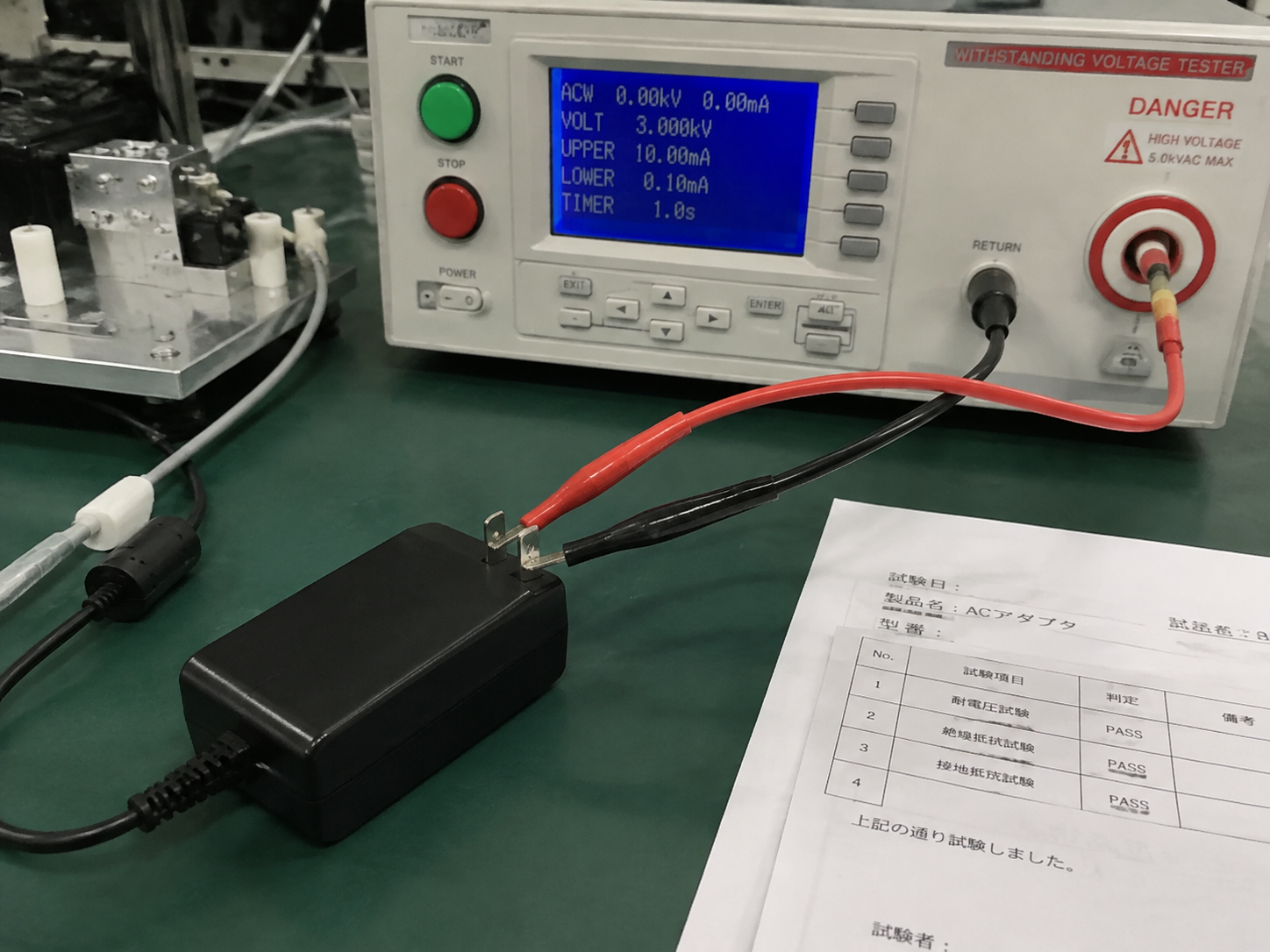
1.3 3 Basic Boundaries That Beginners Must Know
People who are new to PSE are prone to go to extremes: either they think all electrical products need PSE, or they think their products definitely do not need it. Clarifying 3 basic boundaries first can reduce most primary misjudgments:
First, not all electrical products are in the PSE list. Some products with extremely low voltage, no risk of electric shock or fire at all, or products for special purposes may be exempted from PSE obligations.
Second, the list is not permanent. METI regularly adjusts the content of the list according to actual safety accidents and new product types — products that did not require compliance in previous years may be newly added this year, and experience from a few years ago cannot be used as the current standard.
Third, overseas sellers and brands must also comply. As long as your products are to be imported into Japan and sold in the Japanese market, and belong to the ordinary consumer/general categories covered by the list, whether you are a local Japanese enterprise or an overseas company, you must meet the PSE requirements, and there is no such thing as “foreign product exception”.
1.4 Common Basic Cognitive Misconceptions
In addition to boundary issues, there are several common cognitive misconceptions that many beginners get wrong when they first come into contact with PSE:
Misconception 1: PSE is a quality or performance certification. This is not the case. PSE is only the minimum access requirement for electrical safety in Japan — passing PSE only proves that the product meets basic electrical safety requirements and will not leak electricity or catch fire randomly. It does not mean that the product has better functions or is more durable, and has no direct relationship with performance or quality.
Misconception 2: Certifications from other countries such as CE, UL, and CCC can replace PSE. This is also wrong. Each country has different power grid standards and safety requirements. Japan’s household power grid is AC100V, which is different from the standards of Europe, America and China. Therefore, PSE is a mandatory requirement and cannot be replaced by certifications from other countries.
Misconception 3: Circular PSE does not require testing, and you can just affix the mark casually. This misconception can easily lead to compliance risks. Circular PSE only does not require mandatory third-party certification, but the factory or importer must conduct testing in accordance with Japanese safety standards and retain complete test reports. If METI finds no report during a random inspection, the penalty is the same as failing to fulfill Diamond PSE obligations, and the mark must never be affixed casually.
[General Reminder] The common categories of Diamond and Circular PSE listed below are for preliminary reference only, and are only used to help beginners quickly narrow down the verification scope; the final category attribution of all products shall be subject to the listing, rated parameters, structural requirements and exclusions in the official Japanese list of Japan’s METI, and cannot be directly judged solely by Chinese product name, appearance or power supply method.
2. High-Frequency Verification Categories for Diamond PSE (Specified Electrical Appliances and Materials)
The following categories are often included in the verification scope of the Specified Electrical Appliances and Materials list due to their high safety risks, and are divided into 6 major categories according to product attributes:
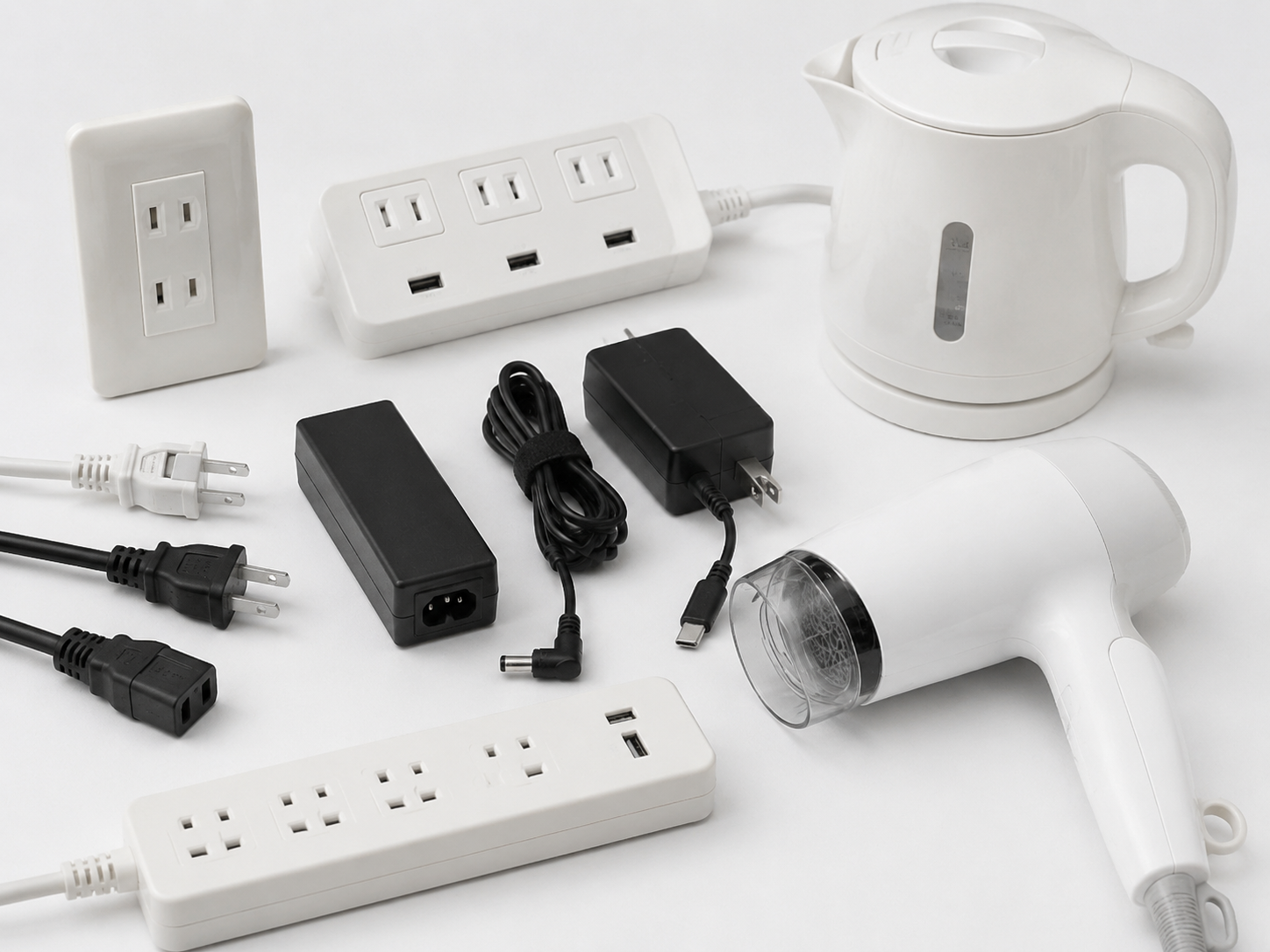
2.1 Wires, Cables and Connection Accessories
This type of product is a basic component for power grid access, and is also one of the categories that are easily missed in judgment.
【Typical Categories for Verification】AC power plugs, household wall sockets, extension cords, terminal blocks, power cord assemblies with plugs
【Easily Missed Categories for Verification】Power strips with USB charging ports, desktop multi-port charging stations, industrial wiring connectors
【Core Verification Point】Whether it is directly connected to the Japanese AC power grid, and whether the rated voltage and current are within the range specified in the list.
2.2 Circuit Protection and Switch Wiring Products
This type of product is directly related to circuit safety, and most are key PSE controlled categories.
【Typical Categories for Verification】Thermal fuses, tubular fuses, wall switches, circuit breakers, residual current devices, cable reels
【Easily Missed Categories for Verification】Built-in fuses for complete machines sold as independent accessories, power strips with switches
【Core Verification Point】Whether it is used for circuit overcurrent or leakage protection, and whether it is sold as an independent component; components soldered on circuit boards and not circulated separately shall have their compliance obligations determined together with the complete machine, and do not need to be verified separately.
2.3 Transformers and Power Adapters
This is a category with a high volume of inquiries from cross-border practitioners, and is also a high-incidence area for misjudgment.
【Typical Categories for Verification】Small single-phase transformers, fluorescent lamp ballasts, laptop chargers, mobile phone fast chargers, printer power supplies
【Easily Missed Categories for Verification】USB-C multi-port fast chargers, monitor power supplies, LED drive power supplies
【Core Verification Point】Whether the input is Japanese AC100V alternating current, and whether it is sold separately as an independent power product; power boards built into the complete machine and not circulated separately shall have their compliance obligations determined together with the complete machine.
2.4 Household Heating Appliances
Heating products are key categories for PSE category verification due to their high fire risk. The specific categories need to be strictly judged against official categories, rated parameters and purposes.
【Typical Categories for Verification】Electric kettles, rice cookers, microwave ovens, hair dryers, electric heaters, electric blankets, electric irons
【Easily Missed Categories for Verification】Plug-in hand warmers, instant hot water dispensers, desktop small electric stoves
【Core Verification Point】Whether it generates heat directly from electric energy, and whether it is intended for household or similar ordinary scenarios.
2.5 Electric Tools and Major Household Appliances
This type of product may be equipped with AC motors or high-voltage components, and the official list needs to be verified one by one to confirm the category.
【Typical Categories for Verification】Electric tools such as electric drills, electric saws, electric welding machines, as well as major household appliances such as household washing machines, refrigerators, and air conditioners
【Easily Missed Categories for Verification】Separately sold AC chargers for cordless tools, industrial power adapters
【Core Verification Point】Whether it is equipped with an AC motor or high-voltage components, and whether it belongs to consumer or general industrial scenarios; specially customized non-circulating industrial products may not be within the scope of the ordinary list.
2.6 Directly Connected Lighting Fixtures
Lighting products directly connected to the AC100V power grid usually need to verify PSE applicability. Bulbs, lamps, and drive power supplies may belong to different categories, and drive power supplies need to be judged separately when sold alone.
【Typical Categories for Verification】LED bulbs directly connected to household sockets, ceiling lights, desk lamps, festive string lights
【Easily Missed Categories for Verification】Plug-in emergency lights, replaceable LED drive power supplies
【Core Verification Point】Whether it is directly connected to an AC100V socket, and whether it is for general lighting purposes; special-purpose lighting such as industrial explosion-proof lights needs to be verified whether they are exclusions from the ordinary list.
3. High-Frequency Verification Categories for Circular PSE (Non-Specified Electrical Appliances and Materials)
The following categories are often included in the verification scope of the Non-Specified Electrical Appliances and Materials list due to their relatively low risks. All categories must be confirmed against the official list before it can be determined whether they fall into the Circular PSE category:
3.1 Low-Voltage Consumer Electronics and Accessories
Not all low-voltage consumer electronic products are within the scope of PSE control. Corresponding PSE obligations arise only when they are covered by METI’s Non-Specified Electrical Appliances and Materials list, or when components such as lithium-ion storage batteries and external power adapters meet compliance requirements.
【Typical Categories for Verification】Power banks (portable chargers), wired/wireless earphones, USB hubs
【Easily Missed Categories for Verification】Bluetooth earphone charging cases, wireless chargers with batteries, portable beauty devices, small electronic scales
【Core Verification Point】Whether it is powered by low-voltage direct current, whether it is equipped with energy-storage lithium batteries, and whether it is clearly listed in the official list.
3.2 Small Household Appliances
The PSE category of small household appliances needs to be comprehensively judged in combination with power supply method, power and structure: products powered by low-voltage batteries and without high-voltage heating components, if listed in the Non-Specified Electrical Appliances and Materials list, need to complete conformity confirmation in accordance with Circular PSE requirements; if they are plug-in models directly connected to AC100V, priority should be given to verifying whether they fall into the category of Specified Electrical Appliances and Materials.
【Typical Categories for Verification】Electric toothbrushes, electric shavers, USB small fans
【Easily Missed Categories for Verification】Small humidifiers, desktop vacuum cleaners, battery-powered electric facial cleansers, desktop USB hand warmers, children’s electric toothbrushes
【Core Verification Point】Whether it is powered by low voltage or battery, has low power, and has no high-voltage heating components; if it contains high-voltage heating components, priority should be given to verifying whether it belongs to Specified Electrical Appliances and Materials.
3.3 Low-Voltage Lighting and Portable Lamps
The core difference between this type of product and directly connected lighting is that they are not directly connected to the AC100V power grid, and it is necessary to confirm against the official list whether they belong to Non-Specified Electrical Appliances and Materials.
【Typical Categories for Verification】Low-voltage LED light strips, battery-powered night lights, USB desk lamps
【Easily Missed Categories for Verification】Solar garden lights with energy storage, battery-powered motion sensor lights, rechargeable portable camping lights
【Core Verification Point】Whether it is not directly connected to an AC100V socket, and whether it is driven by low voltage or battery.
3.4 Audio-Visual and Information Technology Equipment
Most of these products fall into the category of Non-Specified Electrical Appliances and Materials, but they are still subject to the listing in the official list.
【Typical Categories for Verification】Televisions, audio systems, desktop computers, printers
【Easily Missed Categories for Verification】Projectors, copiers, monitors, network equipment, scanners
【Core Verification Point】Whether it is a general consumer-grade product; the compliance categories of the complete machine and separately sold power adapters and power cords need to be determined separately, and the accessory category cannot be directly inferred from the complete machine category.
3.5 Small Electric Tools and Office Equipment
Low-power electric tools and office equipment for ordinary consumers or office scenarios, if listed in the Non-Specified Electrical Appliances and Materials list, need to comply with Circular PSE requirements; high-power industrial-grade products need to be verified whether they fall into the category of Specified Electrical Appliances and Materials.
【Typical Categories for Verification】Small electric grinders, household garden electric tools, paper shredders
【Easily Missed Categories for Verification】Binding machines, rechargeable small electric tools, desktop office appliances
【Core Verification Point】Whether the power is low, whether it is for ordinary consumers or office scenarios, and whether it has no high-voltage high-risk components.
3.6 Lithium-Ion Storage Batteries (High-Frequency Misjudged Category)
Lithium-ion storage batteries are a category with high incidence of PSE category misjudgment. Not all lithium batteries need to fulfill PSE obligations, nor do they all belong to Diamond PSE.
【Typical Categories for Verification】Replaceable or separately sold lithium-ion battery packs and power banks used in mobile phones, laptops, small electric tools, etc.
【Easily Missed Categories for Verification】Batteries for smart wearable devices, batteries for children’s electric toys
【Core Verification Point】Confirmation can be made one by one from four dimensions: first, whether the battery type is lithium-ion storage battery (other battery types such as nickel-metal hydride and lead-acid need to be checked against the list separately); second, whether parameters such as rated voltage and capacity are within the scope of the list; third, whether it is sold as an independent component or can be replaced by the user (built-in batteries that are not circulated separately are determined according to the category of the complete machine); fourth, whether it belongs to excluded uses such as vehicle-mounted, medical, and industrial special purposes; batteries for special scenarios are not applicable to the ordinary PSE list.
4. Boundaries of Products Not Included in the PSE Certification List
Not all electrical products need to fulfill PSE obligations. There are several types of products that are clearly not covered by the ordinary PSE list. Let’s clarify the boundaries to avoid useless work:
4.1 Common Low-Risk Categories That Clearly Do Not Require PSE
When some products meet the conditions of “not listed in the METI list, no obvious electrical safety risks, not controlled by other special regulations, and no independent electrical components that require separate compliance”, they do not need to fulfill PSE compliance obligations. Common examples include: flashlights powered by AA/AAA dry batteries, ordinary dry battery-powered toys, and purely passive wired earphones.
The reference characteristics of this type of product are: low rated voltage (usually below DC50V and no energy storage or high-voltage components), and basically no risk of electric shock or fire. However, it should be noted that low voltage is only a reference for preliminary screening, not a direct basis for exemption from PSE obligations. Ultimately, it is necessary to confirm that the product is not listed in the METI list, does not contain components such as power adapters, battery packs, chargers, and power cords that need to be determined separately, and meets the three premises of low voltage, low risk, and non-special scenarios — for example, low-voltage medical equipment is not subject to the general exemption rules because it belongs to special scenarios.
4.2 Products Easily Misjudged as Requiring PSE
Many practitioners will judge that PSE is required solely based on “being electrical” or “having USB”. In fact, many products are not within the scope of the PSE list. Common examples include: pure heat dissipation accessories without circuits (such as pure metal computer heat sinks without fans), products with purely mechanical structures, and USB data cables that only transmit data (without AC plugs).
Pitfall Avoidance Tip: Do not judge solely based on “being electrical” or “having an interface”. It is necessary to combine product structure and function to judge whether there is an electrical safety risk and whether it is covered by the official list.
4.3 Special Categories Regulated by Other Laws and Regulations
Although some electrical products have safety risks, they are not controlled by ordinary PSE, but are regulated by special laws and regulations. Common examples include: special vehicle-mounted electrical equipment (vehicle navigation, car chargers, etc.) are controlled by the , medical equipment is controlled by the (often referred to as the “PMD Act”), and industrial customized special electrical components and aerospace electrical products also have their own compliance systems.
This type of product does not need to fulfill ordinary PSE obligations, but must meet the requirements of the corresponding special laws and regulations.
4.4 Not Being on the PSE List ≠ No Other Compliance Requirements
Not requiring PSE compliance does not mean that products can freely enter the Japanese market. For example, products with wireless functions need to meet the requirements of Japan’s ; electrical components that come into contact with food (such as the inner liner of electric kettles and the inner pot of rice cookers) need to meet the requirements of the ; some consumer products may also involve the .
PSE is only one of the access requirements in the field of electrical safety in Japan, not all compliance obligations.
5. Practical Judgment Methods for Product PSE Category Attribution
After talking about the verification direction of common categories, you may still ask: My product is relatively special and not in the common categories above, how to judge? We provide you with a set of judgment methods from beginner to professional, covering the judgment needs of most common products:
5.1 Three-Step Quick Preliminary Judgment Method (For Preliminary Screening Only)
If you are just getting started with PSE rules, you can do preliminary screening through the following three steps to quickly narrow down the judgment scope:
Step 1: Check whether the product has a Japanese household AC100V plug — if yes, there is a high probability that it involves PSE compliance obligations, and further category verification is required.
Step 2: Check whether the product has core functions of heating, high voltage, or direct connection to the power grid — if yes, priority should be given to verifying whether it falls into the category of Specified Electrical Appliances and Materials (Diamond PSE).
Step 3: Check whether the product is only powered by low-voltage batteries or USB — if yes, it is necessary to verify whether it falls into the category of Non-Specified Electrical Appliances and Materials (Circular PSE), or may not require PSE.
Core Tip for Preliminary Judgment: Do not only look at the complete machine. The product needs to be split into four parts: “complete machine, power adapter, power cord, battery”, and verify the category attribution of each part separately. For example, for a set of Bluetooth earphones sold as a package, the main unit may belong to Non-Specified Electrical Appliances and Materials, but if the set includes an AC fast charger, the fast charger needs to be separately verified whether it belongs to Specified Electrical Appliances and Materials.
5.2 METI Official List Query Steps (For Overseas Users)
When you are unsure about the preliminary judgment, the most accurate way is to query the METI official list, which is the only legal basis for judgment. Overseas users can follow the steps below:
1. Official channel: The “電気用品名一覧表” (Electrical Appliance Name List) page on Japan’s METI official website can be accessed by searching for Japanese keywords such as 「電気用品安全法 電気用品の区分」, 「特定電気用品 一覧」, 「特定電気用品以外の電気用品 一覧」. It is recommended to directly access the official website to avoid outdated or inaccurate third-party information.
2. Query preparation: Sort out the Japanese name/English name, function description, rated parameters (voltage, current, power, etc.), power supply method, sales form (sold separately / as set accessories), and product pictures in advance to facilitate quick category matching.
3. Query tips: You can filter layer by layer by major category, or search by keywords; if you cannot understand Japanese, you can use the browser’s built-in full-page translation tool (such as Chrome translation) to convert it to Chinese or English, and most category descriptions can be understood normally.
4. Verification points: You cannot only match the major category name of the product. You also need to carefully check the structural requirements, rated conditions, and exclusions in the list — for example, for products that belong to the power category, some products with rated power not within the scope do not require PSE, and some special-purpose products are excluded. Only products that fully meet the description in the list belong to the corresponding category.
5.3 Differences Between Regulatory List Requirements and E-Commerce Platform Requirements
Some cross-border practitioners will encounter the situation that “according to regulations, it belongs to Circular PSE and self-inspection is sufficient, but the e-commerce platform requires third-party reports”. This is because regulatory requirements and platform requirements are at different levels:
• METI regulatory list: It is the legal minimum requirement, which determines whether the product has PSE compliance obligations.
• E-commerce platforms (such as Amazon Japan, Rakuten, etc.): To reduce their own risks, they may require additional certification documents, and the review standards may be stricter than the minimum regulatory requirements.
It should be noted that passing platform review does not mean that the product fully meets regulatory requirements. If it is found to be non-compliant in a subsequent random inspection by METI, the corresponding compliance responsibility still needs to be borne.
5.4 3 Verification Methods When Unsure
If you are still unsure after querying the official list, or if the product structure and purpose are relatively special, you can further verify through the following methods:
1. Apply for a pre-assessment from a PSE compliance service agency with Japan METI qualification. Most formal institutions provide free category pre-assessment services, and you can submit detailed product information for judgment by professionals.
2. Refer to the PSE mark information of products of the same category sold in the formal Japanese market. For example, the mark shape and certification number of the same product on formal Japanese e-commerce platforms can be used as auxiliary reference, but it should be noted that this method is for reference only and cannot be directly used as a basis for compliance.
3. Verify core judgment information: Category judgment cannot be based solely on appearance. Core information such as rated parameters, circuit structure, and sales form (sold separately / set accessories) must be provided to ensure the accuracy of the judgment. For example, for hand warmers with the same appearance, the category of the AC100V plug-in model and the USB rechargeable model may be completely different.
6. Common Pitfall Avoidance Points for PSE Category Classification
The following are the core logic of category classification and high-frequency misjudgment situations, which are advanced judgment content. Practitioners operating in the Japanese market can focus on them:
6.1 3 Key Factors Affecting Category Classification
The core basis for PSE category classification is product safety risk, which can be specifically broken down into three key influencing factors:
1. Rated voltage and power supply method: Products directly connected to Japan’s household AC100V power grid usually have stricter compliance requirements than low-voltage battery-powered products, and are more likely to be included in high-risk categories.
2. Core function: Products with heating, high-voltage, and energy-storage charging functions have higher risk levels, and it is necessary to focus on verifying whether they belong to Specified Electrical Appliances and Materials.
3. Sales form: Separately sold accessories (such as chargers, power cords, battery packs) need to have their categories determined separately, and cannot be directly inferred from the category of the main unit — even if the main unit does not require PSE, as long as the accessory is sold separately and meets the list requirements, it needs to fulfill compliance obligations separately.
6.2 Category Misconceptions That Beginners Most Easily Fall Into
The following are high-frequency category misjudgment situations among practitioners, which require special attention:
Misconception 1: The same product with different configurations has the same category. In fact, differences in power supply method, power, and structure may lead to completely different categories. For example, for the same hand warmer, the category of the AC100V plug-in model and the USB rechargeable model may be different, and need to be judged separately according to the specific configuration.
Misconception 2: Accessories in a set do not need to be judged separately. When selling set products, each independently circulated electrical component needs to have its category verified separately. For example, for a set of Bluetooth earphones paired with an AC fast charger, the fast charger needs to separately meet the compliance requirements of the corresponding category, and cannot be handled only according to the category of the main unit.
Misconception 3: All lithium batteries belong to Diamond PSE. In fact, most consumer-grade small lithium-ion batteries belong to the category of Non-Specified Electrical Appliances and Materials (Circular PSE). Only a few lithium batteries with high energy density and specific purposes may belong to Specified Electrical Appliances and Materials, which shall be subject to the parameter requirements of the official list.
Misconception 4: The list content is permanent. METI regularly adjusts the list content according to safety accident situations and new product types. Products that did not require compliance in previous years may be newly added to the list. The latest list needs to be rechecked every time new products are launched or products are iterated.
Misconception 5: If the main unit does not require PSE, the matching accessories also automatically do not require PSE. For example, the main unit of a purely mechanical hand tool does not require PSE, but if the set is paired with a charger that meets the list requirements, the charger still needs to fulfill PSE compliance obligations separately, and cannot be exempted along with the main unit.
6.3 Common Compliance Risks of Category Misjudgment
The actual impact of category misjudgment varies depending on the scenario and the degree of violation. Not all misjudgments will directly trigger severe penalties. Common risk scenarios include:
1. Customs clearance scenario: If the product actually falls within the scope of the PSE list but has not completed compliance, it may be detained, required to supplement compliance materials or returned, and cannot enter the country normally, if found in a random inspection by Japanese customs.
2. E-commerce platform scenario: If the platform finds that the product category judgment does not meet the requirements during review, it may refuse to list the product, remove it from the shelf, or require additional certification documents; some platforms may have stricter review standards for high-risk categories than the minimum regulatory requirements.
3. METI supervision scenario: If the product has been sold in the Japanese market and is found by METI random inspection to have failed to fulfill the corresponding compliance obligations, the offender may be required to make rectification within a time limit and submit a compliance report for minor cases; in serious cases (such as clear safety hazards, involving batch violations, refusing to rectify), they may be required to stop sales, recall sold products, even face administrative penalties, which will have a negative impact on subsequent market access.
Summary
Through the sorting out in this article, you can initially master the following core judgment logic:
First, you can make a preliminary distinction of the PSE categories of common consumer electrical products, and clarify the approximate boundaries between Diamond PSE, Circular PSE, and products that do not require PSE.
Second, you can find the query entry for the METI official list, and verify the specific category attribution according to product parameters, structure and sales form.
Third, you can avoid most category misjudgment situations common to beginners, and initially assess the compliance risks of exporting or purchasing electrical products to Japan.
Fourth, you can clarify the boundaries of self-judgment, and know under what circumstances you need to further confirm with professional institutions or official channels.
The core basis for PSE category classification is the electrical safety risk of the product. By checking the parameters and applicable conditions one by one in combination with the official list, the judgment needs of most common products can be covered. When in doubt, it is recommended to consult a formal compliance service agency in advance to avoid unnecessary losses later.