
If you are a seller or manufacturer of wireless products for the EU market, you have most likely heard of the term “RED technical documentation” — some say it is a prerequisite for affixing the CE mark, some say you will be fined if you cannot produce it during random inspections, and others confuse it with CE certificates and test reports. In fact, it is not that mysterious; it is essentially a set of compliance evidence organized in accordance with requirements. Today we start with the most basic concepts, covering the entire process from entry-level preparation to compliance assessment, and you will be able to handle the relevant needs of ordinary consumer-grade wireless products after reading this.
1. First, Understand: What Exactly is RED Technical Documentation?
1. Plain-Language Definition and Core Rules
RED technical documentation is not a single stamped certificate, but a complete “compliance evidence package” that proves wireless products meet the requirements of the EU Radio Equipment Directive (RED, Directive No. 2014/53/EU), and is a mandatory market access document required by the EU.
It has three core functions: first, to support the legal use of the CE mark on products — without corresponding technical documentation, affixing the CE mark arbitrarily is a violation; second, to respond to random inspections by EU market regulators, and you must be able to produce it when inspected; third, to provide compliance proof to downstream distributors and e-commerce platforms, as many platforms require it when listing wireless products.
Responsibility division varies by entity, and there is no general “joint liability”:
- Manufacturers bear ultimate responsibility for product compliance, are responsible for product design, conformity assessment, preparation of complete technical documentation and EU Declaration of Conformity (DoC), and ensure that products meet all applicable requirements.
- EU authorized representatives only perform designated duties within the scope of the manufacturer’s written authorization (such as cooperating with regulatory authorities in communication, transmitting compliance information, etc.), their scope of responsibility is subject to the agreement in the authorization document, and they do not naturally assume full compliance responsibility.
- Importers bear the verification obligation before placing products on the market, including confirming that the product has been affixed with the CE mark, that the DoC has been prepared, and that technical documentation can be obtained upon request; at the same time, they must keep copies of the DoC and cooperate with regulatory authorities in investigations.
Regardless of whether a third party is entrusted to prepare the documentation, the manufacturer’s ultimate responsibility will not be transferred. If the technical documentation is missing, has incorrect content, or fails to reflect current product configurations, standards and regulatory requirements, the consequences range from product removal and fines to EU-wide recalls and restrictions on entry into the EU market.
2. Applicable Scope: Which Products Require It?
Many people are unsure whether their products require RED technical documentation. Do not draw conclusions directly based on “whether it has wireless function”; you can judge in three steps:
Step 1: Confirm whether it is a radio equipment: that is, whether it is an electronic device with wireless transmission or reception functions. Purely wired devices and passive wireless accessories (such as passive antennas, headphone storage cases, protective cases without transmission functions) are not radio equipment and are not subject to RED.
Step 2: Check statutory exclusions and special application scenarios: Categories explicitly excluded or with special rules under the RED Directive and relevant special regulations include: military/aerospace equipment, equipment self-made by amateur radio enthusiasts and not for commercial sale, maritime equipment, specific aviation equipment, special equipment dedicated to public safety or national defense, custom evaluation kits, etc. These categories must be implemented in accordance with the corresponding special regulations and do not directly apply to the general RED rules.
Step 3: Confirm parallel regulations: Even if subject to RED jurisdiction, other independent EU regulations (such as RoHS, REACH, Toy Safety Directive, etc.) may also apply simultaneously, and they do not replace each other.
Ordinary consumer-grade Bluetooth headsets, WiFi cameras, smart toys, wireless wristbands, and small home appliances with Bluetooth usually fall within the scope of RED jurisdiction. A reminder here: do not judge solely by product name. For example, a “wireless headphone case” does not require RED documentation if it is just a protective case, but a toy car with Bluetooth or a humidifier with WiFi, even if their main function is not communication, are subject to RED as long as they have wireless functions.
3. Don’t Confuse Them: Several Common Related Concepts
Many people confuse RED technical documentation with CE marking, test reports, etc. Here is a table to clarify the core relationships:
| Common Concept | Essence | Relationship with RED Technical Documentation |
|---|---|---|
| CE Mark | A mark indicating that a product complies with relevant EU regulations | Technical documentation is the prerequisite evidence for legally affixing the CE mark; it cannot be affixed arbitrarily without compliant documentation |
| Test Report | Product performance test results issued by a testing institution | A core component of technical documentation, but a standalone test report is not equivalent to complete technical documentation |
| EU Declaration of Conformity (DoC) | A formal document signed by the manufacturer promising that the product meets relevant requirements | An essential component of technical documentation, usually signed by the manufacturer; whether an authorized representative can sign on behalf depends on the authorization document and applicable regulatory requirements |
| Harmonized Standard | Standardized technical requirements cited in the Official Journal of the European Union | Within its applicable scope and covered essential requirements, passing the test can presume compliance with the corresponding RED requirements, but it cannot replace complete technical documentation and other compliance evidence |
| CE Certificate | A compliance certification document issued by a third-party institution | It is supplementary compliance proof and not required for all products; whether it is needed depends on the applicable conformity assessment module, and it cannot replace complete technical documentation |
2. Core Components: What to Include in RED Technical Documentation
After clarifying the basic concepts, let’s break down the core content of RED technical documentation. You can think of it as a categorized compliance folder. Note that you do not need to provide trade secrets such as source code or production processes, as long as the information is sufficient to assess compliance.
1. Product Identity and Responsible Party Information
This part is the “identity page” of the entire documentation, allowing regulators to immediately know which product it is and who is responsible.
First is product identity information: the official product name, model, software and hardware versions, correspondence between different SKUs, as well as clear photos of the product appearance, nameplate, and packaging, to ensure consistency with the actually sold product. If there are multiple models in the same series, you must also specifically explain the differences between different models, mark which compliance evidence can be shared, and you cannot force completely different products into the same document.
Then is responsible party information: list the name, address, and contact information of the corresponding responsible entities according to the actual supply chain structure and applicable obligations, to ensure regulatory traceability. For example, for products sold to the EU by non-EU manufacturers, it is usually necessary to list the information of the manufacturer and the importer/EU authorized representative, subject to the actual responsibility chain.
2. Wireless Parameters and Design Supporting Materials
This part is the core of RED technical documentation, used to prove that the wireless part of the product meets the requirements.
First, list all wireless technologies used in the product, such as Bluetooth 5.3, WiFi 6, NFC, cellular network, Zigbee, etc., without omission. Then are the core wireless parameters, which must be clearly marked with their definition basis and measurement conditions to avoid ambiguity:
- Conducted power: refers to the power directly measured at the radio frequency interface, excluding antenna gain and cable loss;
- EIRP (Effective Isotropic Radiated Power): the radiated power relative to an ideal isotropic antenna, which is the equivalent power of the actual transmitted signal in the maximum direction, including the effects of antenna gain and cable loss;
- ERP (Effective Radiated Power): the radiated power relative to a half-wave dipole antenna, often used for power measurement in some low-frequency bands or specific wireless systems.
When recording the maximum power, you must also indicate the corresponding operating frequency band, modulation method, duty cycle, antenna gain, cable loss, and whether the value is a measured maximum value, software limit value, or nominal limit value. In addition, the antenna type, gain, and installation position must also be clearly stated.
There are also some special instructions that cannot be missing: for example, the firmware’s control mechanism for wireless parameters, whether the frequency band or power can be modified through upgrades; the differences between the EU sales version and versions for other regions (such as the domestic version, US version), such as different frequency bands and different power limits, must all be clearly written out.
Finally, design supporting materials: for example, system block diagrams that clearly show the connection relationships between wireless modules, power supplies, and interfaces; a list of key RF components, such as the models and suppliers of RF chips, power amplifiers, filters, and antennas; and a production consistency statement to ensure that mass-produced products are the same as the test samples, without cutting corners or modifying configurations.
3. Compliance Basis and Standard List
This part tells regulators what rules you use to judge product compliance.
First are the core regulations, that is, the three types of essential requirements of the RED Directive: first is safety and health, to ensure that the product will not cause electric shock or fire; second is electromagnetic compatibility (EMC), which simply means that the product will not interfere with other devices when operating, nor will it be interfered with by other devices; third is spectrum efficiency, which means the product must use radio frequencies reasonably and will not occupy frequency bands indiscriminately.
Then are other parallel EU regulations, such as RoHS (Restriction of Hazardous Substances) and REACH (Registration, Evaluation, Authorization and Restriction of Chemicals). These apply independently and do not replace RED. You cannot say that since you have RED technical documentation, you do not need to comply with RoHS, and vice versa.
Next are the applicable harmonized standards — simply put, harmonized standards are standards officially cited in the Official Journal of the European Union (OJEU). As long as they are within their applicable scope and pass the test in accordance with the standard requirements, you can presume that the product meets the corresponding essential requirements of RED. But note: this presumption only covers the requirement items corresponding to the standard, and cannot automatically prove that the whole machine meets all RED requirements, nor can it replace risk assessment, DoC, or compliance certificates for other regulations. You need to list the numbers and version numbers of all harmonized standards used clearly, ensuring consistency with the version used in actual testing.
There are also some additional requirements that are not mandatory for all wireless products, and whether they apply needs to be judged in combination with product category, usage scenarios, and special regulations:
- Human exposure related: Cellular communication devices worn at close range and with high transmission power (such as mobile phones, smart watches) usually require SAR (Specific Absorption Rate, the amount of wireless radiation absorbed by the human body) testing; ordinary low-power Bluetooth headsets can first conduct a human exposure exemption assessment, and whether actual testing is required needs to be comprehensively judged based on transmission power, usage distance, wearing method, and applicable standards, and cannot be directly exempted solely based on product category.
- Cybersecurity related: According to EU Delegated Regulation (EU) 2022/30, some connected wireless devices, devices that can process personal data or monetary value, childcare and toy wireless devices need to meet corresponding cybersecurity requirements. The specific scope of application, effective date, and transition arrangements shall be subject to the latest official EU text, and not all wireless products are automatically subject to it.
- Other special requirements: such as emergency call function testing, etc., which are only required for specific product categories.
If the above requirements apply, the corresponding regulations and standards must be included in the compliance basis list.
4. Test and Verification Evidence
This part is the core evidence of compliance, that is, what proof you provide when you say the product meets the requirements.
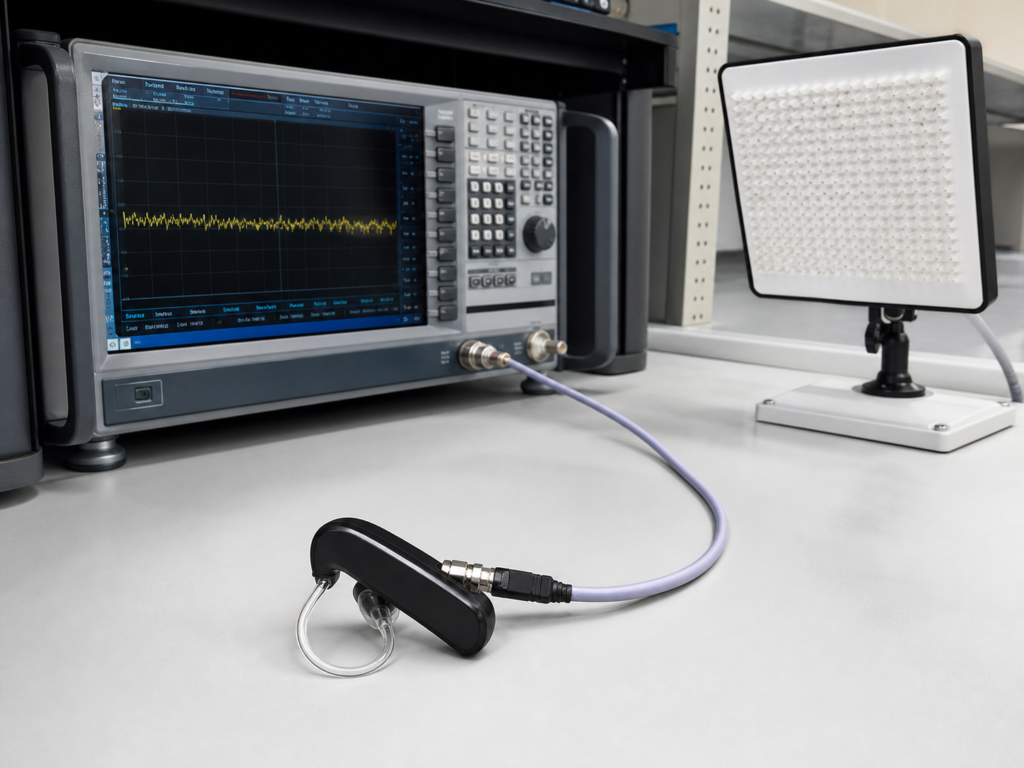
It usually needs to cover three core requirements: radio frequency performance, electromagnetic compatibility (EMC), and electrical safety; whether it is a full actual test report, assessment report, or reference to existing evidence shall be judged according to the product’s power supply method, wireless power, usage distance, and applicable standards. No matter which form is adopted, it must be able to prove that the three types of essential requirements of RED are fully covered.
Then there are special test reports, such as human exposure related tests, cybersecurity tests, and emergency call function tests, which are only required for corresponding products. There is a key requirement here: all test reports must correspond to clear sample models, software and hardware versions, and antenna configurations. You cannot use the report of Model A for Model B, nor can you use the test report of an engineering prototype for a mass-produced device; they must correspond one-to-one.
5. Risk Assessment and Supporting Documents
In addition to test reports, there are several supporting documents that are mandatory.
The first is the risk assessment report: it must identify the risks of the product under normal use and foreseeable misuse scenarios, especially wireless-related risks, and then list the corresponding control measures. You absolutely cannot just write “this product has no risks”, which is invalid. For example, for a smart speaker, a foreseeable misuse scenario includes the user privately replacing a high-gain antenna resulting in excessive power, and the corresponding control measure is to lock the maximum transmission power in the firmware, and at the same time explicitly prohibit private disassembly and replacement of the antenna in the user manual — this is a qualified risk assessment.
The second is the EU Declaration of Conformity (DoC): this is a formal commitment letter signed by the manufacturer, which must include the product model, responsible party information, applicable regulations and standards, and the name and position of the signatory, equivalent to a compliance guarantee given by the manufacturer for the product.
The third is user materials: including user manuals, installation guides, and safety warnings, which must include wireless usage restrictions, such as frequency band/indoor and outdoor usage restrictions in member states, installation distance requirements, prohibition of private modification of antennas, restrictions in specific places, etc.; whether to include prompts for airplanes, gas stations, etc., shall be subject to the actual risks of the product and applicable regulations/standards.
If the product requires the participation of a Notified Body (NB for short, a third-party compliance assessment body officially recognized by the EU) in the assessment, the assessment certificate issued by the Notified Body must also be included.
3. Step-by-Step Implementation: Full Process of RED Technical Documentation Preparation
Now that you know what to include, let’s follow the steps. Ordinary consumer-grade wireless products can be sorted out into qualified technical documentation by following this process. Each step is followed by a checkpoint, which you can check against after completion.
Step 1: Product Compliance Positioning
Before starting, clarify two core questions first: Does your product fall under RED jurisdiction? Does it require the participation of a Notified Body?
First, confirm whether the product falls within the scope of RED jurisdiction according to the three-step judgment method in the first part, do not rely on feeling. Then assess the conformity assessment path: if the product can fully use the valid harmonized standards listed in the OJEU and all RED essential requirements are covered, ordinary consumer-grade products can usually follow the self-declaration path; if harmonized standards are not used, not fully used, or there are no applicable harmonized standards, you need to select the corresponding conformity assessment module in accordance with RED regulations, and then confirm whether the participation of a Notified Body is required.
Note: Products for special purposes such as public safety, medical wireless, cellular communication, and broadcast transmission are clues that require key verification of the assessment path, but they do not directly determine that a Notified Body must be involved. The core judgment basis is always the applicability of harmonized standards and corresponding regulatory requirements.
Checkpoint: You can clearly state the reason why the product is/is not subject to RED, and the regulatory basis for whether a Notified Body is needed, rather than “I don’t think so”.
Step 2: Sort Out Core Product Information
Collect the product’s identity information, responsible party information, and appearance and structure materials together. The focus is to sort out all wireless functions and core parameters. Each parameter must have a clear source, for example, from the chip specification sheet or measured, and cannot be fabricated. You also need to confirm the configuration of the version you plan to sell in the EU, and do not use the parameters of the domestic version to make up the numbers.
If there are multiple models in the same series, list the differences between different models clearly, which ones do not affect wireless performance (such as color, storage capacity), and which ones do, and mark which compliance evidence can be shared.
Checkpoint: All wireless parameters have clear sources, and the differences between products in the same series are traceable and will not be confused.
Step 3: Select Applicable Standards and Assessment Path
Next, select the applicable harmonized standards correctly. When selecting, they must match the product’s wireless technology type, usage scenario, product category, and power supply method. For example, the standards for Bluetooth audio devices and WiFi routers are different, and the safety standards for plug-in and battery-powered products may also be different.
After selecting the standards, be sure to check whether the standards are valid or in a transition period in the valid list of the Official Journal of the European Union (OJEU), and record the check date and version source. Then, according to the actual situation of the product, determine the conformity assessment path, whether it is self-declaration or requires the participation of a Notified Body. Do not force self-declaration when NB participation is clearly required, as it will be a violation if found out.
Checkpoint: The standards used are the latest valid version or within the transition period, fully match the product, and the assessment path meets the requirements of RED.
Step 4: Collect and Supplement Test Evidence
First, sort out all your existing test reports and check them one by one: Is the model covered by the report correct? Are the wireless parameters consistent with what you sorted out? Is the standard version used valid? If there are missing test items, for example, only EMC was done but not RF, or only Bluetooth was tested but not WiFi, you need to find a qualified laboratory to make up for them.
If using a pre-certified wireless module, you must first check whether the antenna, power supply, and shielding conditions of the whole machine are consistent with the test conditions during module certification; if not, supplementary verification is required.
Checkpoint: The test covers all wireless functions, all frequency bands, and all operating modes of the product, and the test sample is completely consistent with the version you want to mass-produce.
Step 5: Prepare Risk Assessment and Supporting Documents
Next, conduct a risk assessment, list all conceivable normal use scenarios and foreseeable misuse scenarios, and provide corresponding control measures for each risk related to wireless, safety, and EMC, without omission.
Then prepare documents such as DoC, user manual, and safety warnings. Special attention should be paid here: the product model, wireless parameters, and responsible party information in all documents must be completely consistent. You cannot write that the maximum transmission power is 2dBm in the product description but 3dBm in the test report, nor can the manufacturer’s name in the DoC be different from that in the test report. Such inconsistencies are the most common pitfalls during random inspections.
Checkpoint: Each risk has corresponding mitigation measures, and the key information of all documents is completely consistent without contradictions.
Step 6: Internal Audit and Archiving
The last step is self-inspection and sorting. First, check the completeness of the documents against the core component list, and then verify the validity of all evidence. Then make a table of contents for the entire document, plus version records: when it was prepared, when it was revised, what the reason for the revision was, and who the responsible person is, all must be clearly written. Finally, keep it as required, either in paper or electronic form, as long as it is clear and can be retrieved at any time.
Checkpoint: The documents are complete and free of contradictions, and the version records are clear and traceable.
4. Advanced Assessment: Compliance Judgment Methods for Complex Scenarios
If your product is relatively complex, or you need to review technical documentation issued by a third party, or handle subsequent product change issues, you need to master several core judgment logics — these are boundary judgment rules beyond the preparation process, you don’t need to memorize them by rote, just find the correct judgment basis when encountering corresponding scenarios.
1. Judgment on the Matching and Validity of Harmonized Standards
Selecting the right harmonized standards is the basis for compliance, but in actual operation, many problems arise in the gray area of “seemingly matching but actually not applicable”. When judging, you can focus on two dimensions:
First is the matching boundary: even if the wireless technology type is the same, you must carefully check whether the scope of application of the standard includes your product category — for example, some industrial-grade wireless standards explicitly exclude consumer-grade household products, and vice versa, and you cannot directly apply them solely based on the wireless technology type. If there are multiple harmonized standards for the same type of product, ensure that all applicable requirements are covered (for example, when RF, EMC, and safety correspond to different standards, you cannot select only one of them).
Second is the validity boundary: it must be subject to the latest valid list issued by the Official Journal of the European Union (OJEU), and at the same time pay attention to the transition period rules after standard updates — if a standard has just been replaced by a new version, the official usually gives a transition period of several months to several years, and test reports of the old version of the standard may still be accepted during the transition period, subject to official announcements. If the standard has been withdrawn by the OJEU and there is no transition period, it can no longer be used to presume compliance with RED requirements. Standard updates do not necessarily automatically invalidate existing test reports, and need to be comprehensively judged based on whether the changes affect the corresponding test items.
If the product adopts a new type of wireless technology and there is no corresponding harmonized standard for the time being, you cannot follow the path of “self-declaration + harmonized standards”, and need to supplement other test or design evidence that can prove compliance. In this case, a Notified Body is usually required to participate in the assessment.
2. Key Points for Compliance Verification of Test Reports
When you get a test report, you cannot just look at whether there is a “pass” conclusion; you must judge whether it can be used as valid evidence for RED from four core dimensions:
First is evidence credibility verification: the technical capability of the laboratory issuing the report, its ISO/IEC 17025 accreditation status and accreditation scope will directly affect the credibility of the evidence. If using a report from an accredited laboratory, you need to confirm that its accreditation scope clearly covers the corresponding RED standards and test items; for test evidence from manufacturer self-assessment or non-accredited laboratories, laboratory accreditation is not a unified mandatory prerequisite for RED, but the evidence must be sufficient to support the conformity judgment, and at the same time, you must confirm in advance the acceptance of the regulatory authority or Notified Body of the target member state.
Second is the consistency requirement: the core configuration of the test sample must be consistent with the mass-produced product. Any changes involving wireless, safety, or EMC performance require assessment of the impact on test results, and the original report cannot be directly used.
Third is the coverage requirement: it must cover all wireless functions, frequency bands, and operating modes, especially the test of multi-wireless coexistence scenarios cannot be omitted; a report that only tests the default normal mode has insufficient effectiveness.
Fourth is result consistency: all test items must be fully qualified, with no “pending” or “non-conforming” items; the standard version cited in the report must be completely consistent with those listed in the DoC and technical documentation.
Regarding the validity period of test reports, it should be clarified here: test reports do not have a unified fixed validity period, and their validity depends on whether product configurations, applicable standards, and regulatory requirements have changed. If the product has not undergone any changes that affect wireless, safety, or EMC performance, and the corresponding harmonized standard is still in the OJEU valid list or within the transition period, the report can usually continue to be used; once the product configuration is adjusted, the standard version is updated, or applicable regulatory requirements change, the validity of the report needs to be re-evaluated, and corresponding tests should be supplemented if necessary.
3. Applicable Boundary for Simplified Preparation of Series Products
Sharing part of the compliance evidence for multiple models of the same series can save a lot of costs, but the premise is that it strictly meets the requirement of “completely consistent wireless core configuration”.
The premise for simplification is: same brand, same wireless platform (chip/module, antenna type/gain/installation position, firmware wireless parameter configuration are all consistent), and only parameters that do not affect wireless performance such as appearance and storage capacity are different.
What can be shared is limited to test reports and general design documents related to core configurations such as wireless performance, EMC, and safety; each model still needs to separately retain exclusive content such as appearance photos, nameplate information, and difference descriptions. If the differences involve antennas, power, frequency bands, or firmware wireless parameters, simplification by series is not allowed, and supplementary verification or separate testing is required.
4. Compliance Judgment for Pre-Certified Module Reference
There are two core judgment boundaries for referencing pre-certified modules, which directly determine whether the module certificate can be used as valid evidence for the compliance of the whole machine:
First is the consistency of integration conditions: you cannot only look at whether the module model matches, but also check whether the antenna configuration (type, gain, installation position), power supply conditions (voltage, ripple), and shielding design in the whole machine are completely consistent with the test conditions during module certification — for example, if an external rod antenna was used during module certification, but the whole machine uses an internal FPC antenna, even if the nominal gain is the same, you cannot directly reference the RF test results of the module; if the power ripple of the whole machine exceeds the range during module certification, it may also affect EMC performance and require additional verification.
Second is the test content that must be supplemented: even if the integration conditions are completely consistent, you cannot directly use the module certificate to replace the RED compliance evidence of the whole machine, and still need to supplement three types of tests: first, EMC testing of the whole machine (because other circuits and the housing of the whole machine will affect electromagnetic compatibility performance, and the EMC results of the module cannot represent the whole machine); second, electrical safety testing of the whole machine (the safety test of the module only covers the module itself, and does not include the power supply, interfaces and other parts of the whole machine); third, RF performance verification after module integration (to ensure that the RF parameters still meet the requirements after integration).
The most common misunderstanding is “if the module has RED certification, the whole machine does not need to do RED” — in fact, module certification is only part of the compliance of the whole machine, and the whole machine still needs to complete full RED compliance verification and prepare complete technical documentation.
5. Compliance Impact Judgment of Product Changes
After a product is launched, changes such as model revisions and firmware upgrades are inevitable. Not all changes require a full set of re-tests, but impact assessment must be done well. The core judgment standard is “whether it affects wireless, safety, or EMC performance”:
If it is a change that affects core performance, such as replacing the wireless module/antenna/motherboard, modifying the metal housing or shielding structure, opening new frequency bands or increasing transmission power after firmware upgrade, adding new wireless functions, these changes will directly affect RED compliance, and must be re-assessed, supplemented with corresponding tests if necessary, and then the full set of technical documentation must be updated.
If it is a change that does not affect core performance, such as adjusting the product color, modifying the packaging design, revising the text content in the user manual (without changing product configuration and warning requirements), these changes will not affect RED compliance, and only need to update the corresponding document content, no re-testing is required.
There is a gray area that is easy to ignore: if you replace RF chips of the same model but different batches, or if the firmware upgrade only fixes ordinary bugs and does not change wireless parameters, do you need to re-assess? The answer is that a written assessment must be done — confirm that the RF parameters of the chip are completely consistent, and that the firmware upgrade does not involve wireless-related configurations. After leaving an assessment record, you do not need to re-test. All changes must leave a written assessment record. Even if you think there is no impact at all, you must clearly write the change content, assessment conclusion, and assessor. You cannot skip it just because “I don’t think it’s important”, otherwise you won’t be able to explain clearly during random inspections.
5. Pitfall Avoidance Guide: Common Misconceptions and Quick Self-Inspection
Many people’s RED technical documentation fails random inspections not because the product is actually non-compliant, but because they made some low-level mistakes. We have compiled the most common misconceptions and a 3-step self-inspection method, which you can check by yourself after finishing.
Most Common Cognitive Misconceptions and Content Errors
Cognitive Misconceptions
- Misconception that technical documentation needs to be submitted to EU institutions for approval in advance → Actually, it is kept by yourself, and you only need to submit it upon request during regulatory random inspections
- Misconception that with a CE certificate, technical documentation is not needed → Technical documentation is a complete compliance evidence package, and the CE certificate is only supplementary proof and cannot replace it
- Misconception that technical documentation is permanently valid once prepared → Technical documentation must continuously match current product configurations, current standards and regulatory requirements, and needs to be re-assessed and updated when products are revised, standards are updated, or regulations are adjusted
- Misconception that if you have EMC/LVD CE, you don’t need to worry about RED → As long as it has wireless function, it is subject to RED jurisdiction. RED already includes corresponding EMC and safety requirements, and is not limited by the LVD voltage range. Separate EMC/LVD tests cannot replace the unique RF and spectrum requirements of RED
High-Frequency Content Errors
- Inconsistent product model, wireless parameters, and responsible entity information in different documents
- Non-EU manufacturers fail to list importer or EU authorized representative information as required
- Using harmonized standards that have been withdrawn and whose transition period has expired, or the standard category does not match the product
- Only providing certificate/report summaries, lacking complete test data and product descriptions
- Failure to update documents or conduct written impact assessment after product changes
- Risk assessment only marks “no risk”, without specific risk identification and control measures
3-Step Quick Self-Inspection Method
You don’t need to check page by page against a thick list. Checking in the following order can cover common formal consistency, validity, and completeness issues:
Step 1, Consistency check: In the order of “product description → test report → DoC → user manual”, check key content such as product model, wireless parameters, and responsible party information. If any item does not match, correct it in time.
Step 2, Validity check: Confirm that the harmonized standards are in the OJEU valid list or still within the official transition period, that the product configuration corresponding to the test report has not undergone changes that affect compliance, and that the credibility of the test evidence meets the requirements of the target market.
Step 3, Completeness check: Check whether the documents are complete against the core component list, such as risk assessment report, DoC, responsible entity information, etc., and supplement missing items in time.
6. Implementation Requirements: Document Retention and Regulatory Random Inspection Response
Finally, let’s talk about the retention of technical documentation and response to random inspections, which are all practically useful.
Technical Documentation Retention Requirements
First is the division of retention responsibilities: Manufacturers shall keep technical documentation and EU Declaration of Conformity in accordance with RED requirements; importers shall keep copies of the DoC and ensure that complete technical documentation can be obtained in a timely manner when required by regulatory authorities. Non-EU manufacturers shall ensure that responsible entities within the EU (importers or authorized representatives) can provide documents as required by regulations, and the specific retention method can be implemented according to supply chain authorization arrangements.
In terms of retention period, RED requires that technical documentation be retained for 10 years from the date when the corresponding batch/model of equipment is placed on the EU market. Products of different models and different batches shall be calculated separately according to their respective launch times, and shall not be uniformly estimated based on the first launch time.
There is no mandatory requirement for the retention form, either paper or electronic, as long as it is clear and can be retrieved at any time, and there is no need to submit it to EU institutions in advance.
Language requirements: Technical documentation and DoC must be in the language required by the competent authority of the member state. If the regulatory authority of the selling member state requires a local language version, it shall be supplemented and submitted within the specified period.
Key Points for Responding to Regulatory Random Inspections
If you receive a random inspection notice from the regulator, don’t panic, focus on three requirements:
First, strictly abide by the response time limit: submit the documents within the time limit clearly required by the regulatory notice; if the notice or the procedures of the applicable member state stipulate a 10-day time limit, you must prepare in advance to ensure that complete materials can be submitted within the time limit.
Second, submit in the specified format: At present, most member states accept electronic submission, and there is no need to specially send paper copies, subject to regulatory requirements.
Third, respond by distinguishing problem types: If it is a minor formal problem (such as non-standard format, missing individual information), you can communicate with the regulator in time to make corrections; if there is substantial non-compliance (such as missing tests, inconsistent parameters, document fraud, etc.), it may trigger penalties such as product removal, fines, EU-wide recalls, and even restrictions on entry into the EU market. Failure to submit within the time limit or refusing to cooperate with regulation may also be deemed as failure to perform compliance obligations and trigger corresponding penalties.
7. Capability Boundaries and Scenarios for Triggering Professional Support
After reading this article, you can master the core capabilities of RED technical documentation from entry to semi-proficiency: at the entry level, you can independently complete compliance positioning, document sorting, and basic self-inspection of ordinary consumer-grade wireless products; at the advanced level, you can make basic judgments on complex scenarios such as the validity of harmonized standards, compliance of test reports, simplified preparation of series products, reference of pre-certified modules, and impact of product changes.
If you encounter the following scenarios, it is recommended to seek support from a Notified Body or professional compliance personnel: the product has no applicable harmonized standards, involves special frequency bands or special purposes, the module integration conditions are inconsistent with the certification status, the compliance impact of product changes cannot be confirmed, and other complex situations requiring professional assessment.