
Nine out of ten small and medium-sized enterprises (SMEs) active in the EU electronics market have heard of REACH, but many perceive it either as “a complex regulation only for chemical companies” or “another certificate that costs money to get”, and some even directly give up EU orders out of fear of the hassle.
In fact, for the vast majority of SMEs in the electronics industry, REACH is far less complicated than imagined – you do not need to understand chemistry, spend a lot of money on full-set testing, or even deal directly with EU regulatory authorities. As long as you clarify your role, manage two categories of substances, and do a good job in information transfer, you can complete basic compliance at low cost. This content is specially designed from the perspective of the electronics product supply chain, breaking down REACH into practical methods that are easy for beginners to understand and apply.
First, figure out: Does your enterprise actually need to comply with REACH?
REACH is not a certificate, but a chemical information transparency rule
Let’s first correct the most common misunderstanding: REACH is not a certificate that can be obtained by paying money. It is a set of chemical control regulations of the EU for all products entering the EU market, with the full name of Regulation concerning the Registration, Evaluation, Authorisation and Restriction of Chemicals. Its core logic is very simple: to make hazardous chemical substances in the supply chain traceable and disclosable, so that downstream buyers and consumers know what potentially harmful substances are in products.
For small and medium-sized electronics enterprises, 90% of the time you only need to handle the compliance obligations for finished products and components (i.e., “articles” as referred to in the regulation), and you do not need to touch the complex registration process for chemical raw materials at all – after all, what you sell are chargers, connectors, circuit boards, not pure chemical products such as glues and cleaning agents.
Quick self-check: Are you within the scope of compliance?
There is only one core criterion for judging whether you need to comply with REACH: whether your products ultimately enter the EU market.
As long as the products are to enter the EU, regardless of whether you are a brand owner, importer, cross-border e-commerce seller within the EU, or a non-EU original equipment manufacturer (OEM) or trader, you need to meet REACH requirements. Conversely, if your products only circulate in non-EU markets, you do not need to worry about it at all.
Special attention should be paid to several easily overlooked scenarios: even samples, gifts, spare parts for maintenance, and even stock stored in EU overseas warehouses are within the scope of control as long as they enter the EU customs territory. For example, if a small OEM factory in Shenzhen sends 50 test samples to an EU customer, it must comply with REACH requirements even if no charge is made.
The real consequences of non-compliance are more practical than you think
Many people think that REACH enforcement is not strict and take chances, but in fact, the losses when problems arise are not small. The most common ones are detention and return of goods by EU customs, and the round-trip freight plus storage fees may be higher than the value of the goods; if a downstream customer is inspected due to non-compliance of your components, there is a high probability that they will cancel the order, and even hold you liable for compensation according to the contract.
As for penalties, the EU does not have a unified fine standard. Fines, recalls, sales bans, rectification deadlines, etc. are determined by the laws of each member state and the circumstances of the case, and may refer to factors such as the severity of the violation, the value of the goods, whether it is intentional, and whether it is a repeated violation. More importantly, once a non-compliance record is left, brand reputation will be affected. Customers in the EU market already value compliance, and a single problem may cost you cooperation opportunities across the entire region.
Don’t confuse: REACH is not the same as RoHS/CE/WEEE
People in the electronics industry often confuse REACH with several other EU regulations, but in fact their scopes of control and requirements are completely different. Here is a table to clarify:
| Comparison Dimension | REACH | RoHS | CE | WEEE |
|---|---|---|---|---|
| Scope of Control | Hazardous chemical substances in all categories of products; the SVHC Candidate List is a dynamic list that has exceeded 200 entries and is continuously updated; Annex XVII restricts specific substances, uses or product categories by entry | Only 10 hazardous substances in electrical and electronic products | EU market access mark, covering multiple directives such as Low Voltage, EMC, and RoHS | Only waste recycling and treatment of electrical and electronic products |
| Core Requirements | Information on hazardous chemical substances is traceable; if the content exceeds the limit, notification is required / market access is prohibited | If the content of hazardous substances exceeds the limit, market access is prohibited | After complying with the corresponding directives, the mark can be affixed, representing that the basic EU safety requirements are met | Enterprises need to bear the responsibility for recycling electronic waste, and a recycling mark is required |
| Significance for Electronics Enterprises | Both finished products and components are subject to control, and substance information must be passed downstream | Only electrical and electronic products need to comply; there is partial overlap in substances with REACH, but the two are independent regulations and cannot replace each other | Affixing the CE mark does not mean compliance with REACH; the two are completely independent requirements | It governs the waste stage, and product BOM data can be shared with REACH for assessment |
Two conclusions should be kept in mind here: first, passing RoHS does not mean complying with REACH, as REACH controls far more substances than RoHS and has more requirements; second, REACH is not a mandatory component of CE, and even if the product bears the CE mark, separate REACH compliance documents need to be prepared.
3 most common entry-level pitfalls
People who are new to REACH almost always fall into these three entry-level pitfalls, and avoiding them in advance can save a lot of detours:
First, “Those in the electronics industry don’t need to worry about REACH” – wrong. Plastic shells, solder, surface coatings, cable sheaths, etc. in products may contain controlled hazardous chemical substances, all of which are within the scope of REACH control.
Second, “Small factories with small shipment volumes don’t need to comply” – wrong. REACH compliance requirements have nothing to do with enterprise size or shipment volume. As long as products enter the EU, they must comply, even if only 10 samples are sent.
Third, “Passing RoHS equals REACH compliance” – wrong. The two have different substance scopes and requirement logics, and cannot replace each other.
Core control requirements: 2 categories of substances + 1 database
For small and medium-sized electronics enterprises, the core control requirements of REACH can be simplified into two categories of substances plus one database, and the vast majority of other provisions have nothing to do with enterprises engaged in electronic finished products/components.
Category 1: Substances of Very High Concern (SVHC Candidate List)
Let’s put it in plain terms: this is a list of chemical substances that the EU focuses on and that are relatively harmful to human health and the environment. It is updated by the European Chemicals Agency (ECHA for short), usually twice a year, in January and July respectively, with several new substances added each time. Because it is still in the tracking and evaluation stage, it is called the “Candidate List”, and the substances in it are commonly referred to as SVHCs (Substances of Very High Concern).
Common SVHCs in the electronics industry include phthalates (plastic softeners, most commonly found in soft PVC cables), lead, cadmium, short-chain chlorinated paraffins (flame retardants), some flame retardants, and PFAS substances (commonly known as “forever chemicals”, which may be present in water and oil repellent coatings).
Many people are unclear about the SVHC threshold, so it must be remembered clearly: when the content of a single SVHC exceeds 0.1% (w/w) by weight of a single article or an independently identifiable component article in a complex product, it does not automatically equate to a sales ban, but will trigger obligations such as providing safe use information downstream, responding to consumer inquiries, and EU-based entities submitting SCIP data subject to conditions; whether it is necessary to notify ECHA requires further judgment based on the total annual amount of the SVHC, whether exposure can be excluded, and whether the use has been registered. An “article” in REACH refers to an object with a specific shape, surface or design. For example, the plastic sheath of a charging cable, plastic housing, and PCB assembly can all be judged as component articles; it is absolutely not allowed to average and dilute based on the weight of the whole machine – for example, if lead in the coating of a small component exceeds the limit, it is still considered non-compliant even if the whole machine weighs 1 kilogram. Note that the “homogeneous material” commonly mentioned in RoHS should not be directly applied to REACH, as the two have different splitting logics. High-risk materials such as solder and coatings usually need to be confirmed separately as risk points.
The corresponding obligations are divided into two levels: if it exceeds 0.1%, first, the information of the substance and safe use instructions need to be passed to downstream customers; second, if the total weight of the SVHC in all relevant articles placed on the EU market by EU-based manufacturers or importers exceeds 1 ton per year, and human/environmental exposure under normal or foreseeable use cannot be excluded, and the use has not been registered, then notification to ECHA is required. Non-EU suppliers usually do not need to notify directly, they only need to provide relevant data to EU customers, who will judge whether they need to perform the notification obligation.
The 1 ton here refers to the total annual placement volume of the SVHC substance itself, not the total weight of components containing the substance. For example, a 10-gram plastic housing, even estimated at 0.1% SVHC content, contains only about 0.01 grams of SVHC per piece, and about 100 million pieces are needed to reach the annual total threshold of 1 ton; actual triggering of notification also requires meeting conditions such as exposure and use registration at the same time. Therefore, for the vast majority of small and medium-sized electronics enterprises, the probability of triggering ECHA notification is extremely low, and daily work only needs to focus on information transfer and SCIP data support.
Category 2: Prohibited/Restricted Substances (Annex XVII Restriction List)
If SVHCs are “key tracking targets that need to be notified when exceeding the limit”, then the Annex XVII restriction list is the “red line”: these substances are explicitly prohibited or strictly restricted by the EU. As long as the content exceeds the limit, the product cannot be sold in the EU at all, which is much stricter than SVHC requirements.
Common restriction requirements in the electronics industry include restrictions on the use of specific phthalates, lead, cadmium, mercury, hexavalent chromium, and short-chain chlorinated paraffins in some components. It should be noted here that some substances, such as lead and cadmium, are on both the SVHC Candidate List and the restriction list. In this case, both requirements must be met at the same time: not only must the limit requirements of the restriction list be complied with, but if the SVHC content exceeds 0.1%, information must also be passed downstream. In addition, the limits, applicable product parts, and exemption conditions for different substances are different. For example, lead is exempt in some solders, so it cannot be generalized.
Supporting information database: SCIP database
The SCIP database is an article information database specially established by the EU to track substances of very high concern in the supply chain. Simply put, it uniformly collects information on all articles entering the EU with SVHC content exceeding 0.1%, to facilitate supervision and supply chain inquiries.
Regarding the submitting entity, what the regulation requires is suppliers within the EU that place articles containing SVHCs exceeding 0.1% on the market, including EU manufacturers, assemblers, importers, distributors, etc. Only retailers directly facing end consumers are usually not within the scope of mandatory submission; for specific responsibility division, please refer to the previous chapter on supply chain roles. Non-EU enterprises do not need to submit by themselves, they only need to provide core data to EU customers or their designated service providers, including: basic identification information of the article, names and concentration ranges of contained SVHCs, material category, and safe use instructions.
These obligations can be directly excluded by most small and medium-sized electronics enterprises
In addition to the two categories of substances and one database mentioned above, there are many other obligations in REACH, but for ordinary SMEs engaged in electronic finished products and components, they can basically be directly excluded, and there is no need to spend time studying them:
The first is chemical registration: only enterprises that import or manufacture more than 1 ton of chemical substances per year need to handle it. Ordinary electronics enterprises sell finished products and parts, not separate chemical raw materials, so they are not involved at all.
The second is substance authorization (Annex XIV): only very high-risk substances and specific industrial uses require authorization applications, which are almost never encountered in ordinary consumer electronic products.
Here is the simplest judgment method: if you sell complete electronic machines and components, not chemical products such as glues, cleaning agents, and paints sold separately, you basically do not need to consider these two obligations.
Obligation division: your supply chain role determines the workload
REACH obligations are divided according to supply chain roles, and different entities bear different responsibilities. Clarifying your own position can accurately match the workload.
Non-EU suppliers (OEMs/traders): just cooperate in providing materials
If you are an OEM or trader outside the EU supplying goods to EU customers, you do not need to submit any documents directly to EU regulatory authorities. Your core obligation is to provide accurate compliance information to downstream customers.
You need to keep evidence such as declarations and test reports from upstream suppliers for your own use, to facilitate responding to inquiries from downstream customers. It should be noted here: if you explicitly promise REACH compliance in the contract signed with the customer, then once a problem occurs, the customer can hold you liable through commercial clauses, and the responsibility will be transferred through the contract. So don’t make random promises, and don’t completely ignore the compliance status of upstream suppliers.
EU-based entities: bear the main compliance responsibility
If your enterprise is located within the EU, you usually have to bear the main compliance responsibility, and the obligations of different roles are also different:
EU importers are the core obligors, responsible for confirming that products meet the requirements for restricted substances, passing SVHC information downstream, submitting SCIP data as needed, and retaining all compliance documents.
For cross-border e-commerce sellers operating in the EU market, the division of obligations needs to be judged in combination with the actual logistics and business model: first confirm who the importer is on the import record, whether the goods first enter the EU warehouse, whether the platform/fulfillment service provider assumes any compliance role, and whether the cooperation of an EU-based responsible entity is required. If the EU warehouse stocking or self-shipping direct mail mode is adopted, sellers usually need to bear or cooperate in fulfilling the REACH obligations related to importers. Specific requirements can refer to platform rules, but platform policies cannot replace regulatory obligations, and sellers still need to prepare supply chain REACH materials in advance. For example, under the Amazon FBA model, sellers are generally responsible for the REACH compliance of their products.
Distributors and retailers have relatively simple obligations: they need to pass known SVHC information downstream and cannot sell products that they know are non-compliant.
EU-based representative (Only Representative, OR): only required for specific scenarios
Many third-party institutions will promote the “EU Only Representative (OR)” service, saying that you cannot enter the EU without it. In fact, ordinary small and medium-sized electronics enterprises do not need this as a default configuration at all.
The Only Representative in the REACH regulation is mainly used for specific scenarios such as chemical substance registration; for enterprises engaged in electronic finished products and components, OR is not a compliance necessity.
If a non-EU enterprise enters the EU through multiple importers, multiple platforms or multi-country channels, and customers require unified SCIP data, list updates and document communication, they can consider seeking assistance from an EU-based compliance service provider, but the identity and positioning of the provider, as well as whether the service includes candidate list monitoring, SCIP data submission support, document template provision, customer inquiry response, etc., must be clarified in the contract; this type of service is essentially compliance assistance, and shall not be understood as automatically replacing all legal responsibilities of importers. If a third party generally claims that “all importer obligations can be transferred”, you must verify carefully.
Ordinary small and medium-sized electronics enterprises, especially OEMs that only supply to a few EU customers, do not need to configure this service at all – it is a pure waste of money.
3 steps to quickly assess REACH workload
After clarifying the basic requirements, you can quickly assess your own REACH compliance workload through 3 steps.
Step 1: Confirm two key premises
First, clarify the two most core issues, which are the basis for all judgments:
First premise: Do your products ultimately enter the EU? Don’t miss easily overlooked scenarios such as samples, gifts, maintenance spare parts, and overseas warehouse stock – as long as they enter the EU, they count.
Second premise: What is your role in the supply chain? Are you a non-EU OEM/trader, an EU importer, a distributor, or a cross-border e-commerce seller?
Step 2: Match workload according to product risk
For different products, the compliance workload and cost vary greatly. You can quickly divide them according to the risk level of materials:
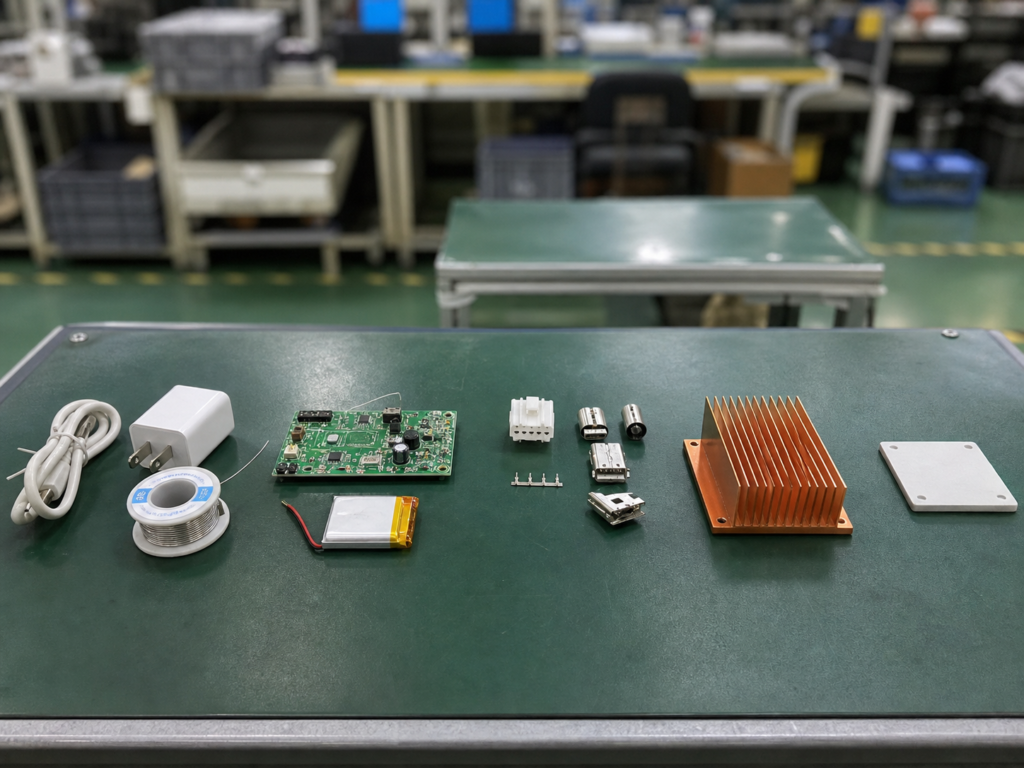
High-risk products: electronic products containing plastic/rubber, cables, batteries, solder, coatings, adhesives. The higher the proportion of organic materials, solder, and coatings, the higher the risk, such as chargers with soft PVC cables, Bluetooth headsets with batteries;
Medium-risk products: electronic components containing metal plating and ordinary plastic parts, such as connectors with plastic housings, nickel-plated hardware;
Low-risk products: simple electronic components made of all metal without coating, pure glass/ceramic, such as pure copper heat sinks, ceramic insulating bases, with basically no risk of exceeding the limit.
Step 3: Core obligation list for corresponding roles
Combining the premises and risks, you can get your core work content without doing unnecessary things:
If you are a non-EU supplier, there are two core tasks: collect compliance materials from the upstream supply chain, and then pass the compliance declaration to downstream customers. The higher the product risk, the more detailed the materials that need to be collected.
If you are an EU importer, there are four core tasks: verify the materials provided by suppliers, ensure that products meet the requirements for restricted substances, submit SCIP data as needed, and retain all compliance documents.
If you are a distributor or retailer, there are two core tasks: pass known SVHC information downstream, and do not sell products that you know are non-compliant.
Low-cost practice: 5 steps to get basic compliance done
Many people think that REACH compliance costs a lot of money, but in fact, as long as you use the right method, you can get basic compliance done with very little cost. The following 5 steps are a simplified process specially designed for SMEs.
Step 1: Product disassembly and risk grading, no need to disassemble to the atomic level
Many people think that products need to be disassembled into each smallest material unit, but in fact it is completely unnecessary. It is enough to disassemble to the level of independently identifiable component articles – for example, a charging cable is disassembled into sheath, copper wire, shielding layer, and a circuit board is disassembled into PCB board, solder, and electronic components, which is sufficient for risk investigation. Note that the “homogeneous material” disassembly logic of RoHS should not be copied. REACH disassembly is centered on independently identifiable articles, and there is no need to create separate files for each solder joint, but solder should be uniformly confirmed as a high-risk material category, and reports from the same supplier with the same solder formula can cover multiple products with the same process.
After disassembly, mark materials according to risk level: high-risk materials include soft PVC, rubber, cables, solder, batteries, coatings, adhesives, recycled materials (recycled materials have the highest risk of exceeding the limit due to unknown sources, so special attention should be paid); medium-risk materials include ordinary plastics, metal plating; low-risk materials include pure metal without coating, glass, ceramics, paper packaging.
After grading, prioritize high-risk materials, and simplify requirements for low-risk materials – for example, for pure copper heat sinks, as long as the supplier provides a general compliance commitment, no test report is needed.
Step 2: Simplified skills for supply chain information collection
When asking suppliers for materials, you don’t need to ask for a pile of documents for each material, just ask according to the risk level, which can save a lot of time:
For high-risk materials, ask for a detailed SVHC declaration (which must clearly state which version of the SVHC list it corresponds to) + a restricted substance compliance declaration; for low-risk materials, a general compliance commitment letter is enough, and industry common templates can be used.
For new materials, suppliers can first sign a compliance commitment letter as a condition for starting procurement, but for high-risk materials or when customer contracts explicitly require test reports, valid certificates should be supplemented before mass production shipment or delivery to the EU; for low-risk materials, the commitment letter can be used to advance the process first, but a follow-up inquiry or review plan must be recorded to avoid long-term lack of valid evidence. Materials of the same material and from the same supplier can share one set of materials, no need to ask separately for each model – for example, the same ABS plastic from the same supplier used in 10 models of housings only needs one report.
When asking suppliers for materials, pay attention to several red flag signals, and be vigilant when you see such responses: only providing finished product test reports (mixed testing of finished products will cover up local excesses, which is useless at all), data not stating which version of the SVHC list it corresponds to, only writing “compliant with REACH” without any details, no signing entity (you don’t know who issued it, and you can’t find anyone if there is a problem).
A special reminder: you cannot default that the product does not contain controlled substances just because the supplier does not provide materials. You must either follow up to get valid materials or arrange testing for confirmation, otherwise you will be responsible if problems arise.
Step 3: Testing cost control methods, don’t waste money
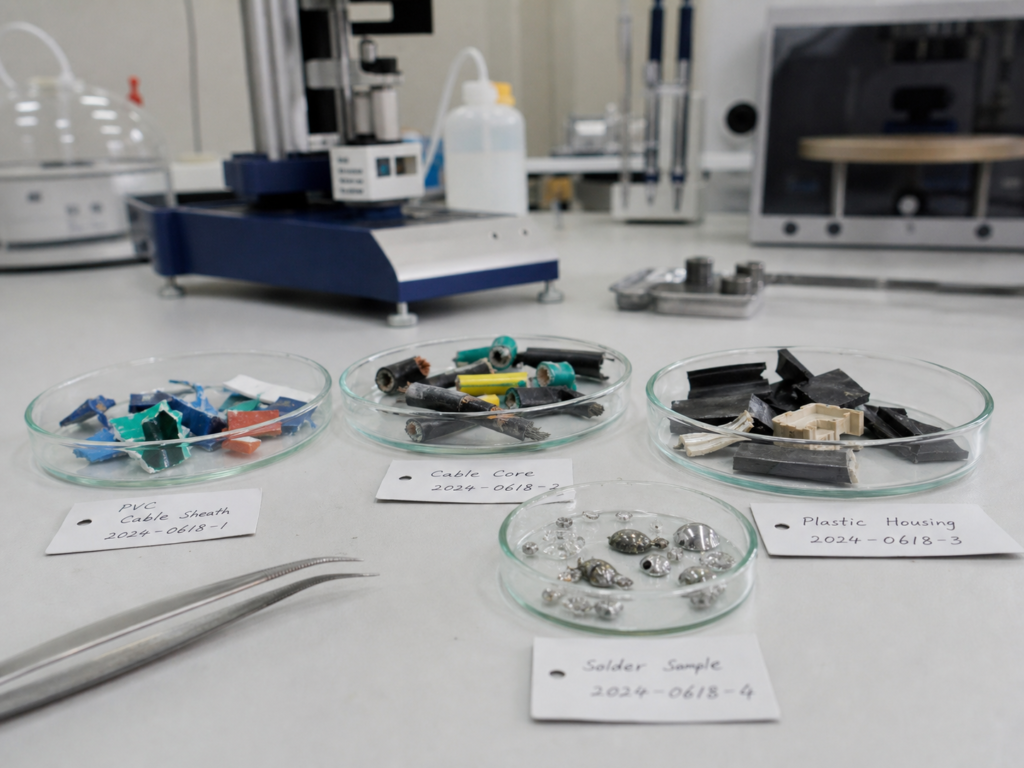
Testing is the most expensive part of REACH compliance, but as long as you master a few principles, you can save more than half the money:
First, prioritize testing high-risk materials, and never test assembled finished products. Because mixed testing of finished products will dilute the substance concentration of high-risk components, what was originally exceeding the limit will not exceed the limit when mixed into the whole machine. Not only are the results inaccurate, but regulators also do not recognize them.
Second, testing is only needed when the supplier cannot provide valid certificates, and there is no need to test every batch. If the supplier already has a valid report issued by a laboratory with ISO/IEC 17025 accreditation, there is no need for repeated testing.
In addition, multiple models of products with the same material can be tested together – for example, if 10 models all use the same ABS plastic shell, testing one is enough, directly saving 90% of the cost.
To judge whether a test report is valid, there are five main points: whether the sample name corresponds, whether the tested material part is accurate, whether the test items cover the substances that need to be controlled (for example, whether it corresponds to the specified version of the SVHC list), whether the marked SVHC list version meets the requirements, and whether the laboratory has ISO/IEC 17025 accreditation and the accreditation scope covers the corresponding test items. ISO/IEC 17025 is an internationally accepted standard for laboratory competence accreditation, but whether the report can ultimately be accepted by customers or regulators depends on factors such as the rationality of sample disassembly, the applicability of test methods, and the authenticity of the report. It is not that accredited reports will necessarily be recognized in all scenarios.
Step 4: Simplified practices for information transfer and document retention
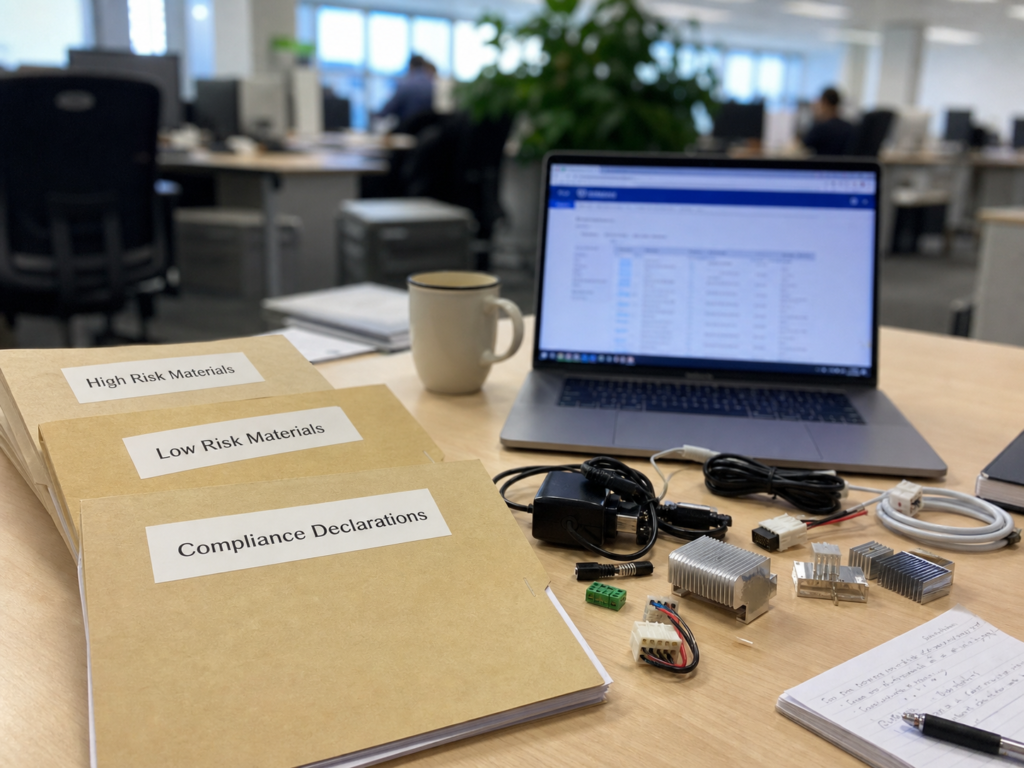
The compliance declaration for customers does not need to be several pages long. The simpler it is, the clearer it is. It only needs to contain three core contents: first, the product meets the restricted substance requirements of REACH Annex XVII; second, whether the SVHC content in the product exceeds 0.1% (if it exceeds, the specific substance names must be listed); third, contact information, who to contact if there is a problem.
The declaration can be in electronic form, no need for paper stamping, unless the customer explicitly requires it. If multiple models have the same material, a general declaration can be issued jointly, no need to make one for each model separately.
In terms of document retention, REACH requires relevant compliance records to be retained for a sufficient period of time. It is recommended to retain them for at least 10 years after the last production, import, or supply; for continuous supply of the same model, it should be calculated on a rolling basis based on the last supply time. The content that needs to be retained includes: supplier declarations, test reports, version update records (such as re-evaluation records after the SVHC list is updated), and communication records with suppliers/customers. All these should be stored properly so that they can be produced in case of regulatory inspection.
Step 5: Dynamic update mechanism, no need to stare at the regulation every day
Many people are afraid of regulation updates and think they have to stare at them every day, but in fact it is completely unnecessary. The SVHC list is only updated twice a year, and a simple update mechanism is enough:
After each update of the SVHC list, there is no need to retest all products. Just first check whether the newly added substances are related to your product materials – for example, if the newly added substance is a textile dye, which you don’t use at all in electronics, then you don’t need to worry about it; if the newly added substance is a flame retardant for plastics, and you have many plastic parts, then go to the supplier to confirm whether this substance is used, no need to spend money on testing yourself.
Usually, as long as the product materials, suppliers, or production processes change, just re-evaluate the compliance status. You can also subscribe to ECHA’s official news email, or third-party free reminder services, which will notify you directly when regulations are updated, no need to check the official website every day by yourself.
Pitfall avoidance and advancement: optimize compliance costs and avoid hidden risks
After completing the basic compliance setup, you can avoid common risks and further optimize compliance costs through the following advanced judgments.
5 high-frequency advanced cognitive misconceptions
The following are advanced cognitive misconceptions that are easy to fall into in practice. Clarifying them in advance can avoid detours:
- “REACH is just testing SVHCs, and you are compliant after testing” – wrong. In addition to SVHC control, you also need to comply with the restricted substance requirements of Annex XVII, and fulfill obligations such as information transfer and SCIP submission. Completing testing does not equal compliance.
- “The 0.1% SVHC threshold is calculated based on the weight of the whole machine” – wrong. The threshold is calculated based on a single article or component articles of a complex product. For specific rules, see the previous explanation. In practice, invalid certificates that only provide mixed test reports of finished products should be rejected.
- “Traders don’t need to worry about it, just push it all to the factory” – wrong. EU importers are the core responsible entities, and regulators will directly contact importers. You cannot be exempted from liability on the grounds of “supplier problems”, and you need to bear the responsibility first and then pursue accountability upstream in the supply chain.
- “All products must be tested as soon as the SVHC list is updated” – wrong. First match the newly added substances with the material types of your own products. If there is no correlation, no treatment is needed; if there is a correlation, you can first verify with the supplier. Blind full testing will only increase unnecessary costs.
- “A supplier’s statement of ‘compliant with REACH’ is enough” – wrong. A valid compliance declaration should at least include the product/material scope, corresponding SVHC list version, restricted substance compliance declaration, signing entity and date; if it is a test report, you also need to additionally check the rationality of sample disassembly, the matching degree of test items, the correspondence of the list version, the laboratory’s ISO/IEC 17025 qualification and accreditation scope, and the authenticity of the report. It is not that an accredited report will necessarily be recognized in all scenarios.
Common practical pitfalls and avoidance methods
There are several other high-frequency specific problems in practice, which can be addressed in advance:
First pitfall: Suppliers provide false declarations and false reports, or only issue “three-no” compliance commitments with no model number, no SVHC list version, and no signing entity. Avoidance method: conduct regular spot checks on high-risk materials. After receiving the report, enter the report number on the laboratory’s official website to verify the authenticity, and at the same time confirm that the laboratory’s ISO/IEC 17025 accreditation scope covers the corresponding test items; for suppliers who only verbally promise “compliance with REACH”, they must be required to supplement formal declaration documents.
Second pitfall: Customers require REACH test reports for all products. Many customers are not familiar with regulations and will require finished product test reports. At this time, you don’t need to agree directly. You can communicate with customers to replace them with material-level test reports + general declaration of conformity, which not only has more accurate results but also much lower costs, and the vast majority of customers will accept it.
Third pitfall: Confusion about SCIP notification responsibility. Many non-EU suppliers are required by customers to directly submit SCIP data. In fact, the legal obligor of SCIP is the article placer within the EU, and non-EU enterprises only need to provide basic data. When signing the contract, the submitting entity should be clarified to avoid assuming obligations and costs that are not your own.
Fourth pitfall: Old reports do not cover the latest SVHC list. For example, after the SVHC list is updated in July, the report issued by the supplier last year does not cover the newly added substances, so it cannot be directly used as the latest compliance certificate. Therefore, all declarations and reports must be marked with the corresponding SVHC list version, and the coverage of existing reports must be checked after each list update.
Compliance plan selection for SMEs of different sizes
Enterprises of different sizes are suitable for different compliance plans. There is no need to blindly pursue the “most complete and most expensive” one, just the one that suits you. The core logic of choosing a plan is: first match customer requirements and product risks, then adjust the investment in combination with shipment volume.
- Micro enterprises (annual exports to the EU less than 100,000 euros, simple products): just collect declarations from upstream suppliers, organize them into a general declaration for customers, the cost is almost zero, suitable for low-risk products and situations where customers have no special requirements.
- Small enterprises (annual exports to the EU 100,000-1,000,000 euros, products with certain complexity): can implement supply chain hierarchical management, conduct spot checks on high-risk materials once a year, and track list updates normally. The cost is several thousand to tens of thousands of yuan per year, suitable for electronic accessories with plastics and cables, and situations where mainly small and medium-sized customers are served.
- Medium-sized enterprises (annual exports to the EU 1,000,000-5,000,000 euros, many product categories): can implement full supply chain compliance management, conduct regular testing, provide customers with SCIP information support, and seek third-party consultant assistance when necessary. The cost is tens of thousands to more than 100,000 yuan per year, suitable for finished product export, high requirements from large customers, and many product categories.
Quick handling of common emergency problems
It is inevitable to encounter emergencies when doing business in the EU market. You can write down the handling steps for these common problems:
If a customer suddenly asks for REACH documents: don’t panic, first ask clearly about the specific requirements – whether it is a declaration of conformity or a test report, and which version of the SVHC list it corresponds to. Then first organize the existing supplier declarations and submit them. For missing materials, prioritize supplementary testing of high-risk materials, no need to test all.
If customs detains goods due to REACH: the EU importer, as the responsible entity, will liaise with the regulators, and non-EU enterprises do not need to liaise directly. You need to provide the existing compliance documents to the importer. If there are indeed problems, either cooperate with rectification or arrange for return of the goods.
If the supplier cannot provide SVHC data: first evaluate the risk level of the material. For high-risk materials, either switch to a supplier that can provide valid materials, or arrange testing by yourself; for low-risk materials, you can first ask the supplier to sign a compliance commitment letter, and then slowly supplement the materials later, without affecting normal shipment.
Practical tools: free/low-cost compliance resources
You don’t have to pay for everything for REACH compliance; there are many free or low-cost resources available.
ECHA official free tools
ECHA’s official website has many free tools, which are completely sufficient:
The first is the query page for the SVHC Candidate List and Annex XVII Restriction List. You can query by directly entering the substance name or CAS number, and the updates are the most timely.
The second is the operation guide for the SCIP database. EU importers can directly refer to the submission process without looking for a third-party agent.
The third is ECHA’s Newsletter subscription, which is free. When regulations are updated, it will send emails directly to your mailbox, no need to browse the official website every day by yourself.
Reusable simplified templates
There are three templates that you can make yourself, or you can find free templates from industry associations, no need to buy them:
The first is the supplier REACH compliance commitment letter template, which should include core contents such as the SVHC list version, restricted substance compliance declaration, product model scope, and signing entity.
The second is the REACH declaration of conformity template for customers, which is the three core contents mentioned before, just simple and clear.
The third is the high-risk material investigation list template, which is used for internal investigation of high-risk materials in products to facilitate progress tracking.
Principles for selecting third-party services
If you need to find third-party services, remember a few principles to avoid being scammed:
For testing services, prioritize institutions with ISO/IEC 17025 accreditation that often do SVHC testing for the electronics industry. There is no need to choose the most expensive international big brands. As long as the qualifications are compliant, the test results will be more recognized.
For consulting or agency services, be sure to clarify the service content first – for example, whether there is list monitoring, SCIP notification, and document template support. There is no need to choose high-priced full-case services, as SMEs simply cannot use so much content.
When the budget is limited, prioritize screening of high-risk materials, and never do full-component analysis. Full-component analysis is very expensive and completely unnecessary for ordinary electronics enterprises.
After reading this article, you can do 3 things right now
This content covers the vast majority of core content of REACH compliance for small and medium-sized electronics enterprises from entry to advanced level. After reading it, you can at least complete 3 things independently: first, quickly judge your own REACH compliance obligations and responsibility boundaries; second, choose a low-cost compliance plan that matches the size of your enterprise; third, avoid the vast majority of common REACH pitfalls and emergency problems in the electronics industry.
The core logic of REACH has never been to make things difficult for SMEs, but to make chemical substances in the supply chain more transparent. For SMEs in the electronics industry, you don’t need to be a regulation expert. As long as you grasp the core of “risk grading” – focus your energy and budget on high-risk materials, and simplify the handling of low-risk materials – you can meet compliance requirements at the lowest cost. The focus of subsequent compliance is to conduct regular reviews following the update of the SVHC list, changes in product materials/suppliers, and customer requirements, to ensure that all documents are traceable and the source of data can be explained.